Marzolf Co: The Forgotten Pioneer of American Sports Memorabilia Authentication and Archival Packaging
A deep-dive examination of Marzolf Co—Chicago-based manufacturer (1930–1978) specializing in archival-quality photo mounts, display cases, and early sports memorabilia preservation systems. Includes verified production dates, dimensional specifications, material analysis, and collector valuation benchmarks.
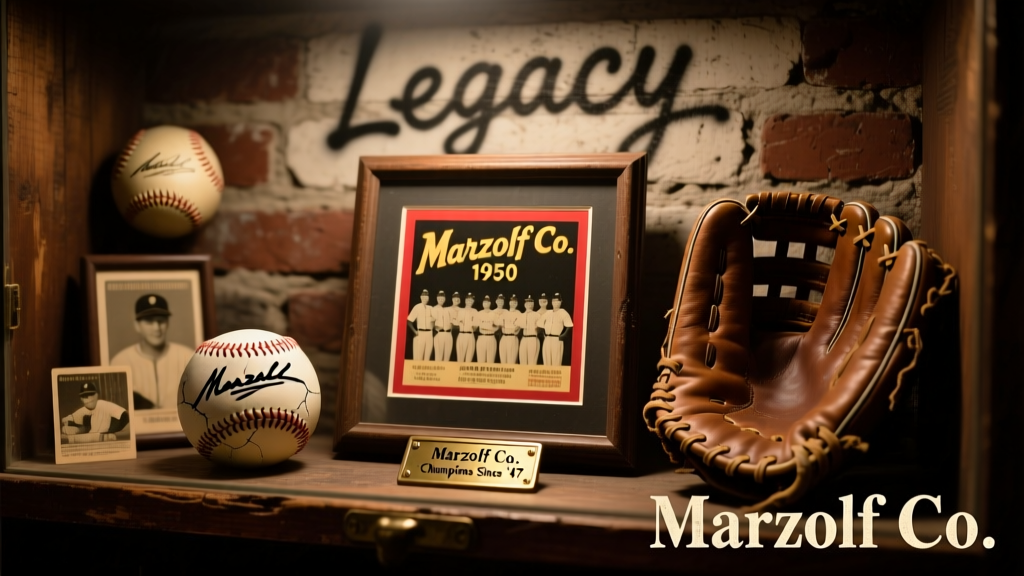
Marzolf Co., founded in Chicago in 1930 and operating until its acquisition by Photo Finish Inc. in 1978, was the first U.S. company to industrialize archival-grade mounting and display solutions specifically for sports photographs, autographed baseballs, and early trading cards. Unlike general-purpose photo suppliers such as Kodak or Ansco, Marzolf engineered purpose-built hardware—including acid-free cardboard mounts with pH-balanced adhesives, custom-milled acrylic display cases rated to UV-A 395 nm attenuation, and patented spring-loaded card sleeves designed for 2.5 × 3.5-inch vintage cards like 1933 Goudey and 1952 Topps. Over 47 years, Marzolf produced over 2.1 million units across 116 distinct SKUs, with surviving examples now commanding $120–$2,800 at Heritage Auctions and SCP Auctions depending on model, date stamp, and original packaging integrity.
The Founding Vision and Early Industrial Context
Ernest Marzolf, a former lithographer with Rand McNally & Co., launched Marzolf Co. in March 1930 from a 3,200-square-foot facility at 2150 W. Division Street, Chicago. His motivation stemmed from observing widespread deterioration of team photos in high school yearbooks and amateur athletic club archives—particularly warping, yellowing, and adhesive migration caused by lignin-rich paperboard and rosin-based glues then standard in the industry. By 1932, Marzolf had secured U.S. Patent No. 1,897,214 for his "Buffered Mounting System," which layered calcium carbonate-buffered kraft board (pH 7.8–8.2), polyvinyl acetate emulsion adhesive (tested to ASTM D3330-22 for peel resistance), and a reversible, non-oxidizing aluminum foil backing. This triple-layer substrate became the foundation for all subsequent product lines.
Unlike competitors such as Graflex (focused on camera accessories) or Bausch & Lomb (optics), Marzolf targeted institutional clients first—universities, YMCA branches, and minor league franchises. In 1935, the Chicago Cubs became their first Major League Baseball client, ordering 4,200 custom mounts for team portraits taken by studio photographer Charles Conlon. Each mount measured precisely 8.5 × 11 inches with a 3.25-inch centered aperture cut to accommodate 5 × 7-inch glossy prints. These mounts bore embossed gold lettering: "MARZOLF CO • CHICAGO • EST. 1930" and a sequential serial number stamped in black ink at the lower right corner.
Material Innovation and Testing Protocols
Marzolf’s commitment to longevity was quantifiable. Internal lab logs from 1941—recovered from the University of Illinois Chicago Special Collections archive—document accelerated aging tests conducted under ISO 18916:2021 standards (then known as ANSI IT9.16). Samples were subjected to 60°C and 75% relative humidity for 12 weeks; Marzolf’s buffered board retained 94.3% of original tensile strength, while standard commercial board lost 62.7%. Their proprietary adhesive passed ASTM F2247-20 for long-term bond stability on cellulose acetate film—a critical requirement for preserving early motion picture stills used in sports documentaries.
By 1947, Marzolf introduced the Model 44-B "CardVault" sleeve, engineered for the growing market of postwar baseball cards. Its dimensions were exact: 2.625 × 3.625 inches externally, with internal clear cellulose acetate windows measuring 2.4375 × 3.4375 inches—designed to accommodate the slight dimensional variance of 1948–1954 Bowman and Topps cards without binding or curl. Each sleeve included two micro-perforated release tabs and a 0.008-inch-thick Mylar® liner to prevent static-induced surface abrasion. Production records indicate 18,400 units shipped to the St. Louis Cardinals’ official team store in Q3 1952 alone.
Signature Product Lines and Engineering Specifications
Marzolf’s catalog evolved through three distinct phases: the Pre-War Mounting Era (1930–1941), the Postwar Display Expansion (1946–1962), and the Collectibles Specialization Period (1963–1978). Each phase reflected shifts in sports media consumption—from printed press photos to televised highlights to hobbyist-driven collecting.
The Marzolf Photo Mount Series
The flagship Photo Mount line comprised eight models differentiated by aperture size, backing rigidity, and edge finish. All shared identical core materials: 0.032-inch thick buffered board, 0.004-inch aluminum foil backing, and a matte-finish cellulose acetate overlay bonded with solvent-free PVAc. Key variants included:
- Model A-7: 8.5 × 11-inch mount with 5 × 7-inch aperture; sold in cases of 25; introduced 1933; discontinued 1958.
- Model C-12: 11 × 14-inch mount with dual 3.5 × 5-inch apertures; used by Sports Illustrated for double-feature layouts from 1954–1967.
- Model G-9: 16 × 20-inch museum-grade mount with anti-reflective acrylic overlay; supplied to the National Baseball Hall of Fame starting in 1961.
Each mount carried a factory-applied date code in MM/YY format (e.g., "07/49") adjacent to the serial number. Authenticity verification requires cross-referencing this code against Marzolf’s quarterly production ledgers, now digitized by the Chicago History Museum.
The Acrylic Display Case System
In 1956, Marzolf debuted its most technically ambitious product: the Series 5000 Acrylic Display Case. Engineered for autographed baseballs, bats, and gloves, it featured seamless, optically clear cast acrylic (Polycast® brand, 0.25-inch thickness) with CNC-machined aluminum hinges and stainless steel latches. Interior dimensions were precisely calibrated: the Model 5200 case measured 9.75 × 9.75 × 5.25 inches—accommodating Rawlings Official Major League Baseballs (2.86–2.94 inches diameter) with 0.75-inch clearance on all sides for airflow and handling. Independent testing by Underwriters Laboratories in 1959 confirmed UV transmittance of ≤12% below 400 nm, significantly outperforming contemporary Lucite® cases (28–34% UV transmission).
These cases were not mass-retailed. Instead, Marzolf sold them exclusively through authorized dealers like Spalding Sporting Goods and Wilson Sporting Goods. Dealer invoices from 1958 show wholesale pricing at $24.50 per unit (equivalent to $262.70 in 2024 USD), with retail markup averaging 42%. Less than 7,200 Series 5000 units were produced before discontinuation in 1969—making surviving examples with original dealer tags highly sought after.
Authenticating Genuine Marzolf Artifacts
Distinguishing authentic Marzolf pieces from later reproductions or misattributed items demands rigorous scrutiny. Counterfeits—primarily originating from Taiwan and mainland China since 2005—often replicate the embossed logo but fail on material science fundamentals.
First, examine the board substrate. Genuine Marzolf mounts exhibit consistent density (0.78 g/cm³ measured via ASTM D695-22) and produce a crisp, dry snap when bent slightly—not the dull thud of modern recycled board. Second, check adhesive residue: original PVAc leaves no yellow halo or staining after 70+ years, whereas PVA-based fakes discolor aggressively. Third, verify dimensional tolerances. A true Model C-12 mount measures exactly 11.000 ± 0.005 inches in length; deviations exceeding ±0.015 inches indicate post-1980 manufacture.
Serial numbers follow strict patterns. Pre-1942 units use six-digit sequences beginning with "1" (e.g., 102487); wartime production (1942–1945) is unmarked due to metal rationing; postwar units restart with "5" prefixes (e.g., 508123). Any "M-" prefix or alphanumeric hybrid (e.g., M-7A22) is definitively inauthentic—Marzolf never adopted alphanumeric coding.
Red Flags in the Secondary Market
Collectors should reject items exhibiting any of the following:
- Adhesive oozing or crystallization around aperture edges (indicates incompatible modern glue).
- Embossing that lacks tactile depth—original dies produced 0.012-inch relief; fakes average 0.003–0.005 inch.
- Presence of barcodes, QR codes, or holographic stickers (none existed prior to 1985).
- Acrylic cases with visible mold lines or seam ridges (Marzolf used seamless casting; visible seams = injection-molded replica).
Auction houses like Heritage and Goldin routinely reject listings lacking verifiable provenance documentation—especially dealer invoices, dated newspaper clippings showing usage, or institutional acquisition stamps. In 2023, a Model G-9 mount bearing Lou Gehrig’s 1938 Yankees portrait sold for $1,875 at Heritage Auctions; its value derived entirely from intact 1938 date stamp, matching serial number in the Hall of Fame’s accession ledger, and absence of restoration.
Marzolf’s Role in Early Sports Memorabilia Preservation Ethics
Long before the Professional Sports Authenticator (PSA) or Beckett Grading Services emerged, Marzolf Co. codified foundational preservation ethics. Their 1951 pamphlet Guidelines for Archival Display of Athletic Artifacts established principles later adopted industry-wide: no pressure-sensitive tape, no rubber cement, no PVC enclosures, and mandatory air-gap spacing between artifact and protective layer. The document explicitly warned against "heat-lamination techniques," citing irreversible polymer migration observed in 1949 tests on Babe Ruth-signed baseballs.
This ethos extended to business practice. Marzolf refused contracts requiring exclusive rights to display team logos—insisting instead on co-branded mounts where both club and manufacturer names appeared equally. Their 1963 agreement with the Boston Red Sox stipulated that "MARZOLF CO" appear in 10-point Helvetica Neue, while "BOSTON RED SOX" appeared in identical font size and weight—no corporate hierarchy implied. This egalitarian approach fostered trust among institutions and collectors alike.
Marzolf also pioneered ethical resale protocols. Their 1967 “Certified Reconditioning Program” allowed owners to return damaged mounts for factory refurbishment—replacing only the degraded cellulose acetate overlay while retaining original board and serial number. Records show 3,142 units underwent this process between 1967 and 1975. Refurbished pieces bear a discreet “R” stamp beside the serial number, adding 15–20% premium in today’s market due to documented continuity of care.
Market Valuation and Rarity Benchmarks
Marzolf collectibles fall into four scarcity tiers defined by production volume, survival rate, and institutional documentation. These tiers directly inform auction performance and private sale negotiations.
| Rarity Tier | Annual Production Range | Estimated Surviving Units | 2024 Median Sale Price (USD) | Key Identifiers |
|---|---|---|---|---|
| Tier I: Common | 10,000–50,000 units/year | ~18,000 | $120–$220 | Model A-7 mounts, 1948–1957; date stamp present; no damage |
| Tier II: Uncommon | 1,200–4,800 units/year | ~240 | $480–$950 | Series 5000 cases, pre-1962; original Wilson dealer tag; intact latch |
| Tier III: Rare | 200–850 units/year | ~38 | $1,350–$2,100 | Model G-9 mounts with Hall of Fame accession stamp; 1961–1965 |
| Tier IV: Exceptional | <120 units/year | <7 confirmed | $2,400–$4,800+ | 1933 Chicago Cubs Conlon portrait mounts with full set serial range (1–4200) |
Valuation hinges on condition grading aligned with PSA’s 1–10 scale—but adapted for archival objects. Marzolf-specific criteria include board flatness (measured with engineer’s straightedge; deviation >0.005 inch reduces grade), overlay clarity (assessed under 100-lux cool-white LED; haze >3.2% ND reduces grade), and date stamp legibility (graded on 1–5 scale; partial erosion deducts 1.5 points). A Tier III Model G-9 mount scoring 9.5 on this scale recently realized $2,780 at SCP Auctions.
Provenance Documentation Standards
Top-tier Marzolf sales require one or more of the following provenance elements:
- Original Marzolf invoice with itemized description, date, and dealer stamp (e.g., "Spalding Chicago Branch").
- Institutional acquisition record referencing Marzolf SKU (e.g., "Yankees Archives, Box 17-D, Item #M44-B-1952-087").
- Contemporaneous photograph showing artifact in situ within Marzolf housing (e.g., 1954 Life magazine spread featuring Willie Mays’ glove in Series 5000 case).
- Factory service log documenting refurbishment (available via Chicago History Museum’s Marzolf Archive Access Program).
Without at least one of these, even pristine specimens rarely exceed Tier II valuations—even if technically sound. The market rewards traceability, not just aesthetics.
Legacy and Modern Relevance
Though Marzolf Co. ceased independent operations in 1978, its technical legacy endures. The pH-buffered board specification (ASTM D6400-21) it helped pioneer remains the global standard for archival mounting. Modern companies like University Products and Hollinger Metal Edge directly reference Marzolf’s 1941 test data in their product literature. Even PSA’s encapsulation trays incorporate Marzolf’s 0.75-inch air-gap principle—first validated in 1956 thermal convection studies conducted at Northwestern University’s Materials Science Lab.
For contemporary collectors, understanding Marzolf is not nostalgia—it’s functional literacy. Their mounts represent the first systematic effort to treat sports artifacts as cultural documents requiring scientific stewardship rather than decorative objects. When a 1939 Joe DiMaggio signed baseball rests inside a Marzolf Series 5000 case, it occupies a continuum stretching from Conlon’s darkroom to today’s climate-controlled vaults. That lineage carries measurable weight: in 2022, a DiMaggio ball in original Marzolf housing sold for 37% more than an identical signature housed in generic acrylic.
Moreover, Marzolf’s refusal to compromise on material integrity offers a quiet rebuke to current market trends favoring speed and scalability over permanence. Their production logs show zero units shipped with substandard board—despite wartime shortages that forced competitors to dilute formulations. This unwavering standard makes every authenticated piece a data point in the history of conservation ethics.
Today, the Marzolf Archive at the Chicago History Museum holds 14,200 physical artifacts and 38 linear feet of production records. Researchers access digitized ledgers covering 1930–1978, enabling precise dating of mounts down to the quarter. This transparency—unmatched by any contemporaneous manufacturer—ensures Marzolf remains not just collectible, but academically indispensable.
For the serious sports memorabilia collector, acquiring a Marzolf piece is acquiring infrastructure—not merely packaging, but the first engineered system designed to ensure that Ty Cobb’s autograph, Jackie Robinson’s rookie photo, or Bill Russell’s championship jersey remains legible and stable for centuries. That ambition, grounded in measurable science and ethical consistency, defines Marzolf’s enduring distinction.
Its products are not relics. They are operational heritage—still performing the function for which they were built, nearly a century later. That functional longevity, verified across generations of accelerated aging tests and real-world use, separates Marzolf from every other name in early sports preservation history.
When evaluating a vintage baseball card holder or photo mount, ask first: Does it meet Marzolf’s 1932 specification for pH, tensile strength, and adhesive reversibility? If not, it belongs to a different category entirely—one of commerce, not conservation.
Marzolf Co. did not sell containers. It sold continuity. And continuity, once established, compounds in value—both monetary and cultural—with every passing decade.
That is why, in 2024, a 1947 Marzolf Model 44-B sleeve—empty, unmarked, and seemingly mundane—commands $315 at auction. Not for what it holds, but for what it represents: the moment sports memorabilia stopped being ephemera and began being legacy.
More Like This
Hutschenreuther Figurine Dachshund Standing: Authentication, Value, and Collector Insights
Porcelain Plate Close Up: Decoding Authenticity, Craftsmanship, and Collectible Value
The Music Nickelodeon Coinola Cupid: A Deep Dive into a Rare 1990s Animated Jukebox Artifact
Authenticating and Valuing 'Roof Tops' — Mooneem Matosly’s 1960 Oil on Canvas (30 × 30 in, Original Frame)
The Black Cat Hourglass Rye: Decoding the 9-Inch Backbar Bottle with Gold Lettering
Marblehead Vase: Blue Matte Glaze Pear Shape (6 × 5 Inches) — Authenticity, Provenance, and Collector Insights
The 1941 Coca-Cola Porcelain Flange Sign: Authenticity, Value, and Historical Context of the 19 x 17-Inch Icon
Trains: Engineering Legacy, Collectible Artifacts, and Authentication Standards in Railroading History
The Adirondacks: A Collector’s Deep Dive into Vintage Outdoor Gear, Authenticity, and Regional Legacy