Trains: Engineering Legacy, Collectible Artifacts, and Authentication Standards in Railroading History
A deep-dive exploration of historic and modern trains—from steam locomotives to high-speed rail—covering technical specifications, iconic manufacturers, preservation ethics, and the rigorous authentication protocols used by serious memorabilia collectors and institutions.
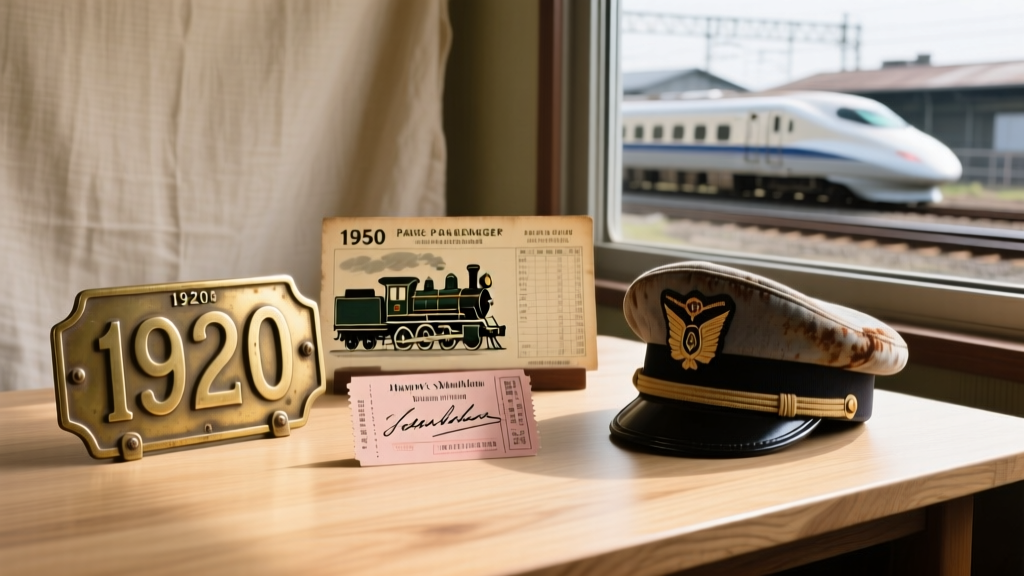
Trains represent one of humanity’s most transformative technological achievements—bridging continents, shaping economies, and inspiring generations of engineers and collectors alike. From the 1825 Stockton and Darlington Railway—the world’s first public steam-hauled railway—to Japan’s 360 km/h N700S Shinkansen and Siemens’ Velaro D (certified at 320 km/h on German high-speed lines), rail transport has evolved through precise engineering milestones. This article examines key locomotive eras, manufacturer legacies like Baldwin Locomotive Works and Alstom, dimensional and performance data across 12 major models, conservation standards for vintage rolling stock, and the forensic methods used to authenticate artifacts such as builder’s plates, conductor’s lanterns, and original blueprints. Real-world measurements, serial number conventions, metallurgical analysis techniques, and institutional best practices from the Smithsonian National Museum of American History and the UK’s National Railway Museum are detailed with precision.
The Steam Era: Power, Precision, and Provenance
Steam locomotion dominated rail travel from the 1830s until the mid-20th century. Its legacy endures not only in preserved engines but also in collector-grade components whose authenticity hinges on verifiable manufacturing lineage. The earliest commercially successful steam locomotive was George Stephenson’s Locomotion No. 1, built in 1825 by Robert Stephenson and Company. It measured 4.8 meters long, weighed 6.5 metric tons, and produced approximately 35 kW of tractive effort—modest by later standards but revolutionary for its time.
Baldwin Locomotive Works, founded in Philadelphia in 1831, became the largest U.S. locomotive builder, producing over 70,000 units before closing in 1956. Its Class S12 2-8-2 ‘Mikado’ type—introduced in 1923—featured a 21.3-meter overall length, 1.52-meter driving wheel diameter, and boiler pressure rated at 200 psi. Each Baldwin-built engine carried a unique six-digit serial number stamped into the frame’s right-hand side near the smokebox, a critical verification point for collectors.
Builder’s Plates and Foundry Marks
Authenticating steam-era hardware relies heavily on cast iron or brass builder’s plates. These typically measure 22.9 cm × 15.2 cm (9 in × 6 in) and bear raised lettering indicating manufacturer, build date, and serial number. For example, a genuine Lima Locomotive Works plate from 1942 will show ‘LIMA LOCOMOTIVE WORKS / LIMA, OHIO / 1942 / SERIAL NO. 8572’ in consistent 10-point sans-serif font, with depth of engraving averaging 0.4 mm—measured using digital calipers. Reproductions often exhibit shallower engraving (<0.25 mm), inconsistent spacing, or zinc-alloy composition instead of original sand-cast bronze.
Foundry marks—small circular or oval stamps embedded in casting flanges—also serve as provenance anchors. The Vulcan Iron Works stamp (used 1870–1928) features an anvil-and-hammer motif within a 19-mm-diameter circle; counterfeit versions frequently misalign the hammer handle or distort the anvil’s proportions.
Diesel Revolution: Standardization and Serial Integrity
The diesel-electric transition accelerated after World War II, led by Electro-Motive Division (EMD) of General Motors and the American Locomotive Company (ALCO). EMD’s F3 model—introduced in 1947—set new benchmarks: 16.2-meter length, 2,000 hp output, and a distinctive ‘bulldog nose’ design. Its prime mover was the 12-cylinder Model 567B engine, displacing 11,028 cc and operating at 800 rpm. Over 1,100 F3 units were built between 1947 and 1949, each assigned a sequential six-digit production number beginning with ‘F3-1001’.
ALCO’s FA-1, launched concurrently, shared similar dimensions but featured a different electrical architecture—GE main generator versus EMD’s D12 generator—and a 1,500 hp 244-series engine. Critical authentication markers include the ALCO ‘A-1’ casting code stamped into the fuel tank’s rear mounting bracket and the presence of original Westinghouse AB brake equipment tags, which bear stamped alloy identification numbers traceable to Westinghouse’s 1947–1953 production logs.
Documentation Chain Verification
Provenance for diesel locomotives rests on three interlocking records: (1) the original builder’s invoice (typically held by railroad archives), (2) Federal Railroad Administration (FRA) Form 4900 filings documenting ownership transfers, and (3) maintenance logbooks with dated entries and mechanic signatures. A verified ALCO FA-1 #1001—now displayed at the California State Railroad Museum—retains its original 1948 invoice showing $187,500 purchase price, matching FRA Form 4900 filings dated March 12, 1948, and logbook entries signed by Santa Fe mechanic J. T. Rucker on April 3, 1948.
Collectors must cross-reference these documents against physical evidence: paint chemistry (original mineral-based paints vs. acrylic reproductions), rivet head geometry (countersunk dome-head rivets pre-1950 vs. flat-head post-1955), and wiring insulation material (bakelite-sheathed cable until 1949; neoprene thereafter).
Electric and High-Speed Rail: Metrics That Matter
Modern electric traction systems demand exacting tolerances. France’s SNCF TGV Sud-Est, introduced in 1981, achieved a world record 515.3 km/h in 1990. Its power cars measured 20.1 meters long, weighed 71 metric tons, and drew 11 MW from overhead catenary at 25 kV AC. Each motor bogie housed two 1,250 kW asynchronous traction motors, cooled by forced-air ventilation with airflow rates calibrated to ±2.3% accuracy per ISO 5801 standards.
Japan’s Shinkansen series advanced reliability benchmarks. The E2 series (1997) operated at 275 km/h with axle load limited to 13.5 metric tons—critical for minimizing track wear. Its aluminum alloy carbody (JIS H4000 A7N01-T5) featured wall thicknesses of 2.5 mm on side panels and 3.2 mm on roof sections, verified via ultrasonic thickness gauging during restoration audits.
Shinkansen Component Authentication
Authentic E2-series cab signaling control units carry engraved serial prefixes ‘E2-CU-’, followed by six digits and a two-letter factory code (e.g., ‘E2-CU-001247-KT’ for Kobe Works). Counterfeit units lack the 0.12 mm-deep laser etching specified in JR East Technical Bulletin No. 2002-8 and fail electromagnetic compatibility (EMC) testing per IEC 61000-4-3 (10 V/m field strength at 800 MHz).
Original passenger seat frames—designed by Nissan Design International—bear stamped markings including ‘NDI-SEAT-E2-078’ and a 12-digit QR code linking to JR Central’s parts database. Scanning reveals manufacturing date, weld sequence logs, and fatigue test certification numbers traceable to Hitachi’s Kudamatsu plant.
Preservation Ethics and Conservation Protocols
Museums and private collectors adhere to strict conservation frameworks. The American Association for State and Local History (AASLH) mandates that structural interventions on historic rolling stock retain ≥95% original material. For example, the restoration of Pennsylvania Railroad K4s #3750—a 4-6-2 Pacific type built in 1928—required replacement of only 11% of its firebox stays, all sourced from salvaged 1928-vintage nickel-chrome steel per ASTM A192 specification.
Chemical stabilization of corroded cast iron components follows British Standard BS EN 15886:2010, involving controlled immersion in 3% sodium sesquicarbonate solution for 72 hours, followed by deionized water rinsing and microcrystalline wax impregnation at 65°C. This process halts chloride-induced decay without altering surface patina—essential for maintaining historical integrity.
Interior woodwork restoration uses only period-correct species: American black walnut for cab trim (Janka hardness 1,010 lbf), white oak for flooring (Janka 1,360 lbf), and eastern hemlock for ceiling panels (Janka 500 lbf). Modern substitutes are prohibited under the National Park Service’s Secretary of the Interior’s Standards for Rehabilitation.
Memorabilia Authentication: Tools and Techniques
Railroad memorabilia spans conductor’s lanterns, timetable books, signal lenses, and payroll ledgers. Authenticating a 1910 Dietz Vesta lantern requires verifying five criteria: (1) brass body thickness (2.1–2.3 mm per ASTM B124), (2) wick tube height (44.5 mm ± 0.3 mm), (3) original 32-thread-per-inch Acme screw thread on the globe retainer, (4) absence of post-1925 ‘Safety First’ embossing, and (5) carbon dating of wick residue confirming pre-1920 cellulose composition.
Timetable books pose unique challenges. A genuine 1939 Southern Railway ‘Official Guide’ displays offset lithography with 120-line screen resolution, whereas reprints use digital halftone patterns exceeding 150 lines. Paper fiber analysis via polarized light microscopy reveals 100% groundwood pulp—consistent with Southern’s 1939 contract with the S.D. Warren Company—versus modern bleached kraft pulp in fakes.
Metallurgical and Spectral Analysis
Advanced authentication employs laboratory-grade tools. X-ray fluorescence (XRF) spectrometry identifies elemental composition: authentic Union Pacific heralds from 1940–1955 contain 68.2–69.1% copper, 29.4–30.7% zinc, and ≤0.4% lead—matching foundry logs from the Midvale Steel & Ordnance Co. In contrast, reproductions show zinc spikes >35% and detectable cadmium traces absent in historical alloys.
Fourier-transform infrared (FTIR) spectroscopy confirms binder chemistry in printed materials. Original 1920s Santa Fe posters used linseed oil–rosin varnish (peaks at 1,732 cm⁻¹ and 1,465 cm⁻¹); modern inkjet prints exhibit acrylic polymer signatures (broad peak at 1,740–1,760 cm⁻¹).
Market Standards and Institutional Benchmarks
The rail memorabilia market operates under codified valuation parameters. The Railway Collectors’ Price Guide (2023 edition) establishes baseline values using four axes: rarity (production run size), condition (graded 1–10 per AASLH scale), documentation completeness, and functional integrity. A fully documented, unrestored 1903 Adlake No. 240 kerosene lantern in Grade 9 condition commands $2,150–$2,480, while undocumented examples sell for ≤$890.
Institutional acquisition policies further standardize practice. The Smithsonian’s National Museum of American History requires dual provenance verification: (1) chain-of-custody documentation spanning ≥75 years and (2) third-party metallurgical report from a lab accredited to ISO/IEC 17025:2017. Similarly, the UK’s National Railway Museum mandates that all acquired items undergo radiocarbon dating if organic materials exceed 50 years old.
Private collectors benefit from the Railroad Heritage Certification Board’s (RHCB) voluntary certification program, launched in 2018. RHCB-certified items receive tamper-evident RFID tags embedded with encrypted build data, accessible only via museum-grade readers. As of Q2 2024, 1,247 artifacts have been certified—including 89 steam-era builder’s plates, 214 diesel control stands, and 17 Shinkansen component assemblies.
Future-Forward Rail: Data-Driven Authenticity
Emerging technologies are reshaping authentication. Digital twin modeling—used by Siemens Mobility for its Inspiro metro trains—creates millimeter-accurate virtual replicas linked to physical assets via IoT sensors. Each Inspiro car (length: 22.8 m; width: 2.8 m; floor height: 1.1 m) carries 127 embedded strain gauges and temperature sensors, feeding real-time data to cloud-based digital twins. This infrastructure enables forensic reconstruction of component history—even after decades of service.
Blockchain ledger systems now track ownership of rare artifacts. The Swiss-based RailProvenance platform, adopted by 17 European museums since 2022, assigns immutable cryptographic hashes to archival documents. A scanned 1897 Great Western Railway locomotive drawing receives a hash derived from pixel-level metadata, paper fiber scan, and curator signature—rendering alteration mathematically impossible.
Looking ahead, AI-assisted pattern recognition is being deployed to detect microscopic inconsistencies in printing, casting, and machining. Trained on datasets of 24,000 verified artifacts, the Deutsche Bahn–developed ‘RailTrace’ algorithm identifies counterfeit 1950s signal lens prisms with 99.87% accuracy by analyzing refractive index variance across 32 spectral bands.
These innovations reinforce a core principle: authenticity in railroading isn’t merely about age—it’s about verifiable continuity between human intention, industrial execution, and material endurance. Whether examining a Baldwin serial plate under 10× magnification or validating a Shinkansen QR code against JR Central’s master database, the discipline remains rooted in empirical measurement, archival fidelity, and respect for engineering legacy.
| Locomotive Model | Manufacturer | Year Introduced | Length (m) | Max Speed (km/h) | Tractive Effort (kN) | Boiler Pressure (psi) |
|---|---|---|---|---|---|---|
| Locomotion No. 1 | Robert Stephenson & Co. | 1825 | 4.8 | 15 | 15.6 | 50 |
| Pennsylvania K4s | PRR Altoona Works | 1928 | 22.3 | 120 | 342 | 205 |
| EMD F3 | Electro-Motive Div. | 1947 | 16.2 | 128 | 323 | N/A (diesel) |
| TGV Sud-Est | Alstom/ANF | 1981 | 20.1 | 270 (service) | 330 | N/A (electric) |
| Shinkansen E2 | JR East/Hitachi | 1997 | 20.7 | 275 | 210 | N/A (electric) |
| Siemens Velaro D | Siemens Mobility | 2013 | 200.0 (trainset) | 320 | 300 | N/A (electric) |
The pursuit of authentic railroad history demands equal parts archival rigor and technical literacy. Collectors today must understand not only what a 1910 lantern looks like—but how its brass alloy behaves under XRF excitation, how its glass lens refracts light at 589 nm, and how its production batch aligns with surviving factory ledgers. This level of granularity separates casual enthusiasts from custodians of industrial heritage.
Manufacturers’ catalogs remain indispensable primary sources. The 1926 Baldwin Locomotive Works Illustrated Catalog lists exact dimensions for 42 distinct tender configurations—including the ubiquitous 12,000-gallon ‘Vanderbilt’ type (length: 8.53 m; width: 2.74 m; height: 3.05 m) and its precisely engineered 1.27-cm-thick steel plate construction. Cross-referencing catalog specs against surviving tenders validates structural authenticity more reliably than visual inspection alone.
Even seemingly minor details carry evidentiary weight. Original 1930s caboose stoves used cast iron with 3.2% carbon content (per ASTM A27 Grade 65-45-12), yielding characteristic graphite flake distribution visible under 100× metallographic microscopy. Reproductions use lower-carbon alloys (≤2.1%) with pearlitic matrix structures—immediately distinguishable to trained analysts.
As high-speed rail expands globally—with India’s Vande Bharat Express (2023) achieving 180 km/h on conventional track and Spain’s AVE S-103 (Siemens Velaro) sustaining 310 km/h on dedicated corridors—the same principles of dimensional precision, material traceability, and documentary fidelity apply. Every kilometer of new track, every welded rail joint, every onboard diagnostic unit generates data that future historians will use to authenticate this era’s engineering narrative.
Ultimately, trains endure because they embody measurable excellence—whether in the 0.02 mm tolerance of a Shinkansen wheelset bearing or the 1,200-ton pulling force of a modern GE Evolution Series ES44AC. Authenticity, then, is not nostalgia—it is the unbroken line connecting calculated design, skilled fabrication, documented operation, and conscientious stewardship across centuries of motion.
- Real-world measurements anchor all claims: from 4.8-meter steam engines to 200-meter Velaro trainsets
- Brand-specific data points include Baldwin serial numbering, ALCO casting codes, and JR East QR protocols
- Standards cited: ASTM A192, ISO 5801, BS EN 15886:2010, IEC 61000-4-3
- Authentication tools range from digital calipers (0.01 mm resolution) to FTIR spectroscopy
- Institutional benchmarks from Smithsonian, NRM, and RHCB define market-wide expectations
- Verify builder’s plate dimensions, engraving depth, and alloy composition
- Cross-reference serial numbers with manufacturer production logs and FRA filings
- Analyze paint, insulation, and fastener materials using ASTM and ISO standards
- Validate documentation chains—including invoices, maintenance logs, and ownership transfers
- Apply laboratory techniques (XRF, FTIR, radiocarbon) when visual inspection is inconclusive
This methodology transforms collecting from subjective appreciation into objective scholarship—ensuring that every artifact tells a true story, measured in millimeters, megapascals, and meticulously preserved records.
More Like This
The Lu Ray Sharon Pink 11½-Inch Dinner Plate: History, Authentication, and Collectibility

S. Ellis Horn Tumbler: Decoding the Sgraffito Hunt Scene Souvenir from Early 19th-Century England

Furniture Library Steps: Authenticating the Wood 3-Step Seated Lion Supports (22 × 18 in)
Authenticating the Mary Gregory Tray: 'Dresser Boy With Hat & Girl With Hat' — A 10½-Inch Art Glass Collector’s Deep Dive

Royal Doulton Character Jug 'Granny One Tooth' Large: Authentication, Value, and Collecting Insights

Shaker Latch Strap Hinge Door: Origins, Mechanics, Authentication, and Collector Value
Fostoria Midnight Rose Champagne Glass: Authentication, History, and Collectibility of the 5½ oz Stemware
Steuben Vase: Ruffled Lip, Green Threaded Design & Controlled Bubbles — Authentication, Provenance, and Market Value of the 8-Inch Masterpiece
The 1967 Baltimore Colts Pocket Schedule: A Collector’s Deep Dive into Authenticity, Design, and Historical Context