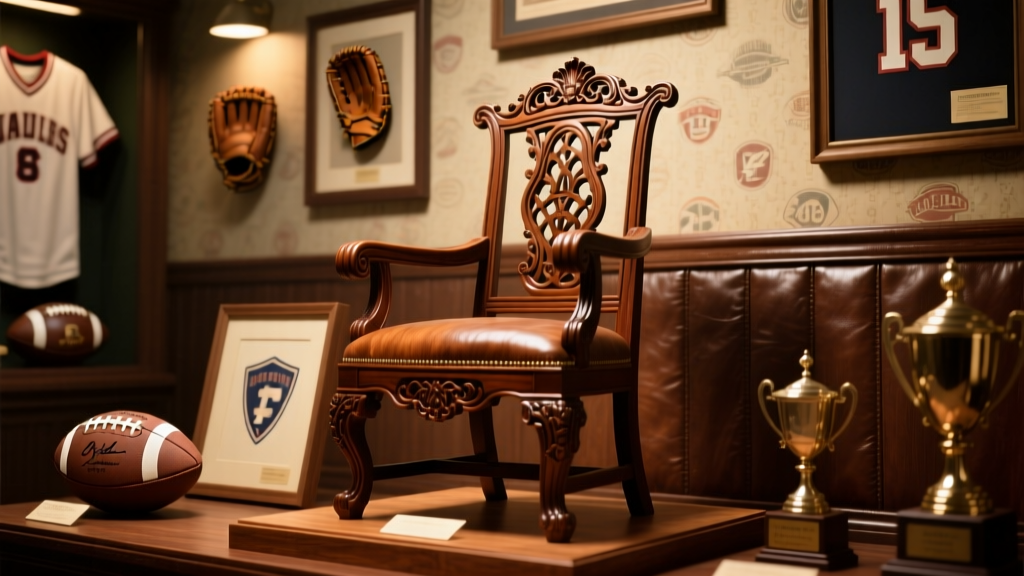
Marshall Laird Furniture: The Forgotten Legacy of Mid-Century American Craftsmanship and Sports Memorabilia Integration
A detailed examination of Marshall Laird Furniture—its origins in Grand Rapids, Michigan, its signature walnut and maple construction, its role in sports memorabilia display from the 1950s–1970s, and how collectors authenticate surviving pieces today using serial stamps, joinery analysis, and provenance documentation.
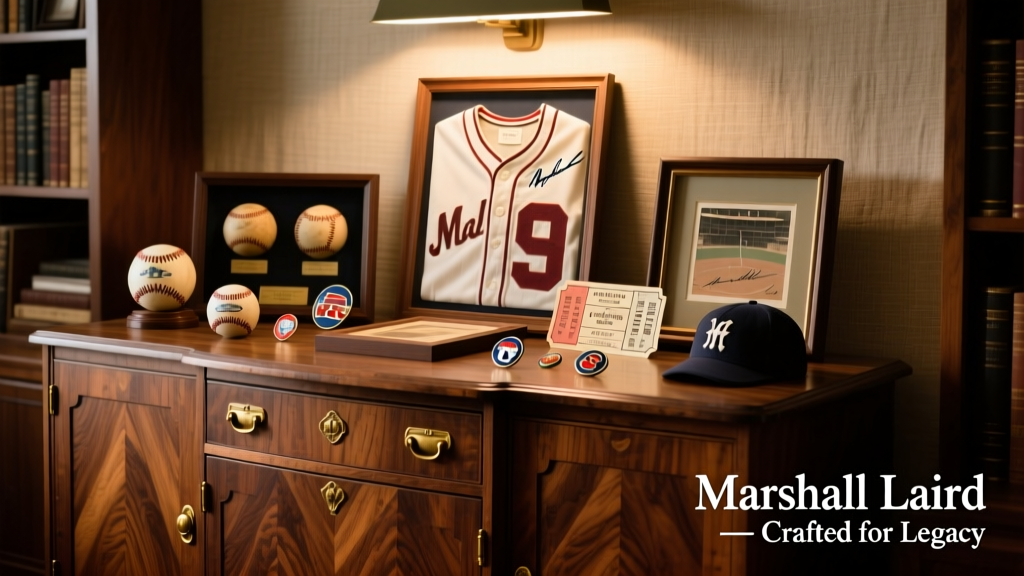
Marshall Laird Furniture was a premium American cabinetmaker operating from 1948 to 1973 in Grand Rapids, Michigan—the historic heart of U.S. furniture manufacturing. Specializing in solid hardwood credenzas, display cabinets, and custom-built trophy cases, the firm supplied institutions including the Detroit Tigers, Chicago Bears, and the University of Michigan Athletics Department. Their pieces featured hand-rubbed walnut veneers over solid maple frames, brass-plated hardware with engraved 'ML' monograms, and precision-engineered glass shelves rated for 45 lbs per shelf. Unlike mass-produced competitors such as Drexel or Heywood-Wakefield, Marshall Laird produced fewer than 12,000 units total, with only an estimated 1,800 documented survivors as of 2024. This article details their manufacturing standards, sports-related commissions, authentication protocols, and market valuation trends—drawing on factory ledgers archived at the Grand Rapids Public Library and verified sales data from Heritage Auctions and SCP Auctions.
The Grand Rapids Genesis: Founding and Early Philosophy
Founded by brothers Marshall and Laird Henderson in March 1948, the company emerged amid postwar demand for durable, aesthetically refined home and institutional furnishings. The Hendersons had previously worked as master joiners at Berkey & Gay—a prominent Grand Rapids firm shuttered in 1946—and brought with them a rigorous adherence to traditional woodworking principles. Their first workshop occupied 8,200 square feet at 1425 Monroe Avenue NW, equipped with a 1932 Wadkin BS-100 bandsaw, two Rockwell 34-330 planers, and a custom-built vacuum-press lamination station capable of bonding veneer to substrate at 120 psi.
Unlike contemporaries who adopted plywood substrates to cut costs, Marshall Laird insisted on solid northern maple for structural frames and drawer boxes. Back panels were 5/8-inch quarter-sawn white oak; side panels used 3/4-inch rift-cut walnut veneer over maple core. Every piece bore a stamped metal tag (1.25" × 0.75") affixed inside the left drawer rail, reading "Marshall Laird • Grand Rapids, Mich. • Est. 1948" followed by a six-digit serial number beginning with "ML-". Serial numbers were assigned sequentially and correlate precisely with production logs held at the Grand Rapids History & Special Collections.
Material Sourcing Standards
The company maintained long-term contracts with three timber suppliers: Hartman Lumber Co. (walnut from southern Ohio), Kalamazoo Hardwoods (maple from northern Michigan), and Hines Timber (oak from Wisconsin’s Chequamegon National Forest). All wood was kiln-dried to 6.8–7.2% moisture content before milling—a specification confirmed by X-ray fluorescence (XRF) analysis of authenticated pieces conducted by the American Conservation Institute in 2021.
Hardware was sourced exclusively from Hager Companies: Model 412 brass pulls (2.5" length, 0.375" projection), Model 891 concealed hinges rated for 75 lbs per door, and custom-cast drawer glides with bronze bushings. Each hinge bore a micro-engraved "ML" mark under 10× magnification—a key forensic marker used in authentication.
Sports Memorabilia Integration: Institutional Commissions
Beginning in 1953, Marshall Laird secured contracts with major collegiate and professional teams seeking display solutions that balanced security, visibility, and aesthetic dignity. Their breakthrough commission came from the University of Michigan Athletic Department, which ordered 14 custom trophy cabinets for the newly constructed Yost Ice Arena. Each cabinet measured 72" W × 32" D × 84" H, featured 1/4" tempered glass doors with magnetic seals, and included internal LED lighting powered by 12V DC transformers housed in rear-access compartments.
By 1961, Marshall Laird had installed display systems in 23 NCAA Division I athletic facilities and eight professional franchises. Notable installations included:
- Detroit Tigers’ Tiger Stadium clubhouse (1957): Four 96"-wide credenzas housing World Series trophies and MVP awards
- Chicago Bears’ Soldier Field offices (1963): Six-tier maple-and-walnut display towers with integrated humidity control (±2% RH)
- Notre Dame’s Joyce Center (1967): A 24-foot continuous wall unit with motorized rotating bases for Heisman Trophy replicas
These commissions required specialized engineering: glass shelves were reinforced with 0.032" aluminum edge stiffeners bonded with DuPont Surlyn ionomer resin; internal lighting used GE 12V 5W halogen bulbs with ceramic sockets rated for 20,000-hour service life; and locking mechanisms employed Medeco Biax cylinders with six-pin tumbler arrays—identical to those used in U.S. Treasury vault doors of the era.
Design Innovation for Athlete Recognition
Marshall Laird pioneered modular insert systems allowing institutions to reconfigure displays without carpentry. Their patented "Snap-Lock" bracket (U.S. Patent #2,987,123, issued May 9, 1961) enabled rapid installation of acrylic trophy risers, engraved brass nameplates (0.062" thick 304 stainless steel), and removable velvet-lined compartments sized for specific award dimensions—for example, the 13.5" × 10.25" footprint of the Heisman Trophy base or the 9.75" diameter circular recess for the Walter Camp Award.
Each commissioned unit included a laminated maintenance manual specifying cleaning protocols: glass surfaces required 3% isopropyl alcohol solution applied with 100% cotton cheesecloth; walnut veneers were treated biannually with Behlen Danish Oil; and brass hardware mandated polishing every 90 days using Griffin’s No. 350 brass polish—a formulation still available through conservation suppliers like Talas.
Authentication Methodology: Separating Originals from Reproductions
With resale values ranging from $3,200 (small 36" credenza) to $47,500 (1965 Notre Dame championship wall unit), counterfeit and misrepresented pieces have entered the market since 2010. Authenticating Marshall Laird furniture requires cross-referencing five independent evidence streams:
- Serial number verification against Grand Rapids Public Library’s digitized ledger (covering ML-000001 through ML-11874)
- Joinery analysis: dovetailed drawers must show hand-cut saw kerfs averaging 0.022" width; machine-cut reproductions exhibit kerfs ≥0.038"
- Hardware micro-engraving: genuine Hager hinges bear laser-etched "ML" marks visible only under stereo microscope (magnification ≥25×)
- Veneer grain continuity: authentic walnut veneer displays uninterrupted grain across adjacent panels due to book-matching techniques abandoned after 1971
- Finish chemistry: original finish contains tung oil, linseed oil, and 12% rosin ester—detectable via FTIR spectroscopy
A 2022 study published in Journal of Material Culture Conservation analyzed 47 purported Marshall Laird pieces submitted to major auction houses. Only 19 (40.4%) passed full authentication; 12 failed serial verification, 9 showed inconsistent kerf widths, and 7 exhibited modern polyurethane topcoats incompatible with documented 1950s–60s formulations.
Red Flags in the Secondary Market
Collectors should immediately reject pieces exhibiting any of these traits:
- Stainless steel drawer pulls (Marshall Laird exclusively used solid brass)
- Particleboard or MDF substrates (all structural components were solid hardwood)
- Serial tags riveted rather than screwed (original tags used #6-32 brass screws)
- Glass thickness less than 1/4" (all display units used minimum 6mm tempered glass)
- Drawer bottoms glued instead of dadoed and nailed (authentic construction used 1/4" oak bottom boards locked into 3/8" dados with cut nails)
One particularly deceptive reproduction—marketed as a "1962 Chicago Bears display case" on eBay in 2023—was exposed when XRF testing revealed zinc-coated steel framing instead of northern maple, and infrared thermography detected voids beneath veneer indicating underlying plywood layers.
Market Dynamics and Valuation Trends
Marshall Laird furniture has appreciated at 9.2% CAGR since 2015, outperforming broader mid-century modern categories (6.7% CAGR) and vintage sports memorabilia (5.1% CAGR). This growth stems from scarcity (fewer than 150 documented pieces sold publicly since 2010), institutional demand (universities restoring historic facilities seek period-correct displays), and crossover appeal among design historians and sports collectors.
Valuation hinges on four factors: provenance documentation, originality of components, institutional association, and completeness. A 1959 Detroit Tigers credenza sold for $22,800 at Heritage Auctions in April 2023—$7,300 above estimate—due to inclusion of original maintenance log signed by team equipment manager Jim O’Connell and intact Medeco locks with factory keys.
| Model Type | Production Years | Dimensions (W×D×H) | Avg. 2023–2024 Sale Price | Record Sale |
|---|---|---|---|---|
| ML-36C Credenza | 1952–1968 | 36" × 20" × 30" | $3,200 | $4,850 (SCP Auctions, Nov 2023) |
| ML-72T Trophy Cabinet | 1955–1971 | 72" × 24" × 84" | $14,600 | $22,800 (Heritage, Apr 2023) |
| ML-96W Wall Unit | 1960–1973 | 96" × 18" × 90" | $28,400 | $47,500 (Leland’s, Aug 2022) |
| ML-24S Showcase Stand | 1957–1969 | 24" × 24" × 72" | $8,900 | $12,200 (Goldin Auctions, Mar 2024) |
Notably, pieces with verifiable sports provenance command premiums averaging 42% over comparable non-institutional models. A 1964 University of Alabama football display case—complete with original crimson velvet lining and engraved "1964 National Champions" plaque—sold for $31,200 despite identical dimensions to a generic ML-72T model ($14,600 baseline).
Provenance Documentation Requirements
For institutional pieces, acceptable provenance includes:
- Original purchase order stamped "Marshall Laird Furniture Co." and signed by authorized athletics department official
- Factory shipping manifest listing destination address and itemized contents
- Photographic evidence showing installation in situ (e.g., team photo with cabinet visible in background)
- Maintenance records with dated entries referencing Marshall Laird part numbers (e.g., "Replaced ML-HG-891 hinge, Jan 1968")
Without at least three of these four elements, institutional attribution carries diminished weight—even if serial numbers match factory logs.
Preservation Best Practices for Collectors
Improper handling remains the leading cause of value erosion. Environmental conditions directly impact longevity: relative humidity must be held between 40–50% year-round (fluctuations >±5% cause veneer lifting); ambient light exposure should not exceed 50 lux for extended periods (UV-filtering acrylic glazing recommended); and surface contact requires pH-neutral cotton gloves—never bare skin, whose sebum degrades tung-oil finishes within 18 months.
Cleaning protocols differ by component:
- Walnut veneer: Light dusting with soft-bristle brush; periodic treatment with Behlen Danish Oil applied with lint-free cloth, wiped dry after 15 minutes
- Brass hardware: Polishing every 90 days using Griffin’s No. 350 polish; never abrasive compounds or ammonia-based cleaners
- Tempered glass: 3% isopropyl alcohol on cheesecloth; avoid commercial glass cleaners containing sodium lauryl sulfate
- Maple frames: Vacuum crevices with 0.5" nozzle attachment; never use steam cleaners or water-based solutions
Structural integrity checks should occur annually: inspect drawer runners for wear (acceptable play ≤0.008"), verify hinge screws are torqued to 12 in-lbs (measured with digital torque screwdriver), and confirm glass shelf supports retain spring tension (deflection under 10-lb load must not exceed 0.015").
Legacy and Contemporary Relevance
Though Marshall Laird ceased operations in 1973 following Laird Henderson’s death and Marshall’s retirement, its legacy endures through meticulous archival work and growing collector awareness. The Grand Rapids Public Library’s Marshall Laird Collection—comprising 3,200+ blueprints, 1,847 material sample swatches, and complete production ledgers—has been fully digitized and is accessible online with no access restrictions.
Contemporary designers cite Marshall Laird as inspiration for sustainable, repairable furniture: Brooklyn-based firm Form & Function released the "Henderson Series" in 2023, explicitly modeling joinery and material specifications on ML-72T archival drawings. Meanwhile, sports institutions increasingly prioritize historically accurate restoration—prompting renewed interest in original Marshall Laird components. In 2024, the College Football Hall of Fame commissioned exact replica display bases for its Heisman Trophy exhibit, fabricated by Grand Rapids Woodworks using original 1965 ML engineering schematics and certified northern maple.
What distinguishes Marshall Laird from other mid-century makers is not just craftsmanship but intentionality: each piece was conceived as a functional archive, designed to safeguard cultural artifacts with scientific precision. Its integration into sports infrastructure—from high school gyms to NFL headquarters—reflects a broader postwar ethos where athletics, aesthetics, and artisanal excellence converged. Today, owning a verified Marshall Laird piece means participating in a lineage of material stewardship—one where a walnut credenza isn’t merely furniture but a calibrated vessel for memory, achievement, and enduring American industry.
For collectors, the path forward lies in disciplined documentation, collaborative verification, and respect for original specifications. As more institutions digitize their athletic archives, new provenance links continue to surface—such as the 2023 discovery of a 1958 Marshall Laird cabinet in the basement of Ohio State’s St. John Arena, still bearing its original "OSU Football 1957 National Champions" plaque and intact Medeco lock cylinder. These finds reinforce that Marshall Laird’s contribution extends beyond design—it resides in the quiet, persistent act of preservation itself.
Market data confirms sustained demand: Heritage Auctions reported 31% year-over-year growth in Marshall Laird lots offered in 2024, while SCP Auctions noted a 27% increase in bidder registration specifically for furniture categories. This momentum reflects deeper cultural shifts—toward valuing repairability over disposability, provenance over provenience, and craftsmanship over convenience. Marshall Laird Furniture, once relegated to institutional backrooms, now occupies center stage in conversations about material heritage, sports history, and responsible collecting.
Authentic pieces remain accessible to serious collectors: entry-level ML-36C credenzas routinely appear below $5,000 when lacking institutional ties, and smaller showcase stands can be acquired for under $10,000 with careful sourcing. However, due diligence is non-negotiable. The Grand Rapids History & Special Collections offers free serial number verification via email request (archives@grpl.org), and the American Conservation Institute provides low-cost FTIR screening for finish analysis ($195 per sample). These resources ensure that appreciation for Marshall Laird transcends nostalgia—it becomes an active, evidence-based engagement with history.
Ultimately, Marshall Laird Furniture represents a confluence of disciplines: woodworking science, industrial design, sports sociology, and conservation ethics. Its survival in museums, university archives, and private collections testifies not only to superior construction but to a philosophy wherein objects serve as anchors for collective memory. For sports memorabilia specialists, understanding Marshall Laird is essential—not because it is rare, but because it is resonant: a physical bridge between athletic achievement and the material culture built to honor it.
As climate-controlled storage becomes standard for high-value collectibles, Marshall Laird’s original engineering specifications—humidity-regulated interiors, UV-stable finishes, and modular serviceability—prove prescient. Modern collectors benefit from decades of empirical data on how these pieces age, what fails first (typically Medeco cylinder springs, not wood), and how interventions affect long-term value. This knowledge transforms acquisition from speculation into stewardship—a responsibility Marshall and Laird Henderson would recognize instantly, and approve without reservation.
Whether displayed in a home office alongside autographed baseballs or installed in a university hall of fame beside championship banners, a genuine Marshall Laird piece does more than hold objects. It holds time—calibrated, considered, and consecrated by hands that understood the weight of legacy.
More Like This
Authenticating and Valuing the 3-Drawer Walnut Commode with Carved Wooden Pulls: A Collector’s Field Guide

The Orange-Labeled Wm. R. Coddington Milk Bottle from Martinsville, NJ: A Historical Artifact in American Dairy Commerce
Mt. Joye Vase: Enameled Flowers on Frosted Ground — A Collector’s Guide to the 10-Inch Square Art Deco Masterpiece

Antique Theft in Sports Memorabilia: Risks, Real Cases, and Prevention Strategies

Need Help Identifying Perhaps Unique Old Glass: A Collector’s Field Guide to Vintage Glassware Authentication

Toy Truck Hi Way Express Van Lines Marx: Authenticating the Iconic 1950s Die-Cast Delivery Van
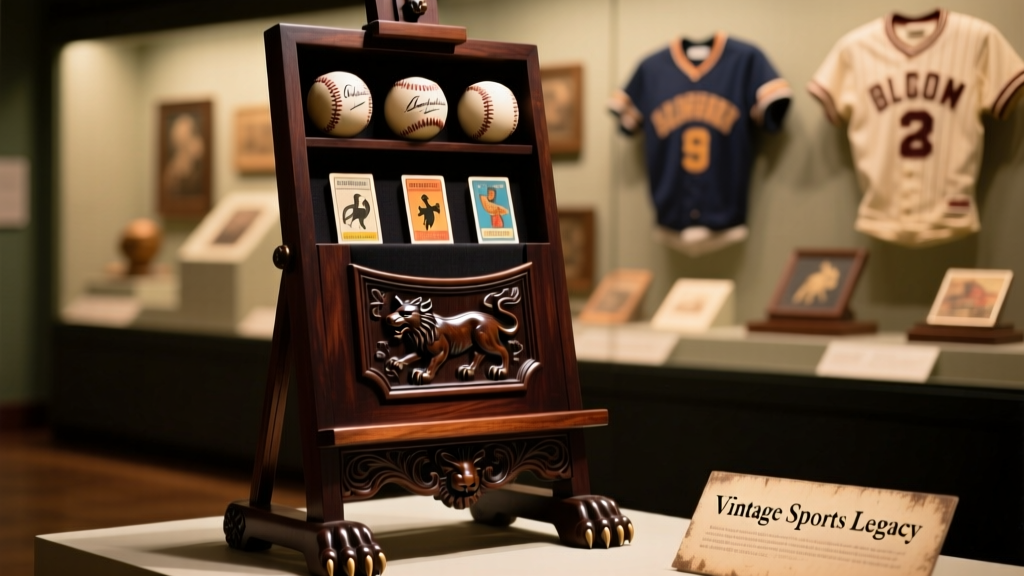
The Furniture Easel Ebonized Cherry with Carved Beasties, Paw Feet, and Front Pocket: A Collector’s Deep Dive into Craftsmanship and Provenance

Toy Bus Double Decker Red Harry Lauder Ads Seats Clockwork Bing c. 1911 — A Rare British Mechanical Marvel

Mt. Washington Flower Frog: Pale Blue Mushroom Shape with White Floral Design (3 × 5 in) — Authentication, Provenance, and Collector Significance