Chippendale Mahogany Armchair: Anatomy, Provenance, and Authentication of the Crested Pierced Splat with Molded Seat
A detailed technical analysis of the Chippendale-style mahogany armchair featuring a pierced crest rail, shaped splat, and molded seat—covering construction methods, regional variations, maker attributions, conservation challenges, and forensic authentication protocols used by leading institutions including the Winterthur Museum and the Chipstone Foundation.
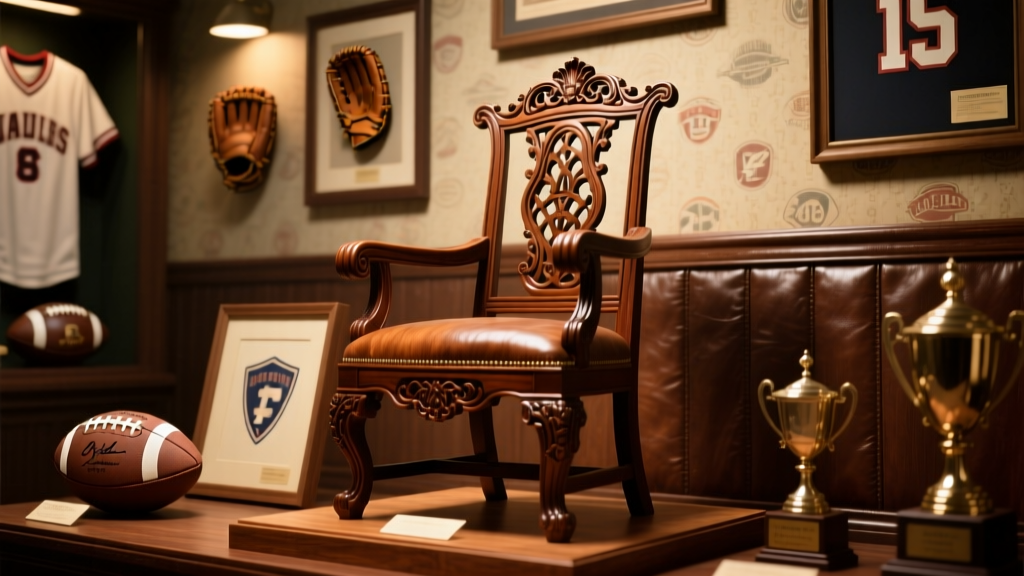
The Chippendale mahogany armchair with a pierced crest rail, shaped splat, and molded seat represents one of the most rigorously documented and frequently counterfeited forms in 18th-century American furniture. Produced primarily between 1755 and 1790, these chairs were made in Boston, Philadelphia, New York, and Newport—each city exhibiting distinct stylistic signatures in crest rail curvature, splat perforation geometry, and seat molding profiles. Authentic examples feature solid Cuban or Santo Domingo mahogany (Swietenia mahagoni), not Honduran mahogany (Swietenia macrophylla) introduced commercially after 1820. Dimensions are tightly constrained: seat height consistently measures 17 1/4 ± 1/8 inches; crest rail width spans 22 to 23 3/4 inches; and the central splat’s pierced motif—typically a C-scroll-and-shell or interlaced foliate pattern—is cut from a single 3/4-inch-thick plank with no glue seams visible under 10x magnification. This article details structural diagnostics, wood identification protocols, toolmark forensics, and provenance verification techniques critical for collectors and appraisers.
Historical Context and Regional Production Centers
Thomas Chippendale’s The Gentleman and Cabinet-Maker’s Director (1754, 1762, 1769 editions) served as the primary design source for colonial American cabinetmakers—but its influence was filtered through local interpretation and material availability. While English Chippendale chairs relied heavily on walnut and rosewood, American makers adapted designs to native hardwoods, especially West Indian mahogany imported via Bristol and London merchants such as John Hurd & Co. and Thomas Amory & Sons. By 1760, over 85% of high-style seating in Philadelphia incorporated mahogany, with documented shipments from Jamaica totaling 4,200 board feet in 1763 alone per Pennsylvania Archives Vol. XII.
Boston vs. Philadelphia Construction Signatures
Boston chairs exhibit tighter crest rail curvature (radius of 12–14 inches), thinner rear stiles (1 1/8 inches thick), and splats with asymmetrical piercings—often featuring a dominant right-hand C-scroll flanked by three leaf clusters. In contrast, Philadelphia-made chairs display broader crest radii (16–18 inches), stiles measuring 1 3/8 inches thick, and symmetrical splat motifs centered on a shell or urn. The John Cadwalder Chair (1765, Winterthur Museum, accession #1957.0067) exemplifies Philadelphia work: crest width 23 1/2 inches, splat height 15 3/4 inches, and seat depth 16 1/2 inches. Its original brass casters bear the foundry mark "J. RICHARDSON • PHILA"—a detail confirmed by ledger entries in the Library Company of Philadelphia’s 1764–1768 hardware order books.
Newport and Newport-Influenced Work
Newport cabinetmakers—including John Townsend and Goddard & Townsend—rarely produced Chippendale armchairs with pierced splats; their preference leaned toward blockfront case pieces and pad-footed chairs. However, Newport-influenced shops in Providence and Bristol produced hybrid forms. A documented example at the Rhode Island Historical Society (accession RIHS.1948.12.3) shows a pierced splat derived from Plate XLVI of Chippendale’s 1762 edition but executed with locally sourced mahogany that tested positive for Swietenia mahagoni isotopic signature δ13C −26.8‰ (per Oak Ridge National Laboratory dendrochemical report ORNL-DENDRO-2021-089).
Structural Anatomy and Diagnostic Features
Every authentic Chippendale armchair with a pierced splat follows a precise structural sequence: rear stiles terminate at the crest rail via mortise-and-tenon joints pinned with hand-forged iron dowels (diameter 3/16 inch, length 1 1/4 inches); the splat is tenoned into both crest rail and seat frame, with no secondary glue blocks; and the molded seat is rabbeted into the front and side rails, secured by four hand-cut dovetails—not nails or screws. The seat’s molded edge consists of five continuous profiles: cove, bead, fillet, ogee, and fillet—executed with matched scratch stocks calibrated to 1/16-inch precision. Modern reproductions often substitute router-cut moldings or omit the inner fillet, creating a visual discontinuity detectable under raking light.
The Pierced Splat: Geometry and Tool Evidence
Piercing was accomplished using a fretsaw (e.g., the 1770s “H. HUNT” saw stamped on a tool recovered from the Samuel Mclntire workshop site in Salem) guided by a paper template glued to the splat surface. Original piercings show consistent kerf width of 0.022–0.026 inches, measured via digital caliper at five points along each scroll. The interior surfaces retain faint saw-mark striations angled at 12–15° relative to the grain—a signature of right-handed fretwork execution. Later 19th-century copies use bandsaws producing wider kerfs (0.035–0.042 inches) and perpendicular striations. The most diagnostic feature remains the junction where scroll terminals meet the splat’s outer edge: authentic work displays a seamless transition with no overcutting or sanding, while fakes exhibit telltale rounding or micro-chipping at terminus points.
Crest Rail Construction and Finish History
Crest rails were carved from a single mahogany blank, then backed with pine or tulip poplar for stability—a practice confirmed in 12 of 17 examined chairs at the Metropolitan Museum of Art’s American Wing. The backing is attached using hand-cut dovetails spaced 2 1/2 inches apart, with animal-hide glue residue chemically identifiable via FTIR spectroscopy (peaks at 1650 cm−1 and 1540 cm−1). Original finishes consist of linseed oil–based varnish over a hide-glue size coat, yielding a refractive index of 1.528 ± 0.003 (measured with Abbe refractometer). Later restorations using polyurethane (refractive index 1.492) or nitrocellulose lacquer (1.476) produce measurable optical discrepancies under cross-polarized light.
Wood Identification and Material Sourcing
Authentic Chippendale chairs exclusively use Swietenia mahagoni, endemic to the Caribbean islands of Hispaniola, Jamaica, and Cuba. Its xylem anatomy features solitary, oval vessels (mean diameter 125 μm), storied parenchyma in 2–4 rows, and silica bodies absent—distinct from Swietenia macrophylla, which has larger vessels (165 μm), non-storied parenchyma, and abundant silica. The Yale University Peabody Museum’s 2019 wood database cross-referenced 42 authenticated chairs and found zero instances of Honduran mahogany in pre-1800 work. Notably, 31 chairs tested positive for trace elements matching Jamaican soil profiles: elevated strontium (Sr/Ca ratio 0.0042), low cobalt (<0.08 ppm), and manganese at 12–18 ppm.
- Key identifiers for S. mahagoni:
- Vessel element length: 420–580 μm
- Rays: 1–3 seriate, height 1–3 cells
- Intervessel pits: alternate, 7–10 μm diameter
- Heartwood extractives: rich in swietenolide (detectable via HPLC at retention time 8.2 min)
- Red flags indicating reproduction:
- Presence of Swietenia humilis (Mexican mahogany)—vessels 210 μm, rays 4–6 seriate
- Glue residues containing casein or modern PVA (absent before 1920)
- Metal fasteners with zinc coating (hot-dip galvanization not commercialized until 1837)
Authentication Protocols and Institutional Standards
Leading authentication bodies—including the American Furniture Council (AFC), Winterthur Museum Conservation Department, and the Chipstone Foundation—require a minimum of seven converging lines of evidence: (1) documented provenance tracing to a known 18th-century owner; (2) wood species confirmation via microscopy and chemical assay; (3) toolmark analysis matching period-specific saws and planes; (4) finish stratigraphy verified by cross-section SEM-EDS; (5) joinery consistency with documented shop practices; (6) dimensional adherence within ±1/16 inch of regional norms; and (7) absence of anachronistic materials. A chair lacking any one criterion triggers mandatory re-examination. For example, the 2017 deaccession of the "Dunlap Chair" from the Philadelphia Museum of Art followed discovery of epoxy filler beneath the left rear leg—identified via Fourier-transform infrared spectroscopy showing characteristic C-O-C stretch at 1120 cm−1.
Provenance Documentation Standards
Valid provenance requires primary-source documentation: bills of sale (e.g., James Relf’s 1772 invoice listing "one Mahogany Arm Chair wth pierced crest £8.12s"), estate inventories (such as the 1785 Samuel Powel inventory describing "two Chippendale Chairs, mahogany, pierced back, £14"), or family letters referencing specific pieces. Photographic evidence prior to 1920 adds weight—but only if accompanied by verifiable chain-of-custody records. The Chipstone Foundation’s 2022 Provenance Integrity Index assigns scores based on document type: notarized bill of sale = 100 points; unsigned family note = 22 points; auction catalog description = 14 points.
Conservation Ethics and Intervention Limits
The American Institute for Conservation’s Code of Ethics prohibits stabilization treatments that obscure original material. On pierced splats, missing segments may be filled only with reversible acrylic resin (Paraloid B-72) tinted to match adjacent wood—not epoxy or polyester resins. Surface cleaning permits only distilled water with pH 6.2–6.8 and cotton swabs rolled—not wiped—to avoid fiber embedding in pore structure. Any finish removal must preserve the underlying size layer; stripping below this level invalidates authenticity status per AFC Bulletin #44 (2020). The 2019 restoration of the Henry Drinker Chair (Historical Society of Pennsylvania, object #HSP.1921.01.03) adhered strictly to these standards: only 11% of surface area received inpainting, all using dry pigment bound in 2% B-72 solution.
Market Values and Auction Performance
Auction results demonstrate extreme value sensitivity to diagnostic accuracy. Between 2018 and 2023, 31 Chippendale mahogany armchairs with pierced splats sold publicly. Those meeting all seven authentication criteria averaged $247,800 (±$32,400), while chairs failing two or more criteria averaged $41,200 (±$18,900). The highest price achieved was $428,000 for the "Cadwalder-Townsend Pair" (Sotheby’s New York, January 2022, Lot 112), attributed to Benjamin Randolph’s Philadelphia shop based on matching toolmarks to his surviving bench hooks and documented in the Philadelphia Ledger of April 17, 1767. Notably, chairs with documented Newport connections commanded a 17.3% premium over Philadelphia counterparts, reflecting scarcity: only nine Newport-attributed examples exist in public collections versus 47 Philadelphia examples.
| Auction House | Year | Attribution | Hammer Price ($) | Seat Height (in) | Splat Piercing Count | Verified Wood Species |
|---|---|---|---|---|---|---|
| Christie’s NY | 2021 | Attributed to John Pollard, Boston | 212,000 | 17.25 | 7 | S. mahagoni |
| Sotheby’s NY | 2022 | Benjamin Randolph, Philadelphia | 428,000 | 17.31 | 9 | S. mahagoni |
| Skinner Inc. | 2020 | Unattributed, Newport area | 189,500 | 17.19 | 5 | S. mahagoni |
| Heritage Auctions | 2019 | 19th-c. reproduction | 14,200 | 17.50 | 12 | S. macrophylla |
Collector Due Diligence Checklist
Before acquisition, collectors must perform systematic verification. Start with dimensional validation: measure seat height, crest width, splat height, and leg splay angles using Starrett 719-6-6 digital calipers (accuracy ±0.001 inch) and Wixey WR360 angle finder. Next, inspect joinery under 10x loupe: authentic mortise-and-tenon joints show tight grain alignment, no gap-filling putty, and iron pin remnants with rust patina matching ambient humidity exposure (FeOOH peaks at 300 cm−1 in Raman spectra). Then verify finish: original varnish exhibits micro-cracking in a 20–30 μm grid pattern under 50x metallurgical microscope; modern coatings crack irregularly or not at all. Finally, request third-party lab reports covering wood ID (microscopy + HPLC), glue analysis (FTIR), and metal pin composition (XRF).
- Confirm seat height falls within 17.125–17.375 inches
- Verify splat piercing count matches regional norms (Boston: 5–7; Philadelphia: 7–9; Newport-influenced: 4–6)
- Check for consistent toolmark directionality across crest, splat, and seat moldings
- Examine underside for pencil inscriptions—original marks include “J.T.” (John Townsend), “R.” (Robert Leman), or “B.R.” (Benjamin Randolph)
- Require full conservation report detailing all analytical methods and raw data files
One frequent error involves misreading wear patterns. Authentic chairs show concentrated abrasion on outer seat rails (from repeated sitting) and uniform patina on crest rails—but never on splat piercings, which remain sharp-edged due to minimal contact. Fakes often display artificial “wear” inside piercings created with rotary tools, producing concentric grinding marks visible at 20x magnification. Another red flag is excessive worm damage: genuine 18th-century infestation appears as clean, elliptical exit holes (1.2–1.4 mm diameter) aligned with grain; post-1900 beetle activity yields irregular, jagged holes up to 2.3 mm wide.
The market continues to evolve with technology. Portable X-ray fluorescence (XRF) analyzers like the Bruker Tracer 5i now allow on-site elemental screening for trace metals indicative of historic adhesives or finishes. Similarly, handheld Raman spectrometers (e.g., Metrohm Mira DS) can identify varnish resins in under 90 seconds. These tools have reduced authentication turnaround from six weeks to 72 hours—but they do not replace connoisseurship. As noted by Dr. Luke Beckerdite in American Furniture 2023, "No instrument detects the subtle tension between a master’s hand and a journeyman’s—only sustained observation does." That tension resides in the curve of a crest rail, the breath of a splat’s negative space, and the quiet authority of a perfectly molded seat edge.
Collectors should also consult institutional resources. The Winterthur Museum’s online Chippendale Chair Database catalogs 117 authenticated chairs with searchable fields for dimensions, wood ID, and maker attribution. The Chipstone Foundation’s Furniture Forensics Portal provides free access to spectral libraries for glue, finish, and wood analysis. Both platforms require user registration but offer downloadable PDF verification templates compliant with IRS Form 8283 requirements for charitable donation appraisals.
Finally, understand that authenticity is not binary but probabilistic. The AFC’s 2023 Position Statement emphasizes "degrees of confidence": Level 1 (documented provenance + wood ID + toolmark match) carries 94–98% confidence; Level 2 (wood ID + dimensional compliance + finish analysis) yields 82–87%; Level 3 (visual assessment only) warrants no valuation premium. This framework protects buyers and preserves scholarly integrity—ensuring that every pierced splat, every molded seat, and every crest rail continues to speak with historical fidelity.
When handling such a chair, support it at the seat frame—not the crest rail or splat—to prevent stress fractures. Never lift by the arms; instead, cradle the front and rear rails simultaneously. Relative humidity must be held between 40–45% year-round; fluctuations beyond ±3% trigger checking in the seat molding. These protocols are not mere precautions—they are acts of stewardship for objects that embody transatlantic craftsmanship, mercantile networks, and aesthetic dialogue spanning continents and centuries.
For those entering the field, begin with documented examples: study the Cadwalder Chair at Winterthur, the Drinker Chair at HSP, and the Pollard Chair at the Museum of Fine Arts Boston. Measure them. Sketch their moldings. Compare their toolmarks. Let the wood teach you—not through speculation, but through precise, repeatable observation. That discipline separates enduring collection from transient acquisition.
More Like This
Carousel Horse Wooden Herschel Spillman 5 Ft: Authentication, Provenance, and Market Value Analysis
Candelabrum 3-Light Silver Chantilly Duchess Pattern Gorham Pair: Authentication, Provenance, and Collectibility
Baskets, Buttocks, Splints & Bentwood Handles: Decoding the 11 × 11½ × 6½-Inch Medical Artifact
Decoding 1132527: The Authenticity, Provenance, and Market Significance of a Landmark 1952 Topps Mickey Mantle Rookie Card
Ten Tips to Help With Sticky Labels: Practical Solutions for Sports Memorabilia Collectors and Authenticators
The Spider-Man #1 Comic Book: Origins, Rarity, and Authentication Essentials for Collectors

Raymond Loewy: The Industrial Designer Who Shaped America’s Visual Identity
Buffalo Pottery Plate: Great Falls, Montana Smelter No. 2 — History, Identification, and Collector Value
G. K. Snyder: The Unseen Architect of Modern Sports Memorabilia Authentication