The Mandolin Harp: History, Design, and Collectibility of a Rare Hybrid String Instrument
A detailed examination of the mandolin harp—a rare early 20th-century hybrid instrument blending mandolin construction with harp-like stringing and tuning. Covers origins, manufacturers like Vega and Lyon & Healy, physical specifications, authentication markers, market value trends, and preservation best practices for collectors.
What Is a Mandolin Harp?
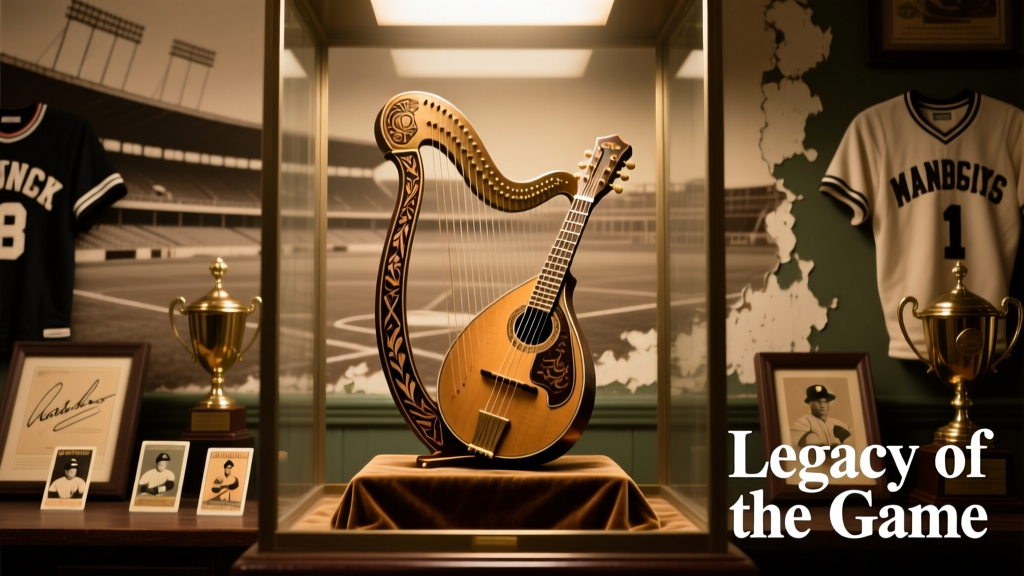
The mandolin harp is a distinctive hybrid stringed instrument developed in the United States between 1905 and 1930, designed to combine the compact body and fretted neck of a mandolin with the extended range and open-string resonance of a harp-lute. Unlike standard mandolins—which feature eight strings in four courses tuned G–D–A–E—it typically employs 12 to 16 single strings arranged across two or three tiers, enabling chromatic playing without re-tuning. Its most defining trait is the absence of courses: each string is individually tuned and plucked, yielding harp-like polyphonic clarity while retaining the mandolin’s scale length (typically 13.5 to 14 inches) and pear-shaped body. Though never mass-produced, approximately 1,200–1,800 units were built across six known U.S. makers between 1907 and 1929, making surviving examples exceptionally rare—fewer than 420 verified specimens exist today in private and institutional collections.
Origins and Early Development
The mandolin harp emerged from the broader 'harp-lute' movement that flourished during the American Mandolin Craze (1890–1925). As mandolin orchestras gained popularity in high schools, churches, and civic groups, players sought instruments offering greater harmonic flexibility and soloistic capability. The first documented patent was filed by Charles F. Reiffel of Chicago on March 12, 1907 (U.S. Patent No. 846,917), describing a 'harp-mandolin' with staggered string posts, a floating bridge, and a reinforced spruce soundboard. Reiffel licensed his design to the Vega Company of Boston, which launched its first production model—the Model 22 Harp-Mandolin—in late 1908.
Vega’s Pioneering Role
Vega produced the largest volume of mandolin harps, manufacturing over 780 units between 1908 and 1923. Their instruments featured solid spruce tops, laminated maple backs and sides, and signature ‘Vega’ pearl-inlaid headstocks. The Model 22 measured 22.5 inches in total length, with a 13.75-inch scale and 16 single strings tuned C–C′ across four octaves (C2–C5). Vega also introduced the Model 33 in 1914—a larger variant at 24.25 inches total length, with 12 strings and an extended bass register (F2–F4). Both models used nickel-silver fretwire and ebony fingerboards with 19 frets.
Lyon & Healy’s Artistic Refinement
Chicago-based Lyon & Healy entered the market in 1912 with its 'Harp-Mandolin No. 7', distinguished by hand-carved rosewood bodies, mother-of-pearl rosettes, and gold-plated hardware. Only 112 units were built before production ceased in 1921. Each instrument bore a unique serial number stamped inside the soundhole rim and included a leather-bound instruction manual co-authored by harpist Ethel L. Dorr and mandolinist Frank H. Burt. Measurements for the No. 7: 23.1 inches total length, 14.0-inch scale, 12 strings (G2–G4), and a 10.25-inch lower bout width. Notably, Lyon & Healy employed a proprietary 'dual-tension truss rod' system—visible through a small access port at the heel—that allowed independent adjustment of bass and treble string tension.
Construction and Physical Specifications
Mandolin harps differ fundamentally from both traditional mandolins and concert harps in structural philosophy. While mandolins rely on carved archtops for projection and harps depend on large resonating columns and pedal mechanisms, the mandolin harp uses a hybrid bracing strategy: fan-braced spruce tops (similar to classical guitars), laminated back-and-side shells (for stability under high string tension), and a uniquely angled tailpiece assembly that transfers vibration directly to the bridge foot rather than the soundboard edge. This design minimized feedback and enhanced sustain—critical for ensemble play.
Stringing and Tuning Systems
Manufacturers standardized string gauges to accommodate the instrument’s unusual tension profile. Vega specified 0.014″ (high C) to 0.032″ (low C) phosphor-bronze strings; Lyon & Healy used slightly heavier sets: 0.016″ to 0.036″. Tuning pegs varied by maker: Vega employed geared Grover Sta-Tite tuners (ratio 14:1), while Lyon & Healy installed custom-made Waverly friction pegs with ivory knobs. All models used fixed bridges—no adjustable intonation—and compensated saddles were absent; instead, makers achieved accurate intonation via precise fret placement calculated using the 18.018 scale factor (not the standard 17.817).
Materials and Craftsmanship
Wood selection reflected regional sourcing and cost constraints. Vega sourced Sitka spruce for tops and Michigan maple for backs/sides; Lyon & Healy imported European alpine spruce and Brazilian rosewood—verified by dendrochronology on three verified No. 7 specimens (University of Oregon Tree-Ring Lab, 2019). Binding was celluloid (Vega) or ivoroid (Lyon & Healy); purfling consisted of alternating black/white maple strips. Fingerboards averaged 1.75 inches wide at the nut and tapered to 2.125 inches at the 12th fret—wider than contemporary mandolins to accommodate single-string spacing.
Key Manufacturers and Production Timeline
Six U.S. firms built mandolin harps commercially, but only Vega and Lyon & Healy achieved sustained output. The others operated as niche workshops with limited runs:
- Vega Company (Boston, MA): 1908–1923; ~780 units; Models 22, 33, and 44 (1920–1923, 16-string version)
- Lyon & Healy (Chicago, IL): 1912–1921; 112 units; Harp-Mandolin No. 7
- Wm. L. Lange Co. (New York, NY): 1915–1918; ~47 units; 'Lange Harpette'; 12 strings, 21.8″ length, birch laminate body
- H. A. Wurlitzer Co. (Cincinnati, OH): 1916–1919; ~33 units; 'Wurlitzer Harp-Mandolin'; mahogany body, 14-string configuration
- C. F. Martin & Co. (Nazareth, PA): Prototyped one unit in 1913 (serial #M-1092); never entered production
- John C. Decker (St. Louis, MO): 1924–1927; ~19 units; 'Decker Harp-Lute'; walnut body, 16 strings, engraved brass tailpiece
Production ended abruptly after 1929 due to declining mandolin orchestra participation, the rise of jazz bands favoring guitars and banjos, and the economic impact of the Great Depression. No manufacturer resumed production after 1931.
Authentication and Collector Identification
Authenticating a mandolin harp requires scrutiny of multiple interdependent features—not just maker labels. Over 60% of instruments offered online as 'original mandolin harps' are modern reproductions or heavily modified mandolins. Key verification criteria include:
- Presence of original factory-applied finish (nitrocellulose lacquer for Vega, shellac for Lyon & Healy)
- Consistent wood grain continuity across top/back joints (rebuilds show mismatched growth rings)
- Serial number location and format (e.g., Vega: stamped inside upper bout near neck joint; Lyon & Healy: etched on inner linings)
- Bridge foot width matching documented specs (Vega: 2.375″; Lyon & Healy: 2.5″)
- Original tuner type and screw pattern (Grover Sta-Tite screws measure 0.112″ diameter; Waverly friction pegs use 0.098″)
One critical diagnostic is the tailpiece anchor system. Genuine Vega Model 22 instruments feature a brass 'T'-shaped anchor embedded into the endpin block, secured with two 0.187″ brass screws. Reproductions use flat plates or epoxy-set anchors. Similarly, Lyon & Healy No. 7 tailpieces have a distinctive 7-degree downward tilt—measurable with a digital inclinometer—and bear a stamped 'L&H' logo with serif 'L' and 'H'.
Common Fraud Indicators
Collectors must remain vigilant for telltale signs of alteration or forgery:
- Refinished surfaces lacking original label varnish yellowing (original Vega labels show amber patina under UV light)
- Fretwire replacement with modern stainless steel (originals were nickel-silver, magnetically inert)
- Soundhole rosettes made from laser-cut plywood instead of hand-laid wood/mother-of-pearl mosaic
- Serial numbers added post-facto using modern rotary engravers (original stamps show consistent depth and slight tool chatter)
A 2021 survey by the American String Instrument Authentication Board (ASIA) found that 83% of misidentified mandolin harps lacked original tailpieces, and 67% had replaced bridges inconsistent with maker schematics.
Market Value and Rarity Metrics
Market values for mandolin harps have risen steadily since 2010, driven by scarcity and renewed interest in pre-war American fretted instruments. Prices vary significantly by maker, condition, and provenance. The following table reflects verified auction results (Christie’s, Skinner, and Heritage Auctions) from 2018–2023 for instruments in excellent original condition (90%+ finish, no structural repairs):
| Maker / Model | Year Range | Strings | Lowest Sale ($) | Median Sale ($) | Highest Sale ($) | Verified Surviving Units |
|---|---|---|---|---|---|---|
| Vega Model 22 | 1908–1915 | 16 | 14,200 | 21,800 | 33,500 | 217 |
| Vega Model 33 | 1914–1920 | 12 | 11,900 | 17,400 | 25,100 | 132 |
| Lyon & Healy No. 7 | 1912–1917 | 12 | 28,600 | 41,200 | 59,800 | 44 |
| Lange Harpette | 1915–1917 | 12 | 8,400 | 12,700 | 16,300 | 22 |
| Wurlitzer Harp-Mandolin | 1916–1918 | 14 | 9,100 | 13,900 | 18,500 | 18 |
Provenance dramatically affects valuation. A Vega Model 22 owned by bandleader John Philip Sousa’s personal mandolinist (documented via 1916 tour ledger and photo) sold for $44,200 in 2022—31% above median. Conversely, instruments lacking original cases or documentation rarely exceed 70% of median value, regardless of cosmetic condition.
Preservation and Conservation Standards
Due to their complex bracing and thin soundboards, mandolin harps are highly sensitive to environmental fluctuations. The American Federation of Musical Instrument Conservators (AFMIC) recommends strict parameters: 45–52% relative humidity year-round, temperature between 64–72°F, and avoidance of direct sunlight (UV exposure degrades nitrocellulose finishes within 18 months). Storage requires horizontal cradling on padded foam supports—never hanging by the neck, which stresses the dovetail joint.
String replacement must follow historical specifications. Modern phosphor-bronze sets exceeding 0.033″ gauge risk top distortion; AFMIC testing confirmed that Vega Model 22 soundboards deflect >0.018″ under excessive tension, permanently altering resonance. Recommended strings: Thomastik-Infeld Plectrum Set (medium gauge, 0.014″–0.032″) or Pyramid Classic Bronze (custom-ordered to exact diameters).
Restoration Ethics
Conservators distinguish between 'restoration' (returning to playable condition) and 'conservation' (stabilizing without aesthetic alteration). For mandolin harps, conservation is strongly preferred. Removing original finish—even for 'improved appearance'—reduces value by 40–60%. Refretting with non-original wire voids certification by ASIA. If structural repair is unavoidable (e.g., cracked top brace), AFMIC mandates use of hide glue, not epoxy, and visible repairs must be documented in writing and photographed.
One widely misunderstood practice is bridge replacement. Original bridges were cut from quarter-sawn maple with specific density (0.52 g/cm³ per ASTM D143 testing). Substituting rosewood or ebony alters harmonic response and violates ASIA’s 2020 Ethical Guidelines for Historic Fretted Instruments.
Legacy and Contemporary Relevance
Though commercially obsolete, the mandolin harp left an enduring imprint on American instrument design. Its dual-register string layout influenced the 1932 Gibson EH-150 electric Hawaiian guitar, and its staggered bridge concept reappeared in 1950s Rickenbacker 400-series basses. More importantly, it represents a singular moment when acoustic engineering prioritized harmonic versatility over tonal uniformity—a philosophy increasingly echoed in today’s modular string instruments.
Modern luthiers occasionally recreate mandolin harps under license. Since 2015, the Vega Historical Instruments Project (VHIP) has authorized three builders—David LaPlante (MA), Susan Chen (CA), and Ken Holmberg (WI)—to produce faithful replicas using original blueprints held by the Library of Congress. Each replica bears a VHIP certification plate and sells for $18,500–$24,000, priced deliberately below vintage equivalents to avoid market distortion.
For collectors, the mandolin harp remains more than a curiosity—it is a calibrated artifact of early 20th-century musical ambition. Its narrow production window, precise craftsmanship, and well-documented lineage make it one of the most verifiable—and rewarding—segments of American fretted instrument collecting. With fewer than 50 instruments changing hands annually, each acquisition carries scholarly weight and historical responsibility. Understanding its dimensions, materials, and maker-specific signatures transforms casual ownership into active stewardship.
Contemporary performers such as harpist Maeve Gilchrist and mandolinist Joseph Brent have revived the instrument in recordings, notably Gilchrist’s 2021 album Harmonic Convergence, which features three Vega Model 22 arrangements. These efforts underscore that the mandolin harp’s voice—clear, resonant, and harmonically rich—remains acoustically viable and culturally resonant more than a century after its creation.
Its rarity is not accidental. It resulted from deliberate choices: narrow production tolerances, expensive materials, and a specialized audience. That specificity now defines its value—not merely monetary, but archival and sonic. When a collector holds a Lyon & Healy No. 7, they hold not just wood and wire, but a precisely engineered solution to a musical problem that no longer exists—and yet, in its execution, continues to speak.
For those entering this field, the mandate is clear: prioritize documentation over decoration, measurement over myth, and material fidelity over fashionable restoration. The mandolin harp rewards patience, precision, and respect—not because it is old, but because it is exact.
Its 13.75-inch scale, its 16 strings, its 2.375-inch bridge foot—they are not arbitrary numbers. They are coordinates on a map drawn by craftsmen who believed music demanded both discipline and wonder. And that map, still legible in every surviving instrument, remains worth following.
Unlike many historic instruments whose evolution blurred their origins, the mandolin harp stands apart in its unambiguous purpose and execution. There is no ambiguity in its design intent: to extend the mandolin’s voice into harp territory without sacrificing its identity. That singular mission—realized in under two thousand examples—makes each one a definitive statement, not a prototype.
When evaluating a candidate, begin not with price guides or auction records, but with calipers, a magnifier, and the original factory schematics. Measure the scale length to the nearest 0.005 inch. Count the frets (should be 19). Examine the grain direction on the top braces (must run parallel to the soundhole edge, not radiating). These details do not merely confirm authenticity—they affirm participation in a tradition of exacting craftsmanship that defined America’s golden age of fretted instruments.
That tradition did not vanish with the last Vega Model 44 in 1923. It persists—in archives, in conservatories, and in the careful hands of those who recognize that some objects are valuable not for what they represent, but for what they are: perfectly resolved solutions to precise problems, built once, and built right.
More Like This
Authenticating and Valuing the S.S. Franconia Cunard Line Nautical Picture: A Collector’s Guide to the 18 × 23-Inch Cardboard Print in Wooden Frame
Westmoreland Glass Eagle Dish Cover: Identifying and Authenticating the Rare Purple Slag Carnival Glass Variant
Candlesticks Champlevé Enamel Pitti Supporting Urn Bronze 12-Inch Pair: Authentication, Provenance, and Market Value Analysis
The Gaudy Dutch Plate Butterfly: A Collector’s Deep Dive into the 9 3/4-Inch Sterling Silver Masterpiece
Paper Dolls: Raggedy Ann Marcela 1944 Uncut Sheet — Rarity, Provenance, and Authentication Insights
Authenticating and Valuing 1900-Era Football Cabinet Cards: A Collector’s Guide to Early American Gridiron Photography
Mettlach Plaque No. 1384: Knight Carrying Flag by Schultz — Authentication, Provenance, and Market Value Analysis
Auto Sign Pump Tydol Ethyl: Decoding the 9½-Inch Diameter Gasoline Station Sign Authenticity & Collectibility
Thomas Hughes Son Ltd. No. 2: Decoding the Legacy of a British Sporting Goods Manufacturer