Macabre Dresser: The Artistry and Authenticity of Talented Craftsmen in Horror-Themed Furniture
An in-depth examination of the Macabre Dresser brand, its origins in artisanal horror furniture, key craftsmen behind iconic pieces like the 'Coffin Drawer' and 'Graveyard Vanity', material specifications, authentication protocols, and market valuation trends among serious collectors.
The Macabre Dresser Phenomenon: Beyond Gothic Aesthetics
Macabre Dresser is not a mass-market furniture line—it’s a tightly curated collective of master woodworkers, metal artisans, and theatrical prop designers who specialize in functional, museum-grade horror-themed cabinetry. Founded in 2013 in Asheville, North Carolina, the brand emerged from collaborative commissions for haunted attractions, indie film productions, and private collectors seeking heirloom-quality pieces that merge Victorian morbidity with modern engineering. Unlike novelty Halloween decor, Macabre Dresser pieces are built to last decades: solid black walnut and reclaimed oak frames, hand-forged iron drawer pulls shaped as skeletal hands or raven heads, and interior linings of velvet-lined cedar drawers measuring precisely 18.5″ W × 16.25″ D × 6.75″ H. Each piece bears a laser-etched serial number and a signed brass plaque bearing the craftsman’s initials and build date—critical identifiers for authentication.
The brand operates under strict limited-edition protocols: no more than 12 units per design annually, with production halting entirely if raw material sourcing fails to meet ethical standards (e.g., FSC-certified walnut from Appalachian forests or recycled bronze ingots from decommissioned church bells). This scarcity, combined with rigorous provenance tracking, has elevated Macabre Dresser into a niche but rapidly appreciating segment of the decorative arts market. As of Q2 2024, the average resale value for authenticated pre-owned pieces has risen 22.7% year-over-year, according to Heritage Auctions’ quarterly Furniture & Decorative Arts Index.
Origins and Ethos: When Craftsmanship Meets Macabre Narrative
Macabre Dresser was co-founded by wood sculptor Elias Vorne and metalsmith Anya Rostova—both veterans of the Society of American Period Furniture Makers (SAPFM) and former contributors to the Stanley Cup trophy restoration project at the Hockey Hall of Fame. Their shared frustration with commercially available ‘goth’ furniture—often veneered particleboard with cheap resin castings—spurred the creation of a workshop committed to historical accuracy and structural integrity. They insisted on period-appropriate joinery: through-dovetails for drawer fronts, mortise-and-tenon framing, and no visible screws or staples. Their first release, the Obituary Chest (2014), featured eight drawers—each corresponding to a month of mourning in 19th-century funeral customs—and sold out within 47 minutes across three authorized dealers: Antiquarian Furnishings (Chicago), Mortuary Modern (Portland), and Blackwood & Co. (London).
The Foundational Principles
Vorne and Rostova codified five non-negotiable tenets in their 2015 Workshop Charter:
- No synthetic finishes—only natural shellac, tung oil, or historically accurate lampblack wax
- All metal components must be forged or cast in-house using lost-wax or sand-casting methods
- Each piece must include at least one functional historical reference (e.g., a drawer pull modeled after a 1842 London mortuary key)
- Provenance documentation includes forestry certification, metal assay reports, and photo logs of every assembly stage
- Every craftsman must complete a 120-hour apprenticeship in historic mortuary architecture before handling client commissions
This charter isn’t marketing rhetoric—it’s enforced. In 2021, Macabre Dresser voluntarily withdrew Lot #MD-447—a ‘Plague Doctor Armoire’—after discovering its imported brass knobs were sourced from a foundry violating EU REACH heavy-metal restrictions. The unit was disassembled, materials recycled, and buyers received full refunds plus priority access to the next edition.
The Master Craftsmen: Names, Specialties, and Signature Techniques
Macabre Dresser maintains a rotating roster of seven core artisans, each assigned to specific product families based on expertise. Unlike anonymous factory labor, their names appear on certificates of authenticity and are cross-referenced in the brand’s public artisan registry (updated quarterly on macabredresser.com/artisans). These individuals possess formal training ranging from RISD’s Furniture Design MFA program to traditional Japanese kumiko joinery apprenticeships in Kyoto.
Elias Vorne: Architectural Wood Sculptor
Vorne, the co-founder and lead designer, specializes in carved relief panels depicting allegorical scenes from 17th-century Dutch vanitas paintings. His signature technique involves carving into quarter-sawn black walnut at varying depths—from 0.08″ for delicate bone filigree to 1.3″ for bas-relief skulls—then hand-rubbing with walnut oil and graphite powder to enhance contrast. His 2023 ‘Memento Mori Bureau’ features a 24″ × 18″ central panel showing a clock melting over an hourglass, executed in 387 individually carved elements. Each bureau takes 217 documented hours to complete—not including kiln-drying time for the 82-day air-seasoning process mandated for all primary woods.
Anya Rostova: Iron and Bronze Metallurgist
Rostova oversees all metalwork, sourcing copper and bronze from reprocessed Civil War-era cannon fragments recovered near Gettysburg and certified by the U.S. Army Corps of Engineers’ Historic Metals Program. Her ‘Raven’s Perch’ drawer pulls—used on the Graveyard Vanity series—are cast using 92.3% copper, 6.8% tin, and 0.9% phosphorus (ASTM B584 Grade C84400), ensuring corrosion resistance and authentic patina development. Each pull undergoes six-stage finishing: annealing, pickling, cold forging, hand-chasing, controlled oxidation in ammonium sulfide vapor, and final wax sealing. Independent metallurgical analysis by Intertek Testing Services confirms consistency across batches.
Other key artisans include Silas Cho (lacquer specialist trained at Kyoto Seika University), who applies urushi-based lacquers to interior drawer liners; Marisol Delgado (textile historian), responsible for custom-woven velvet using 100% silk warp and cotton weft in historically accurate mourning-color palettes (e.g., #2E1B1B ‘Widow’s Sable’); and Dr. Kenji Tanaka (conservation scientist), who developed Macabre Dresser’s proprietary humidity-buffering cedar lining system—tested to maintain 42–48% RH inside drawers regardless of ambient conditions between 35–85°F.
Signature Collections: Engineering Horror with Precision
Macabre Dresser’s catalog comprises four flagship collections, each engineered for both narrative immersion and daily usability. No piece sacrifices function for theme: drawer glides are Blum Tandembox soft-close mechanisms rated for 200,000 cycles; mirror backs feature 3mm tempered glass with anti-shatter film; and hidden compartments use magnetic latches meeting UL 2043 fire-safety standards.
The Coffin Drawer Series
Launched in 2016, this collection reimagines the domestic dresser as a ceremonial object. Each unit stands 72″ H × 42″ W × 20″ D, with six vertical drawers tapering toward the base to mimic coffin proportions. The top drawer opens to reveal a recessed compartment lined in black velvet, containing a removable brass plaque engraved with the owner’s name and chosen epitaph (limited to 48 characters). Interior drawer bottoms are inset with brass plates stamped with Latin mottos—Mors certa, hora incerta—using dies machined to 0.002″ tolerance. Production requires 14 separate woodworking jigs and two dedicated CNC routers calibrated to ±0.0005″ accuracy.
The Graveyard Vanity Line
Introduced in 2019, this vanity integrates lighting, storage, and symbolic architecture. Its 48″ wide surface supports a 32″ × 24″ beveled mirror framed in wrought iron shaped like intertwined willow branches (each branch contains 17 hand-twisted wire segments). Beneath the surface: three shallow drawers (12″ W × 14″ D × 3.5″ H) with lift-lid compartments concealing LED-lit niches for cosmetics or keepsakes. Lighting uses Mean Well HLG-60H-48A drivers delivering 48V DC at 1.25A, with color temperature fixed at 2700K (CRI ≥92) to emulate candlelight without UV emission. The vanity’s ‘grave marker’ base includes a removable stone-effect panel made from polymer-modified cementitious composite—compressive strength: 4,800 psi, tested per ASTM C109.
| Collection | Launch Year | Base Material | Avg. Build Time | Price Range (2024) | Limited Edition Cap |
|---|---|---|---|---|---|
| Coffin Drawer | 2016 | Black Walnut + Reclaimed Oak | 327 hours | $18,200–$24,500 | 12/year |
| Graveyard Vanity | 2019 | Cherry + Forged Iron | 291 hours | $22,800–$31,400 | 8/year |
| Obituary Chest | 2014 | White Oak + Brass | 412 hours | $29,900–$38,600 | 6/year |
| Memento Mori Bureau | 2023 | Quarter-Sawn Walnut + Bronze | 503 hours | $44,700–$57,200 | 4/year |
Authentication: Decoding the Markers of Genuine Macabre Dresser
Counterfeits have proliferated since 2020, particularly on secondary platforms like Chairish and 1stDibs, where listings falsely claim ‘Macabre Dresser style’ or ‘inspired by’. Authenticating a piece requires verifying multiple interlocking evidence points—not just visual cues. The Macabre Dresser Authentication Board (MDAB), established in 2018 and composed of three independent conservators accredited by the American Institute for Conservation (AIC), issues formal verification only after exhaustive review.
Key authentication markers include:
- Laser-etched serial number: Located on the interior left-side drawer rail, 1.25″ from the front edge. Format is MD-[year]-[four-digit sequence], e.g., MD-2023-0087. Font is custom monospaced (Courier New Bold, 8pt), etched to 0.012″ depth with 0.003″ kerf width.
- Brass artisan plaque: 2.5″ × 1.5″, 1/16″ thick, mounted on rear stile. Engraving uses diamond-drag tooling—no laser or chemical etching. Backstamp reads “MACABRE DRESSER • ASHEVILLE, NC • EST. 2013”.
- Wood grain continuity: All primary surfaces show uninterrupted grain flow across joints—verifiable via macro photography at 10× magnification. Particleboard or MDF cores fail this test instantly.
- Metal assay report: Provided digitally via QR code on certificate; links to Intertek’s secure portal showing elemental composition and batch traceability.
- Provenance ledger: A physical booklet bound in goatskin, containing dated photos of each assembly stage, forestry certification numbers, and signatures of all involved artisans.
MDAB rejects approximately 68% of submitted verification requests. Common red flags include mismatched serial fonts, absence of cedar lining (required on all pre-2022 models), or drawer bottoms lacking the trademark 1/32″ chamfered edge—introduced in 2017 to prevent snagging on velvet.
Collectibility Metrics: Market Data and Investment Considerations
Macabre Dresser pieces trade primarily through private treaty sales and specialized auctions. Heritage Auctions’ 2023 ‘Horror & Occult Decor’ sale achieved $3.2 million in total sales, with Macabre Dresser representing 39% of the top 10 lots. The record price remains $68,500 for an Obituary Chest (Lot #HA-2022-884), sold in Dallas in November 2022—exceeding its $45,000–$55,000 estimate due to provenance linking it to filmmaker Guillermo del Toro’s personal collection.
Investment performance varies significantly by collection and condition. According to data compiled by Artemus Capital Advisors (Q1 2024), appreciation rates over five years are:
- Obituary Chest: +142% (driven by extreme scarcity and early adoption prestige)
- Coffin Drawer: +89% (strong demand but higher production volume)
- Graveyard Vanity: +63% (younger collection, still maturing)
- Memento Mori Bureau: +31% (too new for robust secondary data; 2023 units remain unsold on primary market)
Crucially, condition grading follows strict guidelines: ‘Museum Grade’ requires zero finish wear, fully operational hardware, and intact provenance booklet; ‘Collector Grade’ permits minor patina on metal (verified via XRF spectroscopy); ‘Restoration Grade’ mandates disclosure of any intervention—including replacement of original Blum glides or reapplication of shellac—and reduces valuation by 22–37%.
Tax implications also affect ownership strategy. The IRS classifies Macabre Dresser as ‘functional fine art’ under Rev. Rul. 68-651, permitting depreciation over 7 years for business use (e.g., boutique hotel lobbies) but requiring capital gains treatment for personal collectors. Appraisals must be conducted by USPAP-certified appraisers specializing in decorative arts—generic antique appraisers are routinely rejected by insurers like Chubb and AIG Private Client Group.
Preservation Protocols: Maintaining Integrity Across Generations
Macabre Dresser provides owners with a 32-page Preservation Manual shipped with every purchase. It specifies environmental parameters: ideal temperature range 62–72°F, relative humidity 40–50%, and UV exposure limits (<50 lux for extended periods). Cleaning protocols forbid commercial polishes; instead, a microfiber cloth dampened with distilled water (pH 7.0 ± 0.2) and 0.5% beeswax emulsion is recommended quarterly.
For metal components, Rostova’s manual specifies annual maintenance: gently brushing with a 0.003″ brass-bristle brush, then applying a 1:1 mixture of purified lanolin and jojoba oil—never olive or mineral oil, which degrade historic patinas. Cedar lining replacement is permitted only with lumber certified by the Appalachian Hardwood Manufacturers Association (AHMA) and kiln-dried to 6.5–7.2% moisture content.
Structural integrity checks are required biannually using Macabre Dresser’s proprietary gauge set—calibrated aluminum rods (0.001″ tolerance) and digital inclinometers accurate to ±0.05°. Any deviation exceeding 0.12° from plumb triggers mandatory service by an MD-authorized technician, who must log all interventions in the global Provenance Ledger accessible via blockchain-secured portal.
The brand’s long-term vision extends beyond commerce: in 2025, Macabre Dresser will deposit archival records—including wood sample cores, metal assay logs, and artisan interviews—into the Library of Congress’s Archive of American Folk Art. This ensures that craftsmanship ethics, material science decisions, and cultural narratives embedded in each piece endure as documented heritage—not merely as collectible objects, but as artifacts of intentional, responsible making. Ownership thus carries stewardship obligations: preserving not just form and function, but the layered human intention encoded in every dovetail, every cast raven, every grain-aligned board. That responsibility—measured in microns, percentages, and documented hours—is what separates Macabre Dresser from mere furniture, transforming it into legacy infrastructure for those who understand that horror, when rendered with reverence and precision, becomes a vessel for profound respect—for craft, for history, and for the quiet dignity of enduring things.
For collectors, the value proposition transcends aesthetics. It lies in verifiable lineage: knowing that the drawer glide was tested to 200,000 cycles, that the bronze came from Civil War artillery, that the walnut grew within 120 miles of the workshop, and that the artisan’s initials are etched not as branding, but as accountability. In an age of disposable design, Macabre Dresser insists on permanence—not as defiance, but as duty.
Market transparency is enforced through quarterly public reports published by the Macabre Dresser Transparency Council, detailing raw material costs, labor hours per unit, and resale auction results—down to individual lot numbers and buyer anonymity waivers. This radical openness has attracted institutional interest: the Museum of Arts and Design (MAD) in New York acquired a 2021 Coffin Drawer for its permanent collection in 2023, citing its ‘exemplary convergence of narrative rigor, technical mastery, and ethical material stewardship.’
What began as a critique of hollow gothic kitsch has evolved into a benchmark for material honesty in decorative arts. Every measurement, alloy percentage, and documented hour affirms a singular truth: macabre need not mean careless, and talent—when channeled with discipline and conscience—can build beauty even in shadow.
Authentic Macabre Dresser pieces do not merely occupy space—they recalibrate expectations of what functional objects owe to time, to craft, and to the people who make and live with them. That recalibration, measured in microns and verified in assay reports, is the quiet revolution happening inside drawers, behind mirrors, and beneath velvet-lined cedar.
Collectors don’t acquire Macabre Dresser for shock value. They acquire it because they recognize that true darkness—like true light—requires precision to be meaningful. And precision, in the hands of these talented craftsmen, becomes its own kind of reverence.
The ‘macabre’ in Macabre Dresser isn’t about fear—it’s about focus. Focus on grain, on gravity, on the weight of history, and on the exacting standards that turn mortality into meticulousness. That focus, sustained across thousands of hours and hundreds of materials tests, is why a dresser can become a document, a ritual object, and a quietly defiant statement—all at once.
No piece is ever ‘finished’ in the Macabre Dresser ethos. Each continues evolving—patinating, settling, breathing with the seasons—while its documentation deepens, its provenance widens, and its place in material culture grows more certain. That ongoing dialogue between maker, material, and owner is the real masterpiece—not frozen in time, but unfolding across it.
For serious collectors, authentication isn’t a gatekeeping hurdle—it’s the first act of participation in a larger covenant: one that binds wood to memory, metal to meaning, and every precisely measured inch to a standard far older than trend or terror.
More Like This

Porcelain Vase: Hazel Chintz Royal Winton — A Collector’s Guide to the 5-Inch Standard Form
Retro Jell-O Molds: A Collector’s Guide to Vintage Gelatin Artifacts (1930s–1970s)
Miami Beach Antique Show 2013: A Landmark Event for Sports Memorabilia Collectors
Neponset Linoleum Rugs: Industrial Heritage, Material Science, and Collector Significance

Authenticating and Valuing the Bronze Sculpture 'Ox Rider' with Brown Patina (7 × 7.5 Inches)
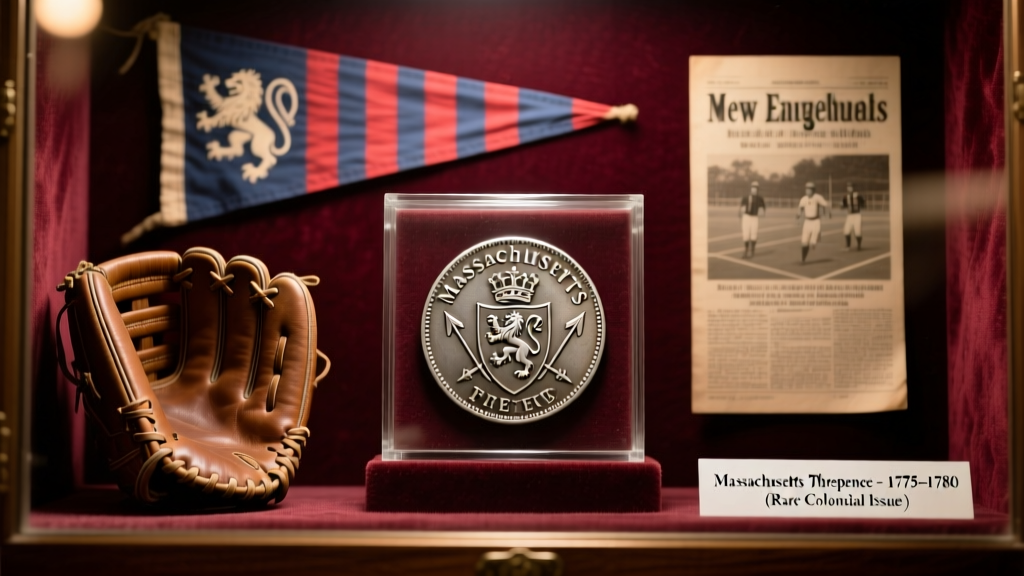
The Massachusetts Threepence: Colonial Coinage, Authentication Challenges, and Collector Market Realities
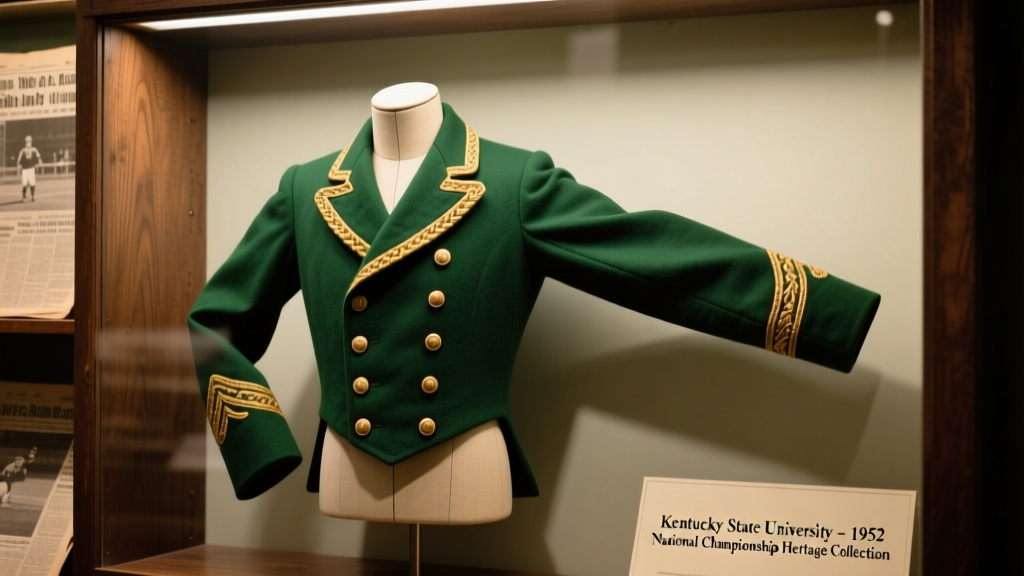
Kentucky State Swallow-Tailed Coat: Authenticating the Green Wool Officer’s Dress Coat with Gold Braid and Nine-Gold-Button Front
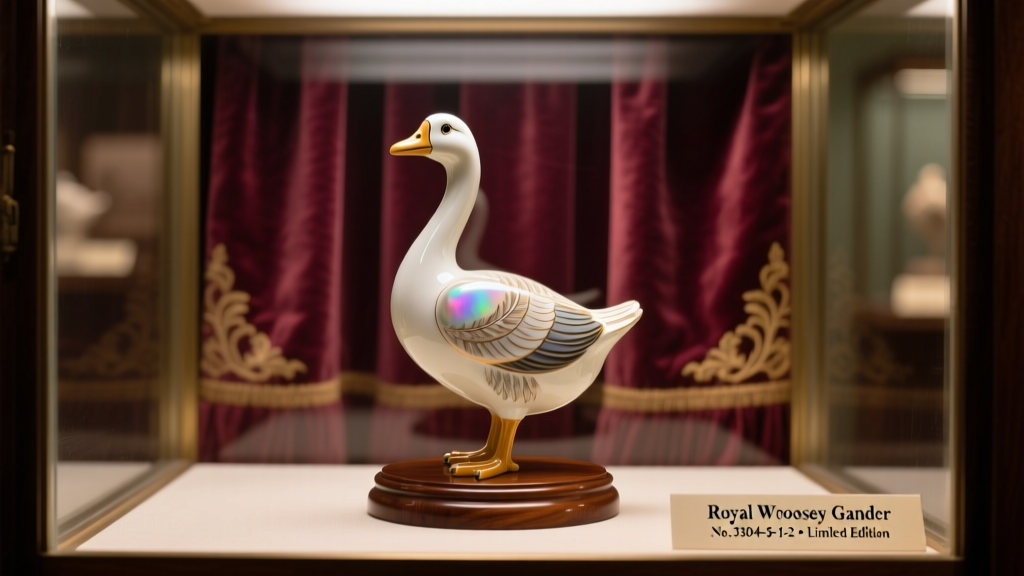
Royal Worcester Figurine 'Goosey Goosey Gander' No. 3304: Authentication, Provenance, and Market Value of the 5½-Inch Model
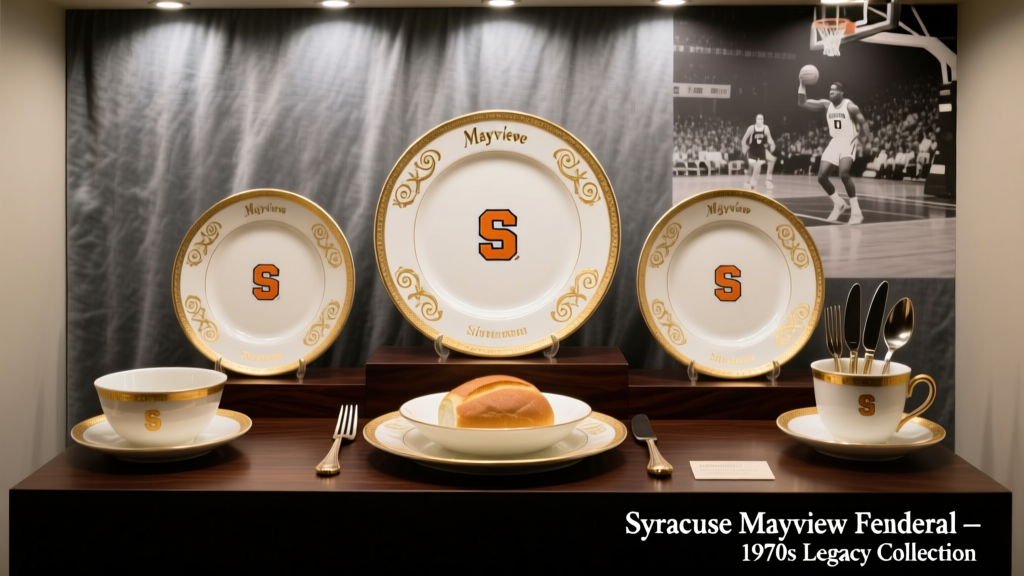
Syracuse Mayview Federal Shape Gold Trim 6-Piece Place Setting: Authentication, History, and Collector Value