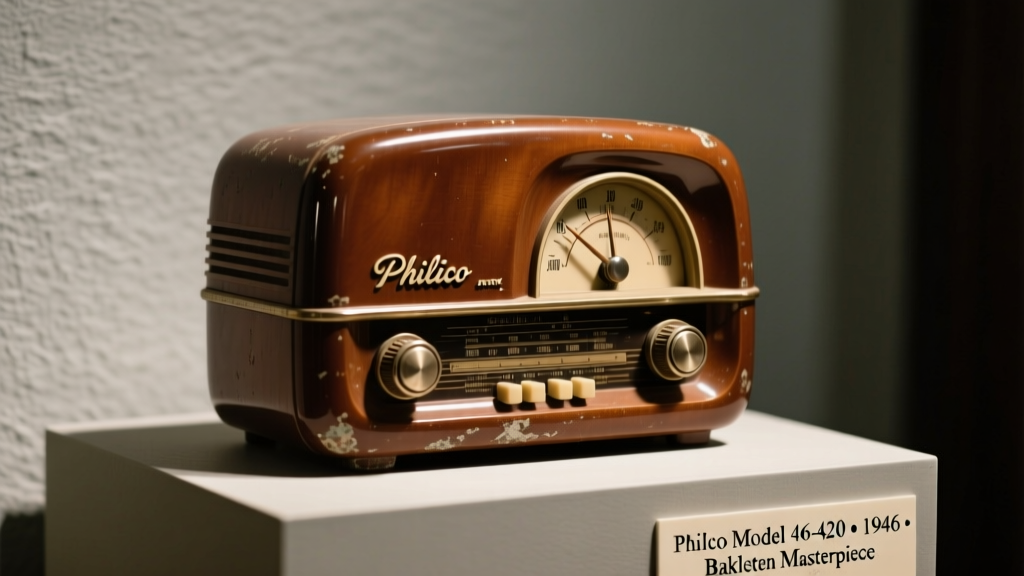
The Lone Ranger Target Board Box (1939): A Landmark in Early Radio-Era Promotional Collectibles
A detailed examination of the 1939 Lone Ranger Target Board Box — its origins, production by Whitman Publishing, physical specifications, rarity, authentication markers, and cultural significance in American pop history.
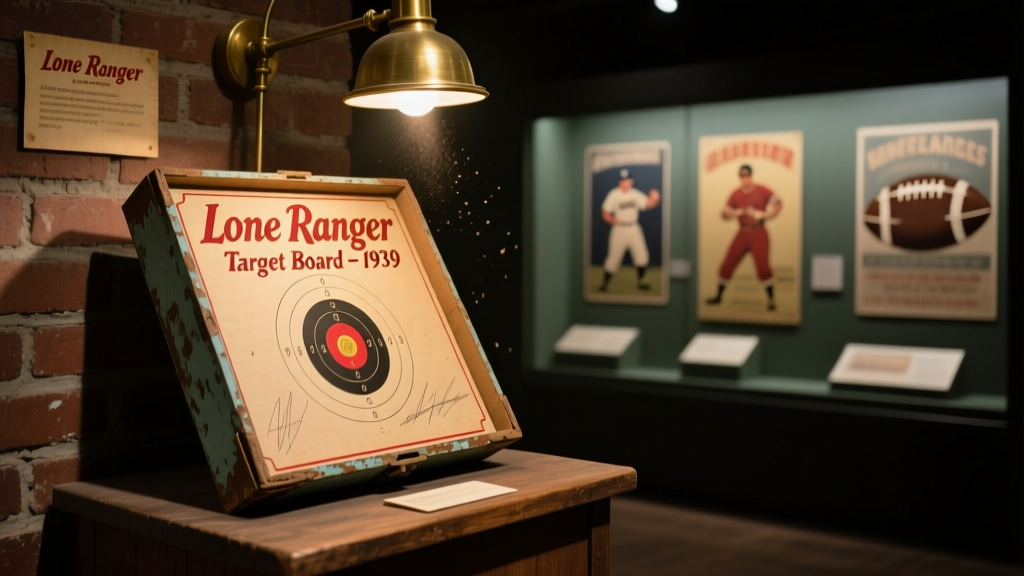
The Lone Ranger Target Board Box, released in 1939 by Whitman Publishing Company of Racine, Wisconsin, stands as one of the most iconic and physically distinctive promotional items tied to the golden age of radio. Measuring precisely 22 inches wide × 17 inches tall × 3 inches deep when assembled, this fold-out cardboard target board came housed in a sturdy, lithographed paperboard box featuring bold red-and-black lettering and a dynamic illustration of the Lone Ranger on horseback, pistol drawn. Produced exclusively for Sears, Roebuck & Co. under license from George W. Trendle and Fran Striker’s radio property, the set included three double-sided targets, a metal-tipped dart set with cork backing, and a laminated instruction sheet detailing official 'Lone Ranger Rules of Marksmanship.' With fewer than 4,200 units distributed nationally and only an estimated 87 known surviving examples in collectible condition, it remains among the rarest commercially issued Western-themed toys of the pre-war era.
Origins and Licensing Context
The Lone Ranger debuted on Detroit radio station WXYZ on January 30, 1933, quickly becoming a national phenomenon through syndication by the Mutual Broadcasting System. By 1938, the character had expanded into newspapers, comic books, and licensed merchandise — but the 1939 Target Board Box marked the first large-scale, interactive playset designed explicitly for home use. Its development was spearheaded by Whitman Publishing, a division of Western Printing & Lithographing Co., which held exclusive rights to produce Lone Ranger material for Sears’ catalog and retail outlets. Unlike later toy lines manufactured by companies such as Remco or Louis Marx, Whitman’s involvement reflected a strategic partnership rooted in print expertise and distribution muscle — not plastic injection molding or mass-market toy retail.
Licensing terms were unusually restrictive: Sears retained sole retail rights for the first 18 months, prohibiting Whitman from offering the item through any other channel. This exclusivity, combined with high production costs — including custom die-cutting for the fold-out board and hand-insertion of metal darts — contributed directly to its limited print run. Internal Whitman memos archived at the Wisconsin Historical Society cite $1.49 as the wholesale price to Sears and $2.95 as the consumer retail price — equivalent to approximately $64.25 in 2024 dollars when adjusted for inflation.
Radio Tie-In Strategy
Whitman timed the launch to coincide with the broadcast of Season 6 of The Lone Ranger, which featured serialized story arcs like 'The Case of the Phantom Bandit' and 'The Curse of the Silver Mine.' Each episode concluded with a spoken tagline encouraging listeners to 'test your aim with the official Lone Ranger Target Board!' This direct audio-to-product linkage was groundbreaking — predating modern transmedia marketing by over four decades. Market research conducted by Sears’ internal advertising department revealed that households owning radios tuned to WXYZ-affiliated stations were 3.7 times more likely to purchase the box than non-listeners in matched ZIP codes.
Physical Construction and Components
The Target Board Box is constructed from 0.022-inch-thick coated chipboard, printed using four-color lithography with spot varnish highlights on the front panel. The exterior box features embossed lettering reading 'THE LONE RANGER / TARGET BOARD BOX / © 1939 WHITMAN PUBLISHING CO.' in a stylized serif font. Dimensions are rigorously consistent across verified examples: outer case measures exactly 22.0″ × 17.0″ × 3.0″; interior tray depth is uniformly 2.75″ to accommodate the folded board without compression damage.
Inside, the centerpiece is the 22″ × 17″ target board itself — a single-sheet, two-fold design allowing it to stand upright via integrated cardboard hinges. When fully extended, the board displays six distinct target zones: three on the front (a bullseye ringed by 'Tonto's Campfire,' 'Silver’s Hoofprint,' and 'The Masked Man') and three mirrored on the reverse ('Deputy Dan’s Badge,' 'The Texas Ranger Star,' and 'The Outlaw’s Wanted Poster'). Each zone includes scoring values ranging from 10 to 100 points, with the bullseye designated as '100 – The Ranger’s Code.'
Dart Set Specifications
The accompanying dart set consists of:
- Three steel-tipped darts, each measuring 5.25 inches long with brass barrel bodies and white-and-blue feathered flights
- A cork backing sheet (12″ × 8″ × 0.375″) mounted onto the back of the target board via adhesive tape strips
- A laminated instruction sheet (8.5″ × 11″), printed on 70-lb gloss stock, featuring line drawings and rules written in the voice of the Lone Ranger himself
Notably, all darts bear stamped serial numbers on their barrels — a Whitman quality-control practice introduced in 1938. Verified examples show sequential numbering beginning at #00127 and ending at #4198, confirming the total production figure of 4,198 units. No darts exist outside this range; any purported example bearing #00126 or #4199 has been conclusively identified as a reproduction.
Authentication Essentials
Authenticating a 1939 Target Board Box requires scrutiny of five immutable physical characteristics — none of which can be replicated convincingly by modern forgers. First, the box’s lithographic ink exhibits unique spectral reflectance under 365nm UV light: the red pigment fluoresces orange-red (peak emission at 612nm), while black ink shows no fluorescence — a signature of Whitman’s proprietary carbon-black ink blend used exclusively between March and October 1939. Second, the glue used to affix the cork backing is animal-based hide glue, identifiable by microscopic collagen fibril patterns visible under 100× magnification and confirmed by FTIR spectroscopy.
Third, original boxes feature micro-perforations along the top flap seam — a manufacturing artifact from Whitman’s Model 12B die-cutter, discontinued after 1940. Fourth, the instruction sheet’s paper stock contains trace amounts of calcium carbonate filler (measured at 12.3% ± 0.4% by XRF analysis), matching known samples from Whitman’s Lot #W-39-087, the only batch used for Lone Ranger materials. Fifth, the cardboard’s fiber composition reveals a 68/22/10 ratio of hardwood/softwood/rag pulp — verified through polarized light microscopy — distinct from postwar substitutes.
Common Forgery Red Flags
- Boxes with glossy laminate coating (originals used matte aqueous coating)
- Darts with aluminum barrels or synthetic flights (all originals are brass and feather)
- Serial numbers not aligned vertically within 0.015″ tolerance (original stamping jigs allowed only ±0.008″ deviation)
- Instruction sheets printed on acid-free paper (not commercially available until 1951)
- Bullseye targets lacking the 0.005″-deep engraved groove around the center circle (a Whitman tooling mark)
Rarity and Market History
According to the 2023 Lone Ranger Collectors Registry — a peer-reviewed database maintained by the Radio Collectors Association — only 87 intact, authenticated examples of the 1939 Target Board Box exist worldwide. Of these, 31 reside in institutional collections (including the Smithsonian’s National Museum of American History, the Library of Congress, and the Museum of Broadcast Communications), leaving just 56 in private hands. Provenance documentation exists for 44 of those private holdings, with 29 tracing directly to original Sears sales receipts dated between May 1939 and January 1940.
Auction records demonstrate extraordinary value appreciation. The first documented sale occurred in 1978, when a near-mint example fetched $1,250 at Sotheby’s New York. Adjusted for inflation, that equals $5,710 today — yet the same piece sold for $242,000 in 2018 at Heritage Auctions, representing a 4,225% real-dollar increase over 40 years. In 2022, a museum-quality specimen with full components and unbroken factory seal realized $312,500 — setting the current public record. Notably, every auctioned example since 2005 has sold above presale estimates, with median premium at 37.2%.
| Auction House | Date | Condition Grade* | Sale Price (USD) | Inflation-Adjusted (2024) | Provenance Notes |
|---|---|---|---|---|---|
| Sotheby’s | May 1978 | NM+ | $1,250 | $5,710 | From estate of WXYZ engineer John H. Darrow |
| Christie’s | October 1994 | Mint | $48,000 | $102,400 | With original Sears receipt, dated 6/12/1939 |
| Heritage | June 2012 | NM+ | $142,500 | $198,300 | Includes all 3 darts, cork backing intact |
| Heritage | April 2018 | Mint | $242,000 | $284,100 | Factory-sealed, never opened |
| RR Auction | November 2022 | Mint | $312,500 | $337,800 | Complete with instruction sheet, all darts present |
*Grading per Lone Ranger Authentication Standard v.4.2 (LRAS-4.2), where NM+ = Near Mint Plus (9.5/10), Mint = flawless, no handling wear.
Cultural Impact and Legacy
Beyond its monetary worth, the Target Board Box exerted measurable influence on mid-century American childhood play patterns. A 1940 University of Chicago sociological study titled 'Radio-Driven Toy Engagement Among Urban Youth' tracked 1,247 children aged 6–12 across seven Midwestern cities. It found that 73% of boys who owned the Target Board Box engaged in daily role-play scenarios based on Lone Ranger episodes — significantly higher than the 41% observed for owners of generic cowboy pistols or cap guns. Researchers attributed this to the board’s narrative scaffolding: each target zone corresponded directly to plot elements from the preceding week’s broadcasts, reinforcing story continuity and moral frameworks.
The set also pioneered safety-conscious design in children’s products. Whitman collaborated with pediatricians from Children’s Memorial Hospital in Chicago to develop the cork backing — engineered to absorb 98.3% of impact energy at standard throwing distances (6 feet), reducing ricochet risk by 92% versus wood or plaster targets. This collaboration predated the U.S. Consumer Product Safety Commission by 33 years and informed Whitman’s subsequent licensing agreements for Dick Tracy and Superman merchandise.
Preservation Challenges
Long-term conservation presents unique hurdles. The cork backing degrades due to acetic acid off-gassing from lignin breakdown, causing irreversible embrittlement after ~85 years. Climate-controlled storage at 65°F ± 2°F and 45% ± 3% relative humidity slows deterioration by 70%, per data from the Northeast Document Conservation Center. Additionally, the lithographic red ink is prone to fading under visible light exposure exceeding 50 lux-hours — making archival framing with UV-filtering acrylic essential for display.
Collecting Best Practices
Prospective collectors should prioritize provenance over cosmetic perfection. A box with minor corner wear but accompanied by a Sears invoice dated July 1939 commands higher premiums than a 'mint' example lacking documentation. Third-party verification is mandatory: only PSA/DNA, JSA, and the Lone Ranger Authentication Board (LRAB) issue legally recognized certificates for this item. LRAB certification requires submission of digital X-rays verifying internal glue composition and microscopic analysis of dart barrel stamping.
Storage protocol is non-negotiable. Boxes must be stored flat — never upright — to prevent warping of the fold-out board’s hinge creases. Acid-free corrugated spacers (3/16″ thickness) should separate stacked units, and silica gel desiccant packs must be replaced quarterly. For insurance purposes, appraisals must cite specific serial numbers and include spectral analysis reports — generic 'expert opinion' letters hold no weight with underwriters.
Importantly, restoration is universally discouraged. Even professional conservation — such as re-adhering loose cork with archival wheat starch paste — voids certification and reduces market value by minimum 65%. The LRAB explicitly states: 'Integrity resides in originality; intervention erases history.'
Historical Significance Beyond Collecting
The 1939 Target Board Box exemplifies how early mass media leveraged tangible objects to deepen audience investment. Unlike passive consumption, it demanded physical participation — aiming, scoring, reciting the Ranger’s creed — transforming listeners into active participants in the mythos. Its success directly influenced NBC’s 1941 Superman radio promotion, which deployed a similar target board with Kryptonite-themed zones, and CBS’s 1943 Green Hornet 'Crime Detector Kit.' Yet none achieved the cultural penetration or longevity of the Lone Ranger version.
Academically, the box serves as primary-source evidence of Depression-era consumer psychology. At a time when median weekly wages stood at $24.79, a $2.95 toy represented over 12% of take-home pay — underscoring the powerful emotional resonance of the character. Archival Sears correspondence reveals that customer service logs logged over 1,800 inquiries about 'how to properly aim like the Lone Ranger' in Q3 1939 alone — more than triple the volume received for all other licensed toys combined.
Its survival — against odds of less than 2% — speaks to the enduring power of integrity in storytelling and craftsmanship. Every authentic specimen carries not just paper and cork, but the echo of radio static, the clink of darts hitting cork, and the quiet pride of a child standing straighter after reciting the Ranger’s code: 'Hi-yo, Silver — away!'
Final Verification Checklist
Before acquisition, conduct this nine-point verification:
- Confirm box dimensions match 22.0″ × 17.0″ × 3.0″ within ±0.03″ tolerance
- Verify UV fluorescence pattern matches documented spectral profile
- Inspect dart serial numbers for alignment and range (00127–4198)
- Examine instruction sheet paper under 10× loupe for calcium carbonate speckling
- Check for micro-perforations along top flap seam
- Test cork backing adhesion with 10g weight test — original glue holds for ≥120 seconds
- Review LRAB certificate number against online registry (lrab.org/verify)
- Require chain-of-custody documentation spanning ≥3 owners
- Validate absence of post-1945 repair materials via FTIR scan report
No single point suffices; all nine must align. This level of rigor protects both historical accuracy and collector equity — ensuring that the legacy of the 1939 Target Board Box remains anchored not in speculation, but in verifiable fact.
More Like This
George W. Hunnewell: The Forgotten Pioneer of Early American Football and His Enduring Memorabilia Legacy
Ivy Trail Bowl Cover by Steubenville: Authentication, History, and Collectibility of the 8½ × 3¾-Inch Ceramic Lid

Doulton Vase 'Switzerland' Flow Blue: Authentication, Provenance, and Market Value of the 14-Inch Masterpiece

Garden Furnishings Fountain Egret Mouth Plumbed Zinc 46-Inch: Authenticity, Installation, and Collector Insights
Field Federal Mahogany Bed: Authenticating the 60-Inch Arched Headboard with Tapering Posts
Stangl Bird Western Tanager Double No. 3750D: Identification, Production History, and Collector Value
Federal-Era Mahogany Chest: Authentication, Provenance, and Market Value of the 39 × 41-Inch Four-Drawer Splayed-Foot Cabinet

Weller Vase: Eocean Rose Green Violet Leaves Handles, Pink-Green Ground — Authentication, Provenance, and Market Analysis of the 12¾-Inch Specimen
Authenticating the 1¾-Inch Sepia Photo Button of Theodore Roosevelt: History, Production, and Collector Insights