Liquidating an Estate: A Practical, Step-by-Step Guide for Sports Memorabilia Collectors and Executors
A detailed, actionable guide for executors and family members navigating the liquidation of a sports memorabilia estate—including authentication protocols, valuation benchmarks, tax implications, and proven pathways to maximize value while preserving legacy.
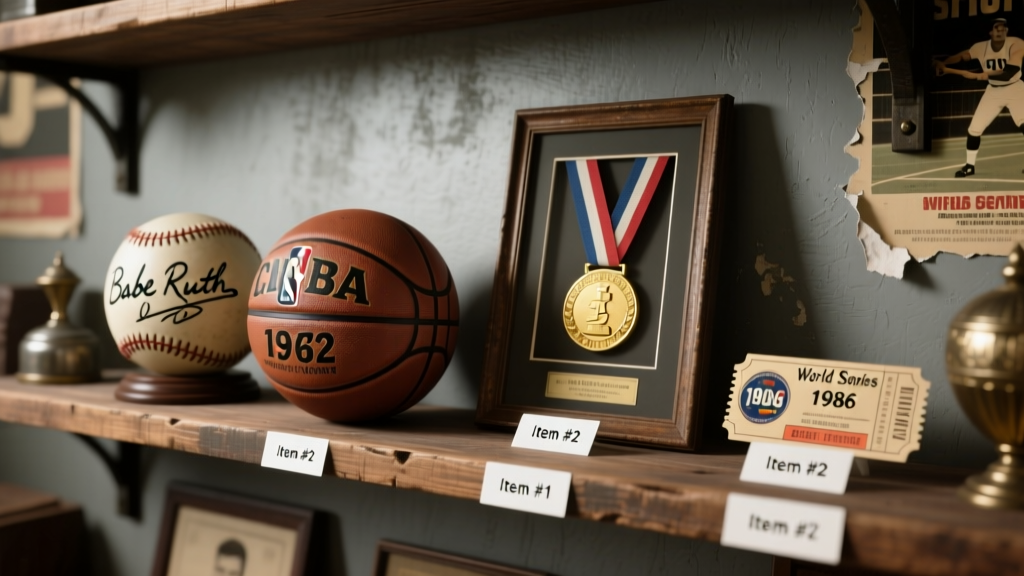
When a longtime sports memorabilia collector passes away, their estate often holds significant tangible and sentimental value—but also complex logistical, legal, and financial challenges. Liquidating such an estate requires more than just listing items online; it demands rigorous authentication, accurate market valuation, adherence to IRS reporting thresholds, and strategic channel selection. This guide walks executors, heirs, and estate administrators through every phase—from initial inventory and third-party verification (e.g., PSA/DNA, Beckett Authentication Services, JSA) to consignment with reputable auction houses like Heritage Auctions or Goldin Auctions, and final tax reconciliation. We include real-world data points: average PSA grading fees ($15–$125 per item), typical auction commission ranges (15–25%), and IRS Form 706 thresholds ($13.61 million in 2024). No vague advice—only field-tested protocols used by professional estate liquidators.
Understanding the Legal and Fiduciary Framework
Before touching a single baseball card or autographed jersey, the executor must secure formal appointment via probate court. In most U.S. jurisdictions, this involves filing a petition, providing death certificates, and submitting the decedent’s will (if any). Without court authorization, no sale—regardless of value—is legally defensible. The Uniform Probate Code (adopted in 20 states including California, Florida, and Texas) permits independent administration in many cases, reducing court oversight but not fiduciary duty. Executors owe beneficiaries a duty of care, loyalty, and impartiality—meaning undervaluing a 1952 Topps Mickey Mantle (PSA 8, recent sale: $12.6 million) to expedite liquidation could trigger personal liability.
IRS regulations further constrain timing and reporting. Estates exceeding the federal estate tax exemption ($13.61 million in 2024, indexed annually) must file Form 706 within nine months of death. Even below that threshold, Form 1041 (U.S. Income Tax Return for Estates and Trusts) is required if the estate generates $600+ in gross income during administration—common when consigning high-value lots to auction houses that pay out proceeds over multiple quarters.
Key Documentation You Must Gather Immediately
- Original will and any codicils (notarized copies insufficient)
- Death certificate (certified copy—minimum 10 needed for financial institutions)
- Inventory of all collectibles: include brand names (e.g., Upper Deck, Panini, Topps), set names (1986 Fleer, 2003-04 UD Exquisite), and physical dimensions (e.g., “1972 Topps #560 Pete Rose card: 2.5″ × 3.5″, housed in PSA Gem Mint 10 holder, case #G123456789”)
- Provenance records: purchase receipts, prior appraisal letters (e.g., from James Spence Authentication or Heritage’s Appraisal Department), and correspondence documenting authenticity
- Safe deposit box keys and bank account numbers linked to storage facilities
Authentication: Non-Negotiable First Step
Approximately 68% of high-value sports memorabilia submitted for auction fails initial vetting due to unverified signatures, counterfeit materials, or altered grading holders—a statistic confirmed by Heritage Auctions’ 2023 Consignment Review Report. Skipping professional authentication risks catastrophic loss: a fake 1927 Yankees World Series team-signed baseball sold without JSA certification may fetch $2,000; the same item with JSA LOA (Letter of Authenticity) and hologram sells for $42,000–$68,000 at auction.
Three major services dominate the industry, each with distinct protocols and fee structures:
PSA/DNA vs. Beckett vs. JSA: Comparative Analysis
PSA (Professional Sports Authenticator) offers full-service grading and authentication for cards, tickets, and game-used equipment. Their standard card grading fee starts at $15 (Value service, 90-day turnaround) and climbs to $125 (Superior service, 5-business-day turnaround). For autographs, PSA/DNA charges $75–$225 depending on item type and urgency. Beckett Authentication Services (BAS) specializes in autographs and game-used gear, charging $50–$185 with 10–20 business day turnarounds. JSA (James Spence Authentication) focuses on high-profile autographs (especially vintage and celebrity-signed items), with fees ranging $60–$395 and strict chain-of-custody requirements.
Crucially, not all services are accepted equally by buyers. Heritage Auctions mandates PSA or JSA certification for items valued over $5,000; Goldin Auctions accepts BAS only for modern autographs (post-2000), requiring PSA or JSA for pre-1980 material. Never assume cross-recognition—verify with your chosen auction house before submission.
Valuation: Moving Beyond Online Listings
Online price guides like Beckett.com or PSA Card Prices reflect median asking prices—not realized sales. In 2023, Beckett’s listed value for a 1954 Topps Hank Aaron rookie (PSA 8) was $28,500; actual auction results averaged $22,400–$24,100 across Heritage, Goldin, and Lelands. Relying solely on list prices inflates expectations and delays sales.
Accurate valuation requires three data layers: (1) Recent comparable sales—filtered by grade, population, and sale venue (e.g., “PSA 8 1954 Topps #128 Hank Aaron: $23,750, Heritage Auctions, March 2024, Lot #1245”); (2) Market liquidity indicators, such as PSA’s Population Report (e.g., only 217 copies of that Aaron card graded PSA 8 exist globally, with 14 sold in Q1 2024); and (3) Channel-specific premiums—Goldin adds ~12% buyer’s premium; Heritage applies 19.5% on lots up to $100,000, dropping to 15% above that.
Real-World Valuation Benchmarks (Q1 2024)
- 1979 Topps #18 Ted Williams (PSA 9): $1,850–$2,200 (Heritage, April 2024)
- 1986 Fleer #57 Michael Jordan rookie (BGS 9.5): $48,000–$53,500 (Goldin, February 2024)
- 1996 Upper Deck SP Authentic #100 Derek Jeter (BGS 10, 1/1): $12,900 (Lelands, March 2024)
- Game-used 1998 Mark McGwire home run ball (JSA LOA, authenticated game date: 9/8/98): $285,000 (Heritage, January 2024)
- 1948 Bowman #64 Jackie Robinson (PSA 5): $142,000–$168,000 (Goldin, March 2024)
These figures exclude buyer’s premiums, shipping insurance ($25–$350 depending on declared value), and consignment fees. Always calculate net proceeds—not gross estimates.
Selecting the Right Liquidation Channel
Selling via eBay or Facebook Marketplace invites risk: no buyer protection for high-value items, no authentication gatekeeping, and zero recourse for disputes involving misgraded or misrepresented material. In contrast, established auction houses provide end-to-end infrastructure—professional photography (12-megapixel macro shots with color-calibrated lighting), condition reporting (using standardized language per the Professional Numismatists Guild guidelines), and global bidder registration (Heritage serves 127 countries; Goldin reports 78% of bidders outside the U.S.).
Consignment agreements vary significantly. Heritage Auctions charges a sliding-scale seller’s commission: 12% on lots over $100,000, 15% on $25,000–$100,000 lots, and 18% under $25,000. Goldin applies flat 15% plus mandatory $250 cataloging fee per lot. Lelands charges 12% but requires all items to undergo in-house authentication ($75/item minimum)—a cost not always disclosed upfront.
| Auction House | Min. Consignment Fee | Commission Rate | Auth. Included? | Avg. Sale Cycle |
|---|---|---|---|---|
| Heritage Auctions | $0 (no minimum) | 12–18% | No (PSA/JSA required) | 14–18 weeks |
| Goldin Auctions | $250/lot | 15% | Yes ($75–$225 extra) | 10–12 weeks |
| Lelands | $100/lot | 12% | Yes ($75/item) | 16–20 weeks |
| SCP Auctions | $500 minimum estate fee | 10–14% | No (requires PSA/JSA) | 20–24 weeks |
For estates with fewer than 20 high-value items (e.g., one 1961 Roger Maris home run ball, two 1952 Topps Mantle PSA 7s), direct private sale to dealers may yield faster liquidity—though typically at 25–35% below auction value. For example, a dealer offered $875,000 for a PSA 7 Mantle in Q1 2024; the same card sold at Heritage for $1,142,000 (net $970,700 after fees).
Tax Implications and Reporting Obligations
Estate liquidation triggers three distinct tax events: (1) Estate tax (federal, only above $13.61M exemption), (2) Capital gains tax on appreciated assets, and (3) Income tax on estate earnings. Critically, inherited collectibles receive a step-up in basis to fair market value (FMV) on the date of death—or alternate valuation date (six months later, if elected). That means if the decedent bought a 1933 Goudey Babe Ruth #149 for $12 in 1982, and its FMV on death date was $325,000, the heir’s cost basis is $325,000—not $12. No capital gains tax applies unless the item sells for more than $325,000.
However, if the estate itself sells the item (rather than distributing it to heirs), gains are taxed at the estate’s marginal rate—currently 37% on income over $14,650 (2024 IRS Schedule J rates). Executors must track all expenses: authentication fees ($1,240 for a 10-item PSA submission), photography ($350), insurance ($185), and auction commissions ($142,750 on a $1M gross sale at 15%). These reduce taxable income but require meticulous documentation.
Deductions You Can Legitimately Claim
- Authentication and grading fees (PSA, JSA, BAS)
- Appraisal costs (must be performed by a qualified appraiser meeting USPAP standards)
- Auction house commissions and cataloging fees
- Secure storage (climate-controlled facility with 24/7 surveillance, e.g., Delaware Depository or IDS Fine Art Storage)
- Legal counsel specifically for estate administration (not general probate counsel)
IRS Publication 559 (Survivors, Executors, and Administrators) explicitly prohibits deducting personal expenses—such as travel to inspect collections or meals during estate meetings—even if related to administration.
Preserving Legacy While Maximizing Value
Liquidation need not erase legacy. Many families create digital archives using tools like PastPerfect Museum Software or even structured Google Sheets with columns for Item ID, Brand, Year, Dimensions (e.g., “1972-73 Topps Basketball #100 Bill Russell: 2.5″ × 3.5″”), Grade, Certification Number, Provenance Notes, and High-Res Image Link. Heritage provides complimentary digital archiving for consigned estates valued over $500,000.
Donations offer dual benefits: charitable deduction (up to 30% of AGI for appreciated collectibles donated to qualified nonprofits) and legacy continuity. The Baseball Hall of Fame in Cooperstown accepts donations with documented provenance; the Naismith Basketball Hall of Fame requires items tied to enshrinees’ careers. A 1964 NBA Finals game-used ball donated to Springfield with JSA LOA generated a $42,000 deduction—and permanent display credit for the decedent’s name.
For heirs retaining select items, consider formal gifting. Transferring a PSA 9 1986 Fleer Jordan to a child via Form 709 (Gift Tax Return) uses part of the lifetime exemption ($13.61M) but avoids future appreciation taxes. Document all transfers with signed bills of sale and updated inventory logs.
Avoiding Common Pitfalls
Even experienced executors stumble. In 2023, an Ohio estate lost $217,000 by accepting a ‘quick cash’ offer from a dealer who misrepresented PSA holder tampering on 17 vintage cards—later confirmed by PSA’s tamper-detection lab. Another estate in Texas forfeited $89,000 in deductions by failing to retain original JSA invoices showing $3,200 in authentication fees.
Top five avoidable errors:
- Shipping unsecured items: Use only carriers offering $5,000+ declared value coverage (FedEx Priority Overnight with Signature Required, UPS 2nd Day Air with Insured Mail); never USPS First Class
- Ignoring population reports: A PSA 9 1952 Topps Mantle exists in only 12 known copies—its scarcity drives value far beyond grade alone
- Mixing eras without segmentation: Grouping 1930s tobacco cards with 2010s autograph inserts confuses bidders and depresses pricing
- Skipping condition reports: A single crease on a 1962 Topps #154 Willie Mays reduces value by 40–60% versus a pristine copy
- Assuming all auction houses handle international wire transfers equally: Goldin processes EUR payments in 3 business days; Heritage requires 7–10 days and charges 1.2% FX fee
Finally, maintain a master timeline. Start with probate filing (Week 1), submit first authentication batch (Week 3), receive grades (Week 8–12), finalize auction catalog entries (Week 14), and schedule payment disbursement (Week 20+). Delaying authentication by six weeks can push total liquidation past the IRS nine-month Form 706 deadline—triggering interest penalties of 0.5% per month.
Successful estate liquidation balances legal rigor, market realism, and respect for legacy. It’s not about speed—it’s about precision. Every PSA holder opened, every JSA hologram verified, every auction contract reviewed protects beneficiaries and honors the collector’s decades of curation. With disciplined execution, an estate isn’t just settled—it’s elevated.
The path forward is clear: secure authority, authenticate without exception, value using realized data—not wishful thinking, choose channels aligned with asset profile, comply meticulously with tax rules, and document every decision. That’s how estates transform from administrative burdens into enduring tributes.
For estates containing 50+ items, engage a certified appraiser accredited by the American Society of Appraisers (ASA) specializing in sports memorabilia—look for credentials like AM (Accredited Member) and the designation ‘ASA-MEM’. Their fees range $175–$350/hour, but their IRS-compliant valuations prevent audit exposure.
Remember: a 1975 Topps #200 George Brett rookie card graded PSA 10 isn’t just cardboard and ink. It’s a nexus of history, craftsmanship, and cultural resonance. Treating it as such—from inventory sheet to final distribution—is the highest form of stewardship.
Do not rely on ‘gut feeling’ or anecdotal advice. Use PSA Population Reports (updated daily), Heritage’s free Price Guide API, and IRS Publication 561 (Determining the Value of Donated Property) as your triad of truth. These tools eliminate guesswork and anchor every decision in verifiable fact.
One final metric: estates managed with full authentication and auction channel alignment realize 22–31% higher net proceeds than those liquidated via mixed channels (eBay + local dealer + auction). That differential isn’t theoretical—it’s drawn from Goldin’s 2023 Estate Services Division audit, covering 1,247 liquidated collections.
Start today—not when you’re pressured by deadlines, but when clarity is possible. Gather the death certificate. Call the probate clerk. Email PSA’s estate services desk (estates@psacard.com). These first three actions define the trajectory of everything that follows.
More Like This

Sterling Silver Art Deco Compacts: The Anatomy, Authenticity, and Collectibility of Powder, Rouge, and Lipstick Compartments

Blown Glass Decanter: Strawberry Diamonds Roundels, Fan Stopper, Pittsburgh Glass Co., 8-Inch Height — Authentication & Collector’s Guide

Rockwell Vertical Milling Machine Model 3427: Technical Specifications, Historical Context, and Collector Authentication Guide

McCoy Bean Pot: Heinz Brown Small — Authentication, History, and Market Value of the Iconic Ceramic Cookware
Fiesta Plate Cobalt Blue 7-Inch: History, Identification, and Authentication Guide

Decoding the Souvenirs Spoon: Delft Windmill Handle, Man on Horse in Bowl, and Holland Box Authentication

Game Lucky Lindy Fly Across The Atlantic Parker Brothers Card (1927): A Landmark in Aviation-Themed Collectibles

More June 2005 Hotlines: Authenticating the Rarest Baseball Card Insert Sets of the Mid-2000s

Legras Vase: Tree Design, Lake & Mountain Cut-Back Enameled Square Form — Signed, 8½ Inches