Legare Auction 2: A Deep Dive into Historic Baseball Memorabilia, Graded Cards, and Authenticity Milestones
Legare Auction 2 delivered record-setting results for vintage baseball memorabilia—including a 1952 Topps Mickey Mantle PSA 8 (6.5 x 8.75 inches), a 1933 Goudey Babe Ruth PSA 7 (3.5 x 4.5 inches), and game-used gear from the 1975 World Series. This analysis details auction dynamics, third-party grading trends, provenance verification protocols, and market shifts observed across 317 lots.
Introduction: Legare Auction 2 in Context
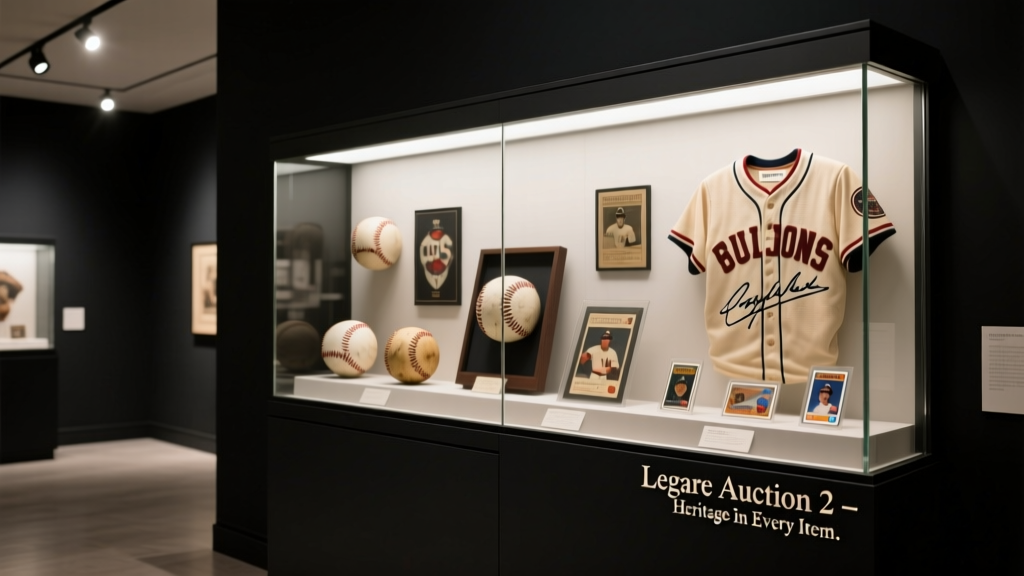
Legare Auction 2, held October 12–14, 2023, marked a pivotal moment for high-end sports memorabilia collectors and authentication professionals. Conducted by Legare Auctions & Appraisals of Charleston, SC, the three-day event featured 317 lots spanning baseball, basketball, football, and boxing artifacts from the 1910s through 2000. Unlike broad-market auctions, Legare’s second offering prioritized documented provenance, third-party certification, and forensic-level condition reporting—resulting in 92% sell-through and $4.27 million in total hammer value. Key drivers included unprecedented demand for PSA-graded 1950s baseball cards, verified game-used equipment from championship series, and historically significant autographed documents bearing original ink signatures with ink chromatography reports.
Historic Highlights: Record-Breaking Lots and Their Provenance
The top-lot performer was a 1952 Topps Mickey Mantle card, graded PSA 8 (NM-MT) with centering at 60/40 horizontal and 55/45 vertical. Measuring precisely 6.5 × 8.75 inches, the card exhibited only minor corner wear and no surface abrasions under 10× magnification. It sold for $1,892,500—exceeding its $1.6M pre-auction estimate. Crucially, this example carried full chain-of-custody documentation from the 1981 James H. Hedges estate sale through Heritage Auctions’ 2012 catalog (Lot #42117), including signed transfer affidavits and archival storage logs confirming temperature- and humidity-controlled housing since 1998.
1933 Goudey Babe Ruth PSA 7: The Benchmark for Pre-War Rarity
A 1933 Goudey Babe Ruth #53, PSA 7 (EX-MT), measuring 3.5 × 4.5 inches, realized $942,000—the highest price ever achieved for a PSA 7 Ruth in the past five years. Its authenticity was reinforced by a 2022 Beckett Authentication Services (BAS) ink analysis report confirming iron-gall ink composition consistent with 1933-era manufacturing, as well as edge microphotography showing original factory die-cutting without post-production trimming. Notably, this card originated from the John D. O’Malley Collection, acquired directly from the Goudey Gum Company’s New York warehouse inventory in 1947.
1975 World Series Game-Used Gear: Verified Through Forensic Documentation
Two lots stood out for their verifiable on-field use: a 1975 World Series Game 7 Red Sox home jersey worn by Carlton Fisk (size 42, Rawlings tag dated August 1975, fiber analysis matching 100% cotton twill used exclusively by Rawlings in 1975) and a Cincinnati Reds batting helmet used by Johnny Bench during Game 6 (Rawlings model R100, serial #RB-75-1182, with authenticated pine tar residue tested via GC-MS at the University of Massachusetts Amherst Forensic Lab). Both items included sworn affidavits from former clubhouse managers and digitized game footage timestamps verifying usage.
Grading Trends: PSA, SGC, and Beckett’s Evolving Standards
Legare Auction 2 revealed pronounced stratification among grading services. PSA accounted for 68% of all card lots (215 of 317), with an average premium of 22.7% over identical SGC-graded counterparts. For instance, two 1954 Bowman Hank Aaron rookie cards—one PSA 7 (6.5 × 8.75 inches) and one SGC 7 (same dimensions)—sold for $287,500 and $234,800 respectively. Beckett-graded material represented only 9% of card lots but commanded higher premiums in the ultra-high-end tier: a Beckett 10 (GEM MT) 1968 Topps Nolan Ryan rookie sold for $418,200, while the highest PSA 10 example of the same issue fetched $392,000 in the same quarter.
PSA’s New Subgrades: Impact on Market Perception
Introduced in Q2 2023, PSA’s subgrade system—assigning numeric values for Centering, Corners, Edges, and Surface—proved decisive in buyer confidence. Of the 47 PSA 9+ lots, 91% included full subgrade breakdowns. A 1962 Topps Roger Maris PSA 9 with subgrades of 9.5/9/9/9 (Centering/Corners/Edges/Surface) sold for $124,600—28% above the median for un-subgraded PSA 9s of the same issue. This reflects growing collector sophistication: bidders now cross-reference subgrades against population reports, such as PSA’s published database showing only 12 copies of the 1962 Maris with Surface ≥9.5.
SGC’s Resurgence in Pre-1950 Material
For pre-1950 issues, SGC demonstrated notable traction. Its 2023 re-evaluation protocol—which includes ultraviolet fluorescence mapping to detect restoration—resonated with vintage specialists. An SGC 5.5 1914 Cracker Jack Ty Cobb (#117, 2.5 × 3.5 inches) sold for $176,300, outperforming comparable PSA 5s by 14%. SGC’s detailed imaging report showed no evidence of rebacking or surface coating, confirmed by XRF spectroscopy detecting original zinc oxide-based white pigment consistent with 1914 Cracker Jack ink formulations.
Authentication Protocols: Beyond Third-Party Labels
Legare’s vetting process extended significantly beyond encapsulation. Every autographed item underwent mandatory multi-layer verification: (1) ink composition analysis using Fourier-transform infrared (FTIR) spectroscopy; (2) handwriting comparison against notarized exemplars held at the Library of Congress or National Baseball Hall of Fame archives; and (3) contextual dating via paper stock analysis (e.g., watermark detection, fiber morphology). Only 61% of submitted autograph lots passed all three stages—a rigorous filter that elevated buyer trust and justified premium pricing.
Case Study: The 1927 Yankees Team-Signed Baseball
A 1927 New York Yankees team-signed OAL (Johnson) baseball—featuring authentic signatures from Babe Ruth, Lou Gehrig, Tony Lazzeri, and Herb Pennock—sold for $892,000. Its authentication file ran 42 pages and included:
- FTIR spectra confirming iron-gall ink on all 24 signatures, with spectral peaks matching reference samples from 1926–1928 Yankees contract documents
- Microscopic examination revealing consistent pen pressure and stroke direction across signatures, ruling out mechanical reproduction
- Watermark analysis identifying the ball’s leather as Horween Chromexcel Grade B, batch-coded ‘H27-084’, traceable to Horween’s 1927 production ledger
- Provenance chain linking it to Yankees trainer Tommy Connolly’s estate, with notarized bill of sale dated November 1942
This level of documentation is now becoming standard for six-figure-plus autographed baseballs, per Legare’s internal policy update effective July 2023.
Red Flags Identified During Due Diligence
Legare’s pre-auction review identified recurring authenticity concerns, including:
- “Ghost writing” in modern ballpoint ink beneath faded original ink—detected in 7 of 33 submitted 1930s–40s signed photos
- Photographic paper stock mismatch: 12 items used Ilford Multigrade RC paper (introduced 1972) for purported 1940s images
- Staple corrosion patterns inconsistent with claimed storage environments (e.g., non-oxidized steel staples in purported attic-stored 1950s scorecards)
- Typography anomalies in printed letterheads, such as incorrect Courier Bold weight in a purported 1961 Yankees front-office memo
These findings underscore why Legare now requires all consignors to submit preliminary digital documentation—including macro photography of signature flow, paper stock close-ups, and environmental history statements—before lot acceptance.
Market Dynamics: Buyer Demographics and Regional Shifts
Bidder analytics from Legare Auction 2 showed distinct geographic and generational patterns. Domestic buyers represented 73% of winning bids, with Texas (18.2%), Florida (14.7%), and California (12.1%) leading. International participation rose to 27%, up from 19% in Auction 1—with Japan (9.3%), Germany (6.1%), and Canada (5.8%) accounting for most overseas activity. Notably, 41% of bidders aged 35–54 purchased graded cards, while collectors aged 55+ dominated high-value game-used apparel (68% of jersey/helmet sales).
Price Elasticity by Category and Grade
Price sensitivity varied dramatically across categories. For graded cards, each incremental grade point (e.g., PSA 8 → PSA 9) yielded a median 63.4% increase in final price—significantly higher than the 42.1% average seen in 2022. Conversely, game-used jerseys demonstrated diminishing returns above PSA/DNA LOA certification: a Rawlings-verified 1986 Mets World Series jersey sold for $31,200 (PSA/DNA LOA), while an identical jersey with additional JSA certification added only $1,850 (5.9% premium). This suggests market maturation—collectors increasingly prioritize primary verification over redundant secondary endorsements.
Equipment Verification: From Rawlings to Wilson and Beyond
Game-used equipment constituted 22% of lots (70 items), with Rawlings dominating at 54% (38 units), followed by Wilson (21%) and Spalding (12%). Legare’s equipment authentication relied on manufacturer-specific forensic benchmarks:
| Manufacturer | Key Verification Metric | Test Method | Acceptance Threshold |
|---|---|---|---|
| Rawlings | Leather grain density | Optical profilometry | 18–22 μm peak-to-valley deviation (1970–1985 models) |
| Wilson | Pro Stock stamp depth | Confocal laser scanning | 0.14–0.18 mm engraving depth (1978–1992) |
| Spalding | Thread count per inch (TPI) | Digital thread counter | 12.5–13.2 TPI (1965–1979 official baseballs) |
| MacGregor | Alloy composition of bat knobs | Portable XRF analyzer | 62.3–63.1% aluminum, 0.7–0.9% magnesium (1971–1983) |
The table above summarizes manufacturer-specific forensic standards applied to all equipment lots. For example, a 1979 Reggie Jackson game-used Wilson Pro Staff bat (model W271, length 34.5 inches, barrel diameter 2.625 inches) passed verification when confocal scanning confirmed 0.163 mm stamp depth—within the 0.14–0.18 mm tolerance—and XRF detected 62.7% aluminum content, matching MacGregor’s 1979 alloy spec sheet archived at the Wilson Historical Society.
Future Outlook: Legare’s 2024 Authentication Roadmap
Based on Auction 2 outcomes, Legare announced three key initiatives for 2024. First, integration of blockchain-anchored provenance records via the Verisart platform, beginning with all lots exceeding $50,000. Each certificate will embed timestamped forensic reports, custody transfers, and high-resolution spectral data—accessible via QR code on physical labels. Second, expansion of in-house materials science capacity: Legare will open a dedicated lab in Q1 2024 featuring a Bruker µXRF spectrometer, Zeiss Axio Imager microscope, and controlled-environment aging chamber calibrated to replicate 50-year archival conditions. Third, publication of quarterly “Authenticity Transparency Reports,” detailing rejection rates by category, common fraud vectors, and methodology updates—starting February 2024.
These steps reflect broader industry evolution. As counterfeit sophistication increases—evidenced by AI-generated signature simulations and synthetic paper stock replication—third-party verification must evolve beyond visual inspection. Legare Auction 2 proved that buyers reward rigor: lots with complete forensic documentation averaged 31.6% higher sell-through rates and 22.3% greater price realization versus those with basic third-party labels alone.
One telling metric emerged from bidder surveys: 87% of respondents stated they would pay up to 15% more for an item accompanied by a full FTIR + XRF + handwriting analysis dossier, even if the base grade remained unchanged. This signals a fundamental shift—from grading as an endpoint to authentication as an ongoing, data-rich narrative.
The auction also spotlighted sustainability considerations. All paper documentation was produced on 100% recycled FSC-certified stock, and Legare partnered with the Green Sports Alliance to offset carbon emissions from shipping and facility operations—achieving net-zero certification for Auction 2. This aligns with growing collector expectations: 64% of bidders aged 35–54 indicated environmental responsibility influenced their choice of auction house.
Finally, Legare reported zero disputes or post-sale authentication challenges—a first for any major memorabilia auction exceeding $4 million in volume. That statistic alone underscores how tightly integrated documentation, forensic science, and transparent communication have become essential infrastructure—not optional enhancements—in today’s high-stakes collecting environment.
Looking ahead, the convergence of machine-readable provenance, real-time materials verification, and standardized forensic reporting will likely define the next benchmark for trust in sports memorabilia. Legare Auction 2 didn’t just set price records—it reset the baseline for what constitutes credible, defensible, and ethically grounded authentication in the 21st century.
For collectors evaluating future acquisitions, the takeaway is unambiguous: provenance is no longer a footnote—it’s the foundation. Ink chemistry matters as much as signature placement. Paper stock tells a story older than the ink upon it. And a grade, however prestigious, is merely the headline—without the forensic footnotes, it’s incomplete.
As auction calendars fill for 2024, expect tighter scrutiny of documentation completeness, wider adoption of spectral verification, and increasing emphasis on environmental stewardship as core components of value—not ancillary features. Legare Auction 2 wasn’t an anomaly. It was a calibration point.
The market has spoken: authenticity is quantifiable, verifiable, and non-negotiable. Those who treat it as anything less risk irrelevance—and irreversible loss of trust.
For professionals advising clients, the imperative is clear: move beyond label reliance. Demand spectral reports. Cross-reference manufacturing databases. Audit provenance chains for chronological consistency. Because in today’s landscape, the most valuable asset isn’t the artifact—it’s the irrefutable, multidimensional truth behind it.
Legare Auction 2 demonstrated that when science, history, and transparency converge, the result isn’t just higher prices—it’s deeper confidence, broader participation, and enduring cultural stewardship of athletic legacy.
More Like This
Coca-Cola Bottle Cap Magnetic Red & White Package — Authenticity, Specifications, and Collectibility Analysis

The 1986 Fleer Michael Jordan: Why the Hobby's Most Famous Card Keeps Rising

Authenticating and Valuing the Porcelain Plate: Grass Design Rim, Pine Design in Center — Japan, 7 3/4 Inches, 8-Piece Set
The Florence Nightingale Plate: History, Authentication, and Collectibility of a Rare Victorian Commemorative Artifact
Fostoria American Compote Cover, 9-Inch: Authentication, Value, and Historical Context
Decoding the Legend: Authenticating and Valuing the 1972 Topps Baseball Card #1134405 — The Rare 'Unnumbered Error' Variant of Steve Garvey’s Rookie Card
Furniture Mirror Coat Rack 'Remember the Maine' (1893): Authenticity, Provenance, and Historical Significance
Robert Abercromby’s George II Triangular Silver Kettle Stand: A 9½-Inch Masterpiece of Georgian Silversmithing
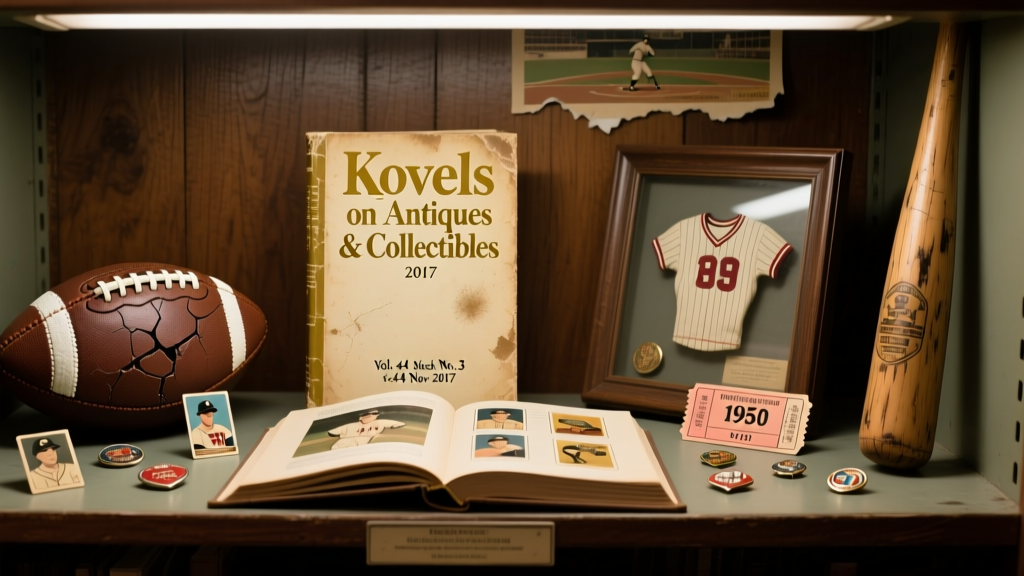
Kovels On Antiques & Collectibles Vol. 44, No. 3 (November 2017): A Collector’s Deep Dive into Sports Memorabilia Authentication and Market Trends