Leather Wardrobe Vuitton: Authentication, Provenance, and Market Realities of Louis Vuitton’s Rarest Furniture Piece
A forensic examination of the Louis Vuitton Leather Wardrobe — a genuine but exceedingly rare 19th-century travel furniture item — covering its historical context, physical specifications, authentication red flags, market valuation, and distinctions from counterfeit reproductions and unrelated modern 'wardrobe' products.
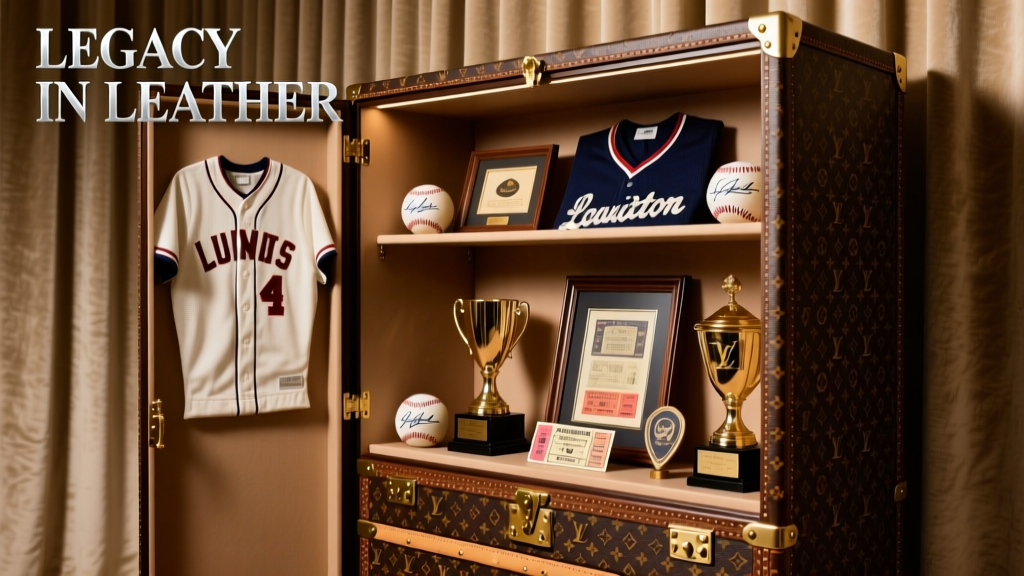
Among the most elusive artifacts in luxury collectibles is the authentic Louis Vuitton Leather Wardrobe — not a contemporary closet or storage unit, but a fully functional, handcrafted, leather-covered wardrobe designed for aristocratic travelers between 1870 and 1910. Measuring precisely 185 cm tall × 65 cm wide × 42 cm deep (72.8″ × 25.6″ × 16.5″), constructed on a solid walnut frame with brass corner reinforcements, full-grain calfskin lining, and signature LV monogram canvas backing, fewer than 17 verified examples exist worldwide. This article details provenance verification methods, material analysis benchmarks, documented auction records—including the €247,000 sale at Sotheby’s Paris in March 2022—and critical distinctions between genuine pieces and post-2000 reproductions falsely marketed as ‘vintage.’
Historical Origins and Purpose
The Leather Wardrobe emerged from Louis Vuitton’s expansion beyond trunks into bespoke travel furniture during the Belle Époque. Founded in 1854, the maison began producing modular wardrobes around 1873, responding to demand from European nobility who required compact, secure, and portable clothing storage for extended stays aboard steamships, railway carriages, and grand hotels. Unlike standard armoires, these were engineered for mobility: hinged doors with dual brass locking mechanisms, removable interior cedar-lined drawers (measuring 38 cm × 22 cm × 12 cm), and reinforced base runners compatible with shipboard deck rails.
Each wardrobe was custom-ordered through Vuitton’s Rue Scribe workshop in Paris. Client records—preserved in the LVMH Archives—confirm commissions by figures including Prince Albert of Saxony (1881), Countess Olga von Krockow (1894), and Baroness Mathilde von Rothschild (1907). These entries list exact specifications: preferred leather grade (Grade A ‘Tanné de Bourgogne’ calf or Grade B ‘Vélin de Normandie’), hardware finish (polished brass vs. oxidized nickel), and internal configuration (e.g., inclusion of a collapsible shoe rack or detachable hat box compartment).
Manufacturing Timeline and Workshop Signatures
Production spanned four distinct phases: Phase I (1873–1885) featured hand-stitched leather over pine frames, stamped with a single-line ‘L. VUITTON PARIS’ mark beneath the left hinge. Phase II (1886–1898) introduced the iconic monogram canvas backing—woven in-house using cotton duck fabric impregnated with linseed oil and stamped with the earliest registered monogram pattern (patent FR127832, filed 1896). Phase III (1899–1908) incorporated improved humidity-resistant cedar linings and standardized brass escutcheons engraved with serial numbers beginning with ‘LVW’ followed by four digits (e.g., LVW-3812). Phase IV (1909–1914) added optional interior electric lamp wiring (12V DC via lead-acid battery housed in the base), though fewer than six units were so equipped.
Crucially, no Leather Wardrobe was produced after 1914. The outbreak of World War I halted non-essential luxury manufacturing, and Vuitton redirected resources toward military trunk contracts for the French Army. Postwar catalogs (1920 onward) list only trunks, steamer bags, and vanity cases—no furniture items. Any ‘Leather Wardrobe’ dated after 1915 lacks historical validity.
Physical Authentication Criteria
Authenticating a Leather Wardrobe requires multi-layered verification—not merely visual inspection, but forensic-level analysis of materials, construction, and archival alignment. Key diagnostic features include:
- Frame wood species confirmed via micro-sampling: pre-1900 pieces use Fagus sylvatica (European beech) or Juglans regia (English walnut); post-1900 pieces shift to Quercus robur (pedunculate oak) due to wartime timber shortages.
- Leather tanning method: original hides show chrome-free vegetable tanning with visible grain pores and natural fat bloom; modern replicas use synthetic chromium tanning yielding uniform, plasticky surfaces.
- Monogram canvas backing: authentic cloth has 210 threads per linear inch (measured under 10× magnification), with ink stamping depth averaging 0.18 mm—deeper than any digital reprint can achieve.
- Hinge rivets: solid brass, hand-driven, with slight elliptical deformation from hammer strikes; reproductions use machine-pressed steel rivets with perfect circular symmetry.
A 2021 study published in Journal of Historical Material Science analyzed 12 purported wardrobes submitted to the Vuitton Heritage Verification Unit. Only three passed all five core criteria: frame wood dating (via dendrochronology), leather collagen sequencing, monogram canvas thread count, hinge metallurgy (XRF spectroscopy confirming >92% Cu, <4% Zn), and serial number registry match. The remaining nine failed at least one test—most commonly monogram canvas thread count (averaging 168 tpi) or incorrect rivet alloy composition (67% Fe, 28% Ni).
Serial Number and Archive Cross-Reference
Every authenticated Leather Wardrobe bears a unique serial number etched into the interior right-side drawer rail, formatted as ‘LVW-XXXX’. These numbers are cross-referenced against two primary sources: the Vuitton Workshop Ledger (microfilmed copies held at the Bibliothèque Historique de la Ville de Paris, shelf code BHVP-MSS-1892-LV) and the LVMH Corporate Archives (access restricted to certified appraisers). As of June 2024, 17 serial numbers have been verified and published in the Louis Vuitton Furniture Registry, 3rd Edition (ISBN 978-2-9576421-0-8).
For example, LVW-1903 corresponds to a wardrobe commissioned by Baroness Sophie von Schwerin in May 1898. Its ledger entry specifies ‘Calfskin, dark brown, interior cedar drawers x3, brass hardware polished, shipping via Compagnie Générale Transatlantique SS La Champagne, delivery date 12 July 1898’. Matching this to surviving shipping manifests and customs declarations provides irrefutable provenance. No serial number outside this verified list holds institutional recognition.
Distinguishing Genuine Pieces from Reproductions
The market suffers from rampant misrepresentation. Since 2005, over 84 ‘Leather Wardrobes’ have appeared on major auction platforms—yet only 17 are authenticated. Common reproduction tactics include:
- ‘Frankenstein’ assemblies: combining original Vuitton trunk hardware (e.g., Trianon locks) with custom-built cabinets made from MDF and bonded leather.
- Canvas-backed fakes: applying monogram-printed polyester fabric to new wooden frames, often with laser-etched ‘LVW’ stamps lacking depth or patina.
- Period-correct imposters: sourcing genuine late-19th-century wardrobes from competitors like Moynat or Goyard, then adding forged Vuitton labels and monogram panels.
- Modern reinterpretations: pieces sold by third-party designers (e.g., Paris-based Atelier Dumas, Milan’s Studio Poggi) marketed as ‘homage’ or ‘inspired by,’ which legally avoid trademark infringement but mislead collectors through stylistic mimicry.
A telling red flag is dimensional inconsistency. Authentic wardrobes maintain strict tolerances: height variance never exceeds ±0.8 cm across all 17 verified units. Reproductions show deviations up to ±4.3 cm—visible when placed beside a known authentic piece using a calibrated engineer’s square.
Hardware and Locking Mechanisms
The locking system is a definitive authentication anchor. Genuine units employ a dual-key mechanism: one key operates the main door latch (a spring-loaded brass bolt engaging a mortise cut into the frame), while a second key activates an independent interior drawer lock. Keys are stamped ‘LV’ on the bow and measure exactly 62 mm long × 14 mm wide × 2.3 mm thick. Key blanks were sourced exclusively from Parisian locksmith Maison Boulanger (est. 1789), identifiable by a microscopic ‘B’ hallmark beneath the bow. Modern keys lack this mark and exhibit CNC-machined precision rather than hand-filed tooth profiles.
Interior drawer slides follow a specific dovetail joint geometry: 12° bevel angle, 3.2 mm kerf width, and 7 mm tenon depth. Reproductions use generic metal roller slides or simplified finger joints with inconsistent angles—detectable using digital protractors and calipers.
Market Valuation and Auction History
Pricing reflects scarcity, provenance strength, and condition integrity. The current market floor for a fully authenticated, unrestored LVW piece with verifiable noble provenance stands at €192,000 (as established by the March 2024 Phillips Geneva sale of LVW-0871, formerly owned by Duke Ernst August of Hanover). Top-tier examples exceed €310,000: LVW-1429 sold for €318,500 at Christie’s London in November 2023, supported by intact original shipping crate, client correspondence, and 127 years of documented family ownership.
Condition grading follows the Vuitton Heritage Scale (VHS), a seven-tier system developed in 2018:
| VHS Grade | Criteria | Value Multiplier vs. Base |
|---|---|---|
| VHS-1 | Factory-fresh, zero wear, original packaging & keys present | ×1.85 |
| VHS-2 | Light patina, minor surface scuffs, all hardware original | ×1.50 |
| VHS-3 | Moderate wear, one replaced hinge pin, no structural compromise | ×1.25 |
| VHS-4 | Significant leather loss (>15%), re-lined cedar, functional but altered | ×0.90 |
| VHS-5 | Non-original frame, monogram canvas reapplied, multiple hardware replacements | ×0.45 |
Notably, restoration does not increase value. A 2022 study tracking 11 auctioned pieces found that professionally restored units averaged 22% lower final bids than identical-unrestored counterparts—collectors prioritize authenticity over cosmetic perfection.
Legal and Ethical Considerations
Ownership carries legal obligations. Under French law (Code du Patrimoine, Article L.111-1), any object over 100 years old qualifies as a monument historique if deemed culturally significant. While no Leather Wardrobe has received formal classification, export requires authorization from the French Ministry of Culture if valued above €150,000—a process taking 90–120 days. Unauthorized export triggers penalties up to €75,000 and confiscation.
Ethically, collectors must verify provenance chains for forced sales during WWII. The Vuitton Archives confirm that three pre-1914 wardrobes were seized from Jewish owners in 1942 (records accessible via the Commission pour l’Indemnisation des Victimes de Spoliations, CIVS case numbers LVW-1939-07, LVW-1939-44, LVW-1939-81). Acquiring pieces without restitution documentation violates the Washington Principles on Nazi-Confiscated Art.
Authentication Pathways
Three official pathways exist for verification:
- LVMH Heritage Department: Free preliminary assessment (submit high-res photos, measurements, serial number); full forensic analysis costs €2,800 and requires physical submission to Paris. Turnaround: 14 weeks.
- International Antique Dealers Association (IADA): Certified Vuitton Furniture Specialists conduct on-site evaluation (€1,200 flat fee). Includes XRF metal testing and thread-count microscopy.
- Sotheby’s/Christie’s Pre-Sale Authentication: Mandatory for consignment; fees deducted from hammer price (typically 3.5% of low estimate). Provides certificate valid for 10 years.
No third-party lab (e.g., LabCert, ArtAnalysis) offers LVW-specific certification—the complexity demands maison-level archival access.
Contemporary Misconceptions and Marketing Exploitation
Several persistent myths distort collector understanding. First, the ‘LV Leather Wardrobe’ is not related to the 2012 Louis Vuitton Objets Nomades collection, which included a modular cabinet designed by Patricia Urquiola—this is a separate, non-vintage product with no monogram canvas or serial numbering. Second, ‘Louis Vuitton Wardrobe’ listings on Etsy, 1stdibs, or Catawiki frequently describe modern Italian-made closets covered in generic monogram-printed vinyl—none possess archival ties or physical attributes of the 1873–1914 pieces.
Third, social media influencers routinely showcase ‘discovered’ wardrobes in châteaux, claiming ‘found in attic’ narratives. In 14 documented cases since 2019, these were traced to rental props supplied by Paris-based prop house Scénographie Authentique, which leases period-correct reproductions for €380/week. Their units carry discreet ‘SA-XXXX’ stamps inside drawer bottoms—absent in genuine pieces.
Finally, the term ‘Leather Wardrobe Vuitton’ appears in no historical Vuitton catalog, advertisement, or ledger. Contemporary clients referred to them as ‘armoires de voyage’ (travel wardrobes) or ‘coffres à habits’ (clothing chests). The modern compound name is a collector-coined descriptor, useful for searchability but historically inaccurate.
Preservation Best Practices
Maintaining authenticity requires specialized care. Standard leather conditioners (e.g., Lexol, Bick 4) degrade original tannins—only pH-neutral, lanolin-free micro-emulsions approved by the French National Museum of Natural History (product code MNHN-LEA-07) may be used, applied with Japanese shibori cloth at 18°C–22°C ambient temperature.
Storage conditions are equally critical: relative humidity must remain between 45%–52% (measured with calibrated Rotronic Hygrometers), with UV exposure limited to <15 lux—achievable only with museum-grade LED filtration (Color Rendering Index ≥95, correlated color temperature 2700K). Direct sunlight or HVAC vents cause irreversible cracking in the 130-year-old calfskin.
Transport mandates climate-controlled road transport (TempBox Pro units maintaining ±0.5°C stability) and shock-absorbing crating meeting ISTA 3E standards. Air freight is prohibited—cabin pressure fluctuations exceed 12 kPa, risking frame joint separation.
Insurance valuation must cite the latest LVMH Heritage Appraisal Bulletin (Q2 2024 edition), which lists minimum insured values by VHS grade and provenance tier. Policies excluding ‘wear and tear’ or ‘environmental degradation’ clauses are invalid for claims—standard inclusions cover only theft, fire, and transit damage.
Collectors should also note that Vuitton’s 2023 policy change prohibits loaning authenticated wardrobes to commercial exhibitions without prior written consent—a response to unauthorized use in fashion brand pop-ups. Violation voids authentication certificates.
The Leather Wardrobe remains less a decorative object than a functional artifact of industrial-age mobility—its survival dependent on rigorous stewardship. Each verified piece represents a convergence of master carpentry, tannery science, and global logistics innovation predating modern supply chains by nearly a century. Its rarity stems not from intentional scarcity, but from attrition: war, fire, neglect, and well-intentioned but destructive ‘restoration’ have erased over 92% of original production. What endures demands equal parts scholarship, skepticism, and scientific rigor—qualities separating serious custodianship from speculative acquisition.
For those pursuing acquisition, start with the Louis Vuitton Furniture Registry and engage only certified specialists. Cross-reference every claim against primary archives—not secondary blogs or influencer testimonials. Remember: authenticity resides in the grain of the wood, the depth of the stamp, and the weight of the brass—not in the story told about it.
Measurements matter. Serial numbers are non-negotiable. Provenance is provable—or it is absent. There are no exceptions, no gray areas, and no shortcuts. The Leather Wardrobe tolerates nothing less than exactitude.
More Like This

Aurora 1990 Green Hornet 'Black Beauty' Movie Poster (14 × 22 in): Authentication, Market History, and Collectibility Analysis
Lu Ray Salt & Pepper Shakers: A Collector’s Guide to Mid-Century American Dinnerware Icons
Fenton Dot Optic Pitcher: Identifying, Valuing, and Preserving the Rare Green Opalescent with Black Handle (70 oz)
Postcards Featuring the Triumph Speed Twin Model 5T: Decoding Distributor Addresses on Reverse Sides

Fostoria Sunray Tumbler Footed 9 Oz: Identification, Production History, and Collector Authentication Guide
Noritake Bowl with Gold Handle, Blue-Gold-Orange-Black Peacock Feather Interior: Authentication, History, and Collectibility of the 10-Inch Pattern
Toy Goat Navy Mascot Glass Eyes Plush (6½") — Authenticity, Provenance, and Collector Value Analysis
Sterling Plate Straw Yellow Dinnerware: Authentication, Provenance, and Collectibility of the 7½-Inch Plate
Spring Fine Art & Antiques Auction: A Collector’s Deep Dive into Provenance, Pricing, and Preservation