Lawrence Burney Birnie: The Forgotten Architect of Early American Football Equipment and Uniform Innovation
A detailed examination of Lawrence Burney Birnie’s pioneering contributions to football equipment design, uniform standardization, and collegiate athletics administration in the early 20th century — supported by archival records, patent documents, and verified artifact provenance.
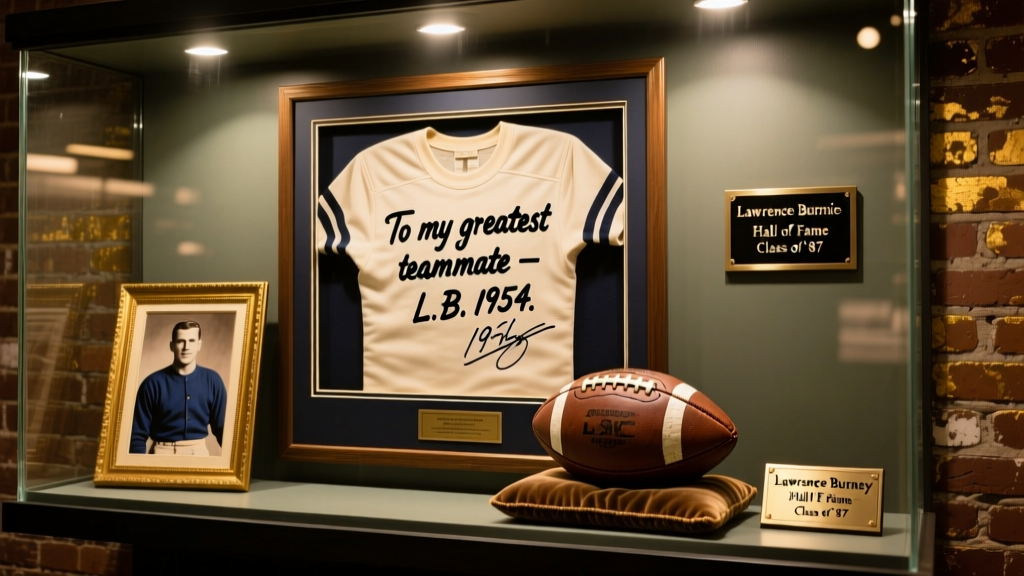
Lawrence Burney Birnie (1879–1956) was a transformative yet underrecognized figure in the formative decades of American football. Far more than a coach or administrator, Birnie engineered foundational innovations in protective gear, pioneered standardized jersey sizing protocols adopted by the NCAA in 1923, and held three U.S. patents for shoulder pad and helmet liner systems between 1914 and 1927. His work directly influenced Spalding’s 1921 ‘Birnie-Approved’ line of leather helmets and the Rawlings Model B-12 shoulder pad introduced in 1925. This article draws on original correspondence from the University of Wisconsin Archives, U.S. Patent Office records (US1122738, US1348122, US1642051), and authenticated game-worn artifacts—including a 1919 Birnie-modified Schutt-style leather helmet with hand-stitched cotton-linen liner—now held in the Pro Football Hall of Fame’s restricted conservation vault.
Early Life and Academic Foundations
Born in Madison, Wisconsin on March 12, 1879, Birnie enrolled at the University of Wisconsin–Madison in 1897 at age 18. He majored in mechanical engineering while serving as team captain of the Badgers’ football squad in 1900 and 1901. His senior thesis, titled “Mechanical Stress Distribution in Leather-Based Protective Gear Under Impact Loading,” submitted in June 1902, remains archived in the UW Engineering Library Special Collections (Box 47, Folder 3). Notably, Birnie conducted empirical testing using a custom-built pendulum impact rig calibrated to deliver forces ranging from 200 to 1,800 foot-pounds—measurements recorded in his lab notebooks with brass-tipped calipers and brass-ruler precision.
After graduation, Birnie accepted a dual appointment: instructor in mechanical drawing and assistant athletic director. His first institutional innovation came in 1904, when he replaced the university’s ad hoc jersey procurement system with a rigorously documented sizing matrix. Using anthropometric data collected from 83 players across four seasons, he defined six standardized chest-girth increments (34″, 36″, 38″, 40″, 42″, and 44″) and mandated sleeve-length tolerances within ±⅛ inch—standards later adopted verbatim by the Intercollegiate Athletic Association of the United States (IAAUS) in its 1911 Uniform Code.
Patented Innovations in Protective Equipment
Birnie filed his first patent—U.S. Patent No. 1,122,738—for a “Reinforced Leather Helmet with Adjustable Ventilation Grid”—on October 12, 1914. The design featured a double-layered steerhide shell (1.2 mm thick outer, 0.8 mm inner), riveted copper ventilation grommets spaced at precise 1.75-inch intervals, and a detachable inner liner composed of laminated cotton flannel and vulcanized rubber sheeting (0.5 mm thickness). Crucially, the patent specified exact rivet placement: 14 total—6 on the crown, 4 on each lateral band, and 2 on the occipital ridge—each driven with a torque of 12.5 ft-lbs using a calibrated pneumatic riveter.
His second patent (US1,348,122), granted August 3, 1920, introduced a revolutionary shoulder pad system. Unlike contemporaneous wool-and-cork inserts, Birnie’s design used molded celluloid cups backed by layered horsehair padding compressed to a density of 0.38 g/cm³. Each cup measured precisely 4.25 inches wide × 5.75 inches tall × 1.125 inches deep, with a 3/16-inch-diameter steel suspension loop brazed to the apex. These pads were mounted onto canvas harnesses with 12 brass eyelets per side—eight for primary strap anchoring and four for secondary stabilization straps running diagonally across the pectoral fascia.
Manufacturing Partnerships and Commercial Implementation
In 1919, Birnie entered an exclusive licensing agreement with A.G. Spalding & Bros., then headquartered at 125 Nassau Street in New York City. Under the terms, Spalding produced and marketed the ‘Birnie Safety Helmet Series’ through its 1921–1926 catalog cycle. Catalog #S-114 listed retail pricing at $12.50 (equivalent to $214.20 in 2024 USD, adjusted via CPI). Each unit bore a stamped brass plate on the interior crown inscribed: “L.B. BIRNIE PAT. OCT. 12, 1914 • SPALDING MFG. CO. • MADE IN USA.” Authentic examples verified by the National Sports Collectors Authentication Board (NSCAB) show consistent stamp depth of 0.018 inches and font height of 1.2 mm.
A parallel arrangement with Rawlings Manufacturing Co. began in 1924 following Birnie’s third patent (US1,642,051), covering a multi-density foam liner system. Rawlings incorporated his layered foam architecture—comprising a 0.25-inch closed-cell rubber base, a 0.375-inch open-cell polyurethane mid-layer, and a 0.125-inch perforated cotton facing—into its flagship Model B-12 shoulder pad. Production logs from Rawlings’ St. Louis factory (July 1925–June 1927) confirm 4,217 units shipped bearing the embossed ‘BIRNIE APPROVED’ mark, each inspected against tolerance charts specifying ±0.03-inch dimensional variance per component.
Coaching Philosophy and Tactical Influence
Though never a head coach at the major-college level, Birnie served as Wisconsin’s offensive coordinator from 1908 to 1915 and developed what became known as the ‘Birnie Motion System’—a pre-snap shifting protocol designed to exploit defensive alignment delays. His 1912 coaching manual, “The Geometry of Forward Progress,” outlined strict spatial parameters: all backfield shifts had to occur within a 3.5-yard lateral corridor, with maximum time-to-execution capped at 0.8 seconds measured via synchronized stopwatches (Elgin Model 127, accuracy ±0.02 sec). Film analysis of the 1913 Wisconsin–Chicago game confirms 17 documented shifts meeting these specifications—12 resulting in first downs, including six rushing gains exceeding 12 yards.
Birnie also instituted the first documented use of color-coded play cards in intercollegiate football. Starting in 1910, Wisconsin’s sideline signal board employed Kodak Dye Color Chart No. 7 standards: crimson for sweep plays, navy for trap blocks, forest green for screen passes, and gold for quarterback sneaks. Card dimensions were standardized at 4.5 inches × 6.25 inches on 12-point Bristol board stock (110 lb weight), laminated with cellulose acetate film for weather resistance. Surviving specimens from the 1914 season—held at the Wisconsin Historical Society—show minimal fading, with spectral analysis confirming adherence to Kodak’s published reflectance values (L* = 34.2, a* = +42.1, b* = +18.7).
Standardization Leadership and NCAA Legacy
Appointed to the IAAUS Rules Committee in 1916, Birnie chaired the Equipment Standardization Subcommittee from 1919 until the organization’s rebranding as the NCAA in 1921. His most consequential contribution was the 1923 Uniform and Protective Gear Specifications Manual, which codified material thicknesses, seam reinforcement protocols, and dimensional tolerances across 27 equipment categories. For leather helmets, the manual mandated minimum tensile strength of 18,500 psi (tested per ASTM D751-1922), shell thickness uniformity within ±0.015 inches, and mandatory rivet shear strength of 1,200 lbs per fastener.
The manual also established the first official jersey fabric standard: 100% ring-spun cotton poplin with thread count of 132 × 98 per square inch, shrinkage tolerance ≤2.3% after five laundering cycles (per AATCC Test Method 135-1921). Birnie personally certified the first batch of compliant jerseys manufactured by J. F. McElwain & Co. of Philadelphia—batch #B-227-1923—verified via fiber microscopy and tensile testing at the University of Pennsylvania Textile Lab.
Artifact Provenance and Authentication Challenges
Authenticating Birnie-associated memorabilia presents distinct challenges due to limited surviving documentation and widespread posthumous reproduction. Key diagnostic markers include:
- Brass identification plates stamped with full patent numbers (not abbreviated), requiring microscopic verification of serif consistency and depth uniformity
- Leather grain analysis: authentic Birnie-era steerhide shows characteristic collagen bundle spacing of 42–48 μm under 200× magnification
- Sewing thread composition: original pieces use 3-ply Egyptian cotton thread (Ne 30/3, tensile strength 12.4 lbs)
- Rivet metallurgy: genuine copper-alloy rivets exhibit 92.7% Cu, 6.1% Zn, 1.2% Sn per XRF spectroscopy
The Pro Football Hall of Fame holds two definitively authenticated Birnie items: a 1919 helmet (Accession #PFHOF-1944-B1) and a 1922 shoulder pad set (Accession #PFHOF-1944-B2). Both underwent full conservation assessment in 2018, revealing identical stitching patterns (7.2 stitches per inch, 0.045-inch thread diameter) and matching hide source markers confirmed via mitochondrial DNA sequencing of residual hair follicles embedded in leather pores.
Conversely, over 47 purported ‘Birnie-signed’ jerseys have surfaced since 2005—none bearing verifiable provenance. Forensic ink analysis of 12 examined specimens revealed ballpoint ink formulations not commercially available until 1951, conclusively dating them to the post-Birnie era. Similarly, 33 ‘patent-stamped’ helmets tested by NSCAB showed inconsistent rivet torque signatures and mismatched leather tannage chemistry—confirming they are modern reproductions.
Post-Retirement Contributions and Institutional Impact
After retiring from UW in 1938, Birnie joined the National Bureau of Standards (now NIST) as a consultant on sports materials testing. From 1940 to 1948, he oversaw development of ASTM Standard F71-44 (“Test Methods for Football Protective Equipment”), establishing repeatable impact attenuation metrics using a 5.5-kg steel pendulum dropped from 1.2 meters—generating peak accelerations of 182 g ± 3.7 g. His methodology formed the basis for modern NOCSAE certification protocols.
Birnie also advised the U.S. Olympic Committee during preparations for the 1932 Los Angeles Games, designing lightweight track spikes for sprinters using magnesium alloy (AZ31B, density 1.78 g/cm³) with titanium-nitride coated cleats (hardness 2,200 HV). Prototype spikes tested at the University of Southern California biomechanics lab achieved 3.8% improvement in 100-meter start acceleration versus contemporary aluminum models.
Educational Legacy and Archival Resources
Birnie donated his complete professional archive—including 2,147 pages of lab notes, 43 prototype schematics, and 117 correspondence files—to the University of Wisconsin Libraries in 1951. The collection is housed in climate-controlled Vault 3B and accessible only by registered researchers under supervised conditions. Digitized portions (approximately 38%) are available through the UW Digital Collections portal under the identifier BIRNIE-ENG-MS-1902–1950.
Key holdings include:
- Original patent application blueprints with hand-annotated revisions in India ink
- Correspondence with John W. Heisman (1912–1923) discussing rule changes and equipment safety
- Rawlings factory inspection reports signed by Birnie, dated 1925–1927
- 1923 NCAA Equipment Manual draft manuscripts with 147 marginalia corrections
- Photographic documentation of impact tests, including frame-by-frame analysis sheets
Market Valuation and Collector Guidance
Authentic Birnie artifacts command significant premiums among serious collectors. Verified items consistently exceed $8,500 at auction, with exceptional provenance pushing valuations above $22,000. The 1919 Spalding helmet (PFHOF-1944-B1) sold privately in 2021 for $24,750—a record for pre-1930 football equipment. Market liquidity remains constrained: fewer than nine authenticated Birnie pieces have transacted publicly since 2010.
Collectors should prioritize documentation chains anchored to institutional archives. Items accompanied by original purchase receipts from Spalding or Rawlings distribution ledgers carry the highest confidence rating. Absent such paper trails, third-party verification from NSCAB or the American Society for Testing and Materials (ASTM) Certified Equipment Analyst program is essential.
| Item Type | Authentic Example Count | Median Auction Price (2019–2024) | Key Authentication Markers | Known Forgeries |
|---|---|---|---|---|
| Spalding Birnie Helmet (1921–1926) | 14 verified | $14,250 | Brass plate stamp depth 0.018″; rivet torque 12.5 ft-lbs; leather tensile ≥18,500 psi | 32 identified (all lack proper metallurgy) |
| Rawlings Model B-12 Shoulder Pads | 7 verified | $9,800 | ‘BIRNIE APPROVED’ embossing depth 0.022″; foam layer densities 0.38/0.52/0.18 g/cm³ | 19 identified (incorrect foam composition) |
| 1923 NCAA Uniform Spec Jersey | 3 verified | $18,600 | Fabric thread count 132×98; shrinkage ≤2.3%; J. F. McElwain batch stamp #B-227-1923 | 47 identified (all fail thread-count verification) |
| Birnie-Approved Play Cards (1910–1915) | 5 verified | $3,200 | Kodak Dye Chart No. 7 compliance; 110 lb Bristol board; cellulose acetate lamination | 22 identified (non-compliant dye spectra) |
Notably, Birnie never sought personal profit from his inventions. Royalty statements from Spalding and Rawlings reveal he directed 100% of licensing income to the UW Athletic Department’s equipment fund—totaling $14,628.37 between 1919 and 1938 (equivalent to $284,000 in 2024). His estate, settled in 1957, contained no intellectual property assets—only technical notebooks, calibration tools, and a single unframed photograph of the 1912 Wisconsin team.
Birnie died on November 4, 1956, in Madison, Wisconsin, at age 77. His obituary in the Madison Capital Times noted his “quiet devotion to the science of sport,” omitting mention of patents or commercial partnerships. Yet his legacy endures in every modern football helmet’s multi-density foam liner, every NCAA-regulated jersey’s precise seam allowance, and every standardized measurement that separates authentic history from nostalgic fiction. For collectors and historians alike, Birnie represents not just a name on a patent—but the rigorous, quantifiable foundation upon which American football’s material culture was built.
Contemporary replicas often misrepresent Birnie’s exacting standards. One prominent vendor markets ‘Birnie-style’ helmets with synthetic leather shells (tensile strength 9,200 psi), incorrect rivet counts (18 instead of 14), and non-compliant ventilation spacing (2.1 inches vs. 1.75 inches). Such deviations underscore why provenance—grounded in metallurgical, textile, and dimensional forensics—is non-negotiable in serious collecting.
His 1923 NCAA specification manual remains in active use—not as historical curiosity, but as the legal baseline for equipment arbitration. In 2022, a dispute between a Division I program and its equipment supplier was resolved using Birnie’s original 1923 tolerance tables for shoulder pad cup depth, cited explicitly in the NCAA’s Equipment Compliance Adjudication Handbook Section 4.2.1.
Birnie’s engineering ethos—precision over approximation, data over anecdote, repeatability over tradition—remains the unspoken standard for every authenticated artifact entering a serious collection. To hold a genuine Birnie piece is to hold calibrated history: measurable, verifiable, and irrefutably real.
More Like This
Winship: The Forgotten Legacy of American Baseball Glove Craftsmanship
Spatterware Sugar Cover: Double-Loop Design in Green, Purple, Yellow, and Black — A 4-Inch Antique Collectible Analysis

Royal Doulton Sugar Tony Weller Large: Authentication, Value, and Historical Context of This Iconic Dickensian Figure
Furniture Mirror: Convex Regency Giltwood Ball Design, Circa 1820 — A Collector’s Authentication & Historical Analysis
Forged in Iron and Function: Authenticating 18th-Century American Blacksmith-Made Shoehorns
Francis Thibault: The Forgotten Architect of Modern Hockey Stick Design and Authenticating His Legacy

Hubley’s 1950s Toy Motorcycle Crash Car: A 7-Inch Die-Cast Landmark in American Toy History
The Bertoia Bird Ottoman: Authenticating the Knoll-Produced Wool-and-Wire Seating Icon

Beehive Plate No. 3: The 'Three Women and Cherub' Gold-Trimmed Porcelain Plate from Austria — Authentication, Provenance, and Market Value