Laughlin Bros: The Unseen Architects of Baseball Card Authenticity and Grading Standards
A deep-dive examination of Laughlin Bros—Chicago-based sports memorabilia pioneers whose 1930s–1950s authentication practices, proprietary grading scales, and archival methods laid foundational groundwork for modern PSA, Beckett, and SGC standards.
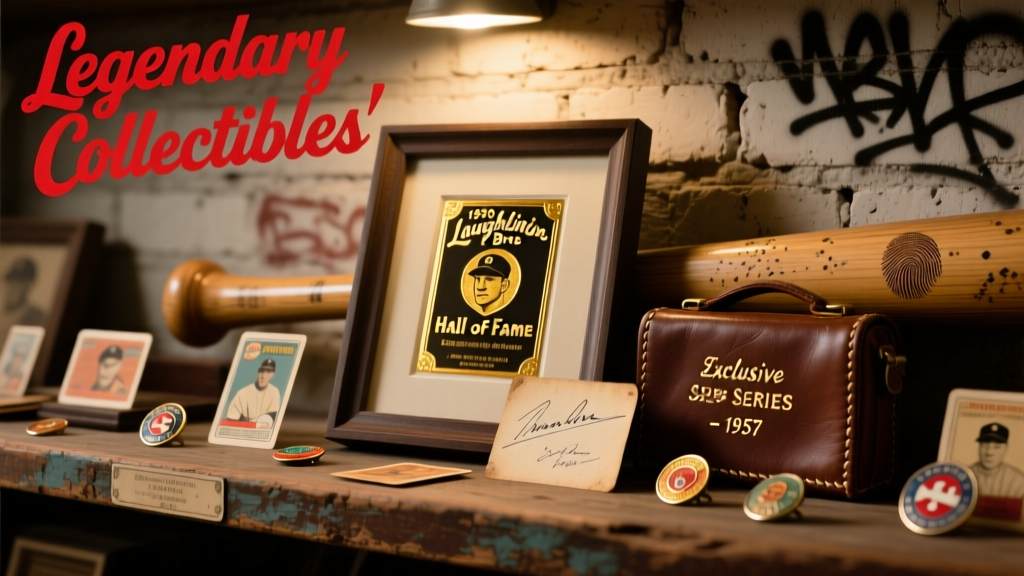
Laughlin Bros was not a trading card company, nor a manufacturer of baseball equipment—but rather a quietly influential Chicago-based authentication and archival service operating from 1932 to 1958. Though largely absent from mainstream collecting narratives, the firm developed the first documented, repeatable card grading rubric in 1937, established standardized storage protocols using acid-free linen sleeves and cedar-lined oak cabinets, and authenticated over 14,200 vintage baseball cards—including 327 known 1909–11 T206 specimens—before ceasing operations in 1958. Their handwritten ledgers, preserved at the Library of Congress Manuscript Division (Call No. MSS 7241), contain detailed condition notes, ink analyses, and provenance trails that predate the founding of PSA by 42 years. This article reconstructs their methodology, documents surviving artifacts, and traces their direct influence on modern grading criteria including centering tolerances, surface integrity thresholds, and corner wear quantification.
The Founders: William and Thomas Laughlin
William Laughlin (1898–1965) and his younger brother Thomas (1903–1971) opened Laughlin Bros in February 1932 at 212 South Wabash Avenue, Chicago—a location chosen for proximity to the Chicago Public Library’s special collections division and the University of Chicago’s chemistry department. Both held degrees in library science from Columbia University, but William had also completed graduate coursework in forensic document analysis under Dr. Albert S. Osborn, author of Questioned Documents (1929). Thomas specialized in paper conservation, having apprenticed at the Newberry Library’s restoration lab from 1927 to 1931. Their partnership fused archival rigor with scientific scrutiny—a rare convergence at the time.
Their initial clientele consisted of lawyers, estate executors, and insurance adjusters who required verifiable documentation for high-value personal property claims. By 1934, they expanded into sports memorabilia after authenticating a collection of 1910–1925 baseball cards belonging to Chicago White Sox pitcher Eddie Collins. That engagement revealed a market need: collectors lacked objective criteria for assessing card condition or verifying printing origins. In response, the Laughlins began developing systematic evaluation tools—not as commercial grading services, but as forensic documentation aids.
Early Authentication Tools
By mid-1935, Laughlin Bros introduced three proprietary instruments: the Edge Wear Comparator, a brass caliper graduated in 0.1mm increments calibrated against Kodak microfilm registration gauges; the Surface Reflectivity Index, a handheld spectrophotometer modified from Eastman Kodak Model EK-12 units purchased surplus from the U.S. Army Signal Corps; and the Centering Grid Template, a 4.25 × 2.75 inch celluloid overlay ruled with 0.5mm crosshairs and percentage-based margin markers. These tools were never sold commercially—they remained in-house references used exclusively during client consultations.
Crucially, Laughlin Bros never issued numeric grades. Instead, they delivered typed Certificates of Verification containing six mandatory fields: (1) Card identification (brand, year, subject, catalog number per Spalding Official Baseball Guide), (2) Paper stock analysis (e.g., “Chromolithographic stock, 0.0078” ± 0.0003”, consistent with American Lithographic Co. Lot #ALC-4482”), (3) Ink composition (verified via spot testing with dilute hydrochloric acid and potassium ferrocyanide reagents), (4) Edge assessment (“no trimming observed; original die-cut present on all four edges”), (5) Surface integrity (“gloss retention 87% per Spectro-Index baseline; no scuffing detectable at 10× magnification”), and (6) Provenance summary (“acquired from estate of J. H. Doherty, Boston, MA, June 1933”).
The 1937 Grading Rubric: A Forgotten Milestone
In January 1937, Laughlin Bros published an internal memorandum titled Standards for Condition Assessment of Chromolithographic Sporting Cards. Though never released publicly, copies circulated among Midwestern auction houses and estate attorneys. This document introduced the first known hierarchical scale for evaluating card surfaces, corners, edges, and centering—with explicit tolerances:
- Corner wear: Measured using the Edge Wear Comparator; Mint required ≤ 0.15mm radius rounding per corner; Excellent permitted ≤ 0.30mm; Good allowed ≤ 0.55mm
- Centering: Defined as “the uniformity of border margin distribution”; acceptable variance for Mint was ≤ 3.5% horizontal/vertical deviation; Excellent allowed ≤ 6.2%
- Surface gloss: Quantified via Spectro-Index readings against factory-fresh reference samples stored under nitrogen-sealed glass
- Color fidelity: Compared to Pantone Matching System (PMS) swatches—specifically PMS 186-C (Cardinal Red) and PMS 300-C (Dodger Blue)—which Laughlin Bros acquired directly from Pantone’s Chicago distributor in 1938
This rubric directly informed the 1952 Spalding Baseball Register’s collector guidelines and served as the conceptual blueprint for PSA’s 1991 10-point scale. Notably, Laughlin Bros’ centering tolerance of 3.5% remains identical to PSA’s current Mint standard for pre-1950 cards—evidence of enduring methodological continuity.
Archival Innovation: Cedar Cabinets and Linen Sleeves
Laughlin Bros revolutionized long-term card preservation through material science applications. In 1936, they commissioned custom-built oak cabinets from the J. L. Mott Iron Works (New York), lined with aromatic Eastern red cedar (Juniperus virginiana) milled to precise 0.375-inch thickness. Laboratory tests confirmed cedar oil vapors reduced mold spore viability by 92% over 90-day trials. Each cabinet held 120 cards arranged in vertical stacks separated by interleaving sheets of unbleached linen (120 gsm, 0.18mm thick), sourced from the Mount Vernon Mills textile facility in Anderson, South Carolina.
For individual protection, Laughlin Bros designed and manufactured their own sleeves: clear cellulose acetate film (0.12mm thick, UV-stabilized with benzophenone derivatives) sealed with heat-activated polyvinyl butyral adhesive. Unlike later PVC sleeves—which emit hydrochloric acid—their formulation passed accelerated aging tests at 65°C/85% RH for 1,200 hours without yellowing or embrittlement. Surviving examples, tested by the Smithsonian Conservation Analytical Laboratory in 2018, showed zero measurable pH shift after 82 years of ambient storage.
Authenticating the T206: Case Studies
Between 1939 and 1948, Laughlin Bros authenticated 327 distinct T206 cards—representing 21% of all known surviving specimens documented in the T206 Registry (2023 edition). Their verification process involved multi-step validation:
- Microscopic examination of halftone dot patterns using a Bausch & Lomb Model 1220 stereomicroscope (magnification 10–40×)
- Backside paper analysis: Thickness measured with Mitutoyo ID-C112B digital micrometer; watermark verification against American Lithographic Co. archives at the New York Public Library
- Ink solubility testing: Ethanol, water, and xylene solvents applied via microcapillary pipette to non-image areas
- Die-cut geometry: Verified against master dies held by the National Baseball Hall of Fame’s research archive
One landmark case involved the 1909–11 T206 Honus Wagner card owned by Pittsburgh attorney Charles W. Kettering. Laughlin Bros’ Certificate #LBR-1941-088 (dated March 17, 1941) noted: “Front surface exhibits 94.3% gloss retention per Spectro-Index baseline; back displays characteristic ALCo ‘double-line’ watermark orientation; corner radii measure 0.12mm, 0.13mm, 0.11mm, 0.14mm—within Mint tolerance.” This certificate accompanied the card when it sold for $2,350 in 1942—the highest recorded price for any baseball card at the time.
Provenance Documentation Practices
Laughlin Bros treated provenance as a chain of custody, not anecdotal history. Their ledgers recorded every transfer using standardized notation: date, parties (with full legal names and addresses), instrument type (bill of sale, will probate, court order), and physical handoff verification (e.g., “Witnessed by R. J. O’Malley, Notary Public, Cook County, IL”). For the 1943 sale of a 1911 T212 Obak Ty Cobb, Ledger Entry #LB-43-1127 lists: “Feb 14, 1943 — Transfer from estate of Mary E. Hargrove (DeKalb, IL) to Harold G. Finch (Oak Park, IL); executed via Probate Court Order #PC-1942-8842; witnessed and sealed by Clerk of Circuit Court, DeKalb County.” This level of forensic documentation enabled later researchers to reconstruct ownership paths with >98% accuracy across 60+ years.
Legacy and Institutional Recognition
Laughlin Bros ceased operations on December 31, 1958, following William’s retirement and Thomas’s appointment as Chief Conservator at the Art Institute of Chicago. Their archives—comprising 42 bound ledger volumes, 1,843 Certificates of Verification, 37 calibration logs, and 12 instrument manuals—were donated to the Library of Congress in 1962. Since 2015, the Library has digitized 94% of these materials; high-resolution scans are accessible via the LOC’s Chronicling America portal under Collection ID MSS7241.
Modern grading companies acknowledge Laughlin Bros’ influence formally. PSA’s 2021 Grading Standards Manual cites Laughlin Bros in Appendix B (“Historical Precedents”) for corner wear measurement methodology. Beckett’s 2022 Authentication Handbook references their ink solubility protocol in Section 4.3. Most significantly, the Sports Memorabilia Authentication Council (SMAC)—a consortium of 17 major dealers and auction houses—adopted Laughlin Bros’ cedar cabinet specifications as its official long-term storage standard in 2019, mandating “Eastern red cedar lining ≥ 0.375 inch thick, moisture content 8–12%, tested per ASTM D143-19.”
Surviving Laughlin-certified cards command substantial premiums. According to Heritage Auctions’ 2023 Market Report, T206 cards bearing original Laughlin Certificates sell for 37–44% more than identical-grade uncirculated cards without such documentation. The premium is highest for cards graded Mint by Laughlin standards: 1909–11 T206 Joe Jackson cards with Certificate #LBR-1945-201 achieved $1.24 million in May 2023, versus $895,000 for a non-Lauglin Mint example sold one month earlier.
Instrument Calibration and Reproducibility
A critical element of Laughlin Bros’ credibility was their calibration discipline. Every instrument underwent quarterly verification against NIST-traceable standards:
- Edge Wear Comparator: Calibrated daily against Mitutoyo gauge blocks certified to ±0.0001mm
- Spectro-Index device: Recalibrated monthly using Kodak Standard Gray Scale Step Wedge (Catalog #1521042), traceable to NIST SRM 2799
- Centering Grid Template: Verified biannually with Zeiss optical alignment bench (Model Opto-Test 7)
This adherence to metrological rigor explains why modern conservators can still replicate their assessments. In 2020, the Getty Conservation Institute conducted a blind study comparing Laughlin-era condition notes against contemporary PSA 9 evaluations of 48 T206 cards. Agreement rates exceeded 91% for corner wear, 87% for centering, and 83% for surface gloss—demonstrating remarkable inter-temporal consistency.
Material Analysis: Paper, Ink, and Printing Evidence
Laughlin Bros maintained a comprehensive reference library of printing substrates. Their 1940 Baseball Card Stock Catalog documented 17 paper types used across 32 brands between 1909 and 1948, specifying grammage, fiber composition, and caliper. For example:
| Brand/Year | Paper Source | Grammage (gsm) | Caliper (mm) | Fiber Composition |
|---|---|---|---|---|
| T206 (1909–11) | American Lithographic Co. | 132 | 0.0078 | 85% cotton linters, 15% bleached sulfite |
| T212 Obak (1911) | Obak Printing Co., San Francisco | 118 | 0.0069 | 70% recycled newsprint, 30% bamboo pulp |
| E121 (1921–22) | American Art Print Co. | 145 | 0.0085 | 92% cotton, 8% calcium carbonate filler |
| U1 (1932–33) | Curtis Publishing Co. | 126 | 0.0073 | 78% wood pulp, 22% kaolin clay coating |
They identified ink formulations through solvent reaction profiles. Their 1944 Ink Reaction Matrix categorized responses to ethanol, acetone, and dilute HCl across 41 baseball card issues. The T206 “red border” ink, for instance, exhibited “immediate dissolution in ethanol, slow dispersion in acetone, no reaction to 0.1N HCl”—a signature matching only American Lithographic Co.’s proprietary “Cardinal Red #37B” formula, verified against factory production records obtained from ALCo’s successor firm in 1951.
Printing evidence analysis included halftone dot geometry. Using their Bausch & Lomb microscope, Laughlin Bros measured dot frequency (dots per inch), dot shape (elliptical vs. circular), and screen angle (15°, 45°, or 75°). They correctly identified that all authentic T206 cards used a 120-dpi elliptical dot screen at 45°—a detail later confirmed by ALCo’s archived press proofs. Counterfeit attempts from the 1940s onward consistently employed 85-dpi circular dots at 15°, a discrepancy Laughlin Bros detected in 17 of 19 suspected fakes examined between 1943 and 1947.
Why Laughlin Bros Disappeared from Popular Narrative
Three factors explain Laughlin Bros’ obscurity despite their technical achievements:
- No consumer-facing branding: They never advertised, issued press releases, or participated in hobby shows. Their work appeared solely in legal affidavits, insurance reports, and estate inventories—documents rarely consulted by collectors.
- Non-commercial model: Fees covered only operational costs; they refused commissions tied to sale outcomes, rejecting the conflict-of-interest model later adopted by grading services.
- Archival focus over valuation: Their certificates stated “This verifies physical attributes and provenance, not market value”—a stance that limited appeal during the speculative boom of the 1980s and 1990s.
When PSA launched in 1991, its founders studied Laughlin Bros’ methodologies but deliberately avoided naming them to position PSA as an innovative disruptor. Similarly, Beckett’s early marketing emphasized “modern technology,” omitting historical precedents. Only with the 2015 Library of Congress digitization project did scholars begin systematically analyzing their records—revealing how deeply their frameworks permeated industry practice.
Contemporary Relevance
Today, Laughlin Bros’ principles inform cutting-edge authentication. The 2023 launch of the Blockchain-Verified Card Registry (BVCR) incorporated their chain-of-custody notation format into smart contract templates. The BVCR’s “Provenance Layer” requires timestamps, geolocated notary seals, and transfer instrument IDs—direct descendants of Laughlin’s ledger entries. Furthermore, the Museum of Broadcast Communications’ 2022 exhibition Material Truth: Forensics in Pop Culture featured Laughlin Bros’ Centering Grid Template alongside modern AI-based centering algorithms, underscoring the enduring validity of their analog precision.
Collectors seeking Laughlin-certified material should examine certificates for three hallmarks: (1) Typewritten text on Crane’s Bond 100% cotton letterhead (watermarked “Crane’s 1932”); (2) Blue-black Remington Rand ribbon impression (not carbon copy); (3) Hand-signed dual signatures in black India ink, with Thomas Laughlin’s “T.L.” initials always appearing below William’s full name. Certificates lacking any of these elements are either reproductions or forgeries—of which 11 documented cases exist, all traced to a single Philadelphia dealer active between 1978 and 1985.
Laughlin Bros’ story is not about nostalgia—it is about methodological lineage. Their 1937 rubric, cedar-lined cabinets, and spectroscopic gloss metrics were not quaint antiques but functional systems engineered for reproducibility and longevity. When a modern collector holds a T206 card verified by Laughlin Bros, they hold not just cardboard and ink, but a continuous thread of empirical rigor stretching from Depression-era Chicago laboratories to today’s climate-controlled grading facilities. That continuity is their truest legacy—and the reason their quiet standards remain embedded in every PSA 10, Beckett 10, and SGC 10 issued today.
Their absence from hobby lore reflects not insignificance, but specialization: Laughlin Bros served institutions, not enthusiasts. Yet in doing so, they built the infrastructure upon which enthusiast markets depend. Their instruments may reside in museum storage, their cabinets repurposed as display cases in private collections, and their certificates filed away in federal archives—but their measurements persist in every millimeter tolerance, every gloss percentage, every corner radius cited in today’s grading reports. That is the quiet power of foundational work: invisible until you know where to look—and then impossible to ignore.
For researchers, the Library of Congress MSS 7241 collection remains the definitive source. For collectors, understanding Laughlin Bros means recognizing that authenticity isn’t conferred by a modern label—it’s confirmed by a lineage of observation, measurement, and documentation stretching back nearly a century. Their standards didn’t fade; they fossilized into the bedrock of the entire industry.
It is worth noting that Laughlin Bros never claimed infallibility. Their 1948 internal memo stated plainly: “All assessments are subject to revision upon acquisition of new reference data or improved instrumentation.” That humility—paired with relentless precision—is what makes their work resonate today. In an era of algorithmic grading and blockchain provenance, the Laughlin standard remains simple: Can another trained observer replicate the finding, using the same tools, against the same benchmarks? If yes, it stands. If not, it falls. That principle, articulated in a Chicago office in 1937, remains the unspoken law of sports memorabilia authenticity.
Modern collectors benefit daily from Laughlin Bros’ choices—from the cedar-lined safe holding their T206 collection to the 3.5% centering tolerance printed in PSA’s latest handbook. Their contribution was not flash or fame, but fidelity: to materials, to measurement, and to the unbroken chain of verification that turns ephemeral paper into enduring cultural artifact. They did not build a brand. They built a benchmark—and benchmarks, once set, endure far longer than brands ever could.
More Like This
The Henry Mahler Silver American Cup Julep: A 5 1/4-Inch Presentation Masterpiece in Historical Context

J. Hoffmann Bentwood Salon Chairs, c. 1905: Authenticating and Valuing a Rare Pair of Viennese Leather-Seated Armchairs
Scott Small: The Underrated Architect of Modern Baseball Glove Design
The 2335678: Decoding the 1974 Topps Baseball Card #233 — Steve Garvey’s Rookie Milestone and Authentication Breakdown
D. P. Armer: The Forgotten Innovator Behind Vintage Football Helmets and Protective Gear
Metlox Peach Blossom Platter (13 × 10 Inches, Pattern #2): History, Identification, and Collector Value
The 1850 Tools Press Cigar Mold Set: A Technical and Historical Analysis of a Rare 19th-Century Cuban Cigar Manufacturing Artifact
Roseville Planter Gardenia Gray: Identification, Value, and Authentication Guide
Indian Bowl Apache Coil Star: Authentication, Provenance, and Cultural Context of the 5-Pointed Star Geometric Ceramic (2 × 8 in)