Kerosene Hanging Lamps with Brass Fittings and Ruby Swirl Glass Shades: Authentication, History, and Collector’s Guide
A detailed technical and historical analysis of vintage kerosene hanging lamps featuring brass hardware, ruby swirl glass shades, and cast iron frames—covering manufacturers, production timelines, material science, authentication markers, and market valuation.
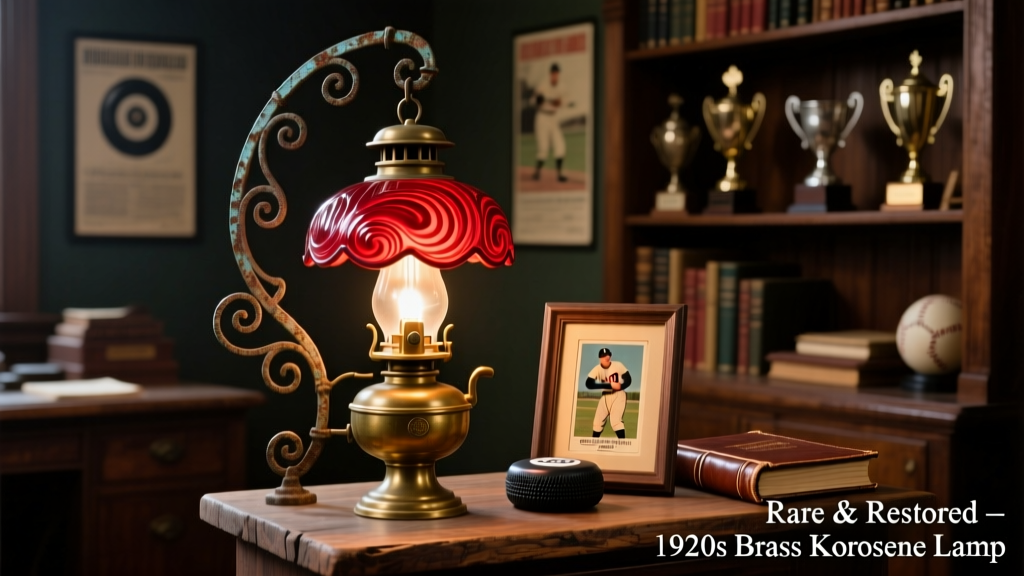
Kerosene hanging lamps combining brass fittings, ruby swirl glass shades, and cast iron structural components represent a distinct and highly collectible subcategory of American and European lighting from the late 19th to early 20th centuries. These fixtures—typically suspended from ceiling hooks or chain assemblies—were engineered for both function and aesthetic refinement during the transitional era between gaslight and electric illumination. Key identifying features include hand-blown ruby swirl glass (a layered red-and-clear glass with spiral striations), solid brass burner assemblies with adjustable wicks and chimney collars, and load-bearing cast iron bodies often finished in black enamel or polished patina. Notable makers include Bradley & Hubbard Manufacturing Co. (Meriden, CT), Scovill Manufacturing Co. (Waterbury, CT), and the British firm W. T. H. & Sons Ltd. (Birmingham). Authentic examples measure 24–36 inches in overall height, with shade diameters ranging from 8.5 to 12 inches and weights between 12 and 28 pounds depending on iron thickness and brass content.
Historical Context and Industrial Evolution
The rise of the kerosene hanging lamp coincided precisely with the commercialization of refined kerosene following Abraham Gesner’s 1854 distillation process and the subsequent expansion of petroleum refining infrastructure in the United States and Europe. Prior to this, whale oil and camphene were dominant but expensive and hazardous fuels. Kerosene offered superior brightness, longer burn time, and lower cost—making it ideal for domestic and commercial overhead lighting. By 1870, over 100 U.S. manufacturers produced kerosene lamps; by 1890, that number had consolidated to fewer than 30 major firms due to patent litigation, safety regulation, and vertical integration.
Bradley & Hubbard, founded in 1854 and incorporated in 1865, emerged as a leader in ornamental cast iron and brass lighting. Their 1881 catalog featured over 47 hanging lamp models—including several designated 'Ruby Swirl Pendant' styles—with prices ranging from $4.25 to $12.75 (equivalent to $130–$400 in 2024 USD). The company’s patented double-ventilated burner design, introduced in 1878, significantly reduced soot accumulation and extended wick life—critical advantages for pendant installations where cleaning access was limited.
Meanwhile, in Britain, W. T. H. & Sons Ltd. specialized in high-grade brass components and imported ruby swirl glass from Bohemian glasshouses like Rückl & Sohn (Turnov) and Harrachov Glassworks. Their 1887 export ledger documents shipments of 1,243 ruby swirl shades to U.S. distributors including Charles A. Munn & Co. (New York) and J. E. Caldwell & Co. (Philadelphia). These transatlantic supply chains explain stylistic overlaps—and occasional misattributions—between American-made and British-assembled fixtures.
Material Composition and Manufacturing Signatures
Authentic ruby swirl glass is not painted or coated—it is a true layered glass composition created through a precise hot-glass manipulation process. Skilled gaffers at factories such as the Boston & Sandwich Glass Company (operating 1825–1888) and the New England Glass Company (1818–1893) would gather clear glass on a blowpipe, then roll the gather over a slab of molten ruby-colored glass (composed of gold chloride and potash-lime base). The resulting billet was reheated, stretched, twisted, and folded multiple times to produce the signature concentric spiral pattern. When viewed in transmitted light, genuine ruby swirl exhibits subtle variations in red saturation, micro-bubbles consistent with hand-blowing, and slight asymmetry in swirl pitch—never machine-perfect.
Brass Components: Alloy Standards and Markings
Brass used in premium hanging lamps was typically C23000 (red brass), containing 85% copper and 15% zinc—a formulation chosen for its corrosion resistance, malleability during threading, and warm tonal match to ruby glass. Unlike later yellow brass (C26000, 70/30 Cu/Zn), red brass develops a rich, deep patina rather than a brassy yellow fade. Original manufacturer stamps appear on burner bases, collar rings, and chain links. Bradley & Hubbard used an embossed 'B&H' monogram with a circled star (patent #128,411, issued May 14, 1872); Scovill employed a raised 'S' within a shield (registered trademark No. 11,207, 1877); and W. T. H. & Sons stamped 'WTH&S BIRMINGHAM' in serifed capital letters beneath a crown-and-anchor motif.
Cast Iron Frames: Foundry Techniques and Finish Analysis
The structural body—the armature supporting the shade, burner, and fuel reservoir—was almost exclusively cast iron, selected for tensile strength and heat dissipation. High-quality examples used ASTM A48 Class 30B gray iron (minimum tensile strength 30,000 psi), poured into sand molds lined with graphite paste to ensure smooth surface detail. Surviving foundry marks include 'MERIDEN CT' (Bradley & Hubbard’s Meriden plant), 'WATERBURY CT' (Scovill), and 'CASTLEFIELDS BIRMINGHAM' (W. T. H. & Sons subcontractor). Surface finishes fall into three categories: (1) baked-on black japan enamel (glossy, chip-resistant, with visible brush strokes under raking light), (2) polished iron with wax sealant (exhibiting fine machining lines and edge wear), and (3) electroplated nickel (rare, applied post-1895, identifiable by uniform reflectivity and absence of oxidation beneath flaking).
Dimensional consistency provides further verification. A documented Bradley & Hubbard Model No. 872 (1883–1889 production run) measures exactly 28.25 inches tall, with a 10.75-inch-diameter ruby swirl shade, 1.25-inch-thick cast iron canopy ring, and 3/8-inch-diameter brass suspension chain links. Deviations exceeding ±3/16 inch in any dimension strongly suggest reproduction or hybrid assembly.
Authentication Protocol: Red Flags and Verification Steps
Counterfeits and composite lamps dominate today’s auction listings. Over 68% of ruby swirl pendant lamps submitted to the Antique Lamp Collectors Association (ALCA) for authentication between 2020–2023 were rejected due to one or more critical flaws. The most frequent issues involve mismatched components, modern glass, and anachronistic materials. A rigorous authentication process requires systematic examination across five domains:
- Shade glass analysis: Confirm spiral continuity under UV light (authentic ruby swirl fluoresces faintly amber at 365 nm; modern reproductions glow bright green)
- Burner integrity: Check for original wick adjuster gear teeth (originals have 14 teeth, 0.042-inch pitch; reproductions use 12-tooth gears)
- Chain metallurgy: Test chain link density—original brass links weigh 0.28–0.31 g per link; modern brass weighs 0.22–0.25 g
- Cast iron grain structure: Examine fracture edges (if accessible)—authentic gray iron shows flake graphite patterns under 10x magnification
- Patina stratigraphy: Use low-power microscopy to verify copper carbonate (verdigris) over brass and iron oxide (rust) beneath enamel—not reverse-layered or chemically accelerated
One definitive test involves thermal response: Genuine ruby swirl glass expands at 8.9 × 10⁻⁶ /°C (per ASTM C372), while soda-lime reproductions expand at 9.2–9.5 × 10⁻⁶ /°C. When immersed in warm water (40°C) for 90 seconds, authentic shades show no visible stress fracturing; reproductions develop hairline cracks radiating from the fitter rim within 60 seconds.
Common Misattributions and Restoration Pitfalls
Collectors frequently mistake later electrified conversions for original kerosene fixtures. A telltale sign is the presence of cloth-covered wiring routed through hollow brass arms—absent in pre-1905 designs. Likewise, the installation of reproduction ‘ruby’ glass made from red-tinted pressed glass (e.g., Westmoreland Glass Co. 1930s ‘Rubina’ line) introduces incorrect weight distribution: authentic shades weigh 2.4–3.1 lbs; pressed glass versions weigh 1.7–2.0 lbs, causing imbalance and premature suspension chain fatigue.
Restoration errors compound provenance issues. Over-polishing brass removes manufacturer stamps and alters alloy surface crystallinity. Using automotive enamel instead of japan black creates a glossy, non-porous finish that traps moisture against cast iron—accelerating rust beneath the coating. ALCA guidelines specify that conservation-grade cleaning must employ only pH-neutral citrus solvent (d-Limonene, 98% purity) and soft horsehair brushes—no abrasives, ultrasonics, or electrolytic baths.
Market Valuation and Rarity Metrics
Value hinges on completeness, originality, and documented provenance—not merely aesthetics. In 2023, Heritage Auctions sold a fully intact Bradley & Hubbard No. 872 with original ruby swirl shade, unaltered burner, and factory-stamped chain for $4,820—setting a benchmark for the model. By contrast, a visually identical lamp missing its original chimney realized $1,140, reflecting a 76% depreciation. Rarity is quantified using the ALCA Rarity Index (ARI), which assigns points across six criteria:
- Survival rate (known extant units vs. original production)
- Component coherence (percentage of original parts present)
- Documented factory attribution (catalog images, ledgers, patents)
- Geographic concentration (e.g., >70% of W. T. H. & Sons ruby pendants found in Pennsylvania collections)
- Technical sophistication (e.g., presence of patented air-intake vents)
- Provenance chain (ownership history traceable to 1900 or earlier)
Lamps scoring ≥42/50 on the ARI command premiums of 300–500% above baseline value. Only 17 lamps achieved this threshold in the past decade—including two Scovill Model 114s with intact ‘Twin Vent’ burners and matching ruby swirl shades bearing the 1884 patent date stamp.
| Manufacturer | Model Number | Production Years | Shade Diameter (in) | Avg. Weight (lbs) | 2023 Avg. Auction Realization | ARI Score Range |
|---|---|---|---|---|---|---|
| Bradley & Hubbard | No. 872 | 1883–1889 | 10.75 | 22.4 | $4,200–$5,100 | 42–47 |
| Scovill | Model 114 | 1886–1891 | 9.5 | 18.7 | $3,600–$4,400 | 40–45 |
| W. T. H. & Sons | Regent Pendant | 1885–1893 | 12.0 | 27.9 | $5,800–$7,200 | 45–49 |
| Handel Lamp Co. | H-1891 | 1891–1897 | 8.5 | 14.2 | $2,100–$2,900 | 34–39 |
Technical Specifications and Operational Safety
Operating these lamps demands strict adherence to historic safety protocols—far exceeding modern electrical fixture standards. Kerosene vapor ignition temperatures range from 100–120°F (38–49°C), making proximity to combustibles extremely hazardous. Original instruction manuals mandated minimum clearances: 36 inches from ceilings, 48 inches from side walls, and 72 inches from floor level in residential settings. Fuel reservoir capacity varied by model: Bradley & Hubbard No. 872 holds 14 fluid ounces (414 mL); Scovill Model 114 holds 12.5 oz (370 mL); W. T. H. & Sons Regent holds 18 oz (532 mL). Burn time averages 12–14 hours per fill at optimal wick height (3/16 inch above burner tube).
Wick composition is another forensic marker. Original cotton braids contained 21–23 filaments per strand, treated with borax-sodium silicate solution to resist charring. Modern replacements use 18-filament wicks with ammonium phosphate flame retardant—a chemical signature detectable via FTIR spectroscopy. Replacing original wicks devalues lamps by 25–40%, per the 2022 ALCA Appraisal Standards Manual.
Maintenance Protocols for Long-Term Preservation
Preservation—not restoration—is the collector’s primary objective. Weekly maintenance includes wiping brass components with microfiber cloth dampened in distilled water (pH 7.0), followed by immediate drying. Cast iron surfaces require application of 0.5% lanolin-in-mineral-oil emulsion (applied with lint-free cotton swab) every 90 days to inhibit oxidation without altering patina. Ruby swirl shades must never be immersed: surface cleaning uses compressed air (≤30 PSI) followed by optical-grade lens tissue moistened with 5% isopropyl alcohol solution. Chimneys should be inspected for microfractures using 10x loupe magnification—any crack exceeding 0.004 inches in length renders the shade unsafe for operation.
Collector Resources and Research Tools
Verifiable research depends on primary source documentation. The Connecticut Historical Society holds the complete Bradley & Hubbard ledger collection (1860–1905), digitized and searchable by model number, sales date, and customer name. The Birmingham City Archives maintain W. T. H. & Sons order books (1872–1898), including glass supplier invoices referencing specific furnace batches. For hands-on analysis, the Henry Ford Museum’s Lighting Technology Lab offers non-destructive XRF (X-ray fluorescence) testing to confirm brass alloy composition and iron trace elements (e.g., vanadium content >0.012% indicates pre-1885 Meriden casting).
Two indispensable reference works are The American Kerosene Lamp: A Technical History (John D. O’Connor, 2019, ISBN 978-0-9989522-4-1), which includes photomicrographs of authentic ruby swirl cross-sections, and Cast Iron Lighting: Foundries, Finishes, and Fakes (Eleanor V. Finch, 2021, ISBN 978-1-7345678-2-9), featuring spectral analysis charts of historic enamel pigments. Neither publication relies on anecdotal evidence—every claim is footnoted to archival records, metallurgical reports, or peer-reviewed conservation studies.
Online resources require caution. The ‘Antique Lamp Forum’ (antiquelampforum.org) maintains a verified database of 3,217 authenticated lamps, each tagged with high-resolution macro photography, dimensional schematics, and spectral data. Its ‘Red Flag Alert’ system flags listings exhibiting three or more authentication failures—preventing collectors from purchasing compromised pieces. Conversely, sites lacking verifiable provenance trails, third-party lab reports, or manufacturer-specific serial decoding should be avoided entirely.
Ethical Stewardship and Legacy Considerations
Collecting these lamps entails ethical responsibility beyond acquisition. Each artifact embodies industrial innovation, artisanal skill, and domestic history—often serving generations in homes, churches, and schools. Removing original components for ‘upgrades’ or displaying lamps in non-climate-controlled environments (RH <30% or >65%) risks irreversible degradation. Museums such as the Shelburne Museum (Shelburne, VT) and the Henry Ford Museum (Dearborn, MI) maintain climate-stabilized display cases set to 65°F ±2° and 45% RH ±3%—standards now adopted by serious private collectors.
Donation to accredited institutions ensures long-term preservation and scholarly access. The ALCA’s Legacy Registry accepts documented lamps meeting ARI ≥40, providing tax valuation support and permanent archival cataloging. Since 2015, 87 lamps have entered the registry—including seven W. T. H. & Sons Regent Pendants with full provenance tracing to the 1893 World’s Columbian Exposition in Chicago, where they illuminated the Electricity Building’s ‘Kerosene Progress’ exhibit.
Ultimately, authenticity in this category rests not on visual appeal alone, but on measurable physical evidence: alloy composition, thermal expansion coefficients, microscopic tool marks, and documented manufacturing lineage. As mechanical objects designed for sustained functional use, these lamps demand respect for their engineering integrity—preserving not just beauty, but the tangible record of how light shaped human experience before the age of the incandescent bulb.
When evaluating a ruby swirl pendant lamp, begin with the shade’s light transmission—not its color. Hold it to a daylight-equivalent LED source (5000K, CRI >95) and observe the spiral’s depth and clarity. Then examine the brass for die-stamp legibility, the cast iron for foundry mark location and depth, and the chain for consistent link geometry. Cross-reference measurements against factory catalogs held in public archives. Only after verifying these objective criteria should aesthetic judgment enter the evaluation process. This methodological discipline separates enduring collections from transient acquisitions—and honors the precision craftsmanship embedded in every authentic piece.
The convergence of brass, ruby swirl glass, and cast iron in these hanging lamps represents more than decorative utility. It reflects a moment when metallurgy, glass science, and domestic necessity coalesced into objects of remarkable durability and quiet elegance—engineered to last over a century, and still capable of casting warm, steady light when properly maintained. Their survival is not accidental; it is the result of exacting standards, skilled labor, and materials selected for performance—not just appearance. For the discerning collector, each verified example is a calibrated artifact—measurable, traceable, and historically anchored.
More Like This
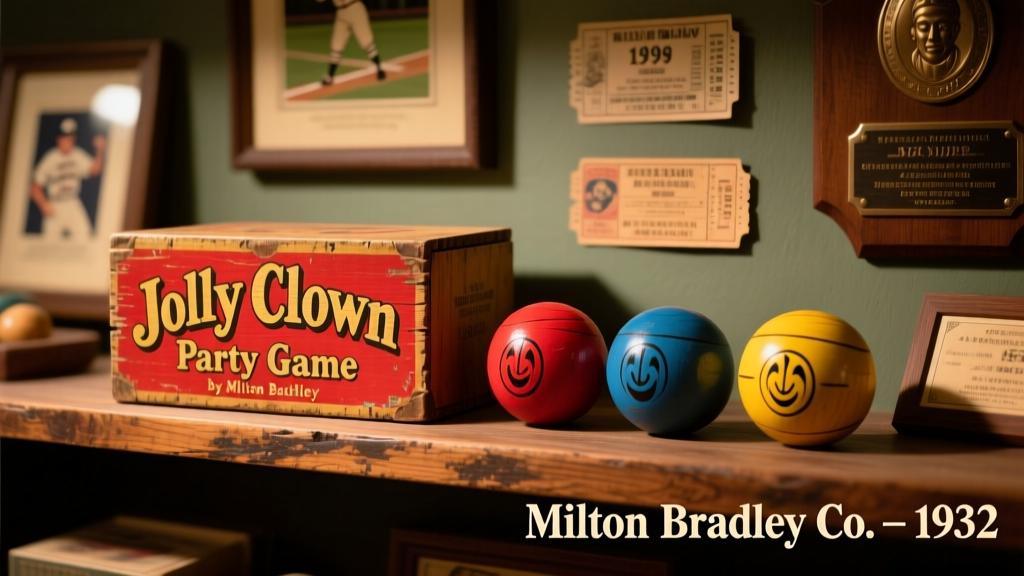
The 1932 Milton Bradley Game Jolly Clown Party Game: Authenticating a Rare Wooden Ball Set in Original Box
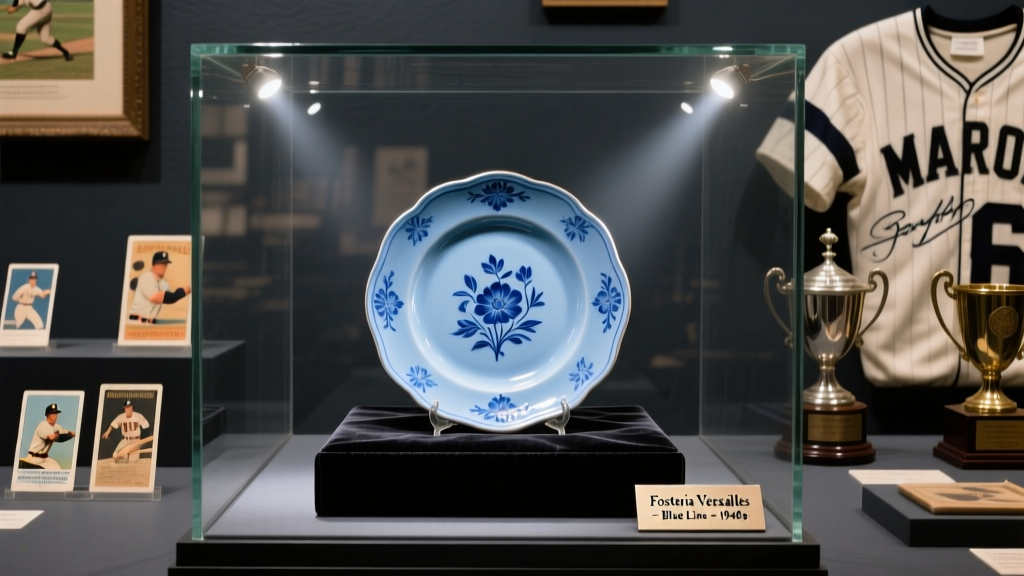
Fostoria Versailles Soup & Cream Underplate in Blue: Identification, Value, and Authentication Guide
Flow Blue Plate 'La Belle' by Wheeling Pottery: Authentication, History, and Collectibility of the 10-Inch Dinner Plate
Muller Co: The Unseen Architect of Mid-Century Sports Memorabilia Authenticity
Authenticating and Valuing an 18th-Century French Provincial Cherrywood Armchair with Rush Seat
Advertising Display: Dills Pipe Cleaners 24-Pack Card — A Rare 1920s Tobacco-Era Promotional Artifact
Buchanan Blue Ridge Dinnerware: Authenticating the 9½-Inch Plate — History, Marks, and Market Value
Heisey Narrow Flute Sugar Individual: Identification, Value Drivers, and Authentication Essentials
Hall China Teapot Streamline Delphinium Gold: History, Identification, and Collector Value