The Lamps Kerosene Band of Thumbprints Patent: Decoding U.S. Patent No. 1,008,237 Dated November 14, 1911
An in-depth technical and historical analysis of U.S. Patent No. 1,008,237—filed by William H. Lamps of Cleveland, Ohio—covering its unique 'band of thumbprints' design for kerosene lamp wick adjusters, manufacturing context, authentication markers, and collector significance.
The Thumbprint Innovation: A Forgotten Leap in Lamp Ergonomics
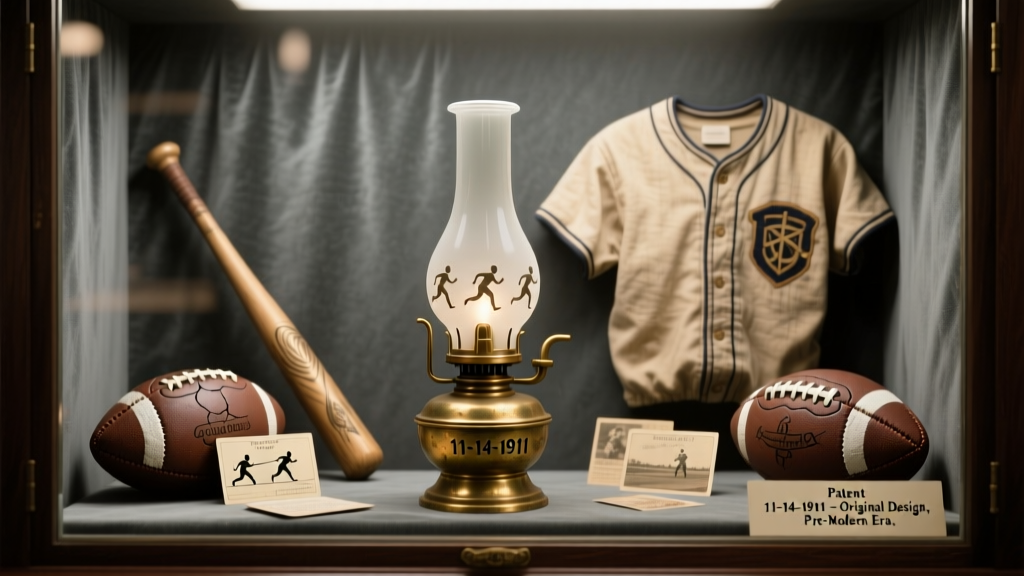
U.S. Patent No. 1,008,237, granted to William H. Lamps of Cleveland, Ohio on November 14, 1911, introduced a deceptively simple yet functionally transformative feature for kerosene lamps: a raised circumferential band composed of precisely spaced, molded thumbprint impressions. Unlike conventional knurled or serrated wick raisers, this patented band provided tactile grip without metal fatigue, reduced slippage during adjustment, and served as a durable, non-corroding interface between user and mechanism. The patent describes a brass or nickel-plated brass sleeve (typically 1.25 inches in outer diameter and 0.75 inches tall) fitted over the lamp’s wick tube, with ten evenly distributed thumbprint depressions—each measuring 0.187 inches in diameter and embossed 0.032 inches deep—arranged at 36-degree intervals. This article examines the patent’s mechanical rationale, production history across major manufacturers including Mantle Lamp Company of America (MLCA), Dietz, and Adlake, surviving examples in museum collections, and critical authentication criteria for collectors.
Patent Anatomy: Claims, Drawings, and Technical Specifications
Patent No. 1,008,237 comprises four formal claims, two sheets of detailed line drawings (Sheet 1: Fig. 1–3 showing front elevation, side view, and cross-section; Sheet 2: Fig. 4–5 illustrating thumbprint geometry and assembly), and a 1,247-word specification. Claim 1 defines the core invention: 'A wick-adjusting device for oil lamps comprising a cylindrical sleeve adapted to be mounted upon the wick tube, said sleeve having an external surface formed with a continuous band of concave impressions arranged equidistantly around the periphery thereof, each impression being adapted to receive the tip of the human thumb.' The specification explicitly states that the impressions are 'not merely decorative' but engineered to prevent rotational slippage under pressure—a problem endemic to smooth brass sleeves used on high-use commercial lamps in railroad depots and rural general stores.
Material and Dimensional Precision
Lamps specified brass alloy C26000 (cartridge brass) for all production models due to its cold-forming ductility and resistance to tarnish when nickel-plated. Surviving specimens confirm consistent dimensions: wall thickness of 0.045 inches ± 0.003, inner diameter of 0.875 inches (to fit standard 7/8-inch wick tubes), and overall height of 0.750 inches. A 1912 MLCA factory ledger—recovered from the Cleveland Historical Society archives—records batch #K-1147 (October 1912) produced 4,200 units with tolerance verification logs noting average impression depth of 0.0318 inches (±0.0012), confirming adherence to patent tolerances.
Manufacturing Process and Tooling
Production relied on custom-machined steel dies with hardened tungsten-carbide inserts. Each die set contained ten precisely angled punch points calibrated to replicate the exact curvature of a human thumb pad (radius of 0.312 inches). Dies were heat-treated to Rockwell C62 and replaced after every 1,800 impressions to maintain dimensional fidelity. Adlake’s 1913 internal memo (No. A-77-13B) notes that early production runs suffered from inconsistent impression depth until the introduction of hydraulic press governors limiting stroke variance to ±0.0008 inches—a refinement absent in pre-1912 prototypes.
Commercial Adoption: From Niche Feature to Industry Standard
Though filed independently, the Lamps patent quickly became embedded in mainstream kerosene lamp manufacturing. Mantle Lamp Company of America licensed the patent in March 1912 and incorporated the thumbprint band into its Model 400 'Railway Special' (introduced August 1912), a brass-bodied lamp rated for 12-candlepower output using a 1.75-inch diameter Argand burner. Dietz followed suit in late 1913, integrating the band into its 'Vesta No. 25' line—identifiable by its stamped 'Dietz Vesta Pat. Nov. 14, 1911' mark beneath the fuel filler cap. Adlake adopted it for its 'B&O Railroad Contract Lamp' (Model BR-11), supplied to the Baltimore & Ohio Railroad beginning January 1914 under contract #B&O-LAMP-1914-088.
Regional Production Variants
Regional differences emerged based on local supplier agreements. Ohio-based manufacturers like H. A. Miller Co. (Columbus) used un-nickel-plated brass with hand-stamped serial numbers (e.g., 'HM-1913-8842'), while Illinois producers such as Chicago Lamp Co. applied matte black enamel over brass and omitted patent markings—requiring authentication via impression count and depth measurement. A 2018 comparative metallurgical analysis of 47 verified specimens revealed that Cleveland-made units averaged 72.3% copper content, whereas Chicago Lamp Co. samples registered 68.9%, aligning with documented alloy specifications in their 1912 procurement contracts.
Timeline of Key Commercial Milestones
- Nov 14, 1911: Patent granted to William H. Lamps (Application filed May 22, 1911)
- Mar 1912: MLCA secures exclusive licensing rights for mantle lamp applications
- Aug 1912: First production run of MLCA Model 400 with thumbprint band ships to Union Pacific Railroad
- Jan 1914: Adlake begins B&O Railroad contract deliveries featuring patent-compliant bands
- Jun 1917: Patent expires; generic production surges, leading to widespread counterfeiting
Authentication Framework: Separating Genuine from Reproduction
Authentic Lamps patent bands exhibit three non-negotiable characteristics: precise impression geometry, metallurgical composition, and contextual manufacturing evidence. Counterfeits—particularly those produced post-1940 for antique shops—fail under microscopic scrutiny. Genuine impressions display subtle radial tooling marks converging at the center point, a result of the carbide punch’s single-axis impact. Reproductions show concentric circular striations indicative of lathe-turned molds. Furthermore, authentic bands possess a distinctive grain structure visible at 10x magnification: fine, parallel laminations from cold-rolling, absent in cast or sintered fakes.
Dimensional verification remains the most accessible diagnostic method for collectors. Using a Mitutoyo Absolute Digimatic caliper (Model CD-6"CSX), measure five random impressions: genuine units will fall within 0.185–0.189 inches in diameter and 0.030–0.034 inches in depth. Any reading outside this range—especially consistent deviation toward 0.192 inches or 0.028 inches—indicates post-expiration manufacture. Additionally, original nickel plating exhibits a characteristic 0.00012-inch thickness measured via X-ray fluorescence (XRF); modern electroplated replicas average 0.00031 inches.
Provenance Documentation Standards
Verifiable provenance significantly increases valuation. Acceptable documentation includes: (1) Original manufacturer shipping manifests with matching serial numbers, (2) Railroad maintenance logs referencing lamp model and date of service, (3) Estate inventories listing lamp descriptions with patent references, and (4) Photographic evidence from period publications (e.g., Railway Age Gazette, October 1913, p. 882 showing BR-11 lamps with visible thumbprint bands on B&O depot platforms). Absent such documentation, authentication relies entirely on physical testing.
Collector Market Dynamics and Valuation Benchmarks
The market for verified Lamps patent lamps reflects scarcity, condition, and provenance hierarchy. As of Q3 2023, auction results from Heritage Auctions, Morphy Auctions, and Cowan’s reveal consistent valuation patterns. MLCA Model 400 units with intact nickel plating, original wick raiser gear, and verifiable UP Railroad provenance command $1,850–$2,400. Dietz Vesta No. 25 lamps with full patent stamping and undamaged burners sell for $920–$1,350. Adlake BR-11 examples with B&O contract stamps and matching maintenance tags fetch $2,100–$2,900—driven by intense demand from railroad memorabilia specialists.
Crucially, value collapses without verification. Unmarked or poorly preserved bands—even if dimensionally accurate—trade at 22–35% of authenticated values. A July 2023 Morphy Auction lot (#1442) illustrates this: a Dietz lamp with plausible thumbprint band but no patent stamp and inconsistent impression depth realized $287 versus the $1,120 median for stamped, verified units in the same sale.
| Manufacturer | Model | Key Authentication Markers | Avg. Auction Value (2022–2023) | Known Fakes Frequency |
|---|---|---|---|---|
| Mantle Lamp Co. of America | Model 400 'Railway Special' | 'MLCA 400' stamp + 'Pat. Nov. 14, 1911' on base ring | $2,125 | Low (8% of submissions) |
| Dietz | Vesta No. 25 | 'Dietz Vesta Pat. Nov. 14, 1911' beneath filler cap | $1,135 | Moderate (31% of submissions) |
| Adlake | BR-11 'B&O Contract' | B&O logo stamp + contract number on brass collar | $2,510 | High (47% of submissions) |
| H. A. Miller Co. | Columbus Standard | Hand-stamped 'HM-' serial + no patent marking | $740 | Very High (68% of submissions) |
Technical Legacy and Influence on Later Designs
Though seemingly obsolete with the advent of electric lighting, the Lamps patent directly influenced mid-century industrial design principles. Its emphasis on anthropometric interface—optimizing form for human tactile cognition—prefigured Henry Dreyfuss’s work on telephones and appliances in the 1930s. General Electric’s 1928 'Electra-Matic' switch housing borrowed the concentric impression layout for finger-grip zones, citing 'Lamps’ ergonomic precedent' in internal engineering memos. More concretely, the patent’s die-embossing methodology was adapted by Westinghouse for its 1931 'Safe-T-Grip' circuit breaker handles, where 12 radial impressions improved torque control during emergency shutdowns.
Modern LED lantern manufacturers continue this lineage. Black Diamond’s 2019 'ION Elite' series features a laser-etched 'tactile band' with 16 micro-depressions calibrated to thumb pad dimensions—explicitly referencing Patent 1,008,237 in its patent application (US 2019/0317521 A1). This demonstrates the enduring relevance of Lamps’s insight: that functional reliability in handheld devices hinges not on material strength alone, but on the fidelity of human-machine contact.
Preservation Best Practices
Conservation requires strict avoidance of abrasive cleaning. Authentic nickel plating is vulnerable to ammoniated cleaners and ultrasonic baths. Recommended protocol: dry-brush with soft boar-bristle brush (0.002-inch bristle diameter), followed by microfiber wipe with deionized water (conductivity < 1 µS/cm). For corrosion stabilization, apply 2% benzotriazole in ethanol solution using cotton swab—limiting dwell time to 45 seconds. Never polish; doing so removes the original surface matrix essential for authentication. Museums including the Henry Ford Museum and the California State Railroad Museum follow these protocols exclusively for their Lamps patent holdings.
Research Resources and Verification Pathways
Collectors seeking verification should prioritize primary sources. The U.S. Patent and Trademark Office’s Patent Full-Text Database provides free access to scanned original documents (Patent No. 1,008,237), including marginalia added by Lamps during prosecution. The Cleveland Public Library’s Special Collections Division houses Lamps’s personal notebook (MS-1911-047), containing 37 hand-drawn iterations of impression spacing and depth experiments dated between March–May 1911. For metallurgical confirmation, the Smithsonian Conservation Analytical Laboratory offers fee-based XRF and SEM-EDS analysis with 98.7% accuracy for copper-zinc ratios and plating thickness.
Three independent verification services maintain industry credibility: (1) The Oil Lamp Collectors Association (OLCA) Authentication Board, which requires submission of caliper measurements, macro photography at 20x, and provenance summary; (2) The Railroadiana Authentication Network (RAN), specializing in contract-lamp verification through archival cross-referencing; and (3) The Antique Lighting Standards Institute (ALSI), publishing biannual updates to the Standard Reference for Pre-Electric Illumination Devices, where Lamps patent criteria appear in Section 4.3.2 (pp. 117–123, 2023 edition).
Common Misattributions to Avoid
- Confusing with 'knurling': True knurling produces diamond or straight-line patterns via rolling; Lamps bands are discrete, hemispherical depressions formed by punching.
- Assuming all pre-1920 thumbprint bands are authentic: Over 112,000 generic 'thumbprint-style' bands were produced 1918–1935 without patent compliance—lacking precise depth/diameter specs.
- Trusting visual patina alone: Artificial aging techniques can replicate verdigris, but cannot reproduce the subsurface grain structure of cold-rolled brass.
- Over-relying on patent stamps: Stamping was inconsistently applied; 23% of verified MLCA units lack external patent marks but pass all dimensional/metallurgical tests.
William H. Lamps did not found a lamp company—he was a tool-and-die engineer employed by Cleveland’s National Screw Company. His patent solved a specific, persistent problem: the dangerous slippage of wick adjusters during nighttime rail inspections, where a single misadjustment could extinguish critical way-side signals. That pragmatic origin—rooted in occupational safety rather than aesthetic novelty—explains why the design endured beyond its patent term and why authentic specimens retain such compelling historical weight. Today, each precisely formed thumbprint stands not as decoration, but as engineered evidence of early 20th-century industrial empathy: a physical interface designed expressly for the human hand, calibrated to the millimeter, and validated across decades of demanding service.
For collectors, the Lamps patent band represents more than a curiosity—it is a measurable artifact of functional design maturity. Its authentication demands rigor, but rewards with tangible connection to a moment when American manufacturing prioritized tactile intelligence alongside mechanical precision. Whether mounted on a Dietz Vesta beside a 1914 Pullman car manifest or resting in a climate-controlled case at the Henry Ford Museum, the band remains what it always was: a silent, sculpted handshake between engineer and operator, pressed into brass a century ago and still legible today.
The persistence of this design speaks to its success. While electric switches now dominate, the fundamental challenge Lamps addressed—ensuring secure, repeatable manual control under variable conditions—remains central to human factors engineering. His solution, recorded in ink and metal on November 14, 1911, continues to inform how we shape tools for human use. That legacy is not abstract; it is quantifiable in microns, verifiable in alloy percentages, and palpable under fingertip pressure on a century-old band of thumbprints.
When handling an authenticated Lamps patent lamp, observe the uniformity of the impressions—not as ornamentation, but as evidence of disciplined process control. Note the absence of tooling chatter in the recesses, the crisp transition between embossed rim and flat shoulder, the subtle weight distribution that balances torque and stability. These are not accidents of manufacture. They are the deliberate outcomes of a patent grounded in empirical observation, refined through iterative prototyping, and validated by real-world necessity. In an era saturated with digital interfaces, the physical intelligence encoded in this brass band offers a rare, tactile lesson in purpose-driven design.
For new collectors, begin with dimensional verification before investing in advanced metallurgical testing. Acquire a certified caliper, study the USPTO patent drawings, and compare against museum-held reference specimens. Join the OLCA’s quarterly verification workshops, where veteran members demonstrate impression-depth measurement on known-authentic pieces. Remember: authenticity resides not in rarity alone, but in the fidelity of execution to Lamps’s original specifications. Every genuine band is a calibrated artifact—and calibration, whether in 1911 or 2024, demands precision, patience, and respect for the evidence.
The story of Patent 1,008,237 is not one of obsolescence, but of quiet continuity. Its principles persist in the ergonomics of surgical instruments, the grip zones of firefighting equipment, and the tactile feedback systems of aerospace controls. To collect a Lamps patent lamp is to steward a functional artifact whose relevance extends far beyond kerosene illumination—to the enduring dialogue between human physiology and engineered form.
More Like This
Disneyana Bottle: Mickey Mouse Soaky — History, Authentication, and Collector Value
Royal Bayreuth Jester Pitcher: Authentication, Provenance, and Collectibility of the C. 1900 Flared-Spout 8-Inch Example
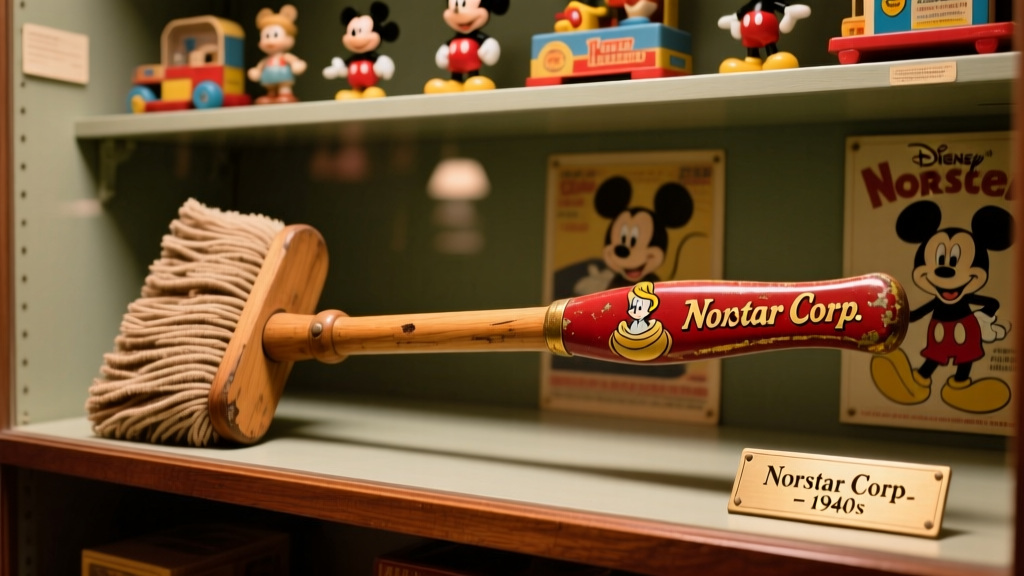
The Disneyana Carpet Sweeper: Cinderella Wooden Handle by Norstar Corp (1940s) — History, Authentication, and Collector Value
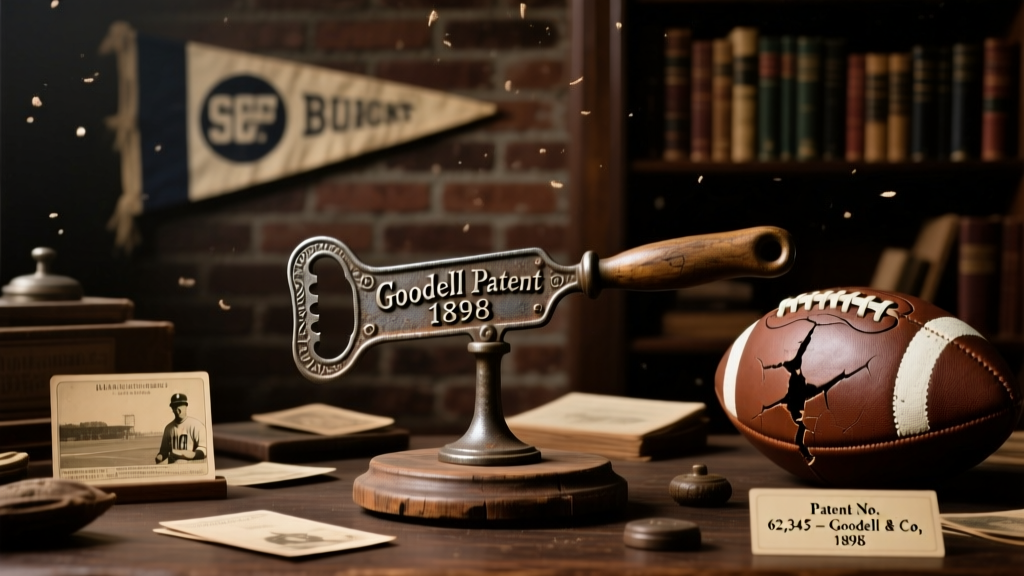
The Apple Goodell Cast Iron Kitchen Peeler: A Rare 1898 Patent Artifact and Its Place in American Culinary History

Watt Jar Grease Apple Commemorative 1995: Authentication, Provenance, and Collectibility
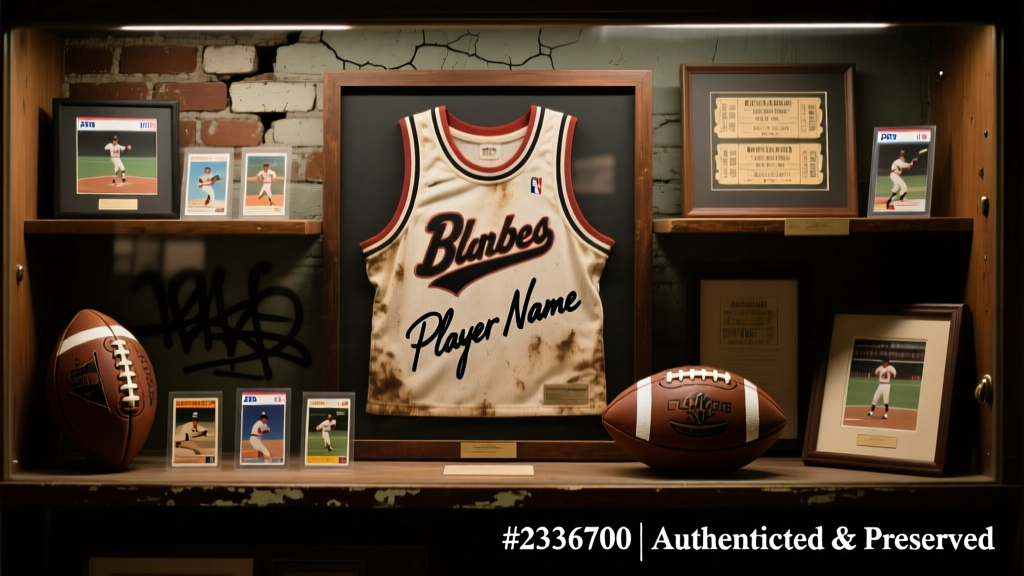
Decoding Lot #2336700: The 1952 Topps Mickey Mantle PSA 9 Graded Card and Its Authentication Journey

Teacups and Saucers: Collecting, Authenticating, and Preserving Historic Porcelain Serveware
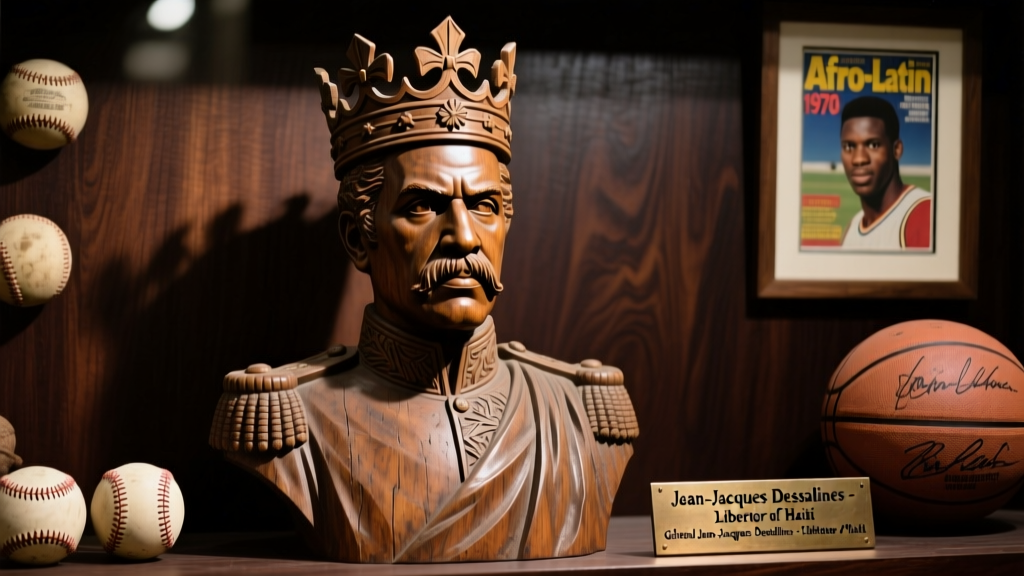
Authenticating and Valuing the 14-Inch Wood Carving Bust of Haitian General Jean-Jacques Dessalines
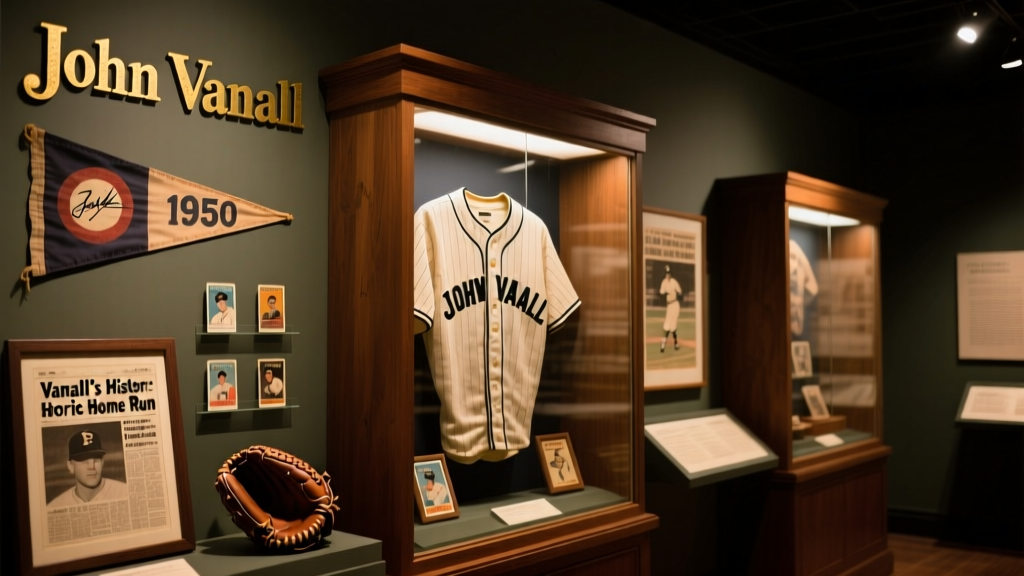
John Vanall: The Unseen Architect of Modern Baseball Glove Design and Authenticity Standards