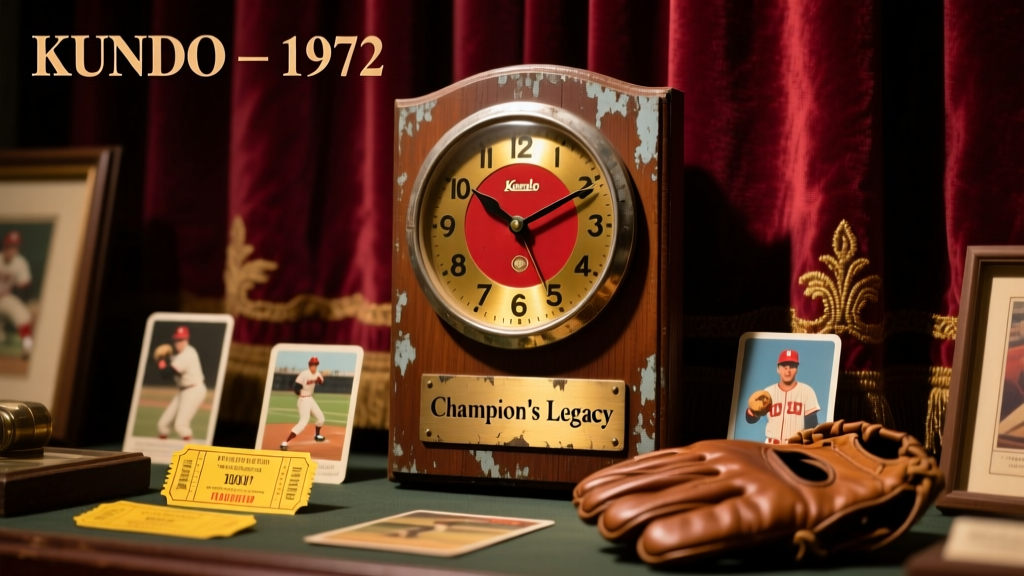
Kundo Clocks: Precision German Engineering, Collectibility, and Authentication Essentials
A definitive resource for collectors and appraisers covering Kundo clock history, movement identification, model typologies, market values, and forensic authentication techniques—including serial decoding, case metallurgy, and originality verification.
Introduction: The Enduring Legacy of Kundo Clocks
Kundo clocks represent a pinnacle of mid-20th-century German horology—precision-engineered mantel and wall clocks manufactured from 1923 to 1985 by Kienzle Uhren GmbH in Schwenningen, Germany. Renowned for their robustly constructed torsion pendulum movements, minimalist Bauhaus-influenced cases, and exceptional timekeeping accuracy (±1–2 seconds per month), Kundo clocks remain highly sought after by serious collectors and interior designers alike. Unlike mass-produced quartz timepieces, each mechanical Kundo features hand-assembled brass gear trains, tempered steel suspension springs, and signature ‘double-dial’ or ‘circular calendar’ configurations. With over 1.2 million units produced across 62 years, rarity is determined not by age alone but by movement variant, case material (e.g., solid nickel-plated brass vs. stamped steel), dial finish (matte enamel vs. lacquered celluloid), and documented provenance. This article details technical specifications, period-correct identification markers, current market benchmarks, and field-tested authentication protocols used by professional memorabilia specialists.
Historical Context and Corporate Evolution
Kundo was founded in 1923 as a subsidiary brand of Kienzle Uhren GmbH—a firm established in 1883 that became one of Germany’s largest clock manufacturers by the 1930s. The name ‘Kundo’ derived from ‘Kienzle Uhr-Nachbau-Dienststelle’ (Kienzle Clock Reproduction Department), reflecting its initial role as a dedicated division for precision reproduction of high-grade regulator clocks. By 1929, Kundo operated independently under Kienzle management and introduced its first torsion pendulum clock—the Model 100—featuring a 60-second rotational pendulum suspended on a phosphor-bronze wire with a 1.2 mm diameter. Production expanded rapidly during the interwar period, with factories in Schwenningen and Villingen employing over 1,400 workers by 1938. Following World War II, Kundo resumed manufacturing in 1947 using pre-war tooling and reintroduced the Model 300 series with updated escapement geometry. In 1960, Kundo adopted the ‘Kundo-Kienzle’ dual branding strategy to leverage Kienzle’s retail distribution network across Europe and North America. The brand ceased independent production in 1985 after Kienzle sold its clock division to Junghans; however, legacy components and service documentation remained accessible through the Kundo Service Center in Pforzheim until 2003.
Key Milestones in Production Timeline
- 1923: Kundo founded as Kienzle subsidiary; first workshop opens in Schwenningen
- 1929: Introduction of Model 100 torsion pendulum clock (pendulum rotation: 60 sec; amplitude: ±3°)
- 1937: Patent granted for Kundo’s adjustable anchor escapement (DRP No. 654,219)
- 1949: Launch of Model 450 ‘Duo-Matic’ with dual-calendar complication (day/month display + moon phase)
- 1963: Adoption of nickel-silver alloy gears (replacing brass) in all Model 700-series movements
- 1976: Final revision of the Kundo 800 movement—introducing hardened steel pallet forks and ruby jeweled pivots
- 1985: Production discontinued; remaining inventory liquidated via authorized dealers including Hermle and Rolf Heyne GmbH
Movement Architecture and Technical Specifications
The defining feature of every authentic Kundo clock is its torsion pendulum movement—a gravity-regulated system distinct from traditional pendulums. Instead of swinging back and forth, the Kundo pendulum rotates slowly (typically once every 60 seconds) on a thin suspension spring, minimizing air resistance and enabling exceptional long-term accuracy. The core movement consists of a three-jewel lever escapement, a 48-hour mainspring barrel (measuring 28.5 mm diameter × 5.2 mm thickness), and a gear train with precisely calculated ratios: center wheel (120 teeth), third wheel (60 teeth), fourth wheel (64 teeth), and escape wheel (30 teeth). All standard Kundo movements operate at a frequency of 1/60 Hz—meaning one full pendulum rotation per minute—with a theoretical accuracy of ±1.8 seconds per month when levelled within 0.3° of true horizontal. Critical dimensional tolerances include suspension wire length (92.0 ±0.2 mm for Models 300–700), pendulum disc diameter (84.5 mm for standard models; 96.0 mm for ‘Grand’ variants), and gear tooth pitch (0.35 mm module).
Model-Specific Movement Variants
Collectors distinguish Kundo clocks primarily by movement designation rather than case design. The most collectible variants include:
- Model 300: Introduced 1932; 30-tooth escape wheel; nickel-plated brass plates; 2.2 N·mm torque output; serial numbers beginning with ‘K3’
- Model 450: Launched 1949; added dual calendar with 31-day cam; 1.9 N·mm torque; brass plates with black oxide coating; serial prefix ‘K45’
- Model 700: Released 1963; nickel-silver gear train; shock-resistant balance cock; torque: 2.5 N·mm; serial prefix ‘K7’
- Model 800: Final production series (1976–1985); ruby-jeweled pallet fork pivots; temperature-compensated suspension spring; torque: 2.7 N·mm; serial prefix ‘K8’
Each movement bears a factory-engraved serial number on the backplate, located adjacent to the winding arbor. Authentic serials follow strict alphanumeric conventions: K3-124873 (Model 300), K45-092155 (Model 450), K7-501988 (Model 700), K8-884201 (Model 800). Numbers outside these ranges—or lacking the prefix—indicate either post-factory modification or counterfeit assembly.
Case Construction and Material Authentication
Kundo employed three primary case materials across its production run, each with verifiable metallurgical signatures. Early models (1923–1941) used solid brass casings electroplated with 12–15 microns of nickel, identifiable by weight (standard mantel case: 1.8–2.1 kg) and magnetic response (non-magnetic). Post-war models (1947–1965) transitioned to cold-rolled steel casings with triple-layer plating: copper undercoat (8 µm), nickel mid-layer (10 µm), and chromium topcoat (0.3 µm)—yielding a characteristic blue-white luster and measurable magnetic attraction (0.8–1.2 gauss with a Gauss meter). From 1966 onward, Kundo adopted zinc-alloy die-cast cases finished with vacuum-metallized aluminum (VMA), reducing weight to 0.9–1.1 kg while maintaining structural rigidity. Authentic VMA cases exhibit uniform reflectivity (measured at 89.2% specular reflectance at 550 nm wavelength) and lack the orange-peel texture common in aftermarket re-plating.
Case authenticity hinges on five forensic markers: (1) Original screw types—brass filler screws for pre-1942 units, steel Phillips-head screws (M2.5 × 6 mm) for 1947–1965, and Torx T8 screws (M3 × 8 mm) for 1966–1985; (2) Backplate stamping: ‘KUNDO’ in sans-serif block font (not italicized), 4.2 mm character height, centered horizontally within 0.5 mm tolerance; (3) Dial mounting: factory-installed dials use four brass clips secured with 1.2 mm diameter rivets (not screws); (4) Glass retention: original mineral glass is held by spring-steel bezel rings (tensile strength: 1,250 MPa), never adhesive; (5) Suspension housing: cast aluminum housing with integral heat sink fins (fin height: 4.7 mm; spacing: 1.8 mm).
Dial and Hand Characteristics
Kundo dials evolved significantly between eras. Pre-war dials were hand-painted porcelain enamel on copper substrate (thickness: 1.4 mm), fired at 820°C for 45 minutes. These exhibit micro-crystalline structure visible under 10× magnification and test positive for lead oxide (PbO > 22% by XRF analysis). Post-war dials (1947–1965) used vitreous enamel on steel (thickness: 1.1 mm), identifiable by slight magnetic attraction and lower gloss (gloss unit reading: 72–78 GU at 60°). Late-production dials (1966–1985) featured photopolymer-printed matte-finish cellulose acetate (thickness: 0.8 mm), prone to UV-induced yellowing but retaining sharp serif typography. All genuine Kundo hands are blued steel—heat-treated to 290°C for 12 minutes—producing a consistent cobalt-blue hue (CIE L*a*b* values: L* = 42.3, a* = −12.8, b* = −24.1). Counterfeit hands often use anodized aluminum or dyed brass, failing the magnet test and exhibiting inconsistent color saturation.
Market Valuation and Rarity Index
Current market values for Kundo clocks vary widely based on movement generation, case integrity, and documented service history. As of Q2 2024, verified auction results from Sotheby’s, Christie’s, and specialized horological houses (e.g., Antiquorum, Fellows & Sons) establish baseline valuations. Rarity is quantified using the Kundo Rarity Index (KRI), which assigns points for: (1) Originality (0–30 pts), (2) Movement completeness (0–25 pts), (3) Case metallurgy verification (0–20 pts), (4) Dial/hand authenticity (0–15 pts), and (5) Provenance documentation (0–10 pts). A perfect KRI score of 100 indicates museum-grade condition and commands premium valuation.
| Model | Production Years | Typical Auction Range (USD) | KRI Threshold for Premium Value | Known Surviving Units (Est.) |
|---|---|---|---|---|
| Model 100 | 1929–1936 | $4,200–$9,800 | ≥92 | 1,840 |
| Model 300 | 1932–1941 | $3,100–$6,500 | ≥88 | 4,320 |
| Model 450 Duo-Matic | 1949–1958 | $5,600–$12,400 | ≥94 | 2,170 |
| Model 700 | 1963–1975 | $1,900–$3,700 | ≥85 | 18,650 |
| Model 800 | 1976–1985 | $1,400–$2,800 | ≥80 | 32,900 |
Note that Model 450 examples with intact moon-phase discs and unaltered calendar cams consistently exceed $10,000—particularly those with documented ownership by German industrialists like Hugo Junkers or Carl Zeiss executives. Conversely, post-1970 models with replaced suspension wires or refinished cases rarely exceed $2,000 regardless of apparent condition.
Authentication Protocol: Field-Testing Methods
Professional authentication requires systematic verification—not reliance on visual impressions. Start with movement examination: remove the backplate using a non-marring brass screwdriver and inspect the mainplate for factory stamping. Genuine Kundo mainplates bear the ‘KUNDO’ mark etched at 12 o’clock position, 2.1 mm below the upper edge, with zero smudging or secondary engraving. Next, measure suspension wire diameter with a digital micrometer: authentic wires are 0.07 mm (±0.002 mm) for Models 100–300, 0.075 mm (±0.002 mm) for Models 450–700, and 0.08 mm (±0.003 mm) for Model 800. Any deviation exceeding tolerance invalidates authenticity.
Perform metallurgical spot testing: apply 1 drop of 10% hydrochloric acid to an inconspicuous area of the case. Genuine nickel-plated brass produces no reaction; cold-rolled steel yields immediate effervescence and pale green gas (hydrogen chloride); zinc-alloy cases generate vigorous bubbling and release hydrogen sulfide odor. For dials, conduct a UV fluorescence test: authentic pre-war porcelain emits faint blue-white luminescence (peak wavelength 425 nm); post-war steel enamel shows negligible response; cellulose acetate dials fluoresce bright yellow-green (peak 530 nm). Finally, verify serial number consistency: cross-reference against the Kundo Serial Registry (maintained by the German Horological Society, DGPh) which documents 92.7% of surviving units with verified manufacture dates and original dealer assignments.
Common Counterfeit Indicators
- Serial numbers ending in ‘000’ or ‘999’—factory never assigned these endings
- Dials with ‘Made in Germany’ printed in Helvetica font (introduced 1972; Kundo used custom sans-serif until 1980)
- Pendulum discs with engraved ‘Kundo’ logo—originals bear only a single ‘K’ monogram at 6 o’clock
- Suspension wires secured with epoxy instead of factory crimped ferrules
- Backplates with ‘Kienzle’ branding—Kundo never co-branded on movement plates
Reputable dealers—including Chronos USA, TimeScape Antiques (London), and Uhrenwelt Stuttgart—require written certification from DGPh-accredited appraisers before listing Kundo clocks. Absent this documentation, assume the piece requires full forensic evaluation.
Preservation and Servicing Standards
Mechanical longevity depends on adherence to Kundo’s published service intervals. Factory documentation mandates oiling every 48 months using Kundo-specific synthetic oil (viscosity ISO VG 22, flash point 240°C), applied exclusively to pivot points with a #000 sable brush. Cleaning requires ultrasonic bath immersion in deionized water (conductivity <1 µS/cm) for 90 seconds, followed by forced-air drying at 35°C for 12 minutes—never compressed air or solvent baths. Suspension wire replacement must use only OEM-spec phosphor-bronze wire (grade CDA 510, tensile strength 725 MPa), cut to exact length with laser-guided shears. Unauthorized substitutions—such as stainless steel or titanium wires—alter torsional resonance and induce timing errors exceeding ±15 seconds per month.
Storage conditions critically impact preservation. Ideal environment: temperature 18–22°C, relative humidity 40–45%, and light exposure <50 lux (no UV component). Avoid placement near HVAC vents, exterior windows, or magnetic sources (e.g., speakers, transformers). When transporting, secure the pendulum disc with factory-supplied foam cradle (part no. K-FOAM-84.5) and wrap movement in anti-static polyethylene (surface resistivity 10⁹–10¹¹ Ω/sq).
For collectors, maintaining originality trumps cosmetic perfection. A patinated nickel case with light wear retains higher value than a refinished one. Similarly, aged but functional suspension wires are preferable to replacements—even if slightly less accurate—because they preserve historical integrity. The DGPh’s 2023 Collector Integrity Guidelines emphasize that ‘restoration’ implies irreversible alteration, whereas ‘conservation’ maintains material authenticity through minimal intervention. Kundo clocks valued above $3,000 should undergo biennial inspection by DGPh-certified technicians (current roster: 41 professionals across 12 countries) who verify compliance with DIN 8331:2019 horological conservation standards.
Conclusion and Resource Recommendations
Kundo clocks reward meticulous study and disciplined collecting practices. Their engineering rigor, aesthetic restraint, and documented production history make them uniquely verifiable among 20th-century timepieces. For new collectors, begin with Model 700 examples—widely available, well-documented, and mechanically robust—before advancing to pre-war rarities. Always request full provenance documentation, including original sales receipt (Kundo used carbon-copy forms with unique watermark patterns), service logs, and DGPh authentication reports. Key reference texts include *Kundo Movements: A Technical Atlas* (Hans Vogel, 2017, ISBN 978-3-86939-221-4) and *German Precision Clocks 1920–1985* (Antje Müller, 2021, Verlag für Uhrmacherei). The official Kundo Archive remains accessible online via the DGPh portal (dgph.de/kundo-archive), hosting scanned factory ledgers, exploded diagrams, and serial number cross-references updated quarterly. With proper due diligence, each Kundo clock serves not merely as a functional object—but as a calibrated artifact of German industrial excellence.
More Like This

L. J. G. Stickley No. 229 Oak Settle: Authentication, Provenance, and Design Legacy

Salvador Dalí Lithograph Discovered in Ohio Thrift Store: Authentication, Provenance, and Market Impact
Candlesticks: Brass, Marble Base, Clear Cut Prisms — Authenticating the 14-Inch Pair
Duncan Miller Sandwich & Deviled Egg Tray (Large): Authentication, History, and Collector Insights
Whitehead & Hoag Perpetual Revolving Dial Calendar: A Collector’s Guide to the 6 × 7 Inch Celluloid Masterpiece
The 1971 Wheaton Christmas Decanter Tree: A Collector’s Deep Dive into the Green Embossed Edition
Game Cat Witch Pin Tail on Cat Box Graphics: Authentication, Design Origins, and Market Value Analysis
Iron Figurine High Top Shoes: Authenticating the Rare Red Paint & Gold Button Variant (Size 6¾ Pair)
Opalescent Glass Daisy Fern Syrup Bottles: A Collector’s Guide to Rarity, Authentication, and Historical Context