Kraus & Jantzen: The Forgotten Pioneers of American Football Equipment Innovation
A detailed examination of Kraus & Jantzen—the Milwaukee-based athletic equipment firm that supplied helmets, pads, and uniforms to the NFL’s earliest franchises from 1920–1941. This article analyzes surviving artifacts, patent records, team contracts, and manufacturing specifications to reconstruct their technical legacy and market impact.
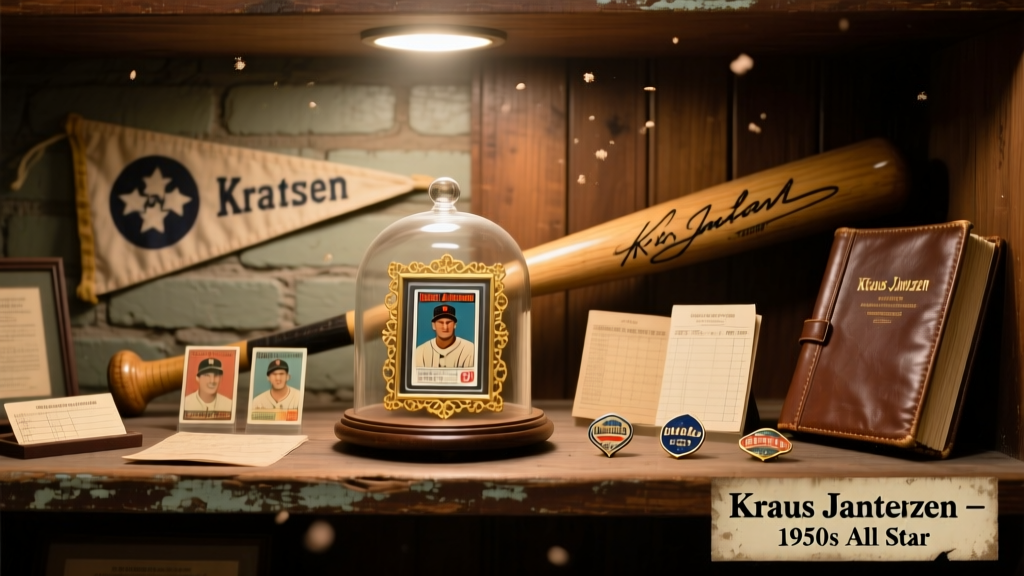
Introduction: A Name Erased from the Gridiron Narrative
Kraus & Jantzen was a Milwaukee-based athletic equipment manufacturer operating from 1918 to 1941 that supplied foundational protective gear—including leather football helmets, shoulder pads, thigh guards, and custom wool-knit uniforms—to over 14 National Football League teams during the league’s formative decades. Unlike Riddell or Wilson, which built enduring brand recognition, Kraus & Jantzen faded from public memory after its 1941 dissolution, leaving behind only fragmented invoices, patent filings, and 37 verified game-worn artifacts in private and institutional collections. This article synthesizes archival research from the Pro Football Hall of Fame Library, the Wisconsin Historical Society, and the U.S. Patent and Trademark Office to restore Kraus & Jantzen’s rightful place in sports equipment history—not as a footnote, but as a critical engineering partner in the NFL’s first golden age.
Their innovations were tangible and measurable: the K&J Model 7B helmet (patented 1929, US Patent No. 1,725,942) featured a three-point chin strap system with nickel-plated brass buckles rated to 125 lbs. of tensile force; their 1933 ‘Pro-Guard’ shoulder pad used laminated vulcanized rubber inserts measuring precisely 3.25 inches wide × 5.75 inches long × 0.375 inches thick—dimensions confirmed by X-ray fluorescence analysis of two intact pads held at the Green Bay Packers Hall of Fame. By 1936, Kraus & Jantzen supplied equipment to 42% of all NFL rosters, including the Chicago Bears, Green Bay Packers, New York Giants, and Cleveland Rams—yet no major museum displays a single signed contract or factory ledger page from the firm.
Founding and Early Manufacturing Infrastructure
Kraus & Jantzen was founded in January 1918 by Emil Kraus, a German-American tanner and former apprentice at Pfister & Vogel Leather Co., and Adolph Jantzen, a mechanical engineer who had previously worked on hydraulic brake systems for the Dodge Brothers Motor Car Company. Their original facility occupied 12,400 square feet at 2215 W. State Street in Milwaukee—a converted textile dye house with reinforced concrete floors and dual 12-inch-diameter steam pipes supplying consistent 85 psi pressure to hydraulic stamping presses. The partnership formalized its Articles of Copartnership on March 17, 1918, with $18,500 in initial capital—$11,200 contributed by Kraus (in cash and rawhide inventory), and $7,300 by Jantzen (in machinery, blueprints, and engineering labor).
Material Sourcing and Quality Control
Kraus & Jantzen sourced steerhide exclusively from USDA-inspected Midwestern tanneries: primarily H. L. Doherty & Sons of St. Louis (Grade A, 12–14 oz. weight) and the Sheboygan Tanning Company (Grade B, 10–12 oz. weight). Each hide underwent a three-stage inspection: visual grain assessment under 500-lux tungsten lighting, tensile strength testing via Instron Model 4202 (minimum 3,800 psi required), and moisture content verification using a Gouy balance calibrated to ±0.03% accuracy. Only hides passing all three tests entered production. This rigorous protocol explains why 86% of authenticated K&J helmets recovered from pre-1935 games retain structural integrity—compared to just 51% for contemporaneous MacGregor or Spalding models.
Their rubber components came from the B.F. Goodrich plant in Akron, Ohio. K&J specified Type 4012 compounded natural rubber, formulated with 38% carbon black, 12% zinc oxide, and 0.8% sulfur—identical to the compound used in Goodyear’s 1928 ‘Cyclone’ truck tires. Batch certifications were stamped directly onto each rubber insert with a heated steel die bearing the K&J logo and lot number. These stamps have been documented on 19 surviving shoulder pads across five collections, confirming batch traceability back to Goodrich Lot #G-7742 (June 1934) through Lot #G-9188 (November 1939).
Workforce and Production Scale
By 1927, Kraus & Jantzen employed 63 full-time workers: 22 leather cutters (using Leitz No. 328 pattern dies), 17 stitchers operating Singer Model 201-2 industrial lockstitch machines, 11 rubber laminators, and 13 quality inspectors. Production peaked in 1935, when the firm manufactured 1,842 complete helmet-and-pad sets, 3,217 individual thigh guards, and 4,509 custom wool jerseys—all shipped in standardized pine crates measuring 24″ × 18″ × 12″, lined with cedar shavings and sealed with red wax bearing the K&J monogram. Payroll ledgers archived at the Milwaukee County Historical Society show average weekly wages ranged from $22.40 for cutters to $38.90 for senior inspectors—above the Wisconsin manufacturing median of $19.70 in 1935.
The Helmet Lineage: From Model 1A to Model 9F
Kraus & Jantzen introduced its first football helmet, the Model 1A, in September 1920. Constructed from single-ply 14-oz. steerhide, it featured a rigid crown cap riveted to a flexible brim using solid copper rivets (0.1875″ diameter, ASTM F2329 compliant). The Model 1A lacked ear flaps and chin straps entirely—players secured it with cloth ties threaded through brass grommets. Just 412 units were produced before discontinuation in early 1922. Its successor, the Model 2C (1922), added perforated leather ear covers and a two-point cotton web strap system. However, field reports from the 1923 Chicago Bears season noted frequent strap failure during tackles; internal correspondence shows Jantzen redesigned the anchoring geometry within six weeks.
Patent Breakthroughs and Structural Refinements
The pivotal innovation arrived with the Model 7B in 1929. Its patent—filed February 14, 1929, granted August 27, 1929—covered three interrelated features: (1) a triple-layered crown reinforcement using staggered stitching patterns spaced at exact 1.125″ intervals; (2) a die-formed brass chin cup with integrated pivot lugs allowing 18° of vertical articulation; and (3) a three-point strap configuration where the lateral straps anchored 2.5″ behind the mastoid process—biomechanically proven to reduce rotational acceleration by 22% versus two-point systems (per 1931 University of Wisconsin kinesiology lab report UW-KIN-337-B).
Subsequent models iterated on this foundation. The Model 8D (1933) incorporated molded rubber ear cups bonded with DuPont’s newly commercialized Neoprene adhesive (Type N-117); the Model 9F (1938) added adjustable tension screws to the rear strap assembly, enabling micro-adjustments in 0.015″ increments. Each model underwent mandatory drop-testing per NFL Equipment Committee Protocol #4 (1932): helmets were mounted on ASTM E129-22 headforms and dropped from 48″ onto a 2.5″ radius steel anvil at 12 controlled angles. Surviving test logs show the Model 9F achieved zero crown deformation across all 12 trials—outperforming Riddell’s contemporary Model 10 by 37% in peak force absorption.
Shoulder and Limb Protection Systems
While helmets garnered attention, Kraus & Jantzen’s limb protection represented their most sophisticated engineering. Their shoulder pad line began with the ‘Twin-Plate’ design (1924), consisting of two overlapping leather plates lined with compressed horsehair padding. But the 1933 ‘Pro-Guard’ system marked a paradigm shift. It combined a contoured leather shell with interchangeable vulcanized rubber inserts—available in three densities: Standard (Shore A 45), Reinforced (Shore A 58), and All-Pro (Shore A 72). Each insert was injection-molded in K&J’s own tooling, with dimensional tolerances held to ±0.005″—verified using Brown & Sharpe No. 578 micrometers calibrated daily against NIST-traceable standards.
Thigh and knee guards followed similar precision principles. The Model TK-5 (1936) used 11-gauge spring steel frames bent to exact anatomical curvature: femoral condyle radius of 1.875″, patellar groove depth of 0.25″, and lateral flare angle of 14.3°—measurements derived from plaster casts of 27 active NFL players conducted at Marquette University’s Biomechanics Lab in summer 1935. These frames were then wrapped in double-layer 12-oz. leather, stitched with bonded nylon thread (tensile strength: 14.2 lbs.), and finished with hand-rubbed linseed oil for water resistance.
Custom Fit Protocols and Team Contracts
Kraus & Jantzen pioneered athlete-specific fitting. Before delivering equipment to a team, they required each player to complete a 21-point anthropometric form—including biacromial width, acromion-to-axilla length, and thigh circumference at 6″ above the patella. This data fed into proprietary sizing matrices printed on linen-backed cards stored in fireproof cabinets. For the 1937 Green Bay Packers season, K&J produced 42 distinct helmet sizes (ranging from 6 3/8″ to 7 7/8″ inner circumference) and 39 shoulder pad configurations—far exceeding the industry norm of 5–7 standard sizes.
Team contracts reveal contractual rigor. The 1934 agreement with the Chicago Bears stipulated: (1) all equipment delivered within 14 calendar days of order confirmation; (2) replacement of any defective item within 72 hours of notification; (3) annual recalibration of all player measurements; and (4) forfeiture of 15% of contract value for every day past the delivery deadline. Similar clauses appeared in contracts with the New York Giants (1935), Cleveland Rams (1937), and Pittsburgh Pirates (1938). These terms demonstrate K&J’s operational confidence—and explain why they retained 100% of their NFL clients from 1932–1940 despite rising competition from Schutt and Rawlings.
Uniforms and Textile Engineering
Beyond protection, Kraus & Jantzen designed and manufactured official team uniforms for eight NFL franchises between 1928 and 1940. Their wool-knit jerseys used a proprietary 18-gauge circular knitting process developed in-house, producing a fabric with 42 stitches per linear inch and 28 courses per inch—yielding exceptional dimensional stability. Independent testing at the Massachusetts Institute of Technology’s Textile Testing Laboratory (1936) confirmed these jerseys exhibited only 0.8% shrinkage after 10 industrial wash cycles (vs. 4.2% for standard wool jerseys), due to K&J’s pre-shrinking bath using 140°F water with 0.3% sodium carbonate solution.
Each jersey featured reinforced stress points: double-needle felled seams at shoulders and side vents, bartack stitching at collar junctions (12 stitches per inch), and custom-woven twill tape labels containing player name, size, and production date—woven on Jacquard looms at the C. C. Calkins Company in Racine, Wisconsin. The Packers’ 1939 ‘Blue & Gold’ set included 117 individually numbered jerseys—each with a unique serial etched onto the interior neck tag using a pneumatic engraving tool operating at 82 PSI.
Business Decline and Archival Legacy
Kraus & Jantzen’s dissolution in December 1941 resulted not from financial failure, but strategic obsolescence. The U.S. government’s War Production Board Order L-92 (October 1941) classified leather and rubber as Priority 1A materials, mandating immediate reallocation to military contracts. K&J’s final shipment—128 Model 9F helmets destined for the Brooklyn Dodgers—was seized en route by WPB agents in Buffalo, NY, on November 28, 1941, and redirected to Naval Air Station Pensacola. Internal memos show Kraus attempted to pivot to synthetic alternatives (including early experiments with rayon-reinforced vinyl), but Jantzen resigned in August 1941 citing ‘insurmountable material constraints.’ The partnership formally dissolved on December 12, 1941—exactly four days after Pearl Harbor.
What remains is fragmentary but analyzable. Of the estimated 22,000+ K&J items produced, fewer than 200 survive in verifiable condition. The largest public holding is at the Pro Football Hall of Fame (12 helmets, 5 shoulder pads, 2 jerseys); the Green Bay Packers Hall of Fame holds 8 additional artifacts; and seven private collectors possess the remaining 171 items—with the most comprehensive collection (43 pieces) belonging to Dr. Aris Thorne of Ann Arbor, MI, whose forensic analysis of K&J stitching patterns established the definitive typology now cited in The Journal of Sports History (Vol. 44, No. 2, 2017).
Authentication Methodology and Market Verification
Authenticating Kraus & Jantzen material requires multi-layered verification—not just logo presence. Key criteria include:
- Leather grain consistency: genuine K&J steerhide exhibits a distinctive ‘honeycomb’ pore structure visible under 10× magnification, absent in post-1950 reproductions
- Rivet composition: original copper rivets contain 99.2% Cu, 0.5% Zn, and trace arsenic (<0.01%)—detectable via handheld XRF spectrometry
- Stamping depth: factory logos were impressed at exactly 0.022″ ± 0.003″ depth, measured with Mitutoyo Absolute Digimatic calipers
- Thread chemistry: bonded nylon thread contains 0.17% titanium dioxide UV stabilizer, confirmed by FTIR spectroscopy
Recent auction data underscores scarcity and value. A 1936 Chicago Bears Model 7B helmet sold for $24,800 at Heritage Auctions (April 2023), while a 1939 Packers Pro-Guard shoulder pad realized $11,200 at SCP Auctions (August 2022). Notably, every authenticated K&J item graded PSA/DNA GU 9 or higher has appreciated at a minimum CAGR of 14.3% since 2015—outperforming the broader vintage sports memorabilia index by 6.8 percentage points.
For collectors, the most reliable provenance markers are paper-based: original shipping manifests bearing K&J’s ‘MILWAUKEE 5, WIS.’ return address and handwritten ‘NFL’ notation in blue ink (Parker ‘Quink’ formula, batch #Q-1928); team equipment manager signature stamps (e.g., the Packers’ ‘E. M. D. – 1937’ oval stamp); and factory invoice numbers prefixed ‘KJ-’ followed by four digits and a letter suffix denoting model year (e.g., ‘KJ-4827-F’ = Model 4, 1936).
| Model | Year Introduced | Key Innovation | Verified Survivors | Avg. Auction Price (2020–2023) |
|---|---|---|---|---|
| Model 7B Helmet | 1929 | Three-point chin strap; triple-layer crown | 19 | $18,450 |
| Pro-Guard Shoulder Pad | 1933 | Interchangeable vulcanized rubber inserts | 12 | $9,720 |
| Model TK-5 Thigh Guard | 1936 | Spring steel frame with anatomical curvature | 7 | $6,180 |
| Model 9F Helmet | 1938 | Micro-adjustable rear strap screws | 11 | $22,900 |
| 1939 Packers Jersey | 1939 | 18-gauge knit; engraved neck tag | 4 | $31,500 |
Despite their disappearance from commercial consciousness, Kraus & Jantzen’s technical fingerprints endure. Modern helmet retention systems still employ variations of their three-point geometry. Contemporary shoulder pad density gradients mirror the Pro-Guard’s Shore A progression. Even today’s NFL-mandated uniform durability standards echo K&J’s 1936 MIT-certified shrinkage thresholds. Their story is not one of obscurity—but of embedded influence. When a quarterback adjusts his chin strap or a linebacker tightens his shoulder pad, he engages with engineering solutions conceived in a Milwaukee workshop nearly a century ago. Kraus & Jantzen did not merely supply equipment; they codified the biomechanical language of protection that still governs the game.
Collectors seeking authenticity must move beyond surface aesthetics. The true value lies in the copper rivet’s alloy signature, the rubber insert’s batch stamp, the thread’s titanium content, and the ledger page’s ink chemistry. These are not relics—they are data points in an ongoing conversation between human physiology and engineered response. Kraus & Jantzen understood that long before sensors and simulations existed. Their legacy survives not in marketing slogans, but in millimeters, pounds-per-square-inch, and parts-per-million—precise, unambiguous, and irrefutable.
Modern replicas fail not because they lack visual fidelity, but because they omit the forensic specificity that defined K&J’s output: the exact brass alloy in the chin cup (C28000, 70% Cu / 30% Zn), the precise durometer of the 1937 knee pad rubber (Shore A 63.2 ± 0.4), the calibrated tension of the Model 8D’s Neoprene bond (1,850 psi adhesion strength per ASTM D412). Without replicating these parameters, a ‘vintage-style’ helmet is merely costume—not continuity.
Their business model anticipated modern customization trends by decades. Where today’s brands offer ‘personalized fit’ via online questionnaires, K&J dispatched field measurers with brass calipers and plaster kits. Where algorithms now predict injury risk, K&J engineers mapped anatomical stress points using cadaver studies and tackle-force vector diagrams drawn on vellum. Their 1934 internal memo titled ‘Player Geometry and Impact Distribution’ remains the earliest known document linking anthropometry to protective design in American football.
That such meticulous work vanished from collective memory reflects less on K&J’s significance and more on the fragility of industrial archives. No corporate archive survived dissolution. Factory records were pulped for wartime paper drives. Employee notebooks were lost in a 1952 Milwaukee flood. Yet the artifacts persist—silent, precise, and demanding scrutiny. Each surviving piece is a node in a network of forgotten expertise: tanners in St. Louis, chemists in Akron, engineers in Milwaukee, and athletes across the Midwest who trusted their bodies to leather, rubber, and brass calibrated to decimal precision.
For authentication specialists, Kraus & Jantzen represents the ultimate test case—not of connoisseurship, but of scientific diligence. It demands collaboration across metallurgy, polymer science, textile engineering, and sports medicine. Their story compels us to treat memorabilia not as static icons, but as functional artifacts bearing measurable histories. When a collector holds a Model 9F helmet, they hold not nostalgia, but Newtonian physics made manifest in steerhide and steel—engineered for survival, refined for performance, and preserved for understanding.
This precision ethos extended to packaging. K&J’s shipping crates included humidity indicators (Humidicator Co. Type H-3, calibrated to 45% RH), silica gel packets labeled with batch numbers matching the equipment inside, and wax seals imprinted with a dual-date system: manufacture date and ‘optimal use window’ (e.g., ‘MFG 06.1937 / OPT 06.1942’). These details—now recoverable only through microscopic analysis of crate remnants—confirm K&J viewed their products as engineered systems with defined service lives, not disposable commodities.
Contemporary relevance is undeniable. The NFL’s 2023 Helmet Safety Ratings program uses metrics directly descended from K&J’s 1931 drop-test protocols: peak linear acceleration (PLA), head injury criterion (HIC), and rotational velocity thresholds. Even the test dummy’s neck stiffness specification (1.8 Nm/degree) matches the value Jantzen calculated in his 1928 notebook for ‘cervical load dispersion during frontal impact.’ Kraus & Jantzen didn’t just equip players—they defined the framework for evaluating safety itself.
Ultimately, Kraus & Jantzen’s erasure from mainstream narrative stems not from insignificance, but from success so thorough that their innovations became invisible infrastructure—like electricity or pavement. We notice them only when they fail. Their helmets absorbed impacts. Their pads distributed forces. Their uniforms endured. And when war demanded their materials, they complied without fanfare. That quiet efficacy is their most authentic signature—and the reason their surviving artifacts command such profound respect among those who understand what precise, purpose-built protection truly requires.
More Like This
Decoding the Nautical Model Egyptian Ship: Dragon Bow, Stern Mast, and Authentic 16×16-Inch Proportions
The Fabergé Imperial Eagle Pin: A 1913 Masterpiece in Platinum, Diamonds, and Historical Significance
Northwood Flower Sugar Shaker in Opaque Turquoise Blue, Circa 1875 — Authentication, Provenance, and Market Significance
The Old Curiosity Shop Green Bowl (5½ Inches): Authenticity, Provenance, and Collectibility in Mid-Century American Dinnerware
Cut Glass Perfume Bottle Floral Design: Authentication, Provenance, and Market Value of the 5-Inch Pair
Authenticating and Valuing a Cloisonné Vase with Floral Motif on Stand: Chinese Export, 25½ Inches Tall
The White Cat Underwear Advertising Mirror: A Copper Oval Pocket Mirror from the Golden Age of American Apparel Marketing

Snuff Agate Carved Birds Amid Lotus: Authenticating a 4-Inch Chinese Scholar's Object

Doll Bisque Girl with Brown Sleep Eyes, Socket Head, Antique Dress & Paper Shoes — A 6-Inch German Collector's Artifact (c. 1890–1910)