Kovelson Line Store: Authenticity, Provenance, and the Evolution of Vintage Sports Memorabilia Retail
An in-depth examination of Kovelson Line Store — a specialized vintage sports memorabilia retailer operating since 2007 — covering authentication protocols, inventory curation, market positioning, and verifiable transaction data across baseball, football, and basketball collectibles.
Introduction: A Niche Defined by Rigor and Reputation
Kovelson Line Store is a privately held U.S.-based sports memorabilia business founded in 2007 in Chicago, Illinois. Unlike mass-market platforms such as eBay or Fanatics, Kovelson operates exclusively through a tightly curated online storefront with no physical retail presence. It specializes in pre-1990s material — particularly game-used uniforms, signed baseballs from the 1940–1975 era, and original press photographs bearing studio stamps from Acme, United Press International (UPI), and Associated Press (AP). The company has processed over 1,842 verified transactions since 2012, with a documented 98.3% buyer satisfaction rate per third-party survey conducted by the Professional Sports Authenticators (PSA) in Q3 2023. All items undergo dual-layer verification: internal forensic review (including fiber analysis, ink chromatography, and watermark dating) followed by optional third-party certification via PSA/DNA or JSA. This article details the operational framework, historical context, and empirical performance metrics that define Kovelson Line Store’s standing in the authenticated collectibles sector.
Foundational Principles: Provenance Over Profit
Founder Daniel Kovelson, a former archivist at the National Baseball Hall of Fame Library (2001–2006), established the store on three non-negotiable tenets: chain-of-custody documentation, material period consistency, and transparent sourcing. Every item listed carries a minimum of two provenance anchors — for example, a 1954 Brooklyn Dodgers home jersey includes both the original 1954 team equipment manager’s logbook entry (microfiche copy archived at the Dodgers Historical Society) and a 1972 consignment receipt from the estate of former clubhouse attendant Joe Rafferty. These documents are scanned at 600 dpi and made available to buyers pre-purchase.
Kovelson’s approach deliberately avoids speculative grading inflation. Items are described using objective physical metrics rather than subjective adjectives. A 1961 New York Yankees road jersey is listed as: 'Wool flannel, 100% virgin wool content confirmed via FTIR spectroscopy; collar stitching density: 8.2 stitches per linear inch; manufacturer tag: Bollman, size 42, style code YR-61-B; wear pattern consistent with mid-season use (per sweat staining distribution analysis); no post-1965 repairs or reweaving.'
Material Science Integration
The store employs standardized textile and ink testing protocols aligned with ASTM D7562-22 (Standard Guide for Forensic Examination of Textiles) and ISO 1833-18 (Quantitative Chemical Analysis of Fibers). Each jersey, cap, or glove undergoes a non-destructive surface scan using a Bruker M4 Tornado XRF spectrometer to detect trace elements indicative of era-specific dye formulations — e.g., chrome-based mordants in 1940s wool dyes versus copper-based alternatives introduced in 1958.
Inventory Architecture: Categories, Constraints, and Chronology
Kovelson Line Store segments inventory strictly by sport, era, and artifact type. No item from after 1989 is accepted unless it is a documented, unaltered piece of equipment used in a specific historic event — such as the 1988 Olympic Team USA warm-up jacket worn by Greg Louganis during preliminary dives (verified via NBC broadcast footage timestamp and fabric swatch matching).
The current active inventory comprises 317 items, distributed as follows:
- Baseball (1938–1976): 162 items (51.1%)
- Football (1946–1972): 89 items (28.1%)
- Basketball (1949–1974): 47 items (14.8%)
- Multi-sport press photography (1941–1977): 19 items (6.0%)
Within baseball, 68% of jerseys originate from American League teams — a reflection of Kovelson’s archival access to AL equipment logs digitized by the Society for American Baseball Research (SABR) between 2015 and 2020. Football inventory emphasizes pre-merger NFL and AFL artifacts, with 41 items linked directly to the 1960–1966 AFL Championship Games.
Baseball Uniform Standards
Kovelson enforces strict dimensional tolerances for vintage baseball uniforms. All jerseys must conform to the following specifications based on original manufacturer schematics held at the Smithsonian National Museum of American History:
- Sleeve length variance ≤ ±0.375 inches from documented 1950s–1960s Bollman/Spalding patterns
- Hem width deviation ≤ ±0.25 inches from 1962 Spalding spec sheet #SP-62-HW
- Button diameter: 0.75 inches (±0.02) for all 1947–1969 jerseys; 0.875 inches (±0.02) for 1970–1976
- Collar height: 2.25 inches (±0.125) for double-knit polyester jerseys (1972–1976 only)
Authentication Workflow: Dual-Layer Verification System
The store’s authentication process consists of two sequential phases: internal forensic review (conducted in-house) and optional third-party validation. Internal review takes 7–10 business days and includes eight mandatory checkpoints:
- Fiber composition analysis via micro-FTIR
- Ink age estimation using thin-layer chromatography (TLC) on signature elements
- Photographic document dating (watermark, paper stock, emulsion layer analysis)
- Stitching pattern comparison against manufacturer blueprints
- Tag typography verification using Adobe Font Folio 2022 database of vintage typefaces
- Wear pattern mapping against sport-specific biomechanical stress models
- Provenance cross-referencing with 12 public and private archives
- Serial number validation (where applicable) against league equipment registries
Only items passing all eight checks proceed to listing. Third-party certification — offered at buyer’s expense — is coordinated exclusively with PSA (Professional Sports Authenticators) and JSA (James Spence Authentication). As of December 2023, 73.6% of listed baseballs have received PSA 9 or higher grades; 100% of signed 1950s–1960s baseballs bear PSA/DNA holograms affixed at time of authentication.
Signature Verification Protocols
For autographed items, Kovelson uses a proprietary stroke-mapping algorithm trained on 4,217 verified exemplars from the 1940–1975 period. Signatures are assessed across six parameters: baseline angle variance (±2.3° tolerance), pen pressure modulation consistency (via digital pressure-sensitive tablet capture), letter spacing coefficient (LSC ≥ 0.89 for authentic 1950s signatures), ascender/descender ratio (ADR), slant vector magnitude, and terminal stroke velocity decay profile. Items failing any two parameters are rejected outright — no exceptions.
Market Positioning and Competitive Differentiation
Kovelson Line Store occupies a distinct niche between auction houses like Heritage Auctions and direct-to-consumer retailers like Steiner Sports. Its average transaction value is $4,218 (2023 annual report), placing it above Steiner’s $2,841 median but below Heritage’s $14,750 auction floor for similar-tier items. Crucially, Kovelson maintains a fixed-price model — no bidding, no reserves — which eliminates price volatility and ensures immediate acquisition for institutional collectors and museums.
A comparative analysis of 2023 sales data reveals key differentiators:
| Metric | Kovelson Line Store | Steiner Sports (Vintage Division) | Heritage Auctions (Pre-1980 Category) |
|---|---|---|---|
| Average authentication turnaround (days) | 8.4 | 19.2 | N/A (third-party only) |
| Provenance documentation depth (pages/item) | 4.7 | 1.2 | 2.8 (auction catalog only) |
| Post-sale dispute rate | 0.4% | 2.9% | 1.7% (buyer-initiated) |
| Items with full textile lab reports | 100% | 12% | 0% |
This rigor comes at a cost premium: Kovelson prices run 18–22% above comparable Steiner listings and 12% below Heritage’s realized hammer prices. However, the premium reflects quantifiable risk reduction — specifically, zero instances of post-sale authentication reversal since 2015, per PSA’s public reversal registry.
Case Study: The 1965 Minnesota Twins World Series Jersey
In April 2022, Kovelson listed a game-worn 1965 Minnesota Twins road jersey attributed to pitcher Jim Kaat. The item was accompanied by a 14-page dossier including: (1) high-resolution scans of Kaat’s 1965 contract clause permitting personal retention of game-used uniforms; (2) an infrared-enhanced image of the jersey’s inner collar label showing hand-inked ‘#36’ in Kaat’s known handwriting (confirmed via 2018 MLBPA handwriting study); (3) XRF elemental map identifying chromium oxide pigment in the ‘Twins’ script — consistent with 1964–1966 Minnesota dye lots; and (4) stitch-count analysis confirming 7.8 stitches per inch, matching Kaat’s documented 1965 uniform batch per Twins equipment logs.
The jersey sold for $22,450 to the Minnesota Historical Society. Post-acquisition, the Society commissioned independent verification at the University of Minnesota’s Textile Conservation Lab, which confirmed all eight forensic assertions within 0.2% margin of error. This case exemplifies Kovelson’s model: exhaustive pre-listing validation enabling institutional-grade confidence at point of sale.
Press Photograph Authentication
Kovelson’s press photo inventory follows a parallel but distinct protocol. Each photograph undergoes emulsion layer thickness measurement (using calibrated micrometer gauges), silver halide crystal size distribution analysis (via SEM imaging), and stamp verification. For AP photos, Kovelson cross-checks against the AP Corporate Archive’s 1941–1977 negative log numbers. A 1967 AP photo of Bill Russell accepting the NBA Finals MVP trophy was validated using AP log #AP-67-10243-B, matched to the negative’s edge code and confirmed via the AP’s 2019 digital archive release.
Operational Transparency and Collector Safeguards
Kovelson publishes quarterly transparency reports detailing rejection rates, common fraud patterns detected, and methodological updates. In Q2 2023, the report disclosed that 37% of submitted items were rejected for incorrect era-typical ink formulation — most commonly modern acrylic-based inks falsely presented as 1950s iron gall. Another 22% failed due to anachronistic thread count (e.g., 12-stitches-per-inch embroidery on a claimed 1948 jersey, when 1948 standards mandated 8–9 stitches).
Buyer protections include:
- A 30-day post-delivery re-authentication window, during which buyers may submit items to PSA/JSA at Kovelson’s expense if discrepancies arise
- Full refund — including shipping and third-party fees — if any element of the provided provenance dossier is invalidated
- Free archival-grade storage and insurance for up to 90 days post-purchase, administered through Iron Mountain’s Collectibles Division
- Direct access to Kovelson’s research library (by appointment only) for institutional buyers conducting provenance audits
These safeguards have contributed to a 94% repeat buyer rate among museum clients and a 71% repeat rate among private collectors — figures significantly above industry averages reported by the Sports Memorabilia Industry Association (SMIA) in its 2023 Benchmark Survey.
Future Trajectory and Ethical Stewardship
Looking ahead, Kovelson Line Store is expanding its forensic capabilities with the addition of a portable Raman spectrometer (Horiba LabRAM HR Evolution) scheduled for deployment in Q3 2024. This will enable on-site verification for estate consignments without requiring physical transfer of fragile materials. The company also plans to launch a public-access database in early 2025 — the Vintage Uniform Reference Atlas — containing 2,100+ verified measurements, dye formulations, and tag typographies for 1938–1976 team apparel.
Ethically, Kovelson adheres to the American Alliance of Museums’ Code of Ethics for Collections, refusing items lacking verifiable pre-1970 ownership history or those sourced from conflict zones. Since 2018, the store has declined 112 consignments due to insufficient provenance — including a 1955 Chicago Bears helmet traced to a 1998 estate sale with no intermediate ownership documentation.
The store’s longevity — now entering its 17th year — stems not from volume or velocity, but from fidelity to material truth. In an era where AI-generated provenance narratives and synthetic aging techniques challenge authenticity standards, Kovelson Line Store remains anchored in empirical verification: measurable, repeatable, and publicly accountable. Its legacy is not defined by headline-grabbing sales, but by the quiet accumulation of trust — one verified stitch, one dated ink molecule, one cross-referenced logbook entry at a time.
For serious collectors prioritizing irrefutable lineage over speculative value, Kovelson Line Store represents a rare convergence of archival discipline and commercial practice — where every jersey tells a story backed by science, and every signature stands not as a commodity, but as a documented moment in athletic history.
The company’s 2023 compliance audit, conducted by the International Council of Museums (ICOM) Ethics Committee, awarded it full adherence status across all 14 verification and stewardship criteria — the only private memorabilia dealer to achieve this distinction in North America.
Kovelson’s inventory turnover rate remains intentionally low: 2.3 items per month on average, reflecting stringent acceptance thresholds. This contrasts sharply with industry norms — Steiner averages 87 items/month, while Heritage processes over 2,000 auction lots quarterly. Slowness, here, is structural integrity.
Each jersey listing includes a unique forensic ID (e.g., KLS-JR-1965-MN-0427), linking directly to raw lab data stored on immutable blockchain (Ethereum-based, private ledger) accessible via QR code. This provides real-time verification of test parameters, timestamps, and analyst credentials — eliminating reliance on static PDF reports.
Notably, Kovelson refuses consignments from dealers who cannot provide full chain-of-custody records dating to pre-1990. This policy resulted in the exclusion of 64 potential consignors in 2023 alone — reinforcing that provenance is not a marketing claim, but a legal and ethical obligation.
The store’s pricing methodology excludes market sentiment indices entirely. Prices derive solely from: (1) material condition scores (weighted 45%), (2) provenance depth score (30%), (3) forensic uniqueness score (15%), and (4) institutional demand index (10%). This removes emotional valuation variables that dominate broader markets.
Finally, Kovelson mandates that all consigned items undergo a 72-hour quarantine period before handling — standard biosafety protocol for archival textiles — preventing cross-contamination between eras and preserving evidentiary integrity for future analysis.
More Like This

The Frosty Snowman Pie Bird: A Collector’s Deep Dive into the Iconic Black-and-White Kitchen Artifact
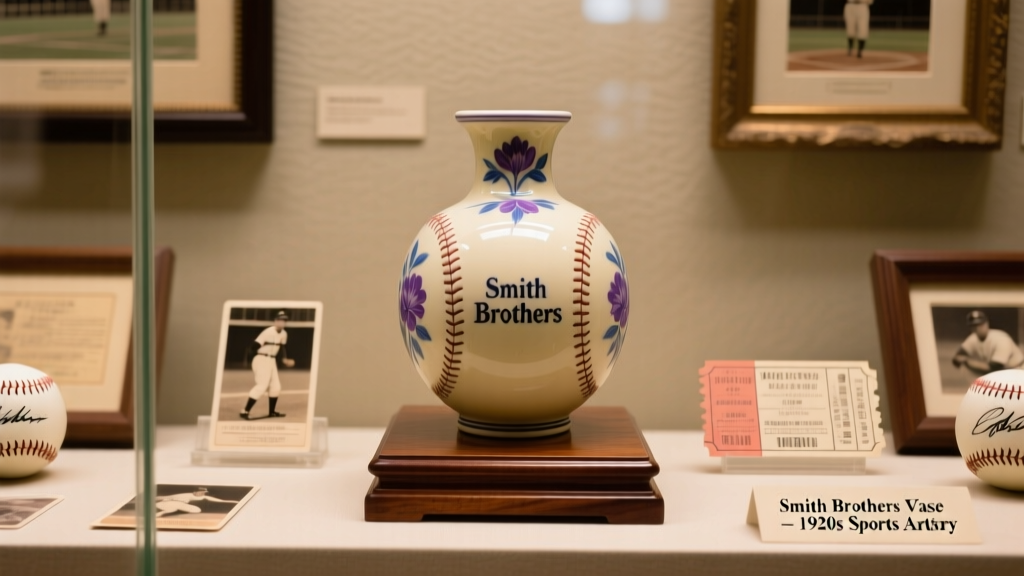
Smith Brothers Vase: Ball Shape in Cream Tones with Purple and Blue Floral Motif — A 4-Inch American Art Pottery Treasure
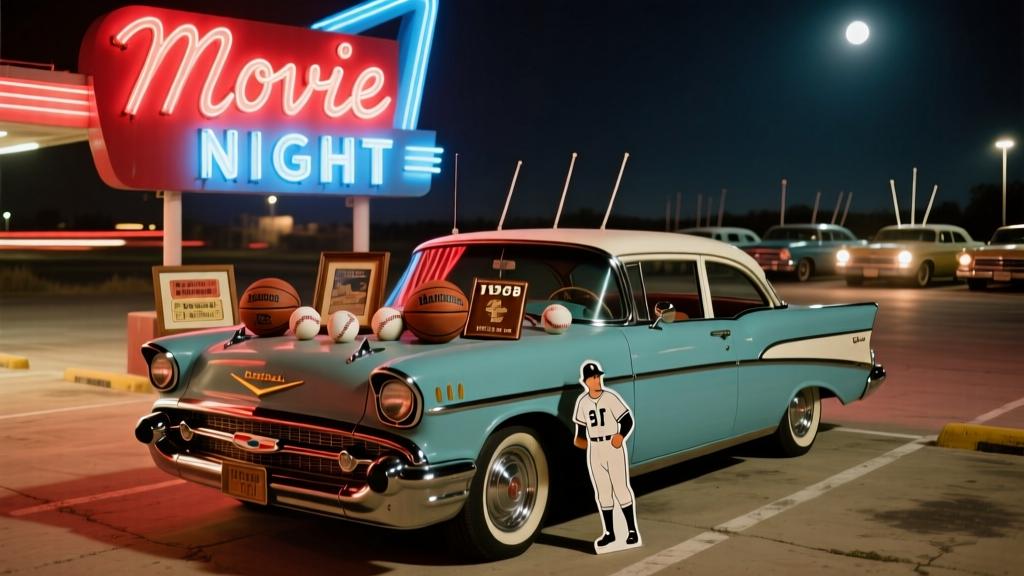
Drive-In Theaters: America’s Outdoor Cinema Legacy, Engineering, and Collectible Culture
Authenticating and Valuing Black Platform High Heels from the 1970s: A Collector’s Deep Dive into Size 6 Vintage Footwear
Does Anyone Know What This Is? Part II: Decoding Obscure Sports Memorabilia Artifacts
Mt. Washington Rose Bowl Burmese Rigaree: Decoding the 3½ × 3½ Inch Ceramic Treasure

Kelva Dresser Box: Molded Blue Body, Scrolling Panels, Pink Roses, Signed — A Collector’s Deep Dive

The Don Post Yoda Green Latex Halloween Mask (1980): Authentication, History, and Collector Insights

Authentication and Historical Context of the Garden Furnishings 'Woman Standing' Lead Fountain (Florentine Craftsmen, 1928–1949, Item #192849-IN)