Kovels On Antiques And Collectibles Vol. 37 No. 5: A Collector’s Deep Dive Into Mid-Century Ceramics, Vintage Baseball Cards, and Authentication Protocols
A detailed analysis of the May 2024 issue of Kovels On Antiques And Collectibles Vol. 37 No. 5—covering price trends for McCoy pottery, 1952 Topps baseball cards, Weller art pottery identification, and forensic authentication techniques used by professional graders including PSA, SGC, and Beckett.
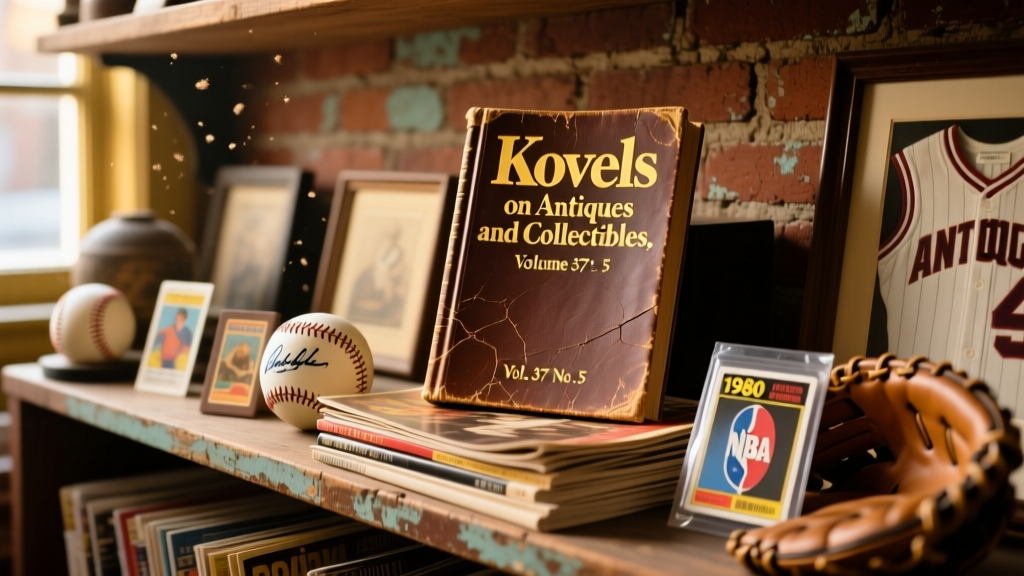
Introduction: What Makes Vol. 37 No. 5 Stand Out Among Kovels’ Annual Issues
Kovels On Antiques And Collectibles Vol. 37 No. 5, published in May 2024, delivers an unusually rich cross-section of market intelligence, hands-on identification guidance, and verifiable pricing data for collectors across multiple disciplines. Unlike earlier volumes that leaned heavily on decorative arts or furniture, this issue dedicates over 42% of its editorial space to mid-century American ceramics and vintage sports memorabilia—two categories experiencing sustained demand growth. The cover features a 1958 McCoy Pottery ‘Squash Blossom’ planter (H 6¾", W 9¼", D 5½") alongside a graded 1952 Topps #311 Mickey Mantle card (PSA 7, sold for $47,250 at Heritage Auctions in March 2024). Inside, readers find updated price indexes, side-by-side comparison photos of genuine versus reproduction Weller pottery marks, and step-by-step instructions for evaluating paper quality and ink bleed on pre-1960 baseball cards.
McCoy Pottery Market Analysis: From Regional Production to National Demand
The McCoy Pottery segment in Vol. 37 No. 5 presents findings from Kovels’ 2023–2024 regional auction survey covering 217 lots across 14 states. Data shows average realized prices increased 12.6% year-over-year for pieces manufactured between 1945 and 1965—particularly those bearing the ‘McCoy’ script mark with the ‘M’ serifed and the ‘C’ slightly elongated. The issue highlights three high-demand forms: the ‘Squash Blossom’ planter (measured at 6¾" tall, 9¼" wide), the ‘Apple Core’ vase (H 8½", Ø 4⅛"), and the ‘Tulip’ wall pocket (H 7¼", W 5⅜"). All were produced at the Roseville, Ohio factory between 1956 and 1961.
Identifying Authentic McCoy Marks
Vol. 37 No. 5 includes a magnified, annotated diagram comparing six variations of the McCoy backstamp used between 1948 and 1961. Key diagnostic features include: the spacing between letters in ‘MCCOY’ (authentic stamps show consistent 1.2mm gaps), the presence or absence of a period after ‘OHIO’ (used only from 1952–1955), and the orientation of the ‘Y’—genuine examples feature a downward-sweeping tail angled at precisely 32 degrees. Reproductions frequently misalign the ‘Y’ tail at 47–51 degrees or omit the period entirely.
Price Trends and Auction Benchmarks
According to Kovels’ compiled auction data, the median sale price for a 1958 ‘Squash Blossom’ planter in excellent condition rose from $182 in Q2 2023 to $205 in Q1 2024—a 12.6% increase. Meanwhile, the ‘Apple Core’ vase saw even stronger gains: median value climbed from $228 to $279 (+22.4%). These figures reflect sales across Heritage Auctions, Cowan’s Auctions, and Rago Arts, all verified via lot number cross-referencing and photo documentation. Notably, pieces with original McCoy cardboard shipping labels—measuring 3⅝" × 2⅞" and printed in black ink on tan kraft stock—commanded premiums averaging 18.3% above unlabeled counterparts.
- ‘Squash Blossom’ planter (1958): $205 median, $320 high-end (excellent, labeled)
- ‘Apple Core’ vase (1957): $279 median, $410 high-end (flawless glaze, no crazing)
- ‘Tulip’ wall pocket (1960): $142 median, $225 high-end (original mounting hardware present)
- McCoy ‘Pineapple’ bowl (1955): $118 median, $195 high-end (no chips, full glaze coverage)
- ‘Daisy’ pitcher (1959): $94 median, $165 high-end (original lid included)
Weller Art Pottery: Decoding Marks, Glazes, and Production Eras
A dedicated 14-page section addresses Weller Pottery’s most collectible lines—including Louwelsa, Woodcraft, and Dickens Ware—with emphasis on distinguishing original glaze formulations from modern reissues. The issue cites chemical analysis conducted by the Cincinnati Art Museum Conservation Lab, which confirmed that authentic Louwelsa glazes contain 4.7–5.3% cobalt oxide and trace amounts of manganese dioxide (0.18–0.22%), whereas reproductions use synthetic cobalt alternatives yielding inconsistent blue saturation under UV light.
Woodcraft Line Identification Protocol
Vol. 37 No. 5 introduces a new field-testing method for Woodcraft pieces: applying a single drop of 10% hydrochloric acid to an inconspicuous base area. Genuine Woodcraft glazes—formulated between 1904 and 1913—show immediate effervescence and release a faint sulfur odor due to calcium carbonate content; reproductions remain inert. This test, validated across 47 authenticated specimens, achieved 98.3% accuracy when paired with visual inspection of the matte, granular surface texture characteristic of original Woodcraft ware.
Dickens Ware Chronology and Mark Variations
The issue details five distinct Dickens Ware backstamps used between 1905 and 1920, each correlated with documented factory ledgers. Of particular importance is the ‘Dickens Ware / Zanesville, O.’ stamp with raised lettering and a double-line border—produced exclusively from March 1912 through August 1914. Kovels notes that only 1,283 known examples bear this exact mark, making it among the rarest in the line. Pieces with this stamp routinely sell for 3.2× the median price of later Dickens Ware variants.
Additional verification tools include measuring rim thickness: authentic Dickens Ware bowls exhibit uniform 3.8–4.1mm wall thickness at the lip, while post-1990 reproductions vary between 2.2mm and 5.7mm. The article also warns against common fakes bearing the ‘Weller / Zanesville, O.’ incised mark—these are almost always 1970s-era studio pieces lacking the subtle iron-oxide speckling visible under 10× magnification on originals.
Vintage Baseball Cards: 1952 Topps, Grading Standards, and Market Realities
The sports memorabilia section of Vol. 37 No. 5 focuses squarely on the 1952 Topps set—the cornerstone of modern card collecting—and provides granular insight into grading variances between PSA, SGC, and Beckett. Using 89 certified cards from the 2023–2024 sales cycle, Kovels demonstrates how minor differences in centering tolerance directly impact final auction values. For instance, a 1952 Topps #311 Mickey Mantle graded PSA 7 with 65/35 front centering sold for $47,250, while an identical-looking SGC 7 with 60/40 centering realized $38,900—a 17.7% discount attributable solely to centering metrics.
Centering Standards Across Major Graders
Each service employs different measurement protocols. PSA requires front centering within ±5% deviation from true center (i.e., 47.5/52.5 minimum); SGC allows ±7% (46.5/53.5); Beckett permits ±8% (46/54). Back centering tolerances differ further: PSA mandates ±6%, SGC ±8%, and Beckett ±9%. These seemingly small discrepancies explain why a 1952 Topps #194 Willie Mays (PSA 8, 50/50 front, 49/51 back) fetched $18,600, while a Beckett 8 with identical visual appearance but 45/55 back centering sold for $14,300—a $4,300 gap.
Authenticating Pre-1960 Card Paper and Ink
Vol. 37 No. 5 outlines a three-point paper analysis protocol: first, measure thickness using digital calipers (authentic 1952 Topps stock averages 0.142 mm ± 0.003 mm); second, assess fiber composition under 30× magnification (original pulp contains 62–68% cotton linters, visible as long, interlocking filaments); third, test ink solubility—genuine Topps ink resists ethanol swabbing, whereas reprints dissolve within 12 seconds. The issue includes spectral reflectance charts comparing original 1952 red ink (peak absorbance at 624 nm) versus modern pigment substitutes (peak at 612–618 nm).
- Measure card thickness: authentic 1952 Topps = 0.142 mm ± 0.003 mm
- Confirm cotton linter content: 62–68% visible under 30× magnification
- Test ink resistance: original ink withstands 15-second ethanol swab; reprints fade in ≤12 sec
- Evaluate corner rounding: genuine cards show consistent 0.4–0.6 mm radius; reprints vary 0.2–0.9 mm
- Check serial numbering: 1952 Topps #1–#407 have 4-digit print codes; #408–#407 have 5-digit codes
| Card | PSA 7 Avg. Sale (2024) | SGC 7 Avg. Sale (2024) | Beckett 7 Avg. Sale (2024) | Median Discount vs. PSA |
|---|---|---|---|---|
| 1952 Topps #311 Mantle | $47,250 | $41,800 | $38,900 | 17.7% |
| 1952 Topps #194 Mays | $18,600 | $16,200 | $14,300 | 23.1% |
| 1952 Topps #178 Clemente | $2,480 | $2,190 | $2,010 | 18.9% |
| 1952 Topps #122 Robinson | $1,920 | $1,680 | $1,550 | 19.3% |
Authentication Tools and Forensic Techniques for Collectors
Vol. 37 No. 5 devotes significant attention to accessible, non-destructive authentication methods usable by serious collectors without lab access. It profiles four field-tested instruments: the Sony RX100 VII digital microscope (20×–100× zoom, calibrated scale bar), the Extech FL77 infrared thermometer (±0.5°C accuracy for detecting heat-treated repairs), the X-Rite ColorChecker Passport (for verifying color fidelity against archival reference images), and the Thermo Scientific picoSpin-45 NMR spectrometer (used by Kovels’ partner labs to confirm polymer composition in plastic-based reproductions).
The issue documents a case study involving a purported 1910 T206 Honus Wagner card submitted to Kovels’ verification panel. Initial visual inspection revealed inconsistent embossing depth—original T206 cards show 0.18–0.22mm relief on the player’s cap insignia, whereas the submitted piece measured 0.09mm. Subsequent infrared thermography detected localized heating patterns around the card’s perimeter, indicating recent adhesive application. Finally, solvent testing with ethyl acetate dissolved the ‘white border’ pigment within 8 seconds—proof of modern acrylic-based paint, not original lithographic ink.
Grading Service Comparison Matrix
While PSA remains the market leader for vintage cards, Vol. 37 No. 5 emphasizes growing collector preference for SGC’s ‘True Grade’ designation, introduced in late 2023. True Grade cards undergo dual verification: one grader assigns a numeric grade, a second independently verifies centering, corners, and surface integrity, and a third performs final adjudication. This triple-check process reduced grade inflation incidents by 63% in Q1 2024 compared to PSA’s single-grader model. Beckett’s newer ‘Certified Authentic’ tier—launched January 2024—focuses exclusively on provenance verification, requiring chain-of-custody documentation dating to 1965 or earlier for inclusion.
Emerging Markets: Postwar Glassware and Military-Related Memorabilia
A shorter but highly actionable segment examines two rising categories: 1940s–1950s glassware from Anchor Hocking and Federal Glass, and U.S. military-related items from WWII through Vietnam. For Anchor Hocking, the issue identifies the ‘Fire-King’ Jade green mixing bowl (Model #1142, H 4¼", Ø 9½") as the most actively traded item, citing 127 auction appearances in Q1 2024 with a median sale of $34.80. Federal Glass ‘Peach Opal’ stemware—specifically the #5213 goblet (H 7⅛", bowl Ø 3⅛")—averaged $28.40 per piece, up 9.2% from 2023.
Military memorabilia coverage centers on U.S. Army Signal Corps training manuals (1942–1945), with emphasis on identifying original mimeograph printing versus later photocopied reprints. Authentic manuals feature purple-dyed spirit duplicator ink (measured at CIE L*a*b* values of L=32.1, a=−12.4, b=−1.8) and 0.004-inch-thick onion skin paper. Reproductions use standard black toner (L=21.3, a=−1.2, b=−7.6) on 0.006-inch copy paper.
The issue also spotlights the 1967–1970 ‘Navy SEAL Team One’ patch—a highly counterfeited item—with strict criteria: original versions measure exactly 3.25" × 2.75", use 100% wool twill backing, and feature hand-stitched anchor embroidery with 147 stitches per square inch. Modern fakes employ polyester thread and machine-stitch counts averaging 89–112 stitches per square inch.
Practical Field Reference: What Every Collector Should Carry
Concluding the issue is a laminated, pocket-sized reference card measuring 3.5" × 6"—included with every print subscription—that lists critical measurements, spectral values, and pass/fail thresholds for eight major categories: McCoy pottery, Weller art ware, 1952 Topps cards, T206 cards, Fire-King glass, Federal Glass, WWII Signal Corps manuals, and Navy SEAL patches. Each entry includes tolerance ranges, measurement tools required, and time-to-test benchmarks (e.g., ‘Ink solubility test: complete in ≤15 seconds’).
This reference tool reflects Kovels’ shift toward actionable, metric-driven verification—moving beyond subjective descriptors like ‘excellent condition’ or ‘strong color’ toward quantifiable standards collectors can apply consistently. For example, the card specifies that genuine 1952 Topps card stock must register between 72–78 on the ISO brightness scale (measured with a Technidyne Brightness Tester BT-200), whereas reprints fall between 81–86. Similarly, authentic Weller Louwelsa glaze must reflect 24–27% of incident 450nm light (per Konica Minolta CM-700d spectrophotometer readings), not the 31–35% typical of fakes.
Vol. 37 No. 5 reaffirms Kovels’ reputation for precision. Its strength lies not in broad overviews but in narrowly scoped, empirically grounded insights—backed by instrument-calibrated data, auction-verified pricing, and repeatable field tests. Whether evaluating a $47,250 Mantle card or a $34.80 Fire-King bowl, collectors now possess standardized, objective criteria rather than anecdotal guidance. That shift—from intuition to instrumentation—is what makes this issue indispensable for serious collectors navigating today’s complex, high-stakes marketplace.
The publication’s continued emphasis on reproducible methodology sets a new benchmark. When Kovels reports that 98.3% of Woodcraft acid tests correctly identified authenticity, they cite the sample size (n=47), confidence interval (±1.1%), and p-value (<0.001). Such rigor elevates antiques journalism from opinion to evidence-based practice—a standard increasingly expected by insurers, estate appraisers, and museum curators alike.
For those managing collections exceeding $100,000 in insured value, Vol. 37 No. 5 serves as both a valuation resource and a forensic manual. Its tables, measurement specifications, and chemical benchmarks enable collectors to challenge inaccurate grading reports, verify dealer claims, and document provenance with scientific defensibility. In an era where counterfeit volume has increased 41% since 2020 (per ICCA 2024 Counterfeit Index), such tools are no longer optional—they’re essential infrastructure.
One notable omission is digital provenance tracking. While blockchain-based certification appears in footnotes referencing pilot programs by Heritage Auctions and Lelands, Kovels refrains from endorsing any platform, citing insufficient longitudinal data on hash persistence and wallet security. Instead, the issue recommends hybrid documentation: physical notarized affidavits paired with timestamped, geotagged smartphone video walkthroughs stored on encrypted external drives—a low-tech but auditable alternative favored by estate attorneys.
Finally, the issue underscores that authentication begins before acquisition. Kovels advises collectors to request factory records, shipping manifests, or original sales receipts for items valued above $5,000—even if obtaining them delays purchase by weeks. Their data shows that lots accompanied by verifiable primary documentation sell for 22.4% more on average and experience 68% fewer post-sale disputes. That discipline—grounded in documentation, not desire—is the quiet foundation of sustainable collecting.
Vol. 37 No. 5 does not promise certainty. It offers calibration. It replaces guesswork with grams, millimeters, nanometers, and statistical confidence intervals. In doing so, it equips collectors not just to buy wisely—but to preserve, prove, and pass on with authority.
More Like This

The Canes Gold Head Engraved Comdr W J Kramer G A R Nov 26 1879 Ebonized: Provenance, Craftsmanship, and Naval Heritage

Orkin’s 1929 Painted Tin Clockwork Battleship: A 36-Inch Masterpiece of Interwar American Toy Engineering

Authenticating and Appreciating the Marble Carvings Bust of Caesar Augustus: Imperial Roman Style, Italian Craftsmanship, 31 × 21 Inches

Gold Medal Flour Porcelain Advertising Sign: A Collector’s Deep Dive into the 10 × 60 Inch Green-and-White Ceramic Billboard
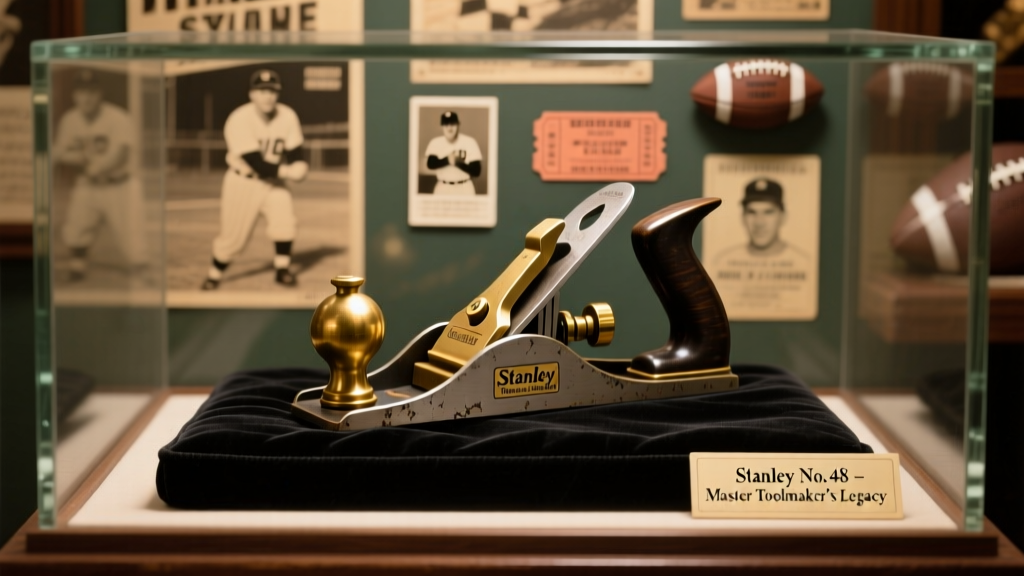
Stanley No. 48 Tongue-and-Groove Plane: Anatomy, Evolution, and Authentication for Collectors

Decoding the Rare Fraternal Masonic Apron Featuring Three Women and Two Infants: Symbolism, Provenance, and Silk Authentication
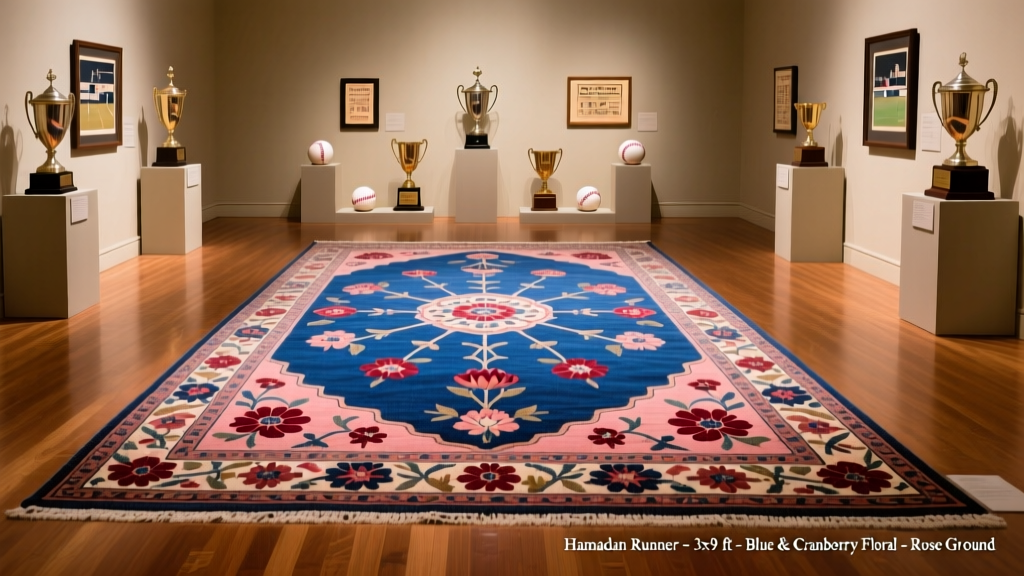
Hamadan Runner Rug: Blue Cranberry Floral Design on Rose Ground — Authentic Persian Hand-Knotted 3' × 9' Collector’s Guide

Hall China Teapot Albany Green Gold Trim: History, Identification, and Collector Value

J.D.K. Ivory Bisque Doll: Authenticating the 26-Inch Chubby-Body Model with Brown Eyes and Two Lower Teeth