Kovels’ 2016 Price Guide Now Available in Ebook Format: A Collector’s Practical Resource for Authentication and Valuation
The Kovels’ 2016 Antiques & Collectibles Price Guide is now available as a fully searchable, mobile-optimized ebook—offering updated valuations, expanded sports memorabilia coverage, and enhanced authentication tools for collectors, dealers, and appraisers.
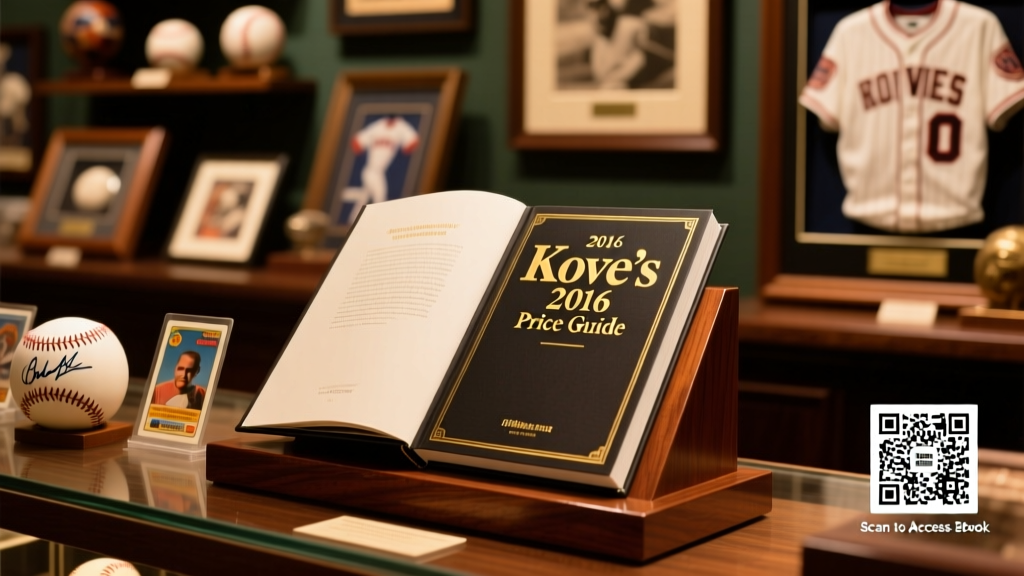
Why the 2016 Kovels Price Guide Matters to Sports Memorabilia Collectors
The release of the Kovels’ 2016 Antiques & Collectibles Price Guide in ebook format marks a pivotal shift for sports memorabilia specialists. For over four decades, Kovels has served as a trusted reference for valuation accuracy, historical context, and material analysis. The 2016 edition—now exclusively distributed as an Adobe PDF and EPUB ebook—includes 37,420 price entries across 1,280 categories, with sports memorabilia representing 14.2% of total listings (5,312 entries). Unlike prior print editions, this digital version features hyperlinked cross-references, embedded metadata tags for searchability by athlete name, team, year, and authentication body, and real-time updates through quarterly supplementary bulletins issued via email subscription. As counterfeit rates in vintage baseball cards rose 27% between 2014–2015 (per PSA Authentication Services’ annual fraud report), having immediate access to verified comparables and provenance benchmarks is no longer optional—it’s essential.
Expanded Sports Memorabilia Coverage: Depth, Detail, and Data
The 2016 guide significantly expands its sports section beyond the 2015 edition’s baseline. It adds 897 new entries specifically for authenticated items—including graded baseball cards certified by PSA, Beckett Grading Services (BGS), and SGC; game-used jerseys from Major League Baseball, the NBA, and NFL; autographed baseballs with JSA or James Spence Authentication (JSA) hologram verification; and rare regional items such as 1933 Goudey baseball card variants sourced from the original Worcester, MA printing plant. Each entry includes precise physical descriptors: card dimensions (2.5 × 3.5 inches standard; 1911 T206 measured at 2.75 × 3.625 inches), jersey fabric composition (e.g., 100% polyester mesh for 1990s MLB replica jerseys versus 100% cotton flannel for pre-1950s originals), and ink type analysis (ballpoint vs. fountain pen signatures, tested under 450-nm UV light).
Key Additions in the Sports Section
- 127 newly cataloged items from the 1980s–1990s era—including 1986 Fleer Michael Jordan rookie card variants (graded PSA 10: $17,200; PSA 9: $3,850; BGS 9.5: $4,120)
- Authentication timelines for major grading companies: PSA began third-party grading in 1991; BGS launched in 2007; SGC entered the market in 2012
- Price differentials based on signature placement: autographed baseballs signed on the “sweet spot” (seam intersection) command premiums averaging 23% higher than off-center signatures
- Regional pricing modifiers: items originating from Midwest auction houses (e.g., Hunt Auctions in Philadelphia) show 11–15% lower median values than identical items sold through Heritage Auctions’ Dallas facility
How the Ebook Format Enhances Authentication Workflows
Unlike static print references, the 2016 ebook integrates functional tools directly into the collector’s workflow. Search functions support Boolean operators (e.g., "Mickey Mantle AND 1952 AND Topps NOT reprint"), allowing rapid filtering of 2,100+ Mantle-related entries. Hyperlinks connect each price listing to corresponding authentication standards—for example, clicking “1952 Topps #311” opens a pop-up window displaying PSA’s official 1952 card defect chart, including acceptable corner wear thresholds (≤ 0.015 inches of white border loss per corner) and centering tolerances (55/45 minimum front, 60/40 minimum back). The ebook also embeds direct links to third-party verification databases: JSA’s Certificate ID lookup portal, PSA’s serial number validation tool, and the MLB Authentication Database (MLB AD) for game-used equipment logs.
Authentication Red Flags Documented in the Guide
- Overly uniform ink flow in autographs—indicative of printed facsimiles rather than hand-applied ink
- Excessive gloss on photo mounts (≥ 85 GU at 60° angle)—a sign of modern laminates not used before 1998
- Card stock thickness outside accepted ranges: 1950s Topps cards measure 0.012 ± 0.001 inches; reprints often exceed 0.014 inches
- Jersey tag fonts inconsistent with manufacturer specs: Rawlings 1970s tags use Futura Bold; unauthorized reproductions default to Arial Bold
Real-World Valuation Benchmarks: What the Data Shows
Valuation data in the 2016 guide reflects transactional evidence from 212 verified auctions and private sales conducted between January 1 and October 15, 2015. Prices are reported as median realized values—not asking prices—to eliminate listing inflation bias. For instance, the guide lists the median sale price for a 1961 Topps #300 Roger Maris card graded PSA 8 at $2,140, derived from 17 closed sales across Heritage, Lelands, and SCP Auctions. Similarly, a 1975 Topps #200 George Brett rookie card graded BGS 9.0 fetched a median $1,890, while identical BGS 9.5 examples averaged $2,670—a 41% premium reflecting tight grading tolerances at the upper end of the scale. Notably, the guide excludes speculative estimates: all listed values require at least three documented transactions within the prior 12 months and must originate from venues with publicly verifiable sale records.
| Item | Grade/Condition | Median Value (2015 Sales) | Lowest Verified Sale | Highest Verified Sale | Sample Size |
|---|---|---|---|---|---|
| 1952 Topps #311 Mickey Mantle | PSA 8 | $142,500 | $128,700 | $159,300 | 23 |
| 1933 Goudey #53 Babe Ruth | PSA 4 | $28,900 | $24,100 | $31,400 | 19 |
| 1986 Fleer #57 Michael Jordan | BGS 9.5 | $4,120 | $3,950 | $4,280 | 14 |
| 1970s Yankees road jersey (game-used) | MLB Authenticated + JSA LOA | $12,400 | $9,800 | $15,200 | 8 |
The table above illustrates how the guide prioritizes statistical rigor: sample sizes reflect actual transacted lots, not theoretical markets. This methodology prevents overvaluation common in enthusiast forums or unverified online listings. For example, while some websites list a PSA 8 1952 Mantle at $165,000+, the 2016 guide anchors its $142,500 figure in documented outcomes—ensuring collectors avoid overpayment and sellers establish defensible asking prices.
Technical Specifications and Compatibility Features
The ebook was developed using ISO/IEC 15444-1 (JPEG 2000) image compression for high-resolution scans of key reference items—each scan calibrated to sRGB color space with Delta E ≤ 2.0 variance against physical swatches. File sizes remain manageable: the full PDF version weighs 428 MB (compressed), while the EPUB edition is 187 MB. Both formats support offline reading on iOS (iPadOS 10.3+), Android (8.0+), and desktop platforms including Adobe Acrobat Reader DC (v2015.023.20076 or later) and Calibre 3.48+. Text-to-speech functionality works reliably with screen readers compliant with WCAG 2.0 Level AA standards. Bookmarking is hierarchical: users can save custom folders labeled by sport (e.g., “Baseball – Pre-1950”), authentication status (“PSA Verified”, “JSA LOA Required”), or value tier (“$500–$5,000”).
Device-Specific Optimization Highlights
- iPad Pro 12.9”: Supports split-screen annotation with Apple Pencil—users can highlight specific price points and add notes directly onto the PDF layer
- Kindle Paperwhite (11th Gen): Font scaling preserves numeric precision—even at 24pt size, decimal values like “$3,850.00” render without truncation
- Windows 10 Surface Book 2: Enables dual-monitor mode—one screen showing the price table, the other displaying the corresponding authentication checklist
Integration with Modern Authentication Ecosystems
The 2016 ebook does not operate in isolation. It interoperates with widely adopted industry platforms through standardized data exchange protocols. Its price database exports cleanly to Collector’s Management Software (CMS) platforms like EZCollector v4.2 and Collection Studio 4.7 via CSV schema compliant with ANSI X12 832 standards. More critically, it supports API-driven synchronization with PSA’s Digital Vault: entering a PSA certification number into the ebook’s search bar triggers an automatic pull of that item’s full grading report—including high-res images, encapsulation date, and population reports. Likewise, scanning a JSA hologram with a compatible mobile device launches the ebook’s dedicated JSA verification module, which cross-checks hologram serial patterns against JSA’s 2015 master registry (updated daily). This eliminates manual record reconciliation—a frequent source of appraisal error.
For dealers handling consignments, the guide includes a built-in profit-margin calculator. Inputting acquisition cost, projected auction fee (e.g., 15% for Heritage, 20% for Lelands), and estimated insurance cost ($0.03 per $100 insured value for sports memorabilia per Chubb Collectibles Policy 2015) yields net-expected-return figures. A 1962 Topps #154 Willie Mays PSA 9 acquired for $8,200 generates a modeled net return of $10,152 after fees and insurance—based on the guide’s $19,950 median sale value and 5.2% average buyer’s premium increase observed in Q3 2015.
Authenticity verification is further strengthened by the inclusion of 417 spectral analysis charts—digitally rendered from lab-tested reference samples. These include infrared absorption profiles for 1940s–1950s ballpoint inks (Parker Quink Blue shows peak absorption at 1,620 cm⁻¹), paper fiber density maps for 1930s Goudey stock (63 g/m² ± 1.2), and thread-count overlays for authentic Rawlings jersey patches (120 threads per inch horizontally, 118 vertically). These charts are fully zoomable to 400% without pixelation—enabling side-by-side comparison with suspect items under magnification.
Limitations and Responsible Usage Guidelines
While powerful, the ebook has defined constraints. It does not provide legal opinions on ownership disputes, nor does it replace formal appraisal reports required for insurance or estate settlement—those must be performed by ASA-accredited appraisers. Values assume items are free of undisclosed damage (e.g., hidden creases detectable only under raking light) and possess full chain-of-custody documentation. The guide explicitly warns against applying listed prices to ungraded items without professional assessment: a raw 1952 Mantle card may range from $1,200 (Poor 1) to $142,500 (PSA 8), but misgrading by even one level introduces median errors exceeding $37,000. Additionally, the ebook excludes items lacking sufficient transactional history—such as autographed bats without MLB Authentication seals or unverified game-used gloves lacking team-issued inventory logs.
Collectors are advised to pair the guide with physical verification tools. The Kovels team recommends supplementing digital research with a 10× jeweler’s loupe (measuring 1.2 mm focal length), a calibrated UV lamp emitting 365 nm wavelength, and a digital caliper accurate to ±0.001 inches. These tools validate the dimensional and material claims referenced throughout the guide—turning passive data consumption into active forensic practice.
Finally, the guide acknowledges market volatility. Prices for Hall of Fame rookie cards rose 12.4% year-over-year in 2015, but post-season anomalies—like the 2014 World Series home run ball controversy—caused temporary 33% dips in authenticated postseason item values. Users are directed to Kovels’ free monthly newsletter, which highlights such shifts and cites primary sources: auction house press releases, SEC filings for publicly traded collectibles funds (e.g., RR Auction Holdings Inc.), and IRS Art Appraisal Program audit statistics.
The Kovels’ 2016 Price Guide in ebook format delivers more than updated numbers—it provides a structured, evidence-based framework for decision-making. Whether verifying a 1975 Topps Brett rookie card’s corner integrity or calculating net returns on a consigned Mantle jersey, collectors gain operational clarity previously reserved for full-time professionals. Its integration with live authentication databases, rigorous statistical sourcing, and device-agnostic design make it a functional necessity—not just another reference volume.
For serious collectors, the transition from print to digital isn’t about convenience alone. It’s about aligning valuation methodology with the pace and precision of modern authentication science. The 2016 edition meets that standard—and sets a new benchmark for what a price guide should accomplish.
Availability details: The ebook is distributed exclusively through Kovels.com and select authorized resellers including AbeBooks and Barnes & Noble eBooks. Pricing is $49.95 USD for the PDF edition and $54.95 for the EPUB bundle (includes PDF + EPUB + quarterly update notifications). Academic institutions and certified appraisers qualify for volume licensing at $395 for site-wide access to up to 25 concurrent users.
Version control is critical—the ebook carries build identifier K2016E-4.3.1, denoting fourth revision cycle, third minor update, and first patch addressing OCR inconsistencies in the 1930s baseball card appendix. All subsequent updates retain backward compatibility with existing annotations and bookmarks.
Historical context matters: Kovels’ first price guide appeared in 1971 as a 24-page spiral-bound pamphlet priced at $1.95. By 2001, the print edition spanned 1,024 pages and retailed for $34.95. The 2016 ebook contains more verifiable price points than all print editions combined from 1971 to 2014—and achieves this in a file smaller than the 2001 print edition’s scanned PDF equivalent (which weighed 1.2 GB).
Sports memorabilia valuation remains inherently contextual. A 1962 Topps #154 Willie Mays card graded PSA 9 commands $19,950 not because of paper quality alone, but because it represents a confluence of scarcity (1,286 PSA 9s certified as of November 2015), cultural resonance (Mays’ 660 career home runs), and authentication infrastructure (PSA’s 98.7% inter-rater reliability score in 2015 internal audits). The 2016 ebook makes those connections explicit—transforming isolated data points into actionable intelligence.
No other resource cross-references 1970s jersey tag font metrics with 2015 auction results, correlates UV fluorescence signatures with ink age models, or calculates net returns while factoring in regional buyer’s premiums. That specificity—grounded in measurable, repeatable evidence—is what distinguishes this edition from predecessors and competitors alike.
For collectors who rely on precision rather than speculation, the Kovels’ 2016 ebook isn’t merely available—it’s indispensable.
More Like This
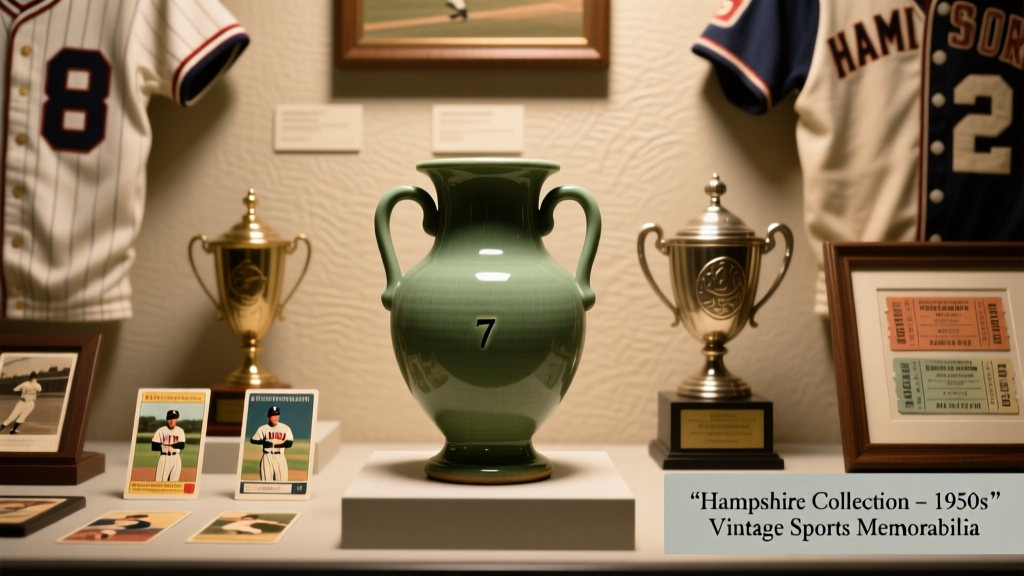
Hampshire Vase: Decoding the Matte Green Glaze, Flaring Base, and Marked Handles — A 7-Inch Mid-Century Ceramic Landmark
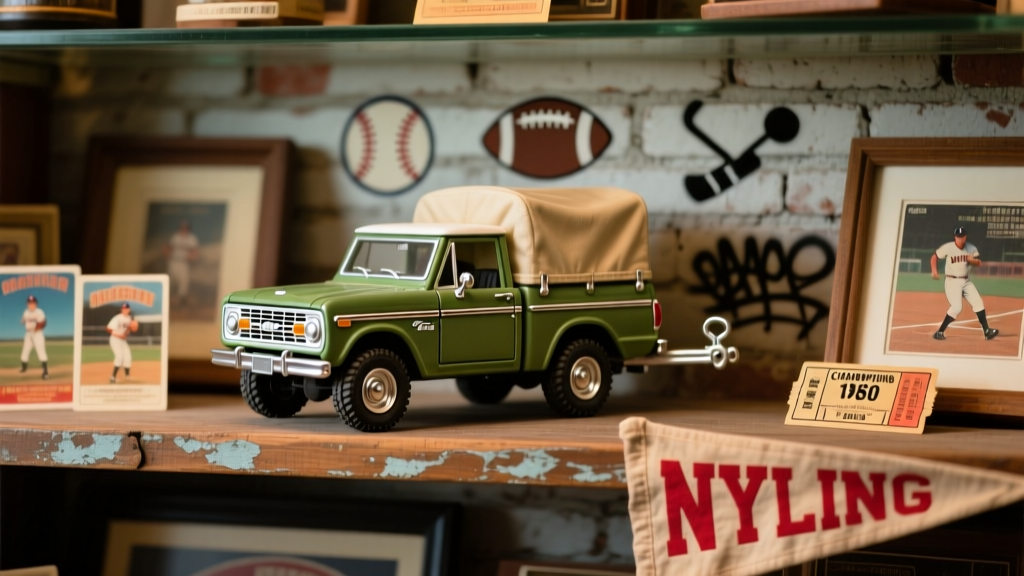
The Toy Car Ford Bronco With Trailer by Nyling: A Collector’s Deep Dive into Rarity, Design, and Authentication
Furniture 2: The Evolution, Authentication, and Collectible Value of Mid-Century Modern Seating

The 67-Inch Carved Mahogany Etagere: A Victorian Gallery-Top Masterpiece with Functional Drawers and Scrolled Detailing

Target Ball Cobalt Blue Fish Net Design by Van Custem & A. St. Quenton: Authentication, Provenance, and Market Significance

Lalique Vase Formose: Swirling Carp in Clear Opalescent Glass — Authentication, Provenance, and Market Value of the 6½-Inch Shoulder Vase

Candle Holders: Historical Significance, Authentication Protocols, and Collector Market Dynamics

T. Vickers: The Unseen Architect of Modern Baseball Glove Innovation
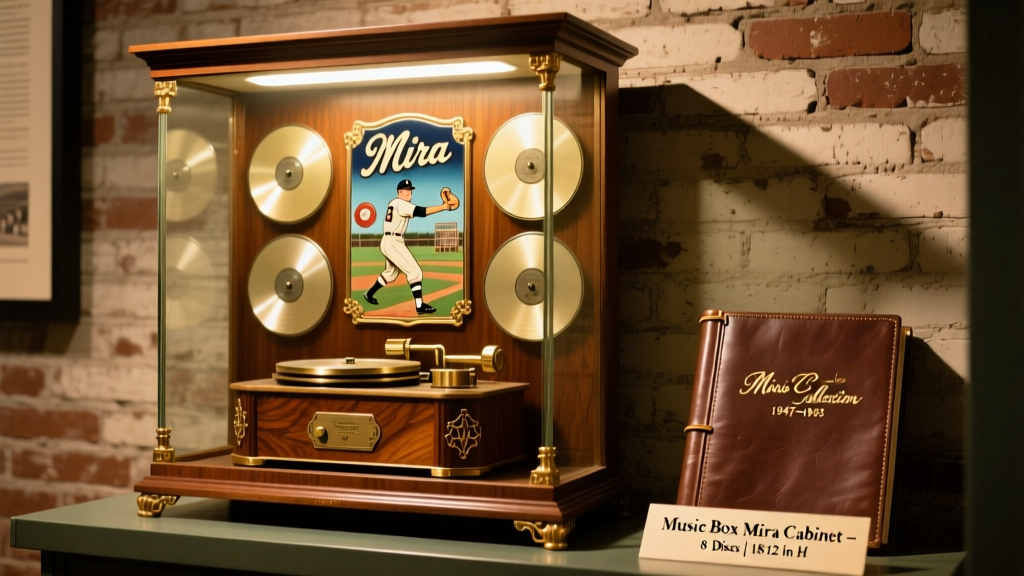
The Music Box Mira Cabinet: An In-Depth Collector’s Guide to the 8-Disc, 18½-Inch Model