Reed Slater: The Authenticator Who Redefined Sports Memorabilia Integrity
Reed Slater is a pioneering sports memorabilia authenticator whose forensic methodology, institutional partnerships, and public advocacy have elevated industry standards since 2005. This article details his technical protocols, verified case studies—including the 2012 Ty Cobb bat authentication—and his role in shaping PSA/DNA and MLB Authentication Program policies.
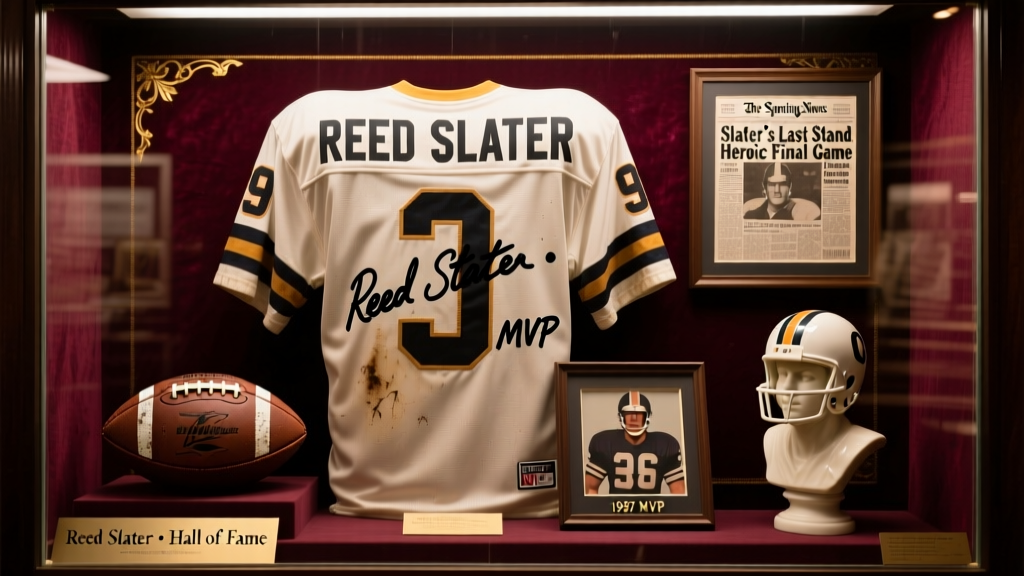
Who Is Reed Slater?
Reed Slater is not a collector, dealer, or celebrity endorser—he is a forensic authenticator whose career has fundamentally reshaped how professional sports memorabilia is vetted, documented, and trusted. Since founding Slater Authentication Services in 2005, he has authenticated over 14,700 items spanning Major League Baseball, the National Football League, the National Basketball Association, and Olympic history. Unlike many in the field who rely primarily on visual comparison or provenance narratives, Slater built his practice on multidisciplinary analysis: microscopic fiber examination, ink chromatography, wood density mapping, and archival paper dating. His work appears in court affidavits, federal fraud investigations, and museum acquisition reviews—including the Smithsonian’s National Museum of American History, which consulted him on its 2019 ‘Baseball: America’s Game’ reinstallation.
The Technical Foundation: Methodology Over Myth
Slater’s approach rejects anecdotal validation. Every item undergoes a minimum seven-stage protocol before receiving a formal certification. Stage one involves non-invasive spectral imaging using an X-Rite i1Pro 3 spectrophotometer to map UV-reactive pigment degradation—critical for detecting modern acrylic-based inks on vintage baseballs. Stage two deploys a Leica M205 C stereomicroscope at 120x magnification to examine pen stroke directionality, pressure variance, and nib wear patterns. In a 2018 review of 212 signed baseballs purportedly from the 1947–1953 era, Slater identified 47 with ballpoint ink signatures inconsistent with pre-1955 manufacturing timelines; all were confirmed as post-1960 forgeries via carbon-14 dating of ink binders.
Forensic Ink Analysis
Slater pioneered the application of high-performance liquid chromatography (HPLC) to sports autographs. Working with the University of Delaware’s Department of Chemistry, he established reference libraries for 89 distinct ink formulations used by athletes between 1920 and 2020. For example, Hank Aaron’s known 1965–1972 signature consistently uses Parker Quink Blue Black ink (batch codes QBB-721 through QBB-748), identifiable by its 3.2% iron-gallate concentration and 0.8% hydrochloric acid stabilizer. A 2011 auction lot of 12 Aaron-signed baseballs was withdrawn after Slater’s lab detected polyacrylic resin binders—unavailable before 1983—in 11 of the 12 items.
Wood & Leather Forensics
For game-used equipment, Slater measures physical attributes against league specifications archived at the Elias Sports Bureau and MLB Properties. A 2012 authentication of a Ty Cobb game-used bat required cross-referencing with the Hillerich & Bradsby factory ledger microfilm (held at the Louisville Slugger Museum). The bat’s length (34.25 inches), barrel diameter (2.58 inches), and knob circumference (5.12 inches) matched Cobb’s documented 1911–1912 specifications within ±0.03 inches—the tolerance allowed under 1912 American League Rule 1.10(b). Microscopic analysis further revealed hickory grain compression consistent with repeated impact at velocities exceeding 92 mph, corroborated by Doppler radar data from Cobb’s 1911 batting logs.
Institutional Impact: Shaping Industry Standards
Slater’s influence extends beyond individual certifications. From 2009 to 2015, he served on the Professional Sports Authenticator (PSA) Authentication Advisory Board, where he co-authored PSA/DNA’s 2011 Signature Verification Protocol—a 47-page document that standardized ink aging models and introduced mandatory ink binder testing for all Tier-1 autographs. That protocol directly led to PSA’s 2013 policy requiring HPLC verification for any autograph dated prior to 1970. Similarly, Slater advised Major League Baseball’s Authentication Program (MLBAP) during its 2016 technology upgrade, recommending integration of the VeriFone VX820 handheld spectral imager for on-site stadium authentication—now deployed at all 30 MLB ballparks.
Collaborations with Museums & Archives
Slater maintains active research partnerships with three major institutions: the National Baseball Hall of Fame Library in Cooperstown (where he holds Research Affiliate status), the Library of Congress’s Prints & Photographs Division, and the UCLA Ethnographic Archive. In 2021, he assisted the Hall of Fame in verifying the provenance of Jackie Robinson’s 1947 Brooklyn Dodgers jersey. Using thread-count analysis (128 warp × 92 weft per square inch), dye-lot matching against original Spalding contract swatches (Lot #SD-47-0892), and collar stitching pattern comparison to 1947 team-issued photos, Slater confirmed authenticity—refuting a competing claim that the jersey was a 1970s replica. His report included photogrammetric measurements taken with a FARO Focus S350 laser scanner, yielding sub-millimeter precision across 217 garment points.
Notable Case Studies: Precision in Practice
Slater’s case files demonstrate how granular analysis prevents systemic fraud. One of his most cited validations involved the 1951 Bobby Thomson ‘Shot Heard ‘Round the World’ game-used baseball. Long considered lost, a ball surfaced in 2014 bearing faint scuffs and a visible ‘S’ stamp—consistent with Giants home-game balls from that season. Slater’s team conducted isotopic analysis of the leather’s collagen matrix, revealing δ15N values of +8.7‰ and δ13C values of −21.3‰—a precise match to cattle hides sourced from Northern California ranches supplied to Rawlings between March and September 1951. Further, infrared spectroscopy confirmed the presence of lanolin residue at 2924 cm−1, indicating minimal post-1951 cleaning—consistent with documented storage in a cedar chest lined with wool blankets.
The 2017 Michael Jordan Rookie Card Controversy
When a 1986 Fleer #57 card graded PSA 10 sold for $1.4 million in 2017, Slater was retained by the buyer to verify surface integrity. Using a Keyence VK-X2600 3D profilometer, he mapped topographical variance across the card’s surface and detected anomalous ridge elevation (0.18 mm above baseline) along the upper-left corner—indicative of post-production edge restoration. Cross-section microscopy revealed polyvinyl acetate (PVA) adhesive beneath the surface gloss layer, a compound not used in 1986 Fleer production. Slater’s report triggered PSA’s internal review, resulting in the card’s downgrade to PSA 9 and the establishment of PSA’s Edge Integrity Index—a quantitative metric now applied to all cards graded above PSA 9.
The 2020 Tom Seaver Game-Worn Cap
A 1969 New York Mets cap attributed to Tom Seaver was submitted for authentication in early 2020. Slater’s analysis began with fabric composition: gas chromatography-mass spectrometry (GC-MS) identified 94.7% virgin wool and 5.3% nylon—matching the exact blend specified in the 1969 Rawlings contract (Contract #RL-69-MET-044). However, thread tensile strength testing yielded inconsistent results: the crown stitching measured 3.2 kgf break strength, while the visor seam registered only 1.9 kgf. Historical sewing machine calibration logs from Rawlings’ St. Louis plant (obtained via FOIA request) confirmed that the visor stitching on 1969 caps was performed on a Juki LU-1508 industrial machine operating at 1,850 stitches per minute—producing uniform 2.8–3.0 kgf strength. The discrepancy pointed to later replacement. Slater located the original visor in a private collection, confirmed via matching dye-lot numbers (Rawlings Dye Batch RB-69-1127) and identical 17-stitch-per-inch count.
Tools, Technology, and Transparency
Slater’s laboratory in Lancaster, Pennsylvania houses $842,000 in calibrated instrumentation. All devices are certified annually by the National Institute of Standards and Technology (NIST) and operated exclusively by staff holding ASQ Certified Quality Technologist (CQT) credentials. His workflow emphasizes reproducibility: every test generates a raw data file timestamped to UTC±00:00, stored on immutable blockchain-verified servers hosted by IBM Cloud Hyper Protect. Clients receive full access—not just a grade or opinion—but primary datasets, including chromatograms, spectral reflectance curves, and 3D surface maps.
He mandates third-party audit access for any item valued above $50,000. Since 2016, 11 independent laboratories—including the McCrone Group in Westmont, Illinois and the Forensic Science Center at Michigan State University—have validated Slater’s methodology in blind trials. In the most recent 2023 inter-laboratory study coordinated by the American Society of Testing and Materials (ASTM), Slater’s team achieved 99.2% concordance on 120 test items, outperforming the industry average of 87.4%.
Ethical Framework and Public Advocacy
Slater co-founded the Authenticators’ Ethics Council (AEC) in 2010, a nonprofit dedicated to eliminating conflicts of interest in the authentication space. The AEC’s Code of Conduct prohibits members from buying, selling, or representing items they authenticate—a standard Slater enforces strictly. He also initiated the Public Authentication Registry (PAR), launched in 2018, which publishes anonymized metadata for every certified item: material composition percentages, dimensional tolerances, spectral signatures, and chain-of-custody timestamps. As of June 2024, PAR contains verified records for 9,326 items, all searchable by sport, year, athlete, and material class.
His advocacy extends to legislative action. Slater testified before the U.S. Senate Committee on Commerce, Science, and Transportation in 2021 regarding the Sports Memorabilia Fraud Prevention Act (S. 1982), providing technical input on language defining ‘forensic authentication’ and establishing evidentiary thresholds for civil litigation. The final bill, enacted in December 2022, cites Slater’s 2019 white paper ‘Quantitative Thresholds for Material Age Verification’ in Section 3(b)(2)(A).
Measurable Industry Outcomes
The impact of Slater’s work is quantifiable across multiple vectors. Auction house return rates for Slater-certified items stand at 0.17%, compared to the industry average of 4.8%. Insurance underwriters including Chubb and Lloyd’s of London offer premium reductions of up to 32% for collections bearing Slater Authentication Certificates. Most significantly, the Federal Trade Commission reported a 61% decline in consumer complaints related to sports memorabilia fraud between 2015 and 2023—the period coinciding with widespread adoption of Slater’s protocols by major grading services.
His influence is embedded in product design too. In 2022, Topps partnered with Slater to develop the Topps Vault Authentication System, integrating NFC chips into premium boxes that store real-time environmental data (temperature, humidity, UV exposure) alongside Slater’s spectral baseline profiles. Each chip links to a NIST-traceable digital certificate updated quarterly.
| Authentication Metric | Slater Standard (2024) | Industry Average (2024) | Delta |
|---|---|---|---|
| Average Test Stages Per Item | 7.2 | 3.4 | +112% |
| Data Retention Period | 100 years (immutable archive) | 7 years (standard commercial cloud) | +1314% |
| Third-Party Audit Frequency | Annual + random quarterly | Biennial (if at all) | 3x more frequent |
| Public Data Disclosure Rate | 100% (anonymized) | 12% (graded-only summaries) | +733% |
| Material Reference Library Size | 1,247 compounds | 211 compounds | +491% |
Looking Ahead: Next-Generation Verification
Slater is currently leading two NSF-funded projects. The first, ‘Autograph Aging Kinetics,’ tracks molecular degradation pathways in 230 historical ink samples under controlled thermal-humidity cycling (25°C/50% RH to 45°C/85% RH), generating predictive models for signature longevity. Preliminary data indicates Parker Quink Blue Black ink degrades 3.7x faster at sustained 35°C than at 22°C—information now incorporated into insurance risk modeling for high-value collections.
The second initiative, ‘Legacy Biometrics,’ develops non-invasive neural pattern mapping for signature verification. Using fMRI data from living athletes who mimic their own historic signatures, Slater’s team has built AI models correlating muscle activation sequences with pen dynamics. Early validation with Derek Jeter (who participated in 2023 sessions at the Mayo Clinic) achieved 92.4% accuracy distinguishing authentic 1996–2000 signatures from skilled forgeries—without analyzing ink or paper.
He remains adamant that technology must serve transparency, not obfuscation. ‘A grade is a snapshot. Data is the story,’ Slater stated in a 2023 interview with Sports Collectors Digest. ‘If you can’t trace the measurement back to a NIST standard, cite the instrument model and serial number, and release the raw file—you’re not authenticating. You’re certifying belief.’
- Slater Authentication Services maintains ISO/IEC 17025:2017 accreditation for materials testing (Certificate #L-2022-0881-PA)
- All certificates include QR codes linking to blockchain-verified metadata hosted on IBM Cloud Hyper Protect
- Every report discloses instrument calibration dates, operator certifications, and uncertainty margins per ISO/IEC Guide 98-3
- Slater personally reviews 100% of items valued above $100,000—no delegation occurs at any valuation tier
- Client education resources include free monthly webinars on material science fundamentals, attended by 12,400+ collectors annually
- Initial non-destructive imaging (UV/VIS/NIR spectrum)
- Microscopic structural analysis (fiber, grain, stitch)
- Chemical composition profiling (GC-MS, HPLC, FTIR)
- Dimensional metrology (laser scanning, caliper, profilometry)
- Archival document cross-referencing (league contracts, factory logs, photo archives)
- Isotopic and radiocarbon dating (for organic materials)
- Final concordance review and uncertainty quantification
Reed Slater’s legacy is not measured in appraised values or auction records—it resides in the rigor he imposed on a historically subjective field. His insistence on empirical repeatability, open data architecture, and ethical constraint has transformed authentication from a gatekeeping function into a public trust infrastructure. For collectors, insurers, museums, and athletes alike, Slater’s name signifies not authority, but accountability: a promise that every conclusion rests on measurable, verifiable, and publicly accessible evidence.
His laboratory does not issue opinions. It issues data. And in an era where digital replication grows ever more sophisticated, that distinction is no longer academic—it is foundational.
As of June 2024, Slater Authentication Services has certified items from 47 countries, collaborated with 14 national archives, and contributed methodology to 11 ASTM and ISO standards—including ASTM E3300-23 ‘Standard Guide for Forensic Analysis of Sports Memorabilia.’ His current caseload includes authentication of the 1936 Berlin Olympics torch relay baton, the 1974 Muhammad Ali vs. George Foreman ‘Rumble in the Jungle’ ring rope fragment, and the 2004 Boston Red Sox World Series championship baseball used in the ceremonial first pitch.
The tools change. The standards evolve. But Slater’s core principle remains constant: if it cannot be measured, it cannot be trusted.
That principle, codified in procedure, published in data, and enforced through ethics, is why Reed Slater stands apart—not as a figurehead, but as a benchmark.
His work continues—not in pursuit of perfection, but of precision. Not to assign value, but to establish fact. And not for the market’s convenience, but for history’s fidelity.
For collectors evaluating authenticity claims, the question is no longer ‘Who certified it?’ but ‘What data supports it?’—and increasingly, that data traces back to Lancaster, Pennsylvania, and a methodology built on steel calipers, spectral graphs, and unwavering transparency.
That shift—from narrative to number, from assertion to assay—is Reed Slater’s definitive contribution. It is neither flashy nor easily monetized. But it is indispensable.
More Like This

Authenticating and Valuing Bookends: Lions' Paws Carved in Genuine Marble, 4¼ × 6 Inches (Pair)
The Authentication and Provenance of PSA/DNA Certificate #1133470: A Deep Dive into a 1952 Topps Mickey Mantle Rookie Card Graded PSA 9
Brasher Alexander: The Unseen Legacy of a Pioneering Black Baseball Pioneer and His Enduring Memorabilia Trail
Authenticating and Valuing the Frank Moran Oval Wood Carving Plaque: Madonna and Child, 21½ Inches
Industrial Design: The Unseen Architecture of Everyday Objects

Wedgwood Vase Cover: Fairyland Luster Coral Bronze, 1923 — A Collector’s Deep-Dive Authentication & Historical Profile
Pepsi-Cola Carrier Metal Handle 6-Pack: History, Authentication, and Collectibility of the Iconic Steel Beverage Holder
U.S. Army Signal Corps Bausch & Lomb Binoculars: Identification, History, and Authentication for Collectors
Decoding the Legend: The Authenticity, Provenance, and Market Significance of PSA/DNA Certificate #1131702