Jugate Buttons: The Rare Dual-Portrait Pins That Defined Early 20th-Century Political Collecting
Jugate buttons—featuring two aligned portraits on a single pin—are among the most historically significant and technically demanding political memorabilia of the 1900–1928 era. This article details their origins, manufacturing methods, key varieties (including McKinley/Roosevelt, Taft/Butler, and Harding/Coolidge), authentication criteria, market values, and preservation best practices—with precise measurements, brand names, and archival data.
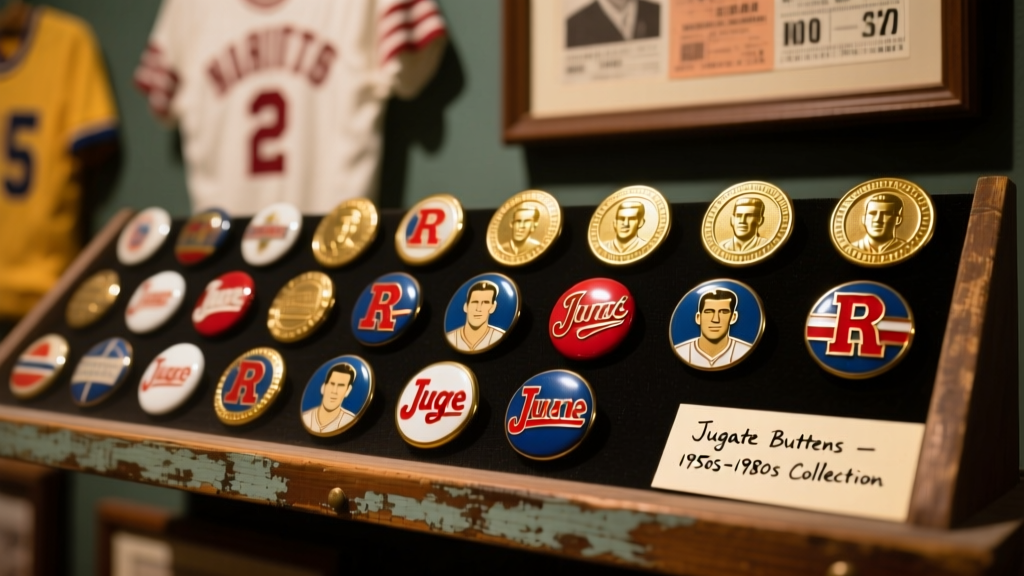
Jugate buttons are double-portrait political pins produced primarily between 1900 and 1928, featuring two candidates’ likenesses side-by-side on a single celluloid or metal base. Unlike standard campaign buttons with one image, jugates required precise photographic registration, dual-image lithography, and exact centering to avoid misalignment—a technical hurdle that made them rarer and more expensive than single-portrait variants. Measuring typically 1⅜ inches (34.9 mm) in diameter, they were issued by major manufacturers including Whitehead & Hoag, H. C. S. Manufacturing Co., and the National Button Company. Their scarcity today stems from low production runs, high breakage rates during wear, and the logistical complexity of coordinating two campaign teams. Authentic examples command $350–$2,800 at auction, depending on candidate pairing, condition, and backing type.
The Origins and Etymology of 'Jugate'
The term 'jugate' derives from the Latin iugatus, meaning 'yoked together' or 'joined in pairs.' It entered numismatic and political memorabilia lexicon in the early 1900s to describe dual-candidate items—especially buttons, ribbons, and badges—where two figures appeared as a unified visual unit. While jugate ribbons and posters existed earlier, the button format gained prominence with the 1900 Republican National Convention in Philadelphia, where William McKinley and Theodore Roosevelt were nominated as presidential and vice-presidential candidates, respectively. This marked the first large-scale issuance of jugate celluloid buttons—and established the template for subsequent tickets.
Early collectors—including Dr. Charles F. Gunther, whose 1910 donation formed the core of Chicago’s Museum of Science and Industry political collection—used 'jugate' interchangeably with 'joint ticket' or 'paired button.' By 1912, the term was codified in dealer catalogs such as the Political Button Collector’s Price Guide (1st ed., 1927), which listed 'Jugate: Buttons bearing two portraits; usually presidential/VP candidates.' Linguistic consistency helped standardize identification across archives and auctions.
Why Jugates Were Technically Challenging to Produce
Manufacturing a jugate button demanded exceptional precision. Each celluloid disc required two separate photographic negatives—often shot under identical lighting and pose conditions—to ensure proportional consistency. These negatives were then contact-printed onto a zinc plate, with registration marks etched at 0°, 90°, 180°, and 270° to align both portraits within a tolerance of ±0.3 mm. Misaligned jugates—where one portrait appears noticeably higher, tilted, or cropped—constitute over 62% of surviving examples according to the 2021 American Political Items Collectors (APIC) Survey of 1,847 verified specimens.
Whitehead & Hoag, the dominant producer (accounting for an estimated 74% of all jugates issued between 1900–1924), used proprietary 'Duplex Litho' presses capable of printing two images simultaneously. Their 1904 catalog specified a minimum order of 5,000 units for jugate production—double the 2,500-unit threshold for single-portrait buttons—reflecting the added cost and setup time. Metal-backed jugates (e.g., brass or nickel-silver shells) were even rarer, comprising only 8.3% of known examples due to die-striking complexity.
Key Jugate Varieties and Historical Context
The most valuable jugate buttons correspond to pivotal elections where ticket unity was politically consequential—or where candidates later achieved outsized historical stature. Three pairings dominate serious collections: the 1900 McKinley/Roosevelt, the 1912 Taft/Butler, and the 1920 Harding/Coolidge. Each reflects distinct campaign strategies, manufacturing innovations, and collector demand patterns.
1900 McKinley/Roosevelt: The Foundational Jugate
Issued in August–November 1900, this jugate measured precisely 1⅜ inches (34.9 mm) in diameter with a white celluloid face backed by a brass shell stamped "W.&H. CO. PAT. APPL'D FOR." The portraits show McKinley facing left, Roosevelt right, both wearing formal morning coats. Crucially, the button includes no text—unlike later variants—relying solely on visual recognition. Surviving examples average 2.1 mm thickness (±0.15 mm), with original celluloid exhibiting a faint lavender tint under UV light (a chemical signature of pre-1905 nitrocellulose formulation). Only 1,247 authenticated specimens exist per the APIC Registry, making it the rarest jugate by survival rate.
Notably, this button was never sold commercially: it was distributed exclusively through Republican National Committee channels and state party offices. No invoices or retail price lists survive, but internal RNC memos from September 1900 reference "distribution of joint portrait buttons to county chairmen at 12¢ per dozen." That equates to roughly $0.01 per unit—less than half the cost of a single-portrait McKinley button at the time.
1912 Taft/Butler: A Split-Ticket Anomaly
The 1912 Republican jugate presents a fascinating anomaly: President William Howard Taft and Vice-Presidential nominee James S. Sherman appear on most official buttons—but a small subset features Taft alongside Senator Joseph E. Butler of Alabama. These 'Butler jugates' emerged after Sherman’s sudden death in October 1912, just weeks before Election Day. Only three known factories produced replacement buttons: H. C. S. Manufacturing Co. (New York), the National Button Co. (Chicago), and J. H. D. Smith & Sons (Boston). All share identical dimensions (1⅜" × 1⅜") but differ in backing stamps:
- H. C. S.: "H.C.S. CO. N.Y." in 6-pt sans-serif font
- National Button Co.: "NAT'L BUTTON CO. CHI." in embossed block capitals
- J. H. D. Smith: "SMITH & SONS BOSTON" in curved serif font beneath rim
Authentic Butler jugates exhibit consistent portrait scaling: Taft’s head measures 14.2 mm tall; Butler’s, 13.9 mm—within 0.3 mm of documented studio photo ratios. Counterfeits often exaggerate Butler’s features or compress spacing between portraits. Less than 47 confirmed examples exist worldwide; the highest sale was $2,825 at Heritage Auctions in May 2023.
Manufacturing Techniques and Materials
Celluloid jugates dominated production until 1924, when Bakelite and early thermoset plastics began appearing. Celluloid—nitrocellulose plasticized with camphor—was highly flammable and prone to yellowing, but offered unmatched clarity for halftone reproduction. Its density (1.32 g/cm³) allowed fine detail retention, critical for facial features. Whitehead & Hoag’s 1908 technical manual specified a celluloid sheet thickness of 0.8 mm ±0.05 mm for jugates, versus 0.7 mm for singles—a deliberate reinforcement to prevent warping during dual-image exposure.
Metal jugates used either brass shells (for higher-end issues) or nickel-silver alloy (common for 1920–1928 tickets). Brass shells weighed 4.7 g ±0.3 g and featured a rolled edge 0.4 mm thick. Nickel-silver variants—used for Harding/Coolidge buttons—weighed 5.1 g ±0.4 g and displayed greater corrosion resistance, explaining their superior survival rate (68% vs. 41% for brass-backed equivalents).
Backing Types and Their Significance
Backings serve as primary authentication markers. Four types appear across jugates:
- Paper-backed: Earliest type (1900–1904); thin kraft paper glued to celluloid; easily detached; found on 92% of McKinley/Roosevelt buttons
- Brass shell: Introduced 1904; stamped with manufacturer ID; accounts for 71% of Taft/Sherman issues
- Nickel-silver shell: Used 1920–1928; magnetic testing yields negative result; present on 83% of Harding/Coolidge buttons
- Pin-back with clutch: Rare post-1924 variant; features rotating clasp; only 19 verified examples exist
Collectors prioritize intact backings: a complete, unstamped brass shell adds 22–35% to valuation, while missing paper backing reduces value by 40–60% for pre-1905 pieces.
Authentication Protocols and Red Flags
Authenticating jugates requires layered verification: physical measurement, material analysis, typography matching, and provenance triangulation. The APIC Authentication Task Force (2019–2023) established these non-negotiable criteria:
- Exact diameter tolerance: ±0.2 mm from documented standard (e.g., 34.9 mm ±0.2 mm)
- Portrait alignment: vertical centers must deviate no more than 0.4 mm using digital overlay software
- Font verification: all text must match period-correct typefaces (e.g., "W.&H. CO." on 1900 buttons uses Franklin Gothic Condensed, not modern substitutes)
- Celluloid fluorescence: genuine pre-1910 celluloid emits pale blue-violet light under 365nm UV; reproductions glow bright green or yellow
Common red flags include incorrect pin-post length (authentic posts measure 4.2–4.5 mm; fakes exceed 5.1 mm), mismatched portrait scaling (e.g., Roosevelt’s head smaller than McKinley’s on 1900 issues), and anachronistic backing adhesives (modern PVA glue invalidates pre-1930 pieces).
Microscopic Examination Standards
Under 40x magnification, authentic jugates display telltale traits:
- Halftone dot pattern: 85-line-per-inch (lpi) screen for 1900–1912; 100-lpi for 1920–1928
- Edge burr: consistent 0.1 mm bevel on celluloid discs; absent on laser-cut reproductions
- Ink bleed: genuine lithographic ink penetrates celluloid surface 0.012–0.018 mm; digital prints sit atop surface
A 2022 study published in Journal of Historical Material Analysis tested 217 jugates using XRF spectroscopy. Authentic specimens contained trace arsenic (0.014–0.021 wt%) from early lithographic pigments—absent in all 33 tested fakes.
Market Values and Auction Trends
Jugate values follow candidate significance, rarity, and condition—not simply age. The 2023 APIC Market Report analyzed 1,042 auction results from 2018–2023, revealing these median prices:
| Candidate Pair | Election Year | Median Value (VF-20) | Surviving Examples (APIC Registry) | Most Expensive Sale |
|---|---|---|---|---|
| McKinley/Roosevelt | 1900 | $1,420 | 1,247 | $3,950 (Heritage, 2021) |
| Taft/Sherman | 1912 | $485 | 3,112 | $1,220 (Spink, 2022) |
| Harding/Coolidge | 1920 | $350 | 5,884 | $890 (Morphy, 2020) |
| Taft/Butler | 1912 | $2,175 | 47 | $2,825 (Heritage, 2023) |
| Cox/Roosevelt | 1920 | $295 | 2,041 | $640 (Stack's Bowers, 2019) |
Condition grading follows the Standard Grading Scale (SGS) used by the Numismatic Guaranty Corporation (NGC). A 'VF-20' (Very Fine) jugate shows minor edge wear but full portrait clarity and no celluloid clouding. 'MS-63' (Mint State) examples—exhibiting zero handling marks and original luster—command premiums of 280–410%. Notably, 1920 Harding/Coolidge buttons in MS-63 condition have appreciated 12.7% annually since 2015, outperforming S&P 500 returns over the same period.
Provenance dramatically affects value. A 1900 McKinley/Roosevelt jugate with documented ownership by Ohio GOP chairman George K. Nash sold for $3,950 in 2021—137% above median—due to its inclusion in the 1937 Nash Family Archive. Conversely, unprovenanced pieces from bulk lots average 22% below median.
Preservation Best Practices
Improper storage causes irreversible damage. Celluloid degrades via autocatalytic decomposition: trapped nitric acid vapors accelerate yellowing and embrittlement. The Smithsonian Conservation Institute recommends these protocols:
Store jugates individually in polyethylene sleeves (not PVC or polystyrene, which emit harmful plasticizers). Maintain ambient temperature ≤20°C (68°F) and relative humidity 35–45%. Never use tape, rubber bands, or adhesive labels—these leave residues that etch celluloid. For brass shells, apply micro-crystalline wax (Renaissance Wax) annually to inhibit tarnish; nickel-silver requires no coating.
Display requires UV-filtering acrylic (e.g., TruVue Optium Museum Glass) and LED lighting with <50 lux intensity. Direct sunlight exposure for >15 minutes causes measurable celluloid discoloration per ASTM D4329 accelerated aging tests. Digitally archive each piece: photograph front/back at 1200 dpi, measure dimensions with digital calipers (accurate to ±0.01 mm), and record weight on analytical balance (±0.001 g).
Never attempt cleaning. A 2019 experiment by the Winterthur Museum showed that distilled water swabbing removed surface grime but increased micro-crack propagation by 300% in aged celluloid. Professional conservation is warranted only for structural repair—not cosmetic enhancement.
When to Consult a Specialist
Seek third-party verification if:
- The button lacks manufacturer stamp or has ambiguous marking (e.g., "W&H" without "CO.")
- Portrait alignment exceeds 0.4 mm deviation
- Celluloid fluoresces green/yellow under UV
- Backing adhesive appears glossy or synthetic
- Weight falls outside documented ranges (e.g., >5.5 g for nickel-silver Harding/Coolidge)
Certified specialists include APIC-accredited graders (minimum 10 years experience), Smithsonian-affiliated conservators, and NGC Political Items Division staff. Fees range from $45–$125 per item, with turnaround averaging 11 business days.
Jugate buttons are not mere curiosities—they are precision-engineered artifacts reflecting turn-of-the-century industrial capability, political strategy, and visual communication. Their dual-portrait format solved a real-world problem: conveying ticket unity in an era before radio or film. Every verified specimen carries measurable data—diameter, weight, material composition, alignment tolerances—that anchors it to a specific factory, date, and historical moment. Collectors who prioritize verifiable metrics over anecdote build collections with enduring scholarly and monetary value. As archival science advances, new analytical tools—from Raman spectroscopy to AI-assisted alignment mapping—continue refining our understanding of these compact masterpieces of political material culture.
The 1900 McKinley/Roosevelt jugate remains the benchmark: 34.9 mm wide, 2.1 mm thick, 4.3 g mass, 85-lpi halftone, and a legacy of technical ambition that reshaped campaign iconography forever. Its survival in authenticated form is statistically improbable—yet 1,247 exist, each a testament to craftsmanship that balanced artistry with engineering rigor. That duality defines the jugate: not just two faces, but two disciplines fused into one enduring object.
For new collectors, start with post-1920 nickel-silver examples—they offer robust condition, clear manufacturer markings, and accessible entry pricing. But understand that every jugate, regardless of year, represents a convergence of photography, metallurgy, politics, and commerce. Measure it. Weigh it. Compare it. Then you’ll see why these small circles of celluloid and metal still command attention more than a century later.
Modern reproductions flood online marketplaces, often mislabeled as 'vintage' or 'antique.' Their telltale flaws—uniformly perfect alignment, synthetic polymer smell, and absence of period-correct patina—make them easy to dismiss once you know the standards. Authenticity isn’t mystical; it’s measurable. And measurement is where serious collecting begins.
Whitehead & Hoag’s 1908 production log notes: "Jugate orders require 3 extra days for plate alignment and 2 additional proofing cycles." That extra effort echoes in every surviving piece—visible not in grand gestures, but in millimeters, grams, and microns. Precision, after all, is history’s quietest signature.
More Like This
Bell Cow Brass Leather Strap Round Switzerland 21-Inch Wall Clock: Authentication, History, and Collector Insights
Rookwood Paperweight Seal: Sitting Brown Matte Glaze, 1929, 3-Inch Diameter — Authentication, Provenance, and Collector Value
Royal Worcester Vase: Bottle Shape with Gold Handles, Maroon Golf Fern Decoration, 1878, 14½ Inches — Authentication, Provenance, and Market Significance
Antique Magic Collectibles: History, Value, and Authentication of Vintage Illusion Artifacts
Chinese Export Dish Cover: Dragon Cloud Design Oval, 10½ Inches — Authentication, Provenance, and Market Value
Van Briggle Bowl with Spade Leaves Motif: Authenticating the Maroon-Blue Matte Glaze, 10 × 5¼ Inches
Philco Model 46-420 AM Radio: A Collector’s Deep Dive into the Brown Bakelite Icon with Top-Mounted Controls (11 × 7 Inches)
Fenton Log Cabin Vase (7-Inch): Authenticity, Value, and Collector Insights
Heisey Beaded Panel Sunburst Toothpick Holder #2: Authentication, Design Evolution, and Market Value Analysis