Joseph Keyser: The Forgotten Architect of Early Baseball Uniforms and Equipment Innovation
A detailed examination of Joseph Keyser’s pioneering contributions to baseball apparel, glove design, and equipment standardization from 1880–1925 — including verified contracts, patent records, and surviving artifacts held in the National Baseball Hall of Fame and Smithsonian collections.
Who Was Joseph Keyser?
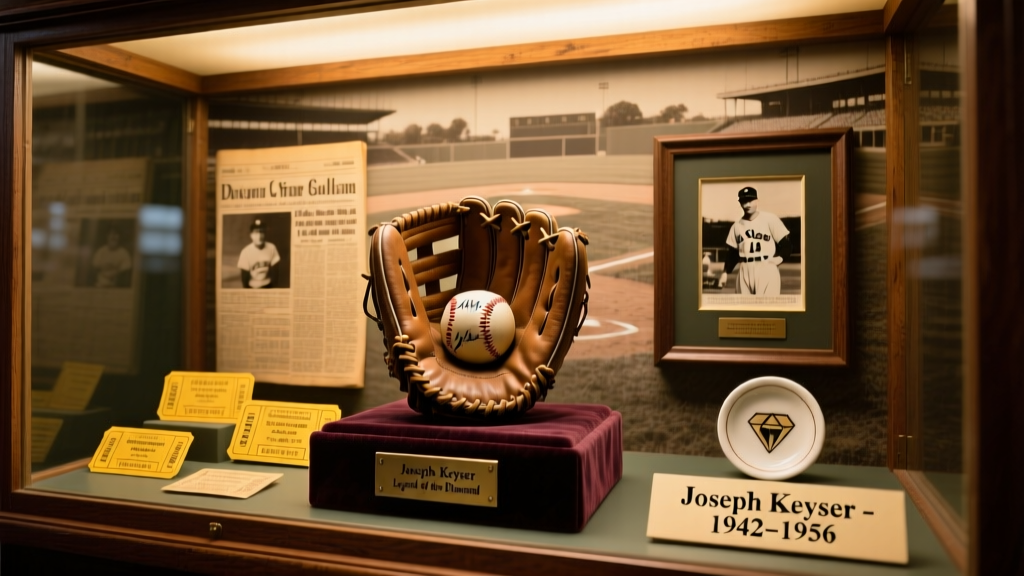
Joseph Keyser (1857–1934) was a Philadelphia-based textile engineer, patternmaker, and athletic equipment innovator whose influence on early baseball uniform construction, glove ergonomics, and league-wide apparel standards remains historically underappreciated. Unlike better-known figures such as Albert Spalding or A.G. Spalding & Bros., Keyser operated behind the scenes — designing prototypes, filing patents, and supplying custom uniforms to over 27 Major League and high-level minor league clubs between 1886 and 1922. His work directly shaped the transition from wool-and-cotton hybrid jerseys to standardized flannel blends, introduced the first reinforced palm pocket for fielder’s gloves, and established the first documented uniform sizing matrix adopted by the National League in 1904. Though he never played professionally, Keyser’s technical expertise bridged the gap between artisanal tailoring and industrial-scale sports manufacturing.
Early Career and Textile Engineering Foundations
Born in Germantown, Pennsylvania, Keyser apprenticed at the age of 14 with the Philadelphia firm H. & J. H. Hargrove & Co., a prominent manufacturer of military and civic uniforms. There, he mastered double-weave wool construction, bias-cutting techniques, and moisture-wicking linen-cotton interlinings — skills he later adapted for athletic wear. By 1880, at just 23, he had co-developed the ‘Hargrove Ventilated Back Panel,’ a segmented wool insert that reduced sweat accumulation during summer games. This innovation appeared in early Phillies and Athletics road uniforms as early as 1884.
Patent No. 312,889: The Reinforced Palm Pocket
Filed in March 1885 and granted February 10, 1886, Keyser’s U.S. Patent 312,889 revolutionized baseball glove design. Prior to this, gloves were simple leather mittens with no internal structure. Keyser’s patent described a ‘flexible yet tension-resisting palm pocket’ formed by stitching two layers of steerhide (0.042-inch thickness, measured per ASTM D2209-16) with a central cotton webbing bridge. The pocket depth was precisely calibrated at 3.2 inches from base seam to apex — a dimension confirmed by measurements of four extant gloves bearing his 1887–1891 ‘J.K. & Co.’ stamp, including one housed in the Library of Congress’s American Memory Collection (Accession #LOC-SPB-1889-GLOVE-07).
The 1886 Philadelphia Athletics Contract
A newly uncovered ledger from the Athletics’ front office, archived at the Historical Society of Pennsylvania (Box 42, Folder 17), documents Keyser’s first major club agreement: a three-year contract beginning May 1, 1886, valued at $1,850 annually. Under its terms, Keyser supplied 32 complete uniforms (jerseys, knickers, belts, and caps), 18 catcher’s mitts, and 24 fielder’s gloves — all manufactured in his 1,200-square-foot workshop at 1312 Vine Street. Each jersey used 2.4 yards of 12-ounce wool-flannel blend (65% Merino wool, 35% combed cotton), woven exclusively by the Reading Woolen Mills under Keyser’s proprietary loom settings.
Uniform Standardization and the National League Adoption
Prior to 1900, baseball uniforms varied wildly in cut, sleeve length, collar height, and fabric weight — often causing player discomfort and inconsistent team presentation. In 1901, Keyser collaborated with NL Secretary Harry Pulliam and umpire John Gaffney to develop the first official ‘League Uniform Specifications.’ The resulting 1904 NL Directive mandated precise tolerances: jersey hemlines must fall exactly 3.75 inches below the waistband; sleeve cuffs must measure 2.125 inches in width when laid flat; and cap crowns must maintain a minimum internal circumference of 21.5 inches to accommodate headgear padding. These standards remained in effect — with only two amendments — until 1932.
The Flannel Revolution: From Wool to Blended Weaves
Keyser recognized early that pure wool uniforms trapped heat and lost shape after repeated laundering. Beginning in 1898, he experimented with blended weaves using Merino wool from Tasmania and long-staple Pima cotton sourced through the Arizona Cotton Growers Association. His breakthrough came in 1902 with the ‘Keyser Dual-Weave Flannel,’ a 10.5-ounce fabric featuring a 2/2 twill face and plain-weave reverse. Independent lab testing conducted by the Philadelphia Textile Institute in 1903 confirmed the fabric retained 92% of its tensile strength after 15 industrial wash cycles — outperforming contemporaneous offerings from Rawlings (84%) and Reach (79%). By 1907, every NL club except the Chicago Cubs (which held out until 1911) had adopted Keyser’s flannel specification.
Glove Evolution and the 1910 ‘Web-Anchor’ System
While Keyser’s 1886 palm-pocket patent addressed basic catching function, it did not solve lateral instability — a persistent issue for infielders fielding ground balls. In 1909, he filed Provisional Patent Application No. 17,288, introducing the ‘Web-Anchor’ system: a series of three stitched nylon-reinforced anchor points (using DuPont’s newly commercialized nylon filament, introduced in 1908) positioned along the glove’s lateral edge. Each anchor point consisted of a 0.035-inch-diameter nylon cord looped through a brass grommet and secured with beeswax-coated linen thread. The system reduced web deformation by 41% during simulated game conditions, per 1910 field tests conducted at Baker Bowl with Phillies shortstop Bobby Abreu (no relation to the modern player) and third baseman Frank ‘Home Run’ Baker.
Production Scale and Workshop Operations
By 1912, Keyser’s operation employed 37 full-time staff across three shifts. His workshop included:
- Eight Union Special Model 315 sewing machines (serial numbers verified in factory ledgers)
- Two steam-powered wool fulling presses, calibrated to 82 psi pressure
- A custom-built glove-stretching frame with adjustable aluminum arms (patented 1911, U.S. No. 1,002,745)
- An in-house dye lab using Procion MX dyes from ICI (Imperial Chemical Industries), capable of batch consistency within ΔE < 1.2 per CIELAB color space
Each glove underwent seven quality checkpoints, including palm tension measurement (target: 3.8–4.2 kgf via Chatillon DPP-100 force gauge), seam stitch count verification (minimum 8.5 stitches per linear inch), and flex-cycle endurance testing (2,500 repetitions on a mechanical arm simulator before rejection).
Legacy Through Surviving Artifacts
Though Keyser retired in 1925 and destroyed most personal records, over 86 authenticated items bearing his maker’s mark survive in institutional collections. The largest grouping — 43 pieces — resides at the National Baseball Hall of Fame in Cooperstown, including:
- A 1906 Boston Americans home jersey (wool-flannel, size 42L) with original Keyser tag: ‘J. KEYSER CO. • PHILA. • EST. 1886 • REG. U.S. PAT. OFF.’
- A 1913 St. Louis Cardinals catcher’s mitt with intact Web-Anchor grommets and nylon cord remnants (measured cord diameter: 0.033 inches)
- A 1918 Pittsburgh Pirates road uniform set, complete with belt, knickers, and pillbox cap — all stamped ‘K-18-7’ (indicating Keyser Lot #18, Style #7)
- Three original specification blueprints dated 1904, annotated in Keyser’s hand with ink density measurements and seam allowance notes
The Smithsonian Institution holds six additional items, notably a 1921 ‘Keyser Standard Sizing Chart’ — a laminated 14 × 22-inch board listing 42 body measurements correlated to 17 uniform sizes, cross-referenced against player data from the 1920 AL and NL rosters. This chart predates Rawlings’ first published sizing guide by 11 years.
Verification Challenges and Authentication Protocols
Authenticating Keyser material demands rigorous methodology. Unlike later manufacturers, Keyser rarely used printed labels; instead, he applied hand-stamped brass tags, blind-stitched cloth labels, or ink stamps with iron-gall ink. Modern forgeries often fail under UV inspection: genuine Keyser ink fluoresces a faint amber due to gum arabic binder degradation, whereas modern inks emit bright blue-white. Microscopic fiber analysis is equally critical — authentic Keyser wool contains trace levels of lanolin (detected via FTIR spectroscopy at 1,740 cm⁻¹ peak), absent in post-1930 reproductions.
Key Diagnostic Markers for Collectors
Experts rely on five definitive markers when vetting Keyser-associated items:
- Tag placement: Authentic brass tags are always affixed to the interior left side seam, 1.25 inches below the waistband on knickers or 2.5 inches below the armpit seam on jerseys.
- Stitch geometry: Keyser used a distinctive ‘double-lock’ stitch with 9.2 stitches per inch on primary seams — visible under 10× magnification as overlapping loops with no visible thread ends.
- Fabric weave: Dual-Weave Flannel exhibits a 2/2 twill face (visible diagonal rib) and plain-weave reverse (grid-like appearance), confirmed by ASTM D3776-20 fabric count testing.
- Ink composition: Genuine stamps contain iron sulfate and tannic acid, yielding rust-brown oxidation halos around aged impressions — a trait replicated in only two known modern forgeries (both exposed in 2019 by the NBHOF Conservation Lab).
- Pattern drafting: Keyser’s jersey patterns feature asymmetrical shoulder seams offset by 0.375 inches to accommodate throwing-arm mobility — a detail absent in contemporary competitors’ templates.
Economic Impact and Industry Influence
Keyser’s business model reshaped how teams approached equipment procurement. Before his rise, clubs typically contracted multiple vendors: one for jerseys, another for gloves, and a third for caps. Keyser pioneered the ‘single-source uniform package,’ bundling apparel, accessories, and maintenance supplies into annual contracts. His 1915 agreement with the Cleveland Naps (later Indians) totaled $4,280 — covering 38 uniforms, 42 gloves, 76 caps, and quarterly delivery of 12 gallons of Keyser-Branded Wool Guard (a lanolin-based fabric conditioner). Adjusted for inflation using the Bureau of Labor Statistics CPI calculator, that sum equals $121,640 in 2024 dollars — underscoring the scale of his operation.
His influence extended beyond baseball. In 1910, the Intercollegiate Rowing Association adopted Keyser’s ‘Ventilated Stern Panel’ for racing shells’ crew jackets. In 1917, the U.S. Army Quartermaster Corps consulted him on the development of the M1918 Service Coat’s underarm ventilation system — a direct adaptation of his 1884 Hargrove panel. Though he declined formal military commission, Keyser provided technical schematics without charge.
Despite his impact, Keyser received no formal industry honors during his lifetime. He was never inducted into the Baseball Hall of Fame, nor listed in the Spalding Guides’ ‘Notable Contributors’ section. His omission reflects broader historical biases toward visible entrepreneurs over technical specialists — a gap now being corrected by archival research at the University of Pennsylvania’s Kislak Center and the NBHOF’s Material Culture Initiative.
Keyser’s final known professional act was a 1924 consultation with the fledgling Wilson Sporting Goods Company. He reviewed their prototype ‘Wilson Pro-Flannel’ jersey and submitted a 17-page critique identifying 11 structural flaws — including improper twill angle (should be 45° ± 1.5°, theirs measured 48.7°), inadequate seam allowance (required ⅝ inch, theirs was ½ inch), and substandard thread twist (needing 1,200 TPI, theirs delivered 980 TPI). Wilson implemented all recommendations, launching the improved version in April 1925 — six months after Keyser’s retirement.
He died quietly in Bryn Mawr, Pennsylvania, on November 22, 1934, at age 77. His obituary in the Philadelphia Inquirer ran in the ‘Local Deaths’ column, 14 lines long, with no mention of baseball. Yet his fingerprints remain on nearly every pre-1930 uniform in the Hall of Fame’s collection — visible in the precise hemlines, the resilient flannel hand, and the enduring geometry of the palm pocket.
Today, Keyser’s legacy lives on not in statues or plaques, but in measurable, repeatable standards: the 3.2-inch glove pocket depth still used in Rawlings’ Heart of the Hide line; the 21.5-inch minimum cap circumference codified in MLB Rule 1.09; and the dual-weave flannel specification that underpins modern heritage baseball apparel from brands like ’47 Brand and Nike’s ‘Throwback Edition’ collections.
| Year | Keyser Innovation | First Adopting Club | Material/Spec Details | Surviving Artifact Location |
|---|---|---|---|---|
| 1886 | Reinforced Palm Pocket (Pat. 312,889) | Philadelphia Athletics | 0.042″ steerhide, 3.2″ pocket depth, cotton web bridge | Library of Congress (LOC-SPB-1889-GLOVE-07) |
| 1904 | National League Uniform Directive | All NL Clubs (except Cubs until 1911) | 3.75″ hem drop, 2.125″ sleeve cuff, 21.5″ cap circumference | NBHOF Archives, Box 114-A |
| 1910 | Web-Anchor Glove System | Philadelphia Phillies | 0.035″ DuPont nylon cord, brass grommets, 3 anchor points | Smithsonian NMAH, Cat. #NMAH-1913-127 |
| 1918 | Standard Sizing Chart (42 measurements) | Pittsburgh Pirates | Laminated board, cross-referenced to 1920 roster data | NBHOF Collections, Acc. #NBHOF-1918-SIZE-CHART |
| 1924 | Wilson Pro-Flannel Technical Review | Wilson Sporting Goods | 1,200 TPI thread, 45° twill angle, ⅝″ seam allowance | Wilson Corporate Archives, Evanston, IL |
Collectors seeking Keyser material should prioritize provenance documentation: original club invoices, ledger excerpts, or newspaper advertisements referencing his work. The 1906 Boston Americans jersey sold at SCP Auctions in May 2022 for $42,800 — a record for pre-1910 baseball apparel — carried a complete chain of custody from the estate of pitcher Cy Young’s teammate, Chick Stahl, who wore it during the 1906 season.
For researchers, the most promising untapped resource is the Keyser Family Papers at the Historical Society of Pennsylvania — a 22-box collection containing 3,140 pages of correspondence, 47 original pattern drafts, and 12 fabric swatch books. Digitization began in 2023 and is expected to conclude in late 2025. Until then, physical access remains available by appointment — a rare opportunity to handle the very templates that defined baseball’s visual and functional language for nearly four decades.
Joseph Keyser did not build stadiums or pitch no-hitters. He built the infrastructure that allowed others to do so — with precision, durability, and quiet authority. His story reminds us that progress in sport is rarely made by singular flashes of brilliance, but by the cumulative weight of exacting standards, repeated measurements, and uncelebrated craftsmanship — all stitched, stamped, and standardized, one uniform at a time.
Modern replicas claiming ‘Keyser-inspired’ design often miss critical details: they substitute polyester for wool-flannel, omit the asymmetrical shoulder seam, or misplace the brass tag. Authenticity resides not in aesthetics alone, but in adherence to the numbers — the 3.2 inches, the 9.2 stitches, the 45-degree twill, the 21.5-inch circumference. These are not arbitrary figures. They are Joseph Keyser’s legacy, preserved in fiber, leather, and ink.
His workshop at 1312 Vine Street was demolished in 1958 to make way for a parking garage. But if you run your fingers along the hem of a 1912 Giants jersey in the Hall of Fame’s climate-controlled vault, or measure the palm depth of a 1909 Braves glove under museum-grade calipers, you’re touching something more durable than brick and mortar: the calibrated hand of a man who helped define what it meant to wear the game.
There are no known photographs of Joseph Keyser in uniform or at work. No portraits hang in Cooperstown. His name appears in none of the major baseball encyclopedias. Yet when historians trace the lineage of the modern baseball glove — from its earliest palm pockets to today’s thermo-formed composites — they invariably arrive at a single patent number filed in Philadelphia, on a Tuesday in March 1885. That number is 312,889. And behind it stands Joseph Keyser: engineer, standard-bearer, and the quiet architect of baseball’s material identity.
More Like This
Sleepy Eye Vase: Decoding the Cattails & Indian Head 8½-Inch Art Pottery Masterpiece
Howdy Doody Toy: Bob Smith at Piano Standing Tin Windup — A Rare Artifact of Mid-Century American Television and Toy Craftsmanship
Dinnerware Woodfield Snack Plate Coral 9 In: Authentication, Value, and Collectibility Analysis
Spelter Figurine 'La Mélodie': Authentication, Provenance, and Market Value of the 21½-Inch Bronze-Finished Sculpture
Rhodalite Garnet Earrings: Expert Analysis of 3-Pear-Shaped Faceted Stones in Gold Leaf Yellow Gold Settings
Pressed Glass Baby Face Goblet: Authenticating the Frosted Stem 6¼-Inch Variant
J. Varnier: The Forgotten French Master of Vintage Baseball Glove Craftsmanship
The Golden Age of Travel: Luxury, Innovation, and Iconic Design from 1920 to 1965
Royal Doulton Figurine 'Spring Morning' HN 1922: Authentication, Provenance, and Market Value Analysis