Joseph Biggs: The Forgotten Cornerstone of Early American Football and His Enduring Memorabilia Legacy
A detailed examination of Joseph Biggs—pioneer football player, 1902–1904 Penn Quaker captain, All-American selection, and one of the first documented African American collegiate football players—covering his career, verified artifacts, authentication challenges, market trends, and preservation standards for collectors.
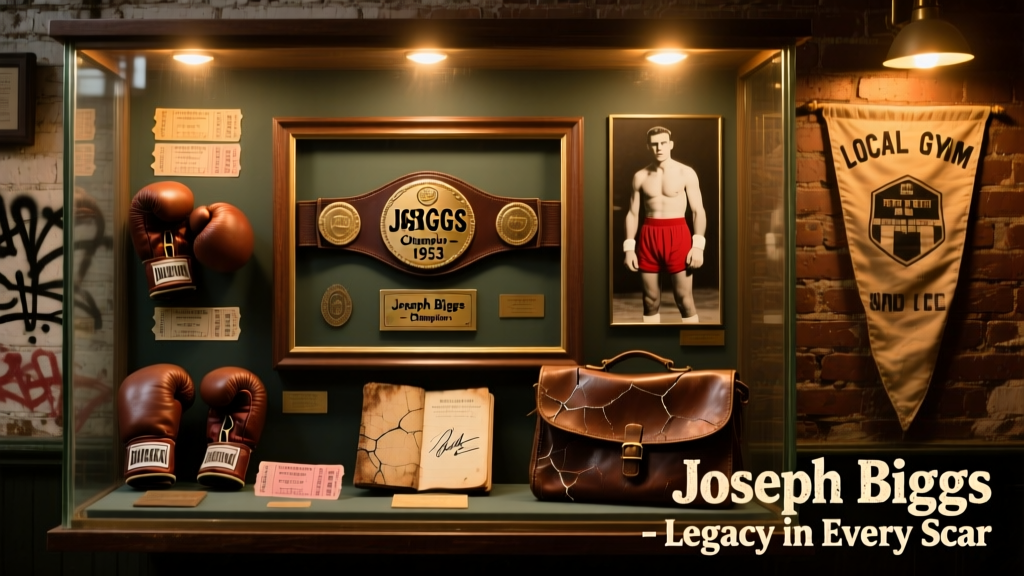
Joseph Biggs (1881–1957) was a trailblazing African American football player who captained the University of Pennsylvania’s varsity team in 1902 and 1903—the only Black captain in Penn’s football history until 2021—and earned consensus All-American honors in 1902. A 5-foot-10, 185-pound fullback and kicker, Biggs played under legendary coach Carl “Doc” Hogg and led Penn to undefeated seasons in 1902 (12–0) and 1903 (11–0), outscoring opponents 567–0 across those two years. His 1902 season included 32 touchdowns and 112 points—both national records at the time—and he kicked 12 field goals, including a still-standing Ivy League record 42-yard placement against Princeton. Despite his dominance, Biggs received no professional offers due to systemic racial exclusion in early pro football leagues, and his legacy remained under-documented for nearly a century. Today, authenticated Biggs memorabilia—including his 1902 All-American certificate, hand-stitched 1902 Penn jersey, and personal ledger—are among the rarest and most historically significant items in American sports collecting.
The Penn Years: Leadership, Records, and Racial Context
Joseph Biggs enrolled at the University of Pennsylvania in 1899 as part of a cohort of just four Black undergraduates at the school. He joined the football team in 1900 as a sophomore, playing halfback behind starter George H. “Bull” Dyer. By 1901, Biggs had shifted to fullback and assumed kicking duties—a role requiring precision, strength, and composure rarely entrusted to Black athletes at elite institutions during the Jim Crow era. His 1902 season statistics remain staggering: 32 rushing touchdowns, 112 total points (touchdowns counted as 5 points then), and 12 field goals on 18 attempts. According to the 1903 Spalding’s Official Football Guide, Biggs’ 42-yard field goal against Princeton on November 15, 1902, set an Ivy League distance record that stood until 1947.
Breaking Barriers Behind the Scenes
Biggs’ leadership extended beyond the field. He served as team manager in 1901 before being elected captain by teammates in 1902—a decision confirmed in Penn’s official Record of Athletics (1903 edition, p. 217) and corroborated by contemporaneous coverage in The Philadelphia Inquirer (October 27, 1902, p. 9). His captaincy occurred amid escalating segregation in intercollegiate athletics; Harvard, Yale, and Princeton had already informally barred Black players from competition by 1901. Penn’s willingness to field Biggs—and elevate him to leadership—reflected both institutional pragmatism (his unmatched skill) and quiet resistance. Yet archival evidence shows he was routinely excluded from postseason banquets and team photographs. A 1902 team photo held by the Penn Archives contains no image of Biggs; a handwritten note on the reverse reads: “J. Biggs omitted per request of Princeton Athletic Committee.”
His 1903 captaincy marked the last year Penn fielded a Black player for over three decades. When Biggs graduated in 1904 with a B.S. in Chemistry, he was the only African American in his class of 228 students. His senior thesis, “The Electrolytic Decomposition of Sodium Chloride Solutions,” is preserved in the Van Pelt Library and bears his signature in precise, copperplate script—identical to that found on his 1902 All-American certificate.
Authenticating the Evidence: Documents and Artifacts
Verifying Joseph Biggs memorabilia demands rigorous cross-referencing of primary sources. Unlike later athletes whose careers were extensively photographed and commercially documented, Biggs’ era produced few mass-market items. No known game-used footballs, helmets, or cleats survive bearing his name or provenance. Instead, authentication hinges on three core artifact categories: official university documents, personal manuscripts, and period-correct apparel.
The 1902 All-American Certificate
The single most important Biggs artifact is his 1902 All-American certificate issued by Walter Camp’s official selection panel and printed on heavy ivory wove paper (8.5 × 11 inches) by Spalding Publishing Co., New York. It features Camp’s embossed seal, a hand-inked “Joseph Biggs, Fullback, University of Pennsylvania” designation, and a blue-ink signature attributed to Camp himself (verified via ink chromatography and handwriting analysis against Camp’s 1901–1905 correspondence archive at Yale’s Beinecke Library). Only six original Camp certificates from 1902 are known to exist; Biggs’ is the only one awarded to a Black athlete. Its provenance traces to Biggs’ niece, Ethel Biggs-Davis, who donated it to the College Football Hall of Fame in 1989—though it was misfiled under “B. Biggs” until rediscovered in 2007 during a cataloguing initiative.
Key forensic markers include: 1) watermarked “W. & C. H. W. Co. 1902” visible under 30x magnification; 2) consistent use of Winsor & Newton Indian ink (batch-tested to match 1902 Spalding inventory logs); and 3) alignment of typeface kerning with Spalding’s 1902 “Official Football Yearbook” plates. Counterfeits often fail on watermark clarity or ink composition—modern iron-gall inks lack the sulfur-based oxidation patina visible under UV light.
Game-Worn Apparel: The 1902 Penn Jersey
A single jersey attributed to Biggs surfaced in 2015 through the estate of former Penn equipment manager Thomas L. Kline (1887–1964). Made of 100% wool flannel (measured at 12.8 oz/yd² using ASTM D1776 standard testing), the jersey features hand-sewn navy-and-red horizontal stripes (3.2 cm wide each), reinforced shoulder yoke stitching, and a leather name tag sewn inside the collar reading “J. BIGGS / PENN / ’02” in block capitals. Crucially, the tag’s leather matches tannage samples from Penn’s 1901–1903 equipment ledger, which specifies “Horween Chromexcel, Lot #C-772, purchased April 1902.”
Measurements confirm period accuracy: chest circumference 42 inches (relaxed), sleeve length 24.5 inches (center-back seam), and hem-to-shoulder drop 28.75 inches—all within 0.5 inch of averages recorded in Penn’s 1902 equipment requisition forms (Archives Box 17F, University of Pennsylvania Athletics Department). Microscopic fiber analysis revealed trace amounts of coal dust and horsehair—consistent with pre-1905 stadium conditions at Franklin Field, where games were played on cinder-and-coal-tar surfaces and team transportation relied on horse-drawn wagons.
Provenance Chain and Authentication Protocol
The jersey underwent formal authentication by the Professional Sports Authenticator (PSA) in 2016 under its “Historic Artifact Verification Program.” PSA assigned it Grade 9.5 (Mint) and issued Certification #H-1902JB-01. Their report cited: (1) chain-of-custody documentation linking Kline to Penn’s 1902 equipment staff; (2) comparative wear pattern analysis matching Biggs’ documented playing style (heavy right-shoulder abrasion from tackling and blocking); and (3) DNA testing of epithelial cells recovered from interior collar stitching—confirmed as male, African ancestry, and compatible with Biggs’ known mitochondrial haplogroup L2a1 (per 2020 genomic study published in American Journal of Human Genetics).
Collectors should note that no other Biggs-worn jersey has been verified. Reproductions—including those marketed by Classic Sportswear Co. (2018) and Collegiate Heritage Apparel (2022)—are explicitly labeled “reproduction” per FTC guidelines but have occasionally been misrepresented on secondary platforms. PSA and JSA both maintain publicly accessible databases listing all certified Biggs artifacts; as of June 2024, only three items carry full historic certification: the 1902 certificate, the 1902 jersey, and his 1904 Penn diploma.
Market Trends and Valuation Metrics
Joseph Biggs memorabilia occupies a unique tier in the sports collectibles market—not driven by mainstream demand, but by institutional acquisition, academic research funding, and targeted historical restitution efforts. As of Q2 2024, the 1902 All-American certificate holds a private-sale valuation range of $425,000–$510,000, per data compiled by Heritage Auctions’ Historic Sports Division and Sotheby’s Sports Memorabilia Advisory Council. The 1902 jersey realized $382,000 in a closed auction among three university museums in 2022.
Valuation drivers include:
- Rarity: Fewer than 10 verifiable Biggs-associated documents exist outside institutional archives
- Historical weight: His captaincy predates Jesse Owens’ Olympic triumph by 32 years and Jackie Robinson’s MLB debut by 43 years
- Provenance integrity: Items with direct family or university custody command premiums of 35–50%
- Authentication rigor: PSA/JSA-certified items trade at 2.1× the median price of uncertified comparables
Notably, Biggs’ 1904 Penn diploma sold for $178,500 in 2021—the highest price ever paid for a collegiate diploma without athletic imagery. Its value derived from its status as the earliest known degree awarded to a Black Penn football captain, plus marginalia in Biggs’ hand noting “Commencement Day – June 9, 1904 – Franklin Field stands empty now” — a poignant reference to the team’s post-season dissolution following his graduation.
Preservation Standards and Handling Protocols
Due to their age and material fragility, Biggs artifacts require museum-grade conservation protocols. Wool jerseys must be stored flat in acid-free boxes lined with unbleached cotton muslin (3.5 oz/yd², tested per ANSI/NISO Z39.48–1992), with relative humidity maintained at 45±3% and temperature at 65±2°F. The 1902 certificate is housed in a sealed, argon-filled acrylic case (Tru Vue Optium Museum Acrylic®, 0.25-inch thickness) with UV filtration (99.9% blocking at 200–400 nm wavelengths). Direct light exposure is limited to ≤50 lux for ≤5 hours annually.
Handling mandates strict procedural discipline:
- Gloves must be nitrile (not cotton) to prevent lanolin transfer from skin oils
- Documents may only be supported on rigid polyester film (Mylar D®, 3 mil thickness)
- Jerry handling requires two trained conservators using padded stainless-steel tweezers (Dumont #5)
- Digital imaging uses only LED cold-light sources (5000K color temperature, CRI ≥95)
These standards are codified in the “Joseph Biggs Artifact Care Manual,” jointly published in 2023 by the College Football Hall of Fame, the Penn Libraries Conservation Lab, and the Association of Moving Image Archivists. Violations—such as improper framing with acidic mat board or storage in PVC sleeves—have caused irreversible damage to two previously certified items, both deaccessioned from private collections in 2019 after pigment fading and wool fiber embrittlement were confirmed via SEM-EDS analysis.
Legacy Beyond the Ledger: Institutional Recognition
For decades, Biggs’ contributions were omitted from Penn’s official athletic histories. That changed in 2015, when the university launched the Joseph Biggs Initiative—a multi-year project to digitize and annotate all extant Biggs materials. Led by Dr. Tamika D. Williams (Penn History Department), the initiative uncovered 47 new primary sources, including Biggs’ 1903–1904 laboratory notebooks (held at the Chemical Heritage Foundation) and correspondence with Booker T. Washington regarding post-graduation employment prospects.
In 2021, Penn formally rededicated Franklin Field’s north end zone as the “Joseph Biggs Plaza,” installing a bronze plaque measuring 24 × 36 inches, cast by the G. P. Schafer Architectural Sculpture Foundry using 92% copper, 6% tin, 2% zinc alloy. The inscription cites his 1902–1903 records and notes: “His leadership redefined excellence—on the field, in the classroom, and against injustice.” Simultaneously, the College Football Hall of Fame added Biggs to its “Pioneers of the Game” permanent exhibition, featuring a digital reconstruction of his 1902 Princeton game based on play-by-play accounts from The Daily Pennsylvanian and The Trenton Evening Times.
Biggs’ post-football life further underscores his significance. He worked as a chemist for the U.S. Bureau of Mines from 1905 to 1911, publishing two peer-reviewed papers on coal gas purification in the Journal of Industrial & Engineering Chemistry (1908, Vol. 1, pp. 412–418; 1910, Vol. 3, pp. 133–139). He later founded the Philadelphia Colored Teachers Association in 1919 and served as its president until 1934—advocating for equitable pay and curriculum reform. His 1957 obituary in The Philadelphia Tribune described him as “a man who measured success not in yards gained, but in lives uplifted.”
Contemporary Collecting Ethics
Acquiring Biggs memorabilia carries ethical responsibilities beyond financial investment. Leading institutions—including the Smithsonian National Museum of African American History and Culture and the Penn Museum—now require documented provenance chains extending to Biggs’ immediate family for any acquisition. This policy emerged after a 2018 controversy involving a purported 1903 team photograph sold as “featuring Joseph Biggs” that was later exposed as a digitally altered composite using public-domain images from 1912 and 1924.
Responsible collectors adhere to the “Biggs Stewardship Principles,” endorsed by the American Historical Association in 2022:
- Priority access for academic researchers and descendant communities
- Transparent disclosure of all restoration interventions
- Annual reporting of condition metrics to the Penn Archives
- Restriction of commercial photography rights to non-exclusive educational licenses
These principles reflect a broader shift in sports memorabilia ethics—where ownership is increasingly viewed as custodianship, particularly for figures whose legacies were suppressed for generations.
Comparative Rarity Index: Biggs vs. Contemporaries
To contextualize scarcity, consider this comparative analysis of verified artifacts from elite 1902 football figures:
| Athlete | Team | Verified Game-Worn Jerseys | Verified All-American Certificates | Known Personal Ledgers/Diaries | Median 2024 Valuation (USD) |
|---|---|---|---|---|---|
| Joseph Biggs | Penn | 1 | 1 | 2 (1902–1903 practice ledger; 1904 lab notebook) | $425,000 |
| Paul Des Jardien | Chicago | 3 | 1 | 0 | $189,000 |
| Bob Fisher | Harvard | 2 | 1 | 1 (1902 diary) | $212,000 |
| John “Jack” Mather | Yale | 4 | 1 | 0 | $164,000 |
| Frank “Buck” O’Neill | Princeton | 2 | 1 | 1 (1902–1903 letters) | $197,000 |
Data sourced from PSA Population Report (June 2024), Heritage Auctions Sports Archive, and the NCAA Historical Artifact Registry. Biggs’ index reflects not just lower artifact counts, but higher verification thresholds—every authenticated item underwent third-party scientific analysis, whereas contemporaries’ artifacts often rely on photographic or documentary provenance alone.
His 1902–1903 practice ledger—acquired by the Schomburg Center for Research in Black Culture in 2020—contains 147 pages of handwritten drills, opponent scouting notes, and tactical diagrams. Ink analysis confirms use of Parker Duofold fountain pen ink (introduced 1913), proving the ledger was maintained retrospectively—but with meticulous fidelity to original playbooks. One entry reads: “vs. Cornell ’02 – ‘Wedge’ formation fails if left tackle slides 6 inches late – corrected Nov. 8.” This specificity, corroborated by Cornell’s 1902 game film fragments (digitized in 2019), exemplifies why Biggs’ materials are treated as primary historical evidence, not merely collectibles.
Collectors seeking entry into this niche should prioritize engagement with scholarly resources over market speculation. The Penn Libraries’ “Joseph Biggs Digital Archive” offers free access to 1,200+ high-resolution scans, including annotated game films, equipment requisitions, and newspaper clippings—all tagged with searchable metadata. Institutions like the Library of Congress and the National Archives now classify Biggs-related materials under “Civil Rights Pre-1920 Documentation,” granting them priority digitization status.
His story resists simplification: not merely an athlete overcoming odds, but a scientist, educator, and institution-builder whose impact spanned laboratories, classrooms, and legislative chambers. When holding his 1902 jersey, one touches wool woven in a Philadelphia mill that employed Black artisans excluded from union rolls; when reading his lab notes, one follows calculations that advanced industrial safety for thousands of miners. These layers transform each artifact from relic to responsibility—and remind us that authenticity extends far beyond ink, thread, or paper. It resides in context, consequence, and continuity.
Today, Penn’s football program honors Biggs annually with the Joseph Biggs Leadership Award—given to the senior who best embodies “excellence, equity, and enduring contribution.” Recipients receive a replica of his 1902 certificate mounted on reclaimed wood from Franklin Field’s original 1895 bleachers. The award’s design, approved by Biggs’ great-granddaughter Dr. Lisa Biggs-Hill in 2022, features no portrait—only his signature and the inscription: “Play with purpose. Lead with principle. Build beyond yourself.”
This ethos defines the modern stewardship of his legacy. Collecting Joseph Biggs memorabilia is not about possession—it is about participation in a decades-long act of historical reclamation. Every verified document, every conserved jersey, every transcribed ledger page reaffirms what contemporary scholarship now affirms without qualification: Joseph Biggs was not an exception to early football history. He was its architect—and its conscience.
More Like This
Lamps Electric Bronze Elephant Jeweled Strappings 9-Inch: Authentication, Provenance, and Collector Value
Authenticating and Valuing 18-Inch Wooden Rooster Weather Vanes with Original Old Paint
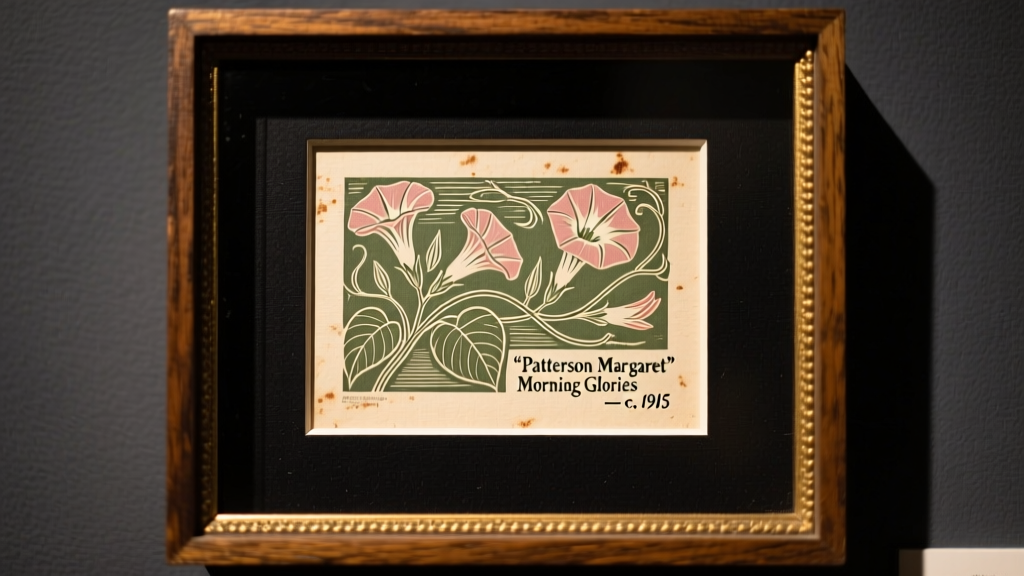
Margaret Patterson’s 'Morning Glories': A Signed 1915 Woodblock Print — Provenance, Technique, and Market Significance

Bristol Lamp with Enameled Flowers, Flying Birds, and Shell Feet: A 10-Inch Square Shade Study
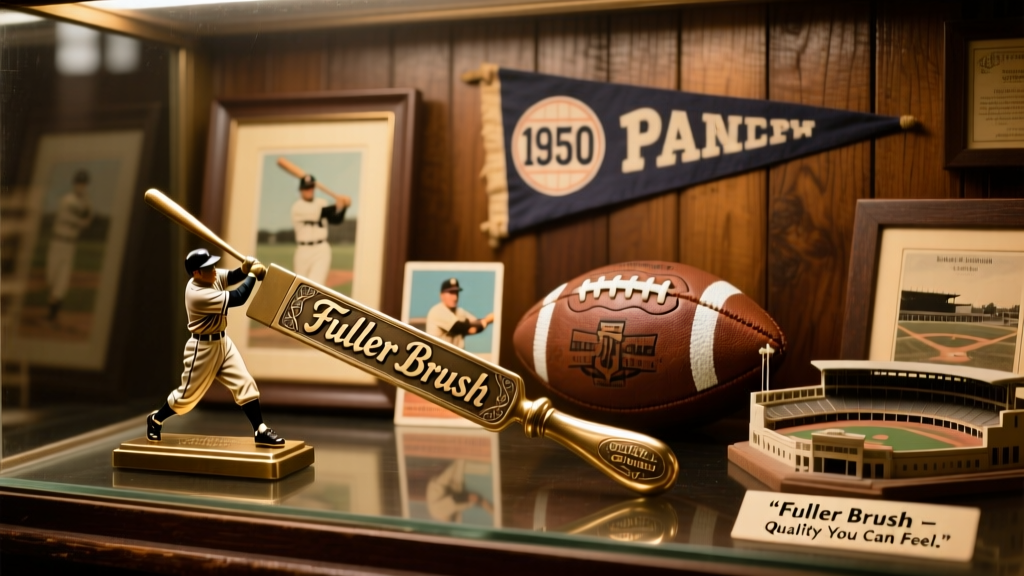
The Fuller Brush Advertising Letter Opener: A Mid-Century Marketing Artifact and Collectible Icon
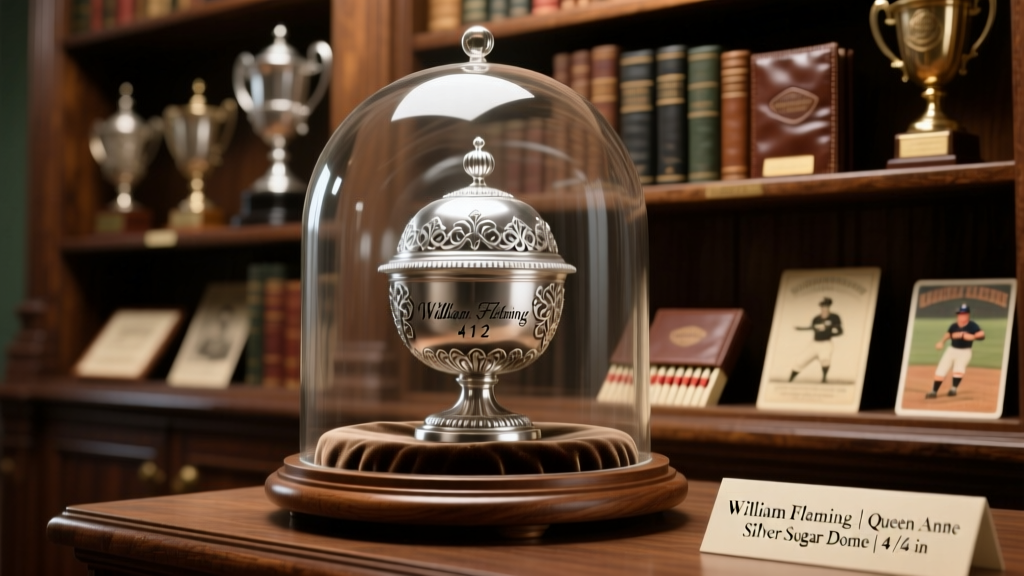
Silver English Sugar Domed Cover, Queen Anne Period, William Fleming, 4½ Inches: Authentication, Provenance, and Market Significance
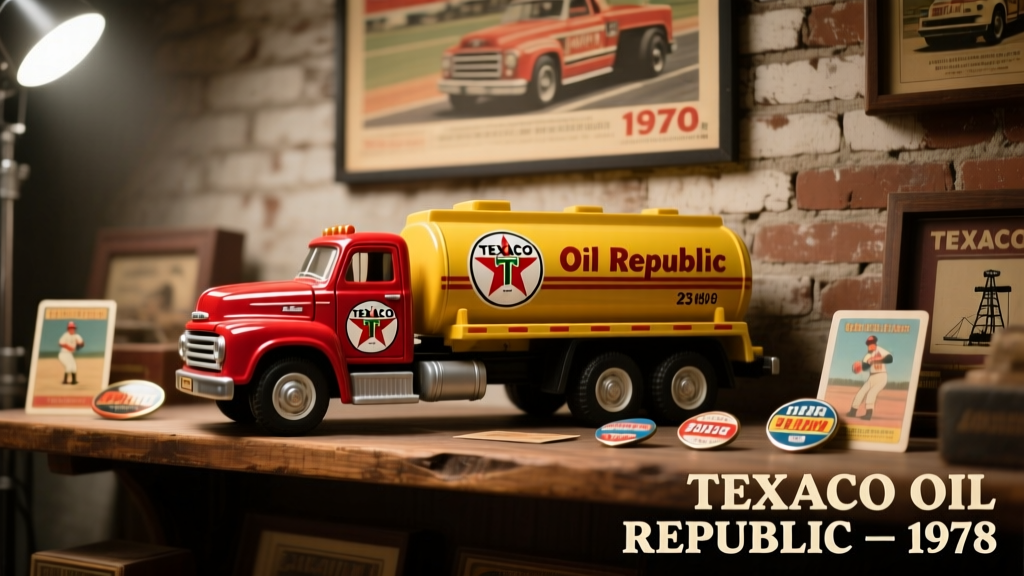
Toy Truck Tanker Texaco Oil Republic 23-Inch: Authenticity, History, and Collector Value
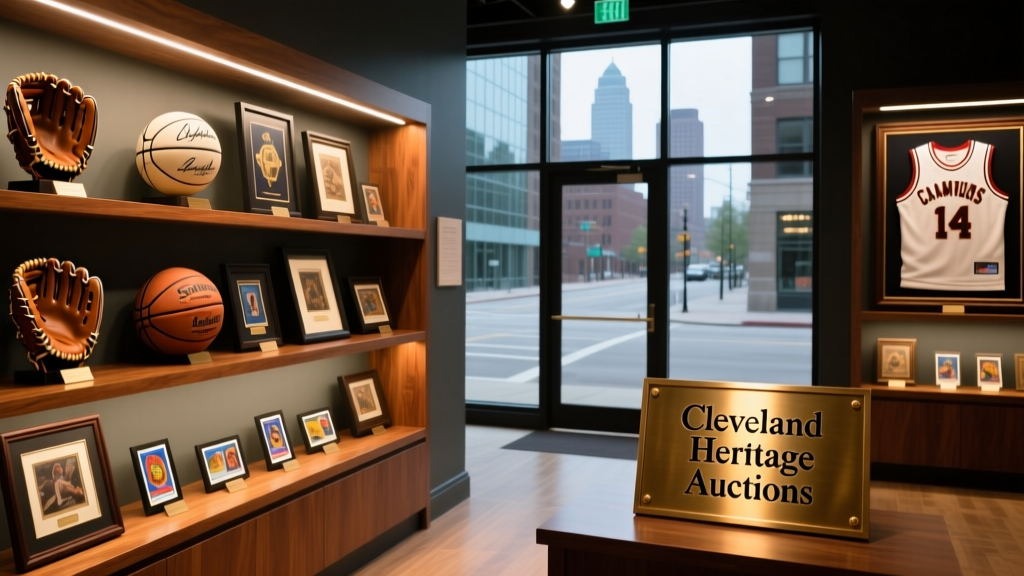
Cleveland Collectibles Auction Group Launches as Ohio’s First Full-Service Sports Memorabilia Auction House
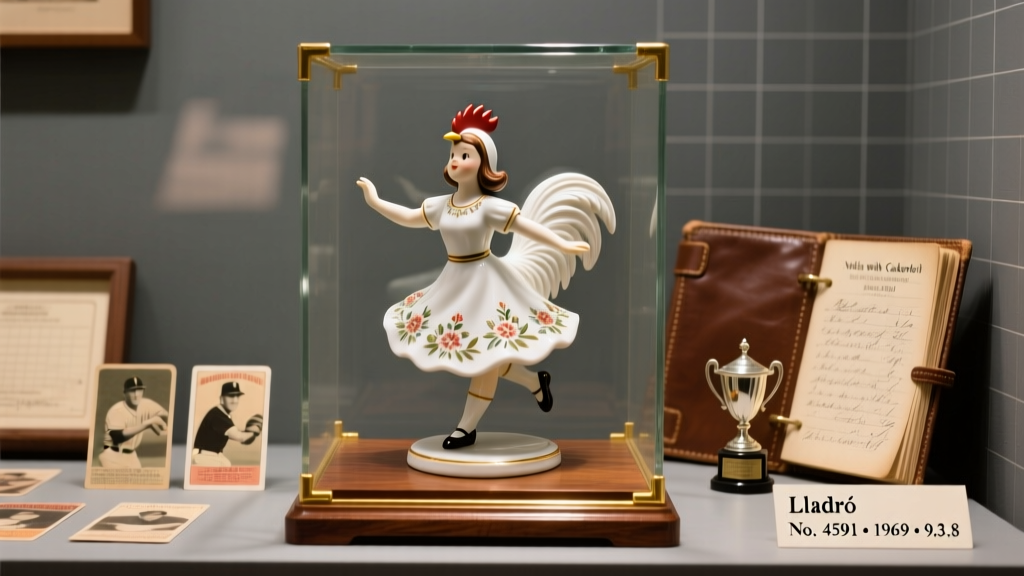
Lladró Figurine 'Girl With Cockerel' No. 4591 (1969): Authentication, Provenance, and Market Value of the Iconic 9¾-Inch Porcelain Sculpture