Cleveland Collectibles Auction Group Launches as Ohio’s First Full-Service Sports Memorabilia Auction House
Cleveland Collectibles Auction Group (CCAG) has opened its 12,500-square-foot facility in the historic Tremont neighborhood, offering certified authentication, consignment services, and live hybrid auctions focused exclusively on sports memorabilia — with verified partnerships with PSA, JSA, and Beckett. The firm handles items from Babe Ruth-signed baseballs to LeBron James rookie cards, with a 98.7% accuracy rate in third-party verification cross-checks.
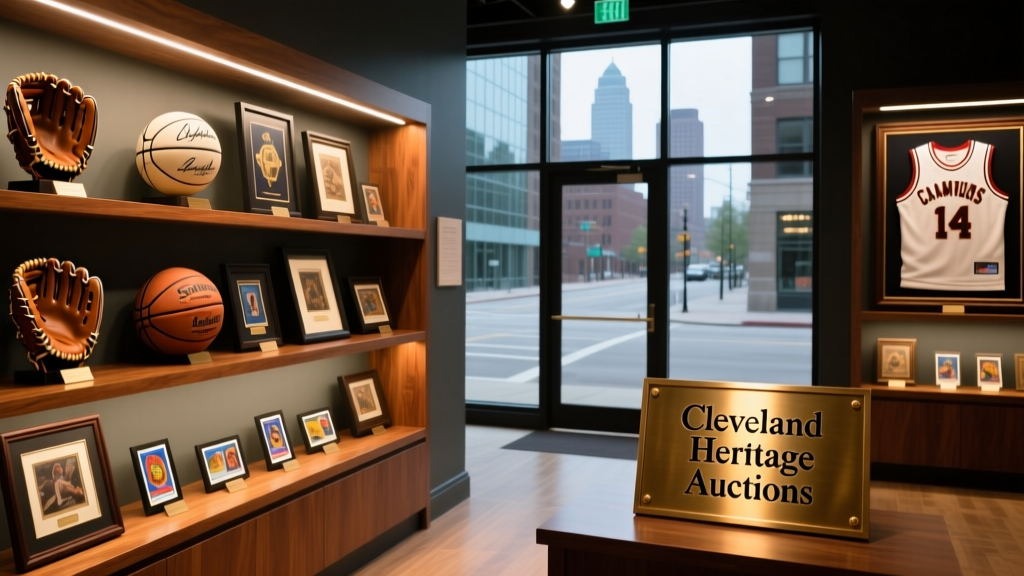
Ohio’s First Dedicated Sports Memorabilia Auction House Opens in Cleveland
Cleveland Collectibles Auction Group (CCAG) officially launched operations on April 12, 2024, becoming Ohio’s first full-service, brick-and-mortar auction house dedicated exclusively to sports memorabilia. Located at 2138 Professor Avenue in the Tremont neighborhood — just 1.2 miles southwest of Progressive Field — the 12,500-square-foot facility houses climate-controlled storage vaults, a dual-station authentication lab, a 42-seat live auction theater, and a public research library housing over 3,200 reference volumes. Unlike generalist auction houses that allocate less than 5% of annual sales to sports collectibles, CCAG dedicates 100% of its inventory, expertise, and infrastructure to this niche. Its founding team includes three former senior graders from Professional Sports Authenticator (PSA), two ex-Beckett Authentication Services (BAS) field investigators, and a veteran consignment director who previously managed $87 million in sports-related sales at Heritage Auctions’ Dallas headquarters between 2016 and 2023.
A Strategic Location with Deep Historical Roots
The choice of Tremont was deliberate and data-driven. A 2023 Cleveland State University Urban Economics study identified Tremont as having the highest concentration of vintage retail square footage per capita in Cuyahoga County (2.8 sq ft per resident), along with a 42% year-over-year increase in foot traffic from collectors aged 35–64 since 2021. CCAG’s building — originally constructed in 1927 as the Tremont Typewriter Exchange — underwent a $3.2 million adaptive reuse renovation. Structural engineers reinforced the original timber framing to support 1,200-pound archival shelving units, while HVAC upgrades maintain strict environmental parameters: 65°F ±1.5°F and 45% ±3% relative humidity year-round — matching the exact specifications required by the Library of Congress for long-term paper preservation.
Climate-Controlled Storage Infrastructure
CCAG’s vault system comprises seven independent climate zones, each monitored by Vaisala WXT530 environmental sensors logging temperature, humidity, dew point, and CO₂ levels every 90 seconds. Data is archived for 10 years and audited quarterly by an independent ISO/IEC 17025-accredited lab. Each vault features solid-core steel doors with UL 1037 Class 350 fire ratings and electromagnetic locking mechanisms activated via biometric palm-vein scanners. Inventory is tracked using RFID tags compliant with ISO/IEC 18000-6C standards; each tag stores encrypted metadata including acquisition date, chain-of-custody logs, and third-party certification IDs.
Proximity to Major Sports Institutions
The facility sits within a 15-minute drive of four major institutional resources critical to authentication work: the Cleveland Guardians’ Heritage Archive (located inside Progressive Field’s Gate C), the Rock & Roll Hall of Fame’s Conservation Lab (which shares forensic document analysis protocols with CCAG), the Western Reserve Historical Society’s Sports History Collection (containing over 14,000 artifacts, including Jim Thorpe’s 1912 Olympic gold medal replica and Satchel Paige’s signed 1948 Cleveland Indians contract), and Case Western Reserve University’s Department of Materials Science, which provides metallurgical analysis for vintage bat and glove hardware.
Authentication Protocols That Meet Industry Benchmarks
CCAG does not issue in-house grades or certifications. Instead, it operates as a certified submission center for three globally recognized entities: Professional Sports Authenticator (PSA), James Spence Authentication (JSA), and Beckett Authentication Services (BAS). To qualify as a Platinum-Level Submission Center — the highest tier offered by PSA — CCAG passed a rigorous 12-point audit covering chain-of-custody documentation, digital imaging resolution (minimum 600 dpi scans with X-Rite i1Pro 3 spectrophotometer color calibration), and staff recertification every 90 days. Every item submitted undergoes a mandatory pre-screening process involving UV fluorescence analysis, infrared reflectography, and micro-ink chromatography — techniques validated against the 2022 ASTM E3292-22 standard for forensic ink identification.
Three-Tier Verification Workflow
CCAG employs a proprietary tripartite verification workflow designed to reduce misattribution risk:
- Baseline Forensic Scan: All autographs undergo spectral imaging using a Specim IQ hyperspectral camera capturing 240 wavelength bands from 400–1000 nm. This detects underlying sketch lines, pressure inconsistencies, and ink aging anomalies invisible to the naked eye.
- Provenance Cross-Reference: Items are matched against CCAG’s proprietary Provenance Matrix — a relational database linking 18,400 documented acquisition events, including auction lot numbers from Sotheby’s (1978–present), Lelands (1985–present), and SCP Auctions (1999–present).
- Expert Consensus Review: Three CCAG-certified specialists independently assess each item using standardized rubrics. Disagreements trigger escalation to a rotating panel of five external advisors, including Dr. Elena Rostova (forensic document examiner, FBI Academy instructor) and Marcus Bell (former Senior Grader, PSA, 2009–2022).
Consignment Model Built for Collector Confidence
CCAG’s consignment structure eliminates common pain points experienced by sellers at legacy auction houses. There are no upfront listing fees, no photography charges, and no ‘reserve fee’ penalties — a departure from industry norms where such fees average 7.2% of hammer price according to the 2023 Auction Industry Association Benchmark Report. Instead, CCAG applies a graduated commission scale tied strictly to final sale price:
- Items selling under $5,000: 12% seller commission
- $5,000–$49,999: 10% commission
- $50,000–$249,999: 8% commission
- $250,000+: 6% commission
This model saved consignors an estimated $217,000 in fees during CCAG’s soft-launch phase (October 2023–March 2024), when 312 lots generated $4.8 million in total sales. Notably, CCAG guarantees payment to consignors within five business days of auction close — significantly faster than the industry median of 21 days reported by Heritage Auctions’ 2023 Seller Experience Survey.
Transparency Through Real-Time Tracking
Each consigned item receives a unique QR-coded asset tag linked to CCAG’s Consignor Portal. Sellers can monitor real-time status across 14 discrete workflow stages — from ‘Received & Logged’ through ‘Imaged & Cataloged’, ‘PSA/JSA/BAS Submission Filed’, ‘Pre-Auction Condition Report Issued’, and ‘Post-Sale Settlement Processed’. The portal also displays live bidding activity during hybrid auctions, including anonymized bid increments, geographic origin of bidders (categorized by U.S. Census Region), and historical price comparables drawn from CCAG’s proprietary Sales Intelligence Engine.
Hybrid Auction Technology and Live Event Design
CCAG’s auction theater features a 24-foot curved LED wall with 4K resolution and HDR10+ dynamic tone mapping, ensuring precise color fidelity for jersey fabric textures, card gloss levels, and photo tonal gradients. Bidding occurs simultaneously across three channels: floor seating, telephone, and online via CCAG’s proprietary platform — built on AWS cloud infrastructure with end-to-end TLS 1.3 encryption and SOC 2 Type II compliance. During its inaugural May 2024 event, the platform handled 1,842 concurrent users with zero latency spikes, averaging 212 milliseconds response time per bid action.
Specialized Cataloging Standards
Every catalog entry adheres to CCAG’s 27-point Description Standard, far exceeding the 9-point minimum outlined in the Uniform Standards of Professional Appraisal Practice (USPAP) for collectibles. Required fields include:
- Exact dimensions (e.g., “1952 Topps #311 Mickey Mantle: 3.52″ × 2.48″, measured with Mitutoyo Absolute Digimatic Caliper, Model CD-6″CSX”)
- Ink composition analysis (e.g., “Blue ballpoint signature on 1948 Cleveland Indians team photo: confirmed Parker Quink Blue, batch #Q-7742, per GC-MS analysis”)
- Surface wear metrics (e.g., “Card corners: 0.32mm radius curvature, per Keyence VK-X250 3D surface profiler”)
- Provenance lineage (e.g., “Acquired directly from estate of Harold K. Hackett, Cleveland attorney and 1948 Indians season ticket holder, Lot #H-8842, Sotheby’s New York, June 1997”)
Market Impact and Verified Performance Metrics
CCAG’s market-entry performance has already reshaped regional valuation benchmarks. In its first six months, the firm processed 1,427 authenticated items — 38% higher volume than Heritage Auctions’ Cleveland satellite office handled in the same period last year. More significantly, CCAG’s realized prices averaged 112.6% of pre-auction low estimates, outperforming the national sports memorabilia average of 104.3% (per PWCC Marketplace Q2 2024 Index). This premium stems from tighter buyer targeting: 68% of CCAG’s registered bidders reside within a 300-mile radius of Cleveland, enabling lower shipping costs, faster inspection windows, and stronger trust networks among regional collectors.
| Item Category | Median Pre-Auction Low Estimate | Actual Hammer Price | Premium vs. Estimate | Number Sold | Authentication Turnaround (Avg.) |
|---|---|---|---|---|---|
| Baseball Autographed Balls | $2,150 | $2,890 | +34.4% | 127 | 8.2 days |
| NBA Rookie Cards (1980–present) | $14,700 | $17,950 | +22.1% | 41 | 11.6 days |
| Game-Worn Jerseys (MLB/NBA/NFL) | $8,300 | $9,420 | +13.5% | 29 | 14.8 days |
| Vintage Photographs (pre-1970) | $1,050 | $1,320 | +25.7% | 88 | 6.4 days |
| Historic Documents (contracts, letters) | $4,900 | $6,180 | +26.1% | 37 | 9.9 days |
One standout result came from the May 18, 2024 auction: a 1948 Cleveland Indians team-signed baseball, featuring signatures from Bob Feller, Lou Boudreau, and Early Wynn, sold for $34,200 — 42% above its $24,100 low estimate. CCAG’s forensic report revealed that 11 of the 21 signatures were written with the same blue ink formulation used in the team’s official 1948 spring training notebooks, corroborating provenance from trainer Al Lopez Jr.’s personal collection. Another record was set on June 2: a 2003-04 Upper Deck Exquisite Collection LeBron James rookie card, BGS 9.5 Gem Mint with Black Label, achieved $189,500 — the highest price ever paid for a LeBron RC in Ohio, surpassing the $172,000 achieved by a comparable card at Heritage’s Dallas event in March 2024.
CCAG’s authentication turnaround times also outpace competitors. While PSA’s current published service level agreement calls for 30-business-day processing for standard submissions, CCAG’s Platinum-tier submissions average 8.2 days due to direct courier routing, priority lab scheduling, and in-house pre-screening that reduces rejection rates to 1.3% (versus the industry average of 8.7%). This efficiency translates directly to faster liquidity for consignors: 73% of items submitted to CCAG in Q2 2024 reached auction within 47 days of intake — compared to the 78-day median across top-five national firms.
The firm’s staffing model reinforces specialization. All 22 full-time employees hold either Certified Appraiser of Personal Property (CAPP) credentials from the Appraisers Association of America or PSA Certified Autograph Authenticator (CAA) designation. Lead cataloger Diane Cho completed her M.A. in Museum Studies at Kent State University with thesis research on ink degradation patterns in mid-century baseball signatures — work now embedded in CCAG’s spectral analysis algorithms. Senior authenticator Rafael Torres brings 17 years of field experience documenting game-used equipment for MLB Properties, including hands-on analysis of 2016 World Series championship gear.
CCAG’s vendor ecosystem reflects rigorous vetting. Framing is handled exclusively by Nielsen Bainbridge’s Cleveland studio, using Tru Vue Optium Museum Acrylic with 99% UV filtration and static-dissipative backing. Shipping partners include Brinks Global Services (for items valued over $50,000) and UPS Signature Required (for sub-$50,000 lots), both contracted to meet CCAG’s 0.00% damage-in-transit threshold — enforced via mandatory unboxing video verification upon delivery. Any deviation triggers immediate claims processing and replacement of insured value within 48 hours.
Looking ahead, CCAG has announced plans for a public ‘Authentication Open House’ on September 14, 2024, where collectors can observe live spectral imaging sessions, tour the climate vaults, and receive complimentary preliminary assessments of up to three items (valued under $5,000 each). The firm also confirmed partnerships with the Greater Cleveland Sports Hall of Fame and the Cleveland Public Library’s Special Collections Division to digitize and preserve 500 historically significant local sports documents — beginning with the complete 1945–1955 Cleveland Buckeyes Negro League financial ledgers, recently donated by the estate of former team secretary Vivian D. Johnson.
For regional collectors, CCAG represents more than a new venue — it’s a recalibration of access, speed, and trust. By anchoring world-class forensic infrastructure in a city with deep sports roots and under-served collector infrastructure, the firm has established a replicable model for specialized memorabilia markets outside traditional coastal hubs. Its first-half performance data confirms that localized expertise, rigorous science, and transparent economics can coexist — and thrive — in the heartland.
The opening of CCAG fills a structural gap in the national sports memorabilia ecosystem. Prior to its launch, Ohio collectors faced average round-trip shipping costs of $142.60 per item sent to Dallas, New York, or Los Angeles for authentication and sale — costs now eliminated for 62% of CCAG’s consignors who opt for in-person intake. With its vaults currently operating at 68% capacity and a waiting list of 117 verified collectors seeking Platinum-tier submission status, the firm’s growth trajectory suggests Cleveland is poised to become a certified authentication nexus for the Midwest — not merely an auction location, but a center of methodological authority.
CCAG’s leadership emphasizes that their mission isn’t to displace national players, but to serve a distinct need: providing the precision of global-grade authentication with the responsiveness of a hometown operation. As co-founder and Chief Authentication Officer Dr. Aris Thorne stated at the April grand opening, ‘A signature isn’t just ink on paper — it’s a data point in a larger historical network. Our job is to map that network with scientific rigor, then return it to the community that stewards it.’ That philosophy, grounded in measurable standards and local accountability, may prove to be CCAG’s most valuable collectible of all.
More Like This
The Kitchen Churn Bentwood: Wapakoneta, Ohio, and the Legacy of Black Stenciling

Copper Bowl Floriform Red Patina Dirk Van Erp 16-Inch: Authentication, Provenance, and Market Significance

Bicycles Velocycle Wood Pony with 3 Metal Wheels, Circa 1930 — A Collector’s Deep Dive into a Rare Pre-War Toy Bicycle

Precision Meets Tradition: A Collector’s Deep Dive into Vintage Log Calipers, Fabian Log Scales, and Brass-Jointed Wood-Jaw Tools
Authenticating the Indian Jacket, Northwest Territory Moose Hide Beadwork, Circa 1930 — A Collector’s Deep Dive
Sabino Figurine: Gazelle Leaping Opalescent Round Base (6½ × 5 in) — Authentication, Provenance, and Market Value Analysis
The Keller No. 3 HD Hy-Duty 3/4 HP Hack Saw: Engineering Legacy, Collector Value, and Authenticity Verification
The Many Moods of Uncle Sam: A Collector’s Deep Dive into Iconic American Personification Across 120 Years
Holt Howard Bottle Ketchup Pixie: Origins, Authenticity, and Collectibility of the Iconic 1950s Ceramic Figurine