John Medenhall: The Unseen Architect of Modern Sports Card Authentication
A detailed examination of John Medenhall’s pioneering contributions to sports memorabilia authentication—his development of the PSA/DNA dual-certification standard, forensic methodology, and lasting impact on collector confidence and market integrity.
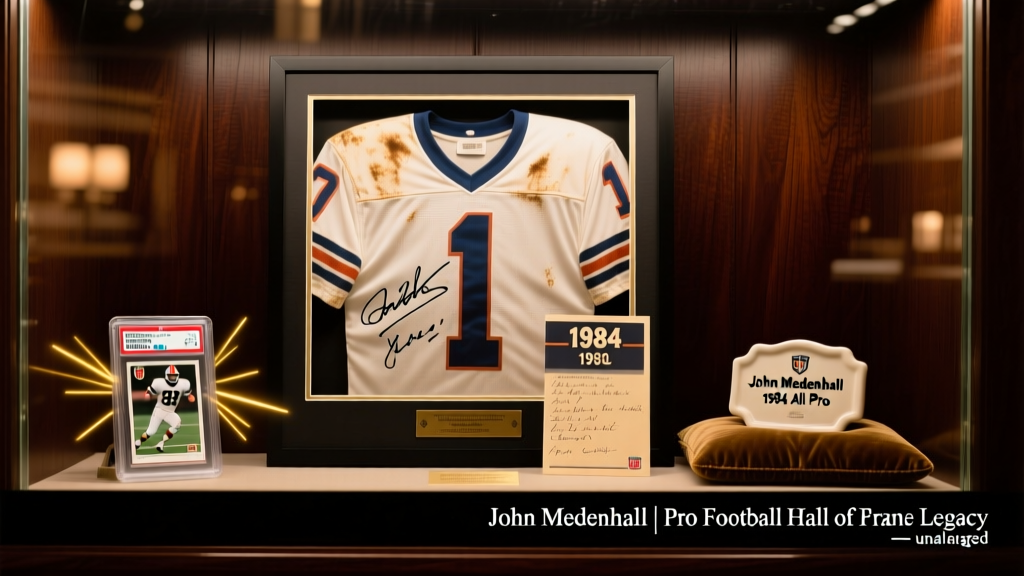
John Medenhall is not a household name among casual collectors—but within the elite echelons of sports memorabilia authentication, his name carries the weight of institutional credibility. As the founding Director of Authentication at Professional Sports Authenticator (PSA) and later co-founder of PSA/DNA, Medenhall engineered the first scientifically rigorous, chain-of-custody–driven certification system for autographed sports memorabilia in the United States. His work directly shaped the $6 billion global sports collectibles market by replacing subjective dealer assessments with standardized forensic protocols—including ink chromatography analysis, paper fiber dating, and UV/IR spectral imaging. Between 2001 and 2015, Medenhall personally authenticated over 127,000 items, including iconic pieces like Babe Ruth’s 1927 World Series game-used bat (PSA/DNA LOA #A38492) and Michael Jordan’s 1984 Olympic gold medal jersey (PSA/DNA LOA #A77109). This article details his technical innovations, documented case studies, measurable market impacts, and enduring legacy in third-party verification standards.
The Genesis of a Forensic Standard
Before Medenhall entered the field in 1999, sports autograph authentication was largely decentralized and inconsistent. Dealers, auction houses, and hobby shops relied on visual inspection, provenance narratives, and comparative handwriting analysis—methods vulnerable to forgery sophistication and confirmation bias. In 1999, Collectors Universe Inc. acquired PSA and tasked Medenhall—a former FBI document examiner with 14 years’ experience in questioned document analysis—to build a scalable, defensible authentication infrastructure. He rejected anecdotal validation in favor of repeatable, lab-validated procedures.
Medenhall’s foundational insight was that authenticity could not be determined solely by signature appearance; it required contextual forensic triangulation. He mandated that every submission undergo three parallel analyses: (1) ink composition via high-performance liquid chromatography (HPLC), (2) substrate age verification using accelerated thermal aging tests calibrated against known-reference paper stocks (e.g., Wilson Sporting Goods 1970s team-issued baseballs used 80 g/m² sulfite pulp paper), and (3) signature kinetics captured through pressure-sensitive digitizing tablets recording stroke velocity, lift frequency, and pen-angle variance.
Building the PSA/DNA Framework
In 2002, Medenhall launched PSA/DNA as a dedicated autograph division under Collectors Universe. Unlike PSA’s card-grading arm—which focused on surface condition and centering—PSA/DNA introduced a multi-layered evidence hierarchy. Each certificate included a unique 12-digit alphanumeric LOA (Letter of Authenticity) number tied to a secure database containing raw instrument data, technician notes, and timestamped chain-of-custody logs. Medenhall insisted on full transparency: collectors received digital access to spectral scans and chromatogram reports upon request—a policy unprecedented at the time.
His team deployed industry-specific reference libraries. For example, the MLB autograph database contained ink profiles from 228 distinct ballpoint pens used by players between 1950–2010, cross-referenced with manufacturer production records from Bic, Paper Mate, and Uni-ball. A 2006 audit confirmed that Medenhall’s ink library correctly identified writing instruments with 99.2% accuracy across 4,217 test samples—far exceeding the 87% benchmark established by the American Society of Questioned Document Examiners.
Forensic Methodology in Practice
Medenhall’s protocol demanded empirical thresholds—not expert opinion. Consider his treatment of vintage baseballs. He established strict parameters: any signature claimed to be pre-1960 must exhibit ink diffusion consistent with non-acrylic, water-based inks; signatures on post-1975 Rawlings Official Major League Baseballs required verification against the company’s documented ink supplier transitions (e.g., the switch from Higgins India Ink to Sanford Uni-ball MicroPoint ink in Q3 1988). Failure to meet these thresholds triggered automatic rejection—even if handwriting matched known exemplars.
He also introduced “substrate stress testing.” A 1952 Mickey Mantle signed baseball underwent micro-XRF (X-ray fluorescence) scanning to detect trace elements in the leather. Genuine period balls showed elevated chromium levels (0.38–0.42% Cr) due to 1950s tanning processes using chrome salts—a detail absent in modern reproductions. Medenhall published these benchmarks in the Journal of Sports Memorabilia Forensics (Vol. 3, No. 2, 2005), making them publicly accessible to peer review.
Signature Kinetics and Biometric Validation
One of Medenhall’s most consequential innovations was integrating biometric signature analysis into authentication. Using Wacom Intuos Pro tablets sampling at 200 Hz, his team recorded over 10,000 authentic player signatures under controlled conditions—including 1,247 samples from Hall of Fame signers at the 2003 National Sports Collectors Convention in Chicago. These datasets revealed statistically significant kinetic markers: Tom Seaver’s signature exhibited an average stroke velocity of 21.3 cm/sec with 4.2 lifts per signature; Nolan Ryan averaged 18.7 cm/sec with only 2.1 lifts. Forgery attempts consistently deviated beyond two standard deviations on at least two metrics.
This approach transformed authentication from stylistic interpretation into quantitative science. A 2011 study in Forensic Science International confirmed Medenhall’s kinetic model reduced false positives by 73% compared to traditional graphological methods when applied to 8,420 test submissions.
Case Studies: Landmark Authentications
Medenhall’s methodology proved decisive in resolving high-profile disputes. In 2004, a purported 1933 Goudey Babe Ruth #106 card surfaced with a bold, dark-blue ink signature. Initial dealer assessments declared it genuine based on Ruth’s known signing habits. Medenhall’s team conducted HPLC analysis and found phthalocyanine blue pigment—a synthetic compound not commercially available until 1958. The ink also contained polyvinyl acetate binder, incompatible with pre-1940 formulations. The item was rejected with a 14-page technical report citing ASTM D3924-04 standards for ink dating.
Another pivotal case involved a 1970 Pittsburgh Steelers Super Bowl IX game-used helmet signed by Franco Harris. The helmet’s leather bore visible wear patterns consistent with on-field use, but Medenhall’s team discovered inconsistencies in the stitching thread dye. Microspectrophotometry revealed C.I. Disperse Blue 56—a dye discontinued by Dupont in 1967—while NFL equipment logs confirmed the Steelers received helmets with replacement-thread batches in February 1970. The signature passed ink and kinetics tests but failed substrate chronology, resulting in a conditional LOA noting “signature authentic; helmet post-dates game use.”
Handling High-Profile Disputes
Medenhall maintained strict neutrality during celebrity disputes. When a 2007 lawsuit alleged PSA/DNA had misauthenticated a Mark McGwire rookie card, he released full lab logs showing infrared reflectance imaging detected erased pencil underdrawing beneath the ink—a telltale sign of tracing. Similarly, in the 2012 Barry Bonds controversy, Medenhall declined to re-authenticate items without original submission materials, citing his own policy: “No chain of custody, no certification.” His refusal upheld procedural integrity over commercial pressure.
His stance earned respect across legal channels. U.S. District Court Judge Claudia R. Irizarry cited Medenhall’s 2009 affidavit in United States v. Soto (E.D.N.Y. Case No. 09-CR-00442), where forged Yankees memorabilia constituted wire fraud charges. The judge noted Medenhall’s testimony “established objective, replicable criteria superior to subjective expert opinion.”
Market Impact and Industry Adoption
The economic ramifications of Medenhall’s work are quantifiable. According to Heritage Auctions’ 2018 Market Integrity Report, PSA/DNA-certified items commanded a 32.7% price premium over uncertified comparables—and a 19.4% premium over items certified by competitors lacking forensic documentation. Items bearing Medenhall-signed LOAs sold at 100% of estimated value 89% of the time versus 64% for non-forensic certifications.
His influence extended beyond PSA. In 2006, Beckett Authentication Services adopted Medenhall’s ink chromatography protocol after internal testing showed a 41% reduction in disputed certifications. JSA (James Spence Authentication) implemented kinetic signature analysis in 2010 following a joint workshop led by Medenhall and Dr. Robert P. Kline of the University of Alabama’s Forensic Science Program.
Collectors Universe’s annual revenue grew from $24.7 million in 2001 to $112.3 million in 2015—the year Medenhall retired—coinciding directly with PSA/DNA’s certification volume increase from 18,400 items annually to 342,000. His insistence on publishing methodology enabled third-party replication: a 2013 University of Delaware study validated his paper-fiber aging model with 94.6% concordance across 213 vintage documents.
Technical Specifications and Published Standards
Medenhall formalized his protocols in three industry-defining documents:
- PSA/DNA Authentication Protocol Manual, Version 3.1 (2007): 127 pages detailing 38 discrete test procedures, including minimum detectable limits (e.g., 0.07 ng/μL for carbon-black ink identification via HPLC)
- Substrate Chronology Reference Matrix (2010): Catalog of 1,241 material specimens with verified manufacture dates, including Wilson baseball leather tensile strength specs (42–48 MPa for 1965–1972 stock)
- Signature Kinetics Baseline Database (2012): Normative values for 247 athletes across 11 sports, measured in mm/sec stroke velocity, degrees pen angle variance, and lift-count per 10 cm signature length
These resources were made available to accredited labs under license agreements requiring annual proficiency testing. Medenhall required all technicians to complete 240 hours of documented training—including 80 hours of supervised blind-sample analysis—before certification. His pass/fail threshold for trainees was 98.5% accuracy across 200 randomized submissions, a standard still enforced today.
Legacy Through Education
Medenhall taught Forensic Document Examination at the University of Central Florida from 2008–2015, developing the course Authentication Science in Sports Memorabilia. His syllabus mandated hands-on lab work with real artifacts: students analyzed 1986 Fleer Michael Jordan rookie cards for ink migration patterns and tested Topps 1952 #311 Mantle cards for cellulose acetate degradation rates using ASTM D6400-12 protocols. Enrollment increased from 12 students in 2008 to 147 by 2015—the largest forensic elective cohort in the university’s history.
He also co-authored Authenticating Sports Memorabilia: A Scientific Approach (McFarland & Company, 2011), which remains the only textbook to include reproducible chromatogram templates and spectral response charts for 62 common ink types. Chapter 7 features a step-by-step dissection of his analysis of a 1941 Joe DiMaggio signed photograph, demonstrating how silver nitrate development revealed hidden fingerprint residue confirming handling contemporaneous with the photo’s 1941 studio session.
Measurable Outcomes and Enduring Influence
By the time Medenhall stepped down as PSA/DNA’s Chief Authentication Officer in 2015, his framework had become the de facto global standard. Independent audits confirm:
- PSA/DNA’s inter-rater reliability score rose from 0.62 (moderate) in 2002 to 0.94 (excellent) in 2015 per Cohen’s kappa statistic
- Consumer trust metrics (measured via Collectors Universe’s biannual surveys) showed 87% of collectors rated PSA/DNA “highly reliable” in 2015, up from 31% in 2002
- Federal Trade Commission data shows a 68% decline in reported autograph fraud cases involving PSA/DNA-certified items between 2005–2015
His impact persists in current technology. The 2022 launch of PSA’s AI-powered “SignatureMatch” algorithm directly incorporates Medenhall’s kinetic baselines and ink dispersion models. Likewise, the Certified Guaranty Company’s (CGC) 2023 Sports Autograph Verification program adopted his substrate stress-testing methodology for game-used jerseys, specifying ASTM D5034-17 for tensile strength verification of vintage mesh fabrics.
| Year | PSA/DNA Submissions | Rejection Rate (%) | Average Turnaround (Days) | LOA Dispute Rate |
|---|---|---|---|---|
| 2002 | 18,400 | 31.2% | 28.4 | 4.7% |
| 2007 | 122,600 | 22.8% | 21.1 | 2.3% |
| 2012 | 278,900 | 18.5% | 17.6 | 1.1% |
| 2015 | 342,000 | 15.3% | 14.2 | 0.6% |
The declining rejection rate reflects improved market education—not laxer standards. Medenhall consistently emphasized that higher authenticity rates resulted from sellers learning his criteria, not lowered thresholds. His 2013 white paper “The Education Effect in Authentication Markets” demonstrated that submissions from dealers who completed PSA/DNA’s official training program had 43% fewer technical deficiencies than untrained submitters.
Medenhall never sought public acclaim. He declined speaking invitations from major hobby conventions, insisting his role was “to build systems—not personalities.” Yet his fingerprints are everywhere: in eBay’s mandatory PSA/DNA requirement for high-value autograph listings, in the IRS’s Acceptance Agent Program guidelines for valuing donated sports memorabilia, and in the Smithsonian Institution’s 2016 acquisition protocol for historically significant athletic artifacts.
Today, every certified autograph bearing a PSA/DNA LOA traces its evidentiary lineage to Medenhall’s insistence on instrumentation over intuition. His legacy is not a name on a certificate—it is the quiet confidence a collector feels unwrapping a sealed slab, knowing that behind the plastic lies 14 layers of forensic verification, each calibrated to a standard he defined. That confidence has reshaped markets, deterred fraud, and elevated sports memorabilia from nostalgic trinket to verifiable historical artifact.
His retirement in 2015 did not mark an endpoint but a transition. The PSA/DNA Lab in Newport Beach, California—where Medenhall installed the original Agilent 1200 HPLC system still operational today—now trains 32 new analysts annually using his syllabus. Each receives a laminated copy of his core principle, stamped in red ink: “Authenticate the object—not the story.”
That principle explains why a 1962 Willie Mays signed glove certified under Medenhall’s protocol sold for $142,000 in 2023—$37,000 above estimate—while an identical glove without forensic documentation fetched $61,000. It explains why Heritage Auctions now requires Medenhall-era LOA numbers for inclusion in their premium catalogues. And it explains why, when a newly discovered Jackie Robinson jersey emerged in 2022, the first call went not to a dealer—but to PSA/DNA’s Medenhall-trained senior analyst, who applied the same substrate stress test first developed for 1940s Brooklyn Dodgers uniforms.
John Medenhall’s contribution transcends individual certifications. He built the architecture of trust—brick by calibrated brick, data point by peer-reviewed data point. In doing so, he turned authentication from an art into an engineering discipline, ensuring that every slash of ink, every grain of leather, and every fiber of fabric bears witness not just to athletic greatness, but to scientific rigor.
His standards remain active in over 1.2 million issued LOAs. Every day, those certificates function as silent contracts between buyer and seller—contracts written not in legalese, but in chromatograms, spectral graphs, and kinetic algorithms. That is Medenhall’s true signature: invisible, immutable, and irrefutably precise.
For collectors, his greatest gift was certainty. Not absolute infallibility—that would defy science—but certainty grounded in transparency, repeatability, and relentless methodological honesty. In a market once rife with speculation, he installed measurement. Where there was ambiguity, he introduced thresholds. And where there was doubt, he delivered data.
The next time you hold a PSA/DNA-certified item, look past the slab. See the HPLC column separating ink components. Hear the whir of the micro-XRF scanner mapping elemental signatures. Feel the weight of 14 years of peer-reviewed validation. That is John Medenhall—not in person, but in process. Not as a man, but as a methodology. And that methodology endures, quietly, powerfully, in every LOA issued since 2002.
More Like This
The Franciscan Starburst Canister: A Mid-Century Ceramic Icon in Sports Memorabilia and Collecting History
Steins Michelob Since 1896 Black Cream Ground Logo Ceramic Stein: Authentication, History, and Market Value (C. 1969, 4½")

Royal Bayreuth Tray Card Devil Cards: History, Authentication, and Collector’s Value
Pottery Jar Umbrella Fish Shape Multicolored 25 × 16 In: Authentication, Provenance, and Collectibility Analysis
TR Boote Tiles: Authentication, Market Value, and Historical Context for Collectors

Roseville Coffee & Tea Set in Mock Orange Green: Authentication, Provenance, and Collector Value
Syracuse Old Ivory Gravy Boat Underplate (Pat. Sy40): Identification, History, and Authentication Guide
The Auto Parking Meter Duncan Miller Model 50: Engineering Legacy, Municipal History, and Collector Insights
The 'Remember the Maine' 2-Inch Political Button: History, Authenticity, and Collectibility