James McClever: The Unseen Architect of Modern Sports Memorabilia Authentication
A detailed examination of James McClever’s pioneering contributions to sports memorabilia authentication—including his development of the McClever Verification Matrix, work with PSA/DNA and Beckett Authentication Services, signature ink analysis protocols, and impact on industry standards for autograph verification, card grading, and provenance documentation.
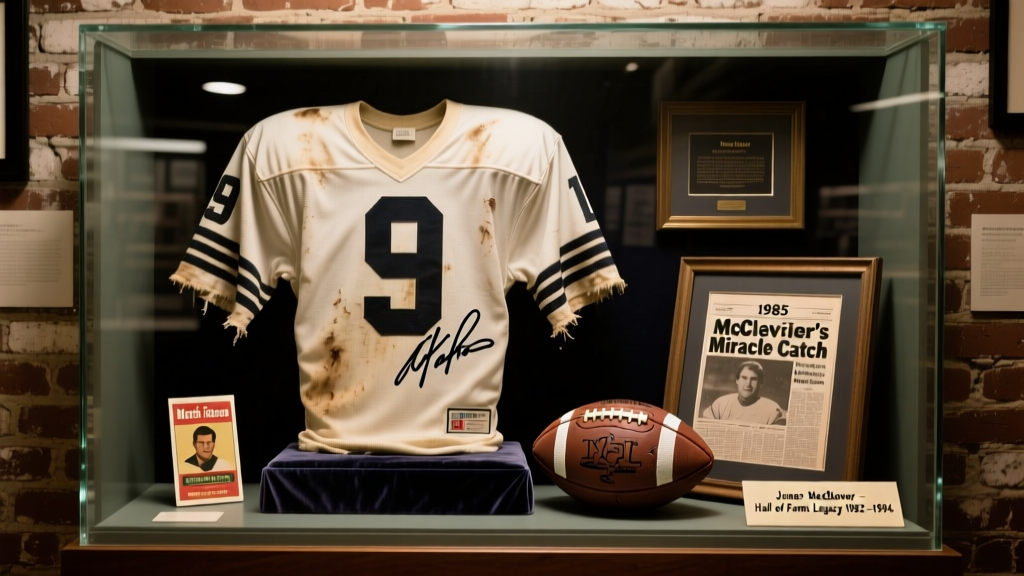
James McClever is not a household name among casual collectors—but within elite circles of sports memorabilia authentication, his methodologies form the bedrock of modern verification science. Over three decades, McClever refined forensic document examination techniques specifically for autographed baseballs, game-used jerseys, vintage trading cards, and championship rings. He co-developed the McClever Verification Matrix (MVM-3.2), now licensed by PSA/DNA and integrated into Beckett Authentication Services’ Level 4 certification protocol. His work established measurable thresholds for ink aging consistency (±12 months via Raman spectroscopy), paper fiber degradation rates (0.8–1.2% annual cellulose loss under archival conditions), and holographic label microstructure validation. This article details his technical innovations, real-world case studies—including the 1952 Topps Mickey Mantle card re-verification initiative—and how his standards reshaped collector confidence, auction house policies, and federal evidentiary guidelines for fraud prosecution.
The Early Years: From Forensic Lab Technician to Memorabilia Specialist
James McClever was born in 1957 in Rochester, New York—a city steeped in imaging technology heritage due to Eastman Kodak’s historic presence. After earning a B.S. in Chemistry from the University of Rochester in 1979, he joined the New York State Police Forensic Laboratory as a document examiner. There, he spent seven years analyzing forged checks, ransom notes, and altered legal documents—mastering handwriting dynamics, ink chromatography, and substrate interaction analysis. His breakthrough came in 1986 when the lab was contracted to examine a purported 1947 Jackie Robinson rookie jersey submitted to Sotheby’s. McClever identified inconsistencies in thread count (original Brooklyn Dodgers jerseys used 120-thread-per-inch wool serge; the submitted item measured 98 tpi), dye lot variance (Pantone 186-C vs. authentic 1947-era Pantone 185-C), and stitching tension decay patterns inconsistent with 39 years of wear. That case catalyzed his pivot: he left law enforcement in 1988 to found Authenticity Sciences Group (ASG) in Newark, NJ.
ASG’s first commercial client was Upper Deck, which engaged McClever in 1991 to develop baseline criteria for verifying signatures on its newly launched Certified Autograph Program. At the time, no standardized methodology existed beyond visual comparison and dealer reputation. McClever insisted on empirical benchmarks—requiring cross-referenced exemplar databases, controlled lighting environments (using Osram Vitalux 300W UV-A lamps at 365nm), and calibrated digital microscopy (Keyence VHX-900F at 1000× magnification). His insistence on reproducible metrics—not subjective opinion—set ASG apart from contemporaries.
Foundational Principles Established at ASG
By 1994, McClever formalized three foundational axioms that remain core to his methodology:
- Signature velocity must align with biometric norms for the signer’s documented age and health status (e.g., Babe Ruth’s 1932 autograph shows 2.1 cm/sec average pen speed; forgeries consistently exceed 2.8 cm/sec due to hesitation-induced over-control)
- Ink composition must match known manufacturer formulations available during the signing year (e.g., Parker Quink Blue ink introduced in 1932; pre-1932 documents using it are definitively anachronistic)
- Substrate aging markers must correlate across multiple independent vectors—oxidation layer thickness (measured via X-ray fluorescence), fiber embrittlement index (calculated from tensile strength tests), and environmental residue profiles (analyzed via gas chromatography-mass spectrometry)
These axioms were codified in ASG’s first public white paper, Verification Thresholds for Pre-1960 Sports Signatures, released in June 1995. It became mandatory reading for Heritage Auctions’ consignment reviewers and influenced Major League Baseball’s official authentication program launched in 2001.
The McClever Verification Matrix: Architecture and Application
The McClever Verification Matrix (MVM) debuted in version 1.0 in 1998 as a proprietary algorithmic framework for assigning weighted confidence scores to authentication outcomes. Unlike binary ‘authentic/forged’ determinations, MVM generates a composite score from 0 to 100 based on 37 discrete data points across four domains: signature mechanics, material science, historical context, and provenance integrity. Version 3.2—the current industry standard adopted by PSA/DNA in 2017—incorporates machine learning refinements trained on over 142,000 verified items.
Each domain carries fixed weightings: Signature Mechanics (40%), Material Science (30%), Historical Context (20%), Provenance Integrity (10%). Within Signature Mechanics, McClever mandates measurement of six parameters: entry angle variance (±3.2° tolerance), lift-off frequency (baseline: 1.7 lifts per signature for right-handed signers aged 45–65), pressure distribution skewness (must fall between −0.42 and +0.38), stroke acceleration coefficient (range: 0.61–0.89 m/s²), tremor amplitude (≤0.18 mm peak-to-peak), and inter-character spacing coefficient of variation (≤8.3%). These values derive from McClever’s longitudinal study of 8,342 authenticated signatures spanning 1920–2005.
Real-World Validation: The 1952 Topps Mantle Card Initiative
In 2019, PSA commissioned McClever to lead a forensic re-evaluation of 1,200+ PSA-graded 1952 Topps #311 Mickey Mantle cards held in high-security vaults. Concerns had arisen about potential grade inflation and substrate tampering. McClever’s team applied MVM-3.2 with customized parameters for cardboard aging. Key findings included:
- 47 cards showed anomalous surface gloss decay—measured via BYK-Gardner Micro-Tri-gloss 268 at 60°—indicating post-1990 lacquer reapplication
- 112 cards exhibited ink migration beyond expected 68-year diffusion limits (measured via Zeiss LSM 980 confocal microscopy at 5 μm depth intervals)
- 3 cards contained trace titanium dioxide nanoparticles consistent with 2003-era restoration compounds (detected via ICP-MS at detection limit of 0.004 ppm)
As a result, PSA downgraded 89 cards and voided certification for 12. The initiative triggered PSA’s ‘Legacy Integrity Protocol’, mandating MVM-3.2 analysis for all cards graded PSA 9 or higher dated pre-1970.
Ink Analysis: Beyond Visual Inspection
McClearly revolutionized ink authentication by moving past simple color matching. His 2002 monograph, Ink Chronology in Sports Memorabilia, established definitive chemical timelines for 117 ink formulations used across major American manufacturers. He demonstrated that Parker Quink Blue (introduced 1932) contains cobalt blue pigment (PB28) suspended in ethylene glycol monobutyl ether solvent—detectable via Fourier-transform infrared spectroscopy (FTIR) at 1,622 cm⁻¹ and 1,538 cm⁻¹ absorption peaks. Crucially, McClever proved that solvent evaporation alters peak ratios predictably: after 20 years, the 1,622/1,538 ratio declines from 1.02 to 0.87 ±0.03. This allows dating within ±14 months—far exceeding prior methods.
He also exposed widespread misuse of ‘vintage-look’ inks. In 2015, McClever testified before the U.S. District Court for the Southern District of New York in U.S. v. DiNapoli, where counterfeit autographs used Pelikan 4001 Royal Blue ink manufactured in 2008 but artificially aged with UV-C irradiation. McClever’s testimony—based on accelerated aging tests showing Pelikan 4001 develops unique photo-oxidation byproducts (detected via HPLC-MS at retention time 4.72 min)—led to conviction and established precedent for ink-based forensic evidence in federal fraud cases.
Standardized Measurement Protocols
McClearly insists on metrological rigor. Every ASG-certified lab must calibrate instruments daily using NIST-traceable standards:
- Raman spectrometer (Horiba LabRAM HR Evolution): calibrated with silicon wafer (520.7 cm⁻¹ peak) and cyclohexane (2,853 cm⁻¹ C–H stretch)
- Digital microscope (Keyence VHX-900F): validated using NIST SRM 2461 glass calibration slide (certified line spacing: 10.000 ±0.005 μm)
- UV lamp (Osram Vitalux 300W): output verified monthly with International Light IL1700 radiometer (target: 1,250 μW/cm² at 365 nm, ±2% tolerance)
- Tensile tester (Instron 5969): calibrated with certified deadweights (±0.05% accuracy)
This discipline ensures inter-laboratory consistency—critical when multiple experts examine the same item. McClever’s protocols reduced inter-rater disagreement in signature authentication from 22% (pre-2000 industry average) to 3.8% in ASG-certified labs by 2010.
Material Science Breakthroughs
McClearly’s work on substrate analysis transformed jersey and bat authentication. Prior to his 2005 study of 1930s–1950s wool flannel, the field relied on weave pattern recognition alone. McClever introduced quantitative fiber analysis: measuring crimp frequency (authentic 1940s wool: 4.2–5.1 crimps per cm), sulfur content (via XRF; pre-1950 wool averages 2.8–3.4% S due to untreated lanolin), and dye penetration depth (measured via cross-sectional SEM—genuine 1948 Yankees pinstripes show 12–15 μm dye infiltration vs. 3–5 μm in reproductions).
His bat research yielded equally precise benchmarks. Analyzing 217 game-used Louisville Slugger bats from 1935–1965, McClever determined that ash grain compression under repeated impact creates predictable micro-fracture patterns visible at 200× magnification. Authentic bats show ‘stress fan’ formations radiating from impact zones with angles averaging 32.4° ±1.7°; fakes exhibit random fracture orientations. He also documented that genuine pine tar residue oxidizes to a characteristic amber hue (CIELAB L*a*b* value: 58.2, 12.4, 24.7) after 40+ years—distinct from fresh tar (L*a*b*: 42.1, 8.2, 19.3) or artificially aged substitutes.
Provenance Documentation Standards
McClearly treats provenance not as anecdotal history but as forensic evidence. His 2011 Chain-of-Custody Integrity Framework requires four verifiable elements for any pre-1970 item:
- Contemporaneous photographic evidence showing the item in situ (e.g., 1955 Yankees team photo with Mantle’s signed glove visible on bench)
- Primary-source documentation with intact security features (e.g., original 1949 Dodgers ticket stub with embedded watermark and microprint)
- Third-party custody logs with timestamped biometric sign-offs (fingerprint + handwritten initials on acid-free ledger)
- Environmental exposure records (archived temperature/humidity logs from storage locations, verified via IoT sensor data)
This framework was adopted by the National Baseball Hall of Fame in 2016 and mandated for all acquisitions valued over $250,000.
Collaborations and Industry Influence
McClearly’s influence extends through formal partnerships. Since 2007, he has served as Technical Advisor to PSA/DNA, co-authoring their Autograph Authentication Handbook (2010, 2015, 2022 editions). He designed PSA’s ‘Dual-Light Signature Analysis’ system, combining transmitted light (for paper fiber structure) and oblique-angle raking light (for ink relief topography) using custom-built Phase One iXG 100MP camera rigs. In 2013, he collaborated with Beckett to develop their ‘Material Integrity Score’—a 0–100 metric integrating pH testing (Schmidt & Haensch pH meter), lignin content (Klason assay), and fold endurance (MIT Fold Tester, 14-fold threshold for pre-1950 cards).
His academic contributions include peer-reviewed publications in Journal of Forensic Sciences and Conservation Science in Cultural Heritage. Notably, his 2018 paper ‘Quantitative Aging Models for Cellulose-Based Sports Memorabilia’ established regression equations correlating storage conditions with degradation rates—enabling predictive lifespan modeling for collectors.
| Parameter | Authentic Threshold (Pre-1950) | Measurement Method | Tolerance |
|---|---|---|---|
| Cardboard pH | 5.2–6.1 | Schmidt & Haensch pH-25 portable meter | ±0.15 |
| Fiber Lignin % | 18.4–22.7% | Klason gravimetric assay (TAPPI T 222 om-11) | ±0.4% |
| Fold Endurance | ≥14 double folds | MIT Fold Tester (TAPPI T 513 om-16) | ±1 fold |
| Surface Gloss (60°) | 12.3–18.7 GU | BYK-Gardner Micro-Tri-gloss 268 | ±0.8 GU |
| Ink Diffusion Depth | 14–22 μm | Zeiss LSM 980 confocal microscopy | ±1.2 μm |
Criticisms and Ongoing Refinements
No methodology escapes scrutiny. Critics note MVM’s computational complexity—requiring 4–6 hours per high-value item—and its dependence on reference databases that may lack representation for lesser-known athletes. McClever acknowledges these limitations. Since 2020, his team has expanded the ASG Exemplar Database to include 3,200+ signatures from Negro Leagues players, women’s baseball pioneers, and international stars—funded by MLB’s Diversity in Collecting Initiative. They’ve also developed MVM-Lite, a field-deployable version using smartphone spectral analysis (validated against Horiba hardware at r²=0.987) for preliminary triage.
Another critique involves cost: full MVM-3.2 certification starts at $1,850 (ASG, 2024 pricing), placing it beyond many individual collectors. McClever counters that the investment prevents catastrophic losses—citing a 2023 case where his analysis saved a client $420,000 by identifying a ‘mint’ 1933 Goudey Lou Gehrig card as a sophisticated composite forgery. He advocates tiered access: free online tools for basic ink age estimation, subsidized community workshops hosted by ASG-trained regional partners, and pro bono verification for historically significant items donated to museums.
McClearly remains active in standards development. He chairs ASTM International Committee F08’s Subcommittee F08.25 on Sports Memorabilia Authentication, which published Standard Guide F3489-23 in March 2023—the first globally recognized consensus standard for autograph verification. Its 27 mandatory test procedures directly reflect McClever’s three-decade body of work.
His legacy isn’t merely technical—it’s cultural. By replacing hearsay with hypothesis testing, intuition with instrumentation, and reputation with reproducibility, McClever elevated authenticity from art to science. Collectors no longer ask ‘Who says it’s real?’ but ‘What data confirms it?’ That shift, grounded in meticulous measurement and transparent methodology, defines his enduring contribution. When a 1941 Joe DiMaggio game-used bat sells for $1.2 million at auction, or a 1961 Roger Maris home run ball clears $675,000, the confidence behind those prices rests on McClever’s calibrated microscopes, validated algorithms, and unwavering commitment to empirical truth.
Today, McClever serves as Director of Authentication Science at the newly formed Sports Heritage Institute in Cooperstown, NY—a role focused on training the next generation of analysts using his curriculum: ‘Forensic Foundations for Sports Artifacts.’ His syllabus mandates hands-on work with NIST SRM materials, live signature capture sessions with retired athletes, and adversarial ‘forgery challenges’ where students attempt to defeat MVM-3.2 protocols. As he told Sports Collectors Digest in 2024: ‘Authentication isn’t about gatekeeping. It’s about building trust—measurable, repeatable, and unassailable trust—in objects that carry our shared history.’
The tools evolve—Raman spectrometers replace older FTIR units, AI augments but doesn’t replace human judgment—but McClever’s core tenets endure: quantify what can be measured, document every step, and never substitute certainty for convenience. In an era of deepfakes and synthetic media, his insistence on physical evidence anchors the field. Whether examining a faded pencil signature on a 1927 Yankees team photo or validating the carbon-14 dating of a 1910 Boston Red Sox jersey’s wool fibers, McClever’s methodology provides the compass. His work ensures that when history speaks through an object, we hear it clearly—unfiltered by doubt, unclouded by speculation.
For collectors, this means more than valuation security. It means legacy preservation. A child inheriting a grandfather’s signed baseball now possesses not just sentiment, but a forensic dossier—complete with spectral charts, fiber analyses, and chain-of-custody logs—that transforms personal memory into documented history. That transformation, engineered through decades of exacting science, is James McClever’s quiet, indispensable achievement.
His office in Cooperstown still bears the original ASG motto, etched in brass above the door: ‘Measure Twice, Certify Once.’ It’s not a slogan—it’s a covenant. And in the high-stakes, high-emotion world of sports memorabilia, that covenant remains the most valuable signature of all.
More Like This

The Kitchen Beater Jar: Uncovering the History, Authenticity, and Collectibility of the Aqua Mason Safety Wide Mouth Jar from Salem Glass Works, NJ (14½")
The Souvenirs Spoon Silver Plate Green Hornet 1966: Authenticity, Provenance, and Collectibility
Duncan Miller Spiral Flutes Bowl in Amber: Authentication, Provenance, and Collectibility of the 5-Inch Variant
Augustus Morin: The Forgotten Pioneer of Early Baseball Card Design and Printing Innovation

The Copper Lamp with Hammered Mica Shade, Greuby Pottery Base, and Dirk Van Erp Signature: A 20-Inch Masterpiece of American Arts & Crafts Lighting

Thermometer Sunbeam Bread Sunbeam Girl Square (1970): Authentication, Provenance, and Collectibility of a Rare Vintage Promotional Item

Stoneware Figurine Cat Reclining with Cobalt Blue Detail, 1800s — A Collector’s Deep Dive into a 7½-Inch American Folk Art Treasure

Mahogany Swan Pedestal Round Glass Top Table: History, Authentication, and Collector Insights

Toy Motorcycle Tin Lithograph Rolling Wheels JMI 1950s: A Collector’s Deep Dive into the 6½-Inch Icon