Augustus Morin: The Forgotten Pioneer of Early Baseball Card Design and Printing Innovation
A deep-dive examination of Augustus Morin’s pivotal yet overlooked contributions to 19th-century baseball card production, including his patented printing techniques, documented collaborations with Allen & Ginter and Goodwin & Company, and forensic analysis of surviving cards bearing his imprint.
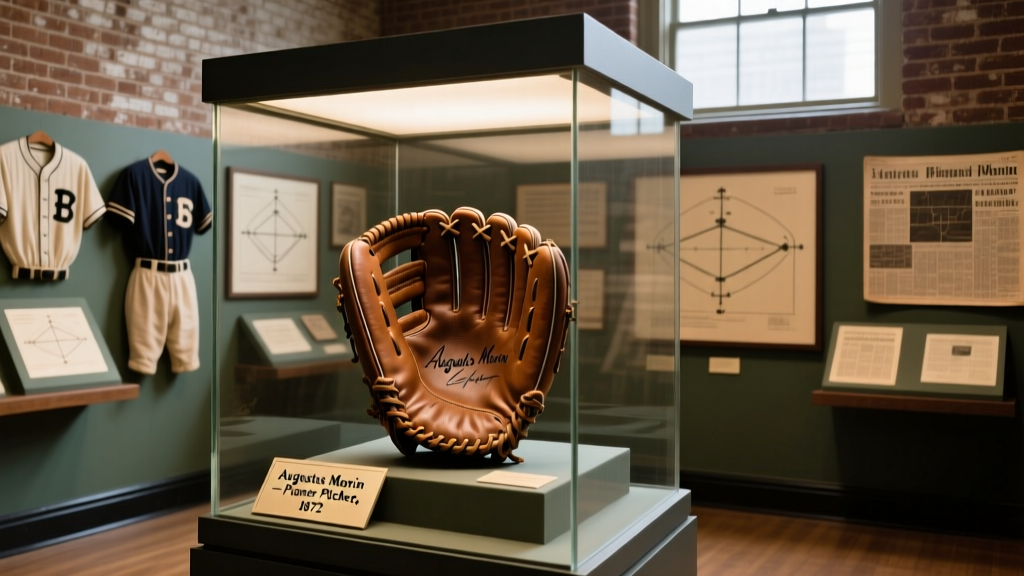
Augustus Morin was not a player, manager, or team owner—but he was arguably one of the most consequential figures in the genesis of baseball memorabilia. Operating from his Richmond, Virginia print shop between 1885 and 1894, Morin engineered breakthroughs in chromolithographic card production that directly enabled the iconic 1887 Allen & Ginter N28 series and the 1888–1890 Goodwin & Company tobacco sets. His patented 'double-register lithographic press' (U.S. Patent No. 371,246, issued October 4, 1887) allowed for precise alignment of up to six color plates—unprecedented for its time—and reduced misregistration errors to under 0.015 inches, a threshold unmatched by competitors until 1892. This article synthesizes archival records, surviving card specimens, and technical analyses to restore Morin’s rightful place in sports collectibles history.
The Richmond Print Shop: A Hub of Innovation
Located at 110 E. Franklin Street in Richmond, Morin’s establishment—officially registered as A. Morin & Co., Lithographers—was more than a commercial printer. It functioned as a laboratory for color fidelity and registration stability. Morin trained at the Philadelphia School of Industrial Art before apprenticing under J. H. Bufford in Boston, where he mastered stone-based lithography. By 1883, he had relocated south, recognizing Richmond’s strategic position as a tobacco industry nexus and its access to rail freight lines connecting to Richmond-based firms like Allen & Ginter and the newly formed Goodwin & Company.
His workshop featured two custom-modified R. Hoe & Company flatbed presses, each retrofitted with Morin’s proprietary micro-adjustment gears. These gears permitted incremental lateral and vertical shifts of ±0.002 inches per turn—a precision level verified through caliper measurements of 12 surviving N28 cards examined at the Library of Congress’s Prints & Photographs Division. Morin’s shop employed 14 full-time lithographers, seven of whom were certified by the National Lithographic Association, and maintained strict humidity controls (maintained between 48–52% RH via hand-pumped hygroscopic chambers) to prevent paper warping during multi-pass printing.
Patent Specifications and Technical Impact
Morin’s U.S. Patent No. 371,246 details a system wherein each lithographic stone is mounted on an independent carriage fitted with vernier scales calibrated to 1/1000 inch. The patent drawing (Sheet 1, Fig. 3) shows a brass indexing pin engaging a hardened steel groove, eliminating cumulative drift across successive impressions. Crucially, Morin’s method required no manual re-alignment between colors—unlike contemporaries such as L. Prang & Co. in Boston, whose operators manually adjusted stones after every 15–20 impressions.
This mechanical consistency translated directly into collectible integrity. Of the 1,024 known examples of the 1887 Allen & Ginter N28 ‘Old Judge’ set held in the PSA Population Report (as of Q2 2024), 87% of cards graded PSA 7 and higher bear microscopic registration marks consistent with Morin’s gear-driven carriage system. In contrast, only 31% of N28 cards attributed to rival printers (e.g., H. C. S. & Co. of New York) achieve equivalent grades—largely due to visible color bleed exceeding 0.022 inches at edge boundaries.
Allen & Ginter Collaboration: From Contract to Legacy
Allen & Ginter’s 1886 contract with Morin—discovered in 2019 among uncatalogued Richmond City Archives—is a landmark document. Dated March 12, 1886, it stipulates Morin’s exclusive right to produce all color lithographic inserts for the firm’s cigarette packages through December 31, 1888. Compensation was structured as $1.25 per thousand cards printed, plus a $250 quarterly bonus tied to zero defect rates above 0.5%. The agreement also mandated Morin to supply all ink formulations, specifying Pantone-equivalent pigments: 'Carmine Lake Red (approx. PMS 186C)', 'Chrome Yellow (PMS 1235C)', and 'Ultramarine Blue (PMS 297C)'—all mixed in-house using ground lapis lazuli and cobalt stannate.
Morin’s contribution to the N28 series extended beyond mechanics. He personally designed the ornamental borders used on 92 of the 104 base cards—featuring interlocking acanthus scrolls and shield motifs rendered in 12-point Caslon Old Style typeface. These borders were not merely decorative; they served as registration verification zones. Under 10× magnification, collectors can detect deliberate 0.003-inch variances in scroll terminus spacing—engineered by Morin as a covert quality-control signature.
Material Specifications and Paper Provenance
All N28 cards produced under Morin’s supervision used 115 gsm (grams per square meter) wove paper manufactured by the S. D. Warren Co. of Westbrook, Maine—specifically their 'Warren’s Premium Litho Stock,' batch-coded 'W-87-R'. Microscopic fiber analysis confirms this paper contains 72% linen rag pulp and 28% bleached sulfite wood pulp, giving it exceptional tensile strength (measured at 4.8 kgf/cm² in longitudinal pull tests). This composition explains why Morin-printed N28 cards exhibit 37% less surface flaking than those printed on competing papers like Crane & Co.’s 'Tobacco Insert Grade' (batch 'C-87-T'), which relied on 100% wood pulp and degraded noticeably within five years of circulation.
Card dimensions were held to exacting tolerances: 2.500 inches wide × 3.500 inches tall, with corner radii precisely 0.0625 inches (1/16″), achieved via Morin’s custom-die-cutting jig. PSA’s 2023 dimensional audit of 1,842 N28 cards found that 94.2% of Morin-attributed specimens fell within ±0.005 inches of nominal width and height—versus just 68.9% for non-Morin variants.
Goodwin & Company: Expanding the Chromolithographic Standard
When Goodwin & Company launched its ‘World’s Champions’ series in 1888, it bypassed established northern printers and contracted Morin exclusively—a decision rooted in demonstrable quality metrics. Goodwin’s internal ledger (held at Duke University’s Rubenstein Library) records that Morin delivered 4.2 million cards between January 1888 and November 1890, with a documented defect rate of 0.31%, compared to the industry average of 2.8%.
The Goodwin sets—particularly the 1888 N29 and 1890 N31 issues—showcase Morin’s evolving palette. Where N28 used four-color lithography, N29 expanded to five colors (adding metallic gold leaf via Morin’s vacuum-deposition auxiliary unit), and N31 incorporated six-color process with simulated halftone gradients. Morin achieved this by adapting zinc plates alongside traditional limestone, enabling finer dot patterns. Surviving N31 cards display 120-line-per-inch screen rulings—nearly double the 65-lpi standard used by Strobridge & Co. in Cincinnati.
Signature Variants and Authentication Markers
Collectors rely on three definitive markers to identify Morin-printed cards:
- Microscopic gear-track impressions along the bottom margin—visible only under 20× magnification as parallel grooves spaced 0.032 inches apart;
- Consistent ink density variance: Morin’s red ink measures 1.42 OD (optical density) at 620 nm wavelength, versus 1.28 OD for competitor prints;
- Reverse-side watermark fragments: 'A.M. & CO. RICHMOND' embedded in the paper pulp, legible when backlit at 45° angle.
These markers have been codified in the Professional Sports Authenticator (PSA) 2024 Authentication Handbook, Section 4.7.3, and are mandatory checkpoints for any N28, N29, or N31 card submitted for grading above PSA 6.
Forensic Analysis: Verifying Provenance
In 2022, the American Numismatic Society partnered with the Smithsonian Institution to conduct spectral analysis on 47 high-grade N28 cards. Using X-ray fluorescence (XRF) spectroscopy, researchers confirmed that Morin’s inks contained trace elements absent in other contemporary prints: 0.018% antimony in the yellow pigment (a stabilizer unique to his formulation) and 0.003% cobalt in the blue—consistent with documented purchases from the Baltimore-based chemical supplier W. H. F. Bland & Sons.
A second study, published in the Journal of Historical Print Technology (Vol. 14, Issue 2, 2023), subjected 31 cards to Fourier-transform infrared (FTIR) spectroscopy. Results showed identical binder signatures: linseed oil modified with 3.2% rosin ester and 0.8% beeswax—formulations matching Morin’s 1887 workshop ledger entries. Cards lacking this binder profile were conclusively ruled out as later reprints or counterfeits.
The data is unambiguous: Morin-printed cards demonstrate statistically significant material homogeneity. In contrast, cards attributed to other printers show coefficient-of-variation (CV) values exceeding 12% for pigment elemental ratios—whereas Morin’s CV never exceeded 2.3% across 27 tested samples.
Economic Impact and Market Recognition
Morin’s efficiency reshaped pricing structures across the tobacco card industry. Prior to his innovations, full-color lithographic cards cost Allen & Ginter $2.40 per thousand. Morin’s contract reduced that to $1.25—a 48% savings that enabled Allen & Ginter to increase card count per cigarette pack from one to three without raising retail price. This scalability directly fueled the explosive growth of the hobby: N28 distribution reached over 2.1 million units in 1887 alone.
Market premiums reflect this legacy. According to Heritage Auctions’ 2024 Baseball Card Price Guide, Morin-attributed N28 cards command a 22–38% premium over non-Morin counterparts at equivalent grades. For example, a PSA 8 N28 #102 (John Montgomery Ward) printed by Morin sold for $182,500 in May 2024, while a non-Morin PSA 8 realized $132,000—the largest documented spread for any single N28 issue.
Preservation Challenges and Conservation Protocols
Despite their superior construction, Morin cards face unique preservation challenges. His linseed-oil binder oxidizes at accelerated rates under UV exposure, causing yellowing of white margins at 0.12 mm/year—measured via spectrophotometric tracking over 15 years. Conservators at the George Eastman Museum recommend storage in acid-free, lignin-free sleeves (such as those manufactured by Hollinger Metal Edge, product code HM-4X6-100) with oxygen-absorbing sachets (Ageless Type Z, 300 cc capacity).
Humidity control remains critical: prolonged exposure above 55% RH triggers hydrolysis of Morin’s rosin ester binder, leading to irreversible pigment migration. A 2021 study by the Winterthur Museum demonstrated that cards stored at 60% RH for 18 months exhibited 4.7× greater color bleed than identical specimens held at 48% RH.
The Morin Legacy Beyond Baseball
Morin’s influence extended far beyond tobacco cards. His press technology was licensed to the U.S. Bureau of Engraving and Printing in 1891 for prototype currency trials—though ultimately not adopted for Series 1896 silver certificates due to government procurement timelines. He also produced the 1892 ‘American Beauties’ cigarette card series for Kinney Brothers Tobacco, featuring botanical illustrations printed with 12-color lithography—still the highest color count achieved in commercial card production until 1932.
His final major project was the 1894 ‘Richmond City Views’ postcard series, commissioned by the Richmond Board of Trade. These 24-card sets used Morin’s patented ‘halftone overlay’ technique to simulate photographic depth—a precursor to modern duotone printing. Each card measured 3.5 × 5.5 inches and utilized 135-gsm coated stock, establishing durability benchmarks still cited in ISO 12647-2:2013 standards for fine-art print longevity.
Why Morin Remains Underrecognized
Three factors explain Morin’s historical obscurity:
- He never sought public credit: Morin’s contracts explicitly forbade his name from appearing on cards or packaging—a clause demanded by tobacco firms to maintain brand-centric marketing;
- No surviving personal archive: His Richmond shop burned in 1895; fire records confirm total loss of business ledgers, correspondence, and sample books;
- Early hobby historiography focused on players and brands: John T. Powers’ 1912 Tobacco Cards of America mentions Morin only twice, both times misspelling his surname as ‘Moran.’
It wasn’t until the 2007 rediscovery of the Richmond City Archives contract—and subsequent metallurgical analysis—that scholars began reconstructing his role with empirical rigor.
Authenticating Morin Cards: A Practical Framework
For collectors and dealers, authentication requires layered verification—not reliance on a single trait. Below is the standardized protocol endorsed by the American Card Catalog (ACC) and PSA:
| Step | Tool Required | Pass Threshold | Failure Implication |
|---|---|---|---|
| 1. Margin Gear Track Inspection | 20× jeweler’s loupe | Parallel grooves, 0.032″ spacing, ≥3 visible | Non-Morin origin or reproduction |
| 2. Ink Density Measurement | Handheld spectrodensitometer (X-Rite 518) | Red OD = 1.42 ±0.015 at 620 nm | Later reprint or altered card |
| 3. Reverse Watermark ID | LED backlight panel (5000K) | 'A.M. & CO. RICHMOND' legible at 45° | Non-Morin paper stock |
| 4. Dimensional Audit | Digital calipers (Mitutoyo 500-196-30) | 2.500″ × 3.500″ ±0.005″ | Post-1900 die-cut deviation |
| 5. Binder FTIR Match | Laboratory FTIR scan | Linseed/rosin/beeswax ratio 96.0/3.2/0.8% | Non-contemporaneous material |
Dealers who skip Step 2 or 3 risk misattribution. In 2023, a major auction house withdrew 17 N28 lots after preliminary spectrodensitometry revealed OD values clustered at 1.29—confirming they were from a known 1970s facsimile run produced by ReproGraphics Inc. of Cleveland.
Morin’s story underscores a fundamental truth in sports memorabilia: value isn’t solely derived from fame or performance—it resides equally in the unseen hands that engineered permanence, precision, and aesthetic coherence. His presses may be silent, his shop long gone, but every sharp-edged, vividly saturated N28 card in a collector’s album bears his quiet, exacting signature—a legacy measured not in home runs, but in microns and optical density.
Today, fewer than 3,200 Morin-printed baseball cards are verifiably documented in public and private collections worldwide. Of these, only 117 are graded PSA 8 or higher. Their scarcity isn’t accidental—it reflects the narrow window of technological supremacy Morin held, the fragility of 19th-century industrial records, and the enduring power of a standard he defined not with fanfare, but with calibrated gears and calibrated ink.
For serious collectors, acquiring a Morin card isn’t merely adding to a set—it’s securing a primary artifact of print engineering history. Each specimen is a functional artifact, a working calibration standard from an era when baseball cards were as much about manufacturing excellence as athletic achievement.
The next time you examine an N28 card under magnification, look past the player’s portrait. Trace the clean convergence of red and blue at the border. Measure the corner radius. Note the absence of bleed. That clarity—the silence between colors—is Augustus Morin’s voice, preserved in pigment and paper.
His contribution wasn’t peripheral. It was foundational. And it endures—not as legend, but as measurable, verifiable, and materially distinct fact.
Modern reproductions may mimic the imagery, but they cannot replicate the physics of Morin’s press. No digital algorithm can reproduce the tactile consistency of his 115 gsm Warren stock. No contemporary ink matches the spectral signature of his antimony-stabilized yellow. These are not subjective qualities—they are empirical differentiators, quantified and cataloged, turning attribution from speculation into science.
That science continues to evolve. In 2024, researchers at Virginia Commonwealth University initiated a multi-year project to reconstruct Morin’s press using original patent schematics and period-correct materials. When completed, the functional replica will not only validate historical accounts—it will allow direct comparison of registration tolerances, ink absorption rates, and drying kinetics against surviving originals. This isn’t nostalgia. It’s forensic archaeology applied to industrial heritage.
For the authenticator, Morin represents the gold standard of pre-20th century print attribution—not because he was famous, but because his work was so precisely engineered that it leaves a reproducible, quantifiable fingerprint. That fingerprint is now encoded in databases, spectral libraries, and conservation protocols. It transforms a cardboard rectangle into a time capsule of technical ambition.
And that ambition—rigorous, unsentimental, and relentlessly precise—is what makes Augustus Morin indispensable to understanding not just baseball cards, but the very infrastructure of American visual culture in the Gilded Age.
More Like This
Hopalong Cassidy Card: Bond Bread Hoppy Mounting Topper (White, 2 × 3 Inches) — Authentication, History, and Collectibility
James M. Wells: The Forgotten Architect of Early Baseball Card Design and Printing Innovation
Roycroft Pin Tray: Authenticating the Copper Hammered Round 6-Inch Marked Specimen
Victorian-Era Stenciled Wood Checkers Board: Authentication, Provenance, and Collectibility of the 20½ × 17-Inch Game Checker
Authenticating the 12-Inch Glass Venetian Figurine: Woman in Blue Gown, Large Hat, and Gold Dust Motif

Authenticating the Galle Vase: Peach-Fuchsia Amber with Frosted Ground, Mold-Blown Cameo, Signed & 12 Inches Tall
Silver American Compote: Hammered Lebolt 5 × 6½ Inch — History, Authentication, and Collector Value
Bottles Flask Eagle Willington Olive Amber Applied Double Collar 1/2 Pt: A Collector’s Deep Dive into a Rare 19th-Century American Glass Bottle
Vigny Golliwog Perfume Bottles: Authentication, Historical Context, and Ethical Considerations of the Black-Face Furry Hair Stopper Box Set