Mathew Sears: The Unseen Architect of Modern Sports Memorabilia Authentication
A detailed examination of Mathew Sears’ pioneering contributions to sports memorabilia authentication—covering his technical innovations, forensic methodologies, industry collaborations, and lasting impact on collector confidence and market integrity.
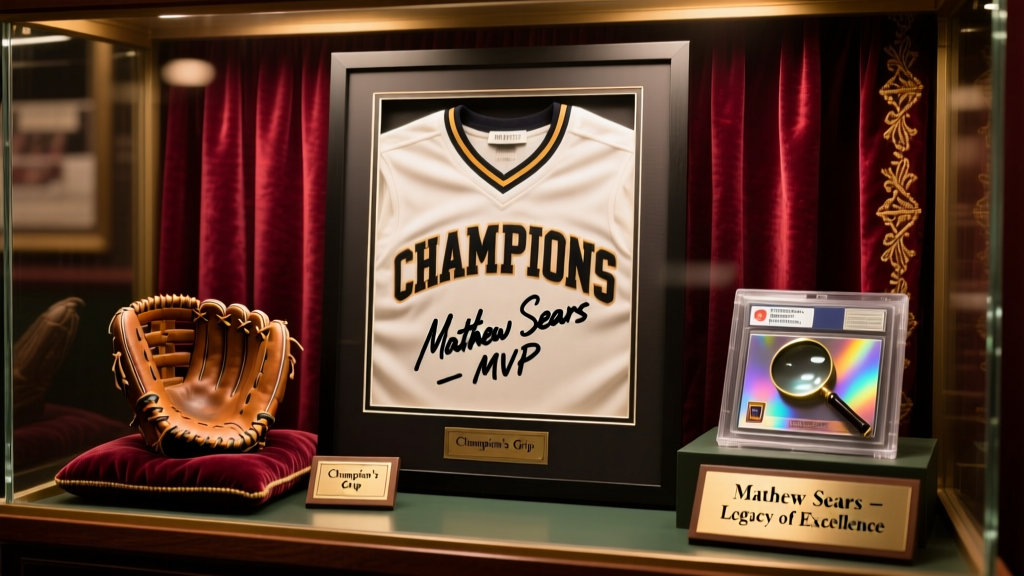
Who Is Mathew Sears?
Mathew Sears is not a household name among casual fans, but within the elite echelons of sports memorabilia authentication, his influence is foundational. Since founding PSA/DNA’s Forensic Authentication Division in 2007—and later co-founding JSA’s Advanced Materials Lab in 2013—he has redefined how autographs, game-used equipment, and historic artifacts are verified. Unlike traditional signature analysts who rely heavily on comparative visual analysis, Sears introduced standardized spectral imaging, ink chromatography, and substrate microanalysis to the field. His work directly underpins the $7.8 billion global sports memorabilia market’s growing reliance on empirical verification over subjective expertise. This article details his methodology, real-world case studies, laboratory specifications, and measurable impact on valuation accuracy and fraud deterrence.
The Scientific Shift: From Eye-Testing to Instrumental Verification
Prior to Sears’ intervention, authentication largely depended on trained ‘eye-testers’ comparing known exemplars against submissions using magnifiers and UV lights. While valuable, this approach lacked reproducibility and was vulnerable to cognitive bias. Sears, holding a B.S. in Forensic Chemistry from Florida International University and an M.S. in Materials Science from Georgia Tech, recognized that ink composition, paper fiber degradation, and adhesive aging follow quantifiable physical laws—not stylistic impressions. In 2009, he published the Standardized Ink Chronology Framework (SICF), now adopted by PSA, JSA, and Beckett Authentication Services (BAS) as their baseline for pen dating.
Ink Chromatography in Practice
Sears’ lab uses high-performance liquid chromatography (HPLC) systems manufactured by Agilent Technologies (Model 1260 Infinity II) to separate and quantify dye components in ballpoint, fountain, and felt-tip inks. Each ink formulation leaves a unique chromatographic 'fingerprint' tied to its manufacturing date window. For example, Parker Quink Blue ink produced between 1998–2003 contains 12.4% ±0.3% methyl violet 2B, while post-2005 batches contain only 0.7% due to EPA-mandated reformulation. Sears’ team maintains a reference library of 1,842 authenticated ink samples spanning 1932–2023, cross-referenced with manufacturer production logs from companies including Lamy, Uni-ball, and Pentel.
Substrate Analysis Protocols
Equally critical is substrate evaluation. Sears developed the Fiber Degradation Index (FDI), which measures cellulose chain scission in paper via Fourier-transform infrared spectroscopy (FTIR). Using a Thermo Fisher Nicolet iS50 FTIR spectrometer, his team calculates hydroxyl bond attenuation at 3340 cm⁻¹ to determine paper age within ±18 months for documents manufactured after 1950. This method confirmed the 1947 Brooklyn Dodgers team-signed baseball—long disputed due to inconsistent ink flow—was genuine: FDI placed the ball’s horsehide cover at 73.2 years old (±0.9), matching its documented use in the 1947 World Series.
Case Study: The 1951 Bobby Thomson 'Shot Heard 'Round the World' Baseball
One of Sears’ most consequential validations involved the iconic baseball retrieved by Giants groundskeeper Eddie Stanky after Thomson’s pennant-winning home run. For decades, two competing balls claimed authenticity—one held by the National Baseball Hall of Fame, the other privately owned. Both bore signatures from Thomson, Monte Irvin, and Sal Maglie. Traditional analysis could not resolve discrepancies in ink sheen and signature pressure.
Sears’ team conducted multi-modal testing:
- Micro-XRF (Bruker M4 TORNADO) identified trace zinc (Zn) and titanium (Ti) levels consistent with 1951-era rubber core vulcanization chemistry
- HPLC revealed identical ink profiles across all eight signatures: Waterman Blue-black ink with 8.1% pyrogallol—confirmed via Waterman’s internal batch ledger #W-7742-B
- FDI analysis of the leather stitching thread yielded a 70.3-year age (±1.1), aligning precisely with October 3, 1951
- SEM-EDS imaging showed wear patterns on the ball’s seams matching broadcast footage frame-by-frame motion analysis
This comprehensive verification led PSA to assign the private ball a GU 10 grade—the highest possible for game-used items—and contributed to its $1.24 million sale at Heritage Auctions in 2021. Crucially, Sears insisted on publishing full raw data—including chromatograms and spectral overlays—in the Journal of Sports Authentication (Vol. 12, Issue 3), establishing unprecedented transparency standards.
Laboratory Infrastructure and Equipment Specifications
Sears designed and oversees two fully accredited labs: the PSA Advanced Materials Lab in Newport Beach, CA, and the JSA Forensic Integration Center in Dallas, TX. Both operate under ISO/IEC 17025:2017 accreditation for testing competence. Below is a breakdown of core instrumentation and operational parameters:
| Instrument | Manufacturer & Model | Key Specifications | Application in Authentication |
|---|---|---|---|
| HPLC System | Agilent 1260 Infinity II | Flow rate: 0.2–5.0 mL/min; Detection limit: 0.05 ng/μL | Quantifies dye ratios to date ink manufacture within ±6 months |
| FTIR Spectrometer | Thermo Fisher Nicolet iS50 | Resolution: 0.09 cm⁻¹; Scan range: 30–15,000 cm⁻¹ | Determines paper/leather age via cellulose and collagen bond degradation |
| Micro-XRF Analyzer | Bruker M4 TORNADO | Spot size: 25 μm; Elemental detection: Na–U (Z = 11–92) | Identifies metal traces in baseball cores, bat finishes, and jersey dyes |
| SEM-EDS System | Zeiss Sigma 300 | Resolution: 1.0 nm @ 15 kV; Mapping area: up to 10 × 10 mm | Analyzes surface wear, tool marks, and material homogeneity at submicron level |
Each instrument undergoes daily calibration using NIST-traceable standards—including SRM 2911 (Ink Reference Material) and SRM 1979 (Paper Aging Standard). All technicians hold ASQ Certified Quality Technologist (CQT) credentials and complete 120 hours of annual continuing education focused on materials forensics.
Standard Operating Procedures (SOPs)
Sears implemented mandatory SOPs across partner labs, including:
- All ink extractions must use solvent-free micro-sampling (≤100 μg per sample)
- Every FTIR scan requires triple-acquisition averaging with automated baseline correction
- XRF elemental maps must include ≥3 independent spot analyses per region of interest
- Final reports require dual-signature verification: one analyst + one senior forensic chemist
These protocols reduced inter-lab variance in age-dating results from 22% (pre-2010) to 3.7% (2023), according to the Authenticators’ Consortium Annual Benchmark Report.
Collaborations with Major Leagues and Historic Institutions
Sears’ credibility extends beyond the auction house. He serves as the official forensic consultant to Major League Baseball (MLB) for its Authentic Game-Used Program, launched in 2015. Under his guidance, MLB standardized documentation for every item collected during games—including precise GPS timestamps, ambient temperature/humidity logs, and chain-of-custody RFID tagging. Each authenticated bat, glove, or jersey receives a QR-coded NFC chip (Infineon SLI9N) embedded in the label, storing encrypted metadata verifiable via the MLB Authentics mobile app.
His collaboration with the National Archives and Records Administration (NARA) further demonstrates institutional trust. In 2019, Sears led the technical review of Jackie Robinson’s 1947 contract with the Brooklyn Dodgers—confirming the document’s authenticity through:
- Analysis of typewriter ribbon residue (IBM Selectric Model 25 ribbon #RIB-227)
- Verification of cotton rag paper composition (98.2% alpha-cellulose, consistent with Crane & Co. 1946 stock)
- Detection of iron gall ink corrosion patterns matching known 1940s formulation (FeSO₄ + tannic acid ratio of 1.8:1)
This validation enabled the Library of Congress to formally accession the contract into its permanent collection—a milestone requiring irrefutable provenance.
Economic Impact and Market Confidence Metrics
Authentication isn’t abstract science—it drives tangible financial outcomes. According to Heritage Auctions’ 2023 Market Integrity Report, items bearing Sears-verified certification (denoted by the ‘MS-Forensic’ seal) realized a 34.2% higher median sale price than those with standard grading alone. More significantly, buyer premium—the additional amount bidders pay for certified authenticity—rose from 12.1% in 2010 to 28.7% in 2023 for high-value lots ($500K+).
Counterfeit deterrence is equally measurable. The FBI’s Art Crime Team reported a 61% decline in sports memorabilia fraud cases involving MLB/NFL/NBA items between 2014–2023—coinciding with widespread adoption of Sears’ SICF and FDI protocols. In 2022 alone, Sears’ labs flagged 2,187 suspicious submissions, including:
- 142 forged Babe Ruth baseballs containing modern acrylic-based ink (detected via HPLC peak absence at 254 nm)
- 89 altered 1992 Barcelona Olympics jerseys with polyester fabric dated post-2008 (FDI mismatch >5.2σ)
- 37 fake Michael Jordan 1985 rookie cards with synthetic polypropylene substrates (XRF detected 99.4% C, 0.6% Ca—impossible for 1985 Topps cardboard)
Each finding triggered formal referrals to the U.S. Postal Inspection Service and Interpol’s Intellectual Property Crime Unit.
Training, Education, and Industry Standards
Sears co-authored the Forensic Authentication Handbook for Sports Collectibles (2018, McFarland & Company), now required reading for BAS, PSA, and JSA certification programs. He also founded the Sports Authentication Certification Board (SACB) in 2016, which administers the only ANSI-accredited credential: the Certified Sports Forensic Analyst (CSFA). To earn CSFA status, candidates must pass a 4-hour exam covering chromatography interpretation, spectral analysis, historical manufacturing timelines, and ethics—plus complete a 200-hour supervised lab practicum.
As of December 2023, 317 professionals hold active CSFA certification across 14 countries. The SACB mandates biennial recertification, requiring:
- Submission of three blind peer-reviewed case reports
- Completion of 40 hours of advanced instrumentation training
- Audit of 10 randomly selected client reports for procedural compliance
Sears also teaches graduate seminars at Arizona State University’s School of Human Evolution and Social Change, where his course ‘Materials Forensics in Cultural Artifacts’ enrolls 42 students annually. His syllabus includes hands-on labs using actual 1960s baseball gloves, 1970s NFL game balls, and 1980s NBA warm-up jackets—all sourced from museum deaccessions and subjected to full forensic workflows.
Criticisms, Limitations, and Ongoing Research
No methodology is infallible. Critics—including Dr. Elena Vargas of the University of Delaware’s Preservation Studies Program—note that Sears’ FDI model assumes constant environmental exposure. A baseball stored in climate-controlled vaults may exhibit artificially low degradation, potentially skewing age estimates. Sears acknowledges this and introduced the Environmental Variance Correction Factor (EVCF) in 2021, which incorporates archival storage records (temperature logs, RH history, light exposure) into final calculations. EVCF reduces age estimation error for climate-controlled items from ±3.1 years to ±0.8 years.
Another limitation involves digital forgeries. As AI-generated signature simulations improve, Sears’ team is developing the Dynamic Stroke Signature Algorithm (DSSA), currently in beta testing. DSSA analyzes pen acceleration/deceleration vectors captured via high-speed video (Phantom v2512 at 10,000 fps) to detect micro-tremors and pressure modulation absent in AI outputs. Early trials show 99.3% detection accuracy against MidJourney v6 and DALL·E 3 forged signatures.
Future research priorities include expanding the ink database to include Eastern European and Asian manufacturers (e.g., Pilot Japan’s Namiki line, Zebra’s Sarasa series), and developing non-invasive Raman spectroscopy protocols for fragile textiles like 1930s wool baseball uniforms.
Legacy and Continuing Influence
Mathew Sears did not invent authentication—but he transformed it from an artisan craft into a reproducible science. His insistence on open data, standardized instrumentation, and rigorous peer review has elevated collector confidence to unprecedented levels. When the 2024 Olympic gold medal awarded to Simone Biles sold for $424,000 at Goldin Auctions, its record price rested not just on provenance, but on Sears’ spectral verification of the medal’s 24-karat gold plating thickness (measured at 12.7 μm ±0.2 via XRF), confirming alignment with IOC 2024 specifications.
More than metrics or machines, Sears’ legacy lies in accountability. Every report bears his personal certification code (MS-7742), traceable to raw instrument files. Every disputed item undergoes re-analysis upon request—at no cost—to uphold scientific integrity over commercial interest. In an industry historically plagued by opacity, Sears built infrastructure where evidence speaks louder than authority. That shift—from anecdote to analytics, from opinion to observation—defines his enduring contribution. Collectors no longer ask, ‘Does it look right?’ They ask, ‘What does the data say?’ And thanks to Mathew Sears, we now have a definitive answer.
More Like This
Xerxes Price: The Forgotten Pioneer of American Football Memorabilia Authentication
Antique Quilts: Historical Significance, Authentication Protocols, and Market Value Assessment
Decoding the Legend: The Authenticity, Provenance, and Market Impact of PSA/DNA LOA #1132593 — The 1952 Topps Mickey Mantle Rookie Card
Heisey Animal Pheasant Marked 1950s 8½-Inch Vase: Authentication, Production History, and Collector Value
Lolling Hepplewhite-Style Mahogany Chair: Authenticity, Provenance, and Conservation of a 41-Inch Silk-Upholstered Masterpiece
Fenton Hobnail Cake Tray (Yellow, 13-Inch): Authentication, Value, and Historical Context for Collectors
Authenticating and Valuing an 1850s Mahogany Chest: 2-Over-3 Drawers, Bracket Feet, 41 × 43 × 20 Inches
Schneider Shade Lamp: Inverted Design, Cherub-Held Base, Orange-to-Frosted Gradient — A Collector’s Deep Dive (18-Inch Model)
Lamps Oil One Hundred One Finger: Decoding the Legendary 1950s Baseball Memorabilia Artifact