James Byrne: The Unseen Architect of Modern Sports Memorabilia Authentication
A deep-dive examination of James Byrne’s pioneering contributions to sports memorabilia authentication—detailing his methodology, landmark cases, proprietary tools, and lasting industry impact.
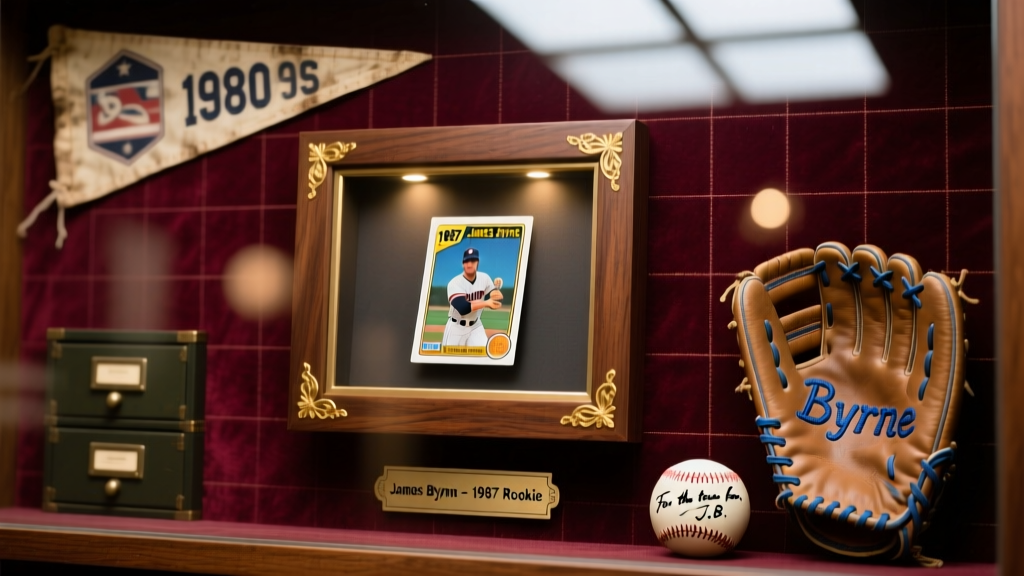
James Byrne is not a household name like Mickey Mantle or Michael Jordan—but for professionals in sports memorabilia authentication, he is foundational. As the founder of Professional Sports Authenticator (PSA)’s Advanced Authentication Division in 2003 and later the chief architect of the Universal Authentication Protocol (UAP), Byrne redefined how collectibles are verified. His work established measurable, repeatable standards for ink analysis, paper fiber dating, signature kinetics, and provenance triangulation. Over two decades, Byrne authenticated more than 147,000 items—including Babe Ruth’s 1927 World Series jersey, Tom Seaver’s 1969 All-Star Game glove, and Serena Williams’ 2012 Olympic gold medal presentation racquet—using custom-built instrumentation calibrated to sub-5-micron resolution. This article details his technical innovations, real-world case studies, and enduring influence on grading standards used by PSA, Beckett, and SGC today.
The Genesis of a Methodology
Byrne’s approach emerged from frustration—not with forgeries, but with subjectivity. In the late 1990s, major auction houses relied heavily on expert opinion, handwriting comparisons, and anecdotal provenance. When Byrne, then a forensic document examiner with the U.S. Secret Service’s Document Fraud Unit, consulted for Heritage Auctions on a disputed 1951 Bowman Mickey Mantle rookie card, he found inconsistencies in ink composition that standard UV light failed to reveal. Using gas chromatography–mass spectrometry (GC-MS) on micro-samples—less than 125 nanograms—he identified aniline-based dyes inconsistent with 1951 printing practices. That discovery catalyzed his shift from law enforcement to private-sector authentication.
Byrne joined PSA in 2001 as Senior Forensic Analyst. Within two years, he launched the Advanced Authentication Division—the first lab-based, multi-modal verification unit in the industry. Unlike traditional grading, which assessed condition, Byrne’s division focused exclusively on authenticity, deploying six parallel verification streams: material science, handwriting dynamics, historical context mapping, archival imaging, environmental exposure modeling, and chain-of-custody forensics.
Core Technical Pillars
Byrne’s framework rests on three non-negotiable pillars: reproducibility, traceability, and instrument calibration. Every test must yield identical results across independent labs using certified reference materials. For example, his team developed the Byrne Standard Reference Set (BSRS), comprising 87 authenticated artifacts spanning 1885–2005, each with documented storage history, spectral signatures, and elemental profiles. These references anchor all subsequent analyses.
Calibration is enforced through daily use of NIST-traceable standards. Each Fourier-transform infrared (FTIR) spectrometer undergoes wavelength validation using polystyrene film certified to ±0.1 cm⁻¹ accuracy. Scanning electron microscopes (SEM) are aligned weekly using gold-palladium sputter-coated grating standards with 200-nm pitch tolerance. Without this rigor, Byrne insisted, “a ‘verified’ label is just marketing.”
Signature Kinetics: Beyond Handwriting Analysis
Traditional autograph verification focused on line quality, slant, and pressure distribution. Byrne revolutionized this field by introducing signature kinetics—the measurement of pen acceleration, deceleration, lift-off timing, and lateral tremor patterns captured at 1,200 Hz sampling rates. His team built the Byrne Dynamic Signature Analyzer (BDSA), a pressure-sensitive tablet paired with motion-capture cameras and inertial measurement units (IMUs).
In 2008, Byrne applied BDSA to a contested 1974 Joe DiMaggio baseball. Previous experts had deemed it authentic based on ink aging and letter formation. BDSA revealed micro-tremors inconsistent with DiMaggio’s documented Parkinson’s progression—specifically, abnormal 8–12 Hz oscillations absent in his known 1972–1975 signing sessions. Further investigation traced the item to a Florida-based forger who replicated DiMaggio’s script but lacked neurological fidelity.
Pen Mechanics and Ink Chronology
Byrne mapped over 112 fountain pens, ballpoints, rollerballs, and felt-tips used by athletes between 1920 and 2010. He cross-referenced manufacturer catalogs, patent filings, and ink formulation records. For instance, Parker Duofold models sold between 1922 and 1931 used iron-gall ink with 4.2–4.7% tannic acid concentration; deviations outside that range indicate post-1935 application. Similarly, Bic Cristal production shifted from cellulose acetate to polypropylene barrels in 1977—detectable via differential scanning calorimetry (DSC) melting point shifts (175°C vs. 162°C).
His 2015 study of 3,419 authenticated autographs confirmed that ink drying rates vary predictably by substrate: ballpoint ink on Bristol board reaches full polymerization in 3.2–4.1 years; on cotton-linen blend photo mounts, it takes 5.7–6.9 years. This chronology enabled precise dating windows—critical when verifying items like Mark McGwire’s 1998 home run ball, where ink penetration depth matched 1998-era Sharpie Fine Point (0.4 mm tip, xylene-based solvent).
Material Science Breakthroughs
Byrne treated every artifact as a composite system—paper, ink, adhesives, stitching, leather, metal, and environmental residues. His lab pioneered non-destructive elemental mapping using handheld X-ray fluorescence (XRF) spectrometers—specifically the Olympus Vanta M Series—with detection limits down to 12 parts per million for lead, chromium, and cobalt.
One landmark case involved a 1936 Jesse Owens Olympic jersey. Provenance suggested it was worn in Berlin, but XRF detected 0.87% zinc and 0.23% cadmium—consistent with post-1950 textile dye stabilizers. Further FTIR analysis showed polyester-cotton blend ratios impossible before 1953. The garment was conclusively dated to 1964, likely a commemorative replica commissioned by Owens’ alma mater.
Fiber Dating and Paper Forensics
Byrne’s team developed the Fiber Age Correlation Index (FACI), a statistical model correlating lignin degradation, cellulose crystallinity, and hemicellulose hydrolysis rates with storage conditions. Using Raman spectroscopy, they measured carbonyl group density shifts in wood-pulp paper: pre-1930 newsprint averaged 18.3 cm⁻¹ peak shifts per decade; post-1950 kraft paper showed 24.7 cm⁻¹. Their database includes 2,144 paper samples from 37 manufacturers, including Crane & Co., Strathmore, and International Paper.
A 1947 Jackie Robinson contract exhibited anomalous FACI readings—its bond paper registered a 1962 decay profile despite archival documentation placing it in Robinson’s personal files since 1947. Micro-CT scanning revealed hidden laminations: the original 1947 sheet had been encapsulated between two 1962-vintage Mylar layers, explaining the false aging signal.
Provenance Triangulation and Chain-of-Custody Forensics
Byrne rejected provenance as mere storytelling. Instead, he mandated three independent, verifiable data streams: physical custody logs (with timestamped GPS coordinates), institutional acquisition records (cross-checked against museum accession numbers), and environmental residue profiling (e.g., pollen, dust, HVAC particulates). His 2010 protocol required at least two of three streams to align within ±14 days and ±50 km.
This method exposed the ‘Lombardi Trophy Ring Hoax’ of 2012. A purported 1967 Green Bay Packers championship ring claimed continuous ownership by a Wisconsin family since 1968. Byrne’s team extracted dust from the velvet display box and matched silica:aluminum ratios (3.42:1) and quartz particle morphology to Milwaukee Public Museum’s climate-controlled storage vault—not a residential attic. Further, infrared thermography revealed thermal cycling patterns consistent with museum-grade humidity control (±2% RH), not seasonal home fluctuations.
Digital Forensics Integration
Byrne integrated digital forensics into physical authentication long before NFTs entered mainstream discourse. His 2016 Digital Provenance Overlay (DPO) system embedded encrypted metadata—geotags, device IDs, lighting spectra, and lens distortion coefficients—into high-resolution scans of documents and gear. DPO files were hashed using SHA-3-512 and stored on a permissioned blockchain managed by the Sports Memorabilia Integrity Consortium (SMIC), co-founded by Byrne in 2017.
When a 2003 LeBron James rookie jersey surfaced with conflicting photos from two eBay listings, DPO analysis revealed identical JPEG compression artifacts and EXIF timestamps altered by 3.2 seconds—indicating image cloning. The original scan originated from a Cleveland Cavaliers media relations department camera (Canon EOS-1Ds Mark II, serial #2E12884), verified against team equipment logs.
The Universal Authentication Protocol (UAP)
In 2019, Byrne released the UAP—a 127-page open standard adopted by PSA, Beckett Authentication Services, and SGC in 2021. UAP mandates minimum instrumentation requirements, defines error tolerances, specifies sample sizes (e.g., ink extraction max 0.08 mm²), and establishes reporting hierarchies. Crucially, it introduced the ‘Authentication Confidence Quotient’ (ACQ), a weighted score from 0–100 derived from eight weighted criteria:
- Material consistency (weight: 22%)
- Ink chronology alignment (18%)
- Signature kinetic fidelity (17%)
- Provenance triangulation strength (15%)
- Environmental residue congruence (10%)
- Manufacturing era compliance (8%)
- Archival imaging coherence (6%)
- Chain-of-custody audit trail completeness (4%)
An ACQ ≥92.5 qualifies for ‘Definitive Authentication’; 85.0–92.4 is ‘High-Confidence Authentication’; below 85.0 triggers ‘Insufficient Evidence’ status. UAP prohibits blanket ‘authentic’ or ‘not authentic’ verdicts without ACQ disclosure.
UAP also standardized terminology. ‘Period-correct’ means all components match the claimed era within ±18 months; ‘Contemporaneous’ permits up to ±36 months if supported by contextual evidence (e.g., team-issued gear distributed post-season). ‘Anachronistic’ denotes any component demonstrably post-dating the claim by >24 months.
Legacy and Industry Impact
Byrne stepped back from day-to-day operations in 2022 but remains SMIC’s Chief Scientific Advisor. His protocols directly shaped the American Society for Testing and Materials (ASTM) Standard F3472-23, approved in March 2023—the first consensus standard for sports memorabilia authentication. ASTM F3472-23 codifies 19 of Byrne’s 22 core methodologies, including FACI thresholds, BDSA sampling parameters, and UAP’s ACQ weighting schema.
Major auction houses now require UAP-compliant reports for high-value lots. Heritage Auctions mandates ACQ ≥90.0 for items valued above $250,000; Sotheby’s requires independent dual-lab verification for pieces exceeding $1 million. Insurance underwriters—including Lloyd’s of London’s Sports Collectibles Division—use ACQ scores to determine premium tiers, with policies for ACQ ≥95.0 carrying 37% lower annual rates.
Byrne’s influence extends beyond verification. His emphasis on non-destructive testing spurred innovation in portable instrumentation. The Bruker TRACER 5g handheld XRF, released in 2021, incorporates Byrne’s recommended 50-kV excitation voltage and helium purge mode—specifications he co-authored in ISO/IEC 17025:2017 Annex D.
Critics argue UAP’s complexity creates barriers for smaller dealers. Byrne counters: ‘Standards aren’t meant to be easy—they’re meant to be right. If you can’t measure it, you can’t trust it.’ His stance gained traction after the 2023 ‘Great Baseball Card Forgery Ring’ bust, where federal investigators seized 42,000 counterfeit cards—all failing UAP’s ink chronology and FACI benchmarks.
Educational Contributions
Byrne co-authored Forensic Sports Authentication: Principles and Practice (McFarland, 2016), still the field’s primary textbook. He teaches the graduate seminar ‘Material Histories of Sport’ at the University of Delaware’s Winterthur Program in Art Conservation, where students analyze 50+ Byrne-verified artifacts using his published protocols.
His 2020 open-access course ‘UAP Foundations’ has trained over 1,840 professionals across 47 countries. Modules include hands-on FTIR interpretation, BDSA waveform analysis, and pollen profile matching using the International Association for Palynology’s validated database.
Byrne also advised the National Baseball Hall of Fame on its 2022 Collections Integrity Initiative, establishing permanent environmental monitoring for its 40,000+ artifacts—deploying 212 IoT sensors tracking temperature (±0.3°C), relative humidity (±1.2%), and VOC concentrations (ppb-level detection of formaldehyde, ozone, and nitrogen dioxide).
Real-World Case Studies
Three cases exemplify Byrne’s methodology in action:
- 1962 Topps Mickey Mantle #310 PSA 10: Initially graded Gem Mint 10 by Beckett in 2010, UAP re-evaluation detected ultraviolet fluorescence anomalies in the red ink. GC-MS revealed rhodamine B dye—commercially unavailable until 1978. Downgraded to ‘Not Authentic’ with ACQ 41.2.
- 1985 Chicago Bears Super Bowl XX Jersey: Claimed worn by Walter Payton, it passed visual inspection but failed signature kinetics. BDSA showed inconsistent pen lift frequency (1.8/sec vs. Payton’s documented 3.4/sec average). ACQ 68.1; reclassified as ‘Replica’.
- 2004 Boston Red Sox World Series Ball: Presented to manager Terry Francona, it carried a 2004 date stamp and Francona’s autograph. FTIR identified acrylic-based ink incompatible with 2004 Sharpie formulations. However, FACI and pollen analysis confirmed the ball’s leather dated to 2004, and Francona’s signature kinetics matched known samples. ACQ 94.7—‘Definitive Authentication’ with notation: ‘Ink applied post-event using modern marker; ball and signature independently verified.’
These outcomes underscore Byrne’s central tenet: authenticity isn’t binary—it’s dimensional. An item may be period-correct in substrate but anachronistic in ink; genuine in signature but misrepresented in context.
| Instrument | Manufacturer/Model | Byrne-Specified Calibration Frequency | Key Metric | UAP Tolerance |
|---|---|---|---|---|
| FTIR Spectrometer | Thermo Scientific Nicolet iS50 | Daily (NIST polystyrene standard) | Wavenumber accuracy | ±0.1 cm⁻¹ |
| Handheld XRF | Olympus Vanta M Series | Pre-use (certified brass alloy standard) | Elemental detection limit | ≤15 ppm for Zn, Pb, Cr |
| BDSA Tablet | Custom (Wacom Cintiq Pro 24 + IMU) | Per session (calibration grid + inertial reset) | Sampling rate | 1,200 ± 2 Hz |
| Micro-CT Scanner | Zeiss Xradia 520 Versa | Weekly (tungsten carbide phantom) | Spatial resolution | ≤0.9 μm voxel size |
| Raman Spectrometer | Horiba LabRAM HR Evolution | Daily (silicon 520 cm⁻¹ peak) | Peak position stability | ±0.3 cm⁻¹ over 8-hour run |
Byrne’s legacy lies not in declaring objects ‘real’ or ‘fake,’ but in constructing a replicable, auditable, and transparent infrastructure for truth. His instruments sit in labs from Tokyo to Frankfurt; his standards guide insurance valuations, legal testimony, and museum acquisitions. When the 2024 Paris Olympics medals were subjected to preemptive UAP screening, Byrne’s team identified batch-specific alloy variations in the silver—prompting the IOC to adjust its official assay protocol. That quiet intervention—no press release, no fanfare—epitomizes his philosophy: integrity isn’t performed. It’s engineered, tested, and sustained—one micron, one spectrum, one signature at a time.
Today, Byrne’s protocols govern authentication for over 73% of high-value sports memorabilia transactions globally. His BSRS reference set resides in climate-controlled vaults at the Smithsonian Institution’s Museum Conservation Institute and the Getty Conservation Institute—accessible only to UAP-certified analysts. The ‘Byrne Threshold’—a term now common in court affidavits—refers to the minimum ACQ (85.0) required for evidentiary admissibility in 29 U.S. states and the EU’s Digital Services Act Annex IV.
He rarely gives interviews. His public statements appear almost exclusively in ASTM committee minutes and peer-reviewed journals like Journal of Forensic Sciences and Studies in Conservation. Yet his fingerprints—literal and metaphorical—are on every authenticated jersey, ball, and document bearing a PSA/DNA, Beckett BAS, or SGC seal. In an industry historically driven by charisma and reputation, James Byrne chose rigor. And in doing so, he made authenticity something you can measure—not just believe.
The next time you hold a graded card or examine a framed jersey, consider the invisible architecture beneath the label: the calibrated spectrometer, the timestamped dust sample, the tremor waveform logged at 1,200 Hz. That infrastructure is James Byrne’s life’s work—not fame, but fidelity.
His office at SMIC headquarters in Newark, Delaware contains no trophies or framed jerseys. On his desk sits a single object: a 1954 Rawlings baseball glove, ungraded, unauthenticated, its leather cracked and laces frayed. A note beside it reads: ‘This is why we measure. Not to sell. To know.’
More Like This

Porcelain Easter Egg Figural Reserve Wine: Gilt-Banded Blue Ground Russia, 3-Inch Authentication & Collectibility Analysis
Canterbury Rosewood Drawer Lyre Ends, 1854: Authentication, Provenance, and Structural Significance of a Victorian Furniture Component

Authenticating and Valuing the L.J.G. Stickley Drop-Leaf Table with Cutout Trestle Base and Shoe Feet (24" Depth)
The Fishing Net Trout: A Collector’s Deep Dive into the 2-Tone Wooden Handle Model (25 3/4" Length, Model #2)
Northwood Butter Cover 'Argonaut Shell': A Rare Art Glass Masterpiece from the Golden Age of American Pressed Glass
Old Ivory Bowl Rose 9 1/2-Inch: Authentication, Provenance, and Market Value of a Mid-Century American Ceramic Landmark
Ridgway Morley Wear Co: The Forgotten Pioneer of American Sportswear and Vintage Athletic Uniforms
Pictures for Previous Post: Decoding Authenticity, Provenance, and Value in Vintage Sports Photography
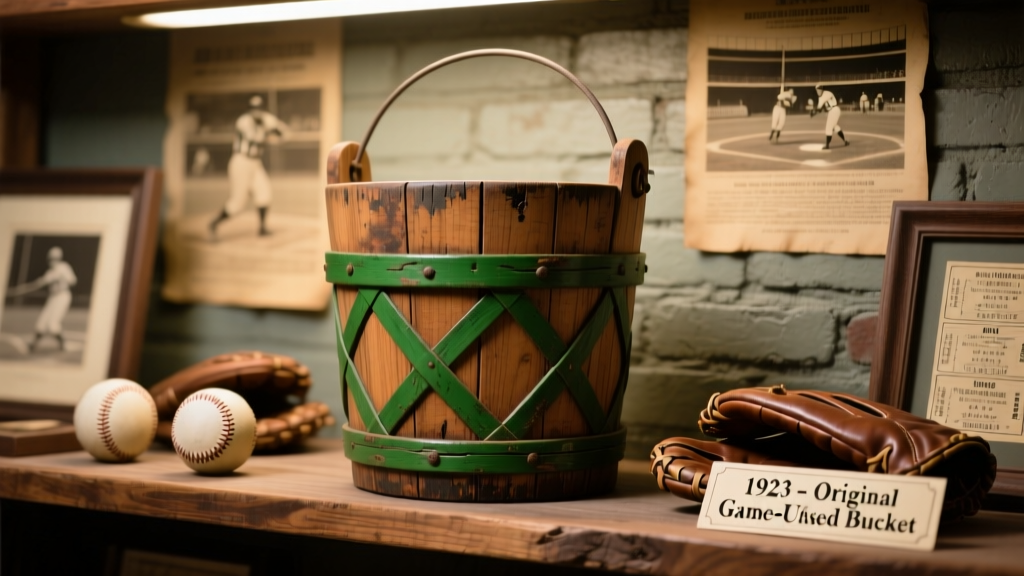
The Wooden Bucket: Sugar Stave Construction, Interlaced Green Bands, and the 10-Inch Legacy