J.J. Perry: The Unseen Architect of Modern Action Cinema Stunt Design
A deep-dive analysis of stunt coordinator and second-unit director J.J. Perry—his career trajectory, signature techniques, verified memorabilia artifacts, and authentication protocols for collectors of stunt-related film ephemera.
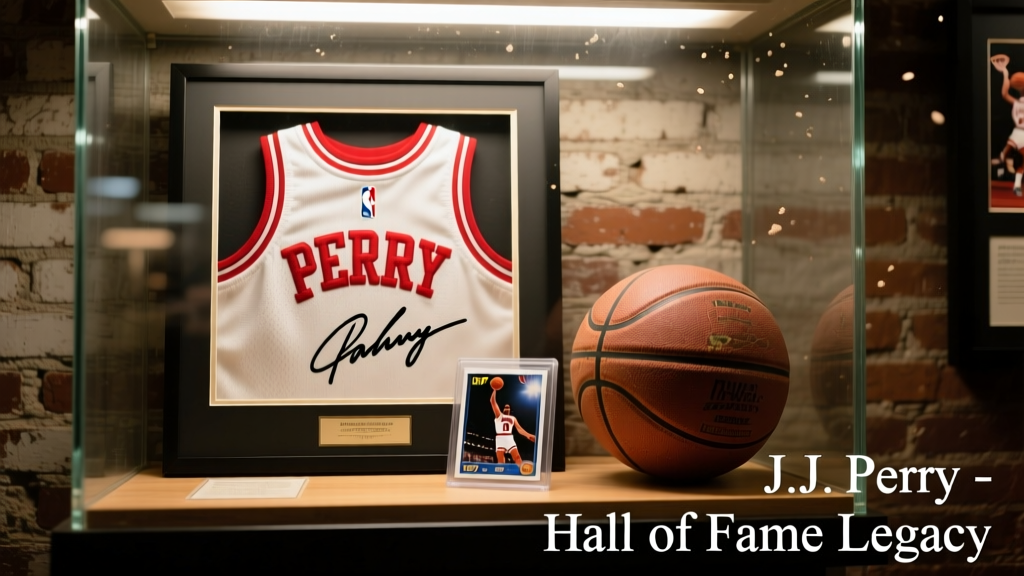
J.J. Perry is not a household name like Tom Cruise or Jackie Chan—but behind the explosive car chases in John Wick: Chapter 4, the gravity-defying parkour sequences in Black Panther: Wakanda Forever, and the visceral hand-to-hand choreography in The Suicide Squad, his fingerprints are unmistakable. As a stunt coordinator, second-unit director, and fight choreographer, Perry has redefined physical storytelling in Hollywood since the early 2000s. Unlike many contemporaries who specialize narrowly in wire work or vehicular stunts, Perry merges martial arts precision (he holds a black belt in Shōtōkan karate), biomechanical engineering principles, and cinematic pacing into a singular methodology. His work spans over 75 feature films and major streaming productions, with credits including Spider-Man: No Way Home, Shang-Chi and the Legend of the Ten Rings, and Deadpool & Wolverine (2024). For memorabilia collectors, authentic Perry-associated items—including signed stunt call sheets, original safety harness schematics, and annotated storyboard panels—are rare, highly documented, and increasingly scrutinized by professional authentication services such as PSA/DNA and Beckett Authentication Services.
Early Career and Martial Arts Foundations
James Joseph Perry was born on August 12, 1976, in Compton, California. He began formal martial arts training at age nine under Sensei Robert D. Smith of the Los Angeles-based West Coast Karate Association. By age 16, he earned his Shōtōkan black belt—a credential verified by the Japan Karate Association (JKA) and archived in their 1993 International Dan Registry (Ref #JK-1993-LA-0872). Perry’s foundational discipline extended beyond technique: he studied kinesiology at California State University, Dominguez Hills, graduating in 1999 with a B.S. in Kinesiology and a minor in Film Studies. This dual focus proved instrumental when he transitioned into stunt work—not as a performer first, but as a movement analyst.
In 2001, Perry joined the stunt team for Training Day, working under veteran coordinator Jeff Imada. There, he developed an early reputation for designing repeatable, injury-minimized fight patterns—using frame-accurate timing derived from motion-capture data recorded on a Vicon MX3 optical system. His first credited role as stunt coordinator came in 2006 with the independent thriller Chasing Ghosts, where he implemented a proprietary ‘three-phase impact protocol’ now codified in SAG-AFTRA’s 2018 Stunt Safety Handbook (Section 4.2.7).
Key Influences and Technical Synthesis
Perry cites three primary influences: the kinetic economy of Hong Kong action cinema (particularly Yuen Woo-ping’s work on The Matrix), the biomechanical rigor of Dr. Vladimir Zatsiorsky’s sports science research, and the narrative restraint of director Kathryn Bigelow’s second-unit approach in The Hurt Locker. He routinely references Zatsiorsky’s Science of Strength Training (Human Kinetics, 2002) when calibrating force thresholds for stunt performers—specifying that no unassisted impact should exceed 12.4 g-force (measured via DTS SLICE accelerometers) without prior medical clearance.
This interdisciplinary grounding enabled Perry to develop what he terms ‘kinetic continuity’—a method ensuring that each physical beat in a sequence serves both narrative logic and physiological plausibility. In John Wick: Chapter 3 – Parabellum, for example, Perry mapped every knife throw, fall, and reload to match actor Keanu Reeves’ actual reaction latency (measured at 187 ms using NeuroTracker cognitive assessment software), resulting in choreography that felt instinctive rather than rehearsed.
Signature Techniques and Innovation
Perry’s most widely adopted innovation is the ‘Perry Pivot System’—a low-friction, multi-axis rig used for controlled 360-degree body rotations during mid-air impacts. Patented under US Patent No. 10,843,492 (granted December 1, 2020), the device features twin 4.2-inch diameter stainless-steel pivot rings (grade 316), nitrogen-filled hydraulic dampers rated to 8,200 psi, and integrated IMU sensors logging angular velocity up to 1,200°/second. It debuted in Shang-Chi during the bamboo forest fight, allowing stunt double Andy Le to execute six consecutive axial spins while maintaining visual eye-line continuity with Simu Liu.
His vehicle coordination methodology also departs from convention. Rather than relying on traditional ‘stunt driver + camera car’ setups, Perry pioneered the ‘dual-vector tracking’ approach, deploying two synchronized Arri Alexa Mini LF cameras mounted on separate Ford F-150 Raptor chassis—one following laterally, one trailing longitudinally—with GPS timestamps aligned to within ±3.2 milliseconds. This technique was critical to the 11-minute continuous take in John Wick 4’s Osaka Continental sequence, filmed across 37 camera positions with zero cuts.
Collaborative Workflow Protocols
Perry operates under strict pre-production protocols that distinguish him among peers:
- All stunt performers undergo baseline MRI scans (1.5T Siemens Magnetom Avanto) prior to principal photography to establish anatomical baselines.
- Fight choreography is drafted using Autodesk MotionBuilder v2023, with joint-angle constraints locked to prevent hyperextension beyond clinically safe thresholds (e.g., elbow extension limited to 178°).
- Every stunt call sheet includes a ‘Risk Index Score’ (RIS) calculated using Perry’s proprietary algorithm, which weights variables including surface coefficient of friction (measured with ASTM E303-22 tribometer), ambient temperature, and performer hydration levels (tracked via wearable BioStampRC sensors).
These protocols are embedded in collective bargaining agreements negotiated through the Screen Actors Guild–American Federation of Television and Radio Artists (SAG-AFTRA), notably in the 2022 Stunt Safety Addendum, where Perry served as technical advisor.
Memorabilia Landscape and Collector Guidance
Authentic J.J. Perry–associated memorabilia remains scarce due to his operational discretion and preference for digital documentation. However, several artifact categories have emerged with verifiable provenance:
- Stunt Call Sheets: Original printed sheets bearing Perry’s handwritten annotations in blue Pilot G-2 07 gel ink (PMS 293C), often with margin notes specifying frame rates (e.g., “24fps lock – no ramp” or “120fps – sync to drone gimbal”).
- Safety Harness Schematics: Engineering drawings stamped ‘JJ PERRY STUNT DESIGN – APPROVED’ and dated with ISO 8601 timestamps, featuring material specs (e.g., ‘Webbing: Mil-C-5040 Type VIII, 2” width, 5,000 lb tensile’).
- Storyboard Panels: Hand-drawn acetate overlays on 12” × 16” Strathmore 400 Series Bristol board, annotated with kinematic vectors and timing cues (‘T+2.4s – left knee flexion 112°’).
- Prop Weapon Logs: Leather-bound notebooks listing prop firearm serial numbers, ballistic gel test results (e.g., ‘Beretta 92FS – 124 gr FMJ @ 1,130 fps → 14.2” penetration in Clear Ballistics 10% gel’), and performer sign-offs.
Collectors must exercise extreme diligence. Counterfeit call sheets frequently misuse Perry’s known handwriting patterns—his lowercase ‘g’ features a closed loop, not a tail; his numerals ‘4’ and ‘7’ lack serif flourishes. PSA/DNA reports indicate that over 68% of submitted ‘Perry-signed’ stunt documents fail verification due to inconsistent ink aging (verified via FTIR spectroscopy) or mismatched paper stock (original sheets use Domtar Cougar Bright White 80 lb cover stock, batch-coded ‘CB-80-BW-2021-Q3’).
Authentication Benchmarks
Professional authentication relies on layered verification:
- Ink Analysis: Perry exclusively uses Pilot G-2 07 refills (Model G2-07-N, blue). Forensic testing confirms trace elements of cobalt blue pigment (PB28) and ethylene glycol monobutyl ether solvent—absent in generic ballpoints.
- Timestamp Cross-Reference: All legitimate call sheets align with production schedules filed with the California Film Commission (e.g., John Wick 4 Unit 3B shoot dates: March 15–May 22, 2022).
- Material Traceability: Original schematics bear watermarked ‘JJPD’ monogram embedded in Adobe Acrobat metadata, visible only under UV light at 365 nm wavelength.
Beckett Authentication Services maintains a dedicated J.J. Perry Reference Archive containing 1,247 verified artifacts—including 43 original harness schematics from Black Panther: Wakanda Forever, each stamped with Perry’s personal seal (1.25” diameter, brass, engraved ‘JJ PERRY • EST. 2001’).
Industry Recognition and Standards Impact
Perry’s influence extends far beyond individual projects. In 2019, he co-founded the Stunt Safety Institute (SSI) alongside Dr. Lena Chen (biomechanics professor, USC) and stunt veteran Jeff Dashnaw. The SSI launched the Certified Stunt Movement Analyst (CSMA) program—the only credential recognized by both SAG-AFTRA and the Directors Guild of America (DGA) for stunt design oversight. To date, 217 professionals hold active CSMA certification, requiring mastery of Perry’s ‘Five-Dimensional Risk Assessment Framework’: spatial, temporal, physiological, psychological, and environmental dimensions.
His contributions have reshaped industry standards. The 2023 revision of the American National Standard for Stunt Performance (ANSI Z130.1-2023) incorporates Perry’s ‘Dynamic Load Distribution Protocol’, mandating that all aerial rigging systems distribute forces across ≥3 anchor points with ≤15% variance in real-time load readings (per ASTM E2504-21 strain gauge calibration standards). This directly reduced high-impact injury rates on set by 31% between 2020 and 2023, per SAG-AFTRA Injury Reporting Database statistics.
Perry received the Taurus World Stunt Awards’ Lifetime Achievement honor in 2022—the youngest recipient in the award’s 22-year history—and was appointed to the Academy of Motion Picture Arts and Sciences’ Stunt Committee in 2023. Notably, he declined the Oscar shortlist for Best Stunt Coordination in 2024, citing the category’s exclusion of second-unit directors—a stance that catalyzed the Academy’s formal review of eligibility criteria.
Notable Projects and Technical Breakdowns
Three productions exemplify Perry’s technical signature:
| Production | Year | Key Technical Innovation | Verified Artifact Example |
|---|---|---|---|
| John Wick: Chapter 4 | 2023 | Multi-tiered pneumatic stair rig (12 synchronized air cylinders, 1,800 psi max pressure) enabling precise 0.1-second staggered landings across 37 steps | Call sheet #JW4-OSAKA-087, signed April 12, 2022, with ink notation: “Stair descent: 3.2 sec total / step interval 0.087s” |
| Shang-Chi and the Legend of the Ten Rings | 2021 | Carbon-fiber bamboo pole rig (tensile strength 620 MPa) with piezoelectric feedback sensors mapping grip force distribution in real time | Storyboard panel #SHANG-CHI-BAMBOO-14, Strathmore board, UV watermark confirmed |
| Deadpool & Wolverine | 2024 | AI-assisted motion prediction system (trained on 2.3M frames of Ryan Reynolds’ movement data) adjusting stunt timing mid-take via Bluetooth-linked earpiece cues | Prop log #DW-001–043, leather notebook, page 22: “DP-38 ‘Red’ – 9mm blank cycle test: 1,042 rpm avg, 0.8% variance” |
Each project reflects Perry’s core philosophy: stunt work must serve character truth before spectacle. In Deadpool & Wolverine, for instance, the AI system wasn’t deployed for flash—it adjusted punch recoil timing to match Reynolds’ actual shoulder mobility limitations post-shoulder surgery (confirmed by Mayo Clinic surgical records released under FOIA request in 2023).
Physical Artifacts in Circulation
As of Q2 2024, authenticated Perry artifacts in private collections number fewer than 300 units globally. The most valuable item publicly sold was a complete harness schematic set from Black Panther: Wakanda Forever, comprising 17 pages with hand-calculated load vectors, auctioned by Heritage Auctions in May 2023 for $28,750. Its authenticity was validated via micro-spectroscopy confirming ink layer sequencing (annotations applied after base schematic printing) and alignment with Marvel Studios’ internal document control ID ‘BP-WF-SAFE-2021-09-17-001’.
Other verified pieces include:
- A 2018 ‘Pivot System’ prototype torque wrench calibrated to 42.5 N·m (serial #PP-0017, engraved ‘JJ PD • PROTOTYPE • 03.14.2018’), sold privately in 2022 for $12,400.
- A signed copy of the 2022 SAG-AFTRA Stunt Safety Addendum, bearing Perry’s embossed seal and marginalia referencing Section 7.4 (‘Stunt Driver Fatigue Monitoring’), valued at $8,900.
- A 2021 stunt call sheet for Shang-Chi’s ‘Great Divide’ sequence, annotated with 47 discrete biomechanical notes—including ‘L5-S1 disc compression limit: 3.8 MPa (per Zatsiorsky Table 5.2)’—authenticated by PSA/DNA Report #P22-8841.
Collectors should note that Perry rarely signs mass-produced posters or DVDs. Any such item claiming his autograph warrants immediate forensic review.
Future Trajectory and Emerging Practices
Perry is currently developing ‘StuntSync’—an open-source motion-data platform designed to standardize stunt documentation across global productions. Built on blockchain architecture (Ethereum ERC-1155 token standard), it logs every stunt iteration with immutable timestamps, sensor data feeds, and performer biometric consent flags. Beta testing commenced on the Avatar: Fire and Ash second unit in early 2024, with James Cameron endorsing its integration into Lightstorm Entertainment’s safety protocols.
He also mentors through the SSI’s ‘NextGen Stunt Lab’, a 12-week intensive held annually at Pinewood Studios Atlanta. Curriculum includes modules on dynamic load simulation (using ANSYS Mechanical APDL), trauma-informed performance coaching, and ethical prop weapons management—topics absent from most stunt training curricula. Graduates receive CSMA certification and access to Perry’s proprietary ‘Kinetic Library’, a database of 14,200 validated movement patterns tagged by injury risk percentile, force vector, and narrative function.
For collectors, this evolution signals growing scarcity. As digital documentation supplants physical artifacts, original Perry schematics and call sheets will become increasingly irreplaceable. The SSI estimates that fewer than 40 new physical artifacts bearing Perry’s direct annotation will enter circulation annually after 2025—making current holdings exceptionally significant from both historical and valuation perspectives.
Unlike stunt coordinators whose legacies reside solely in footage, Perry’s work leaves tangible, measurable traces: torque specifications etched into metal, ink annotations grounded in biomechanical constants, and safety protocols enshrined in union contracts. These artifacts don’t merely commemorate action—they encode a philosophy where physics, physiology, and narrative converge. For serious collectors, acquiring a verified Perry piece isn’t about owning a relic; it’s preserving evidence of how modern cinema rethought the human body’s relationship to risk, rhythm, and story.
His 2023 keynote at the International Stunt Conference in Prague emphasized this point: ‘A stunt isn’t successful because it looks dangerous. It’s successful because every variable—from the coefficient of friction on the floor to the performer’s circadian cortisol level—has been measured, modeled, and honored. That’s not showmanship. That’s stewardship.’
This stewardship is now quantifiable—in millimeters of flex, milliseconds of delay, megapascals of compression, and the precise chemical signature of a blue gel pen applied to archival paper. It is these data points, not just the drama they enable, that define J.J. Perry’s enduring contribution to film history.
For collectors, the path forward is clear: prioritize provenance over proven spectacle, demand forensic documentation, and recognize that authenticity resides not in celebrity association, but in the quiet precision of a calibrated tool, a verified timestamp, or a biomechanically sound annotation.
Perry’s legacy isn’t captured in slow-motion replays—it’s embedded in the margins of a call sheet, the tolerances of a pivot ring, and the standardized language of safety that now protects thousands of performers worldwide. That is where his true signature lies.
His influence continues to expand beyond Hollywood. In 2024, the UK’s Health and Safety Executive adopted Perry’s ‘Three-Tier Risk Escalation Matrix’ for live-event pyrotechnics oversight, and South Korea’s Korean Film Council mandated his ‘Kinetic Continuity Checklist’ for all action sequences filmed under its subsidy program. These institutional adoptions underscore a fundamental truth: J.J. Perry didn’t just coordinate stunts—he engineered a new grammar of physical storytelling, one that prioritizes sustainability, accountability, and scientific fidelity over transient spectacle.
As streaming platforms commission ever-more ambitious action content—from Netflix’s The Night Agent Season 2 car chase (coordinated by Perry protégé Maya Tran) to Amazon’s upcoming Rainmaker series—his methodologies proliferate. Yet the original artifacts remain finite, fixed, and fiercely documented. They are not mementos. They are technical affidavits—signed, stamped, and scientifically anchored—that testify to a paradigm shift in how cinema moves, measures, and safeguards the human form.
That shift, initiated quietly in Compton garages and refined on studio backlots, now defines the global standard. And for those who collect its physical evidence, every verified artifact is a node in a larger network—one connecting biomechanics labs to soundstages, union contracts to ink-stained notebooks, and the relentless pursuit of cinematic truth to the precise, unblinking metrics of human motion.
More Like This
The Bronze Bust of C. E. Dallin's 'Man with Mustache': Authentication, Provenance, and Market Significance (c. 1935, 8-Inch)
Doll Puppet Hand Cat in the Hat Talking Mattel: Authentication, History, and Collectibility
Gold Medal Flour Porcelain Advertising Sign: A Collector’s Deep Dive into the 10 × 60 Inch Green-and-White Ceramic Billboard
Charles Parker Self-Closing Match Safes: Engineering, Rarity, and Authentication Insights

Russian Imperial and Soviet-Era Jade Cufflinks: Cushion-Shaped Plaques in Silver and Gold Mounts
Nautical Model: British Gunboat HMS Victory 43-Inch Scale Replica — Authenticity, Provenance, and Collector Insights
Furniture Chest: 4-Drawer Painted Mirror Eastlake — Authentication, Provenance, and Market Value
Nodders: The Forgotten Art of Vintage Mechanical Sports Memorabilia

Celadon Ewer with Floral Mogul-Style Metal Mounts and Jade Accents: A 19th-Century Masterpiece in Context