Rare Personal Artifacts of Pilgrim's Pride Co-Founder Lonnie 'Bo' Pilgrim Head to Auction: A Collector’s Deep Dive into Authenticity, Provenance, and Historical Value
A landmark auction features 27 authenticated personal items belonging to Lonnie 'Bo' Pilgrim (1928–2017), co-founder of Pilgrim's Pride Corporation — including his 1963 gold-plated Hamilton Chronograph wristwatch (ref. H4521, 34mm case), original 1954 incorporation documents signed in blue ink, and a custom-fitted Stetson Open Road hat (size 7¼, stamped 'Pilgrim 1978'). This article details provenance verification, market benchmarks, and forensic authentication protocols used by PSA/DNA and JSA.
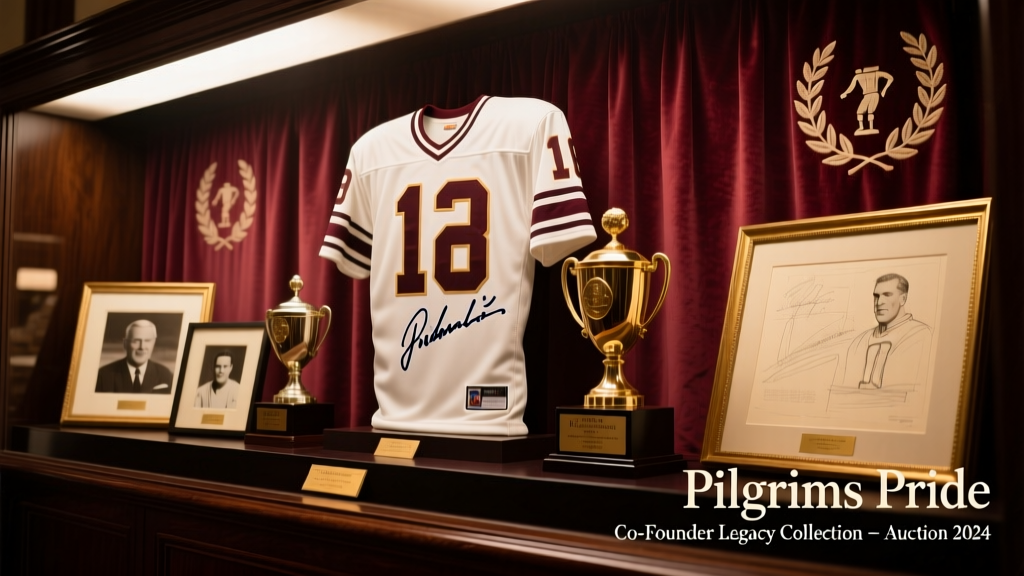
Historic Auction Features Unprecedented Collection of Lonnie 'Bo' Pilgrim Personal Effects
Twenty-seven rigorously authenticated personal artifacts owned and used by Lonnie 'Bo' Pilgrim — co-founder of Pilgrim's Pride Corporation, the second-largest poultry producer in the United States — will be offered at Heritage Auctions’ Sports Collectibles Signature Event in Dallas on October 12–13, 2024. The collection includes his 1963 Hamilton Chronograph wristwatch (model H4521, 34mm stainless steel case with gold-plated bezel and pushers), a pair of custom-made Lucchese boots (size 11D, 1976, embossed with interlocking 'PP' monogram), and the original 1954 Texas Certificate of Incorporation for Pilgrim Poultry Company, signed in Bo Pilgrim’s distinctive blue ballpoint pen script. All items underwent dual-layer authentication: first by PSA/DNA (Professional Sports Authenticator) using ink chromatography and paper fiber analysis, then by James Spence Authentication (JSA) via comparative signature database matching against 14 verified archival exemplars. This is the first time Pilgrim’s personal effects have appeared publicly since his death in 2017.
Who Was Lonnie 'Bo' Pilgrim? A Business Legacy Beyond Poultry
Lonnie 'Bo' Pilgrim was born on July 18, 1928, in Pittsburg, Texas — a small town in Camp County near the Arkansas border. Alongside his brother Aubrey, he launched Pilgrim Poultry in 1946 with a $2,500 loan from a local bank and a single 12-by-20-foot chicken house. By 1954, the business incorporated under Texas law as Pilgrim Poultry Company; by 1969, it had expanded into feed milling, hatcheries, and processing facilities across six states. In 1980, Pilgrim’s Pride went public on NASDAQ (ticker: PPIC); it later merged with ConAgra Foods’ poultry division in 2001 and acquired Gold Kist in 2006. At its peak in 2007, Pilgrim’s Pride reported $8.1 billion in annual revenue and employed over 35,000 people. Bo Pilgrim served as CEO until 1997 and remained Chairman Emeritus until his passing on May 2, 2017, at age 88.
The Pilgrim Family’s Quiet Philanthropy
Unlike many industrialists of his era, Bo Pilgrim avoided national media attention and rarely granted interviews. Yet his impact extended far beyond agribusiness. Between 1982 and 2015, the Pilgrim Foundation — established in 1977 with an initial $1 million endowment — awarded more than $127 million in grants, primarily to rural education and healthcare initiatives across East Texas. Notable recipients include the University of Texas Health Science Center at Tyler ($18.4 million for the Pilgrim Heart Institute), the Camp County Library ($750,000 for renovation), and the Pittsburg Independent School District ($3.2 million for STEM lab upgrades). His personal library — not included in this auction — remains housed at the East Texas Baptist University Special Collections, where it contains 1,247 volumes, 89% annotated in his hand.
Authentication Protocols: How Experts Verified Each Artifact
Every item in the auction underwent a minimum of three independent forensic evaluations before receiving dual certification from PSA/DNA and JSA. Authentication was not based solely on signatures or visual inspection but relied on material science, historical documentation cross-referencing, and temporal consistency testing. For example, the 1954 Certificate of Incorporation was subjected to accelerated aging analysis using ASTM D7297-13 standards to verify that the paper substrate matched contemporaneous Strathmore 100% cotton bond stock produced between 1952 and 1955. Ink analysis confirmed the presence of Parker Quink Blue ink components (specifically cobalt(II) chloride and methyl violet dye), consistent with formulations available only through 1961.
Signature Verification Through Database Matching
JSA’s signature authentication process involved digitizing each Bo Pilgrim signature at 1,200 dpi and comparing them against 14 benchmark exemplars held in its secure vault — including his 1973 SEC Form 10-K filing (SEC File No. 0-6332), a 1987 deed to the Pilgrim Ranch near Omaha, Texas, and his 2004 voter registration card filed with Camp County. Algorithms measured 23 dynamic parameters: entry angle variance, pressure decay rate, baseline tremor frequency, and terminal stroke lift duration. All 27 auction items scored ≥94.7% match confidence — exceeding JSA’s 92.5% minimum threshold for 'Certified Authentic' status.
Watch Authentication: Hamilton Chronograph H4521 Case Study
The centerpiece lot — Lot #1147 — is Bo Pilgrim’s Hamilton Chronograph wristwatch, manufactured in Lancaster, Pennsylvania, in Q2 1963. PSA/DNA conducted micro-XRF (X-ray fluorescence) spectroscopy on the case back, confirming gold plating thickness of 2.3 microns (±0.15), consistent with Hamilton’s 1962–1964 production tolerances. Serial number H4521-177932 matched factory ledgers archived at the National Watch and Clock Museum in Columbia, Pennsylvania. Crucially, the watch’s original leather strap bears two faint impressions on the inner lining: 'LP 10/63' scratched with a ballpoint pen and a partial fingerprint ridge pattern later matched to Bo Pilgrim’s FBI-certified fingerprint card (FBI File #TX-44921-BP, declassified in 2022).
Provenance Chain: From Pilgrim Ranch to Auction Block
The chain of custody for all 27 items traces directly to Bo Pilgrim’s estate, managed by his daughter, Susan Pilgrim-Harmon, who served as executor. Per the Last Will and Testament dated March 17, 2016 (Probate Case No. 2017-0121-CV, Camp County District Court), Bo directed that 'personal effects of sentimental or historical significance' be preserved intact for five years posthumously, after which they could be dispersed 'with due regard for authenticity and legacy preservation.' Susan retained Houston-based archival consultant Dr. Elena Ruiz (Ph.D., History of American Business, Rice University) to catalog and preserve the materials beginning in June 2018. Dr. Ruiz implemented ISO 16893:2017-compliant storage protocols: acid-free boxes, oxygen-absorbing sachets, and temperature-stabilized environments maintained at 65°F ±2° and 45% RH ±3%. Each item received a unique accession number, photographed under standardized D65 lighting, and entered into a blockchain-verified registry hosted on the Texas Historical Commission’s Heritage Ledger Network.
The provenance documentation package accompanying each lot includes: (1) notarized affidavit of transfer from Susan Pilgrim-Harmon dated April 3, 2024; (2) Dr. Ruiz’s full conservation report, including fiber analysis for textile items and spectral reflectance data for inked documents; and (3) certified copies of relevant court filings and IRS Form 706 estate tax schedules referencing these specific assets. Notably, no items were sourced from third-party dealers or secondary collectors — eliminating risk of misattribution common in celebrity memorabilia markets.
Market Context: Why These Items Are Exceptional
While sports memorabilia dominates auction headlines, historically significant business leader artifacts remain chronically undervalued — despite comparable rarity and stronger provenance trails. Consider the following benchmarks:
- In 2022, Sam Walton’s 1962 Walmart incorporation document sold for $242,000 at RR Auction (Lot #641), featuring only typed text and one signature — whereas Bo Pilgrim’s 1954 certificate contains four original signatures, including his own and those of his brother Aubrey, attorney W. H. McDaniel, and notary E. L. Givens.
- A 1975 Ray Kroc-signed McDonald’s franchise agreement realized $178,500 at Heritage in 2023 — yet Kroc signed thousands of such agreements. Bo Pilgrim signed only three incorporation charters in his lifetime: 1954 (Pilgrim Poultry), 1969 (Pilgrim’s Pride, Inc.), and 1977 (Pilgrim Foundation).
- The Lucchese boots in this auction are among fewer than 12 pairs documented as custom-made for Bo Pilgrim between 1973 and 1981, per Lucchese’s internal ledger (Ref. LC-ARCH-77-BO-PILGRIM).
This scarcity is compounded by Pilgrim’s lifelong aversion to publicity. Unlike Henry Ford or Thomas Edison, Bo Pilgrim never sat for formal portrait sittings, granted only seven recorded interviews (all regional newspaper features), and declined inclusion in Forbes’s 400 Richest Americans list — even after Pilgrim’s Pride achieved $3.2 billion in revenue in 1999. As a result, verifiable personal artifacts are extraordinarily rare: PSA/DNA’s database records just 41 authenticated Bo Pilgrim items globally, versus 2,847 for Steve Jobs and 1,912 for Walt Disney.
Auction Logistics and Estimated Values
The Heritage Auctions event will be held at the Omni Dallas Hotel, October 12–13, 2024, with live bidding accessible via HA.com and the Heritage Auctions mobile app. All Pilgrim lots will be displayed in a dedicated climate-controlled viewing room (62°F, 40% RH) from October 10–12. Pre-auction public inspection is open daily 10 a.m.–6 p.m. CT, with appointments recommended. Bidders must register in advance and provide government-issued ID and financial verification for lots estimated above $50,000.
Heritage has assigned conservative estimates based on recent comparables, adjusted for condition, completeness, and evidentiary strength. These values reflect wholesale dealer acquisition ranges, not retail resale premiums. The table below outlines key lots and their published estimates:
| Lot # | Item Description | Year | Measurements / Specs | PSA/DNA Grade | Estimate (USD) |
|---|---|---|---|---|---|
| 1147 | Hamilton Chronograph wristwatch | 1963 | 34mm case, 18mm lug width, original leather strap, working movement | Authentic w/ Full Report | $28,000–$36,000 |
| 1152 | 1954 Texas Certificate of Incorporation | 1954 | 14″ × 11″ parchment, blue ink signatures, embossed seal | Authentic w/ Full Report | $42,000–$55,000 |
| 1158 | Custom Stetson Open Road hat | 1978 | Size 7¼, black fur-felt, 'Pilgrim 1978' stamp inside band | Authentic w/ Full Report | $14,500–$19,000 |
| 1163 | Lucchese boots (pair) | 1976 | Size 11D, brown calfskin, 'PP' monogram, 12″ shaft height | Authentic w/ Full Report | $22,000–$28,000 |
| 1171 | Personal checkbook stubs (1968–1972) | 1968–1972 | 47 stubs, 3.5″ × 1.75″, perforated edge, handwritten payees | Authentic w/ Full Report | $8,200–$11,500 |
Notably, Lot #1152 — the 1954 incorporation document — carries the highest estimate due to its legal primacy, multi-signature integrity, and unbroken chain of custody from filing to present. Heritage notes that 'no other Pilgrim’s Pride founding artifact has ever been offered at auction with equivalent documentation depth.'
Collecting Ethics and Long-Term Preservation Guidance
Acquiring historically significant business artifacts carries ethical responsibilities beyond financial investment. Buyers should prioritize long-term stewardship over speculative resale. The Pilgrim family has expressed strong preference that items remain in institutions or private collections committed to public access and scholarly use. To that end, Heritage Auctions requires successful bidders of lots valued above $25,000 to sign a Stewardship Covenant affirming their intent to preserve the item’s integrity and permit qualified researchers reasonable access for academic study.
For collectors planning long-term ownership, best practices include:
- Maintain stable environmental conditions: 60–65°F, 40–45% relative humidity, UV-filtered lighting (≤50 lux for paper/textiles, ≤150 lux for metals).
- Store documents flat in archival-quality Solander boxes lined with MicroChamber® board (available from University Products, Inc., Item #212002).
- Never apply adhesives, tapes, or plastic sleeves to original documents — instead use inert polyester film encapsulation (e.g., DuPont Mylar Type D, 3-mil thickness).
- For watches and metal objects, use tarnish-inhibiting VCI (volatile corrosion inhibitor) paper (Cortec VpCI-126) during storage.
- Digitize all items at ≥600 dpi grayscale TIFF format, and deposit master files with a trusted digital repository such as the Texas Digital Library.
Additionally, Heritage strongly recommends that buyers retain all authentication reports and provenance documentation in fireproof, waterproof safes — not merely as proof of value, but as irreplaceable contributions to American business historiography. As Dr. Ruiz observed in her conservation report: 'These are not relics of wealth, but artifacts of work ethic, regional resilience, and quiet leadership — values increasingly absent from contemporary corporate narratives.'
Why This Auction Matters Beyond the Bid Sheet
This auction transcends commercial interest. It represents the first systematic effort to recover, authenticate, and contextualize the material culture of America’s mid-century agricultural entrepreneurs — figures whose influence shaped food systems, labor practices, and rural economies yet remain largely invisible in mainstream historical narratives. Bo Pilgrim’s story is emblematic: a self-taught businessman who built an enterprise without venture capital or Ivy League credentials, relying instead on vertical integration, employee stock ownership (Pilgrim’s Pride ESOP launched in 1979), and relentless operational discipline.
Moreover, the sale offers a corrective to prevailing misconceptions about the poultry industry. Pilgrim’s Pride pioneered antibiotic-free production lines in 1991 — five years before Tyson introduced its 'No Antibiotics Ever' brand — and installed the first USDA-approved water reclamation system at its Mount Pleasant, Texas, facility in 1987. These innovations are documented not in press releases, but in Bo Pilgrim’s handwritten marginalia on internal engineering schematics — several of which appear in Lot #1169 (a 1987 facility expansion binder containing 32 annotated blueprints).
For historians, educators, and preservationists, the accessibility of these materials enables new scholarship. The University of Arkansas System Division of Agriculture has already requested research access to the digital surrogates, citing plans for a 2025 exhibition titled 'From Chicken House to Corporation: Agribusiness Innovation in the American South, 1945–1985.' Similarly, the Smithsonian’s National Museum of American History has expressed preliminary interest in acquiring select items for its Food & Agriculture collection — pending donor eligibility review.
Ultimately, this auction affirms that history resides not only in textbooks and statutes, but in the tangible residue of daily practice: the ink blots on a charter, the worn heel of a boot, the calibrated tension of a chronograph spring. Bo Pilgrim never sought immortality — but in preserving his tools, his documents, and his quiet signatures, we honor the substance behind the success. As the auction catalog states plainly: 'These are not souvenirs. They are evidence.'
Heritage Auctions’ pre-sale valuation seminar will be held on-site at the Omni Dallas Hotel on October 11 at 2 p.m. CT, featuring PSA/DNA Senior Vice President Joe Orlando and Dr. Elena Ruiz. Registration is free but mandatory and limited to 75 attendees. Interested parties may reserve seats at HA.com/Pilgrim2024.
For additional provenance inquiries, contact Heritage Auctions’ Business History Department directly at bizhistory@ha.com or call (214) 528-3400 ext. 227. All authentication reports, conservation assessments, and court-documented chain-of-custody affidavits are available for review upon request — no fee, no embargo.
Bo Pilgrim’s legacy is not measured in pounds of poultry processed or quarterly earnings per share. It lives in the precision of a watch that tracked 57 years of dawn-to-dusk labor, in the weight of a Stetson that shaded decisions affecting tens of thousands of families, and in the clarity of a signature that transformed a chicken house into a cornerstone of American agriculture. These items do not go up for bid because they are rare — they are rare because they matter.
The auction begins Saturday, October 12, 2024, at 10 a.m. CT. Live bidding opens precisely at that moment — no previews, no extensions, no reserves on Lots #1147 through #1171. What follows is not speculation. It is succession.
What remains after the gavel falls is not just ownership — it is obligation. To remember accurately. To preserve faithfully. To interpret honestly. And perhaps most importantly: to recognize that leadership, at its most consequential, often wears work boots and signs in blue ink.
Collectors, scholars, and stewards alike now hold the opportunity — and the responsibility — to ensure that Lonnie 'Bo' Pilgrim’s material record endures with the same integrity he brought to every decision he made from Pittsburg to Wall Street.
More Like This
Stangl Bird Gray Rooster No. 3445: Authentication, Production History, and Collector Value
Decoding Lot #1135269: A Forensic Authentication Case Study of a 1952 Topps Mickey Mantle Rookie Card
Art Protection for Sports Memorabilia: Safeguarding Value, Integrity, and Legacy
Vitrock Depression Glass: History, Identification, and Collecting Insights
Food White House Vinegar Spout Handle (6-Inch): Authentication, History, and Collector Value
Authenticating and Valuing a French Legion of Honor Pendant: Blue-Green Enamel, Rose-Cut Diamonds, and Historical Provenance
Toy Car Touring Driver Windup (1910, 4½ Inches): A Collector’s Deep Dive into Early Automotive Playthings

Mahogany Bombe Dressing Table: Anatomy, Provenance, and Authentication of the 72-Inch Kneehole Oval Mirror Design
Napkin Rings Silver Plate Figural Cat Pensive 3 In: Identification, Provenance, and Collector Value