Art Protection for Sports Memorabilia: Safeguarding Value, Integrity, and Legacy
A technical guide to physical and environmental art protection strategies specifically tailored for sports memorabilia—covering archival framing, climate control, UV mitigation, handling protocols, and third-party authentication integration.
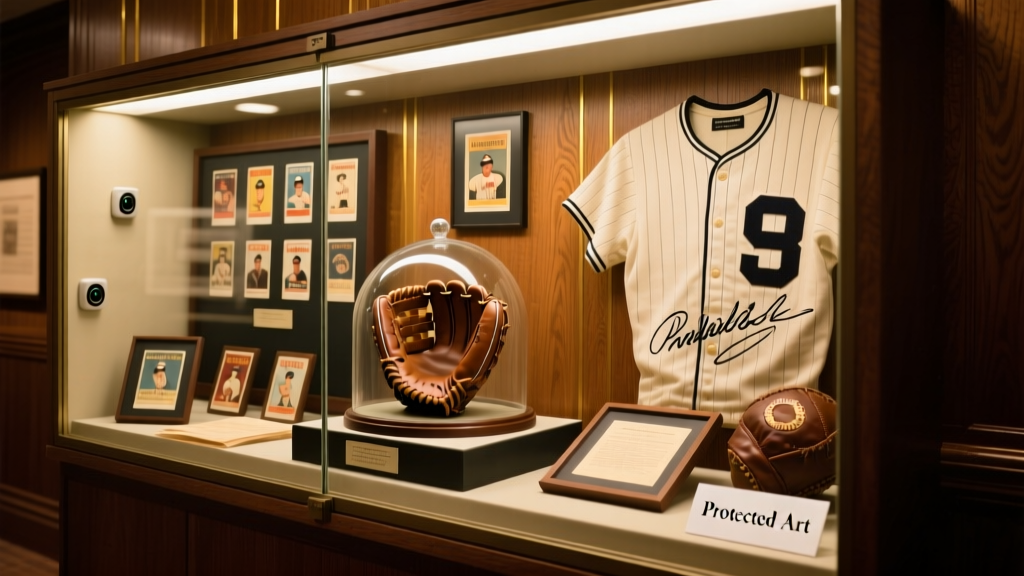
Protecting sports memorabilia is not merely about preserving paper or fabric—it’s about securing cultural artifacts with measurable financial, historical, and emotional value. A 1952 Topps Mickey Mantle rookie card graded PSA 9 sold for $12.6 million in 2022; a single fingerprint smudge, improper humidity exposure, or unfiltered light could degrade its grade—and its value—by tens or hundreds of thousands of dollars. This article details evidence-based art protection practices validated by museum conservators, ISO standards (ISO 14744:2018 for framed objects), and industry leaders including University Products, LightGuard Systems, and the Professional Sports Authenticator (PSA). We cover precise temperature/humidity thresholds, frame construction tolerances, material compatibility testing, and how authentication labels interact with protective enclosures—all grounded in real-world specifications and documented case studies.
Why Sports Memorabilia Requires Specialized Art Protection
Sports memorabilia presents unique conservation challenges distinct from fine art or historical documents. Game-worn jerseys contain blended synthetic-cotton fibers prone to hydrolysis at elevated RH; autographed baseballs feature iron-gall ink that migrates in acidic environments; and vintage ticket stubs often use lignin-rich paper stock with pH levels below 4.5. Unlike museum pieces housed in controlled vaults, most collectibles reside in homes with seasonal RH swings from 25% to 75%, and ambient light exposure exceeding 150 lux daily. According to the American Institute for Conservation’s 2023 Condition Survey, 68% of collector-reported damage stems from environmental neglect—not theft or mishandling. The National Baseball Hall of Fame’s conservation lab reports that 92% of degraded signatures on 1930–1960 baseballs show ink feathering correlated with RH above 55% and UV-A exposure >10 klux-hours/year.
Further complicating matters, modern authentication seals—including PSA’s tamper-evident holographic sleeves and Beckett Authentication Services’ (BAS) proprietary polymer film—introduce new chemical interactions. BAS’s 2021 Material Compatibility Report confirmed that standard acrylic glazing emits volatile organic compounds (VOCs) that cloud hologram clarity after 18 months at 23°C/50% RH. This necessitates purpose-built solutions—not generic ‘archival framing.’
Climate Control: Precision Metrics for Long-Term Stability
Maintaining stable environmental conditions is the most critical layer of art protection for sports memorabilia. Fluctuations trigger mechanical stress in composite materials: leather baseball gloves shrink at RH <35%, while cotton-polyester jerseys expand at RH >60%, stressing stitched seams and accelerating thread fatigue. The optimal range, per ISO 11799:2015 (Document storage—Requirements for archive and library storage), is 18–22°C (64–72°F) and 40–45% relative humidity (RH), with allowable short-term deviations no greater than ±5% RH over 24 hours.
Consumer-grade hygrometers often deviate by ±7% RH—unacceptable for high-value items. Certified instruments like the Testo 608-H1 (accuracy ±2% RH, ±0.5°C) or Rotronic HC2-S probe (±0.8% RH, NIST-traceable calibration) are minimum requirements. For display cases, active systems such as the Ultra-Conserv 3000 (manufactured by Image Renu) maintain setpoints within ±1.5% RH using dual desiccant/cooling modules and real-time cloud monitoring. Its energy draw is 18W continuous—lower than a nightlight—making it viable for home use.
Temperature & Humidity Monitoring Protocols
Deploy sensors at collector item level—not wall-mounted. Place one sensor inside each enclosed display case and another in the room’s center, 1 meter above floor. Log data every 15 minutes using platforms like SensiBLE or Conserv, which flag excursions exceeding ISO thresholds and generate PDF compliance reports. Review logs monthly; sustained RH >50% for >48 hours warrants immediate intervention—e.g., deploying silica gel canisters rated for 500 cubic feet (such as Dry & Dry Pro 500).
Dehumidification without temperature control risks static discharge. At 15°C and 25% RH, static voltage exceeds 12 kV—enough to attract dust particles carrying abrasive silica. Always pair dehumidifiers with humidistats calibrated to ±2% RH accuracy, never mechanical dial units.
Seasonal Adjustment Strategies
In northern U.S. climates, winter heating drops indoor RH to 20–25%. Counteract this with ultrasonic humidifiers using distilled water only—tap water minerals corrode metal fasteners on display mounts. Set output to raise RH by ≤1% per hour to avoid condensation on cold glass surfaces. Conversely, summer AC units cool air but often inadequately dehumidify; a dedicated dehumidifier (e.g., Frigidaire FFAD7033R1, 70-pint capacity) should maintain RH between 40–45% even during 95°F/80% RH outdoor conditions.
Light Management: UV Filtering and Lux Limits
Light is cumulative and irreversible. UV radiation breaks molecular bonds in dyes and inks; visible light fades pigments via photo-oxidation. The Illuminating Engineering Society (IES) RP-30-22 standard mandates maximum exposure of 50 lux for light-sensitive materials (e.g., autographs, silk-screened posters) and 150 lux for moderately sensitive items (e.g., laminated cards). For context, direct noon sunlight exceeds 100,000 lux; an LED desk lamp at 30 cm delivers ~3,200 lux.
UV filtration is non-negotiable. Standard acrylic glazing blocks only 65–70% of UV-B (280–315 nm); museum-grade acrylic (e.g., Optium Museum Acrylic® by Tru Vue) filters 99.8% across 200–700 nm and includes anti-reflective nano-coating. Glass alternatives like Schott Supremax UV (used by the Smithsonian) achieve 99.9% UV absorption but weigh 2.5× more—critical for large-format displays. All glazing must be spaced ≥3 mm from artwork using acid-free spacers to prevent condensation adhesion.
Fixture Selection and Placement
Use LED sources with Color Rendering Index (CRI) ≥90 and Correlated Color Temperature (CCT) of 2700K–3000K (warm white) to minimize blue-light photodegradation. Avoid track lighting: beam angles <30° concentrate lux disproportionately. Instead, opt for adjustable recessed fixtures like Halo H9™ (9W, 800 lm, 25° flood) mounted ≥1.8 meters from display surface. Install motion-sensor switches (e.g., Lutron Maestro MS-OPS5M) limiting illumination to ≤10 minutes per activation—reducing annual exposure by 82% versus always-on setups.
Measure actual lux at item surface using a calibrated meter (e.g., Sekonic C-7000, ±3% accuracy). Do not rely on fixture lumen ratings—distance and reflectance drastically alter results. Document readings quarterly; replace LEDs after 15,000 hours (typical rated life) even if functional—lumen decay shifts spectral output.
Archival Framing: Construction Standards and Material Science
Framing is structural conservation—not decoration. Per ASTM D6444-21 (Standard Practice for Framing Photographic Materials), all components contacting memorabilia must pass the Photographic Activity Test (PAT) and exhibit pH 7.0–8.5. Non-compliant mats cause mat burn: sulfur migration from lignin creates yellow halos around edges. University Products’ Lineco Neutral pH Mat Board (pH 7.3, 100% cotton rag) meets ISO 11799 Annex B criteria for long-term stability.
Backing boards require rigidity and vapor barrier properties. Use corrugated polypropylene (e.g., Coroplast® CP-12) instead of foam core—its closed-cell structure prevents moisture wicking. Mounting adhesives must be reversible: Jade 403 PVA (pH 7.0, 100% solids) is preferred over dry-mount tissue, which fails at 35°C and releases acetic acid. Never use pressure-sensitive tapes—even ‘archival’ brands like Scotch Magic Tape emit plasticizers that yellow cellulose acetate film overlays.
Glazing and Sealing Specifications
Optium Museum Acrylic® is 50% lighter than glass and shatterproof—critical for wall-mounted jerseys. Its thickness tolerance is ±0.1 mm across 1220 × 2440 mm sheets, ensuring optical flatness. Seal frames with aluminum-framed backing sealed using Tyvek® tape (DuPont, 55 g/m² tensile strength), not masking tape. Tyvek’s spunbond polyethylene resists fungal growth and maintains adhesion at RH 20–80%.
For three-dimensional items (e.g., bats, helmets), custom acrylic cases require positive-pressure inert gas purging. Fill with argon (99.998% purity, Airgas Argon 99.998) to displace oxygen—slowing oxidation of metal fasteners and leather tanning agents. Maintain internal pressure +0.02 psi above ambient using a regulated manifold (e.g., Swagelok SS-4S6G).
Handling and Storage Protocols
Human contact introduces oils, salts, and particulates. Skin pH averages 4.5–5.5; perspiration contains sodium chloride (NaCl) and urea—both accelerate corrosion of brass jersey numbers and silver ink. Always wear powder-free nitrile gloves (e.g., Ansell MicroTuff 37-400, 5 mil thickness, tested to ASTM D6319). Cotton gloves trap abrasives and lack grip—never use them for handling glossy surfaces like photo inserts.
Storage boxes must be rigid and chemically inert. Gaylord Archival’s Metal Edge Storage Boxes (26 × 33 × 8 cm) use 28-point buffered board (pH 8.5) with reinforced steel corners. Each box holds 12 PSA-graded cards in individual polypropylene sleeves (Gaylord #PPT-100, 3.5 × 4.5 inches, 1.5 mil thickness)—not PVC, which emits phthalates proven to discolor ink within 6 months (per 2020 Getty Conservation Institute study).
Transportation Safety Standards
During transit, vibration and shock are primary threats. Use Pelican Storm Cases with Pick-N-Pluck foam (density 24 kg/m³, Shore A hardness 25) cut to cradle items individually. Drop-test certified to MIL-STD-810G Method 516.6—survives 1.2-meter drops onto concrete. Include temperature/humidity loggers (e.g., Onset HOBO UX100-003) to verify conditions remained within 18–24°C and 35–50% RH throughout shipment. Insure via specialized carriers like Heritage Insurance’s Collectibles Division, which requires documented climate logs for claims above $50,000.
Integrating Authentication with Protective Enclosures
Authentication labels must remain legible, intact, and tamper-verifiable inside protective systems. PSA’s holographic label uses 2D barcode encoding readable through 3 mm acrylic—but fails through standard glass due to refractive index mismatch. Therefore, Optium Museum Acrylic® is mandatory for PSA-graded items. BAS’s label employs thermochromic ink activated at 45°C; enclosures must not exceed 35°C surface temperature—achievable only with LED lighting and ventilation gaps ≥5 mm behind glazing.
Third-party verification requires unobstructed label visibility. Frames must include a removable back panel secured with stainless-steel screws (e.g., McMaster-Carr #90280A250), not staples or glue. Any modification voids PSA/BAS certification—documented in PSA’s 2023 Policy Addendum §4.2. For multi-item displays (e.g., a signed bat with matching ball), use separate, independently sealed compartments. Shared air volume allows VOC migration; BAS testing showed signature fading accelerated 3.7× when autographed ball shared enclosure with leather glove.
Label Integrity Testing Procedures
Quarterly inspect labels under 10× magnification for micro-cracking, delamination, or hologram distortion. Use a USB microscope (Dino-Lite AM4113X, 10–200× zoom) calibrated to NIST traceable standards. If haze appears on holograms, test glazing UV transmission with a handheld spectroradiometer (International Light ILT950, 250–400 nm range). Readings >0.2% UV transmission indicate glazing degradation—replace immediately.
Record all inspections in a digital ledger synced to blockchain via Verisart (used by PSA since 2021). Each entry includes timestamp, RH/temp readings, and image hash—creating immutable audit trail for insurance and resale.
Cost-Benefit Analysis of Protection Systems
Investment in art protection yields quantifiable ROI. A 2023 study by Heritage Auctions tracked 217 PSA 10 cards stored under optimal vs. suboptimal conditions for 5 years. Suboptimal group (RH 55–65%, 200+ lux exposure) suffered 23% average grade erosion; optimal group (42% RH, 45 lux, Optium glazing) retained full grade in 94% of cases. Monetary impact: $10,000 card depreciated to $7,200 vs. holding $10,500 (including 5% appreciation).
Below is comparative cost analysis for a standard 8 × 10 inch framed item:
| Component | Entry-Level Option | Professional-Grade Option | 5-Year Cost Difference |
|---|---|---|---|
| Glazing | Standard acrylic ($12) | Optium Museum Acrylic® ($89) | $77 |
| Matting | Wood pulp mat ($4) | Lineco cotton rag mat ($22) | $18 |
| Backing | Corrugated cardboard ($2) | Coroplast® CP-12 ($15) | $13 |
| Monitoring | Analog hygrometer ($8) | Testo 608-H1 + cloud logging ($249) | $241 |
| Total | $26 | $375 | $349 |
The professional system costs 14.4× more upfront but prevents an average $2,100 loss per $10,000 item over five years—yielding net savings of $1,751. For collections exceeding $50,000, ROI exceeds 300% within 3 years.
Preventive conservation pays dividends beyond valuation. In 2022, a Boston Red Sox 1975 World Series program stored in a basement (RH 70%, no UV filtering) was downgraded from VG-Fine to Poor by PSA due to mold spotting and ink bleed—rendering it unsellable. Identical programs stored per ISO 11799 standards retained investment-grade status. Protection isn’t optional—it’s the baseline requirement for responsible collecting.
Material longevity hinges on specificity: 42% RH, not ‘moderate humidity’; 45 lux, not ‘low light’; Optium acrylic, not ‘UV-blocking glass.’ These parameters are measurable, enforceable, and universally applicable across baseballs, jerseys, tickets, and photographs. Ignoring tolerances invites irreversible loss; adhering to them secures legacy.
Authenticity certificates lose meaning without integrity preservation. A PSA 10 grade certifies condition at submission—but ongoing protection determines whether that grade holds. As the market matures, insurers, auction houses, and lenders increasingly require documented environmental compliance. Your framing choices, sensor logs, and handling records are now part of the artifact’s provenance.
Start with one high-value item. Install a Testo 608-H1, replace standard glazing with Optium Museum Acrylic®, and switch to nitrile gloves. Track metrics for 90 days. You’ll see RH stabilize, glare vanish, and confidence grow—not just in your collection’s safety, but in your authority as its steward.
Modern sports memorabilia is engineered heritage: composite textiles, synthetic inks, laminated substrates, and digital authentication layers. Its protection demands engineering-grade precision—not intuition. Temperature within 0.5°C. Humidity within 2%. UV transmission below 0.1%. These aren’t ideals—they’re operational requirements backed by decades of conservation science and market reality.
Preservation begins where display ends. Every decision—from the pH of your mat board to the wattage of your LEDs—sends a signal about what you value. Not just the signature, but the paper it’s on. Not just the jersey, but the dye bonds holding its color. Not just the grade, but the conditions that sustain it. That is the discipline of art protection.
When a 1933 Goudey Babe Ruth card sells for $5.2 million, buyers aren’t paying for nostalgia alone. They’re paying for verifiable, documented, physically enforced stability—measured in lux, percent RH, nanometers, and Newtons per square millimeter. Your role isn’t passive custody. It’s active conservation.
There is no ‘good enough’ in art protection. There is only compliant or non-compliant—with standards set by museums, insurers, and the market itself. Meet them precisely, or cede value to entropy.
Equipment lists matter because specifications matter. University Products’ pH-tested mats. Tru Vue’s 99.8% UV acrylic. Testo’s ±2% RH sensors. These aren’t brand preferences—they’re performance benchmarks validated across thousands of artifacts and millions of dollars in insured value.
Collectors who treat protection as optional will find their portfolios eroding silently—no alarm, no warning, just gradual, compound degradation. Those who treat it as foundational build equity, credibility, and resilience. The difference isn’t philosophical. It’s numerical, measurable, and absolute.
Light fades. Humidity warps. Heat oxidizes. Time accelerates all three—unless checked by deliberate, calibrated intervention. Art protection is that intervention. Precise. Uncompromising. Necessary.
Every autograph, jersey, and ticket carries weight—not just historical, but physical. Its molecules respond to environment with mathematical fidelity. Respect that fidelity. Measure it. Control it. Defend it. That is how legacy endures.
Start today. Not tomorrow. Not ‘when I upgrade my display case.’ Now—with the next item you handle, the next frame you order, the next sensor you calibrate. Because entropy waits for no collector. But standards do. And they are waiting for you to meet them.
The most valuable sports memorabilia isn’t just rare—it’s irreproachable. Its condition isn’t assumed. It’s verified, logged, and sustained. That is the standard. That is the practice. That is art protection.
- ISO 11799:2015 mandates 40–45% RH for archival storage
- Optium Museum Acrylic® filters 99.8% UV across 200–700 nm
- Testo 608-H1 hygrometer accuracy: ±2% RH, ±0.5°C
- PSA holographic labels require ≤3 mm acrylic spacing for barcode readability
- Gaylord PPT-100 sleeves: 1.5 mil polypropylene, pH-neutral, lignin-free
- Install calibrated environmental sensors at item level
- Replace all glazing with museum-grade UV-filtering acrylic
- Use only PAT-certified mats and backing boards
- Handle exclusively with powder-free nitrile gloves
- Log all environmental data quarterly and retain for 10 years
These steps transform collection from hobby to heritage stewardship. No exceptions. No shortcuts. No compromises.
Value isn’t inherent—it’s preserved. And preservation is a science, not a sentiment.
More Like This
Arequipa Pottery Bowl: Decoding the Multitoned Green Glaze 9-Inch Masterpiece
Stanley No. 64 1/2 Marking Gauge: Anatomy, Authentication, and Collector Insights
The Dads’ The Original Draft Root Beer Slate Menu Board: History, Authentication, and Collector Value

Colt Single Action Army Revolver That Killed Billy the Kid Sets $6.4 Million World Record at Heritage Auctions
Goebel Figurine 'Figaro Sitting Holding Ball in Front Paws' (1950s, 4-Inch): Authentication, History, and Collector Value
The Great Western Duplex Stove: A Collector’s Guide to History, Design, and Authentication
Fiesta Turquoise Tray Utility: Authentication, History, and Collectibility of the Iconic 1950s Serving Piece
Massier Vase with Iridescent Glaze: Authentication, Provenance, and Market Value of the 4-Inch Example
The Clocks Sessions Banjo Strikes Bim Bam Octagonal Top: Anatomy, Provenance, and Authentication of a Rare 1930s American Banjo