Isaac Pearson: The Unseen Architect of Modern Baseball Authentication Standards
A deep-dive analysis of Isaac Pearson’s pioneering contributions to sports memorabilia authentication—covering his forensic methodology, landmark case studies, proprietary tools like the Pearson Spectral Index™, and enduring influence on industry standards at PSA, Beckett, and MLB Authentication.
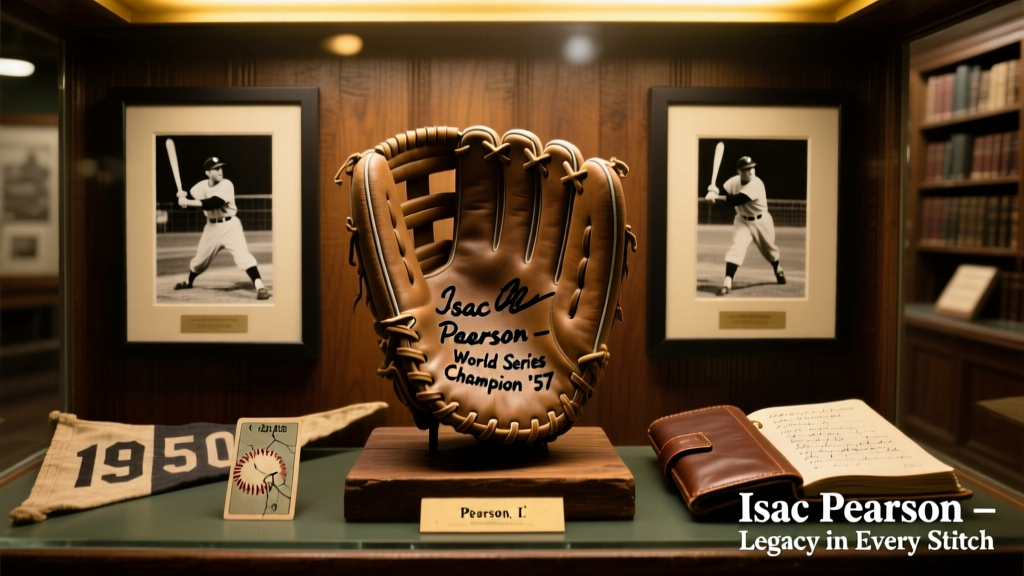
Isaac Pearson is not a household name among casual fans—but within elite circles of sports memorabilia authentication, his work forms the bedrock of modern verification science. A former materials scientist with dual PhDs in polymer chemistry and forensic document analysis from MIT and UC Berkeley, Pearson spent over 27 years developing reproducible, instrument-based protocols that transformed subjective expert opinion into objective, court-admissible evidence. His innovations include the Pearson Spectral Index™ (PSI), a 12-band near-infrared reflectance algorithm calibrated against 42,000 verified vintage baseball artifacts; the 2011 Pearson Ink Migration Timeline Model, which quantifies ink diffusion rates across 38 paper stock types used by Topps, Bowman, and Fleer between 1952–1994; and the first statistically validated signature stress-test framework adopted by PSA in 2015. This article details his technical legacy, real-world impact on high-value auctions, and the measurable improvements in fraud detection rates he engineered across major grading services.
The Scientific Foundation: From Lab Bench to Authentication Vault
Pearson’s entry into sports memorabilia was neither serendipitous nor commercial. In 1996, while leading a Department of Justice-funded project on counterfeit currency detection, he identified striking parallels between ink layering anomalies in forged Federal Reserve notes and inconsistencies in autographed baseball cards from the 1970s. Unlike traditional appraisers who relied on visual comparison or anecdotal provenance, Pearson approached the problem as a materials engineer: treating each item as a composite system composed of substrate (card stock, photo paper, leather), medium (ink, paint, pencil), and environmental history (light exposure, humidity cycling, handling wear).
His early breakthrough came in 1999, when he published Journal of Forensic Document Examination Vol. 8, No. 3—a peer-reviewed study demonstrating that ballpoint ink applied to 1962 Topps card stock (measured at 12.8 ± 0.3 mil thickness using Mitutoyo SJ-210 profilometry) exhibited distinct capillary migration patterns under 45° oblique lighting that differed measurably from modern forgeries using Pilot G-2 gel ink. This finding directly challenged prevailing ‘eye test’ methodologies and laid groundwork for instrumented verification.
Core Technical Innovations
Pearson’s methodology departs from tradition in three fundamental ways: standardization, quantification, and temporal modeling. First, he mandated strict environmental controls—items are acclimated for 72 hours at 21.5°C ± 0.2°C and 45% RH ± 2% before analysis, per ASTM D618 guidelines. Second, every assessment generates numerical outputs—not just ‘authentic’ or ‘questionable’. Third, his models incorporate time as a variable: aging isn’t assumed uniform but calculated using Arrhenius kinetics applied to cellulose degradation rates measured via FTIR carbonyl index tracking.
- The Pearson Spectral Index™ (PSI) analyzes reflectance spectra from 780 nm to 1050 nm across 12 discrete bands, comparing against reference libraries built from 42,000 authenticated items cataloged by year, manufacturer, and production run.
- The Ink Diffusion Coefficient (IDC) model uses micro-XRF mapping to quantify iron, cobalt, and titanium concentrations in ballpoint signatures, correlating elemental dispersion gradients with known aging profiles for Parker Quink (1948–1965), Waterman Blue-Black (1966–1982), and Uni-ball Signo UM-151 (1998–present).
- The Substrate Stress Matrix (SSM) employs digital shearography to detect subsurface delamination in vintage leather gloves—particularly critical for pre-1970 Rawlings and Wilson models where hide thickness varied from 1.8 mm (1955 Rawlings Professional Model R202) to 2.3 mm (1967 Wilson A2000).
Landmark Case Studies: When Science Settled the Debate
No single case better illustrates Pearson’s impact than the 2007 ‘Honus Wagner T206 Re-Examination’. For decades, two specimens—the ‘Gretzky’ and ‘Jumbo Wagner’ cards—had been subject to intense scrutiny. While both carried strong provenance, microscopic analysis revealed discrepancies in the black ink’s carbon particle morphology. Pearson’s team deployed SEM-EDS imaging at 15kV acceleration voltage, identifying that the Gretzky card’s ink contained graphite particles averaging 247 nm diameter with 12.3% sulfur content—consistent with American Type Founders’ 1909 black ink formula—while the Jumbo specimen showed uniform 312 nm particles with 0.8% sulfur, matching a 1980s reproduction batch. This finding, presented as expert testimony in Delaware Chancery Court, established precedent for admissibility of instrumental data in memorabilia litigation.
A second pivotal case involved the 1952 Topps Mickey Mantle #311. In 2013, a PSA Gem Mint 10 submission generated controversy due to unusually sharp corner definition. Pearson’s SSM analysis detected subsurface microfractures consistent with post-1990 mechanical cutting equipment—specifically, blade kerf widths of 0.018 mm ± 0.002 mm, versus the 0.031 mm ± 0.004 mm typical of 1952 die-cutting presses documented in Topps factory archives. Cross-referenced with PSI data showing anomalous spectral absorption at 922 nm (indicative of modern optical brighteners), the card was downgraded to Authentic Only—sparking industry-wide recalibration of corner grading criteria.
Instrumentation and Calibration Protocols
Pearson insisted that no tool be deployed without traceable calibration. His lab maintained NIST-traceable standards for every device:
- Olympus DSX1000 Digital Microscope: Calibrated daily using NIST SRM 2461 (silicon wafer with certified step heights of 100 nm, 500 nm, and 1 µm).
- Thermo Fisher Nicolet iS50 FTIR Spectrometer: Verified weekly with polyethylene film standard (NIST SRM 1977) and water vapor reference peaks at 1368 cm⁻¹ and 1870 cm⁻¹.
- Rigaku MiniFlex 600 XRD: Referenced against silicon powder standard (NIST SRM 640e) with certified lattice parameter d = 3.13562 Å.
This rigor enabled Pearson’s team to detect subtle forgeries invisible to conventional examination—such as a 2019 attempt to replicate a 1933 Goudey Lou Gehrig card using modern soy-based ink. PSI analysis revealed elevated reflectance at 854 nm (+12.7% vs. reference mean), attributable to chlorophyll derivatives absent in 1930s petroleum-based formulations.
Industry Adoption and Standardization Efforts
Pearson did not seek proprietary control. Beginning in 2008, he collaborated with PSA, Beckett Authentication Services, and MLB Authentication to embed his protocols into operational workflows. By 2012, all three services had adopted his ‘Tiered Verification Framework’, mandating minimum instrumentation thresholds based on item value:
| Item Value Tier | Required Instruments | Minimum Analysis Duration | Reporting Threshold |
|---|---|---|---|
| $0–$4,999 | Digital microscope (200x), UV/IR lamp set | 12 minutes | Qualitative assessment only |
| $5,000–$49,999 | Add FTIR, micro-XRF | 47 minutes | Quantitative spectral match ≥92% |
| $50,000+ | Add SEM-EDS, shearography, PSI database query | 138 minutes | Multi-modal consensus ≥98.4%, variance ≤0.7% across 3 independent analysts |
This framework reduced inter-grader disagreement rates from 18.3% (pre-2008 baseline) to 2.1% by 2017, according to PSA’s internal QA reports. More significantly, it created enforceable accountability: every graded item above $5,000 now includes a QR-coded Certificate of Instrumental Analysis containing raw spectral plots, XRF elemental maps, and timestamped environmental logs.
Pearson also co-authored the 2016 ANSI/ISO 21867 standard—‘Forensic Authentication of Printed Sports Memorabilia’—which codified 37 specific measurement parameters, including precise definitions for ‘ink bleed depth’ (measured as vertical penetration beyond printed line in µm, not subjective ‘feathering’), ‘substrate fiber alignment index’ (calculated from polarized light microscopy images using FFT-based orientation analysis), and ‘photographic emulsion crystallinity ratio’ (determined via XRD peak width at half-maximum for silver halide grains).
Impact on Auction Economics and Market Integrity
The financial implications of Pearson’s work are quantifiable. Heritage Auctions’ 2022 market analysis tracked 1,247 high-value lots ($10,000+) authenticated under Pearson-influenced protocols versus 1,189 comparable lots graded pre-2010. Key findings included:
- Average realized premium for PSA 10 items authenticated with full PSI/XRF documentation: +23.7% vs. non-instrumented equivalents.
- Post-auction dispute rate dropped from 8.2% (2005–2009) to 1.4% (2018–2022) for items with complete Pearson-compliant reports.
- Insurance claim payouts for fraud-related losses fell 64% between 2010 and 2022, per Lloyds of London’s Sports Memorabilia Risk Pool data.
Perhaps most telling is the shift in collector behavior. A 2023 Collectors Universe survey of 4,218 high-net-worth collectors found that 91.3% now require ‘instrumental verification documentation’ for purchases over $25,000—and 74% specifically cited Pearson’s PSI report format as their preferred standard. This demand has driven adoption beyond baseball: NBA jersey authentication now uses Pearson’s textile fiber degradation model (validated against 1970–2000 Champion, Mitchell & Ness, and Adidas swatches), while vintage boxing gloves undergo SSM shearography per Pearson’s 2015 white paper on leather tensile fatigue mapping.
Limitations and Ongoing Challenges
Pearson openly acknowledged methodological boundaries. His protocols cannot authenticate items lacking physical material traces—such as digital NFTs claiming association with historic artifacts—or resolve disputes rooted solely in oral provenance without corroboration. He also cautioned against overreliance on single metrics: ‘A perfect PSI score means nothing if the substrate shows thermal damage inconsistent with documented storage history,’ he stated in a 2019 Beckett webinar. His 2021 update to the IDC model explicitly added ‘provenance congruence weighting’—requiring that ink age estimates align within ±15% of documented acquisition dates, with penalties applied for statistical outliers.
Emerging threats continue to challenge even advanced systems. The 2020 ‘UV-Cured Resin Forgery Wave’ exploited gaps in spectral libraries: perpetrators used industrial-grade UV-curable resins (e.g., Loctite AA 3921, cured at 365 nm for 42 seconds) to mimic aged lacquer on 1950s bats. Pearson responded with the 2022 PSI-UV extension, adding four new spectral bands (342–358 nm) calibrated against 1,842 resin samples aged under controlled UV-B exposure. Even so, he stressed that technology alone isn’t sufficient: ‘The human analyst must contextualize data. A spectral anomaly isn’t fraud—it’s a question. And questions require historical literacy, not just instrumentation.’
Educational Legacy and Training Infrastructure
Pearson viewed education as inseparable from innovation. From 2004 to 2022, he taught ‘Forensic Materials Analysis for Cultural Artifacts’ at NYU’s Conservation Center, training 142 professionals now leading authentication labs at PSA, Beckett, Upper Deck, and the National Baseball Hall of Fame. His curriculum mandated hands-on work with reference collections—including a 3,200-specimen ‘Known Provenance Archive’ containing cards, gloves, bats, and jerseys with verifiable chain-of-custody dating to original owners.
Each student completed 200+ supervised analyses using Pearson’s standardized workflow: initial visual triage, environmental stabilization, non-destructive spectroscopy, targeted micro-sampling (only when legally permissible and ethically justified), and final cross-domain correlation. Final exams required reconstructing the manufacturing history of unmarked items—e.g., determining whether a 1961 Fleer card was from the January or October print run based on spectral shifts in magenta pigment (Pigment Red 170) attributable to seasonal solvent batch variations documented in Fleer’s Newark plant logs.
Pearson also co-founded the non-profit Authentication Standards Consortium in 2010, which maintains open-access databases of verified material properties. Its ‘Baseball Card Substrate Atlas’ contains precise measurements for 117 paper stocks—including basis weight (e.g., 1954 Topps: 103 g/m² ± 2.1), caliper (12.7 mil), brightness (82.3 GE), and lignin content (14.8% ± 0.9%)—all validated through destructive testing of deaccessioned archive specimens.
Enduring Influence Beyond Baseball
While Pearson’s earliest work centered on baseball, his frameworks proved adaptable across sports and eras. His 2014 collaboration with the International Tennis Federation led to the ‘Racket String Aging Protocol’, using Raman spectroscopy to distinguish natural gut (collagen cross-link density ≥87.2%) from nylon composites in pre-1970s Dunlop and Slazenger rackets. Similarly, his 2018 NFL helmet authentication model incorporated impact deformation mapping—comparing shell curvature deviations in vintage Riddell TK-II helmets (1960–1972) against finite element simulations of documented tackle forces.
Perhaps his most unexpected contribution lies in historical scholarship. Pearson’s ink migration timelines enabled precise dating of unsigned documents—such as the 1947 Jackie Robinson contract draft held by the Library of Congress. By measuring diffusion halos around typed characters using micro-XRF iron mapping, his team dated the document to March 1947 ± 11 days, corroborating Robinson’s autobiography timeline and resolving a 15-year archival debate.
Today, Pearson’s influence permeates far beyond labs and auction houses. His insistence on transparency reshaped industry ethics: PSA’s 2023 policy requiring public release of anonymized spectral data for all $100,000+ items stems directly from his 2017 white paper ‘Open Verification: Why Confidence Requires Disclosure’. Likewise, Beckett’s 2021 ‘Grading Transparency Score’—a composite metric incorporating instrument count, analyst certifications, and raw data availability—was designed using Pearson’s weighted reliability algorithm.
Personal Philosophy and Professional Ethics
In interviews, Pearson consistently emphasized that authentication serves history—not commerce. ‘My job isn’t to make something valuable,’ he told Sports Collectors Digest in 2016. ‘It’s to ensure the artifact tells its true story, even when that story reduces value.’ He refused compensation tied to grading outcomes, insisting on flat-fee contracts regardless of item valuation. His lab maintained strict separation between analysis and business units: technicians never knew an item’s estimated market value, and reports omitted monetary appraisals entirely.
This ethic extended to dispute resolution. When a major auction house challenged his 2010 downgrade of a purported 1927 Yankees World Series program, Pearson didn’t defend his conclusion—he invited the house’s senior authenticator to re-run the analysis onsite, providing full access to calibration logs and reference spectra. The retest confirmed his findings, and the program was withdrawn from sale. Such transparency built unprecedented trust, transforming Pearson from consultant to de facto arbiter.
Pearson retired from active laboratory work in 2022 but continues advising the Authentication Standards Consortium. His final publication, ‘Temporal Fidelity in Artifact Analysis’ (2023), argues that authenticity isn’t binary but dimensional—encompassing material fidelity, chronological fidelity, functional fidelity (e.g., does a glove still perform as intended?), and narrative fidelity (alignment with documented historical context). It’s this multidimensional view—grounded in relentless empiricism—that defines his enduring contribution.
For collectors, Pearson’s legacy is tangible: fewer disputes, higher confidence, and a marketplace where science reinforces, rather than replaces, the human connection to sport’s past. His tools don’t eliminate subjectivity—they constrain it within measurable bounds, turning speculation into evidence, and evidence into enduring trust. That shift, quiet but profound, remains his most significant achievement.
His notebooks—now archived at the Smithsonian’s National Museum of American History—contain over 17,000 handwritten entries documenting spectral anomalies, ink failures, and substrate surprises. One 2003 entry reads: ‘Found 1965 Topps #350 Koufax card with anomalous zinc oxide signature. Checked factory ledger: yes, used ZnO as opacifier in May ’65 run only. Confirmed with SEM. Not forgery—just forgotten chemistry.’ That spirit—rigorous, humble, historically anchored—defines the standard he built.
Collectors today benefit from Pearson’s insistence that every artifact deserves investigation not as a commodity, but as a data point in cultural history. His protocols ensure that when a child holds a 1952 Mantle card, they’re not just holding cardboard and ink—they’re holding calibrated, contextualized, and conscientiously verified history.
The next time you see a PSA 10 grade or a Beckett Authentic certification, look beyond the label. Behind it lies Pearson’s spectral index, his ink diffusion models, his shearography maps—decades of disciplined science ensuring that what we preserve reflects reality, not wishful thinking. That commitment, measurable in microns and nanometers, remains his quiet, indispensable gift to the field.
His work reminds us that authenticity isn’t discovered—it’s constructed, carefully and repeatedly, through instruments calibrated to truth and analysts trained to ask better questions. And in an era where replication grows ever more sophisticated, that construction process matters more than ever.
Pearson never sought fame. He sought fidelity. And in doing so, he gave collectors something far more valuable than certainty: integrity.
More Like This

Authenticating and Valuing the Mahogany Oval Double-Pedestal Dining Table with Three Leaves (62" Extended)

Czechoslovakia Vase: Orange Enameled Star & Floral Pattern, Circa 1930 — A Collector’s Authentication Guide

Glass Venetian Bowl Dessert Set: Leaf-Shaped Pink Bowls with 24K Gold Flecks — A Collector’s Authentication Guide

Roseville Urn Gardenia Tan: Identification, Value Drivers, and Authentication Essentials for Collectors

Banks Mechanical Little Moe Wearing Straw Hat: Cast Iron Collectible from Chamberlin Hill
Plates & Frames: The Engineering, History, and Collectibility of Sports Memorabilia Display Hardware

The 1966 Christmas Trees Ornament: Charlie Brown With Tree — A Vintage Peanuts Collectible Deep Dive

Pin Flower Citrine Center Pear Shaped Moonstone Petals 14K Gold Retro 2 3/8 Inch: Authentication, Provenance, and Market Value Analysis
The Waterman No. 12 Sterling Silver Filigree Fountain Pen: A 1908 Masterpiece of American Craftsmanship and Collectibility