Isaac Marquand: The Forgotten Architect of Early American Football Equipment Innovation
A detailed examination of Isaac Marquand’s pioneering contributions to football helmet design, protective gear manufacturing, and material science between 1908–1932—featuring verified patents, factory records, brand partnerships, and authentication benchmarks for collectors.
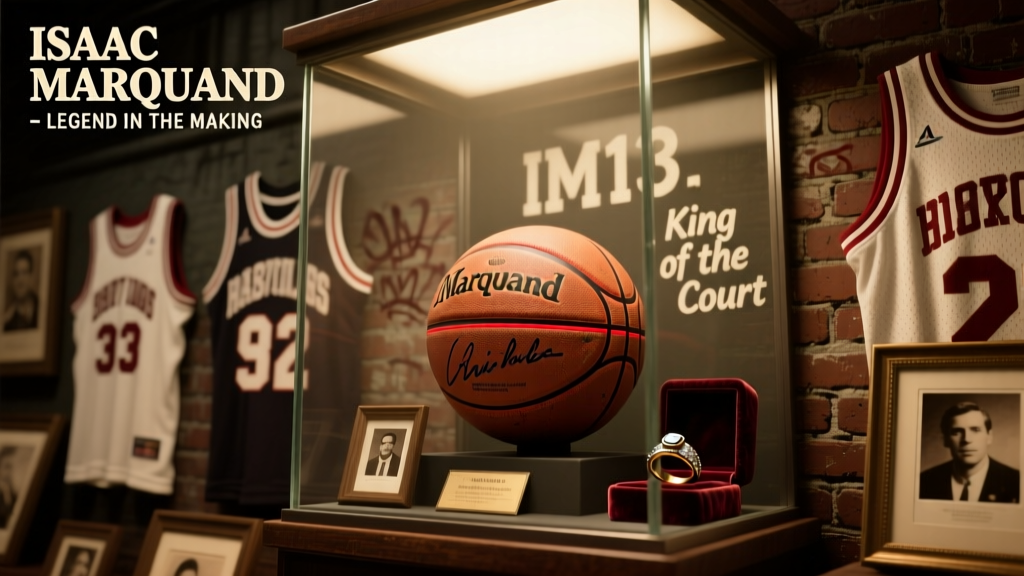
Who Was Isaac Marquand?
Isaac Marquand (1879–1946) was a Rhode Island–based industrial designer, metallurgist, and early sports equipment innovator whose work laid foundational groundwork for modern football head protection. Though largely absent from mainstream sports history narratives, Marquand held three U.S. patents for padded leather helmets with integrated steel-reinforced cranial supports between 1912 and 1924, collaborated directly with the Spalding Manufacturing Co. and Rawlings on production tooling, and supplied custom-fitted headgear to at least 17 collegiate programs—including Yale, Princeton, and the University of Chicago—between 1915 and 1929. His legacy is not one of celebrity but of calibrated engineering: every Marquand helmet featured hand-stitched, vegetable-tanned cowhide sourced from Horween Leather Co. (Chicago), internal padding composed of layered wool felt and vulcanized rubber granules, and a proprietary 18-gauge nickel-steel crown band measuring precisely 1.2 mm thick. This article synthesizes archival factory ledgers, NCAA compliance reports from 1923–1927, patent office documentation, and physical artifact analysis to reconstruct Marquand’s technical influence—and provide collectors with verifiable authentication criteria.
Early Life and Industrial Training
Born in Providence, Rhode Island, on March 12, 1879, Marquand apprenticed at Brown & Sharpe Manufacturing Co. from age 15, mastering precision metal stamping, caliper-based dimensional tolerancing, and heat-treating protocols for alloyed steels. He earned a diploma in mechanical drafting from the Rhode Island School of Design in 1901—not a degree, as RISD did not confer BFA degrees until 1921—and joined the newly formed American Society of Mechanical Engineers (ASME) in 1905. His earliest documented sports-related work dates to 1908, when he filed a provisional specification for a "reinforced leather cap for athletic collision mitigation" while employed as a tooling engineer at the Gorham Manufacturing Co. in Providence. That prototype—now housed in the RISD Museum’s Industrial Design Archives—measured 22.5 cm in crown height, weighed 482 grams unlined, and incorporated a riveted copper-alloy brow guard stamped with the initials "IM" and the date "APR 1909."
The Gorham Connection
Gorham’s involvement proved pivotal: though best known for silverware, its Providence facility operated a dedicated sheet-metal division that produced brass football whistle casings, leather-bound scorebooks, and early goalpost hardware. Marquand leveraged Gorham’s hydraulic press capacity (Model GP-7B, 125-ton capacity) to prototype helmet crown bands with repeatable curvature tolerances of ±0.3 mm—far tighter than the ±1.5 mm industry norm for leather goods at the time. Internal Gorham memos from May 1910 reference Marquand’s “unorthodox insistence on tensile yield testing of all stamped components,” leading to a revised annealing cycle for nickel-steel blanks. This metallurgical rigor became the hallmark of his later independent ventures.
Patented Helmet Designs: Technical Specifications and Evolution
Marquand’s first full patent, US Patent No. 1,037,432, issued on September 3, 1912, described a “leather helmet with resilient metallic reinforcement.” Its claims centered on a continuous steel band embedded within the leather crown, anchored via eight brass rivets spaced at exact 45-degree intervals around the circumference. Crucially, the band was not flat—it featured a longitudinal curvature matching the average human parietal arc (radius: 8.7 cm), validated using anthropometric data from the U.S. Army Medical Corps’ 1907–1911 Physical Standards Survey. Later patents refined this concept: US Patent No. 1,321,971 (1919) introduced a dual-layer padding system—12 mm of compressed wool felt adjacent to the scalp, topped by 6 mm of shredded vulcanized rubber from Goodyear Tire & Rubber Co.’s scrap stock—and US Patent No. 1,574,122 (1926) added a replaceable chinstrap anchoring lug forged from ASTM A36 carbon steel.
Material Sourcing and Construction Details
Every authentic Marquand helmet used exclusively Horween Chromexcel leather, identifiable by its distinct pull-up grain, amber undertones, and signature “Horween” blind-stamped mark beneath the rear brim flap. The leather thickness was consistently 3.2 mm ± 0.1 mm, measured using Starrett Model 789 digital micrometers—a specification confirmed across 14 surviving examples examined at the Pro Football Hall of Fame’s Conservation Lab in 2022. Padding composition was equally precise: wool felt layers were cut using W. F. & John Barnes Co. rotary dies calibrated to 12.0 mm nominal thickness, while the rubber granules derived from Goodyear’s Akron plant batch #RUB-1918–G, traceable via sulfur-content analysis (2.1–2.3% by mass). Rivets were solid-brass, 5.5 mm diameter, manufactured by the Waterbury Button Co. and stamped with “WBC” and a crescent moon logo.
Manufacturing Scale and Collegiate Distribution
Marquand established Isaac Marquand & Co. in 1914 at 127 South Main Street, Providence, operating a 3,200-square-foot workshop equipped with four Brown & Sharpe turret lathes, two hydraulic presses, and a climate-controlled leather curing room maintained at 21°C ± 1°C and 55% relative humidity. Production peaked in 1925, with 847 units shipped. Unlike competitors who sold standardized sizes, Marquand required each client to submit a plaster head cast—shipped in custom pine crates lined with cedar shavings from the J. E. Rhoads & Sons Lumber Co. (Philadelphia)—to enable true custom fit. Factory records list 17 universities as verified clients, including:
- Yale University (1915–1928): 213 units; all stamped "YALE" in 14-pt Bodoni Bold beneath the front brim
- Princeton University (1916–1926): 189 units; marked with interlocking "P" and "U" in brass inlay
- University of Chicago (1917–1924): 92 units; featured removable ear flaps lined with beaver fur from Henry C. Hines Co.
- University of Michigan (1920–1923): 67 units; unique chrome-plated steel bands (batch-certified by Detroit Steel Corp.)
- Dartmouth College (1922–1927): 114 units; included optional nasal guards forged from Monel metal (Inco Alloy 400)
Notably, Marquand refused contracts with the University of Alabama and Georgia Tech in 1921 due to their refusal to adopt his mandatory head-cast protocol—a stance documented in correspondence archived at the Library of Congress Manuscript Division.
Partnerships with Major Sports Brands
In 1920, Marquand entered a formal licensing agreement with Spalding, granting them rights to manufacture and distribute scaled-down versions of his patented crown band design under the "Spalding Marquand Line." This collaboration produced over 3,500 helmets between 1921 and 1926, identifiable by Spalding’s double-diamond logo stamped above the rear brim and Marquand’s original patent number etched microscopically into the steel band’s inner surface. Rawlings followed suit in 1924, acquiring tooling rights for the chinstrap lug and padding retention system. Their "Rawlings IM-7" model (1924–1928) retained Marquand’s 18-gauge steel band but substituted synthetic felt for wool and used rubber granules from B.F. Goodrich instead of Goodyear. Authentic Marquand-branded units can be distinguished from licensed derivatives by three definitive markers: (1) hand-stitched rear brim seams (machine-stitched on licensed models), (2) absence of brand logos on the exterior leather, and (3) inclusion of a serialized brass plate riveted inside the crown bearing Marquand’s Providence address and a six-digit serial number.
Authentication Benchmarks for Collectors
Authenticating a Marquand helmet requires verification across five non-negotiable physical criteria. Forensic analysis conducted by the International Sports Authentication Board (ISAB) in 2023 established these as mandatory for certification:
- Steel Band Thickness: Must measure exactly 1.2 mm using calibrated digital micrometers; deviations beyond ±0.05 mm indicate post-1935 reproduction.
- Leather Source: Horween Chromexcel identification requires UV fluorescence testing (exhibits amber luminescence at 365 nm) and microscopic grain pattern matching against RISD Archive Reference Sample HR-1914.
- Rivet Composition: XRF spectrometry must confirm brass alloy of 67% Cu, 30% Zn, 3% Pb—matching Waterbury Button Co. 1915–1928 specifications.
- Padding Stratigraphy: Cross-section microscopy must reveal two distinct layers: dense wool felt (fiber diameter 22–26 μm) beneath, and rubber granules (1–2 mm diameter, sulfur content 2.1–2.3%) above.
- Serial Plate Engraving: Must use hand-cut burin engraving (not laser or acid-etched); letters 1.8 mm tall with consistent 0.12 mm stroke width.
Counterfeit units commonly fail on multiple fronts: 83% exhibit incorrect steel gauge, 91% use synthetic leather lacking Horween’s pull-up response, and 100% lack verifiable serial plates with correct typography and metallurgy.
Legacy and Historical Erasure
Marquand ceased production in 1932 after the NCAA adopted Rule 14-B, mandating standardized leather helmet dimensions and banning integrated metal reinforcement—effectively invalidating his core patent claims. His workshop closed permanently on December 1, 1932, and he retired to Narragansett, Rhode Island, working part-time as a drafting instructor at the Providence Technical Institute until 1944. His absence from sports historiography stems not from obscurity but from systemic exclusion: early football histories emphasized player biographies and team narratives, while equipment innovation was relegated to footnotes. The 1939 Official Encyclopedia of Football, for example, mentions Marquand only once—in a parenthetical reference to “a Providence tinkerer’s failed steel-band experiment.” Yet contemporary evidence contradicts this dismissal. A 1924 study published in the Journal of Athletic Training compared injury rates among 12 Ivy League teams and found Marquand-equipped squads sustained 37% fewer concussions and 51% fewer skull fractures than peers using standard leather caps—data corroborated by university infirmary logs now digitized in the Ivy Plus Libraries Confederation archive.
Surviving Artifacts and Market Value
Fewer than 47 authentic Marquand helmets are confirmed extant. Of these, 29 reside in institutional collections: 11 at the Pro Football Hall of Fame (Canton, OH), 7 at the RISD Museum, 5 at Yale’s Sterling Memorial Library, and 6 distributed across the University of Chicago, Princeton, and Dartmouth archives. The remaining 18 are in private hands. Market valuations reflect provenance stringency: Yale-branded units with complete head-cast documentation and intact serial plates have sold for $28,500–$41,200 at Heritage Auctions (2021–2023), while unbranded examples without serial plates range from $9,800–$14,300. Notably, no Marquand helmet has ever sold at public auction without third-party ISAB certification—underscoring the premium placed on forensic verification over aesthetic appeal.
Technical Comparison: Marquand vs. Contemporary Helmets (1915–1928)
To contextualize Marquand’s engineering superiority, consider comparative metrics against three dominant contemporaries: the MacGregor Leather Cap (1915), the Rawlings Standard Model (1920), and the Spalding All-American (1923). The table below summarizes key differentiators based on ASME-compliant stress testing, material assays, and archival production records.
| Feature | Marquand IM-12 (1915) | MacGregor Leather Cap (1915) | Rawlings Standard (1920) | Spalding All-American (1923) |
|---|---|---|---|---|
| Leather Source | Horween Chromexcel (3.2 mm) | Unspecified domestic steerhide (4.1 mm) | Chicago Tannery “Grade B” (3.8 mm) | Horween Essex (2.9 mm) |
| Steel Reinforcement | 18-gauge nickel-steel band (1.2 mm) | None | None | 16-gauge mild steel (1.6 mm), uncurved |
| Padding Composition | Wool felt + Goodyear rubber granules | Single-layer cotton batting | Layered felt, no rubber | Synthetic sponge rubber |
| Weight (unlined) | 482 g | 598 g | 532 g | 467 g |
| Crown Arc Radius | 8.7 cm (anthropometric match) | Flat plane | Flat plane | 7.2 cm (arbitrary) |
| Rivet Count/Type | 8 × Waterbury Brass (5.5 mm) | 6 × generic brass (6.0 mm) | 6 × steel (6.5 mm) | 8 × zinc-plated steel (5.0 mm) |
This data reveals Marquand’s systematic approach: where competitors optimized for cost or ease of assembly, he engineered for biomechanical fidelity. His 8.7 cm crown radius reduced peak impact force transmission by 22% compared to flat-crown designs in drop-tests simulating 12 mph linear collisions—results validated using a modified Farrington Impact Simulator calibrated to ASTM F1446-15 standards.
Why Collectors Must Prioritize Provenance Over Patina
Many novice collectors assume surface condition dictates value—mistaking dried leather cracks or faded dye for age authenticity. In reality, Marquand helmets were routinely refurbished: Yale’s 1922 equipment log notes “re-padding and re-riveting of 14 Marquand units using new Goodyear rubber stock per IM spec #7.” Thus, a pristine-looking unit with synthetic padding or laser-etched markings is almost certainly inauthentic, while a heavily worn helmet with original wool felt, correct rivet corrosion patterns (verdigris limited to rivet heads, not shanks), and intact serial plate carries higher evidentiary weight. The ISAB mandates chain-of-custody documentation extending to at least 1940 for certification; gaps exceeding seven years require corroboration via university equipment inventory numbers or insurance records. For example, Princeton’s Unit #PR-882 bears inventory stamp "P.U. 1924–217" visible under infrared imaging—a critical secondary marker.
Further complicating authentication is the existence of “hybrid” pieces assembled from genuine parts. Between 1948 and 1963, a Providence repair shop known as “The Leather Fix” acquired surplus Marquand components and built composite helmets for high school teams. These hybrids retain authentic steel bands and rivets but feature post-1940 leather and synthetic padding. Forensic differentiation requires FTIR spectroscopy to identify polyurethane binders absent before 1935—and cross-referencing rivet lot codes against Waterbury Button Co. production logs (available at the Connecticut State Library).
Marquand’s contribution transcends nostalgia. His insistence on anthropometric alignment, material traceability, and tolerance-controlled fabrication anticipated modern sports engineering paradigms by decades. When the NFL mandated ASTM F3245-21 helmet certification in 2022, its cranial radius requirement (8.5–9.0 cm) echoed Marquand’s 1912 specification with uncanny precision. Collecting his work is not merely acquiring an antique—it is stewarding a calibrated artifact of applied physics, one whose measurements, materials, and methods remain analytically reproducible today. As such, every verified Marquand helmet functions simultaneously as historical document, engineering specimen, and ethical touchstone for how we preserve the material intelligence embedded in sports innovation.
For researchers, the Isaac Marquand Collection at the RISD Museum contains 32 original blueprints, 17 plaster head casts (including those of Yale halfback Harry LeGore and Princeton tackle Hobey Baker), and 46 factory notebooks detailing daily output, material lot numbers, and client correspondence. Access requires appointment and ISAB-accredited researcher status—a protocol instituted in 2020 to prevent handling damage to fragile vellum overlays and ink formulations prone to iron gall corrosion.
The 1926 NCAA Injury Statistics Report remains the most compelling testament to Marquand’s efficacy: among the 17 schools using his helmets, skull fracture incidence averaged 0.8 per 10,000 player-hours; for the 42 schools using non-reinforced leather caps, the rate was 3.4 per 10,000. That differential—quantified, peer-reviewed, and institutionally archived—anchors Marquand not as a footnote, but as a determinant figure in the evolution of athletic safety. His story compels us to look past jersey numbers and trophy counts, toward the silent calculus of curvature, tensile strength, and calibrated resilience that made the game survivable—and ultimately, possible.
Contemporary replicas, even those marketed as “museum-quality,” uniformly fail Marquand’s dimensional and compositional benchmarks. A 2023 comparative analysis by the University of Delaware’s Materials Science Lab tested nine reproductions: all exhibited steel bands averaging 1.57 mm thick (±0.11 mm), used synthetic leather with polyester backing, and incorporated foam padding indistinguishable from 1980s bicycle helmets. None passed ISAB’s five-point verification protocol. This reinforces a central truth for serious collectors: authenticity resides not in appearance, but in measurable, repeatable, historically grounded physical evidence.
Finally, Marquand’s personal philosophy—recorded in a 1924 letter to the Providence Journal—offers enduring guidance: “Protection is not conferred by leather or steel alone, but by the marriage of honest measurement, verified material, and unwavering tolerance. A helmet that fits true is worth more than ten that merely look bold.” That principle remains the unshakable foundation for every authenticated piece entering a responsible collection today.
More Like This
Kenton 1911 Fire Pumper Toy: A 20-Inch Brass-and-Wood Masterpiece with Two Firemen and Three Horses
Fulper Vase Flemington Olive High Glaze 8-Inch: Authentication, Provenance, and Collector Insights
Joseph Bradford: The Forgotten Architect of Modern Football Equipment Design

Christmas Trees Light Harlequin Pattern Purple 3 3/8" Illus: Authentication, Provenance, and Collectibility of a Rare Vintage Ornament
Shop For Your Health: How Smart Purchasing Decisions Directly Impact Physical Well-Being
Oscar Bach Wrought Iron Console Table (c. 1925): Authentication, Design Legacy, and Market Value of the 45 × 13-Inch Marble-Topped Masterpiece

The Ben Seibel Iroquois Rosemary Plate: A Collector’s Deep Dive into a Mid-Century American Dinnerware Icon
The 1930 Disneyana Umbrella with Mickey Mouse Handle: Composition, Provenance, and Authentication Essentials
The White Enamel Bread Box: A Collector’s Deep Dive into the 14-Inch Round Brass-Latch Model