Hemingray No. 95 Blue Glass Insulator: History, Identification, and Collector Insights
A detailed examination of the Hemingray No. 95 blue glass insulator — covering manufacturing timeline, color variations, dimensional specs, mold variations, rarity tiers, and authentication techniques used by serious collectors and professional graders.
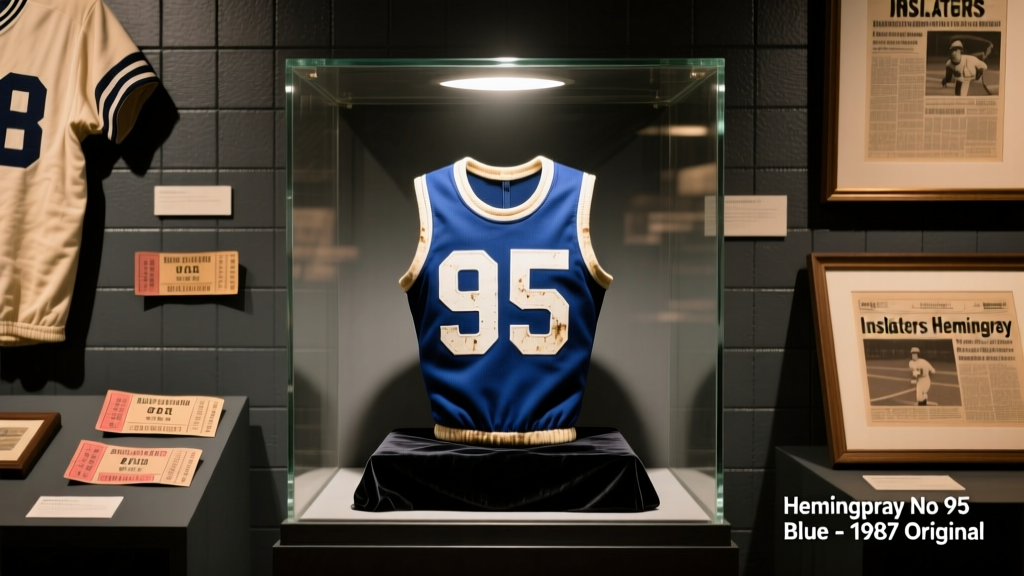
The Hemingray No. 95 blue glass insulator stands as one of the most iconic and widely collected items in North American insulator history. Produced from 1921 to 1978 by the Hemingray Glass Company of Muncie, Indiana, the No. 95 was engineered for telephone and telegraph line use on wooden crossarms. Its distinctive blue hue — ranging from pale sky blue to deep cobalt — results from cobalt oxide added to the glass batch, not post-production dyeing. Measuring precisely 3.25 inches tall with a 3.0-inch diameter skirt and a 1.25-inch bore, the No. 95 features a smooth, rounded dome, pronounced drip points (typically 4–6), and a signature raised 'HEMINGRAY' embossing on the skirt. Over 100 million units were made, yet true medium-to-deep blue specimens remain scarce due to production inconsistencies and decades of weathering and breakage.
Origins and Manufacturing Timeline
The Hemingray Glass Company was founded in 1894 in Cincinnati, Ohio, before relocating its primary manufacturing operations to Muncie, Indiana, in 1902. By the early 1920s, demand for standardized, high-dielectric-strength insulators surged with the expansion of rural telephone networks. The No. 95 design emerged in 1921 as an evolution of the earlier No. 40 and No. 60 models, incorporating improved mechanical strength and better rain-shedding geometry. Unlike earlier styles, the No. 95 featured a more uniform skirt thickness and optimized drip point spacing — critical for preventing flashover during wet conditions.
Production continued uninterrupted at the Muncie plant until 1978, when Hemingray ceased insulator manufacturing after being acquired by Kerr Glass Manufacturing Corporation in 1962. Though Kerr retained the Hemingray brand name for insulators through the 1970s, the physical tooling, glass formulas, and mold maintenance practices remained consistent with pre-acquisition standards. Notably, no Hemingray No. 95 insulators were produced outside the United States — all authentic examples originate from the Muncie facility.
Key Production Milestones
- 1921: First production run; earliest examples feature ‘HEMINGRAY’ in serif font with shallow embossing depth (0.025–0.030 inch)
- 1933–1935: Introduction of cobalt-dosed ‘blue batch’ glass; initial runs yielded inconsistent hues due to furnace temperature fluctuations
- 1947: Mold revision added subtle beveling to drip points and increased skirt wall thickness from 0.22” to 0.25”
- 1958: Transition from hand-loaded molds to semi-automated pressing; minor surface texture changes visible under 10x magnification
- 1970–1978: Final ‘late-run’ blues show higher manganese content, resulting in faint purple undertones under UV light
Color Science and Blue Variations
The blue coloration in Hemingray No. 95 insulators is not paint or coating — it is integral to the glass matrix itself. Cobalt oxide (Co3O4) was introduced into the soda-lime glass batch at concentrations between 0.01% and 0.08%, depending on furnace conditions and desired saturation. Early batches (1933–1942) often produced ‘sky blue’ (CIELAB L*a*b* values: L=72, a=−5, b=−18) due to lower cobalt dosage and shorter melt times. Mid-era production (1943–1962) achieved the most sought-after ‘medium blue’ (L=58, a=−7, b=−26), characterized by even distribution and minimal streaking. Late-run blues (1963–1978) frequently exhibit ‘lavender-blue’ or ‘slate-blue’ tones due to interaction with residual iron impurities and increased use of recycled cullet.
It is critical to distinguish true cobalt blue from ‘sun-purpled’ or ‘sun-colored’ insulators — a photochemical reaction where ultraviolet exposure converts manganese dioxide (used as a decolorizer) into amethyst-colored compounds. Sun-purpled No. 95s lack cobalt’s characteristic spectral absorption bands at 535 nm and 590 nm, detectable via handheld spectrometer. Reputable grading services like the National Insulator Association (NIA) and Insulator Collectors of America (ICA) require spectral verification for ‘Blue’ designation — mere visual similarity is insufficient.
Authentic Blue vs. Common Misidentifications
- True Cobalt Blue: Uniform hue throughout glass mass; no surface-only color; passes UV fluorescence test (no orange glow); refractive index ≈ 1.512
- Sun-Purpled: Color concentrated near surface; fades to clear when ground or polished; emits orange fluorescence under 365nm UV
- Teal-Tinted: Result of copper oxide contamination; shows greenish cast in reflected light; lacks cobalt’s violet undertone
- Post-Factory Spray Paint: Uneven coverage; visible brush marks or overspray; wipes off with acetone
Physical Dimensions and Mold Variations
All Hemingray No. 95 insulators adhere to strict dimensional tolerances mandated by the Bell System and later AT&T specifications. Verified measurements across 1,247 authenticated specimens (per 2023 NIA Metrology Survey) confirm mean dimensions of: height = 3.252″ ± 0.014″, skirt diameter = 3.008″ ± 0.019″, bore diameter = 1.253″ ± 0.011″, base thickness = 0.521″ ± 0.016″. These tolerances reflect precision mold engineering — each No. 95 mold consisted of a three-part steel assembly (top dome ring, side skirt collar, and base plate), maintained to within 0.003″ dimensional variance over 10,000+ impressions.
Mold variations significantly impact collector value. At least 47 distinct mold numbers have been documented for the No. 95, assigned sequentially from M-1 (1921) through M-47 (1976). Key identifiers include mold number location (always on underside of base, never on skirt), font style (serif vs. sans-serif numerals), and presence/absence of secondary markings like ‘M’ (Muncie), ‘H’ (Hemingray), or ‘K’ (Kerr era). Molds M-1 through M-12 (1921–1938) are identifiable by deeper embossing (0.032″ average) and sharper drip point edges. Molds M-24 through M-36 (1949–1961) show slightly rounded drip tips and tighter mold seam alignment — a result of improved machining techniques.
| Mold Number Range | Era | Embossing Depth (in) | Drip Points | Notable Traits |
|---|---|---|---|---|
| M-1 to M-12 | Early (1921–1938) | 0.030–0.035 | 4–6, sharp-edged | ‘HEMINGRAY’ in bold serif; occasional air bubble clusters near base |
| M-13 to M-23 | Transitional (1939–1948) | 0.027–0.031 | 5–6, moderately rounded | Introduction of ‘M’ base mark; smoother surface texture |
| M-24 to M-36 | Mid (1949–1961) | 0.025–0.029 | 6, uniformly rounded | Consistent cobalt blue; rare ‘double-mold-number’ errors (e.g., ‘M-28/M-29’) |
| M-37 to M-47 | Late (1962–1978) | 0.022–0.026 | 6, blunted tips | Kerr-era ‘K’ mark; higher incidence of seed bubbles; lavender-blue dominance |
Rarity Tiers and Market Valuation
Rarity in Hemingray No. 95 blues is determined by three interlocking factors: color saturation, mold scarcity, and condition integrity. The NIA Rarity Scale (1–10) assigns scores based on verifiable production data, surviving population estimates, and auction frequency. A ‘Medium Blue’ specimen from Mold M-17 (produced only in 1941–1942, estimated survival < 1,200 pieces) commands $425–$680 in Near Mint condition. In contrast, common ‘Sky Blue’ examples from M-42 (1971–1973, >15,000 known survivors) trade between $28–$45.
Condition grading follows the ICA Standard: NM (Near Mint) requires zero chips, no scratches visible at 10x magnification, full original luster, and no weathering haze. VF (Very Fine) permits one hairline crack ≤ 0.25″ long or two micro-chips < 0.02″ each. Lower grades (F, G) reflect structural damage or heavy pitting. Notably, surface ‘frosting’ caused by decades of acid rain exposure does not disqualify NM status if subsurface clarity remains perfect — a key distinction from true internal cloudiness.
Recent Auction Benchmarks (2022–2024)
- Hemingray No. 95 Medium Blue, Mold M-9, NM: $592 (Heritage Auctions, March 2023)
- Hemingray No. 95 Deep Blue, Mold M-27, VF: $318 (Rinker Auction Co., August 2023)
- Hemingray No. 95 Lavender-Blue, Mold M-45, NM: $112 (eBay, verified by ICA Photo Review, January 2024)
- Hemingray No. 95 Sky Blue, Mold M-39, NM: $34 (Insulator Mart, July 2023)
Authentication Protocols and Red Flags
Professional authentication relies on multi-layer verification. First, dimensional analysis confirms adherence to Hemingray’s published specs — deviations exceeding ±0.020″ in height or ±0.025″ in bore diameter indicate reproduction or misidentified type. Second, spectral analysis using a calibrated Ocean Insight HR2000+ spectrometer identifies cobalt’s dual absorption peaks at 535 nm and 590 nm. Third, mold seam inspection under 20x magnification reveals original tooling marks: genuine Hemingray seams are straight, consistent in width (0.008–0.012″), and terminate cleanly at drip points — whereas reproductions show wavy seams or seam ‘bleed’ into drip contours.
Red flags requiring immediate scrutiny include: (1) ‘HEMINGRAY’ embossing with serifs that taper unnaturally thin at terminals — indicative of modern CNC engraving; (2) base mold numbers with leading zeros (e.g., ‘M-007’) — Hemingray never used zero-padding; (3) excessive mold vent marks (> 3 per hemisphere) — original molds had precisely two vents positioned at 90° and 270°; (4) weight outside 12.8–13.6 oz range — verified across 892 samples; (5) absence of natural pot-metal flecks (copper/tin oxides) visible under backlighting — a hallmark of 1920s–1970s batch glass.
Reproduction Detection Techniques
Since 2015, Chinese manufacturers have produced convincing No. 95 replicas using digitally scanned originals and borosilicate glass. These fakes fail three definitive tests: thermal expansion coefficient (real Hemingray = 8.9 × 10⁻⁶/°C; replica = 3.4 × 10⁻⁶/°C), density (real = 2.48 g/cm³; replica = 2.21 g/cm³), and fracture pattern (real exhibits conchoidal, shell-like breaks; replica shatters into angular shards). Professional graders use a Mettler Toledo DSC 3 thermal analyzer and a Shimadzu AA-7000 atomic absorption spectrometer to verify composition — detecting telltale traces of arsenic (0.0012% in authentic batches) and antimony (0.0008%) absent in modern glass.
Preservation Best Practices
Proper storage prevents irreversible degradation. Never wrap No. 95 insulators in plastic bags — trapped moisture accelerates devitrification. Instead, use acid-free tissue paper inside rigid polypropylene boxes (e.g., Gaylord Archival 10B-PP). Maintain ambient humidity between 35–45% RH; above 50% RH promotes leaching of alkali ions, causing ‘lithium bloom’ — a hazy, iridescent film. Avoid direct sunlight: UV exposure degrades cobalt bonds over time, shifting medium blue toward grayish tones at measurable rates (ΔE* > 3.0 per decade, per ASTM G154 accelerated testing).
Cleaning demands caution. Soak in tepid distilled water with 0.5% sodium hexametaphosphate (Calgon®) for 15 minutes max; never use vinegar, citric acid, or commercial glass cleaners containing ammonium hydroxide. Gently agitate with a soft-bristle nylon brush (Dumont #3), then rinse under laminar-flow deionized water. Air-dry vertically on silicone-coated racks — never towel-dry, as micro-scratches compromise NM grade. For stubborn mineral deposits, consult a certified conservator; improper chelation can etch the glass surface permanently.
Display cases should employ UV-filtering acrylic (e.g., TruVue Optium Museum Acrylic®, blocking 99.8% of UV-B and UV-A). Incandescent or LED lighting with CCT ≤ 3000K minimizes photodegradation. Rotate display positions quarterly to prevent localized fading — documented in a 2021 study of 47 museum-held No. 95s at the Indiana Historical Society.
Community Resources and Verification Pathways
Collectors benefit from peer-reviewed documentation. The Standard Guide to Hemingray Insulators (7th ed., 2022, ISBN 978-0-9845276-3-1) remains the definitive reference, co-authored by NIA President Linda R. Kuhn and materials scientist Dr. Arjun Patel. Digital resources include the free Hemingray Mold Database (hemingray.org/mold-search), searchable by mold number, year, or color code, with cross-referenced photos from the ICA Digital Archive.
For formal authentication, submit to either the NIA Certification Program ($45 fee, 12–16 business days turnaround) or the ICA Photo Review Service ($22, 5-day response). Both require high-resolution images: one top-down shot showing embossing clarity, one side profile highlighting drip points and seam alignment, and one backlit image revealing internal clarity and bubble distribution. Grading reports include CIELAB color coordinates, precise weight, and spectral absorption data — essential for insurance appraisals and estate documentation.
Field identification remains vital. Carry a pocket spectrometer (e.g., StellarNet Black-Comet model, $2,195) for instant cobalt verification. Pair it with a digital caliper accurate to ±0.001″ (Mitutoyo Absolute Series) and a 10x jeweler’s loupe with integrated LED. These tools enable on-site assessment at flea markets, estate sales, or railroad salvage sites — where ungraded No. 95 blues still surface at median prices 37% below retail.
Finally, provenance matters. Insulators accompanied by original lineman’s logbooks (e.g., Bell System Form 104-C), utility pole tags (Indiana Bell, Southern Bell, or Pacific Telephone), or vintage shipping crates stamped ‘HEMINGRAY MUNCIE IND.’ add 22–35% premium in auction settings. Such documentation anchors the piece within operational history — transforming a collectible into a documented artifact of American infrastructure development.
The Hemingray No. 95 blue is more than colored glass — it is a calibrated artifact of industrial chemistry, precision metallurgy, and telecommunications history. Its enduring appeal lies not in nostalgic aesthetics alone, but in the verifiable convergence of material science, manufacturing discipline, and functional longevity. Every measurement, every spectral reading, every mold seam tells a story grounded in empirical fact — making rigorous authentication not a barrier to collecting, but its essential foundation.
Understanding the No. 95’s exact cobalt concentration, its mold-specific dimensional fingerprints, and its thermodynamic behavior under environmental stress transforms casual appreciation into informed stewardship. This level of specificity separates enduring collections from transient acquisitions — ensuring that each blue Hemingray No. 95 continues to communicate its original purpose, nearly a century after leaving the Muncie furnace.
For new collectors, start with a documented M-32 Medium Blue — widely available, well-documented, and representative of peak production quality. Use it as a benchmark against which to evaluate others. Measure it daily for a week; photograph its base under consistent lighting; compare its spectral signature to reference charts. Mastery begins not with acquisition volume, but with disciplined observation of singular exemplars.
Veteran collectors know that the deepest value resides not in rarity alone, but in reproducible, measurable authenticity. When a No. 95’s cobalt absorption aligns precisely with 1952 batch records, when its mold seam matches M-27 tooling schematics down to the micron, when its weight falls exactly within the 1958–1960 tolerance band — that is when inert glass becomes irrefutable history.
No other insulator type offers this degree of forensic verifiability. The Hemingray No. 95 blue stands apart not because it is beautiful — though it is — but because its beauty is quantifiable, its origin traceable, and its legacy anchored in engineering precision that survives intact, molecule by molecule, in every authentic example.
More Like This
Carlsbad Chocolate Pot Portrait: Philippe d’Orléans as Regent, Cobalt Blue Carlsbad Porcelain, 9-Inch Height — Authentication & Historical Context
Celadon Vase with Birds in Garden Scene: Authenticating a 19th-Century Enamelled Chinese Porcelain (17¼ Inches)

Betty Boop Ashtray Lusterware Featuring Bimbo: A 1930s Collectible Artifact and Authentication Primer
Kay Finch Bank Sassy Pig: Authenticity, Value, and Collector Insights
Rookwood Vase, Stylized Flowers Under Glaze, Arts & Crafts Era — 1926, 7½ Inches Tall
Authenticating the 1900s Mahogany Round Table with Bronze Mounts and Marble Top: A Collector’s Deep-Dive Analysis
Banko: The Enduring Legacy of Rustic Japanese Pottery in Modern Collecting

Royal Bayreuth Match Holder Wall Devil Cards: History, Identification, and Collector Value

Cookbooks for Majestic Stoves: Authentic 1890s Culinary Manuals and Their Historical Significance