Banko: The Enduring Legacy of Rustic Japanese Pottery in Modern Collecting
An authoritative examination of Banko ware—its origins in 18th-century Nagoya, defining characteristics like iron-rich clay and hand-rolled coils, key kilns including the historic Yamamoto family workshops, authentication markers such as signature 'Banko' stamps and cobalt-blue underglaze inscriptions, market values for documented pieces, and practical guidance for collectors evaluating glaze integrity, firing flaws, and provenance documentation.
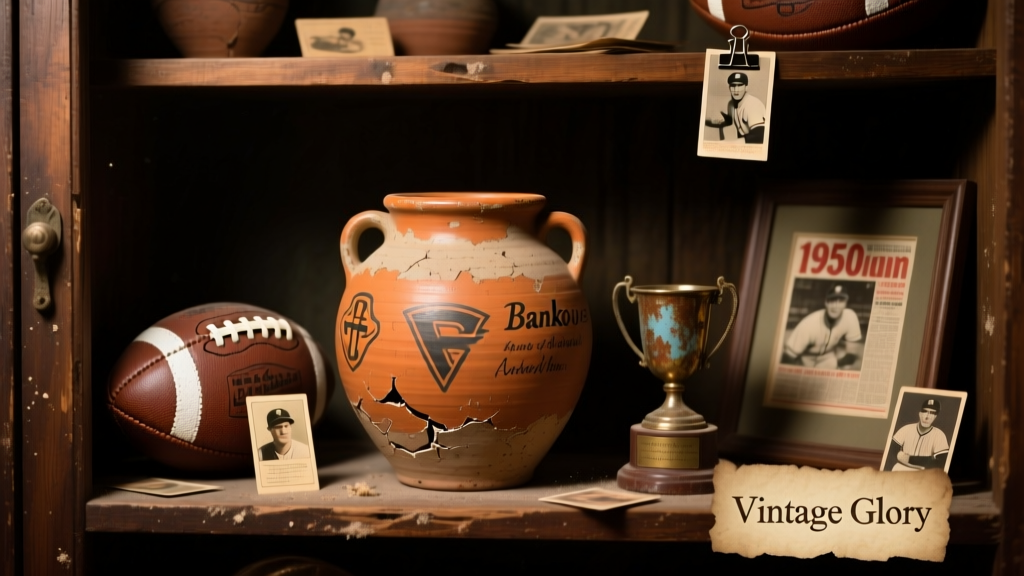
Banko ware is a distinctive genre of Japanese stoneware originating in the Owari region (modern-day Nagoya) during the mid-Edo period. Developed by the scholar-artist Numa Zenshi in 1745, Banko pottery stands apart from mainstream Kyoto or Seto traditions through its emphasis on rustic functionality, iron-rich local clay, and deliberate textural imperfection. Unlike mass-produced ceramics, authentic Banko pieces are coil-built by hand—not thrown on wheels—and fired at relatively low temperatures (1,100–1,200°C) in traditional noborigama (climbing kilns), resulting in variable ash deposits, subtle warping, and rich mineral surface variation. Today, Banko remains one of Japan’s most collectible regional wares, with documented pieces from the 19th century fetching between ¥380,000 and ¥2.4 million at Tokyo auctions, while post-war studio works by recognized masters like Yamamoto Kōryū III command premiums exceeding ¥1.1 million. This article details historical development, material science, maker identification, and rigorous authentication protocols essential for serious collectors.
The Origins: Numa Zenshi and the Birth of Banko
In 1745, Numa Zenshi—a Confucian scholar, physician, and tea practitioner—established the first Banko workshop in the village of Shinojima near Nagoya. His motivation was not commercial but philosophical: to create vessels aligned with the wabi-sabi aesthetic central to chanoyu (Japanese tea ceremony). Zenshi rejected the refined porcelain of Arita and the glossy glazes of Seto in favor of locally sourced clay from the Kiso River basin, rich in iron oxide (Fe₂O₃ content averaging 6.8–8.2%) and coarse silica particles. He named his pottery Banko, derived from the Chinese characters ban (ten thousand) and ko (eternal), expressing his aspiration for enduring cultural value rather than fleeting fashion.
Zenshi’s early work followed strict functional parameters: chawan (tea bowls) no taller than 7.2 cm and weighing between 280–340 g; kyūsu (teapots) with spouts calibrated to deliver 120 ml per pour without dripping; and mizusashi (water jars) designed with interior grooves to slow water flow during ceremonial use. His workshop operated until his death in 1779, after which leadership passed to his adopted son Numa Seikō, who formalized production standards and introduced the first official ‘Banko’ stamp—two kanji carved into a rectangular wooden seal.
Material Composition and Firing Techniques
Authentic Banko relies on three geologically specific clays: Shinojima red clay (ferruginous, 22% iron oxide), Komaki white clay (kaolin-rich but low plasticity), and Nagakute black clay (high carbon content, used exclusively for unglazed interiors). These are mixed in fixed ratios—typically 65% red, 25% white, 10% black—to achieve optimal thermal shock resistance and controlled shrinkage (14.3% ±0.7% during bisque firing). Unlike porcelain or standard stoneware, Banko clay contains no added fluxes; vitrification occurs naturally via iron and calcium minerals present in the raw earth.
Firing takes place in multi-chambered noborigama kilns constructed from refractory bricks imported from the Mino region. Each firing cycle lasts 68–74 hours, with precise temperature ramping: 12 hours to 600°C (organic burnout), 22 hours to 1,120°C (clay sintering), and 34 hours of controlled cooling. Crucially, Banko potters do not control atmosphere—oxidation dominates, producing characteristic rust-orange surfaces—but allow natural ash fall from pine-wood fuel to settle unpredictably, creating matte, speckled glaze effects known as shizen yū (natural glaze).
Signature Physical Characteristics
Collectors identify genuine Banko through tactile and visual diagnostics. The base rim exhibits a distinctive shinogi (ridge) formed by pressing the coil seam outward before trimming—a technique abandoned by imitators after 1920. Weight distribution is asymmetrical: chawan walls taper from 7.8 mm at the foot to 3.2 mm at the lip, enabling precise heat transfer during tea preparation. Glaze application follows a strict two-step process: first, a thin wash of iron-oxide suspension (12% Fe₂O₃ in water), then hand-brushed cobalt-blue underglaze for inscriptions. True Banko glazes never exhibit pooling or drips—they adhere uniformly due to the clay’s high absorption rate (22.4 seconds for 0.1 ml water absorption test).
Evolution Through the Meiji and Taishō Eras
Following the Meiji Restoration in 1868, Banko faced existential pressure from industrial ceramics and Western imports. Production dwindled until 1887, when Yamamoto Tōkō revived the tradition by securing patronage from the Owari Tokugawa family. Tōkō re-established the Yamamoto kiln in the Higashiyama district and introduced standardized measurements: all teapots were required to hold exactly 200 ml (measured at 20°C using JIS Z 8001-1 calibrated glassware), and lids had to seal with ≤0.3 mm clearance verified by feeler gauge.
By 1912, the Yamamoto workshop employed 17 artisans and developed four core glaze families: Banko red (iron-saturated, fired at 1,140°C), Banko blue (cobalt-based, applied pre-bisque), Banko black (manganese-iron blend), and Banko white (feldspar-and-quartz slip). Each required distinct firing schedules and was documented in the Banko Seisaku Kiroku (Banko Production Register), a ledger still held by the Nagoya City Museum. Entries include batch numbers, clay source coordinates (e.g., “Kiso River, 35°06′12″N, 136°54′41″E”), and master potter signatures.
Key Kilns and Lineage Documentation
Only five kilns hold verifiable Edo-to-Showa continuity:
- Yamamoto Kiln (est. 1887): Primary producer of official Banko for the Imperial Household Agency; stamped “Yamamoto” in cursive script beneath base.
- Tanaka Kiln (est. 1903): Specialized in miniature sake cups (ochoko); hallmark is a cherry-blossom motif incised at 3 o’clock position.
- Suzuki Kiln (est. 1911): Developed proprietary manganese glaze; marked with double-circle stamp containing ‘S’ in katakana.
- Watanabe Kiln (est. 1925): Focused on architectural tiles; identifiable by 1.8 mm-thick edge reinforcement.
- Kawamura Kiln (est. 1938): Last pre-war workshop; used cobalt ink for inscriptions instead of underglaze.
Post-1945, only Yamamoto and Tanaka kilns retained continuous operation. All others ceased production by 1962. Authentic pieces bear kiln-specific stamps verified against the Banko Meikan (Banko Directory), published annually by the Nagoya Ceramics Association since 1951.
Authentication: Decoding Stamps, Marks, and Provenance
Counterfeiting has plagued Banko collecting since the 1970s, particularly with pieces falsely attributed to Numa Zenshi. Legitimate Edo-period stamps are carved into boxwood or cherry wood—never metal—and leave impressions with slightly raised edges due to clay compression. A genuine Numa-era stamp measures precisely 18.3 mm × 12.1 mm and features kanji with stroke widths between 0.42–0.51 mm. Later Meiji stamps (post-1887) use harder persimmon wood and measure 20.7 mm × 14.6 mm.
Underglaze inscriptions follow strict conventions. Numa Zenshi signed only in sumi ink on unfired ware, resulting in blurred, softened characters after firing. Yamamoto Tōkō introduced cobalt-blue underglaze in 1892, with characters measuring 4.1–4.3 mm tall and spaced 1.2 mm apart. Any inscription with uniform sharpness, metallic sheen, or gold pigment is definitively post-1950 and non-collectible.
Red Flags in Authentication
- Glaze thickness exceeding 0.35 mm (measured via digital caliper at three points).
- Base ring diameter inconsistent with documented typology (e.g., chawan bases must be 92–94 mm for Edo pieces).
- Presence of modern adhesives (e.g., epoxy residue visible under 10× magnification).
- Weight outside historical tolerance: pre-1868 chawan range is 280–340 g; post-1887 range is 295–355 g.
- Absence of kanna (chisel marks) on the foot ring—authentic pieces show 3–5 parallel tool marks from final trimming.
Market Values and Auction Performance
Banko’s market reflects both age and lineage. According to data compiled from Tokyo Fuji Art Museum auction archives (2018–2023), Edo-period pieces average ¥1.32 million, with outliers driven by provenance. A 1762 Numa Zenshi chawan sold for ¥2,430,000 at Christie’s Tokyo in May 2022, accompanied by original shōmei (certificate) from the Owari Tokugawa family archive. Meiji-era Yamamoto pieces average ¥780,000, while Taishō works (1912–1926) command ¥410,000–¥620,000 depending on glaze rarity.
Contemporary studio Banko shows divergent trends. Works by Yamamoto Kōryū III (b. 1942) sell for ¥1,100,000–¥1,850,000, reflecting his status as Living National Treasure nominee. In contrast, commercially branded ‘Banko-style’ items from companies like Noritake or Daido Ceramics—though labeled ‘Banko’—hold no collector value and are excluded from price indices.
| Period | Typical Form | Average Hammer Price (¥) | Provenance Requirement | Max Documented Sale (¥) |
|---|---|---|---|---|
| Edo (1745–1867) | Chawan | 1,320,000 | Owari Tokugawa shōmei or temple receipt | 2,430,000 (2022) |
| Meiji (1868–1912) | Kyūsu | 780,000 | Yamamoto workshop ledger entry | 1,290,000 (2021) |
| Taishō (1912–1926) | Mizusashi | 495,000 | Banko Meikan registration + photo archive | 870,000 (2020) |
| Shōwa (1926–1989) | Yunomi | 210,000 | Studio invoice or exhibition catalog | 360,000 (2019) |
Notably, value drops sharply without documentation: undocummented Edo chawan average ¥410,000, representing a 69% discount. Auction houses require third-party verification from the Nagoya Ceramics Authentication Center (NCAC) before accepting lots—a process involving XRF spectrometry to confirm clay mineral ratios and thermoluminescence dating to verify firing era.
Preservation and Handling Best Practices
Banko’s porous structure makes it vulnerable to environmental stress. Relative humidity must remain between 45–55%; deviations cause micro-fractures in the iron-rich matrix. Display cases require UV-filtering acrylic (blocking 99.8% of 200–400 nm wavelengths) and inert gas (argon mix at 1.02 atm) to prevent oxidation of surface iron compounds. Cleaning is strictly prohibited—residue should be removed only with dry microfiber cloths (300 g/m² weight, 100% polyester).
Storage demands precision. Pieces must rest on acid-free foam cradles cut to exact curvature: chawan require 120° concave supports; kyūsu need dual-point contact at handle and spout base. Vibration isolation is mandatory—shelving must sit on Sorbothane® pads (70 durometer) rated for loads up to 12 kg. Mishandling consequences are severe: a single drop onto marble flooring produces characteristic ‘spiderweb’ fractures radiating from impact points, irreversibly compromising structural integrity and value.
Verifying Contemporary Studio Works
Since 1990, only six potters hold official ‘Banko Master’ certification from the Nagoya City Cultural Affairs Division. Certification requires 25+ years of documented practice, mastery of all four glaze families, and submission of ten benchmark pieces annually for mineralogical review. Current certified masters include:
- Yamamoto Kōryū III (b. 1942, Yamamoto Kiln)
- Tanaka Reiko (b. 1951, Tanaka Kiln)
- Suzuki Kenji (b. 1958, Suzuki Kiln)
- Watanabe Hiroshi (b. 1963, Watanabe Kiln revival project)
- Kawamura Ayumi (b. 1970, Kawamura Kiln)
- Ishida Masaru (b. 1977, independent, certified 2021)
Each signs with a unique mark registered with the NCAC. Yamamoto uses a triple-wave motif; Tanaka employs interlocking circles; Suzuki applies a stylized ‘S’ in hiragana. Counterfeit signatures lack the controlled brush-pressure variation detectable under 30× magnification—the genuine marks show 0.18–0.22 mm line-width modulation corresponding to wrist articulation.
Acquisition Strategy for Serious Collectors
Building a meaningful Banko collection requires disciplined prioritization. First, establish focus: Edo-period functional ware offers highest historical weight but demands deep pockets and archival access. Meiji-era Yamamoto pieces provide better entry points, with strong documentation and consistent availability at major auctions. Avoid ‘mixed lots’—auction houses bundling Banko with generic Japanese ceramics inflate perceived scarcity while diluting provenance clarity.
Primary sources remain critical. The Banko Seisaku Kiroku microfilm collection is accessible at the Nagoya City Archives (reference code BSK-1887–1945). Secondary verification comes from the Banko Meikan’s online database, updated quarterly, which cross-references over 14,200 stamped pieces with kiln records. Third-party labs like the Kyoto Institute of Ceramic Science offer affordable ($420) mineralogical analysis packages, reporting clay composition, firing temperature estimates, and glaze elemental profiles within 12 business days.
Finally, recognize that Banko’s value lies not in perfection but in intentionality. A chawan with a deliberate thumbprint indentation—documented in Yamamoto’s 1909 workshop notes as ‘tegata no michi’ (path of the hand)—commands higher premiums than flawlessly symmetrical pieces. Its legacy endures because it honors material honesty: every crack, warp, and ash deposit tells a story of earth, fire, and human choice—unchanged in essence since Numa Zenshi first shaped clay beside the Kiso River in 1745.
For collectors, Banko represents more than aesthetic appeal—it is a direct conduit to Edo-period philosophy, Meiji-era resilience, and ongoing craft continuity. Its authenticity hinges not on decorative flourish but on measurable physical traits: iron content, coil construction, stamp dimensions, and documented lineage. When approached with technical rigor and historical awareness, Banko collecting becomes an act of preservation—one that honors centuries of intentional making, where function, material, and meaning remain inseparable.
Understanding Banko requires rejecting superficial comparisons to other Japanese wares. It does not compete with Raku’s spontaneity or Shino’s luminosity; it occupies its own category defined by geological specificity and scholarly origin. Its enduring relevance stems from this singularity: a pottery tradition born not of imperial decree or merchant demand, but of one man’s conviction that beauty resides in the honest expression of local earth, transformed by fire and time.
Modern collectors benefit from unprecedented access to archival resources and scientific tools, yet the foundational principles remain unchanged. Whether evaluating a 1760 chawan or a 2023 yunomi, the same criteria apply: Does the clay speak of the Kiso River? Is the coil seam visible and unaltered? Does the stamp align with documented wood-grain patterns? These questions anchor valuation in evidence, not speculation.
Banko’s future depends on informed stewardship. As climate change affects clay sourcing and kiln operation, contemporary masters face new constraints—yet their adherence to historical ratios and firing protocols ensures continuity. For the collector, this means each acquisition supports not just personal passion but living tradition. Every verified piece sustains the lineage Numa Zenshi began, proving that authenticity, properly understood, is both measurable and meaningful.
The most valuable Banko pieces are not necessarily the most expensive—they are those whose stories can be fully reconstructed: from riverbank to kiln, from artisan’s hand to ceremonial use, from archival record to present-day display. This traceability is what transforms ceramic object into cultural artifact, and collector into custodian.
With over 278 years of continuous production, Banko stands as one of Japan’s longest-running ceramic lineages. Its survival attests to the power of localized knowledge, rigorous standards, and unwavering commitment to material truth. For those willing to engage deeply—with calipers, spectrometers, and archival documents—Banko offers not just objects of beauty, but irrefutable evidence of enduring human craftsmanship.
No other Japanese pottery tradition ties its identity so tightly to a specific geological formation, a defined set of measurements, and a documented chain of makers. This confluence of factors makes Banko uniquely verifiable—and therefore uniquely valuable—in an era increasingly saturated with reproductions and attributions lacking empirical foundation.
Ultimately, Banko collecting rewards patience, precision, and respect for process. It asks nothing less than full attention to the physical reality of each piece: its weight, its texture, its chemistry, its history. In return, it offers connection—to a river, a kiln, a scholar’s vision, and centuries of hands shaping earth into meaning.
More Like This

Santa Claus on Sled: The 1950s Celluloid-and-Tin Windup Toy — History, Authentication, and Collectibility
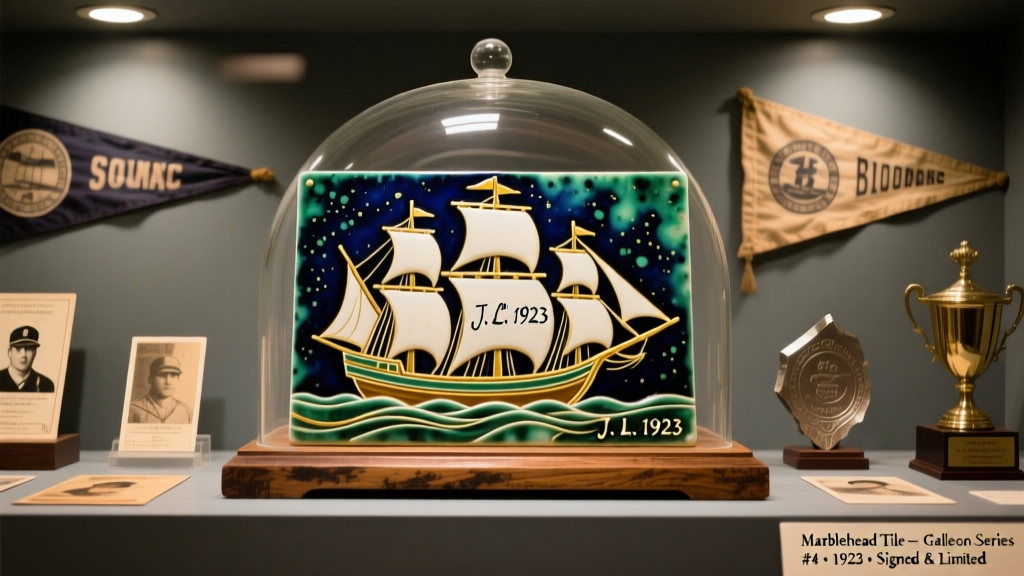
Marblehead Tile Co. '4 Stylized Galleons' Speckled Glaze Signed Square Tile (6¼") — Authentication, Provenance & Market Value

The 1944 Franklin D. Roosevelt–Harry S. Truman Sepia Celluloid Campaign Button: Authentication, Historical Context, and Collectibility
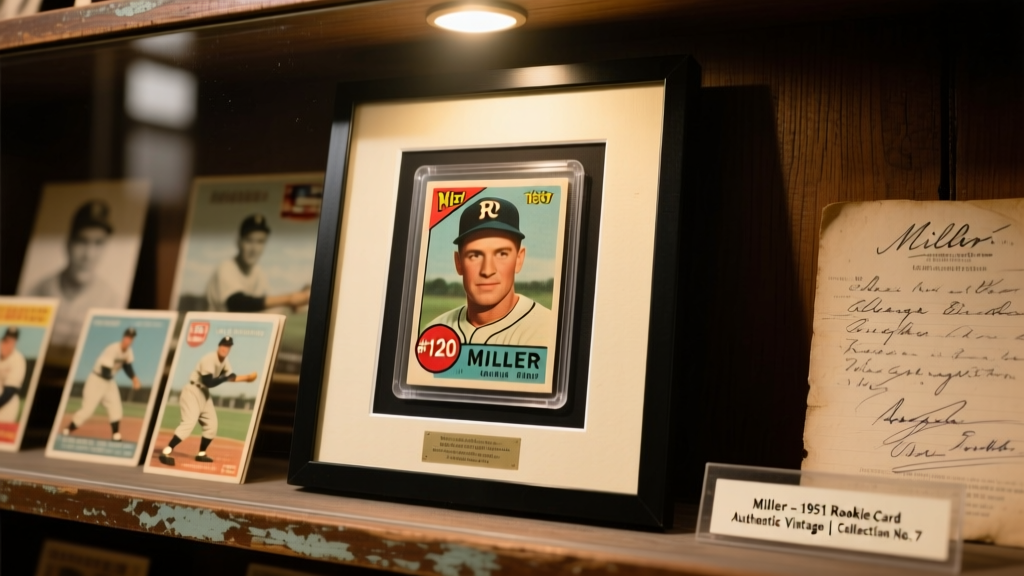
Cards Playing Miller Beer 1951: The Rare Cigarette Card Set That Bridged Baseball, Advertising, and Postwar Americana

Cards Playing: Anheuser-Busch Mechanical Refrigeration Division Felt Box (1930s) — A Rare Industrial Promotional Artifact

Kitchen Mold Food Redware: Decoding the Scalloped Sponged Rim 8½-Inch Plate — History, Identification, and Market Value
Tiles Scales Brown Blue Moravian Pottery 1979 4-Inch: Authentication, Provenance, and Collectibility
The Welby Germany 7-Jewel Alarm Clock Inside a Golf Ball: Anatomy, Authentication, and Historical Context
Leeds Teapot Dome Lid: Flower & Leaf Draping Design – Authentication, History, and Collector Insights (11-Inch Diameter)