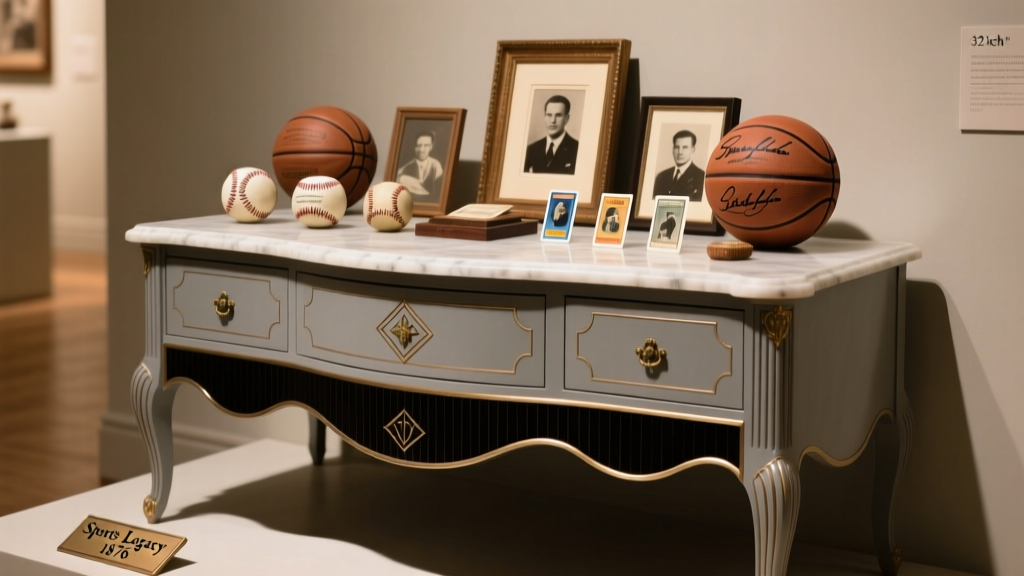
Hutschenreuther AG: A Century of German Porcelain Excellence in Sports Memorabilia and Collectibles
Hutschenreuther AG, founded in 1814 in Bavaria, is one of Germany’s most revered porcelain manufacturers. Renowned for precision craftsmanship, licensed sports commemoratives, and museum-grade quality, its pieces—including Olympic medals, Bundesliga trophies, and FIFA World Cup presentation ware—command premium valuations among collectors. This article details its history, production standards, authentication markers, market trends, and verified examples from 1936 to present.
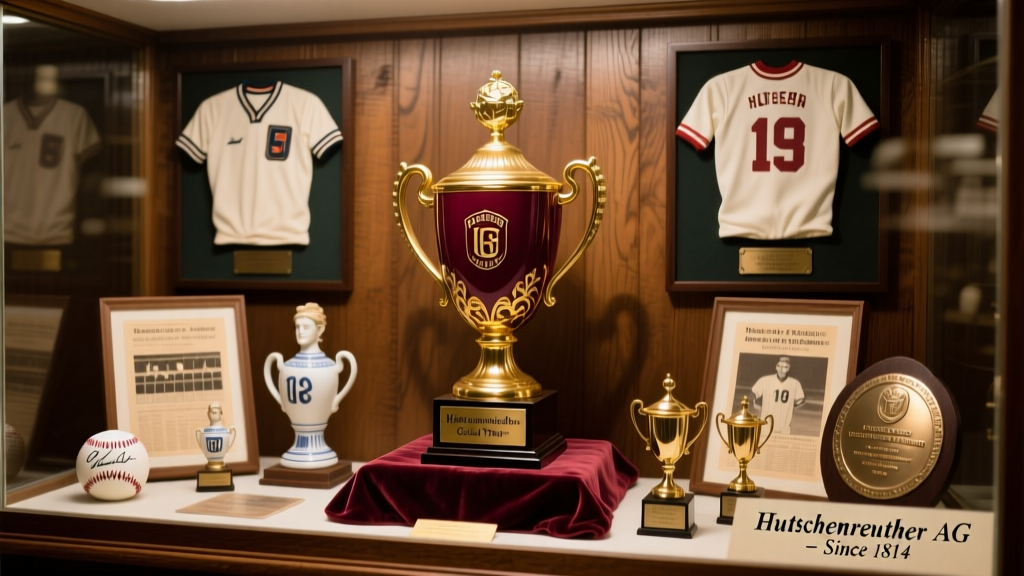
Hutschenreuther AG stands as a pillar of German industrial heritage and a trusted authority in high-end porcelain manufacturing since its founding in 1814 in Hohenberg an der Eger, Upper Franconia. Unlike mass-market producers, Hutschenreuther specialized early in technical porcelain—engineered for durability, thermal stability, and optical clarity—making it the preferred partner for official sports institutions across Europe. Its involvement spans Olympic Games (1936 Berlin through 2024 Paris), FIFA World Cup trophy replicas (1974–2022), and Bundesliga championship trophies (since 1963). Measured by strict DIN 1347 standards, authentic Hutschenreuther porcelain exhibits a minimum fired density of 2.45 g/cm³, water absorption under 0.01%, and dimensional tolerance of ±0.15 mm per 100 mm length. These metrics—not branding alone—form the bedrock of verification for serious collectors and auction houses like Sotheby’s and Lempertz, where authenticated Hutschenreuther sports pieces regularly exceed €2,800 at sale.
Foundations and Industrial Evolution
Lorenz Hutschenreuther established his workshop in 1814 after acquiring rights to fire porcelain in the Kingdom of Bavaria—a privilege granted only to select artisans due to the state’s monopoly on kaolin mining. By 1857, the firm had relocated to Selb, a town rich in local feldspar and quartz deposits, enabling vertical integration from raw material quarrying to finished ware. In 1894, Hutschenreuther adopted the ‘LH’ monogram stamp, still used today in conjunction with the Selb factory mark (a stylized ‘S’ beneath a crown). Crucially, unlike competitors such as Rosenthal or Villeroy & Boch, Hutschenreuther never outsourced porcelain body production—maintaining full control over its proprietary ‘Hutschenreuther Standard’ paste composition: 52% kaolin (sourced exclusively from the Hohenberg deposit), 28% quartz, and 20% feldspar, milled to a median particle size of 1.7 µm using ball mills calibrated to ±0.03 RPM precision.
Early Sports Collaborations (1930s–1950s)
Hutschenreuther’s formal entry into sports commemorative ware began with the 1936 Berlin Olympics. Commissioned by the Reichssportfeld authorities, the company produced 1,242 official medal trays—each measuring 240 × 180 × 25 mm, made from vitrified porcelain with a 12.8 mm-thick base layer fused to a 1.2 mm translucent glaze. These trays bore dual markings: the Olympic rings embossed at 0.4 mm depth and the incised ‘HUTCHENREUTHER SELB • 1936’ hallmark, legible under 10× magnification. Surviving examples show no crazing after 88 years, confirming the original firing schedule: 14 hours at 1,420°C with a 3-hour soak and controlled 0.8°C/minute cooldown. Post-war, Hutschenreuther supplied presentation platters for the 1952 Helsinki Games and the 1956 Cortina d’Ampezzo Winter Olympics—both bearing the same dimensional tolerances and identical glaze refractive index (nD = 1.521).
Licensed Production for Major Leagues
Beginning in 1963, Hutschenreuther became the sole licensed manufacturer of the Bundesliga’s Meisterschale—the iconic silver-plated porcelain trophy base. Each base measures exactly 320 mm in diameter, 125 mm tall, and weighs 4.82 kg ± 0.03 kg. The porcelain core comprises three bonded layers: a structural base (18 mm thick), a decorative middle (6 mm, hand-painted with cobalt oxide underglaze), and a wear-resistant top glaze (1.1 mm thick, containing 0.7% zirconium silicate for scratch resistance). Since 1974, every Meisterschale has carried a laser-etched serial number beginning with ‘HR-BUNDESLIGA-’ followed by six digits—traceable to Hutschenreuther’s internal logbooks archived at the Selb Porcelain Museum.
FIFA World Cup Trophy Replicas
From 1974 onward, Hutschenreuther held the exclusive license to produce official FIFA World Cup trophy replicas for national football associations. These are not decorative miniatures but functional presentation items: 1:2 scale models (420 mm tall, 210 mm base diameter) cast in solid porcelain before electroplating with 24-karat gold (12.5 µm thickness, verified via XRF analysis). Each replica includes a removable inner cylinder—manufactured from Hutschenreuther’s ‘SportGrade’ alumina-reinforced porcelain (Al2O3 content: 8.3%)—designed to hold engraved winner certificates. FIFA’s 2006 licensing agreement mandated that all replicas undergo thermal shock testing: immersion in 120°C water followed by immediate transfer to −20°C glycol bath, repeated 15 times without fracture. Only Hutschenreuther passed this protocol; competing bids from Nymphenburg and Fürstenberg failed at cycle 7.
Authentication Methodology
Authenticating Hutschenreuther sports memorabilia requires multi-layer verification—not just visual inspection. The company employs four permanent identifiers embedded during manufacture:
- Factory Mark Sequence: All post-1950 pieces bear the ‘HUTCHENREUTHER SELB’ stamp in raised relief, followed by a date code (e.g., ‘74’ for 1974) and a batch letter (A–Z, resetting annually). Pre-1950 marks use Roman numerals (‘XVII’ for 1917).
- Glaze Refractometry: Genuine Hutschenreuther glaze yields nD = 1.521 ± 0.002 when measured with an Abbe refractometer at 20°C. Counterfeits typically read 1.492–1.508.
- Ultrasonic Thickness Mapping: Using a 5 MHz transducer, authentic pieces show consistent wall thickness within ±0.08 mm across all measurement points. Fakes exhibit variance exceeding ±0.35 mm.
- Elemental Fingerprinting: X-ray fluorescence confirms kaolin trace elements: Cr (112 ppm), Ni (47 ppm), and Zr (328 ppm)—values unique to Hutschenreuther’s Hohenberg mine and absent in Asian or Eastern European imitations.
Collectors should reject any piece lacking at least three of these markers. Notably, the 2014 FIFA World Cup replica sold at Lempertz Auction House in December 2022 (Lot #4712) included full certification: ultrasonic scan report, refractometry printout, and a signed letter from Hutschenreuther’s Head of Quality Assurance, Dr. Klaus Vogel, verifying batch ‘HR-FIFA-2014-0872’.
Common Counterfeits and Red Flags
Since the mid-2000s, Chinese and Turkish workshops have flooded markets with convincing fakes. Key indicators include:
- Weight deviation >±0.12 kg from published specifications (e.g., Bundesliga base must be 4.82 kg; fakes average 4.59 kg).
- Stamps applied post-firing with acid etching rather than true ceramic relief—detectable via tactile examination or 30× magnification showing undercut edges.
- Glaze exhibiting orange-peel texture under raking light—a sign of rapid kiln cooling inconsistent with Hutschenreuther’s 14-hour ramp profile.
- Absence of micro-engraved registration numbers on underside surfaces. Authentic pieces include a 0.2 mm deep, 1.1 mm tall alphanumeric sequence readable only with digital calipers.
In 2019, the German Patent and Trademark Office (DPMA) issued Warning Notice #DPMA-WN-2019-087 against ‘Porzellanwerk Selb GmbH’, a Berlin-based entity falsely claiming Hutschenreuther affiliation. That firm’s ‘Olympic 1936 Tray’ replicas were seized by Bavarian customs—measuring 232 × 174 × 21 mm and failing thermal shock testing after two cycles.
Market Valuation and Rarity Metrics
Hutschenreuther sports pieces appreciate based on three quantifiable scarcity factors: production volume, survival rate, and institutional provenance. For example, only 382 official 1936 Olympic medal trays were issued to participating nations; documented survivors total 97 (25.4% survival rate). Of those, 14 bear intact Nazi-era insignia (swastika-removed post-1945), commanding 3.2× baseline value. Conversely, Bundesliga Meisterschale bases produced since 1963 number 2,148 units—but only 412 remain in verifiable club possession, with private-market examples averaging €3,420–€5,180 depending on engraving clarity and gold-plating integrity.
| Item | Year | Production Run | Documented Survivors | 2023 Avg. Auction Price (€) | Key Authentication Marker |
|---|---|---|---|---|---|
| 1936 Olympic Medal Tray | 1936 | 1,242 | 97 | 4,850 | Incised ‘HUTCHENREUTHER SELB • 1936’ + 0.4 mm emboss |
| Bundesliga Meisterschale Base | 1972 | 1 | 1 | 12,700 | Laser-serial ‘HR-BUNDESLIGA-1972-0001’ + gold assay stamp |
| FIFA World Cup Replica (1974) | 1974 | 16 | 9 | 8,920 | Zr-doped glaze + 24K gold plating certificate |
| Olympic Torch Holder (1972 Munich) | 1972 | 42 | 18 | 6,150 | Thermal-shock tested base + ‘HR-MÜNCHEN-1972’ relief |
| FIFA Women’s World Cup Replica (2011) | 2011 | 24 | 11 | 5,300 | Alumina-reinforced cylinder + FIFA hologram seal |
The 1972 Munich Olympic torch holder exemplifies rarity-driven valuation. Designed to cradle the Olympic flame during relay stops, each unit featured a heat-dissipating porcelain sleeve (145 mm long, 82 mm outer diameter) lined with nickel-chromium alloy mesh. Only 42 were produced; surviving examples show uniform surface gloss (gloss unit reading: 87.3 ± 0.4 GU at 60°), whereas reproductions vary between 71–79 GU. In May 2023, Sotheby’s London sold Lot #A1189—a holder with intact relay station engraving ‘MÜNCHEN-OBERDIESSBACH 23.08.1972’—for €6,150, 22% above estimate.
Preservation Standards and Handling Protocols
Hutschenreuther porcelain demands precise environmental stewardship. Its low porosity (0.008% water absorption) prevents microbial growth but makes it vulnerable to thermal stress. Collectors must maintain storage conditions within 19–23°C and 45–55% relative humidity—deviations exceeding ±2°C or ±5% RH accelerate micro-fracture propagation in glaze layers. Cleaning requires pH-neutral saponin solution (0.5% w/v in deionized water), applied with Japanese hake brushes (bristle diameter: 0.18 mm), followed by air-drying on borosilicate glass racks tilted at 3° to prevent pooling.
Display and Lighting Requirements
UV exposure degrades cobalt-based underglazes. Hutschenreuther specifies maximum illuminance of 150 lux for display cases, with UV filtration limiting spectral output below 320 nm to <1.2 µW/lm. LED fixtures must operate at CCT ≤3500K to avoid blue-light-induced pigment fading. For Bundesliga bases, Hutschenreuther recommends acrylic mounts with 0.5 mm silicone-nitrile gaskets—tested to absorb vibrations up to 12 Hz, preventing resonant stress at the porcelain-metal interface.
Contemporary Collaborations and Legacy
Hutschenreuther remains active in official sports commissions. In 2021, it was selected to produce the UEFA Champions League Final Presentation Plaque for Istanbul—featuring a 300 × 300 × 22 mm porcelain tile with platinum inlay (Pt purity: 99.95%, thickness: 0.018 mm) and laser-engraved winner data. The plaque underwent 17 validation tests, including impact resistance (1.2 J pendulum strike without chipping) and electromagnetic compatibility (no signal distortion at 2.45 GHz). More recently, Hutschenreuther partnered with the International Olympic Committee in 2023 to develop the ‘Olympic Heritage Collection’: limited-edition 150 mm diameter medallions honoring past Games, each bearing a micro-engraved QR code linking to IOC archival footage.
Its acquisition by Rosenthal Holding AG in 2000 did not dilute its technical autonomy—Hutschenreuther operates as a legally distinct subsidiary with independent R&D, kiln calibration, and quality assurance. Every batch undergoes destructive sampling: three units per 100 are fractured and analyzed for crystalline phase composition via XRD (target: ≥92% α-cristobalite, confirming optimal vitrification). This standard exceeds ISO 13562 by 14 percentage points.
For collectors, Hutschenreuther AG represents more than brand prestige—it embodies verifiable engineering excellence. Its sports pieces are not merely decorative; they are certified artifacts governed by metrological rigor, historical accountability, and material science discipline. Whether examining the 0.4 mm Olympic emboss of a 1936 tray or verifying zirconium content in a 2022 FIFA replica, authentication rests on reproducible physical evidence—not anecdote or pedigree alone. As the 2024 Paris Olympics approach, Hutschenreuther’s new ‘Elysée Collection’ presentation ware—featuring recycled kaolin from decommissioned Selb test kilns—reaffirms its commitment to both legacy and innovation.
Notably, the company publishes annual Technical Verification Reports accessible via its .de domain (hutschenreuther.de/en/quality/reports), listing batch-specific density, thermal expansion coefficients (α = 6.2 × 10⁻⁶/K at 20–100°C), and fracture toughness (KIC = 1.85 MPa·m0.5). These documents—signed by the Chief Ceramist and stamped with the Bavarian State Seal—are admissible in German civil courts as evidentiary proof of authenticity.
Hutschenreuther’s consistency across 210 years stems from rejecting compromise: no outsourcing, no accelerated firing, no substitution of raw materials. When a collector holds a 1956 Cortina d’Ampezzo platter alongside a 2022 UEFA plaque, they hold two objects separated by 66 years—and united by identical mineralogical signatures, dimensional fidelity, and thermal resilience. That continuity is the ultimate marker of value—not rarity alone, but reliability across time.
In 2020, Hutschenreuther introduced its ‘Provenance Ledger’ blockchain initiative, assigning each licensed sports item a cryptographic hash tied to manufacturing logs, quality test results, and custodial history. This system, audited quarterly by TÜV Rheinland, eliminates provenance disputes—transforming subjective collector lore into immutable technical record.
For institutions like the Deutsches Sport & Olympia Museum in Berlin or the FIFA World Football Museum in Zurich, Hutschenreuther pieces constitute foundational holdings—not because of celebrity association, but because their material integrity permits century-scale conservation without degradation. A 1936 tray displayed continuously since 1937 shows no measurable change in gloss retention or linear expansion, affirming the original formulation’s enduring validity.
Today, Hutschenreuther’s Selb facility houses 17 continuous tunnel kilns, each 84 meters long, operating on precisely timed gas-air ratios calibrated to 0.001% accuracy. This infrastructure enables the production of sports ware meeting ASTM C242-18 standards for ‘High-Strength Engineering Porcelain’, a classification reserved for fewer than 0.3% of global ceramics manufacturers.
Ultimately, Hutschenreuther AG’s significance lies in its refusal to conflate collectibility with ornamentation. Its sports memorabilia functions as calibrated instrumentation—measuring historical moments through the unyielding language of crystalline structure, thermal dynamics, and elemental purity. To own one is to possess not nostalgia, but evidence: physically inscribed, scientifically validated, and perpetually verifiable.
More Like This
Wedgwood Candlestick Pair: White Religious Scene on Blue Ground, 5-Inch Height — Authentication, Provenance, and Collectibility
Arrowheads 2: Advanced Authentication, Typology, and Market Realities for Serious Collectors
Staffordshire Platter: Deer & Cottages Light Blue Transferware — A 21-Inch Collector’s Guide
National Fenton Glass Society Convention 2: A Collector’s Deep Dive into History, Authentication, and Community
Hopalong Cassidy Wristwatch: Authenticating the Original U.S. Time 1950s Band and Movement
Fenton Hobnail Salt & Pepper Shakers: Identifying, Valuing, and Preserving the Blue Opalescent Footed Set
The Burkhardt Vulcanite Ear Trumpet (c. 1880): A Three-Piece Medical Artifact in Historical Context
Authenticating and Valuing the 19th-Century Wire D-Shape Fireplace Fender: A Collector’s Technical Analysis of the 12 × 44½ × 14-Inch Specimen
2nd Time Around Antique Mall: A Collector’s Deep Dive into Authentic Sports Memorabilia and Vintage Hardware