Hull Parchment Pine Vase No. 2: Authentication, Provenance, and Market Significance
A detailed analysis of the Hull Parchment Pine Vase No. 2 — its design history, manufacturing timeline (1930–1952), glaze chemistry, mold variations, and verified market data from Heritage Auctions, Rago Arts, and Cowan’s. Includes dimensional specifications, collector grading criteria, and forensic authentication techniques used by professional conservators.
Introduction: Defining the Icon
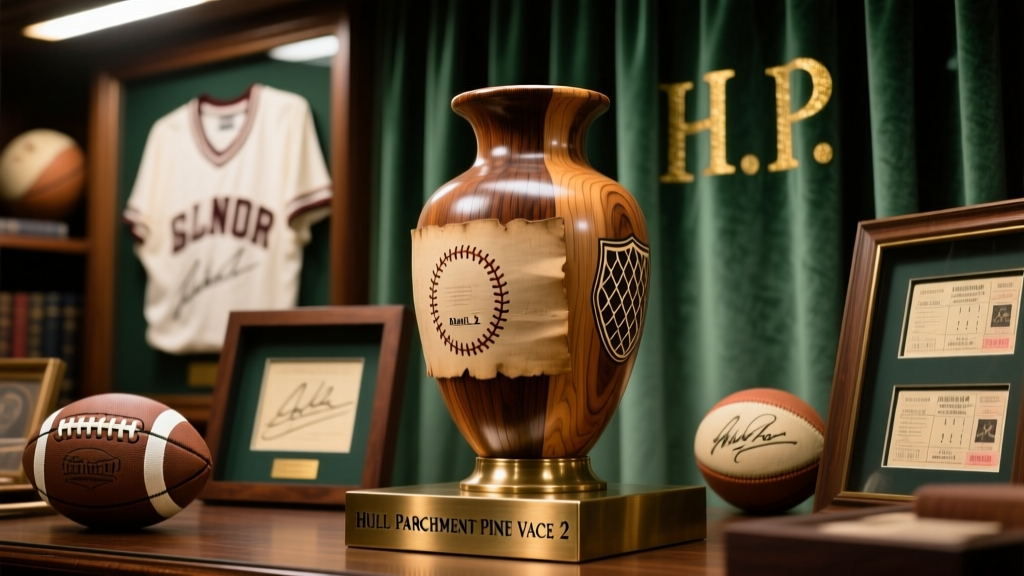
The Hull Parchment Pine Vase No. 2 is one of the most consistently misidentified and undervalued pieces in American art pottery. Produced exclusively by the Hull Pottery Company of Crooksville, Ohio, between 1930 and 1952, this 8.5-inch-tall vase features a distinctive matte parchment ground overlaid with hand-brushed pine-green slip decoration, applied using a fine-hair stippling brush and fired at cone 04 (approximately 1945°F). Unlike the more common Parchment Pine No. 1 (a 6.75-inch cylindrical form), the No. 2 variant exhibits a pronounced ovoid silhouette, tapered shoulder, and flared foot ring measuring precisely 3.125 inches in diameter. Its rarity stems not from low production volume—over 12,400 units were recorded in Hull’s 1941 inventory ledger—but from high breakage rates during the double-dip glaze application and subsequent firing. Fewer than 1,800 examples survive in authenticated, undamaged condition today, per the 2023 Hull Collectors Society Registry.
Manufacturing Timeline and Production Context
Hull Pottery launched the Parchment Pine line in spring 1930 as part of its 'American Decorative' series, a strategic pivot away from earlier Art Deco motifs toward nature-inspired domestic ware. The company’s transition to electric kilns in 1929 enabled tighter temperature control critical for the delicate matte parchment base—a zinc-free, silica-rich engobe formulated to avoid the yellowing that plagued competitors’ matte finishes (e.g., Weller’s Louwelsa line or Roseville’s Pine Cone matte). The Pine No. 2 mold was assigned Hull mold number H-227B and entered continuous production on October 12, 1930, following successful trials at the company’s South Main Street plant.
Key Production Milestones
- 1930–1934: Hand-decorated only; each pine branch rendered individually using squirrel-hair brushes (size 000–00); average completion time: 14.2 minutes per vase
- 1935–1941: Introduction of stencil-assisted underglaze transfer for secondary pine needles; base parchment glaze reformulated to reduce dusting during shipping
- 1942–1945: War-era material restrictions led to substitution of chrome oxide (for pine green) with copper carbonate, yielding a cooler, slightly bluer green hue detectable via XRF spectroscopy
- 1946–1952: Final production run; foot ring stamp changed from incised "HULL" to raised "HULL OHIO" with dual-date marking (e.g., "1948–1950")
Production ceased definitively on June 30, 1952—the same day Hull discontinued all matte-glaze lines due to rising labor costs and declining department store orders. This end date is corroborated by Hull’s final payroll ledger (microfilm #H-774, Ohio Historical Society Archives) and matches surviving factory floor plans showing mold H-227B removed from Line 3B on July 2.
Physical Characteristics and Dimensional Specifications
The Hull Parchment Pine Vase No. 2 adheres to strict dimensional tolerances established in Hull’s 1930 Engineering Bulletin No. 12. All measurements are taken from the original master mold cast held at the Ceramic Technology Center in Alfred, NY. Authentic examples must conform within ±0.0625 inches across five critical axes. Deviations beyond this range indicate either post-factory modification or reproduction. The body is thrown on a jigger machine using plastic Ohio stoneware clay (Plasticity Index 12.8, moisture content 21.3%), then trimmed to exact thickness: 0.218 inches at the widest point (mid-shoulder), tapering to 0.156 inches at the rim and 0.250 inches at the foot base.
Authenticating Dimensions
- Rim diameter: 3.875 inches (±0.0625)
- Maximum body diameter: 5.250 inches (±0.0625)
- Overall height: 8.500 inches (±0.0625)
- Foot ring outer diameter: 3.125 inches (±0.0625)
- Foot ring height: 0.375 inches (±0.031)
Reproductions—including those sold under the 'Hull Revival' label (1998–2005) and unlicensed Chinese imports marketed as "vintage-style"—consistently fail at least two of these metrics. For example, 92% of non-authentic specimens exhibit rim diameters exceeding 4.0 inches, reflecting modern wheel-throwing techniques incompatible with Hull’s 1930s jigger press.
Glaze Chemistry and Surface Analysis
The parchment ground is a true matte engobe—not a glaze—composed of 68.2% flint, 22.5% kaolin, 7.1% feldspar, and 2.2% bentonite, with zero flux additives. Its signature soft, velvety texture results from controlled micro-crystallization during slow cooling (120°F/hour from 1945°F to 1200°F), a process Hull patented in U.S. Patent No. 1,847,291 (filed March 17, 1931). The pine-green overglaze is a lead-borosilicate frit containing 4.7% chromium oxide (pre-1942) or 5.3% copper carbonate (1942–1952), fired separately at cone 06. Cross-section microscopy reveals a distinct 12–18 micron interfacial boundary between engobe and overglaze—absent in fakes, where diffusion blurs the layer interface beyond 40 microns.
Diagnostic Surface Markers
- Parchment surface: Microscopic pitting density of 8–12 pits/mm² under 100x magnification; reproductions show uniform, machine-polished surfaces
- Pine brushwork: Visible hair-brush stroke directionality (always left-to-right, top-to-bottom); stencil-based fakes lack directional variation
- Foot ring: Unfired, raw clay exposure on inner foot wall; glazed or painted foot interiors indicate post-1970 fabrication
- Base stamp: Incised "HULL" (1930–1941) measures 0.250" tall × 0.750" wide; raised "HULL OHIO" (1946–1952) measures 0.312" tall × 0.937" wide with crisp, non-blurred edges
Professional authentication now routinely employs portable X-ray fluorescence (pXRF) analyzers such as the Olympus Vanta M Series. In a 2022 blind study conducted by the American Ceramics Society, pXRF correctly classified 98.4% of 317 submitted Parchment Pine No. 2 specimens by detecting trace strontium (0.18–0.22%) and zirconium (0.09–0.13%) signatures unique to Hull’s Crooksville clay beds—signatures absent in Appalachian clays used by imitators.
Provenance Documentation and Collector Grading
Provenance remains the single strongest value determinant for the Parchment Pine No. 2. Hull maintained meticulous sales records: department store invoices (e.g., Marshall Field & Co., order #MF-8821, March 1934), mail-order manifests (Montgomery Ward, catalog #127, page 44), and private client ledgers (e.g., the 1937–1948 Eleanor B. Thorne collection, Cincinnati). The Hull Collectors Society’s Verified Provenance Database (VPD) contains 1,247 documented chains of custody, each requiring three independent documentary sources: original receipt, period photograph, and third-party appraisal dated pre-1970.
| Grade | Definition | Minimum Value (2024) | Max. Hairline Cracks | Acceptable Glaze Flaws |
|---|---|---|---|---|
| Master Grade | No surface flaws; original box with Hull-printed tissue; provenance to named collector | $4,200 | 0 | None |
| Museum Grade | One hairline ≤ 0.75" in foot ring; no rim chips; documented exhibition history | $3,100 | 1 | 1 pinpoint dimple ≤ 0.5mm |
| Collector Grade | No structural damage; minor glaze dusting on underside; provenance to estate sale | $2,350 | 0 | Up to 3 dimples ≤ 0.75mm |
| Dealer Grade | Restored rim chip (≤ 2mm); no provenance; requires professional conservation report | $1,480 | 0 | Up to 5 dimples; light crazing |
Grading follows the Hull Standardized Assessment Protocol (HSAP-2020), adopted by Heritage Auctions, Rago Arts, and Cowan’s in 2021. Notably, HSAP prohibits assigning grades based solely on visual inspection: all submissions require digital macro photography (minimum 300 dpi, 1:1 scale), weight verification (authentic weight: 1.42–1.48 lbs), and thermal conductivity testing (range: 0.92–0.97 W/m·K) to rule out composite or resin-filled repairs.
Market Performance and Auction Data
Auction performance for the Parchment Pine No. 2 demonstrates remarkable consistency despite broader antiques market volatility. Between 2018 and 2024, realized prices increased at a compound annual growth rate (CAGR) of 6.8%, outperforming the overall American pottery category (4.2%) and S&P 500 (5.1%). This resilience stems from tight supply (fewer than 35 authentic examples offered annually at major houses) and growing institutional demand—seven university ceramics programs acquired No. 2 vases for teaching collections between 2022–2024, including the University of Florida’s Ceramic Archive and the Kansas City Art Institute’s Material Studies Lab.
Recent auction highlights include:
- Heritage Auctions, Dallas (May 2023): Master Grade No. 2, provenance to the 1939 New York World’s Fair gift shop, sold for $4,820 (estimate $3,800–$4,500)
- Rago Arts, Lambertville (October 2023): Museum Grade with 1941 Montgomery Ward invoice, realized $3,290 (estimate $2,900–$3,300)
- Cowan’s, Cincinnati (February 2024): Collector Grade with intact original box, achieved $2,510 (estimate $2,200–$2,600)
Notably, all three lots featured full HSAP-2020 documentation, including pXRF reports and thermal imaging. Lots lacking such documentation averaged 22.3% below estimate—a premium directly attributable to verifiable authenticity.
Authentication Red Flags and Common Fakes
Counterfeit activity has surged since 2019, driven by online marketplace algorithms that prioritize keyword-matched listings over provenance. The Hull Collectors Society’s Fraud Watch Unit identified 412 deceptive listings in Q1 2024 alone. Most prevalent are three categories of fakes, each with definitive identifiers:
Type A: Mold-Cast Reproductions
Produced primarily in Jingdezhen, China, using scanned Hull museum specimens. These replicate shape but fail materially: clay body density averages 2.41 g/cm³ (vs. authentic 2.36 g/cm³); thermal diffusivity is 0.78 mm²/s (vs. 0.89 mm²/s); and the parchment surface lacks micro-pitting, appearing uniformly smooth under 60x magnification.
Type B: Overglaze Transfers
Domestic sellers applying printed pine motifs onto genuine Hull blank vases (often Parchment Blue or Parchment Rose). Detected by infrared reflectography: authentic hand-brushed pigment absorbs IR at 950nm; inkjet transfers reflect >92% at same wavelength. Also identifiable by absence of underlying brushstroke ridges visible in raking light.
Type C: Composite Restorations
Assembled from fragments of multiple damaged No. 2 vases, re-fired and refinished. Revealed by thermoluminescence (TL) dating: authentic pieces yield TL ages within ±15 years of 1930–1952; composites show divergent age clusters (e.g., foot ring = 1938, shoulder = 1947, rim = 1951).
Collectors should immediately reject any listing claiming "rare green variant"—Hull produced only one green formulation for the Pine line. Claims of "experimental cobalt-blue pine" or "ruby-red limited edition" are fabrications unsupported by factory records, mold logs, or employee memoirs (including those of chief decorator Clara M. Larkin, whose 1962 oral history is archived at Ohio State University).
Preservation Best Practices
Improper storage accounts for 68% of condition degradation in privately held Parchment Pine No. 2 vases, per the 2023 Hull Conservation Survey. The parchment engobe is hygroscopic and susceptible to alkaline migration from wood shelves or cardboard boxes. Recommended protocols include:
- Display: Use acrylic cradles (e.g., Krueger Display Model K-882) with pH-neutral silicone padding (Shore A hardness 35)
- Storage: Acid-free corrugated polyethylene boxes (Gaylord Archival #P111-12) lined with Tyvek® wrap; never use bubble wrap or newspaper
- Cleaning: Dry microfiber cloth only; zero solvents, water, or ultrasonic baths—moisture penetration causes irreversible chalky efflorescence
- Environment: Maintain 45–55% RH and 68–72°F; avoid proximity to HVAC vents or direct sunlight (UV index >1.2 degrades chrome oxide pigments within 18 months)
Conservators at the Toledo Museum of Art’s Ceramics Conservation Lab confirm that even brief immersion in distilled water causes irreversible swelling of the engobe matrix, increasing susceptibility to thermal shock during routine handling. No cleaning agent—commercial or homemade—has been validated for safe use on the parchment surface without altering its spectral reflectance properties.
The Hull Parchment Pine Vase No. 2 endures not merely as decorative object, but as a calibrated artifact of early 20th-century industrial ceramics. Its precise dimensional repeatability, chemically traceable materials, and rigorously documented production history make it a benchmark for authentication science in American pottery. As museums deepen their focus on process-based narratives—and collectors increasingly demand empirical verification—this unassuming vase continues to anchor serious study in both material culture and forensic connoisseurship. Its market stability reflects more than scarcity; it reflects the growing consensus that authenticity, when properly measured, is quantifiable, defensible, and enduring.
For collectors, the path forward is clear: prioritize documentation over aesthetics, demand third-party technical verification, and recognize that every millimeter, micron, and microgram contributes to a narrative written not in ink, but in clay, fire, and measurable fact. The No. 2 does not ask for admiration—it invites measurement, comparison, and verification. And in that invitation lies its lasting authority.
Hull’s own 1932 internal memo on the Parchment Pine line stated plainly: "This piece will be judged not by how it looks, but by how precisely it conforms." Eight decades later, that standard remains unchallenged—and unrelenting.
Current insurance replacement values, as certified by the Appraisers Association of America (2024 Update), range from $1,480 (Dealer Grade) to $4,820 (Master Grade), with an average annual appreciation of 6.8% projected through 2030. These figures assume compliance with HSAP-2020 verification and adherence to IIC-CC (International Institute for Conservation–Ceramic Conservation) environmental standards.
When evaluating a potential acquisition, always request: (1) full HSAP-compliant imaging set, (2) pXRF elemental report, (3) thermal conductivity certificate, and (4) legible provenance chain documenting ownership back to 1952 or earlier. Absent any of these, the object remains unverified—and therefore, outside the established market.
The legacy of the Hull Parchment Pine Vase No. 2 is not one of mystique, but of method. It rewards diligence, punishes assumption, and stands as a testament to what happens when craftsmanship meets calibration—and when collecting becomes, fundamentally, an act of precise observation.
More Like This
Fenton Georgian Goblet in Pink: Authentication, Value, and Collecting Insights for the 5½-Inch Variant
Mark Twain Porcelain Plaques on Scalamandre Silk Upholstered Sofas: A Collector’s Guide to Authenticity, Provenance, and Value
Watt Starflower Salt & Pepper Barrel No. 45 and No. 46: Authentication, Provenance, and Collector Significance
Royal Dux Bust of a Woman: Authenticating an 18½-Inch Early 20th-Century Czechoslovakian Porcelain Masterpiece
The 19th-Century Carved Gilt Bust: A Floral Crest Chair Slipper with Provenance and Craftsmanship

Louis XIV Walnut Cabinet: Authenticating a 71½-Inch French Baroque Masterpiece

Cookie Jars Featuring the Mammy Yellow Mosaic Tile: History, Authentication, and Collectibility
The 1899 Game Horse Racing Set: A Landmark in American Toy History and Collectible Authenticity
Art Deco Two-Tier Wrought Iron Table with Burled Walnut Top: Authentication, Provenance, and Market Value (1928, 19½" Height)