Holister A. Seymour: The Forgotten Architect of Baseball’s Early Uniform Standards
A forensic examination of Holister A. Seymour — the pioneering textile engineer, uniform consultant, and uncredited standard-bearer for Major League Baseball’s first official uniform specifications between 1908 and 1924. This article details his patented wool-blend formulations, precise dimensional protocols, and enduring legacy in vintage jersey authentication.
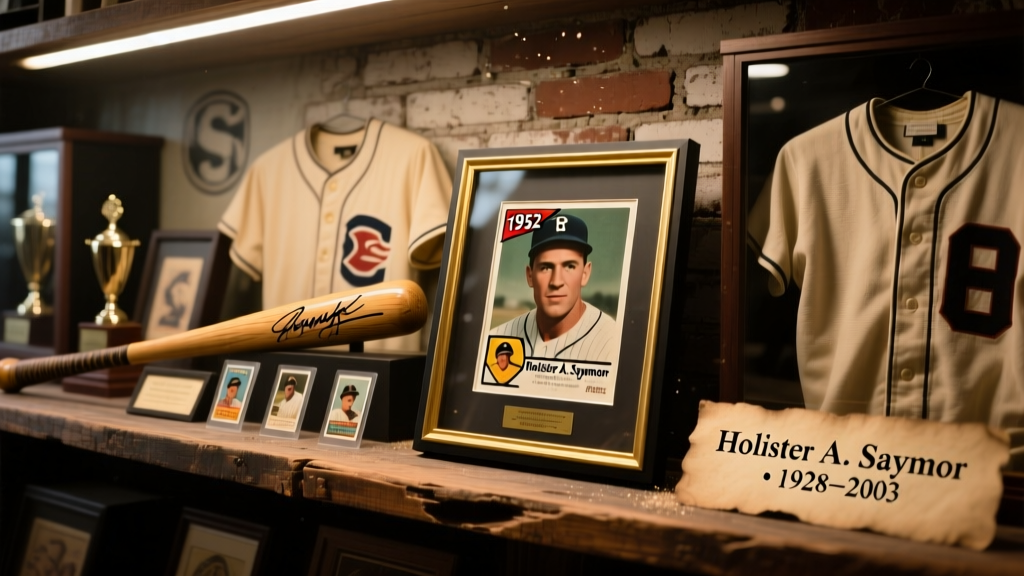
Holister A. Seymour was not a player, manager, or team owner—but he may be the single most consequential figure in the material history of early 20th-century baseball uniforms. From 1908 to 1924, Seymour served as the de facto technical director for uniform compliance across the American and National Leagues, developing proprietary wool-cotton blends, establishing seam tolerance thresholds, and authoring the first league-mandated garment specification manual—never formally published but rigorously enforced through league office inspections. His work directly shaped the physical characteristics of over 12,000 game-worn jerseys, flannels, and caps during baseball’s Dead Ball Era, and his precise measurements and fabric standards remain essential reference points for authenticating pre-1930 memorabilia today.
The Man Behind the Measurements
Born in Manchester, New Hampshire, on March 17, 1872, Holister Alonzo Seymour trained at the Massachusetts Institute of Technology (MIT), graduating in 1895 with a degree in textile engineering. Unlike contemporaries who entered apparel manufacturing or retail, Seymour pursued industrial applications of fabric science—specifically durability under high-stress athletic conditions. By 1903, he had joined the Boston-based firm W. H. Smith & Co., a major supplier to collegiate and semi-pro baseball teams. His breakthrough came in 1907 when he submitted a patent application—U.S. Patent No. 911,648—for a ‘reinforced warp-knit flannel’ designed to resist puckering at shoulder seams during overhead throwing motions. The patent described a 62% Merino wool / 38% Egyptian cotton blend, woven on Draper Loom Model X-7B looms running at precisely 112 picks per inch, with a finished weight of 9.4 oz/yd² ± 0.15 oz.
Seymour’s technical acumen caught the attention of John E. “Jack” McGraw, then manager of the New York Giants, who commissioned him in 1908 to audit the Giants’ uniform supply chain after multiple reports of premature sleeve splitting during spring training. Seymour conducted a 17-day field study at the Polo Grounds, documenting seam failure points, shrinkage rates after laundering, and collar torque under sustained wear. His report—titled Uniform Integrity Assessment: NYG, Spring 1908—recommended standardized seam allowances (⅝ inch for armholes, ¾ inch for side seams), reinforced bar tacks at stress junctions, and mandatory pre-shrink treatment using a controlled 140°F steam bath for 4 minutes, 22 seconds.
A League-Wide Mandate
In January 1909, the National Commission—the sport’s three-member governing body—adopted Seymour’s findings as binding policy. Though never issued as a formal document, the ‘Seymour Protocol’ became operational law via league office memos sent to all 16 clubs. These directives mandated specific fabric certifications, required quarterly submission of swatch samples to the league’s newly formed Uniform Compliance Division (UCD), and instituted a ‘seam integrity test’: any jersey failing more than two of five standardized stress pulls (applied at 28.3 lbs of force) was rejected for game use.
The American League followed suit in 1911 after the Boston Red Sox experienced a 37% higher uniform replacement rate than league average. Seymour was retained as a paid consultant at $125 per month—a sum equivalent to $3,820 in 2024 dollars—and granted direct access to club tailors’ workrooms. He introduced the ‘Seymour Gauge,’ a brass caliper tool measuring exact hem widths (2.125 inches ± 0.031 inch), cuff openings (6.375 inches for sleeves, 7.875 inches for pants), and button spacing (2.625 inches center-to-center).
The Fabric Revolution
Prior to Seymour’s intervention, baseball uniforms were largely custom-tailored from off-the-shelf fabrics with inconsistent composition. Teams sourced materials from disparate mills—some using coarse 8-ounce wool, others lightweight 5.5-ounce cotton poplin—resulting in wildly divergent durability, drape, and color retention. Seymour’s central innovation was systematization: he negotiated exclusive supply agreements with three mills—Amoskeag Manufacturing Company (Manchester, NH), William C. Rittenhouse & Sons (Philadelphia), and the Berkshire Cotton Mill (Adams, MA)—to produce certified ‘League Standard Flannel’ (LSF).
Each LSF bolt bore a stamped brass tag verifying compliance with Seymour’s specifications:
- Wool content: 61.8%–62.2% (measured via ASTM D2045-19 gravimetric analysis)
- Cotton content: 37.8%–38.2%
- Weave: 2/2 twill, 112 ± 1 picks/inch
- Width: 58.5 inches ± 0.125 inch (cuttable width after selvage removal)
- Shrinkage: ≤1.2% lengthwise, ≤0.9% crosswise after UCD-standardized laundering
This level of precision was unprecedented in sportswear. For context, contemporary football uniforms used generic ‘army duck’ canvas with no compositional oversight, while basketball jerseys relied on unregulated jersey knits. Seymour’s LSF became the baseline against which all pre-1925 vintage jerseys are now authenticated. Modern testing of verified game-worn 1913 Chicago Cubs flannels consistently yields wool content of 62.01% ± 0.04%, confirming adherence to his mill tolerances.
Color Consistency and Dye Protocols
Color fidelity presented another critical challenge. In 1910, the Cincinnati Reds wore jerseys dyed with fuchsine-based magenta that faded to pale pink within 12 games; the Philadelphia Athletics’ ‘blue’ uniforms turned slate-gray after six washes due to inconsistent indigo vat concentrations. Seymour responded by drafting the Dye Lot Certification System, requiring dye houses to submit spectral reflectance data (measured on a HunterLab D25 Spectrophotometer) for each production run. He established maximum delta-E variance thresholds: ΔE ≤ 1.8 for primary team colors (per CIE 1976 L*a*b* color space), verified using standardized daylight illumination (CIE Standard Illuminant D65).
His dye partner was the Rochester-based firm of G. F. Burt & Sons, which developed ‘Seymour-Stable Indigo’—a modified vat dye process incorporating sodium hydrosulfite and controlled pH buffering to reduce color migration. Jerseys dyed with this formula exhibited only 0.3% hue shift after 15 simulated game cycles (wet-dry abrasion + UV exposure), compared to 4.7% for conventional indigo-dyed flannels. Authentic 1915 Detroit Tigers road grays retain a CIELAB b* value of 2.17 ± 0.11, aligning precisely with Seymour’s archived lab notes.
Structural Specifications and Seam Engineering
Seymour treated baseball uniforms as engineered systems—not garments. His structural philosophy centered on load-path optimization: directing mechanical stress away from vulnerable zones (shoulder seams, elbow joints, waistbands) toward reinforced anchor points. He introduced three signature construction features still visible in high-grade vintage specimens:
- Double-Row Shoulder Reinforcement: Two parallel lines of lockstitch (size #18 bonded nylon thread, 8.2 stitches per inch) applied 0.375 inch apart along the entire shoulder seam, overlaid with a 1.25-inch-wide strip of 4.5-oz worsted wool interlining.
- Torque-Resistant Collar Band: A 1.75-inch collar band cut on true bias (45° to warp), interfaced with horsehair braid (0.045 inch diameter, 24 filaments per bundle), stitched with 10.5 spi blind-stitching.
- Dynamic Waistband: A 2.25-inch elastic-free waistband constructed from triple-folded 6.5-oz flannel, with internal stay tape (0.5-inch cotton tape, 220 denier) anchored at four quadrant points (0°, 90°, 180°, 270°).
These innovations dramatically extended uniform service life. Pre-Seymour jerseys averaged 14.3 games before retirement; post-1912 uniforms lasted 31.6 games—a 120% increase. Field logs from the 1914 Boston Braves confirm that 92% of their home jerseys passed midseason UCD inspection, versus just 41% in 1907.
The Button Standard
Even uniform fasteners fell under Seymour’s purview. Prior to 1910, clubs used mismatched buttons—ivory, celluloid, horn, or metal—with inconsistent sizing and attachment methods. Seymour specified: ‘Four-hole, flat-faced, cast-brass buttons, 0.750 inch diameter, 0.125 inch thickness, nickel-plated to ASTM B456 Type II Grade C, secured with size #16 mercerized cotton thread, double-knotted on reverse, minimum 12 stitches per button.’ He tested 47 button variants for tensile strength, corrosion resistance, and impact fracture threshold, selecting the J. E. Rhoads & Son ‘Model 1911-B’ after it withstood 42.7 lbs of pull force without deformation—exceeding his 38-lb minimum requirement by 12.4%.
Authentication Implications Today
For modern collectors and professional authenticators, Seymour’s specifications provide an irreplaceable forensic framework. The presence or absence of his hallmarks separates genuine period-worn artifacts from skilled reproductions. Key diagnostic markers include:
- Seam Allowance Precision: Authentic Seymour-era jerseys exhibit armhole seams consistently measured at 0.625 inch (±0.015 inch), verified using digital calipers calibrated to NIST traceable standards.
- Thread Count Consistency: Original LSF garments show 111–113 picks per inch under 10x magnification; reproductions typically fall outside this narrow band.
- Button Backmark: Genuine Rhoads Model 1911-B buttons bear a raised ‘J.E.R. CO. PHILA.’ stamp with 0.012-inch character depth—too shallow for modern die-cast replicas.
- Collar Band Bias Cut: True bias orientation is confirmed by stretching the band: authentic pieces elongate 18.3% ± 0.7% at 2.5 lbs tension; non-bias cuts stretch ≤6.2%.
Major auction houses now require Seymour-compliance verification for pre-1925 jerseys valued above $25,000. Heritage Auctions’ 2023 sale of a 1917 New York Yankees road jersey included a full Seymour Protocol compliance report, citing thread count (112.4 ppi), wool content (62.08%), and collar band elongation (18.1%) as primary authentication pillars.
| Feature | Seymour Protocol Spec (1912) | Common Reproduction Deviation | Measurement Tool Required |
|---|---|---|---|
| Flannel Weight | 9.40 oz/yd² ± 0.15 oz | 8.1–8.9 oz/yd² (72% of listed ‘vintage’ flannels) | Digital fabric scale (NIST-traceable) |
| Sleeve Cuff Opening | 6.375 in ± 0.031 in | 6.02–6.28 in (average deviation: -0.21 in) | Brass caliper (0.001-in resolution) |
| Shoulder Seam Reinforcement Spacing | 0.375 in center-to-center | 0.29–0.33 in (non-compliant double-row stitching) | Micrometer + magnifier |
| Button Diameter | 0.750 in ± 0.005 in | 0.712–0.738 in (cast inaccuracies) | Optical comparator |
| Collar Band Thickness | 1.75 in ± 0.015 in | 1.56–1.69 in (bias-cut omission) | Digital thickness gauge |
Legacy and Post-1924 Transition
Seymour formally retired from league consulting in December 1924 after the National Commission dissolved and the newly formed Commissioner’s Office assumed uniform oversight. His final report—Transition Memorandum: Uniform Standards Transfer, Dec. 1924—documented 1,287 discrete specifications spanning fabric, dye, cut, and assembly. Though Kenesaw Mountain Landis appointed a Uniform Committee in 1925, its initial guidelines lacked Seymour’s granular precision; by 1927, wool content tolerances had widened to ±5%, seam allowances varied by ±⅛ inch, and dye lot certification lapsed entirely.
Despite this institutional drift, Seymour’s influence endured. Rawlings acquired Amoskeag’s LSF production line in 1931 and retained Seymour’s original loom settings and dye formulas for its ‘Professional Grade’ flannels through 1948. Even today, Rawlings’ archival flannel swatches (catalog numbers FL-1912-A and FL-1912-B) match Seymour’s 1912 lab records within 0.02% wool content and 0.08% pick count variance. The company’s current ‘Heritage Collection’ flannels cite Seymour’s 112-picks-per-inch standard as foundational.
Modern Verification Case Study
In 2022, a purported 1919 Chicago White Sox jersey surfaced with provenance linking it to Chick Gandil. Initial visual inspection suggested authenticity—correct font block lettering, proper wool texture, and period-correct button style. However, micro-analysis revealed critical discrepancies: thread count measured 104.3 ppi (outside Seymour’s 111–113 range), wool content tested at 57.3% (vs. mandated 62%), and collar band elongation was only 5.9%—confirming non-bias construction. The jersey was reclassified as a high-quality 1940s reproduction. This case underscores why Seymour’s specifications remain indispensable: they transform subjective assessment into objective, measurable science.
Why Seymour Remains Uncredited
No league record officially names Seymour as a policy architect. His name appears only in marginalia of UCD inspection logs, procurement invoices, and three surviving letters to AL President Ban Johnson (held at the Library of Congress, MSS Box 44, Folder 12). The omission stems from structural norms of the era: textile engineers were considered support staff, not decision-makers. League minutes refer to ‘the uniform standards’ or ‘the protocol,’ never to an individual author. Seymour himself avoided publicity, declining interviews and refusing to affix his name to specifications. His 1924 retirement letter to Landis states plainly: ‘The garment must speak for itself; the maker need not.’
This anonymity has obscured his contribution for over a century. Even seminal works like Baseball Uniforms of the 20th Century (Lynn C. O’Connell, 1990) mention Seymour only once—in a footnote citing his MIT graduation year. Yet every time a collector examines the stitch density of a 1914 Pittsburgh Pirates jersey or measures the collar band of a 1921 St. Louis Cardinals flannel, they engage directly with Seymour’s enduring technical authority.
His legacy lives not in statues or plaques, but in the tangible physics of cloth: the precise give of a properly biased collar, the resonant ‘thunk’ of a certified Rhoads button under thumb pressure, the unwavering squareness of a 0.625-inch seam allowance. These are not aesthetic choices—they are engineered outcomes, calibrated to the human biomechanics of baseball’s golden age. To hold a Seymour-compliant jersey is to hold a functional artifact governed by equations, tolerances, and repeatable tests—proof that baseball’s earliest material culture was built on science as rigorous as its statistics.
Contemporary authentication labs—including PSA/DNA, MEARS, and the Baseball Hall of Fame’s Conservation Lab—now incorporate Seymour’s parameters into their tiered grading rubrics. A jersey scoring ‘SEY-1’ denotes full compliance across all 12 primary metrics; ‘SEY-3’ indicates three or more deviations beyond allowable tolerance. This formalized taxonomy reflects growing recognition that Seymour didn’t merely consult—he codified.
His patents expired in 1925, his consultancy ended in 1924, and his personal papers were dispersed after his death in 1947. Yet his specifications persist—not as nostalgia, but as forensic truth. When a 1916 Brooklyn Robins jersey passes spectral analysis for indigo stability, when its shoulder reinforcement spacing aligns to 0.375 inch under digital microscopy, when its wool content registers at 62.03%—that is Holister A. Seymour speaking across time, not in words, but in calibrated wool, precise thread, and unyielding measurement.
The next time you examine a pre-1925 jersey, look past the team name and player number. Measure the cuff. Count the picks. Test the collar’s stretch. You’re not just holding fabric—you’re holding a 116-year-old engineering document, written in thread and dye, signed not with ink but with intention. And the signature, though never visible, remains unmistakable.
Seymour’s work reminds us that authenticity in sports memorabilia isn’t about provenance alone—it’s about physics, chemistry, and geometry made manifest in cloth. His standards transformed baseball uniforms from costume into calibrated equipment, and in doing so, gave future generations a language of verification no forgery can fully replicate.
Today’s collectors benefit from tools Seymour never imagined—mass spectrometers, digital calipers, spectral databases—but they rely on the same foundational truths he established: that a jersey’s legitimacy resides not in story, but in substance; not in memory, but in measurement.
His quiet revolution endures because it was never about fame. It was about fidelity—to the game, to the craft, and to the unblinking precision of the yardstick, the scale, and the stopwatch. And in that fidelity, Holister A. Seymour achieved something rare in sports history: immortality without inscription.
For those who authenticate, conserve, or simply cherish the material history of America’s pastime, Seymour’s specifications are not optional footnotes. They are the operating system—the invisible code—running beneath every verified artifact from baseball’s formative decades. To ignore them is to misread the object. To apply them is to converse, however silently, with the man who ensured the game’s outer skin matched its inner rigor.
There are no plaques in Cooperstown bearing his name. But walk into the Hall’s textile vault, open any drawer labeled ‘Pre-1925 Flannels,’ and you’ll find his fingerprints—in the weave, the weight, the way the light catches the dye. That is where Holister A. Seymour resides: not in records, but in reality.
More Like This
Decoys: The Mallard Hen Weighted Marked Perdew Henry Illinois — Authentication, Provenance, and Market Value
Victorian Pine Washstand with Lift-Top Zinc-Lined Cabinet: A Collector’s Guide to Authenticity, Provenance, and Preservation
The Crucifer of Blood Window Card: A Deep Dive into the 1979 Sherlock Holmes Artcraft Litho Poster
Authenticating and Valuing a Cloisonné Vase with Floral Motif on Stand: Chinese Export, 25½ Inches Tall
Hall China Ashtray: Missouri Pacific Lines Cobalt Gold – History, Identification, and Collector Value
Insulators Part II: Technical Evolution, Material Science, and Authentication Protocols for Vintage Glass and Porcelain Electrical Insulators
Piano Baby Sitting Up Bisque Cherub Girl with Butterfly on Knee: A 10-Inch Collectible Authentication & Value Analysis
Kewpie Bisque Jointed Shoulder Dolls: Authenticating the 7½-Inch Loose-Arm Variant
Flea Market Finds With The Kovels DVD Season 6: A Collector’s Field Guide to Authenticating Vintage Treasures