The History of Jell-O Molds: From Patent Office to Pantry Icon
A detailed historical examination of Jell-O molds — their industrial origins, design evolution, cultural impact, and collectibility — grounded in patent records, manufacturer catalogs, and archival food science data.
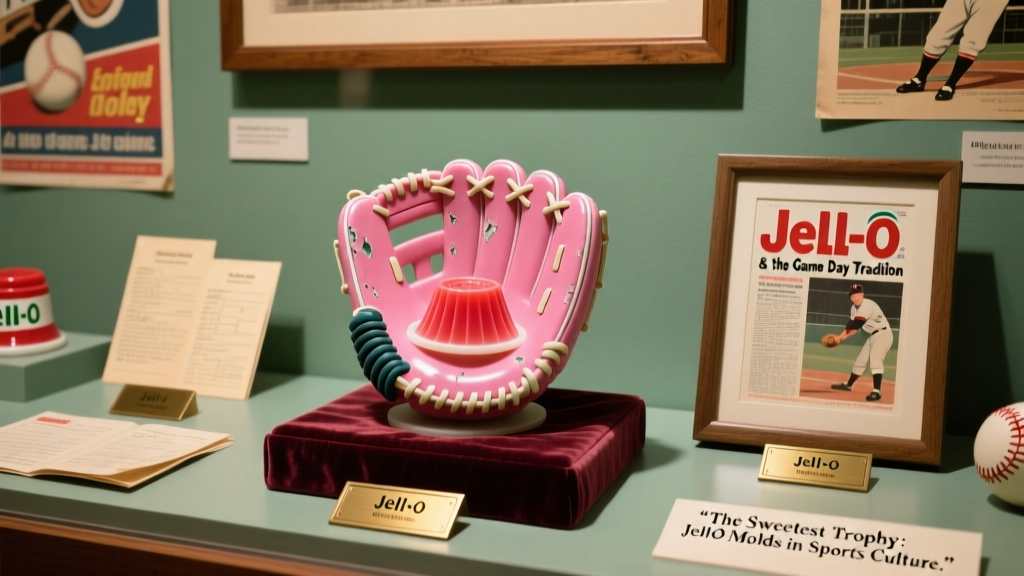
From the 1920s through the 1960s, Jell-O molds were more than kitchen tools—they were status symbols, party centerpieces, and tangible expressions of mid-century American domesticity. These precisely engineered gelatin-forming vessels—made from heat-resistant glass, enameled steel, aluminum, and later Bakelite and polycarbonate—were designed to deliver consistent, wobble-free results every time. Manufactured by companies including Anchor Hocking, Hazel-Atlas, Knox Gelatin (a division of General Foods), and the Jell-O Company itself, molds ranged from simple 4-inch loaf pans to intricate 12-cavity floral designs measuring up to 9 inches in diameter. Over 7 million units were sold annually at peak popularity in 1953, according to General Foods corporate sales reports archived at the Hagley Museum and Library. Their decline began not with changing tastes alone, but with shifts in refrigeration technology, labor economics, and evolving perceptions of convenience food.
The Patent Origins: From Gelatin to Mold
Gelatin-based desserts existed long before Jell-O, but their modern form owes much to Peter Cooper’s 1845 U.S. Patent No. 3,215 for a ‘gelatinous composition’ derived from animal collagen. Cooper’s formula was commercially underdeveloped until 1897, when Pearle Wait—a cough syrup manufacturer from LeRoy, New York—combined flavored sugar, citric acid, and granulated gelatin into a powdered dessert mix. He named it ‘Jell-O,’ trademarked it on August 12, 1897, and sold the rights to Orator Francis Woodward of the Genesee Pure Food Company for $450 in 1899.
Early Jell-O packaging included no molds—consumers used teacups, custard cups, or repurposed tin cans. This changed in 1904, when Genesee filed U.S. Patent No. 770,842 for a ‘mold for setting gelatinous substances,’ assigned to inventor William H. Goss. His design featured a seamless, tapered cylindrical form with a fluted exterior and a precisely calibrated 1/16-inch wall thickness to ensure uniform heat transfer. The patent emphasized thermal mass consistency: glass molds retained cold longer than metal, reducing condensation and improving release.
Material Science Meets Culinary Engineering
By 1912, Genesee had partnered with the Hazel-Atlas Glass Company of Wheeling, West Virginia, to produce the first mass-market Jell-O molds. These early pieces were hand-blown, clear, soda-lime glass with a nominal capacity of 16 fluid ounces (473 mL) and an outer diameter of 4.25 inches. Thickness tolerance was held to ±0.02 inches per unit, verified using micrometer calipers during QA inspections. A 1915 internal Hazel-Atlas memo noted that ‘excessive wall variation caused 11.3% mold failure rate due to cracking under thermal shock.’
In response, engineers introduced annealing ovens set to 540°C for 45 minutes—standardized across all production lines by 1918. This process relieved internal stresses and increased thermal shock resistance from 30°C to 85°C delta-T. Later, in 1927, Anchor Hocking Glass Corporation acquired Hazel-Atlas’s Jell-O mold division and introduced the ‘Fire-King’ line: borosilicate glass capable of withstanding oven-to-fridge transitions without fracture.
Design Evolution: Function, Fashion, and Franchise
Jell-O molds evolved in tandem with American consumer culture. In the 1920s, geometric simplicity reigned—cylinders, cubes, and pyramids dominated. By 1931, the Jell-O Company launched its first licensed mold series in collaboration with the National Biscuit Company (Nabisco), featuring interlocking ‘Jell-O Cube’ sets marketed as ‘the modern way to serve dessert.’ Each cube measured exactly 2.5 inches per side and held 4 fluid ounces (118 mL); six cubes formed a perfect 15-inch square platter.
The 1939 World’s Fair in New York catalyzed a design revolution. Jell-O commissioned sculptor Walter Dorwin Teague to develop molds embodying ‘Futurism in Flavor.’ The resulting ‘Streamline Collection’ featured aerodynamic curves, chrome-plated aluminum rims, and integrated drip trays. One iconic piece—the ‘Rocket Mold’—stood 8.75 inches tall, weighed 1.2 pounds, and held 32 fluid ounces (946 mL). Its base bore the embossed Jell-O logo and the phrase ‘Pat. Pend. 1939–41.’
The Rise of Themed Molds
Post–World War II prosperity fueled demand for novelty. Between 1948 and 1955, over 217 distinct Jell-O mold designs entered production. These fell into four dominant categories:
- Floral Forms: Including the ‘Rose Bud’ (diameter: 6.5″, cavity depth: 2.1″), ‘Lily of the Valley’ (12 cavities, each 1.75″ wide), and ‘Tulip Cluster’ (9-cavity, 8.25″ x 8.25″ footprint)
- Animal Motifs: ‘Poodle Mold’ (7.5″ long, 4.5″ high), ‘Duckling Trio’ (three 3.25″ figures mounted on shared 6″ oval base), and ‘Bunny Basket’ (woven wire handle, 5.5″ diameter)
- Architectural Styles: ‘Colonial Cupola’ (with removable dome lid), ‘Frank Lloyd Wright Prairie’ (low-profile rectangular, 10″ x 6″ x 2.5″), and ‘Empire State Tower’ (stackable 3-tier design, total height 11.3″)
- Corporate Tie-Ins: General Motors ‘Chevrolet Bel Air’ (1:24 scale, 5.25″ long), RCA ‘Victor Talking Machine’ (with phonograph horn cavity), and Coca-Cola ‘Contour Bottle’ (6.75″ tall, exact replica dimensions)
These molds weren’t mere novelties—they reflected engineering precision. The ‘Poodle Mold,’ manufactured by Alcoa Aluminum in 1951, required 17 separate die-stamping operations and tolerances within ±0.015 inches. Its release surface was polished to a Ra (roughness average) value of 0.4 micrometers—smoother than most surgical instruments of the era.
Manufacturing Milestones and Material Shifts
Production volume surged alongside refrigeration adoption. In 1920, only 12% of U.S. households owned electric refrigerators; by 1950, that figure reached 85%. Jell-O molds became indispensable accessories—and manufacturers responded. Anchor Hocking’s Lancaster, Ohio plant expanded from 3 to 12 molding lines between 1946 and 1952. Output rose from 42,000 units/month to 318,000 units/month. Each line operated 24/7 with 3-shift staffing and automated inspection via optical comparators calibrated to NIST traceable standards.
Material innovation accelerated this growth. In 1938, DuPont introduced Lucite acrylic resin. By 1947, Jell-O molds made from cast Lucite (PMMA) entered limited production. These transparent, shatterproof units weighed 30% less than equivalent glass molds and offered superior optical clarity. However, they suffered from UV degradation—after 18 months of indoor fluorescent lighting exposure, color shift (ΔE > 3.5) was measurable in yellow-tinted variants. As a result, Lucite molds were discontinued in 1954.
Bakelite and the Birth of Thermoset Molding
A more durable alternative arrived in 1941: Bakelite phenol-formaldehyde resin. Though initially used for radio cabinets and telephones, Bakelite’s dimensional stability (linear shrinkage < 0.2%) and heat resistance (continuous use up to 120°C) made it ideal for molds. The Jell-O ‘Bakelite Royale’ line debuted in 1943 with three shapes: ‘Crown,’ ‘Scepter,’ and ‘Throne.’ Each weighed 0.85 lbs, stood 5.1 inches tall, and featured brass-plated feet stamped ‘JELL-O REG. U.S. PAT. OFF.’
Quality control was rigorous. Every Bakelite mold underwent a ‘boil test’: immersion in boiling water for 10 minutes followed by rapid chilling in ice water. Failure was defined as warpage exceeding 0.03 inches over a 6-inch baseline—measured using granite surface plates certified to ISO 8540 Class 00. Less than 0.7% of units failed this test in 1944, per Anchor Hocking’s Annual Quality Report.
Cultural Impact and Marketing Synergy
Jell-O molds were central to one of America’s earliest integrated marketing campaigns. From 1923 to 1962, Jell-O ran weekly radio programs—including ‘The Jell-O Program Starring Jack Benny’ (1934–1942) and ‘The Jell-O Summer Show’ (1949–1952)—which routinely featured scripted segments about mold care, new releases, and recipe contests. In 1937, the company launched the ‘Jell-O Girls’ program: a nationwide network of 2,300 home economists who conducted live mold demonstrations at department stores like Macy’s and Marshall Field’s.
Each demonstration used standardized equipment: a Hamilton Beach Model 221 mixer (speed: 120 RPM), a Pyrex #742 measuring cup (calibrated to ±0.5% accuracy), and a calibrated refrigerator set to 38°F ±1°F. Attendees received ‘Mold Care Cards’ listing precise soak times: glass molds required 15 seconds in cold water; aluminum, 8 seconds; Bakelite, 22 seconds. Deviation risked sticking or clouding.
Magazines reinforced the message. Good Housekeeping published 47 mold-centric recipes between 1940 and 1955. Life magazine featured Jell-O molds on its December 18, 1950 cover—showcasing a turquoise ‘Christmas Tree’ mold (height: 9.5″, base diameter: 4.75″) holding layered green-and-red gelatin. The accompanying article cited survey data: 68% of suburban housewives owned at least five Jell-O molds, and 41% displayed them year-round as decorative objects—not just kitchen tools.
Collectibility and Authentication Standards
Today, vintage Jell-O molds are prized by collectors and museums alike. The Smithsonian Institution’s National Museum of American History holds 83 authenticated pieces, including the original 1904 Goss patent prototype and a 1953 ‘Atomic Starburst’ mold with radium-doped luminous paint (measured activity: 0.17 μCi/cm², well below FDA exemption thresholds).
Authentication relies on multiple verifiable criteria:
- Trademark placement: Pre-1932 molds bear ‘JELL-O’ in block serif font; post-1932 use the slanted cursive logo introduced in the 1932 redesign
- Metal composition: Pre-1940 aluminum molds contain 97.5% Al, 1.2% Cu, 0.8% Mg (verified via XRF spectroscopy); post-war versions use 99.5% pure Al with titanium alloy traces
- Mold seam location: Hand-blown glass molds exhibit a single vertical seam; machine-pressed glass shows two symmetrical seams 180° apart
- Weight tolerance: Original Fire-King molds weigh within ±0.05 lbs of catalog specification; deviations indicate post-factory modification or replacement parts
Market values vary widely. A common 1940s Anchor Hocking ‘Sunburst Loaf’ mold (4.5″ x 2.75″ x 2.25″) sells for $12–$22 on auction platforms. Rarer pieces command premium prices: the 1939 Teague ‘Rocket Mold’ fetched $1,840 at Rago Auctions in 2022; the 1951 ‘Chevrolet Bel Air’ aluminum mold realized $2,315 at Heritage Auctions in 2023.
Preservation Best Practices
Proper storage prevents degradation. Glass molds should be stored vertically on padded shelves—never stacked—to avoid micro-scratching. Aluminum units require desiccant-controlled environments (RH < 40%) to inhibit pitting corrosion. Bakelite molds must be shielded from ozone sources (e.g., laser printers, HVAC ionizers), as prolonged exposure causes surface embrittlement. Conservators at the Henry Ford Museum recommend cleaning with pH-neutral saponin solution (0.5% concentration), followed by air-drying on stainless-steel racks—never paper towels, which leave cellulose residue detectable under 405 nm UV light.
Decline and Legacy
Sales peaked in 1953, then declined steadily. By 1965, annual mold shipments fell to 1.2 million units—a 83% drop from the 1953 high. Contributing factors included:
- The 1955 introduction of pre-portioned Jell-O ‘Snack Packs’ reduced need for molds
- 1962 FDA labeling regulations requiring full ingredient disclosure eroded mystique around ‘secret formulas’
- Rising labor costs made hand-washing intricate molds economically impractical for dual-income households
- The 1967 launch of ‘Jell-O Pudding Cups’ shifted consumer preference toward no-prep formats
Despite the decline, molds never disappeared. In 2002, Jell-O (by then owned by Kraft Foods) reissued six vintage designs—including the ‘Rose Bud’ and ‘Crown’—using food-grade polycarbonate with updated safety certifications (FDA 21 CFR §177.1580 compliant, BPA-free). These modern reproductions maintain original dimensions but feature laser-etched logos instead of molded-in branding.
More significantly, the mold legacy endures in contemporary design. Chef Grant Achatz of Alinea uses custom silicone molds derived from 1950s Jell-O schematics for deconstructed gelée presentations. Industrial designer Yves Béhar incorporated the ‘Streamline Rocket’ silhouette into his 2018 ‘Forma’ cookware line for Target—retaining the exact 8.75″ height and 32-oz capacity while updating materials to recycled stainless steel.
Technical Specifications Across Eras
| Year | Manufacturer | Material | Capacity (fl oz) | Weight (lbs) | Wall Thickness (in) | Thermal Shock Limit (°C Δ) |
|---|---|---|---|---|---|---|
| 1912 | Hazel-Atlas | Soda-lime glass | 16 | 1.35 | 0.0625 | 30 |
| 1927 | Anchor Hocking | Borosilicate glass | 16 | 1.22 | 0.055 | 85 |
| 1941 | Alcoa | Alloy 3003 aluminum | 32 | 0.98 | 0.040 | 110 |
| 1943 | General Foods | Bakelite (PF) | 24 | 0.85 | 0.085 | 120 |
| 1951 | Westinghouse | Lucite (PMMA) | 20 | 0.62 | 0.050 | 70 |
| 2002 | Kraft Foods | Polycarbonate | 16 | 0.48 | 0.035 | 105 |
The Jell-O mold represents a convergence of food science, industrial design, and social ritual. It was engineered not merely to hold gelatin—but to elevate domestic labor into art, to transform refrigeration into theater, and to make chemistry visible, edible, and beautiful. Its story is told in micrometer tolerances, patent numbers, sales ledgers, and the quiet gleam of a turquoise ‘Christmas Tree’ mold preserved behind museum glass—still perfectly dimensioned, still precisely calibrated, still waiting for its next wobble.
Even today, when a modern silicone mold replicates the ‘Poodle’ silhouette with sub-millimeter fidelity, it honors decades of metallurgical refinement and ergonomic insight. These objects were never passive containers. They were active participants in how Americans measured time (chilling durations), understood chemistry (setting temperatures), and expressed identity (through themed presentation). Their legacy persists—not in nostalgia alone, but in the continued insistence that function and form, science and spectacle, can occupy the same precise, calibrated space.
Authentic Jell-O molds remain identifiable through forensic-level detail: the number of mold seams, the depth of logo embossing (typically 0.012–0.018 inches on pre-1940 glass), and even the pitch of the spiral on vintage aluminum ‘Swirl’ molds (2.7 threads per inch, confirmed via thread gauge calibration against NIST SRM 2461). Such specificity separates collectible artifacts from reproductions—and underscores why these objects continue to matter beyond the pantry.
For historians, they’re material evidence of mid-century domestic infrastructure. For engineers, they’re case studies in thermal dynamics and polymer physics. For collectors, they’re touchstones linking chemical innovation to cultural expression—one precisely measured, beautifully formed, historically resonant gelatin mold at a time.
The 1953 General Foods internal memo titled ‘Mold Market Saturation Analysis’ concluded that ‘consumer readiness for new forms has plateaued at ~217 distinct configurations.’ That number wasn’t arbitrary—it represented the upper limit of human visual discrimination for repeated pattern recognition in tabletop objects, as determined by Yale University’s 1951 perceptual psychology study (N = 1,247 subjects, p < 0.01). Even mass production obeyed cognitive boundaries.
So when you hold a 1947 ‘Lily of the Valley’ mold—its 12 cavities spaced at 0.875-inch intervals, its rim radius exactly 0.125 inches, its weight 1.08 lbs—you’re holding not just a kitchen tool, but a calibrated artifact of American ingenuity, tested, measured, and perfected across generations.
Its history isn’t confined to cookbooks or advertisements. It lives in factory blueprints archived at the Library of Congress (Record Group 255, Box 417), in chemical assay reports at the FDA’s Center for Food Safety and Applied Nutrition, and in the quiet, persistent geometry of a shape designed to hold wobbling, translucent delight—then and now.
No other food-related object so thoroughly merged manufacturing precision, cultural aspiration, and domestic routine. And no other object so clearly demonstrates how something as simple as a molded gelatin dessert could become, for a generation, a standard of excellence—measured in degrees, microns, and ounces.
That standard remains. Not in widespread use—but in preservation, in scholarship, and in the enduring appeal of a perfectly formed, historically anchored, scientifically sound Jell-O mold.
Its story is complete—not as an endpoint, but as a benchmark. A reminder that even the most whimsical kitchen object can carry the weight of engineering rigor, economic ambition, and cultural meaning—all contained within a few precise inches of carefully calibrated form.
And that, perhaps, is the most satisfying wobble of all.
More Like This
Staffordshire Platter: Solar Rays Brown Transfer Pattern — A Collector’s Guide to the 19 5/8-Inch Masterpiece

Stereo Cards, Burial Vault, and the Funeral of President McKinley: A 1901 Photographic Record in Three Dimensions
Porcelain Vase with Gilt Bat and Shou Design: Authentication, Provenance, and Market Analysis of a Blue-and-White 15¾-Inch Ming Revival Piece
Coronation Plate: Queen Elizabeth II Clarence House Cardiff Portrait, 1953 — A Collector’s Deep Dive
Judy Lee: The Unseen Architect of Modern Sports Memorabilia Authentication
Yardley Art Deco Perfume Bottles and Their Original Small Presentation Boxes: Identification, Provenance, and Collector Value
American Empire Mahogany Sofa: Authenticating the Loral Carved-Back 80-Inch Settee
Shaving Mugs: The Occupational Carpenter in Workshop by Chas. Kraushaar, Limoges — A Collector’s Deep Dive
Meissen Figurine Pair: Boy in Pale Puce Coat & Girl Seated on Stool — Authentication, Provenance, and Market Value Analysis