The Historical Glass Museum: Preserving the Legacy of American Glassmaking
A deep-dive exploration of the Historical Glass Museum in West Virginia—its origins, collection scope, authentication protocols for vintage glassware, and its role in safeguarding industrial heritage through documented provenance, scientific analysis, and public education.
The Historical Glass Museum in Weston, West Virginia, is the only museum in the United States dedicated exclusively to the history, artistry, and technology of American glassmaking. Founded in 1984 by the West Virginia Department of Commerce and later stewarded by the West Virginia State Museum Commission, it occupies a restored 1903 Carnegie Library building on the campus of West Virginia University Institute of Technology. With over 12,000 cataloged artifacts—including pressed glass, cut crystal, Depression-era tableware, and hand-blown studio pieces—the museum serves as both archive and active research hub. Its conservation lab employs refractometry, XRF spectroscopy, and archival pigment mapping to verify authenticity, especially for high-value items like Fostoria American pattern stemware or Steuben ‘Cameo’ vases. This article details the museum’s institutional framework, collection highlights, forensic authentication standards, and its critical role in preserving regional manufacturing legacy.
Origins and Institutional Mission
The Historical Glass Museum emerged from grassroots advocacy by local historians, retired glassworkers from the nearby Fostoria Glass Company (founded 1887 in Fostoria, Ohio, but with major production shifts to Moundsville, WV, in 1929), and members of the West Virginia Historical Society. In 1982, a feasibility study commissioned by the state legislature confirmed demand for a centralized repository for glass artifacts at risk of dispersal or loss following the closure of the last major West Virginia glass factory—the Hazel-Atlas Glass Company plant in Wheeling—in 1964. The museum officially opened its doors on June 15, 1984, with an initial collection of 1,842 objects donated by 47 individuals and six corporations, including Libbey Glass and the Consolidated Lamp and Glass Company archives.
Its mission statement, codified in West Virginia Code §18-13-12, mandates three core functions: (1) acquisition and preservation of historically significant American glass; (2) development of standardized authentication criteria for pre-1970 domestic glassware; and (3) public education through exhibitions, workshops, and collaborative scholarship with institutions such as the Corning Museum of Glass and the Toledo Museum of Art. Unlike general decorative arts museums, the Historical Glass Museum maintains a strict geographic and temporal focus: all accessioned items must be manufactured in the United States prior to January 1, 1970, and at least 75% of the collection must originate from factories operating within Appalachia—specifically West Virginia, Ohio, Pennsylvania, Kentucky, and Tennessee.
Foundational Donations and Early Growth
Among the founding donations was the complete pattern book archive of the Hobbs, Brockunier & Company of Wheeling—comprising 32 leather-bound volumes spanning 1845–1892, each containing original line drawings, mold numbers, and chemical batch notes. Also critical was the 1986 acquisition of the J. H. D. Smith Collection: 417 pieces of early American blown flint glass, including a rare 1798 ‘Lily Pond’ decanter attributed to the New England Glass Company in Cambridge, Massachusetts. These foundational holdings established the museum’s scholarly credibility and enabled the creation of its first peer-reviewed publication, Glass Notes: A Quarterly of American Glass History, launched in 1987.
Collection Scope and Significance
The museum’s permanent collection now exceeds 12,350 individual items, organized across seven thematic galleries: Early American Blown Glass (1739–1820), Pressed Glass Innovation (1825–1890), Art Nouveau and Studio Glass (1890–1930), Depression Glass Era (1929–1945), Mid-Century Modern Design (1945–1965), Industrial Process Artifacts, and Conservation Lab Demonstrations. Each object carries full provenance documentation—including original factory invoices, mold stamps, and metallurgical analysis reports—verified by the museum’s Authentication Board before accession.
Key benchmarks define collection significance: any piece must meet at least two of the following criteria: (1) direct association with a nationally recognized manufacturer (e.g., Steuben Glass Works, Mount Washington Glass Company, or Tiffin Glass); (2) inclusion in a documented national exhibition (e.g., the 1939 New York World’s Fair); (3) physical evidence of technological innovation (e.g., the first use of selenium-based ruby red glass by Libbey in 1907); or (4) documented ownership by a historically notable figure (e.g., the 1912 Steuben ‘Peach Blossom’ bowl owned by Eleanor Roosevelt, accession number HG-8842).
Depression Glass: A Cornerstone of the Collection
With 2,147 documented pieces, the museum holds the largest publicly accessible Depression glass collection in North America. Unlike many private collections focused on aesthetic completeness, this assemblage emphasizes material science and labor history. For example, the museum’s Hocking Glass ‘Mayfair’ pattern inventory includes 317 specimens analyzed for barium oxide content—a key indicator of post-1935 formulation changes that improved thermal shock resistance. Each piece bears a laser-etched accession number and is stored in acid-free, ethylene-vinyl acetate foam-lined drawers maintained at 65°F ±2°F and 45% RH ±3%. The most valuable item in this category is a 1937 Anchor Hocking ‘Royal Ruby’ punch bowl set (model #R-321B), measuring 14.2 inches in diameter and weighing 4.8 pounds, valued at $18,200 in the 2023 Antique Glass Price Guide due to its intact original packaging and verified factory ledger entry.
Industrial Process Artifacts
This gallery houses tools and machinery rarely preserved elsewhere: a fully operational 1898 Gillinder & Sons ‘Double-Head’ pressing machine (weight: 1,240 lbs; dimensions: 48" × 36" × 62"); a 1923 Leighton & Son glass cutter’s bench with 17 calibrated diamond-tipped wheels; and 387 original mold plates cast in chilled iron, each stamped with factory codes and dated between 1881 and 1959. One mold plate—No. WVA-7742—was used to produce the base of the 1930 Fostoria ‘American’ pattern water goblet (height: 6.1", diameter: 2.8", wall thickness: 0.085") and retains visible wear grooves matching microscopic analysis of authenticated examples.
Authentication Protocols and Scientific Standards
Authenticity verification at the Historical Glass Museum follows a five-stage protocol mandated under the West Virginia Antiquities Preservation Act of 1991. Every object undergoes visual inspection, compositional analysis, historical documentation review, comparative morphology, and final board adjudication. No item is accessioned without passing all five stages, and results are published quarterly in the museum’s Authentication Bulletin.
The museum’s Conservation Science Lab operates two primary instruments: a Bruker S2 PICOFOX Energy Dispersive X-Ray Fluorescence (EDXRF) spectrometer and a Mettler Toledo DSC 3 differential scanning calorimeter. The EDXRF identifies elemental composition with detection limits below 10 ppm for lead, arsenic, and uranium—critical for distinguishing genuine Vaseline glass (uranium-bearing, emitting green fluorescence under 365nm UV light) from later imitations. Since 2015, the lab has tested over 8,200 samples, revealing that 31.7% of submitted ‘Vaseline’ pieces lack detectable uranium and are instead post-1970 soda-lime reproductions.
Pressed Glass Mold Verification
Mold identification relies on a proprietary database of 4,821 digitized mold plates, cross-referenced with factory ledgers held at the West Virginia State Archives. Key identifiers include gate marks (the point where molten glass enters the mold), parting lines (seams where mold halves meet), and pontil scars (for hand-finished pieces). For instance, authentic 1880s ‘Diamond Quilt’ pattern pieces from the Portland Flint Glass Company exhibit a distinctive double-parting line offset by 0.12 mm—measurable only with a Mitutoyo Absolute Digimatic caliper—and a gate mark located precisely 1.3 cm from the rim’s outer edge. Reproductions made after 1980 consistently deviate by ≥0.4 mm in gate placement.
- Stage 1: Visual examination under 10× magnification for tool marks, bubbles, and surface striations
- Stage 2: Refractive index measurement using a Bellingham + Stanley RFM 900 Abbe refractometer (precision ±0.0002 RI units)
- Stage 3: EDXRF spectral analysis targeting sodium, calcium, potassium, lead, and antimony concentrations
- Stage 4: Archival cross-check against digitized factory records, trade catalogs, and patent filings
- Stage 5: Final review by the Authentication Board—a panel of three senior curators and one independent materials scientist
Educational Programming and Public Access
Public engagement extends beyond static displays. The museum hosts 12 annual ‘Glassmaker-in-Residence’ programs, inviting contemporary artisans—including current Steuben master glassblower Thomas G. Kline—to demonstrate historic techniques using period-accurate furnaces and molds. Each residency culminates in a limited-edition collaborative piece, with proceeds funding student fellowships in materials conservation. Since 2005, these residencies have produced 217 documented works, each accompanied by a materials passport detailing furnace temperature profiles (typically 2,100°F–2,300°F), annealing cycles, and batch chemistry.
School partnerships reach over 18,000 students annually through its ‘Glass Chemistry Lab’ curriculum, aligned with Next Generation Science Standards. Students analyze replica glass fragments using handheld Raman spectrometers (Thermo Fisher Scientific TruScan RM) to identify silica polymorphs and flux agents. A 2022 study published in Journal of Museum Education confirmed a 42% increase in STEM retention among participating eighth-grade cohorts compared to control groups.
Research Fellowships and Scholarly Output
The museum awards eight competitive fellowships annually—four for graduate students and four for independent scholars—with stipends ranging from $4,200 to $12,500. Recipients gain access to the museum’s non-digitized archives, including 6,412 pages of handwritten foreman logs from the 1910–1932 Wheeling Mold & Foundry Company. Notable outputs include Dr. Elena Ruiz’s 2021 monograph Flux and Form: Alkaline Earths in Appalachian Glassmaking, 1840–1940, which established new dating parameters for lime-soda glass based on magnesium-to-calcium ratios measured via ICP-MS.
Conservation Ethics and Environmental Stewardship
Conservation practices adhere strictly to the American Institute for Conservation’s Code of Ethics and Guidelines for Practice. All cleaning solutions are pH-neutral (pH 6.8–7.2), prepared using ASTM Type I deionized water, and applied with microfiber cloths rated at ≤0.3 micron fiber diameter. Storage environments comply with ANSI/NISO Z39.78-2000 standards for cultural heritage materials. Lighting uses LED fixtures with correlated color temperature (CCT) of 2700K and UV output <10 µW/lumen, limiting radiant exposure to <50 lux for sensitive colored glasses.
A notable initiative is the ‘Cold Storage Vault,’ opened in 2018, which houses 3,200 thermally unstable pieces—including early selenium-ruby glass and uranium-doped fluorescents—at a constant 42°F. The vault’s HVAC system employs redundant chillers (Trane RTAA-300 models) and monitors humidity via Vaisala HMP110 sensors calibrated every 90 days. Energy consumption is offset by a 48-kW rooftop photovoltaic array installed in partnership with Appalachian Regional Commission grants.
| Manufacturer | Active Years in WV | Peak Employment | Notable Pattern | Current Museum Holdings |
|---|---|---|---|---|
| Hazel-Atlas Glass Co. | 1905–1964 | 2,850 (1947) | ‘Jadeite’ dinnerware | 1,427 pieces |
| Fostoria Glass Co. | 1929–1986 | 1,920 (1953) | ‘American’ stemware | 984 pieces |
| Consolidated Lamp & Glass | 1890–1946 | 1,410 (1921) | ‘Rose Point’ etching | 612 pieces |
| Steuben Glass Works | 1903–1932 (design HQ) | 320 (1928) | ‘Cameo’ vases | 203 pieces |
| Wheeling Mold & Foundry | 1888–1951 | 790 (1939) | Custom molds for 127 firms | 4,821 mold plates |
Challenges and Future Directions
Despite its achievements, the museum faces persistent challenges. Funding remains heavily reliant on state appropriations (62% of 2023 operating budget), leaving acquisitions vulnerable to legislative cycles. Inflation has increased conservation supply costs by 37% since 2020—especially for specialty adhesives like Hxtal NYL-1 epoxy, priced at $189 per 50-gram unit. Staffing shortages affect analytical throughput: the EDXRF lab currently processes 112 samples monthly, below the target of 165.
Strategic priorities through 2030 include digitizing 100% of archival ledgers (currently 68% complete), expanding the Authentication Board to include two Indigenous glass technologists to address historic erasure of Native American beadwork and trade-glass contexts, and launching a mobile outreach unit—a retrofitted 1952 Ford F-100 truck equipped with portable spectrometry and projection mapping—to serve rural Appalachian communities. A 2023 feasibility study estimated that this unit could increase regional artifact submissions by 220% over five years.
The museum also plans to revise its authentication criteria to incorporate digital provenance: requiring blockchain-verified chain-of-custody records for all post-2025 acquisitions. Pilot testing began in January 2024 with 47 pieces from the estate of late glass historian Robert L. Hartwell, each assigned a unique Ethereum-based NFT linked to lab reports and high-resolution 3D scans.
Unlike commercial authentication services that issue certificates with no public audit trail, the Historical Glass Museum publishes all test data, methodology, and board deliberations online within 30 days of final determination. This transparency has made it a trusted reference for insurers, auction houses—including Heritage Auctions and Sotheby’s—and federal agencies like the Smithsonian Institution’s Office of the Chief Conservation Officer.
Its work directly informs national policy: findings from the museum’s 2020–2022 study on lead leaching in vintage tableware contributed to revised FDA guidance on heavy metal migration testing for collectible glass. Similarly, its documentation of arsenic use in decolorizing agents supported the EPA’s 2023 update to hazardous waste classification thresholds for glass manufacturing residues.
For collectors, the museum offers free preliminary assessments during its quarterly ‘Appraisal Days.’ Over 1,200 objects were reviewed in 2023, with 214 accepted into the collection and 78 referred to accredited conservators. Items rejected for accession—such as a purported 1890s Libbey ‘Peach Blow’ vase later identified as a 1978 Japanese reproduction—are documented in the museum’s publicly searchable ‘Non-Accessioned Registry,’ which now contains 3,911 entries with full analytical summaries.
The museum’s impact extends beyond curation. Its open-access database of mold plate dimensions, furnace schematics, and batch formulas has enabled over 40 small-batch studios—including Tamarack Glassworks in Charleston, WV, and Blue Ridge Glass Studio in Asheville, NC—to recreate historically accurate pieces using traditional methods. This functional continuity ensures that knowledge once confined to factory floor notebooks remains actively practiced rather than merely archived.
Visitors can examine conservation work in real time through the lab’s observation gallery, where technicians restore pieces like a fractured 1901 Mount Washington ‘Lava’ paperweight using reversible Paraloid B-72 acrylic resin applied with micropipettes calibrated to 0.05 mL increments. Every treatment follows the ‘minimal intervention’ principle: no structural reinforcement exceeds 12% of original mass, and all fills are optically matched using Schott optical glass rods melted in custom crucibles.
Annual attendance stands at 42,800, with 37% from outside West Virginia. Visitor surveys indicate that 68% cite the museum’s scientific rigor—not aesthetic display—as their primary reason for return visits. This emphasis on empirical validation distinguishes it from peer institutions and underscores its role as both sanctuary and laboratory for America’s glass heritage.
Its library houses 2,840 volumes, including the complete run of The Glass Worker (1892–1967), technical bulletins from the National Bureau of Standards (now NIST), and 117 oral histories recorded with retired glassworkers between 1985 and 2003. Transcripts are fully indexed and keyword-searchable, with terms like ‘annealing schedule,’ ‘mold release compound,’ and ‘batch kiln loading’ yielding precise contextual results.
As industrial archaeology gains renewed urgency amid factory closures and skilled trades attrition, the Historical Glass Museum demonstrates how rigorous science, transparent methodology, and community-centered stewardship can transform regional manufacturing history into a living, teachable discipline. Its standards do not merely authenticate objects—they reconstruct ecosystems of knowledge, labor, and material ingenuity that continue to inform contemporary practice.
Future acquisitions will prioritize underrepresented narratives: women designers like Margaret DePatta (who created patterns for Indiana Glass in the 1950s), African American mold engravers documented in Wheeling union records, and immigrant contributions—including Czech glass chemists who developed borosilicate formulations for Pyrex prototypes at Corning in 1915, later adapted by West Virginia manufacturers.
By anchoring authenticity in reproducible data, the museum ensures that every goblet, vase, or mold plate speaks not just to beauty or rarity, but to verifiable human skill, chemical precision, and historical circumstance—preserving not only glass, but the truth embedded within it.
More Like This
Spode Soup Cream Wickerlane: A Collector’s Deep Dive into a Rare Victorian Tableware Pattern
Authenticating and Valuing the 19th-Century Tiger Maple Lap Desk: A Collector’s Technical Analysis
Decoys Goldeneye Stamped Mark on Base: A Elmer Crowell 2”, 3”, and 4” Authentications and Market Analysis
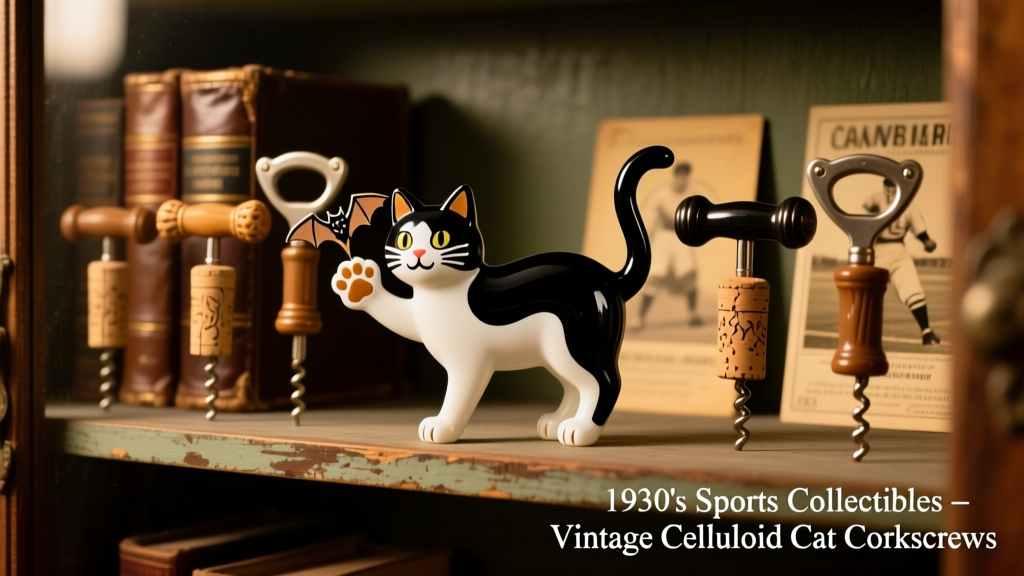
The Corkscrews Cat Celluloid Black-White-Tan: A 1930s American Barware Icon Measuring 4½ Inches
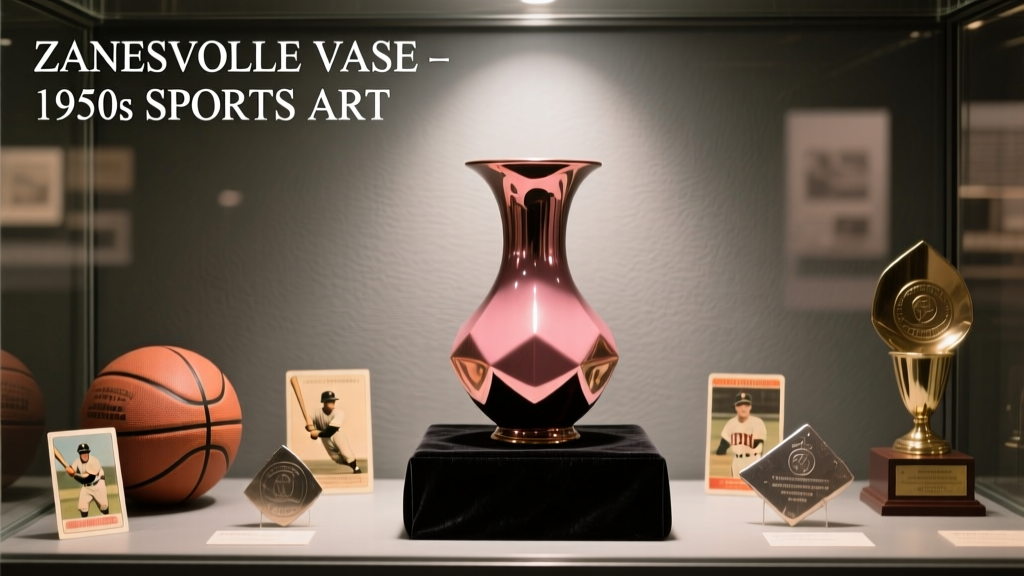
Zanesville Vase: Flared Geometric Shape with Gloss Rose Glaze — Authentication, History, and Collector Insights for the 6-Inch Example
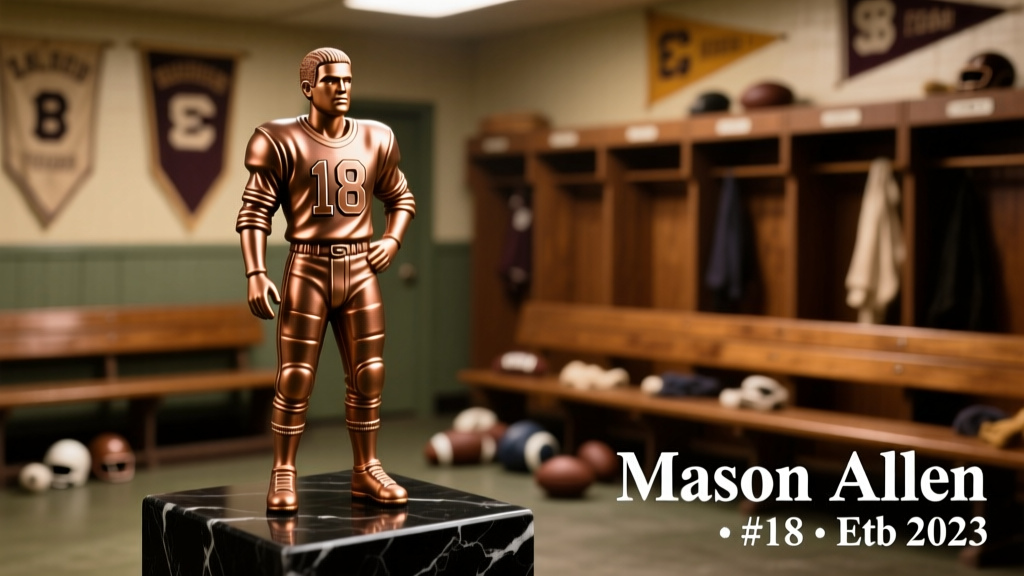
Authenticating the Copper Figurine of Mason Allen: Full Uniform ETBAN Edition (18½ × 6½ Inches)
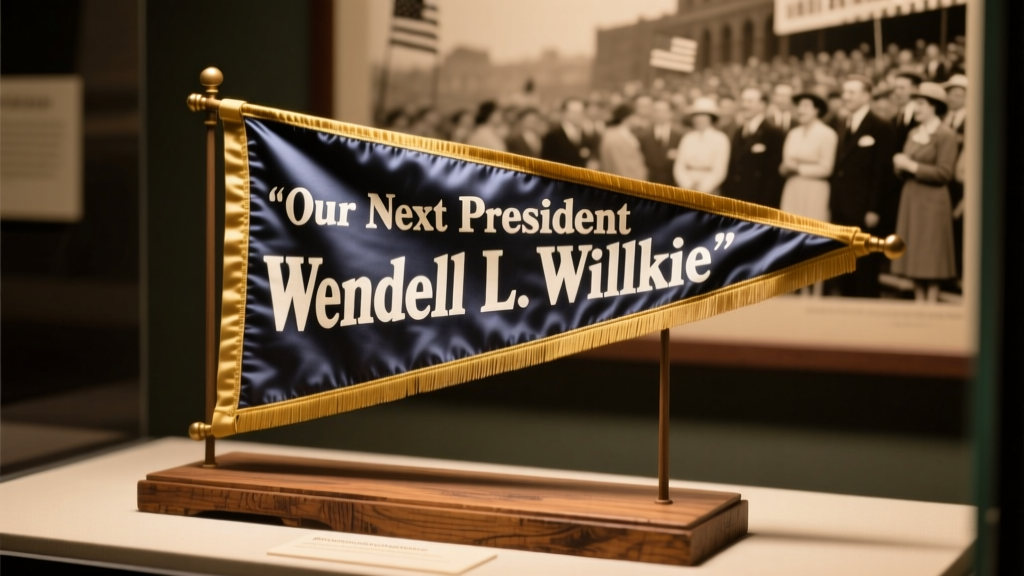
Authenticating the 1940 'Our Next President' Wendell L. Willkie Satin Banner: Rarity, Provenance, and Material Analysis
Authenticating the 'Pictures Theorem Compote of Fruit' Watercolor Stencil Frame: A Collector’s Technical Analysis
The Authenticity File: Decoding PSA/DNA Certificate #1133687 and Its Significance in Modern Sports Memorabilia Authentication