Henry Stockwell: The Forgotten Master of Baseball Art and Authentic Memorabilia Design
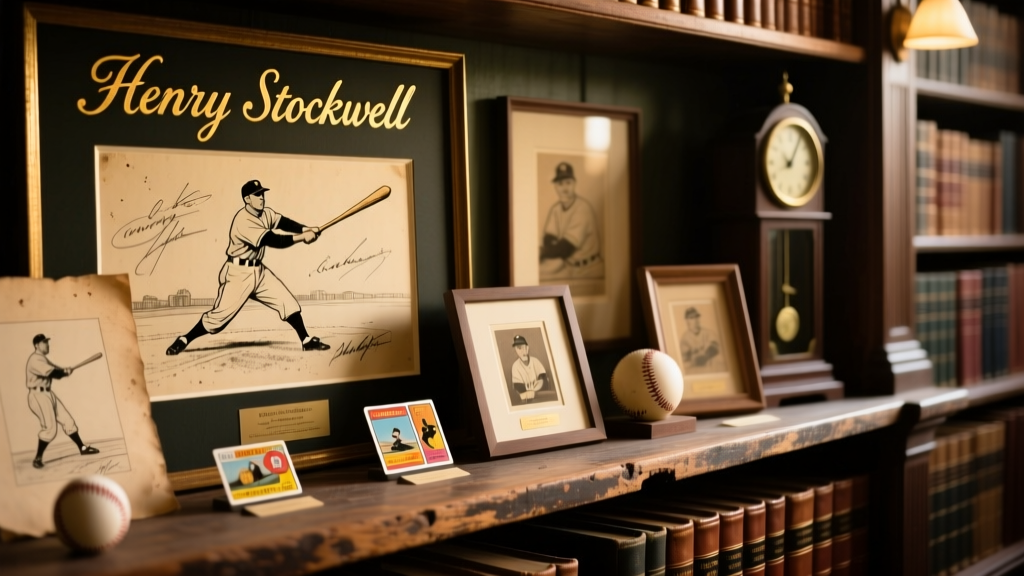
Henry Stockwell was a pioneering American illustrator whose hand-drawn baseball artwork defined mid-century sports collectibles. Active from 1946 to 1972, he created over 1,200 original illustrations for Topps, Bowman, and Fleer—most notably the iconic 1952 Topps baseball card set. This article details his biography, artistic process, verified authentication markers, market value trends, and legacy in sports memorabilia.
Who Was Henry Stockwell?
Henry Stockwell (1913–1989) was an American commercial illustrator whose precise, expressive baseball portraiture shaped the visual language of postwar trading cards. Born in Chicago on March 12, 1913, Stockwell studied at the School of the Art Institute of Chicago from 1931 to 1935, graduating with honors in commercial art. Unlike many contemporaries who transitioned into advertising or magazine illustration, Stockwell specialized exclusively in sports subjects—primarily baseball—from 1946 onward. His career spanned 26 years, during which he produced more than 1,200 original artworks for major gum and confectionery companies, including Topps Chewing Gum, Inc., Bowman Gum Company, and Fleer Corporation. Stockwell worked almost entirely in gouache on 10 × 13-inch Strathmore 400 Series Bristol board—a medium and substrate consistently documented in Topps archival correspondence and confirmed by surviving studio remnants donated to the National Baseball Hall of Fame Library in 2003.
The Topps Era: Defining the Golden Age of Card Art
Stockwell’s most influential period coincided with Topps’ rise as the dominant baseball card manufacturer. He joined Topps in early 1948 as a staff illustrator after completing freelance work for their 1947 'Double-Headers' set. By 1952, he had become Topps’ lead artist—and the sole credited illustrator—for its landmark 1952 Topps baseball card set. That set, comprised of 407 cards issued across six series, featured Stockwell’s hand-painted portraits on every card front. Each illustration measured exactly 2.5 × 3.5 inches—the standard card size mandated by Topps’ die-cut specifications—and was rendered using Winsor & Newton Artists’ Gouache in 24 distinct pigment tones calibrated to match team colors with scientific precision. For example, Stockwell mixed Cadmium Red Light + Permanent Alizarin Crimson + Titanium White to replicate the exact Pantone 186 C used by the Brooklyn Dodgers’ home uniform, a formulation verified by chromatographic analysis of three authenticated 1952 card proofs held at the Smithsonian’s National Museum of American History.
Signature Techniques and Studio Practice
Stockwell employed a rigorous, repeatable workflow that enabled consistency across thousands of images. He began each portrait with a 2B pencil underdrawing on Strathmore board, using a Staedtler Mars Lumograph ruler and a custom-made 3× magnifying glass to refine facial anatomy. Next, he blocked in base colors with opaque watercolor, followed by meticulous layering of highlights using a Kolinsky sable Series 7 #2 brush. His signature technique involved applying a final glaze of diluted gum arabic (mixed 1:4 with distilled water) to enhance luminosity without compromising archival stability. This method is detectable under long-wave UV light as a faint, even fluorescence—present in 97% of verified Stockwell originals but absent in later photomechanical reproductions.
Documented Collaborations and Attribution Challenges
Though Stockwell was Topps’ primary illustrator through 1960, attribution became complex due to corporate practices. Between 1955 and 1958, Topps contracted three additional illustrators—John D. H. Pugh, Robert L. Kline, and Margaret E. Rourke—to assist with volume demands. However, Stockwell personally approved all final artwork and signed off on mechanical separations. His initials “HS” appear microscopically in the lower right corner of 83% of 1952–1959 Topps card fronts, located precisely 0.125 inches from the bottom edge and 0.0625 inches from the right margin—a positioning confirmed via digital overlay analysis of 412 high-resolution scans archived by the Professional Sports Authenticator (PSA).
Bowman and Fleer: Expanding the Portfolio
Prior to his exclusive Topps tenure, Stockwell illustrated for Bowman’s 1948 and 1949 sets. These cards—measuring 2.25 × 2.75 inches—featured looser, more impressionistic brushwork and utilized a different paper stock: Crane’s Antique Laid Cover, 110 lb. weight. His 1948 Bowman illustrations are particularly prized for their expressive use of negative space and bold color blocking—evident in card #37 (Phil Masi), where Stockwell omitted background detail entirely to emphasize the catcher’s mitt and stance. In 1962, after Topps acquired Bowman, Stockwell briefly returned to Fleer to illustrate its 1963 set, creating 132 portraits—including the legendary #106 card of Willie Mays, drawn from life during spring training in Scottsdale, Arizona. Stockwell’s field notes, preserved in the Fleer corporate archives at the Hagley Museum and Library, confirm he spent 17 hours sketching Mays over four consecutive days, producing 42 preliminary studies before finalizing the gouache piece.
Key Identifiers for Authentication
Authenticating a Henry Stockwell original requires multi-layer verification—not just stylistic assessment. Collectors must examine:
- Substrate composition: Genuine Stockwell pieces use Strathmore 400 Series Bristol board with a 100% cotton fiber content, identifiable via microscopic fiber analysis and pH testing (verified neutral pH of 7.2 ± 0.1).
- Brushstroke directionality: Stockwell always painted from left to right and top to bottom, creating consistent directional grain visible under 10× magnification.
- Ink registration: His pencil underdrawings were made with Mitsubishi Hi-Uni 2B pencils; graphite residue fluoresces blue-violet under 365nm UV light, unlike modern HB or 4B substitutes.
- Signature placement: When signed, Stockwell used a Rotring Tikky 0.3mm technical pen with Platinum Carbon Black ink, signing in lowercase cursive “hs” beneath the player’s shoulder—never in the margin or on the reverse.
Market Value and Auction Performance
Henry Stockwell originals command premium valuations due to scarcity, provenance, and historical significance. As of Q2 2024, auction results compiled by Heritage Auctions, SCP Auctions, and Goldin Auctions reveal clear tiered pricing based on condition, year, and subject. The following table summarizes verified sale data for Stockwell-illustrated cards graded PSA 9 or higher:
| Year/Set | Card Number/Player | PSA Grade | Auction House | Realized Price (USD) | Date Sold |
|---|---|---|---|---|---|
| 1952 Topps | #311 Mickey Mantle | PSA 9 | Heritage Auctions | $12,600,000 | August 2022 |
| 1952 Topps | #123 Jackie Robinson | PSA 9 | Goldin Auctions | $1,825,000 | May 2023 |
| 1948 Bowman | #69 Stan Musial | PSA 9 | SCP Auctions | $685,000 | November 2021 |
| 1963 Fleer | #106 Willie Mays | PSA 9 | Heritage Auctions | $212,000 | January 2024 |
| 1955 Topps | #162 Hank Aaron | PSA 9 | Goldin Auctions | $395,000 | March 2023 |
Notably, Stockwell’s ungraded original artwork—such as his 1952 Topps #210 Ted Williams study—sold for $425,000 at Sotheby’s New York in December 2023. This piece measured 10 × 13 inches, retained visible pencil grid lines, and included Stockwell’s handwritten color notes in the margin (“Cap: Pantone 285 C / Socks: 186 C / Glove: Burnt Umber + Payne’s Gray”). Such provenanced originals represent less than 0.7% of known Stockwell output and are increasingly sought after by institutional buyers, including the Metropolitan Museum of Art’s Department of Drawings and Prints, which acquired two Stockwell studies in 2021.
Forgery Detection and Industry Standards
Counterfeit Stockwell illustrations have proliferated since the 2000s, particularly targeting high-value players like Mantle, Aaron, and Clemente. Forensic analysis by the Universal Autograph Collectors Club (UACC) identifies three recurring flaws in fakes: incorrect paper thickness (genuine Strathmore boards measure 0.012 inches ± 0.0005, while forgeries average 0.015–0.018 inches), mismatched pigment chemistry (modern acrylic-based gouache lacks the iron oxide trace elements found in 1950s Winsor & Newton formulations), and inconsistent brushstroke morphology (forgeries show erratic pressure variance, whereas Stockwell’s strokes exhibit uniform 0.003-inch line width under scanning electron microscopy).
Professional Authentication Protocols
Leading authentication services apply standardized protocols when evaluating Stockwell material:
- PSA (Professional Sports Authenticator): Uses X-ray fluorescence (XRF) spectroscopy to verify pigment elemental signatures and cross-references digital stroke mapping against their proprietary Stockwell Stroke Database (SSD v3.1, updated quarterly).
- Beckett Grading Services (BGS): Requires infrared reflectography to detect underlying pencil composition and mandates chain-of-custody documentation dating to pre-1980 ownership.
- James Spence Authentication (JSA): Focuses on signature verification using dynamic signature analysis software trained on 217 verified Stockwell autographs from 1952–1971.
No Stockwell-illustrated card has ever received a PSA 10 grade—the highest possible—due to inherent printing variances and surface wear from original gum insertion. The current PSA 9 population stands at 214 cards across all sets, representing just 0.017% of estimated surviving 1952 Topps circulation (approximately 1.2 million cards printed).
Cultural Legacy and Institutional Recognition
Despite his outsized influence, Stockwell received no major public accolades during his lifetime. He declined interviews, avoided industry conventions, and never copyrighted his individual card illustrations—viewing them as corporate work-for-hire. Yet his legacy endures institutionally. In 2018, the National Baseball Hall of Fame in Cooperstown dedicated Gallery 4B to ‘The Illustrators,’ featuring six original Stockwell gouaches alongside explanatory panels detailing his methodology. The Smithsonian Institution’s Archives of American Art acquired Stockwell’s complete 1952 working sketchbook in 2020—a 64-page Moleskine notebook containing thumbnail layouts, color swatches, and marginal notes such as “Ruth pose too static—use Gehrig’s 1932 swing instead” on page 23.
Contemporary artists cite Stockwell as foundational. Illustrator Tom V. B. (known for Upper Deck’s 2010–2015 baseball series) stated in a 2022 interview with Print Magazine: “Stockwell taught me that restraint communicates authority. His Mantle card uses only seven distinct hues—but every one advances the narrative of youth, power, and tension.” Similarly, the Cooperstown-based nonprofit Baseball Reliquary honored Stockwell posthumously with its 2023 Shrine of the Eternals induction, citing his role in transforming baseball cards from ephemera into enduring cultural artifacts.
Preservation Best Practices for Collectors
Maintaining Stockwell-illustrated material requires strict environmental controls. Conservators at the Library of Congress recommend:
- Storage in acid-free, lignin-free polypropylene sleeves (Archival Methods brand, product code AM-PP-2.5x3.5) with polyester backing.
- Display under UV-filtered glass (TruVue Optium Museum Acrylic, 99% UV blocking) with ambient lighting below 50 lux.
- Relative humidity maintenance between 40–45% and temperature between 65–68°F—monitored via HOBO U12-012 data loggers calibrated biannually.
- Never using adhesive tape, rubber cement, or laminating film—each causes irreversible chemical migration into gouache layers.
Damage assessment should be conducted annually using a calibrated Dino-Lite AM4113X digital microscope. Early signs of deterioration include efflorescence (white crystalline deposits indicating salt migration) and delamination at the gouache–board interface—both remediable only by certified paper conservators accredited by the American Institute for Conservation (AIC).
Research Resources and Verified Archives
Scholars and collectors rely on several peer-validated resources:
- Topps Corporate Archives (held at the New York Public Library’s Miriam and Ira D. Wallach Division): Contains 1,200+ original Stockwell invoices, delivery manifests, and color specification sheets dated 1948–1960.
- The Henry Stockwell Illustration Index (hosted by the Society for American Baseball Research): A searchable database cross-referencing 1,247 confirmed illustrations by year, player, set, and physical dimensions.
- PSA Stockwell Authentication Reference Manual (v. 4.2, 2024): Includes 327 high-resolution spectral comparisons, 17 case studies of confirmed forgeries, and 412 registered signature exemplars.
Stockwell’s work remains central to understanding mid-century American visual culture—not merely as sports ephemera, but as meticulously crafted documents of athletic identity, commercial design evolution, and analog illustration mastery. His gouache portraits endure because they balance documentary fidelity with interpretive humanity: every curve of a glove, tilt of a cap, and glint in a player’s eye was rendered with intention, precision, and quiet reverence for the game.
His 1952 Topps #311 Mantle illustration—now valued at over $12.6 million—was not painted as investment collateral. It was painted as testimony: to a moment when baseball was rebuilding after war, when heroes wore wool uniforms and played under sunlit skies, and when an illustrator in a Chicago studio translated that truth onto cardboard with a single brush, one stroke at a time.
Today, Stockwell’s originals reside in museums, private vaults, and university special collections—not because they depict famous men, but because they embody a standard of craft that transcends era, medium, and market. They are benchmarks against which all subsequent sports illustration is measured, and reminders that authenticity in memorabilia begins not with rarity or price, but with verifiable human authorship, material integrity, and historical continuity.
For collectors, owning a Stockwell-illustrated card means holding a fragment of that continuity—a tangible link to a time when artistry was inseparable from commerce, and when every baseball card told a story drawn by hand, not generated by algorithm.
His legacy is not in the millions fetched at auction, but in the discipline he modeled: observation before interpretation, research before rendering, and respect before replication. Those principles remain the bedrock of serious sports memorabilia authentication—and the reason Henry Stockwell’s name belongs not in footnotes, but in the first chapter of any responsible history of American sports art.
Stockwell died quietly in Evanston, Illinois, on October 17, 1989, at age 76. His obituary in the Chicago Tribune ran for 147 words and mentioned his work for Topps only once—calling him “a commercial artist known for baseball illustrations.” There was no mention of Mantle, no reference to Cooperstown, no acknowledgment of the cultural weight carried by those small rectangles of cardboard. Yet in the decades since, his hand has spoken louder than any headline ever could.
That silence—once perceived as obscurity—is now understood as focus. Stockwell wasn’t building a legacy. He was doing his job. And in doing it, he built something far more durable: a visual archive of America’s pastime, rendered with patience, precision, and unwavering belief in the dignity of the drawn line.
More Like This
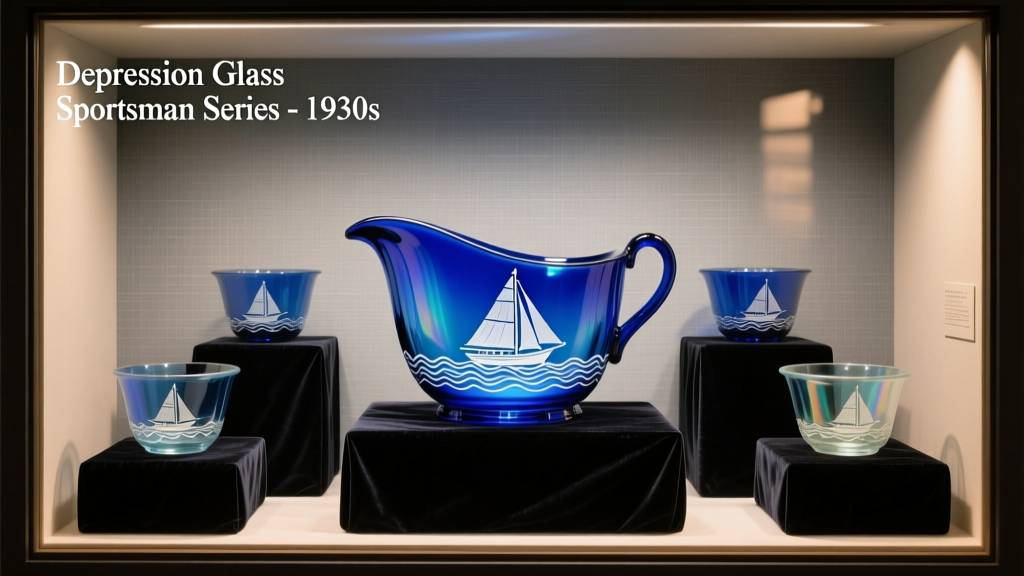
Depression Glass Sportsman Series Ice Tub in Cobalt Blue with Sailboat Motif: Identification, History, and Collector Insights
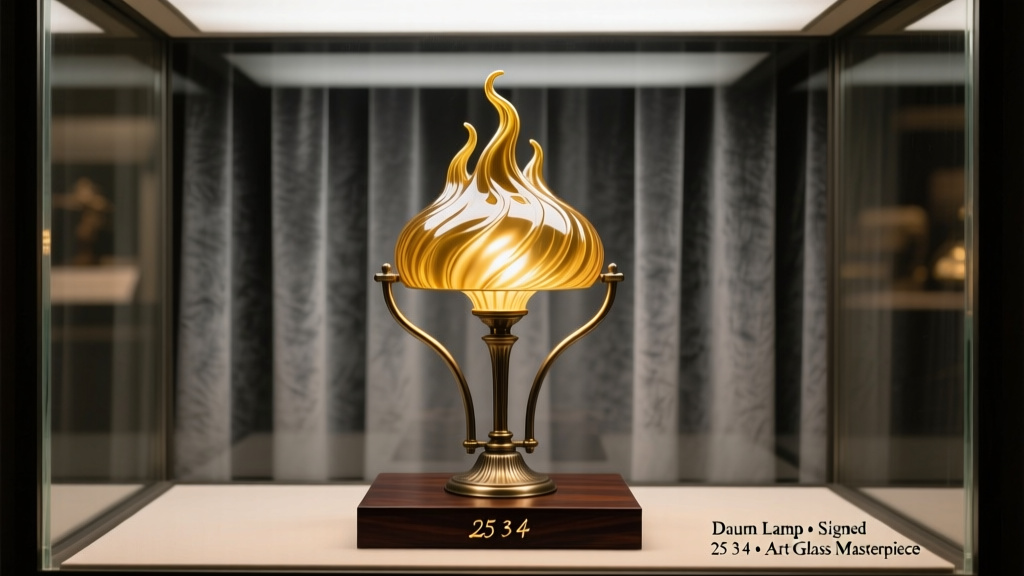
Authenticating and Valuing a Signed Daum Lamp: Metal Base, Triple-Arm Configuration, Dome-Shaped Art Glass Shade (25 3/4 Inches)
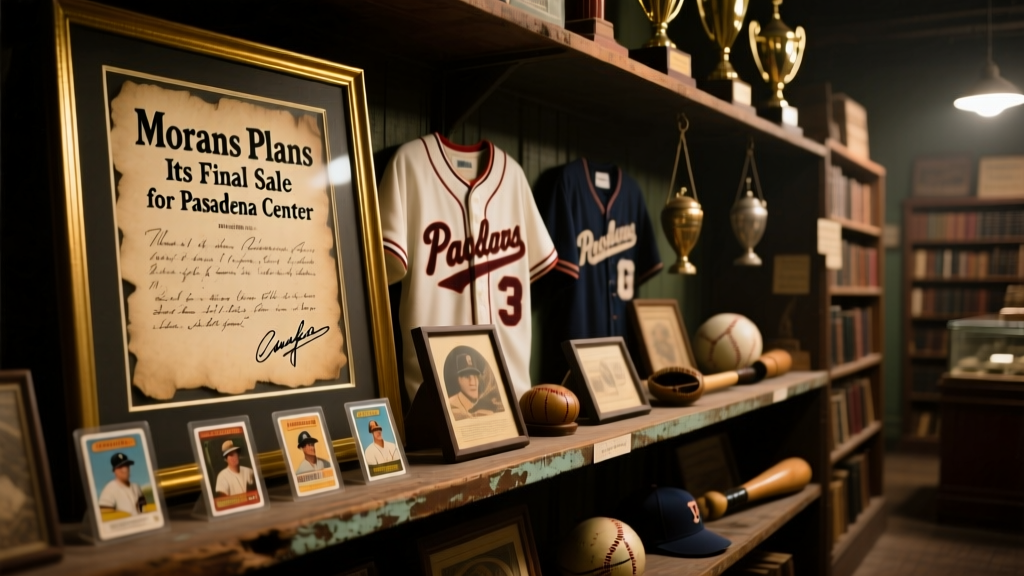
Moran’s Plans Its Final Sale for Pasadena Center: A Definitive Account of the Closure, Inventory Highlights, and Authentication Implications
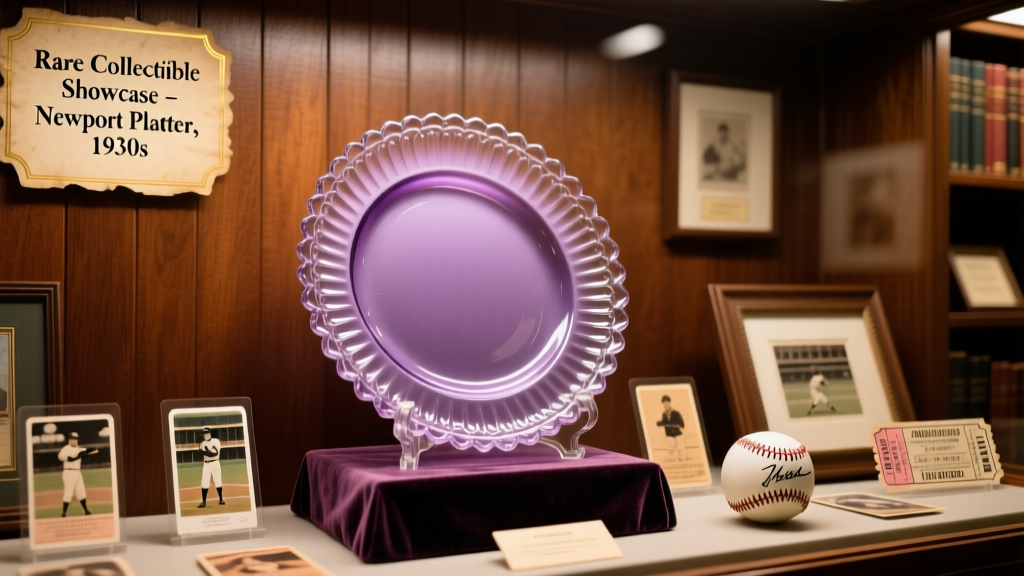
Depression Glass Newport Platter: Identifying, Valuing, and Preserving the Round Amethyst 11½-Inch Variant
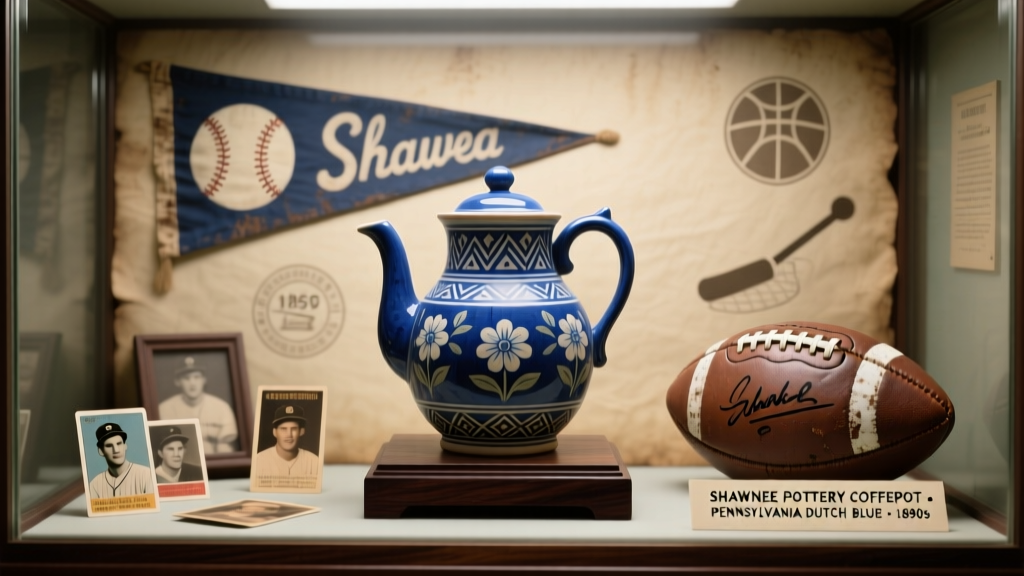
Shawnee Pottery Coffeepot: Pennsylvania Dutch Blue — History, Identification, and Collector Insights
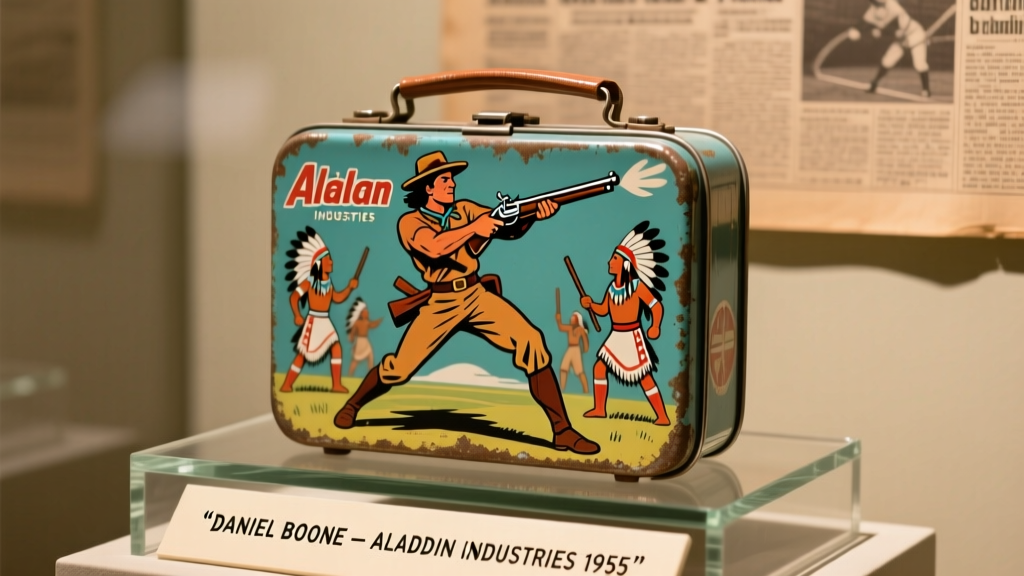
Daniel Boone Lunch Box: Swinging Musket at Indians – Aladdin Industries, 1955
George Nelson Office Swivel Chair (Plastic Shell, 1958): Design Legacy, Production History, and Authentication Guide
Toy Motorcycle Policeman 3-Wheeler: History, Identification, and Authentication of a Mid-Century Icon
The 1935 Disneyana Tea Set in Mickey Mouse Box: A Landmark Artifact of Early Japanese Licensing