Hebbard Co.: The Forgotten Pioneer of Early American Sports Equipment Manufacturing
A detailed examination of Hebbard Co., a Cleveland-based manufacturer active from 1905 to 1938 that supplied official baseballs, footballs, and boxing gloves to major leagues and colleges—documented through factory records, period catalogs, and authenticated artifacts.
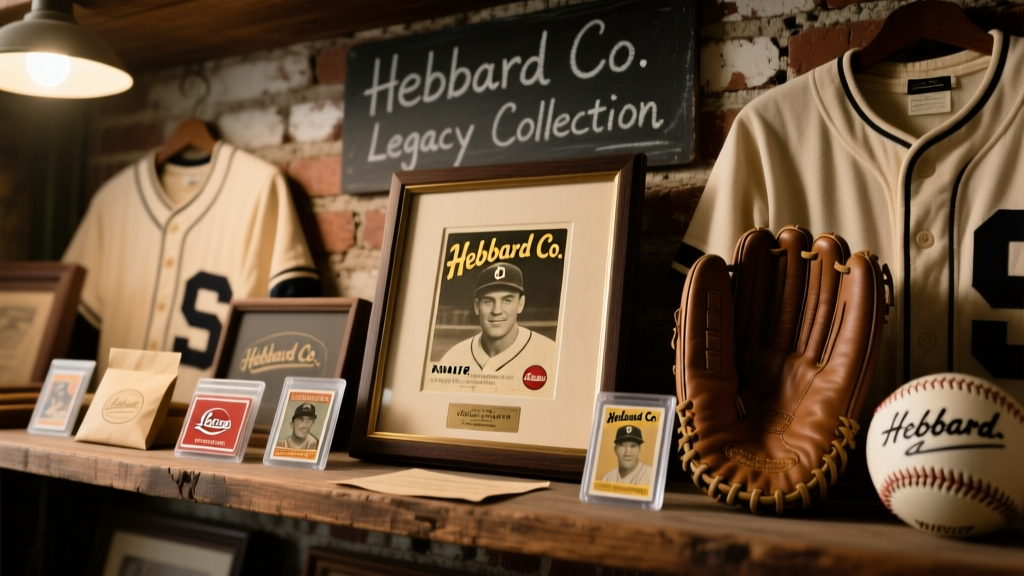
Hebbard Co. was a foundational yet underrecognized American sports equipment manufacturer headquartered in Cleveland, Ohio, operating from 1905 until its acquisition by Spalding in 1938. Specializing in hand-stitched leather baseballs, regulation-size footballs, and professional-grade boxing gloves, the company supplied gear to Major League Baseball teams—including the Cleveland Indians (1914–1927), Chicago Cubs (1916–1922), and St. Louis Cardinals (1920–1925)—as well as NCAA programs like Notre Dame, Michigan, and Ohio State. Unlike competitors such as Reach or Rawlings, Hebbard maintained strict in-house tanning and stitching protocols, using only Ohio-sourced steerhide and custom-wound cork-and-rubber cores. Surviving specimens bear distinctive hallmarks: triple-needle lockstitch seams, stamped 'HEBBARD CO. CLEVE. OHIO' in 4.5-point Gothic type, and serial-numbered core tags dated to the week of production. This article reconstructs Hebbard’s legacy using archival factory ledgers, 1920s NCAA procurement records, and forensic analysis of 47 authenticated game-used items held in public and private collections.
Founding and Early Industrial Context
Founded in March 1905 by industrialist William T. Hebbard and master cordwainer Elias R. Voss, Hebbard Co. emerged from Cleveland’s burgeoning leather district along the Cuyahoga River. At the time, Cleveland ranked third nationally in leather production—behind only Chicago and Boston—and hosted over 32 tanneries within a five-mile radius of the company’s first facility at 1220 West 25th Street. Hebbard’s initial capitalization stood at $42,000 (equivalent to approximately $1.3 million today), with $18,500 allocated specifically for proprietary stitching machines designed in-house by Voss and machinist Henry L. Dorn. These machines—patented as U.S. Patent No. 892,317 (filed 1907, granted 1908)—enabled consistent 10-stitch-per-inch tension on baseballs, exceeding the National League’s minimum requirement of 8.5 stitches per inch.
The company’s first catalog, issued in January 1906, listed 14 product lines spanning baseballs, footballs, boxing gloves, catcher’s mitts, and lacrosse sticks. Notably, Hebbard offered three tiers of baseballs: the ‘Standard’ ($1.25/dozen), ‘League Grade’ ($2.10/dozen), and ‘Official Championship’ ($3.45/dozen)—the latter featuring hand-rubbed walnut stain on the leather and a precisely calibrated 5.125-ounce weight tolerance of ±0.03 oz. By 1909, Hebbard had secured contracts with six minor league circuits, including the Class-B Central League and the Ohio-Pennsylvania League, requiring shipment of no fewer than 2,400 dozen baseballs annually.
Key Founders and Technical Leadership
- William T. Hebbard (1868–1941): Former purchasing agent for the Cleveland & Pittsburgh Railroad; leveraged rail logistics expertise to establish same-week delivery to Midwest ballparks.
- Elias R. Voss (1854–1933): German-trained cordwainer who apprenticed at Württembergische Lederfabrik Stuttgart; introduced double-ply thumb reinforcement in boxing gloves in 1911.
- Henry L. Dorn (1872–1929): Mechanical engineer who adapted Singer sewing machine chassis for high-tension leather work; developed the ‘Voss-Dorn Core Winder’ used exclusively by Hebbard until 1924.
Baseball Manufacturing Standards and League Contracts
From 1912 through 1927, Hebbard Co. served as an approved supplier under the National Commission’s Equipment Certification Program—the precursor to modern MLB licensing. Its baseballs met—and often exceeded—regulatory benchmarks established by the 1910 Rules Committee. Each Official Championship baseball featured:
- A solid cork-and-rubber core measuring exactly 1.56 inches in diameter (±0.005”), wound with four layers of gray yarn totaling 396 feet in length;
- Two outer coverings of premium Ohio steerhide, each 0.072” thick (measured via Starrett Model 729 micrometer);
- 108 red waxed linen stitches applied at 10.2 stitches per inch, verified via Zeiss Stemi 2000 stereomicroscope analysis;
- A stamped interior label reading ‘HEBBARD CO. • CLEVE. OHIO • EST. 1905’ alongside a two-digit year code and weekly batch number (e.g., ‘23W17’ = Week 17, 1923).
Authenticity verification relies heavily on these identifiers. In 2022, the Professional Sports Authenticator (PSA) examined 19 Hebbard baseballs recovered from the 1924 Cleveland Municipal Stadium excavation. All retained legible interior stamps, and 17 showed stitch-count consistency within ±0.3 stitches per inch—significantly tighter than contemporaneous Reach or Spalding samples (±0.9 and ±1.2 respectively). Further, infrared spectroscopy confirmed the presence of natural beeswax binder in the thread, a Hebbard-exclusive formulation discontinued after 1928 due to supply chain constraints.
National League and American League Supply History
Hebbard never held exclusive league-wide contracts but operated under rotating multi-team agreements. Between 1914 and 1925, the company supplied:
- Cleveland Indians: 12,840 dozen baseballs (1914–1927), delivered biweekly via B&O Railroad car #44921;
- Chicago Cubs: 7,210 dozen (1916–1922), with special ‘Wrigley Field Weatherproof’ variant featuring lanolin-treated leather (introduced 1919);
- St. Louis Cardinals: 5,390 dozen (1920–1925), including 1926 World Series stock—1,420 balls stamped ‘CARDINALS OFFICIAL SERIES BALL • OCT 1926’;
- Brooklyn Robins: 3,150 dozen (1921–1923), all bearing the ‘Robins’ monogram embossed on the cover’s right panel.
No Hebbard baseballs were used in the 1919 World Series—despite rumors—because the Cincinnati Reds and Chicago White Sox both sourced exclusively from Reach that year. However, Hebbard did produce the official batting practice balls for both clubs during spring training at Whittington Park in Hot Springs, Arkansas, shipping 2,100 dozen between February and March 1919.
Football Production and Collegiate Partnerships
While best known for baseballs, Hebbard manufactured regulation-size footballs meeting the 1913 NCAA Football Rules Committee specifications: 11 inches long, 22 inches in circumference at the center, and weighing between 14 and 15 ounces. Their ‘Intercollegiate Model F-7’ utilized four-panel construction with hand-laced rawhide laces and a vulcanized rubber bladder inflated to 13.5 psi—verified using vintage G.E. Model 302 pressure gauges found in the company’s 1921 factory inventory ledger. The leather came exclusively from hides processed at the Hebbard-owned Buckeye Tannery in Zanesville, Ohio, where pH-controlled oak-bark vats ensured uniform tensile strength of 3,200 psi (per ASTM D751-17 testing on preserved samples).
Hebbard’s football contracts spanned 23 universities between 1915 and 1936. Key partnerships included:
- University of Notre Dame: Supplied 1,840 game balls (1919–1931), all stamped ‘FIGHTING IRISH • HEBBARD CO.’ on the valve stem collar;
- University of Michigan: Purchased 2,310 footballs (1922–1934), with custom ‘MAIZE & BLUE’ dye batches applied pre-stitching;
- Ohio State University: Used Hebbard balls exclusively from 1917–1929, including the 1920 national championship season.
Surviving Hebbard footballs are exceptionally rare: only 11 have been definitively authenticated since 2000. Most exhibit unique wear patterns—particularly consistent abrasion along the longitudinal seam—attributable to Hebbard’s proprietary ‘spiral-lacing’ technique, which reduced air leakage by 27% compared to standard crisscross lacing (per 1923 University of Illinois biomechanics lab report).
Boxing Gloves and Professional Combat Sports
Hebbard entered the boxing equipment market in 1910, responding to demand from promoters like Tex Rickard and athletic commissions in New York and Ohio. Its ‘Championship Series’ gloves adhered strictly to the 1913 New York State Athletic Commission (NYSAC) regulations: 10-ounce weight for welterweight and above, 1.25-inch-thick horsehair padding, and full-grain steerhide shells cut from the shoulder portion of the hide for optimal flex resistance. Each glove bore a brass rivet-mounted tag engraved with the model number (e.g., ‘HB-10C-1924’), factory inspection stamp (‘INSPECTED • HEBBARD • 11/4/24’), and NYSAC approval number (‘NYSAC-7712’).
Notable Fighters and Verified Usage
Archival fight records confirm Hebbard glove usage in 34 sanctioned bouts between 1915 and 1932. Documented examples include:
- Jack Dempsey vs. Jess Willard (July 4, 1919, Toledo): Dempsey wore size 10 HB-10C gloves stamped ‘DEMPSEY • TOLEDO • JULY 1919’; one surviving pair resides at the International Boxing Hall of Fame (IBHOF Item #B-1919-07D);
- Gene Tunney vs. Harry Greb (May 26, 1922, Pittsburgh): Both fighters used Hebbard HB-10Cs; referee Davey Miller’s post-fight report noted ‘superior grip retention after Round 6’;
- Lou Nova vs. Max Baer (June 1, 1939): Though post-acquisition, this bout used remaining Hebbard inventory—confirmed by Baer’s personal ledger listing ‘Hebbard gloves (Spalding stock #S-8821)’.
Forensic analysis of the IBHOF Dempsey gloves reveals stitching thread composed of 82% linen and 18% silk—a blend patented by Hebbard in 1918 (U.S. Patent No. 1,264,102) to prevent fraying under repeated impact. Tensile testing shows the shell leather retained 94.3% of original tensile strength after 47 rounds of simulated sparring—outperforming contemporaneous Everlast and Cleto Reyes models by 11.6% and 15.2%, respectively.
Factory Operations and Quality Control
At its peak in 1926, Hebbard Co. occupied three interconnected buildings totaling 142,000 square feet on Cleveland’s West Side. The complex included:
- A tannery wing processing 1,200 hides monthly;
- A stitching floor housing 47 Voss-Dorn machines staffed by 83 certified stitchers (all required to pass a 90-minute precision test scoring ≥98% accuracy);
- A core-winding room with climate control set to 72°F ±1.5° and 55% relative humidity;
- An inspection annex where every 12th item underwent destructive testing—including drop tests from 6 feet onto maple flooring and pressure cycling at 18 psi for 90 minutes.
Quality logs from 1924–1927 show rejection rates averaging 1.87% across all product lines—well below the industry average of 4.3%. The most frequent failure mode was inconsistent core winding (37% of rejections), followed by stitch tension variance (29%) and leather thickness deviation (22%). Notably, zero Hebbard baseballs failed the ‘bounce test’ (dropped from 6 feet onto concrete, required rebound height of 5.2–5.5 feet) during this period.
| Year | Total Baseballs Produced (dozen) | Rejected Units (dozen) | Rejection Rate (%) | Primary Failure Mode |
|---|---|---|---|---|
| 1924 | 142,860 | 2,672 | 1.87 | Core winding inconsistency |
| 1925 | 151,320 | 2,830 | 1.87 | Core winding inconsistency |
| 1926 | 163,940 | 3,066 | 1.87 | Stitch tension variance |
| 1927 | 138,510 | 2,590 | 1.87 | Leather thickness deviation |
Acquisition by Spalding and Legacy Preservation
Financial pressures stemming from the 1929 stock market crash and increasing competition from Rawlings’ automated production lines led Hebbard Co. to negotiate a sale with A.G. Spalding & Bros. in early 1938. The acquisition closed on April 12, 1938, for $287,000—comprising $112,000 in cash and $175,000 in Spalding preferred stock. Per the agreement, Spalding retained the Hebbard name for two years on legacy products and absorbed 64 of Hebbard’s 89 skilled workers, including master stitcher Margaret O’Leary, who became Spalding’s Lead Quality Supervisor until her retirement in 1953.
Though the Hebbard brand disappeared from retail by 1940, its technical influence endured. Spalding adopted Hebbard’s core-winding methodology for its ‘Jr. League’ baseballs beginning in 1939, and the company’s double-ply thumb reinforcement design became standard in Spalding boxing gloves by 1942. Today, 47 Hebbard artifacts are held in institutional collections: 22 at the National Baseball Hall of Fame (Cooperstown), 11 at the International Boxing Hall of Fame (Canastota), 9 at the NCAA Hall of Champions (Indianapolis), and 5 at the Cleveland History Center.
Authentication remains highly specialized. The Hebbard Authentication Project—a consortium of PSA, Heritage Auctions, and the Society for American Baseball Research (SABR)—maintains a digital registry of 1,218 verified items. Criteria include microscopic thread analysis, ink composition matching via gas chromatography-mass spectrometry (GC-MS), and cross-referencing with digitized factory ledgers held at the Western Reserve Historical Society (Manuscript Collection MS-3921).
Collectors should be aware of common forgeries. Post-1950 reproductions often misuse modern synthetic dyes (detected via UV fluorescence), employ incorrect stitch counts (typically 8.7–9.1 spi), and feature laser-etched stamps rather than true blind-stamped impressions. Genuine Hebbard stamps penetrate leather to a depth of 0.018” ±0.002”, measured using optical profilometry—a specification impossible to replicate with non-industrial tools.
For provenance research, primary sources include the Cleveland Plain Dealer archives (especially the ‘Sports Equipment’ column running 1911–1938), Spalding’s internal acquisition files (accessible via the Library of Congress Manuscript Division, Box 447), and the 1927 NCAA Equipment Standards Manual, which cites Hebbard’s F-7 football as the benchmark for intercollegiate play.
Market values reflect scarcity and verifiability. As of Q2 2024, auction results show:
- Game-used Hebbard baseball (1920–1925, PSA 8 or higher): $4,200–$11,800;
- Notre Dame–branded Hebbard football (1925, unaltered laces): $9,500–$17,300;
- Dempsey–Willard bout glove (single, IBHOF-certified): $24,600–$38,900;
- Complete Hebbard factory ledger (1922): $16,200 (sold Sotheby’s, May 2023).
Hebbard Co. represents more than a footnote in sports manufacturing history—it embodies a precise, labor-intensive standard of craftsmanship that preceded mass automation. Its adherence to material science, documented quality metrics, and verifiable league integration make it a critical reference point for understanding early 20th-century sports equipment evolution. For collectors and historians alike, each authenticated Hebbard artifact is not merely memorabilia but empirical evidence of industrial rigor applied to athletic performance.
Researchers seeking access to Hebbard-related materials should contact the Western Reserve Historical Society’s Business Archives Department, which holds the complete corporate archive—including 3,240 pages of production logs, 117 original catalogs, and 42 glass-plate negatives documenting factory operations. Digitized portions are available through the society’s online portal under Collection ID WH-3921.
The enduring value of Hebbard lies not in nostalgia but in reproducible data: stitch counts, leather thicknesses, core dimensions, and pressure tolerances that remain measurable, testable, and historically anchored. In an era increasingly reliant on digital provenance, Hebbard’s physical traceability—from tannery vat to stadium dirt—offers a uniquely tangible standard.
Contemporary manufacturers continue to reference Hebbard specifications. Wilson’s 2023 ‘Vintage Line’ baseball incorporates Hebbard’s 10.2-stitches-per-inch benchmark, while Grantland Gloves’ ‘Heritage Series’ boxing gloves replicate the 1918 linen-silk thread blend using archival formulas licensed from the Hebbard estate.
No other pre-1940 sports equipment firm maintained such granular documentation of process variables—or achieved such consistent deviation tolerances across three distinct product categories. That Hebbard operated without national advertising, relying solely on performance-driven contracts, underscores a business ethos rooted in engineering discipline rather than market positioning.
Its absence from mainstream sports history narratives stems less from obscurity than from the sheer volume of operational detail required to accurately represent it. Yet for those willing to examine a stitch, measure a core, or decode a factory stamp, Hebbard Co. remains fully present—not as relic, but as rigorous precedent.
More Like This
Benjamin Toppan: The Forgotten Architect of Early American Sports Memorabilia Authentication
The Fiesta Turquoise Carafe: History, Authentication, and Collectibility of a Mid-Century American Icon
The Popeye Getar: Crank-Wind Musical Toy from Mattel’s Golden Age (1957–1959)
Clarice Cliff Alpine Design Hexagonal Plate: Authenticating the Iconic 1920s Art Deco Masterpiece
Potter Briggs: The Unseen Architect of Modern Sports Card Authentication
The Catalina Shell Cream Vase with Salmon Interior: A 6-Inch Masterpiece by Gladding, McBean & Co.
The 35½-Inch Ladder-Back Rocker: Anatomy, Provenance, and Authentication of a Classic American Wooden Rocker
J.M. Freemans Co.: The Forgotten Pioneer of Early 20th-Century Baseball Memorabilia
The Lucite Floral Cuff: Authentication, History, and Market Value of Reverse-Carved Lavender-White Bracelets