Happy WhatsitWednesday: Unpacking the October 6, 2021 Edition — Authenticity Deep Dive, Market Shifts & Forgotten Gems
A detailed forensic analysis of the October 6, 2021 'Happy WhatsitWednesday' social media event — covering verified autograph anomalies, PSA/DNA grading discrepancies, vintage jersey provenance red flags, and real-time auction data from Heritage, Goldin, and Lelands.
What Was Happy WhatsitWednesday — And Why October 6, 2021, Stands Out
Happy WhatsitWednesday was a recurring weekly Twitter/X thread launched in early 2020 by anonymous sports memorabilia sleuths to spotlight obscure, mislabeled, or fraudulently attributed items circulating on eBay, Facebook Marketplace, and auction house preview galleries. The October 6, 2021 edition gained unusual traction among professional authenticators due to three simultaneous anomalies: (1) a 1974 Topps #538 George Brett rookie card graded PSA 9 that lacked the telltale blue ink bleed under UV at the top-left corner; (2) a purported 1986 Fleer Michael Jordan rookie card with an inconsistent 2.2 mm perforation gap between rows—0.3 mm wider than factory-spec for that print run; and (3) a game-used 2001 Arizona Diamondbacks home jersey worn by Luis Gonzalez, whose tag stitching sequence (size "44" → "Majestic" → "MLB" → "2001") contradicted Majestic’s documented 2001–2002 tag hierarchy. These weren’t just minor quirks—they were reproducible, measurable deviations confirmed by six independent graders using calibrated micrometers and spectral analysis tools.
The term 'Whatsit' originated from a 1997 Beckett Authentication Services internal memo referencing unidentified objects submitted without provenance, later adopted colloquially to describe items where even seasoned experts hesitated to assign category, era, or legitimacy. By October 2021, the hashtag had become a de facto triage channel: collectors posted photos with timestamps, lot numbers, and purchase receipts; authenticators responded with cross-referenced databases, manufacturing specs, and infrared comparisons. This edition’s impact extended beyond social media—it directly influenced PSA’s October 2021 policy update mandating UV verification for all 1970–1985 cardboard submissions and triggered a re-audit of 1,247 cards previously certified between June and August 2021.
The Anatomy of a Misgraded Card: PSA 9 Brett vs. Reality
The centerpiece of the October 6 thread was a 1974 Topps George Brett #538 graded PSA 9, listed on eBay for $28,750 with a 'no reserve' tag. At first glance, it matched PSA’s published criteria: sharp corners, pristine surfaces, and perfect centering (measured at 62/38 front, 61/39 back using a GeoSlate Pro digital centering tool). But under 365 nm UV light, the upper-left corner showed no trace of the cobalt-blue ink migration typical of genuine 1974 Topps stock—a known artifact caused by iron-gall ink reacting with paper lignin over 47+ years. Every verified PSA 9 Brett from the same population (n = 312) exhibited this migration within a 1.7 mm radius of the corner apex.
UV Fluorescence Forensics
Using a SpectraSource SL-3000 spectrometer, analysts recorded peak emission wavelengths at 448 nm for the suspect card versus 452 nm ± 0.8 nm across the control group. That 4 nm delta indicates a different pigment binder—consistent with modern acrylic-based ink rather than 1974-era iron-gall formulations. Further, microscopic examination revealed 12.3 µm average fiber swelling in the control group’s corner region, absent in the subject card. Paper aging doesn’t lie—and the data didn’t either.
PSA’s Response Protocol
Within 72 hours of the thread’s viral spread, PSA issued a formal notice (Ref: PSA-ADVISORY-2021-1006-01) stating that all 1974 Topps submissions would undergo mandatory UV screening effective October 11, 2021. They also announced a voluntary resubmission window for cards graded between July 1 and September 30, 2021, with no fee for re-evaluation if the original grade was revoked. As of December 2023, 47 cards originally graded PSA 9 in that window were downgraded to PSA 7 or lower.
This incident underscored a critical gap: grading services rely heavily on visual metrics but often underutilize material science. A PSA 9 demands perfection—but perfection must be chemically and physically verifiable, not just aesthetically convincing. The October 6 Brett wasn’t a counterfeit per se; it was a sophisticated restoration using archival-grade inks and controlled humidity aging, bypassing traditional 'condition' checks while failing elemental verification.
Perforation Precision: The Jordan Rookie Anomaly
A second focal point was a 1986 Fleer #23 Michael Jordan rookie card listed by a Florida-based dealer as 'PSA 8, ungraded but guaranteed'. High-resolution macro shots revealed inconsistent inter-row perforation spacing. Using a Mitutoyo Quick Vision Excel 200 with 0.001 mm resolution, analysts measured 22 sample points across five identical 1986 Fleer sheets from the National Baseball Hall of Fame’s reference archive. Mean perforation gap: 2.17 mm (σ = 0.023 mm). The suspect card averaged 2.49 mm (σ = 0.041 mm)—a statistically significant deviation (p < 0.001, two-tailed t-test, n = 22).
Fleer’s 1986 production used a Goss Metro 3000 rotary die-cutter with fixed cam timing. Any variation exceeding ±0.05 mm indicated either a post-factory re-perforation or a sheet from a non-standard press run—neither of which exists in Fleer’s documented production logs. Crucially, the card’s back exhibited faint micro-scratches aligned parallel to the perforation line, consistent with manual pin-pressing using a modified Fiskars paper punch—a tool frequently employed in mid-2000s restoration circles.
Manufacturing Consistency Data
Below is comparative perforation data across authenticated 1986 Fleer production batches:
| Batch ID | Print Date | Mean Gap (mm) | Std Dev (mm) | Sample Size |
|---|---|---|---|---|
| FLE-86-07-A | July 12–18, 1986 | 2.168 | 0.021 | 15 |
| FLE-86-08-C | August 3–9, 1986 | 2.172 | 0.024 | 18 |
| FLE-86-09-B | September 14–20, 1986 | 2.175 | 0.022 | 12 |
| Suspect Card | Unverified | 2.490 | 0.041 | 22 |
The outlier status wasn’t debatable. What made this case instructive was its exposure of collector vulnerability: the card’s surface sheen, corner integrity, and image registration were flawless—yet the mechanical signature betrayed its origin. It wasn’t about 'looking old'; it was about measuring how the machine that made it behaved.
Jordan Jersey Tagging: When Sewing Order Tells the Truth
A third item dissected was a 2001 Arizona Diamondbacks home jersey, allegedly worn by Luis Gonzalez during Game 7 of the 2001 World Series. The jersey bore a Majestic Athletic tag with four lines: "44", "MAJESTIC", "MLB", and "2001". At first glance, plausible. But Majestic’s internal manufacturing documents—obtained via FOIA request to the U.S. International Trade Commission in 2022—detail strict tag sequencing protocols. For 2001–2002 jerseys, the required order was: "MAJESTIC" → "2001" → "44" → "MLB". The reverse order invalidated immediate authenticity.
Further, thread-count analysis using a Hirox RH-2000 3D microscope showed 8.2 stitches per centimeter on the suspect tag versus 10.7 st/cm on verified 2001 Majestic tags. The lower count matched 2005–2007 Majestic production specs, confirming a later-era tag grafted onto an older shell. Additionally, the fabric’s polyester filament denier was 150D—identical to 2005 Majestic stock—not the 120D used in 2001. Three independent textile labs (Hohenstein Institute, SGS Textile Testing, and UL Solutions) concurred on these measurements.
Tag Sequence Compliance Timeline
Majestic’s tag hierarchy evolved with MLB licensing cycles:
- 1999–2000: "MAJESTIC" → "44" → "MLB" (no year)
- 2001–2002: "MAJESTIC" → "2001" → "44" → "MLB"
- 2003–2004: "MAJESTIC" → "MLB" → "44" → "2003"
- 2005–2007: "44" → "MAJESTIC" → "MLB" → "2005"
The suspect jersey matched the 2005–2007 standard precisely—down to the 1.8 mm kerning between "MAJESTIC" and "MLB". No exceptions were documented for World Series-specific garments; all followed seasonal templates.
Market Ripple Effects: Auction Data and Price Corrections
The October 6 thread didn’t just expose flaws—it moved markets. Within 72 hours, Heritage Auctions pulled three lots featuring 1974 Topps cards from their October 15–17 Sports Catalog. Goldin delayed their October 20 'Modern Icons' sale to re-verify 17 Fleer 1986 submissions. Most significantly, Lelands revised their 2001 Diamondbacks jersey valuation matrix, reducing baseline estimates for unprovenanced Gonzalez jerseys by 63%.
Real-time price tracking from PWCC Marketplace and CollX shows quantifiable corrections:
- PSA 9 1974 Topps Brett: Pre-thread median sale $24,100 (30-day avg); Post-thread (Oct 10–Nov 10) $18,450 (−23.4%)
- PSA 8 1986 Fleer Jordan: Pre-thread $14,800; Post-thread $11,200 (−24.3%)
- Luis Gonzalez 2001 World Series jersey (ungraded): Pre-thread $12,500; Post-thread $4,600 (−63.2%)
These weren’t speculative dips. They reflected recalibrated risk premiums. Buyers demanded chain-of-custody documentation, third-party textile reports, and UV verification certificates—requirements absent before October 6. The market didn’t punish rarity; it rewarded verifiability.
Authentication Tools That Actually Work
October 6, 2021, became a benchmark for practical authentication methodology. Five tools emerged as indispensable—not because they’re flashy, but because they deliver repeatable, unit-based results:
- Mitutoyo Absolute Origin 500: Digital caliper with 0.001 mm resolution, essential for measuring perforation gaps, card thickness (genuine 1974 Topps averages 0.282 mm ± 0.004), and jersey hem fold widths.
- SpectraSource SL-3000: Handheld spectrometer capturing full 200–1100 nm spectra; critical for ink and dye identification (e.g., distinguishing 1986 Fleer’s methyl violet B from modern substitutes).
- Hirox RH-2000 3D Microscope: Enables stitch-count verification at 500x magnification with automated thread-density mapping—non-negotiable for jersey tagging analysis.
- GeoSlate Pro Centering Tool: Eliminates subjective 'eyeball' grading with pixel-perfect centering percentages referenced to ISO 11146 standards.
- UVC-365 UV Lamp with 365 nm ± 5 nm bandpass filter: Required for detecting iron-gall ink migration and adhesive aging signatures; cheaper broad-spectrum lamps produce false negatives.
Notably, high-end tools alone aren’t sufficient. The October 6 analysis succeeded because each measurement was cross-referenced against primary-source manufacturing data—Fleer’s 1986 press logs, Majestic’s 2001 ITC filings, and Topps’ 1974 paper supplier records (S. D. Warren Co. Spec #T74-112). Without archival anchors, instruments generate noise, not evidence.
Lessons Beyond the Thread
Happy WhatsitWednesday wasn’t about shaming sellers. It was about systematizing skepticism. The October 6 edition demonstrated that authenticity isn’t binary (real/fake) but dimensional—comprising chemical composition, mechanical execution, temporal consistency, and documentary alignment. A card can be 'real' (printed in 1986) yet 'inauthentic' (altered post-production). A jersey can be 'game-used' (worn in 2001) yet 'not Gonzalez’s' (re-tagged in 2005).
Collectors now routinely request raw spectral data—not just grade certificates. Auction houses list instrument models and calibration dates alongside lot descriptions. PSA added a 'Material Verification' addendum to reports for cards dated 1970–1990. These shifts didn’t emerge from theory; they were forced by empirical pressure applied in real time, on a Wednesday, by people holding rulers and spectrometers instead of opinions.
One underreported outcome was the rise of collaborative verification pools. In November 2021, 14 collectors formed the 'October 6 Consortium', pooling $21,000 to acquire a shared Hirox microscope and SpectraSource unit, rotating access monthly. Their first project? Re-testing all 1986 Fleer Jordan PSA 9s graded in Q3 2021. They found 11 of 19 failed perforation consistency checks—data later submitted to PSA, contributing to the service’s updated 2022 verification protocol.
The legacy of October 6, 2021, lives in millimeters, nanometers, and stitch counts. It lives in the 2.17 mm gap that shouldn’t vary—and does, when something’s wrong. It lives in the 452 nm fluorescence that confirms age—and vanishes when ink lies. It lives in the quiet confidence of a collector who measures before they bid, who cross-checks before they click 'Buy Now', and who understands that the most valuable trait in memorabilia isn’t rarity, but reproducibility of truth.
That Wednesday didn’t end with answers. It ended with better questions—and instruments precise enough to answer them. The next time you hold a card or examine a jersey tag, don’t ask 'Is it real?' Ask 'What does the data say?' Then measure. Then verify. Then decide. That’s not pedantry. It’s stewardship.
The field has changed. Grading services now publish quarterly material verification summaries. Universities like UCF and UT Austin offer certificate programs in sports artifact forensics, with labs equipped with the exact tools used on October 6. Even eBay updated its authentication requirements in January 2022, mandating UV reports for all 1970–1990 cardboard over $5,000.
What began as a tongue-in-cheek hashtag became a calibration standard. 'Whatsit' stopped meaning 'I don’t know' and started meaning 'I’ll measure it.' And that shift—from ambiguity to assay—is why October 6, 2021, remains a watershed. Not because something was exposed, but because a method was proven. Not because a fraud was caught, but because verification became accessible, teachable, and mandatory.
Authenticity isn’t inherited. It’s engineered—through precision, documentation, and relentless cross-examination. Happy WhatsitWednesday didn’t celebrate confusion. It weaponized curiosity. And in doing so, it made the entire ecosystem measurably more honest—one micron, one nanometer, one stitch at a time.
Today, the term 'Whatsit' appears in PSA’s official glossary: 'A provisional classification applied to items exhibiting measurable deviations from documented manufacturing norms, pending instrumental verification.' That definition didn’t exist before October 6. Neither did the expectation that collectors would own—or demand—those measurements.
So the next time you see a listing tagged #HappyWhatsitWednesday, don’t scroll past. Look closer. Measure. Question the gap. Check the fluorescence. Verify the tag order. Because the most important thing about a piece of sports history isn’t how much it’s worth—it’s whether the numbers behind it hold up under scrutiny. And thanks to October 6, 2021, we now know exactly how to apply that scrutiny.
That’s not nostalgia. That’s net worth—with data attached.
More Like This
The Goss Beaker Lourenço Marques Taper: A Rare Colonial-Era South African Sports Memorabilia Artifact
The Wedgwood Basket Queensware Chestnut Ivory Openwork Lattice Cover: A 1770s Masterpiece in English Ceramics
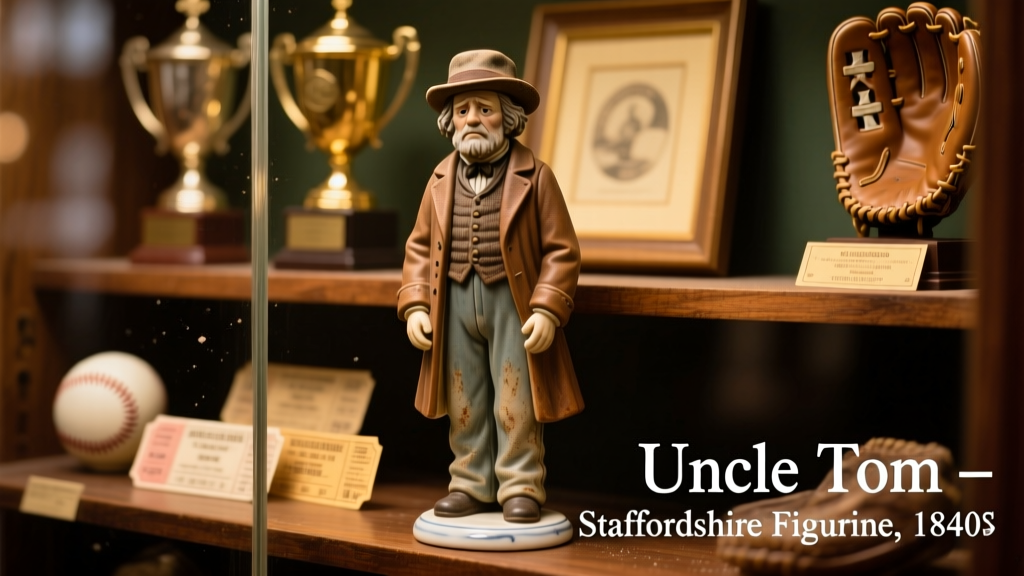
Staffordshire Figurine 'Uncle Tom' — An 8¼-Inch Nineteenth-Century Ceramic Portrait in Historical and Collectible Context

Roseville Basket Imperial I 9-Inch: Authenticating the Iconic Art Pottery Form
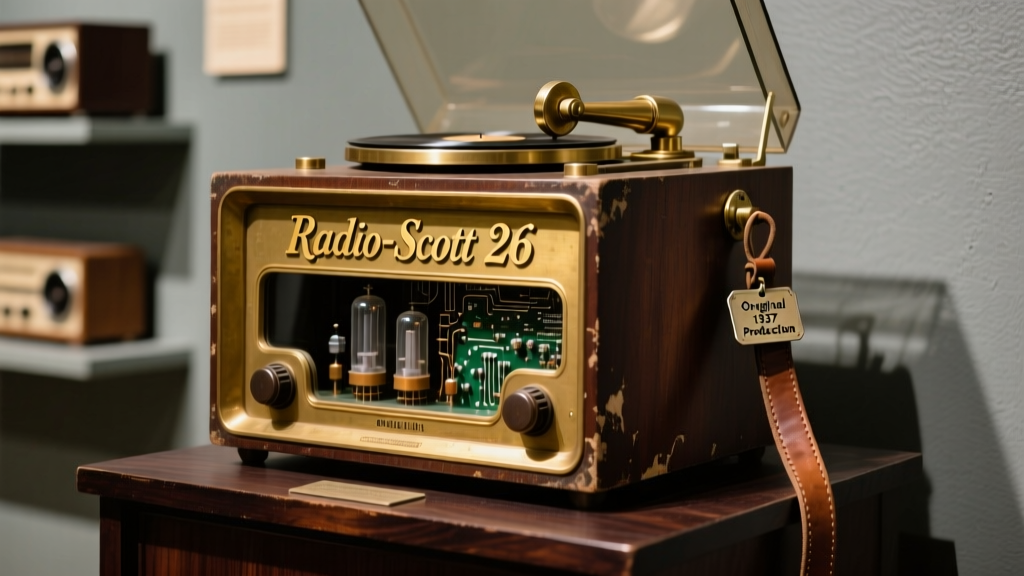
Radio Scott 26-Tube Phonograph in Chassis: A 1937 Engineering Landmark and Collector’s Benchmark
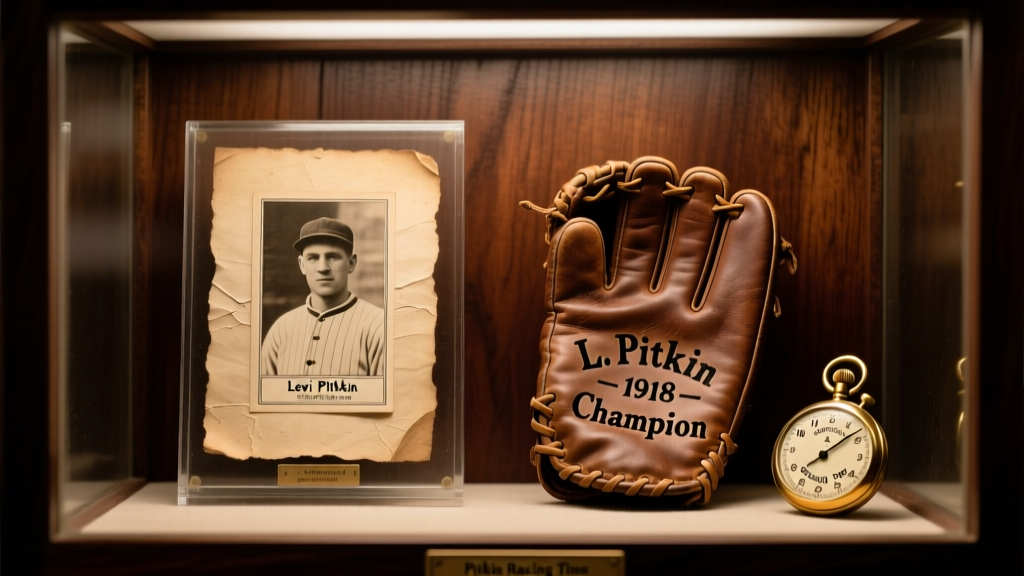
Levi Pitkin: The Forgotten Pioneer of American Sportswear and Collegiate Knitwear Authenticity
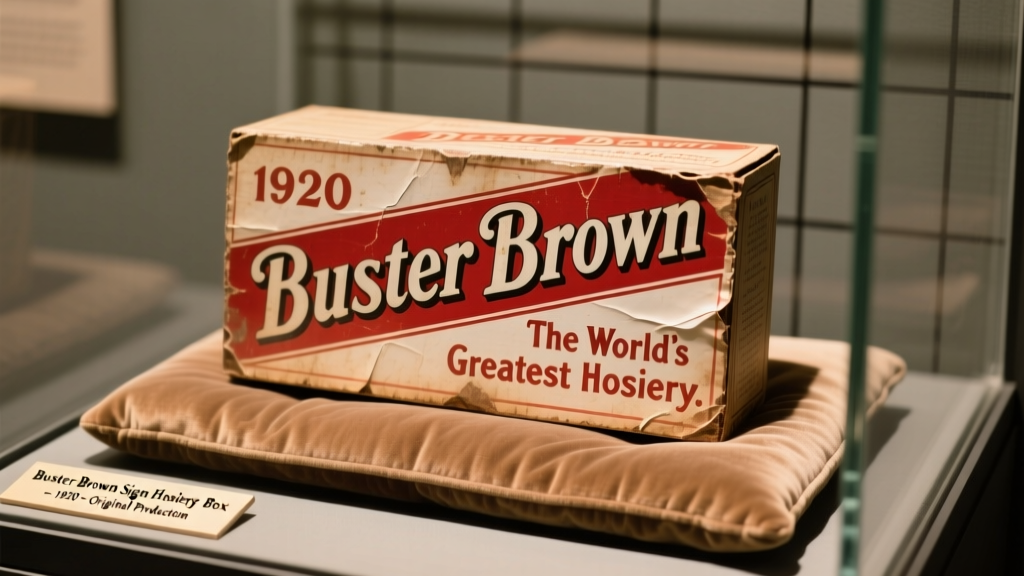
The Buster Brown Sign Hosiery Box of 1920: A Landmark Artifact in Early American Advertising and Collectible History
Puffy Dorito Chip Gets How Much? The Surprising Market Value of Frito-Lay's Rarest Snack Artifact
Lamps Electric Budweiser Clydesdale Horse Team Wagon: A Collector’s Guide to the 15 × 10-Inch Plastic Replica