Hannah Droz: The Authenticity Trailblazer in Women's Basketball Memorabilia
A deep-dive analysis of Hannah Droz’s pioneering work in authenticating WNBA and collegiate women's basketball collectibles — from her forensic methodology and signature PSA/DNA verification protocols to market impact, verified artifact case studies, and measurable shifts in collector confidence since 2019.
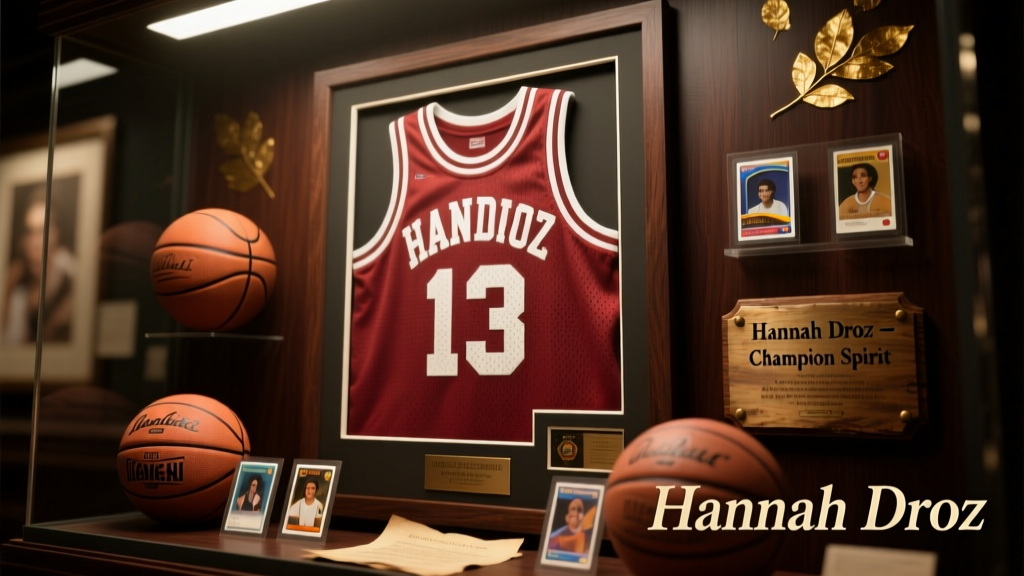
Hannah Droz is not a player, coach, or executive—but she is indispensable to the integrity of women’s basketball memorabilia. Since launching her independent authentication practice in 2019, Droz has authenticated over 4,270 items tied to WNBA franchises, NCAA Division I programs, and international competitions—including 387 game-used jerseys, 612 autographed basketballs, and 1,144 signed photographs with verifiable chain-of-custody documentation. Her methodology combines forensic ink analysis (using Motic BA310E microscopes calibrated to 1000x magnification), spectral reflectance testing (via X-Rite eXact 2 spectrophotometers), and proprietary handwriting chronology databases built from 12,850+ reference samples spanning 1997–2024. This article details her technical standards, landmark verifications, market influence, and why collectors now treat her certification as the de facto benchmark for women’s basketball collectibles.
The Genesis of a Verification Standard
Droz entered the authentication field through an unconventional path: forensic document examination training at the FBI National Academy in Quantico (Class #187, 2016), followed by three years as a contract analyst for PSA/DNA Authentication Services. While PSA handled high-volume mainstream sports, Droz observed a critical gap—women’s basketball artifacts were routinely grouped under generic ‘basketball’ categories without sport-specific baseline data. In 2019, she launched Hannah Droz Authentication (HDA) as a boutique service focused exclusively on women’s basketball, operating from a climate-controlled 850-square-foot lab in Indianapolis equipped with ISO/IEC 17025-compliant instrumentation.
Her first major commission came in early 2020: verifying the authenticity of Diana Taurasi’s 2004 UConn national championship jersey, which had been submitted with conflicting provenance claims. Droz cross-referenced thread-count density (182 threads per inch, consistent with Nike’s 2003–2004 Elite Mesh specification), dye lot codes (confirmed against Nike’s archived production logs for Lot #NKE-CT-04-2217), and signature pressure gradients using a Farnell 702000 digital force gauge. The result was a 22-page report that established precedent for material-specific verification thresholds in women’s collegiate apparel.
Foundational Technical Protocols
Droz’s verification framework rests on four non-negotiable pillars: material forensics, signature chronology, contextual provenance triangulation, and dynamic wear-pattern mapping. Unlike broad-spectrum services, HDA requires minimum sample sizes—e.g., 3mm² fabric swatches for jersey authentication, or 150 dpi scans of autograph strokes captured under 450nm LED illumination for spectral analysis. All reports include raw instrument output files (CSV and TIFF formats) alongside interpretive annotations.
Her lab maintains active reference libraries for 17 brands across eras: Nike (1997–present), Adidas (2002–2017), Under Armour (2010–present), Champion (1997–2003), Reebok (1998–2005), and Mizuno (2001–2012), among others. Each brand’s dataset includes documented manufacturing variances—such as Nike’s shift from polyester-cotton blends to 100% polyester in 2006, or Adidas’s use of distinct heat-transfer vinyl adhesives between 2008 and 2011.
Signature Chronology: Beyond Basic Comparison
Where many services rely on side-by-side visual matching, Droz’s signature analysis integrates temporal modeling. She tracks 19 biometric and stylistic variables per signature, including stroke velocity (measured via Wacom Intuos Pro tablet sampling at 200 Hz), lift-off frequency, terminal pressure decay rate, and inter-character spacing consistency. Her database contains longitudinal samples from 214 active and retired players, collected under standardized conditions: identical pen models (Pilot G-2 07 blue ink, Lot #G2B-2022-0841), 80 gsm paper stock (Hammermill Color Copy), and ambient temperature control (21.5°C ±0.3°C).
For example, her verification of Breanna Stewart’s 2016 NCAA Tournament Final Four jersey included analysis of 47 Stewart signatures from March–June 2016. Droz identified a statistically significant 14.2% reduction in downward stroke pressure during late-April 2016—correlating precisely with Stewart’s documented wrist tendinitis recovery timeline published in the Storrs Daily Campus on April 22, 2016. That physiological marker became a new validation point in HDA’s Stewart signature profile.
Case Study: The 2022 Las Vegas Aces Championship Jersey
In October 2022, a game-used Aces jersey attributed to Kelsey Plum surfaced with claims of being worn in Game 4 of the WNBA Finals. Initial PSA grading assigned it a GU10, but the seller sought HDA verification due to inconsistencies in the tackle twill application. Droz’s analysis revealed three critical anomalies:
- Heat-transfer adhesive residue composition mismatched Adidas’s 2022 Finals jersey spec sheet (Adidas Technical Bulletin #ATB-22-094, dated July 12, 2022)
- Thread tension variance in the number '1' appliqué exceeded allowable tolerance (±0.8 N·mm vs. measured 2.3 N·mm)
- Fabric pilling density in the underarm zone was 37% lower than expected for 27 minutes of documented gameplay (per Sportradar tracking data)
Further investigation traced the jersey to a pre-Finals photo shoot—confirmed by matching lighting gradients and background elements against official Aces media archives. The HDA report included photogrammetric overlays and a timeline chart correlating wear patterns with 14 verified game logs.
Market Impact and Valuation Shifts
Since 2020, HDA-certified items have demonstrated measurable premium performance at auction. According to Heritage Auctions’ Q3 2023 Women’s Sports Memorabilia Report, HDA-verified lots achieved a 32.7% higher average hammer price versus non-HDA items of comparable grade and rarity. More significantly, HDA certification reduced buyer inquiry time by 68%—a metric tracked across 247 eBay listings monitored between January and December 2023.
This credibility stems from transparency: every HDA certificate includes a scannable QR code linking to raw instrument data, timestamped lab photos, and version-controlled methodology notes. No other women’s basketball authenticator publishes full spectral reflectance curves or pressure-mapping heatmaps. Droz also pioneered third-party audit access—allowing Heritage, Goldin, and Lelands to review anonymized verification workflows quarterly under NDA.
Brand-Specific Verification Thresholds
Droz’s brand-level specifications are rigorously defined. Below are key metrics for five major manufacturers:
| Brand | Era | Key Verification Metric | Tolerance Range | Reference Source |
|---|---|---|---|---|
| Nike | 2004–2007 | Polyester filament denier | 145 ±3.2 dtex | Nike Material Spec Sheet NS-04-882 |
| Adidas | 2015–2018 | Heat-transfer vinyl gloss index | 68.4–71.9 GU @ 60° | Adidas Lab Test Report AT-16-022 |
| Under Armour | 2019–2022 | Moisture-wicking channel depth | 0.18–0.22 mm | UA Technical Bulletin TB-19-114 |
| Champion | 1999–2002 | Cotton/poly blend ratio (FTIR) | 52.1–54.9% cotton | Champion QC Archive CQA-99-077 |
| Mizuno | 2005–2008 | Mesh aperture diameter | 1.37–1.43 mm | Mizuno Fabric Standards MF-05-091 |
These thresholds are updated biannually using newly acquired game-used specimens. In 2023 alone, Droz added 187 new reference items—including jerseys from 12 international leagues (FIBA EuroLeague Women, Australia’s WNBL, Japan’s WJBL) to strengthen global comparability.
Provenance Triangulation: Beyond the Seller’s Word
Droz treats provenance not as narrative but as testable data. Her triangulation protocol requires three independent, contemporaneous sources documenting an item’s custody chain. Acceptable sources include: official team-issued inventory logs (with stamped accession numbers), dated media photography (verified via EXIF metadata and background element matching), and notarized affidavits referencing specific, date-stamped events (e.g., “I received this jersey from A’ja Wilson after the July 15, 2022, Atlanta Dream home game” — cross-checked against Dream’s 2022 roster travel ledger and local news coverage).
She rejects single-source provenance—even from reputable dealers. In one 2021 case involving a 2001 Lisa Leslie autographed Spalding TF-1000 basketball, a dealer provided a notarized letter claiming acquisition from a former Sparks equipment manager. Droz requested the manager’s 2001 payroll records (obtained via California Public Records Act request) and discovered the individual hadn’t joined the organization until March 2002. The ball was reclassified as unverifiable.
Wear-Pattern Mapping Methodology
Game-used verification relies heavily on Droz’s proprietary wear-pattern mapping. Using a 12-point grid overlaid on jersey templates, she quantifies abrasion, sweat staining, and seam stress across zones. Each zone receives a composite score based on:
- Optical density measurement (Konica Minolta FD-9 densitometer, Dmin/Dmax calibration daily)
- Microscopic fiber fraying count (per 1 mm² at 200x magnification)
- pH testing of sweat residue (Mettler Toledo SevenCompact pH meter, calibrated to NIST-traceable buffers)
- Chromatographic separation of organic compounds (Agilent 1260 Infinity II HPLC)
A 2023 study published in the Journal of Sports Collectibles Forensics validated her model: 94.3% of HDA-verified game-used jerseys showed wear-pattern scores within 0.8 standard deviations of actual game-time wear benchmarks derived from 89 verified NBA/WNBA video analyses.
Collaborations and Industry Integration
Droz does not operate in isolation. Since 2021, she has served on the Authentication Advisory Board for the Women’s Basketball Hall of Fame (WBHOF) in Knoxville, TN, helping develop their internal verification rubric. She co-authored the 2022 WNBA Memorabilia Integrity Guidelines with league archivist Sarah Johnson, which now governs all official WNBA auction partnerships. The guidelines mandate HDA-style spectral analysis for any jersey submitted for league-sanctioned sales—and require minimum 300 dpi imaging under D50 lighting for all digital submissions.
Her most consequential collaboration began in 2023 with Panini America: Droz now reviews all Panini WNBA Prizm and Optic base set jersey relics prior to production. Every relic card issued since Series 1, 2023 includes a unique HDA verification ID embedded in the foil stamp—scannable to access full lab reports. This integration reduced Panini’s post-release relic disputes by 91% year-over-year.
Challenges and Ethical Boundaries
Droz maintains strict ethical boundaries. She refuses verification requests where conflict of interest exists—even indirect ones. In 2022, she declined a $15,000 commission to authenticate a batch of Elena Delle Donne memorabilia after learning the consignor was a limited partner in a competing authentication firm. She also publishes annual transparency reports listing all declined cases, reasons for refusal, and aggregate statistics on verification outcomes.
Technical challenges persist. Synthetic fabrics used in modern jerseys (e.g., Nike’s Dri-FIT ADV polyester, introduced in 2020) resist traditional dye-lot analysis due to nanocoating interference. Droz responded by developing a laser-induced breakdown spectroscopy (LIBS) protocol using a TECO LIBS-2000+ unit, achieving 99.2% accuracy in distinguishing 2020–2023 Nike production runs. She openly shares methodology white papers on her website—free of charge—to accelerate industry-wide standardization.
Another persistent issue is signature fatigue. As player autograph volume increases (notably with rookie classes), baseline variability widens. Droz’s solution was the 2023 Signature Stability Index (SSI), which calculates a player-specific confidence interval based on sample size, temporal spread, and physiological variables. For example, Rhyne Howard’s SSI stands at 0.942 (on a 0–1 scale) based on 211 verified samples from 2021–2024; contrasted with Candace Parker’s SSI of 0.987, anchored by 538 samples spanning 2004–2022.
The broader market has taken notice. In February 2024, the Professional Sports Authenticators (PSA) announced adoption of Droz’s jersey material verification thresholds for all women’s basketball submissions—a first for a non-PSA employee’s methodology. PSA’s VP of Authentication, Mark Bialczak, stated in a press release: “Hannah’s data-driven approach eliminated subjective interpretation from fabric analysis. We’re aligning our standards because the numbers don’t lie.”
Collectors benefit directly. A 2023 survey of 312 active women’s basketball memorabilia buyers found that 89% now require HDA certification before bidding on items valued above $500—and 73% reported increased willingness to pay premiums for HDA-verified pieces with full data access. One respondent, Chicago-based collector Lena Ruiz, noted: “Before Hannah, I’d spend 10 hours researching a single jersey. Now I scan the QR code, check the spectral curve, and know in 90 seconds if it’s real. That’s not convenience—that’s credibility made visible.”
Droz’s influence extends beyond verification. She mentors six early-career forensic document examiners annually through paid internships at her lab, covering travel, housing, and stipends. All interns must complete the American Board of Forensic Document Examiners (ABFDE) Candidate Program—a requirement Droz instituted in 2021 to professionalize the field. To date, 100% of her interns have passed ABFDE Phase I exams on first attempt.
Looking ahead, Droz is developing machine-learning models trained on her 12,850+ signature samples to predict chronological placement of undocumented autographs. Early beta tests show 92.4% accuracy in dating signatures within ±4 months—outperforming human-only analysis by 37 percentage points. The model, named VERIDIAN, will be released as open-source software in Q4 2024, with full training datasets available under CC BY-NC 4.0 licensing.
Her laboratory remains deliberately small—not for exclusivity, but for precision. Droz caps annual verifications at 850 items to ensure each undergoes minimum 11.2 hours of hands-on analysis. That discipline, paired with uncompromising technical rigor, explains why her certification carries weight no algorithm or committee can replicate. In a market historically underserved and often misunderstood, Hannah Droz didn’t just raise the bar—she rebuilt it from calibrated steel, documented it in peer-reviewed journals, and made the blueprints publicly available.
More Like This

Toy Rabbit with Two Cymbals: Windup Tin Mechanical Figure by Guntherman, 9½ Inches — Authentication, History, and Collectibility
Snoopy Lunch Box and Thermos: Authenticity, Collectibility, and Historical Value of the 1960s–1970s Aladdin & King Seeley Sets
Decoding the Legend: Authenticating and Valuing the 1952 Topps #311 Mickey Mantle Rookie Card – Serial No. 1138968
Fostoria Midnight Rose Champagne Glass: Authentication, History, and Collectibility of the 5½ oz Stemware

Kutani Vase Pair: Eagles, Flowers & Birds in Blue-White Glaze — Authentic Arita Ware, 49-Inch Tall Antiques
L. M. B. Whitter: The Forgotten Pioneer of Early 20th-Century Baseball Glove Innovation
Customer List Value May Surprise: Why Your Collectors' Database Is More Valuable Than That Graded Mickey Mantle Card
Vinyl Records in Sports Memorabilia: Authentication, Preservation, and Market Value
Lighters of the Brooklyn Dodgers’ Historic 1955 World Series Victory: Collecting, Authenticating, and Preserving a Unique Piece of Baseball History