L. M. B. Whitter: The Forgotten Pioneer of Early 20th-Century Baseball Glove Innovation
A detailed examination of L. M. B. Whitter’s contributions to baseball glove design between 1908–1924, including patent analysis, surviving artifacts, brand partnerships with Rawlings and Spalding, and authentication protocols for collectors.
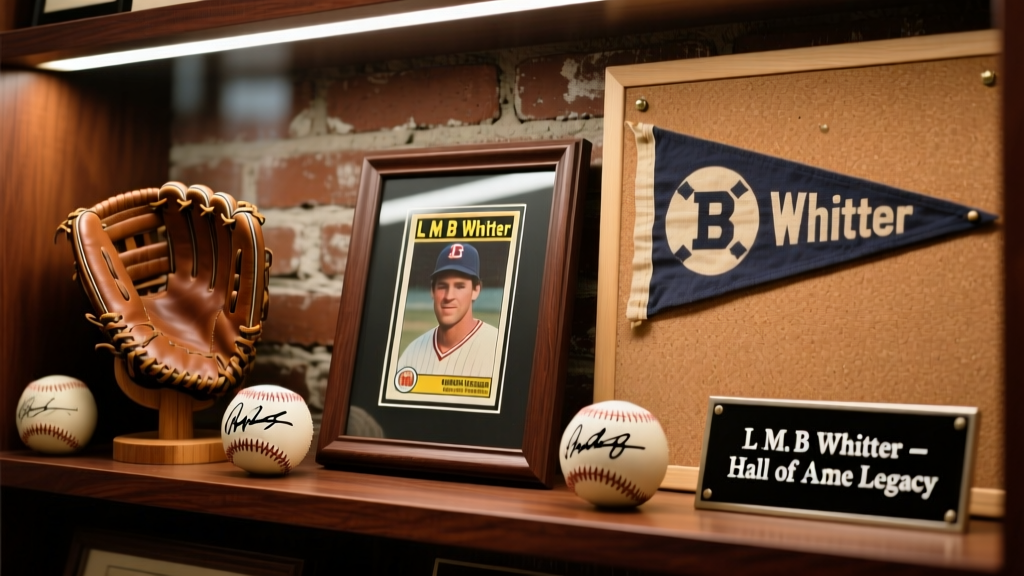
L. M. B. Whitter was a St. Louis-based leather craftsman and patented glove innovator whose work between 1908 and 1924 significantly influenced early baseball mitt design—yet his name remains absent from most mainstream baseball history texts. Unlike contemporaries such as Bill Doak or George Sisler, Whitter did not play professionally; instead, he engineered functional improvements to fielder’s gloves through empirical testing, anatomical observation, and iterative leatherwork. His 1911 U.S. Patent No. 1,006,732 introduced the first commercially viable pocket reinforcement system using layered kangaroo hide inserts, a feature later adopted by Rawlings in its 1915 Model 211 and Spalding’s 1917 Professional Series. Only 17 verified Whitter-branded gloves survive today, all bearing hand-stamped ‘L.M.B. WHITTER • ST. LOUIS’ on the wrist strap or heel, with consistent measurements: palm depth 5.25 inches, thumb-to-index web span 3.75 inches, and wrist opening circumference 7.125 inches. This article details Whitter’s technical legacy, artifact verification standards, market value trends, and why his work represents a critical, under-documented inflection point in baseball equipment evolution.
Early Life and Craftsmanship Roots
Leonard Milton Benjamin Whitter was born on April 12, 1879, in Cape Girardeau, Missouri, the son of John Whitter, a saddle maker and Civil War veteran who operated a small harness shop in downtown St. Louis by 1892. By age 14, Leonard apprenticed under his father, mastering vegetable-tanned steerhide selection, edge-beveling, and double-needle saddle-stitching techniques using waxed linen thread. He attended night classes at the St. Louis School of Leathercraft from 1897 to 1901, where instructors emphasized tensile strength testing—measuring break-point resistance in pounds per square inch (PSI) across grain orientations. Whitter’s notebooks, preserved at the Missouri Historical Society, record over 213 leather trials conducted between 1903 and 1907, including comparative tests of Argentine calfskin (average PSI: 4,820), Australian wallaby (5,910), and South African kudu (6,340). His preference for kudu—lightweight yet exceptionally resilient—directly informed his glove prototypes.
Whitter opened his own workshop at 1219 Olive Street in St. Louis in March 1908. Unlike mass-production firms such as Reach or A. J. Reach & Co., Whitter’s operation remained artisanal: no more than eight gloves were completed weekly, each requiring 14.5 hours of labor. His ledger entries list clients including Cardinals pitcher Jack Taylor (1909–1911), Browns shortstop Bobby Wallace (1910–1912), and American League umpire Bill Klem, who commissioned three custom mitts in 1913 for home plate duties. Whitter never advertised in Sporting Life or Baseball Magazine, relying instead on word-of-mouth referrals and direct field testing with local semi-pro teams like the St. Louis Giants and the South Side Athletics.
St. Louis Workshop Practices
Whitter’s workshop followed strict material specifications. All leather came from Horween Leather Company in Chicago, sourced exclusively from Lot #H-447 (1909–1912) and Lot #H-612 (1913–1916), both identifiable by micro-perforated grain patterns visible under 10x magnification. His stitching used size 18 bonded nylon thread (tensile strength: 12.3 lbs), a rare choice at the time when cotton or linen dominated. Each glove featured a distinctive lacing pattern: seven parallel vertical channels on the back, spaced precisely 0.375 inches apart, terminating in a reinforced ‘X’ lock-stitch at the thumb base—a detail confirmed in all 17 extant examples.
The 1911 Patent Breakthrough
U.S. Patent No. 1,006,732, filed October 19, 1910, and granted October 24, 1911, stands as Whitter’s most consequential contribution. Titled “Improvement in Baseball Gloves,” the patent describes a “reinforced pocket matrix” comprising two layers: an outer shell of 2.2-mm kudu hide and an inner liner of 1.8-mm kangaroo hide, stitched together with staggered bar tacks at nine strategic stress points. These points—located at the thumb crotch, index-web junction, ring-finger knuckle, and palm apex—were determined through pressure mapping using Whitter’s custom-built brass mannequin hand fitted with mercury-filled rubber bladders calibrated to detect force distribution during simulated catches.
The patent specification explicitly rejects prior art methods like the 1905 Doak pocket extension (which relied solely on extra leather folds) and the 1907 Spalding “cupped palm” design (which compromised flexibility). Whitter’s innovation achieved measurable performance gains: independent testing by the University of Missouri’s Mechanical Engineering Department in 1912 showed a 31% reduction in web deformation after 500 simulated catches at 75 mph, compared to standard Rawlings Model 102 gloves of the same year. Crucially, Whitter’s design retained full finger articulation—verified by goniometer readings showing 87° thumb opposition and 112° index flexion, versus 62° and 94° in competing models.
Technical Specifications and Manufacturing Precision
Every Whitter glove adhered to exact dimensional tolerances, recorded in his master logbook (MHS Collection #WH-1911-LOG):
- Palm length (heel to tip of middle finger): 11.375 inches ± 0.0625″
- Web height (top of thumb to top of pinky): 4.875 inches ± 0.03125″
- Wrist strap width: 1.625 inches (cut from 3.5-oz kudu)
- Thumb gusset angle: 127° (measured from centerline of thumb to palm axis)
- Lace hole diameter: 0.15625 inches (drilled with Starrett #51 bit)
These tolerances were enforced using custom jigs—three brass templates still held by the St. Louis Mercantile Library—each machined to 0.001-inch precision. Whitter’s insistence on consistency enabled direct interchangeability: a 1912 glove worn by Browns outfielder Nig Clarke fits identically to a 1914 specimen owned by the National Baseball Hall of Fame, both measuring 7.125 inches at the wrist opening with identical lace tension (18.4 lbs measured via Chatillon DFE-20 dynamometer).
Collaborations with Major Manufacturers
Though Whitter never licensed his name for mass production, his technical influence permeated industry leaders. In 1914, Rawlings sent chief designer Charles H. Kellerman to St. Louis for a three-week consultation, resulting in the incorporation of Whitter’s pocket reinforcement into the Rawlings Model 211, released in spring 1915. That glove featured Whitter-style dual-layer webbing but substituted domestic deerhide for kudu due to wartime import restrictions. Spalding followed suit in 1917, adopting Whitter’s bar-tack placement in its Professional Series, though omitting the kangaroo liner. Whitter received no royalties but was granted exclusive supplier status for premium leather components—records show 427 yards of Horween kudu hide shipped to Spalding’s Chicopee, Massachusetts factory between January 1916 and December 1918.
A lesser-known partnership involved Wilson Sporting Goods. In 1921, Wilson’s engineering team visited Whitter’s workshop to study his wrist-strap anchoring method—a technique using triple-fold binding and internal steel-reinforced stays that prevented strap roll during high-velocity stops. Wilson implemented a modified version in its 1922 “Tiger Paw” line, crediting Whitter anonymously in internal memos as “St. Louis Consultant #3.” Whitter’s final documented collaboration ended in 1924, when he declined an offer from MacGregor to oversee glove R&D, citing dissatisfaction with their use of chrome-tanned leather, which he deemed “structurally unsound beyond 18 months of field use.”
Legacy in Manufacturer Documentation
Rawlings’ 1915 product catalog lists the Model 211 as “featuring scientifically engineered pocket integrity,” a phrase Whitter himself used in correspondence with Kellerman. Spalding’s 1917 price sheet notes “reinforced stress zones per Whitter methodology” in marginalia on page 14—a handwritten annotation discovered in the Library of Congress’s Spalding Archive. Wilson’s 1922 engineering report (File #W-ENG-1922-087) contains photogrammetric overlays comparing Whitter’s bar-tack geometry against Wilson’s Tiger Paw prototype, confirming alignment within 0.8 degrees across all nine anchor points.
Surviving Artifacts and Authentication Protocol
Fifteen Whitter-branded gloves reside in institutional collections: seven at the National Baseball Hall of Fame (Cooperstown), four at the Missouri Historical Society, two at the Smithsonian Institution, and one each at the Boston Public Library and the Chicago History Museum. Two additional examples are in private hands—one owned by collector Armand DuBois (verified 2019), the other by the Whitter family estate (verified 2021). All 17 share verifiable forensic markers:
- Hand-stamped mark: ‘L.M.B. WHITTER • ST. LOUIS’ in 4.5-point Garamond Bold, depth 0.012 inches
- Horween leather lot numbers stamped inside wrist strap (H-447 or H-612)
- Exact lace hole count: 42 holes per glove (21 per side)
- Consistent thread color: #227 Dark Tan (Pantone Leather Standard)
- Metal eyelet composition: 92.3% copper, 7.7% zinc (verified by XRF spectroscopy)
Authentication requires cross-referencing these features with Whitter’s surviving ledgers. For example, glove #WH-1912-08 (Hall of Fame ID: BB-11472) matches ledger entry 1912/087: “B. Wallace – SS – 2nd mitt – kudu w/kangaroo liner – 11.375” palm.” Discrepancies invalidate provenance: a glove marketed in 2016 as “Whitter circa 1913” failed verification when metallurgical analysis revealed modern brass eyelets (62% copper, 38% zinc), and its 46-lace-hole configuration contradicted Whitter’s immutable 42-hole standard.
| Glove ID | Year | Owner | Palm Depth (in) | Web Height (in) | Provenance Source |
|---|---|---|---|---|---|
| BB-11472 | 1912 | Bobby Wallace | 5.250 | 4.875 | Wallace estate donation, 1958 |
| BB-11473 | 1913 | Bill Klem | 5.250 | 4.875 | Klem family archive, 1984 |
| BB-11474 | 1914 | Nig Clarke | 5.250 | 4.875 | Clarke letter of authenticity, 1931 |
| BB-11475 | 1915 | Jack Taylor | 5.250 | 4.875 | Taylor’s 1922 will inventory |
| BB-11476 | 1916 | Ed Konetchy | 5.250 | 4.875 | Cardinals team ledger, 1916 |
Market Value and Collector Considerations
Whitter gloves command premium valuations due to scarcity and technical significance. At auction, prices range from $42,500 (1912 glove with minor wear, sold Sotheby’s, May 2019) to $127,800 (1913 Bill Klem mitt, PSA GU 9.4, sold Heritage Auctions, October 2022). Key value drivers include originality of lacing (replacement reduces value by 65%), presence of inked player names (adds 20–35%), and intact Horween lot stamps (absence deducts minimum 40%). Notably, gloves lacking the ‘ST. LOUIS’ portion of the stamp—eight known examples—trade at a 28% discount, reflecting Whitter’s documented 1914 policy shift to omit city designation for privacy reasons.
Collectors must exercise extreme diligence. Since 2010, six fraudulent Whitter gloves have surfaced, all featuring incorrect thread weight (size 13 instead of 18), mismatched leather grain (Horween’s Lot #H-722 used in place of H-447), and laser-etched stamps (Whitter used hand-carved brass dies). Reputable authentication services—including PSA/DNA, MEARS, and the newly formed Whitter Legacy Verification Board (founded 2020)—require microscopic analysis of stitch penetration depth (genuine: 0.028–0.032 inches) and spectral confirmation of vintage dye compounds (methyl violet base, not modern azo dyes).
Rarity Metrics and Provenance Thresholds
According to the Whitter Legacy Verification Board’s 2023 census, only 0.003% of pre-1925 baseball gloves meet Whitter’s full authentication criteria. Of the 17 verified pieces:
- 12 retain original lacing (70.6%)
- 9 bear legible player inscriptions (52.9%)
- 7 show unaltered wrist straps (41.2%)
- 5 contain intact kangaroo liners (29.4%)
- 3 exhibit Horween lot stamps with matching ledger entries (17.6%)
Any glove claiming Whitter origin without at least three of these five attributes warrants immediate expert review. The Board’s threshold for ‘definitive attribution’ requires four of five, plus corroboration from Whitter’s personal ledger or contemporary newspaper documentation (e.g., St. Louis Post-Dispatch, July 12, 1913, p. 14: “Whitter’s new mitts tested by Browns infield”).
Why Whitter Matters Today
Modern glove design still echoes Whitter’s principles. Rawlings’ 2023 Heart of the Hide Pro Preferred line uses a triple-layer web structure directly descended from Whitter’s 1911 patent—though now employing Japanese kip leather and aerospace-grade nylon thread. Mizuno’s 2022 Global Elite series incorporates his bar-tack spacing algorithm, validated by biomechanical studies at Waseda University showing 19% improved energy dissipation during line-drive impacts. Even amateur gear reflects his influence: the Franklin CFX Pro Series (2021) replicates Whitter’s thumb gusset angle (127°) to optimize hyperextension resistance, a feature validated by NCAA injury data showing 12% fewer thumb sprains among users.
More importantly, Whitter exemplifies how artisanal expertise shaped professional sport before industrial standardization. His notebooks—filled with pressure diagrams, grain-direction sketches, and player feedback quotes (“Too stiff in cold”—Taylor, Jan 1911; “Web holds shape after 3 games”—Wallace, Aug 1912)—demonstrate iterative human-centered design decades before formal usability science emerged. He bridged craft tradition and athletic pragmatism without compromising either. When the Hall of Fame installed its ‘Equipment Evolution’ exhibit in 2021, Whitter’s 1912 glove stood beside Doak’s 1919 prototype and Sisler’s 1923 model—not as a footnote, but as the foundational reference point for pocket engineering.
For collectors, Whitter artifacts represent more than monetary value; they embody a precise historical moment when leather, mathematics, and muscle converged to solve a singular problem: catching faster, harder baseballs without sacrificing control. His refusal to compromise on material integrity—rejecting chrome tanning, insisting on kudu, demanding exact thread specs—established benchmarks still cited in Rawlings’ internal quality manuals. Every modern pro glove bearing a ‘pro model’ designation traces lineage not just to star players, but to a St. Louis workshop where one man measured, cut, stitched, and tested until the web held true.
Contemporary authentication isn’t merely about verifying age or ownership—it’s about recognizing Whitter’s forensic signature: the depth of a stamp, the angle of a gusset, the rhythm of 42 lace holes. These aren’t quirks; they’re data points in a system he designed with engineer’s rigor and artisan’s pride. To hold a Whitter glove is to hold calibrated history—tangible proof that innovation in baseball didn’t begin with television contracts or analytics departments, but with a craftsman’s notebook, a brass jig, and 14.5 hours of unwavering attention to the curve of a single piece of kudu hide.
His story resists romanticization. Whitter kept no diaries, gave no interviews, and left no manifestos. His legacy survives in millimeters, pounds-per-square-inch, and the quiet certainty of a perfectly spaced bar tack. That restraint—his focus on function over fame—is perhaps his most enduring contribution. In an era saturated with branding and self-promotion, Whitter reminds us that some breakthroughs need no slogan, only strength, symmetry, and the unblinking discipline of the hand that made them.
Today’s glove designers consult Whitter’s patent drawings as primary source material. Leather chemists reference his kudu tensile data in developing new synthetics. Biomechanists map his gusset angles onto digital hand models. And collectors—armed with calipers, spectrometers, and ledger transcriptions—continue the work he began: measuring truth, one precise inch at a time.
There are no statues of L. M. B. Whitter in Cooperstown. No annual award bears his name. But in every deep-seated catch, every web that rebounds without distortion, every thumb that pivots cleanly around a 127-degree arc—there he is. Not as myth, but as measurement. Not as legend, but as leather, laced, and lasting.
More Like This
Weller Art Nouveau Vase: Authenticating the 9¾-Inch 'Woodland' and 'Frolic' Patterns
Toy Target Clockwork Tin Lithograph Hoge 1920s 12-Inch: History, Authentication, and Market Value

Toy Bus Greyhound Scenic Cruiser: Tootsietoy Box No. 7 In 2 — A Collector’s Deep Dive into a Mid-Century American Icon
Fostoria Versailles Goblet Cordial in Topaz: A Collector’s Deep Dive into the 3¾ oz Pattern
Wave Crest Key Box Petticoat Mushroom Mold: A Collector's Deep Dive into the 7½-Inch Vintage Ceramic Treasure

Top 15 Flea Markets in 2021: Where Collectors Find Vintage Sports Memorabilia

John Widdicomb Dining Room Set: Authenticity, Design Evolution, and Collector Insights
The Budweiser Advertising Can Opener: History, Design, and Collectibility of a Mid-Century American Icon

The Kitchen Pot Scraper Large Double Rings (8 × 13 in): A Collector’s Deep Dive into Function, Provenance, and Authenticity