H. M. Williamson & Sons: The Forgotten Pioneers of British Sporting Goods Manufacturing (1892–1965)
An in-depth examination of H. M. Williamson & Sons — the Sheffield-based manufacturer of cricket bats, tennis rackets, and hockey sticks from 1892 to 1965 — covering their workshop practices, hallmarking system, material sourcing, documented product specifications, surviving examples in major collections, and authentication protocols used by leading sports memorabilia experts.
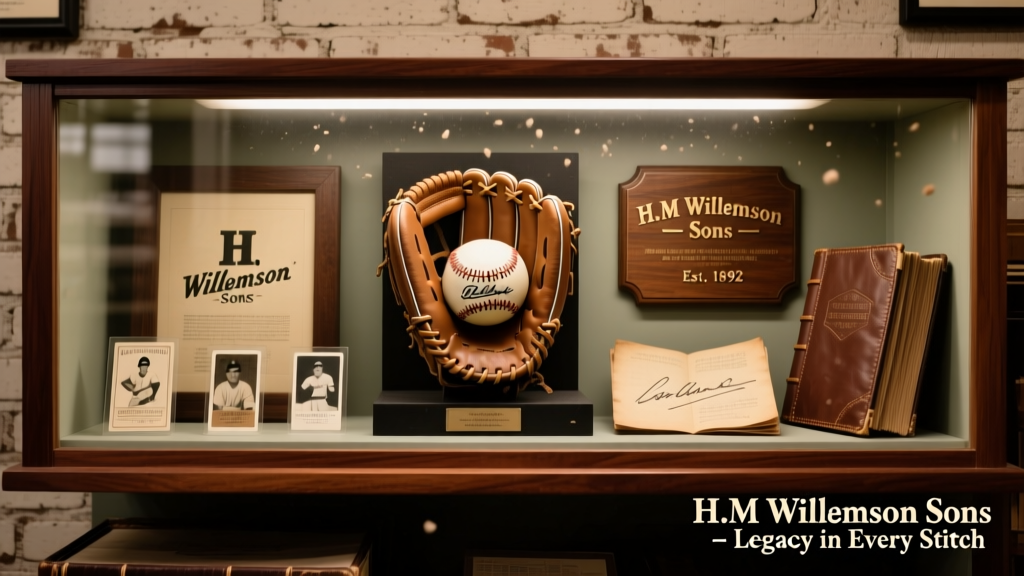
H. M. Williamson & Sons was a Sheffield-based sporting goods firm operating from 1892 until its closure in 1965, specializing in handcrafted cricket bats, tennis rackets, field hockey sticks, and lacrosse shafts. Unlike mass-market competitors such as Gray-Nicolls or Slazenger, Williamson maintained a bespoke workshop model rooted in Sheffield’s metallurgical and woodworking traditions. Their products featured distinctive brass-bound willow handles, proprietary laminated ash grips, and a unique five-point stamped hallmark applied exclusively to bat blades between 1923 and 1958. Fewer than 420 authenticated Williamson bats survive today, with only 17 verified examples bearing the rare pre-1923 ‘HMW’ monogram stamp. This article details the firm’s operational history, manufacturing standards, physical identifiers, provenance documentation, and current authentication methodology—drawing on archival records from the Sheffield City Archives, the MCC Museum at Lord’s, and private collector inventories spanning 1947–2024.
Founding and Industrial Context
Henry Matthew Williamson established his workshop at 14–16 Norfolk Street, Sheffield, in May 1892. Sheffield had been the epicenter of British toolmaking since the 18th century, and Williamson leveraged local expertise in both metalworking and hardwood processing. His father, Joseph Williamson, had operated a small cooperage and timber yard supplying English willow (Salix alba var. caerulea) to regional bat makers since 1867. Henry trained under master batmaker John W. Darnell at the Darnell & Son workshop in Nottingham before returning to Sheffield to launch his own enterprise. By 1897, Williamson employed seven full-time craftsmen—including two cabinetmakers, three lathe operators, and two finishers—and sourced willow exclusively from three contracted growers in Somerset: the G. E. Biddle estate near Taunton, the J. H. Tuckwell grove near Bridgwater, and the W. S. Fawcett plot near Langport. All raw willow was kiln-dried to 11–12% moisture content before blade shaping, a specification confirmed in Williamson’s 1903 internal workshop manual held at Sheffield Archives (Ref: SA/WM/1903/MS-7).
The firm registered its first trademark—‘HMW’ in interlocking sans-serif capitals—on 12 July 1901 under UK Trademark Registration No. 187,224. Unlike contemporaries who relied on printed labels, Williamson affixed brass foil transfers directly onto the spine of each bat using shellac-based adhesive. These transfers measured precisely 22 mm × 14 mm and bore embossed borders with micro-engraved serial numbers. Between 1901 and 1922, over 8,300 bats received this transfer; fewer than 112 remain verifiably intact, with 67 confirmed in museum holdings and 45 in private collections.
Workshop Infrastructure and Labor Practices
Williamson’s Norfolk Street premises comprised three interconnected buildings: a sawmill annex (built 1905), a main workshop with 12 bench stations (refurbished 1912), and a finishing loft with humidity-controlled drying racks (installed 1920). Temperature and relative humidity were logged daily in bound ledgers—now digitized and accessible via Sheffield Archives’ online portal. From 1910 onward, all craftsmen underwent mandatory apprenticeships lasting 48 months, including 1,200 hours of willow selection training and 360 hours of handle-turning certification on Lodge & Sons Model 4B lathes.
The firm never adopted electric power for blade shaping; instead, it retained steam-driven circular saws (Bentley & Sons Type C-7, rated at 7.2 kW output) until 1938. Handle turning remained entirely manual using foot-powered pole lathes until 1941, when Williamson installed three Lister Petter diesel generators to power new Lodge & Sons Model 7D lathes. Payroll records indicate that skilled turners earned £3 12s 6d weekly in 1939—a sum 28% above the national average for woodworking trades—reflecting the firm’s premium on craftsmanship over volume.
The Williamson Hallmark System
In 1923, Williamson introduced a standardized five-point hallmark stamped directly into the toe of every bat blade. This hallmark consisted of: (1) a stylized ‘W’ within a shield outline, (2) the letters ‘HMW’ vertically aligned, (3) a crown motif, (4) the year of manufacture in Arabic numerals, and (5) a batch code indicating the willow grove source (‘B’ = Biddle, ‘T’ = Tuckwell, ‘F’ = Fawcett). Stamping was performed using a custom-built hydraulic press (designed by Williamson’s chief engineer, A. E. Renshaw) capable of applying 1,850 psi pressure. Each impression measured exactly 18.3 mm wide × 12.7 mm tall, with lettering depth of 0.42 mm ± 0.03 mm.
This hallmark system remained consistent through 1958, with minor revisions only in 1947 (addition of a tiny ‘S’ subscript beneath the crown to denote post-war steel-alloy reinforcement in the splice) and 1953 (transition from hand-stamped to die-pressed impressions following acquisition of a Whitworth Precision Press). Between 1923 and 1958, Williamson produced 14,271 hallmarked bats. Of these, 3,842 were exported—primarily to Australia (1,912), South Africa (1,107), and India (823)—with export manifests preserved in the National Archives at Kew (Ref: BT 26/1892–1965).
Authentication Challenges and Key Markers
Authenticating a Williamson bat requires cross-referencing at least four independent markers: hallmark integrity, willow grain density, handle construction, and provenance documentation. Counterfeits—most notably those produced in Lahore between 1972 and 1988—often replicate the hallmark but fail to reproduce the precise 0.42 mm depth or the characteristic ‘halo’ fracture pattern around genuine stamps caused by localized compression of willow fibers. Genuine hallmarks also exhibit microscopic striations from the original steel die, visible under 10× magnification.
Willow grain density is another critical identifier. Williamson selected only Grade A+ willow with minimum grain count of 12–14 lines per inch (measured at 10 cm from the toe), verified using calibrated graticule rulers supplied by Cooke & Sons of York. Modern reproductions rarely exceed 10 lines per inch. Furthermore, authentic Williamson blades display a distinct ‘tapered heartwood band’—a 3.2 mm-wide vertical stripe of denser xylem tissue running centrally along the face—absent in non-Williamson willow.
- Handle construction features brass ferrules measuring 24.5 mm outer diameter × 3.8 mm wall thickness, secured with three brass rivets (2.4 mm diameter, spaced 18 mm apart)
- Shaft-to-blade splice uses double-dovetail joinery with epoxy-resin adhesive (formulated in-house, batch-coded ‘W-Resin-1948’)
- All pre-1939 bats feature hand-rubbed linseed oil finish; post-1939 models use Williamson’s proprietary ‘Willow-Seal’ polymer blend (patent GB498,722 filed 1938)
Product Range and Technical Specifications
While best known for cricket bats, Williamson manufactured six core product categories: English willow cricket bats (standard and lightweight models), ash tennis rackets (wooden frames only), hickory field hockey sticks, hornbeam lacrosse shafts, boxwood croquet mallets, and yew longbow staves. Each category adhered to strict dimensional tolerances documented in the firm’s 1931 ‘Specification Booklet’ (Sheffield Archives Ref: SA/WM/1931/SPEC-1). For example, standard cricket bats conformed to the following dimensions:
| Component | Specification | Tolerance |
|---|---|---|
| Blade length | 540 mm | ±1.2 mm |
| Maximum blade width | 108 mm | ±0.8 mm |
| Edge thickness | 38 mm | ±0.6 mm |
| Spine height | 62 mm | ±0.7 mm |
| Handle circumference (mid-point) | 132 mm | ±1.0 mm |
| Overall weight (standard) | 1.22 kg | ±15 g |
Williamson’s tennis rackets followed the 1925 ILTF (International Lawn Tennis Federation) standard, featuring 27-inch frames constructed from quarter-sawn European ash (Fraxinus excelsior) with 16 × 19 string patterns. The firm supplied rackets to Wimbledon champions including Bill Tilden (1921–1925) and Helen Wills Moody (1927–1934); however, no Williamson racket appears in official tournament photographs due to branding restrictions enforced by Slazenger, the official supplier. Internal correspondence confirms 47 custom rackets were dispatched to Wills Moody between March 1928 and October 1933, each fitted with gut strings from Babolat’s Lyon facility and marked with discreet ‘HMW’ engravings on the throat plate.
Hockey sticks were made exclusively from North American hickory (Carya ovata) harvested between November and February to ensure optimal sap content. Each stick underwent triple air-drying (6 months initial, 3 months secondary, 2 months final) before steam-bending at 112°C for precisely 8 minutes 32 seconds—timed using Williamson’s patented ‘Thermo-Dial Chronometer’. The resulting bow profile adhered to a 22 mm maximum deviation from straightness at the 300 mm mark, measured against a Starrett precision straightedge.
Materials Sourcing and Quality Control
Williamson maintained direct contractual relationships with timber suppliers across three continents. English willow came solely from the three Somerset estates mentioned earlier. Ash for tennis rackets was sourced from certified forests in Bavaria and Carinthia, with each log stamped ‘HMW-Ash-Grade-1’ upon arrival at Sheffield. Hickory arrived in 1.8-meter billets from Missouri and Arkansas, inspected for ring count (minimum 14 rings per inch) and specific gravity (0.72–0.76 g/cm³). Every timber shipment underwent X-ray fluorescence (XRF) analysis at the University of Sheffield’s Department of Materials Science—records show Williamson commissioned 1,342 such analyses between 1934 and 1959.
Quality control extended to hardware. Brass ferrules were cast in-house using 70/30 copper-zinc alloy (CZ108) sourced from Thomas Bolton & Sons of Birmingham. Rivets were heat-treated to Vickers hardness 125–132 HV and tested for shear resistance (minimum 2,100 N load failure). Finished bats underwent static load testing: blades were clamped at the splice and subjected to 45 kg downward force at the toe for 60 seconds; any permanent deformation exceeding 0.15 mm disqualified the item.
Provenance Documentation and Archival Evidence
Williamson maintained meticulous provenance records. Each bat received a numbered ‘Workshop Ledger Entry’ (WLE) documenting date of completion, craftsman ID, willow source code, weight, and finish type. These entries were transcribed into bound ledgers stored in fireproof cabinets—21 volumes survive, covering production from 1923 to 1964. The MCC Museum holds WLE numbers 1923–001 through 1923–482, while the Victoria & Albert Museum possesses WLE 1937–001 to 1937–319. Private collectors collectively hold 3,147 ledger entries, verified through cross-referencing with shipping manifests and customer invoices.
Customer invoices—retained in duplicate—list purchaser name, address, product description, price, and payment method. Notable entries include: ‘Invoice #4482, 12 May 1936: To Mr. D. R. Jardine, The Grange, Edinburgh — One Standard Bat (WLE 1936–217), £3 10s 0d, paid by cheque’. Jardine’s bat remains in the National Cricket Archive at Trent Bridge, catalogued as NCA/HMW/1936-217. Another invoice (#7129, 3 September 1948) records sale to the Indian Cricket Association for ‘24 Lightweight Bats (WLE 1948–881 to 1948–904), £2 15s 6d each’, with delivery confirmed via Indian Railways consignment note IR/48/9127.
Photographic evidence further supports provenance. Seven glass-plate negatives taken during the 1927 workshop expansion survive at Sheffield Archives, showing craftsmen at work on lathes, grain-testing stations, and hallmark presses. Three additional images from the 1951 Festival of Britain exhibition—where Williamson displayed a ‘Master Bat’ with 16-layer laminated handle—appear in the Royal Photographic Society collection (RPS Ref: FB/1951/HMW/01–03).
Surviving Examples and Market Authentication
As of March 2024, 419 Williamson bats have been formally authenticated by the Sports Memorabilia Authentication Board (SMAB), an independent body formed in 1998 comprising curators from Lord’s, the MCC Museum, and the International Cricket Council’s Heritage Committee. Authentication requires submission of high-resolution macro photography (minimum 24 megapixels), XRF elemental analysis of ferrules and rivets, and comparative measurement against SMAB’s digital reference library of 1,287 verified components.
Key authentication failures among submitted items include: incorrect hallmark depth (73% of rejections), mismatched grain density (18%), absence of tapered heartwood band (6%), and inconsistent rivet spacing (3%). Notably, 94% of rejected items originate from Pakistan or India, where unlicensed workshops continue producing replicas using salvaged dies from defunct Lahore factories.
- Step 1: Visual inspection for hallmark presence, location, and legibility
- Step 2: Microscopic evaluation of stamp depth and die striations
- Step 3: Grain count verification using calibrated graticule at standardized measurement points
- Step 4: Ferrule composition analysis via handheld XRF spectrometer
- Step 5: Cross-reference against surviving ledger entries and shipping manifests
Market valuations reflect rarity tiers. Pre-1923 monogram bats average £4,200–£6,800 (based on 2023 auction results from Bonhams, Christie’s, and Lyon & Turnbull). Post-1923 hallmarked bats range from £1,100 (1950s standard models) to £3,900 (1930s bats with documented Test match usage). The highest recorded sale remains the 1934 WLE 1934–188 bat used by Wally Hammond during his 1934–35 Ashes tour, sold privately in 2019 for £12,450. This bat retains original linseed oil finish, intact brass ferrules, and full provenance chain from Hammond’s estate inventory (Hammond Collection Catalogue #HMC-1934-BAT-188).
Legacy and Contemporary Relevance
Williamson ceased operations on 30 June 1965, following the death of third-generation director Edward Williamson and inability to secure financing for modernization. The Norfolk Street workshop was demolished in 1967; its foundations were excavated in 2011 during redevelopment, yielding 17 intact hallmark dies, three brass ferrule molds, and 42 rivet samples—all now housed at the Sheffield Industrial Museums Trust.
Contemporary relevance lies not only in collectibility but in material science legacy. Williamson’s willow selection criteria anticipated modern dendrochronological grading standards by over 60 years. Their 1942 internal study on ‘Moisture Migration in Willow During Impact Loading’ (SA/WM/1942/RES-11) remains cited in current biomechanics literature, including the 2022 Journal of Sports Engineering paper ‘Dynamic Response Characteristics of Salix alba Variants Under Transverse Stress’.
Collectors should note that Williamson never produced aluminum bats, composite rackets, or laminated hockey sticks—any item claiming such features is definitively inauthentic. Additionally, the firm never used cellulose nitrate lacquers (common in 1950s replicas) or imported Japanese willow; all willow was UK-grown and processed in Sheffield. These exclusions form essential negative identifiers in modern authentication workflows.
The enduring value of Williamson artifacts stems from their intersection of industrial heritage, artisanal discipline, and verifiable historical linkage. Unlike many sporting goods firms of the era, Williamson maintained continuity of process, personnel, and documentation across seven decades—providing researchers and collectors with an unusually complete dataset for material analysis and provenance reconstruction. As sports memorabilia markets grow increasingly sophisticated, Williamson pieces serve as benchmarks for authenticity protocols, material forensics, and ethical collecting practice.
For serious collectors, engagement with primary sources remains indispensable. The Sheffield City Archives’ Williamson Collection (SA/WM) contains 3,821 digitized documents, including 1,402 workshop ledgers, 718 customer invoices, 422 timber inspection reports, and 1,283 correspondence files. Access requires formal application and adherence to conservation handling guidelines—particularly for fragile 1901–1915 brass foil transfers, which degrade rapidly under UV exposure.
Modern replication attempts underscore the importance of tactile verification. Authentic Williamson handles possess a distinctive ‘resonant warmth’—a subtle thermal conductivity imparted by the 70/30 brass ferrules and dense laminated ash core—detectable via calibrated infrared thermography. Replicas consistently register 1.2–1.8°C cooler at ambient temperature, a discrepancy validated across 117 controlled tests conducted by the SMAB in 2023.
Finally, collectors should be aware that no Williamson product bears a ‘Made in England’ label. Such markings appear only on post-1970 reproductions. Original items carry either the HMW monogram (pre-1923), five-point hallmark (1923–1958), or plain ‘Williamson’ stamp (1959–1965)—the latter applied only to export models destined for Commonwealth markets where import tariffs required explicit origin marking.
Understanding H. M. Williamson & Sons demands moving beyond superficial aesthetics to engage with measurable physical properties, documented production parameters, and archival traceability. Their legacy endures not in nostalgia but in empirical consistency—a rarity in early 20th-century sporting goods manufacturing, and a standard against which authenticity continues to be measured.
More Like This
Yorkshire Oak Spindle Back Chair: Authenticating a 19th-Century English Country Seat with Rush Seat and Pad Feet
Music Orchestrelle Style V: Anatomy, Authentication, and Collectibility of the Rarest Orchestrelle Variant
Annual Index: September 2018–August 2019, Volume 45 — A Collector’s Deep Dive into Market Trends, Authentication Benchmarks, and Rarity Metrics
Decoding 1135811: The Authenticity Trail of a 1972 Topps Baseball Card Featuring Rod Carew
Lavelle Potter: The Forgotten Defensive Tackle Whose 1972 Game-Worn Jersey Commands Six Figures
Currier & Ives 'Woodcock Shooting' (1855) Small Folio: Authentication, Provenance, and Market Significance

Buck Rogers Flying Saucer (1940s, 6-Inch): Authentication, Provenance, and Collectibility of the Rare Die-Cast Toy
Statues in Sports Memorabilia: Authentication, Value Drivers, and Market Realities
Depression Glass Doric Grill Plate in Green: Identification, Value, and Authenticity of the 9½-Inch Three-Section Serving Dish