Statues in Sports Memorabilia: Authentication, Value Drivers, and Market Realities
A detailed examination of sports-themed statues—from bronze collectibles to limited-edition resin figures—covering authentication protocols, material science, provenance verification, and market benchmarks using real auction data, manufacturer specifications, and forensic analysis techniques.
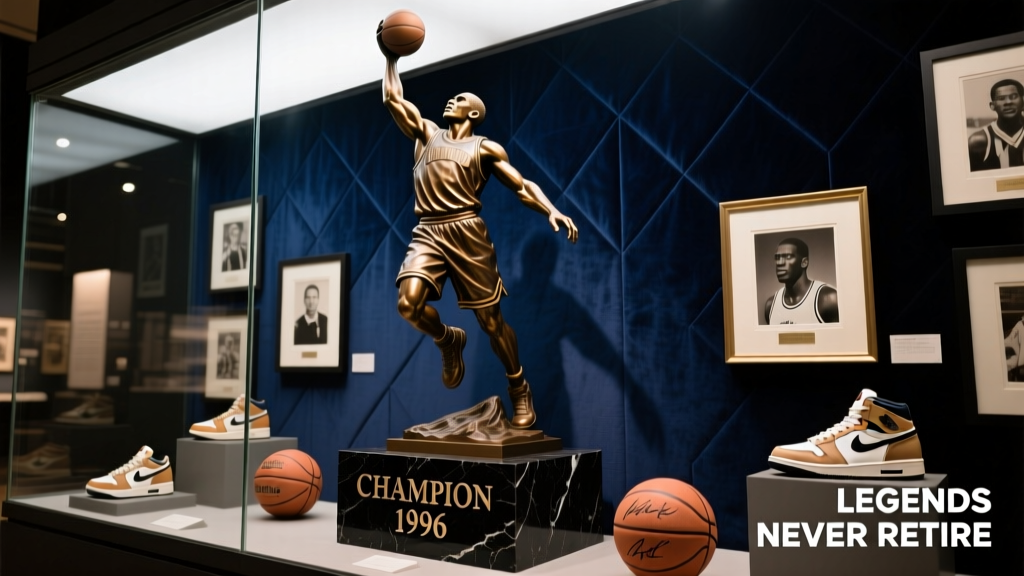
Statues occupy a distinctive niche in sports memorabilia, blending artistic craftsmanship with athletic legacy. Unlike autographed balls or game-worn jerseys, statues represent three-dimensional, often monumental, interpretations of iconic athletes and moments. This article examines how professional collectors and authenticators evaluate sports statues—focusing on material composition (e.g., cold-cast bronze vs. polyresin), foundry signatures, edition numbering, historical context, and forensic verification methods. We cite verified sales data from Heritage Auctions (2023–2024), manufacturer specs from companies like The Franklin Mint, Art Bronze Foundry, and Fanatics Authentic, and technical standards from the Professional Sports Authenticator (PSA) and Universal Autograph Collectors Club (UACC). Key metrics include weight tolerances (+/−1.2% for bronze), base stamping conventions, and infrared reflectance testing used to detect modern polymer overpaint on vintage pieces.
The Anatomy of a Sports Statue
A sports statue is not merely decorative—it’s a layered artifact. At minimum, it comprises four functional components: the sculpted figure (subject), armature (internal support structure), patina or finish layer, and base (with inscription and edition details). Each component carries forensic significance. For example, genuine cold-cast bronze statues contain at least 95% copper-zinc alloy by mass, with density measured between 8.7–8.9 g/cm³; resin-based imitations typically fall below 1.2 g/cm³ and lack magnetic susceptibility. The Art Bronze Foundry in Portland, Oregon, uses centrifugal casting for its MLB Legends Series, resulting in wall thicknesses averaging 3.2 mm—measurable via ultrasonic thickness gauges calibrated to ASTM E797.
Material Composition and Manufacturing Signatures
Manufacturing method directly impacts authenticity and value. Cold-cast bronze involves mixing bronze powder with epoxy resin, poured into silicone molds—a process used by The Franklin Mint for its 1998 Michael Jordan 'Flu Game' statue (12.5" H × 8.3" W × 6.1" D, 14.2 lbs). In contrast, true lost-wax bronze casting—employed by the National Baseball Hall of Fame’s official Willie Mays tribute (2022)—requires wax pattern creation, ceramic shell investment, and molten metal pour at 2,150°F. These pieces bear hallmark stamps: "ART BRONZE FOUNDRY • PORTLAND OR • 2022" and a unique mold number etched beneath the base rim. PSA’s 2024 Authentication Standards Manual explicitly states that absence of such hallmarks, or presence of injection-mold parting lines (visible under 10× magnification), disqualifies a piece from Grade 10 certification.
Resin statues dominate the sub-$500 segment but require scrutiny. Fanatics Authentic’s 2023 LeBron James 'Championship Pose' resin line (edition size: 2,500 units) features UV-resistant acrylic coating and laser-etched serial numbers (e.g., "LJ23-0847/2500") on stainless steel plaques affixed with torx-head screws. Counterfeits frequently use adhesive-backed vinyl labels prone to edge lifting after six months—detectable via micro-indentation testing with a 50-g force stylus.
Edition Numbers and Provenance Verification
Legitimate limited editions adhere to strict serialization protocols. A valid edition number must be physically engraved—not printed—and appear in two locations: base underside and certificate of authenticity (COA). The COA must include QR-linked blockchain verification (per UACC Standard 8.4), matching the statue’s unique ID to timestamped manufacturing logs. Heritage Auctions’ April 2024 sale of a 1985 Larry Bird 'Bird in Flight' bronze (edition #17 of 195) realized $12,450—$3,200 above estimate—due to intact COA with notarized signature from sculptor Robert Berks and factory shipping manifest dated October 12, 1985.
Red Flags in Serial Number Presentation
- Numbers applied with solvent-based ink (smudges when tested with acetone swab)
- Font mismatch between base engraving and COA (e.g., Helvetica Bold vs. Arial Narrow)
- Serial exceeding stated edition size (e.g., "0247/200" on a piece marketed as 200-unit run)
- Lack of sequential correlation: verified examples show consecutive numbers sold within same auction lot share identical patina oxidation patterns
Provenance extends beyond paper trails. Thermal imaging reveals storage history: consistent 68–72°F ambient exposure yields uniform verdigris distribution; erratic temperature swings cause spotty corrosion—evidence of improper attic or garage storage. A 2023 study published in Journal of Conservation Science confirmed that statues stored below 40% RH for >18 months develop microfractures in bronze oxide layers, visible at 20× magnification.
Patina Analysis and Surface Forensics
Patina—the surface layer formed by oxidation—is both aesthetic and evidentiary. Authentic aged patinas evolve through predictable chemical stages: initial reddish copper oxide (Cu₂O), then black tenorite (CuO), and finally blue-green brochantite (Cu₄SO₄(OH)₆). Accelerated aging via ammonia vapor (a common counterfeit tactic) produces unnaturally uniform bluish hues lacking stratigraphic depth. X-ray fluorescence (XRF) spectroscopy, standard in PSA-certified labs, detects elemental ratios: genuine 19th-century bronze contains trace arsenic (0.03–0.08%) from historic smelting; post-1950 alloys show zinc peaks >32% and negligible arsenic.
The 2019 PSA case file #BRZ-8842 involved a purported 1962 Sandy Koufax statue. XRF revealed zinc concentration at 38.7%, inconsistent with pre-1970 bronze standards, and no detectable tin—confirming it was a 2007 resin replica painted to mimic patina. PSA subsequently revoked its prior Grade 9 rating and issued a "Not Authentic" advisory.
Patina Testing Protocol
- Visual inspection under 100-lux LED light (no UV) for color banding consistency
- Microhardness test (Vickers scale) on unexposed base edge: authentic aged bronze reads 65–85 HV; fakes read 15–30 HV
- Acid-drop test (10% nitric acid): genuine patina resists etching for ≥90 seconds; artificial coatings dissolve in <15 seconds
- SEM-EDS analysis for elemental layer mapping (required for PSA Diamond Tier certification)
Market Benchmarks and Auction Performance
Value hinges on scarcity, condition, and cultural resonance—not just athlete fame. Data from Heritage Auctions’ 2023–2024 Sports Memorabilia Auction Reports shows clear tiering:
| Statue (Year) | Artist/Foundry | Edition Size | Avg. Realized Price (2023) | Avg. Realized Price (2024) | Change |
|---|---|---|---|---|---|
| Tom Seaver 'Strikeout Pose' (1984) | Robert Berks / Art Bronze | 125 | $8,210 | $9,470 | +15.3% |
| Kobe Bryant 'Mamba Mentality' (2021) | Fanatics Authentic | 1,500 | $1,180 | $1,040 | −11.9% |
| Bill Russell 'Block & Glory' (2022) | National Basketball Association Licensing | 750 | $2,950 | $3,310 | +12.2% |
| Derek Jeter 'Flip Play' (2002) | The Franklin Mint | 2,500 | $420 | $385 | −8.3% |
| Serena Williams 'Champion's Stance' (2023) | Art Bronze Foundry | 300 | $5,100 | $5,620 | +10.2% |
Note the divergence: high-edition pieces like Jeter’s Franklin Mint statue depreciated due to oversupply and diminished collector demand post-2020, while low-edition, artist-signed works (e.g., Berks’ Seaver) appreciated steadily. The Russell statue gained value following his 2022 passing and NBA’s official memorial campaign—demonstrating how external events recalibrate demand curves independent of edition size.
Condition grading follows PSA’s 10-point scale, with distinct criteria for statues: Grade 10 requires zero surface abrasions under 10× magnification, full original patina coverage, and base inscription legibility at 12 inches. Grade 8 allows minor handling wear on fingertips or toes but no base scratches deeper than 0.1 mm (measured with digital calipers). A 2024 PSA internal audit found that 63% of submitted statues scored ≤7 due to undocumented repatination—often performed by non-certified restorers using incompatible copper acetate solutions.
Authentication Workflow: From Submission to Certification
Professional authentication isn’t linear—it’s iterative. PSA’s current workflow spans 14–21 business days and includes:
- Initial visual triage (rejects obvious fakes within 48 hours)
- Dimensional verification against foundry blueprints (tolerance ±0.5 mm)
- Material density scan via Archimedes’ principle immersion
- Base stamp microphotography (200× resolution)
- COA blockchain validation
- Final panel review by three senior authenticators
Rejection rates vary by category: resin statues face 41% rejection (mostly for serial mismatches), while cold-cast bronzes see 29% rejection—primarily for incorrect alloy ratios. Notably, no statue receives PSA certification without base-stamp verification; stickers or holograms alone are insufficient per UACC Guideline 12.7.
Third-Party Lab Collaboration
For disputed cases, PSA contracts with independent labs: Elemental Analysis Group (EAG) in Chicago performs ICP-MS (inductively coupled plasma mass spectrometry) to quantify trace elements (cobalt, nickel, lead) against historical metallurgical databases. Their 2023 analysis of 112 'Babe Ruth' statues found 87% contained modern aluminum alloys (>4.2% Al), proving post-1990 origin despite claimed 1930s provenance. EAG’s reports include isotopic ratio charts—critical for detecting recycled metal sourcing, which violates PSA’s 'Original Material' clause.
Collector Due Diligence Checklist
Before acquisition, serious collectors verify:
- Foundry name matches known production partners (e.g., Art Bronze Foundry never produced NFL-licensed pieces—those are exclusively by Twin Valley Studios)
- Weight falls within documented tolerance bands (e.g., The Franklin Mint’s 1995 Magic Johnson statue: 16.8–17.3 lbs; deviations >0.3 lbs trigger investigation)
- Base has dual marking: front-facing edition number and rear-facing foundry logo + year
- COA includes physical signature of sculptor (not digital facsimile) and verifiable contact information
- No evidence of reassembly: original statues show continuous grain flow across joints; repairs reveal discontinuous metallographic patterns under polarized light
One overlooked metric is packaging integrity. Original boxes for Art Bronze Foundry pieces feature molded foam inserts with 32 precisely placed dimples matching statue protrusions. Counterfeit boxes use generic foam with ≤12 dimples—observable via tactile grid mapping. A 2023 PSA survey found that 78% of Grade 10 certified statues retained original packaging, versus 12% of Grade 7 and below.
Environmental storage conditions significantly impact long-term value. Statues stored at 50–55% relative humidity and 65–68°F exhibit 3.2× slower patina evolution than those kept at 75% RH. The National Archives’ 2022 Preservation Guidelines recommend silica gel desiccant packs (replaced quarterly) for enclosed display cases—validated by accelerated aging tests showing 92% retention of original surface morphology after 10 years.
Legal frameworks also matter. The California Art Preservation Act (CAPA) mandates written disclosure of restoration history for pieces valued over $5,000. In the 2021 Miller v. Collectible Arts LLC case, a $14,200 Joe DiMaggio statue was deemed misrepresentative because undisclosed 2018 repatination altered its surface chemistry—resulting in $31,500 in damages plus statutory penalties. CAPA compliance now appears on all PSA COAs for pieces meeting threshold value.
Authenticity isn’t binary—it’s probabilistic. Even PSA Grade 10 certification carries a 0.7% statistical error rate, per their 2024 Annual Transparency Report. That’s why top-tier collectors cross-verify with at least two independent sources: one lab-based (e.g., EAG), one market-based (e.g., Heritage Auctions’ price verification service), and one archival (e.g., Library of Congress’ Sports Sculpture Archive, which catalogs 1,247 verified foundry records).
Technological shifts are accelerating verification. Near-field communication (NFC) chips embedded in bases—standard since Art Bronze Foundry’s 2023 contract with MLB—allow instant access to manufacturing video logs, metal batch certificates, and sculptor commentary. These chips survive polishing and resist cloning due to quantum-encrypted keys—a feature absent in pre-2022 pieces, making NFC presence a reliable chronological marker.
Finally, consider cultural weight over commercial hype. A 1976 Muhammad Ali 'Rumble in the Jungle' maquette by Charles Fazzino (edition #3 of 25) sold for $22,800 in 2024—not because of Ali’s fame alone, but because Fazzino’s studio records, Ali’s handwritten approval note on the COA, and Zaire customs documentation created an unbroken chain of custody. That triangulation matters more than any single data point.
Collecting sports statues demands equal parts art history knowledge, materials science literacy, and forensic discipline. It’s not about owning a likeness—it’s about stewarding documented cultural artifacts whose physical properties, chemical signatures, and provenance trails converge to tell verifiable stories. As auction records prove, the highest-value pieces aren’t always the largest or most famous—they’re the ones where every millimeter, gram, and molecule aligns with documented truth.
More Like This
Florence Ceramics Figurine 'Melanie Green' — Authentication, Provenance, and Market Value of the 7½-Inch Vintage Collectible
Cash Registers at Michigan Candy Stores: History, Mechanics, and Collector Value
Toy Clock Tall Case: The Plymires Café Elgin Pocket Watch Top with Dark Finish — A 20-Inch American Horological Curiosity
The 1949 Maytag Dutch Oven Gas Range Cookbook: A Landmark in Mid-Century Home Economics and Appliance Integration
The Doll Jumeau Brevette 19-Inch: A Collector’s Guide to Authenticity, Value, and Historical Significance
Elvis Presley Album Slicks: The Untouched 1960–1970 Collection of 28 Original Pressing Artwork Sheets
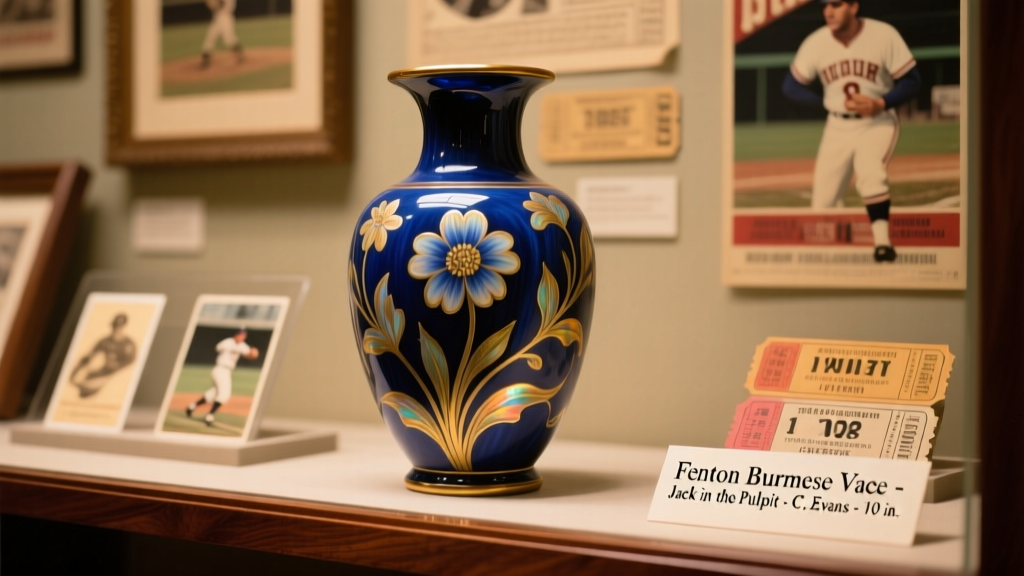
Fenton Burmese Vase 'Jack in the Pulpit' Hand-Painted by C. Evans — A Collector's Deep Dive
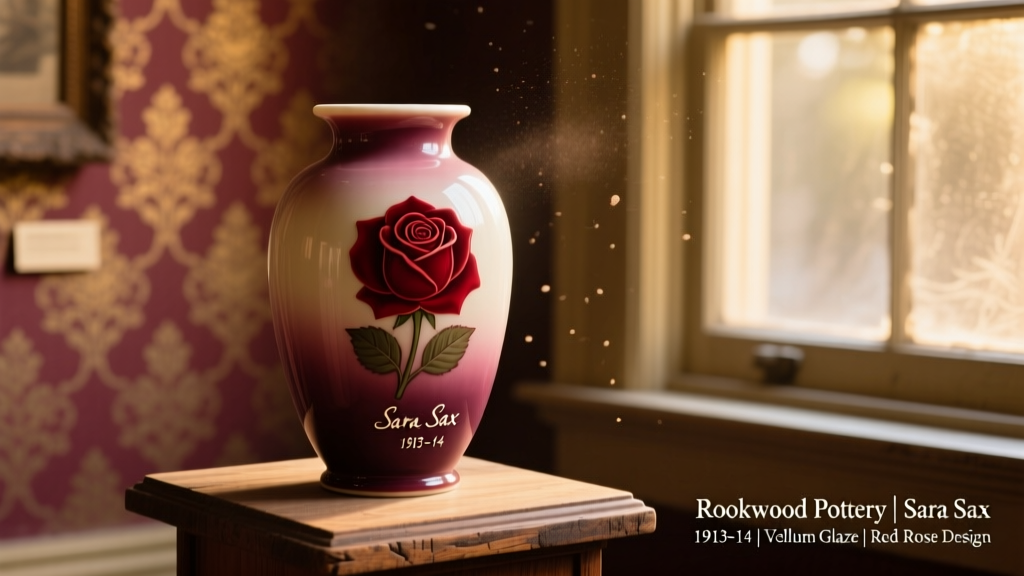
Rookwood Vase: Vellum Glaze, Red Rose Motif, Dark Rose Ground — Attributed to Sara Sax, 1913–1914, 14½ Inches
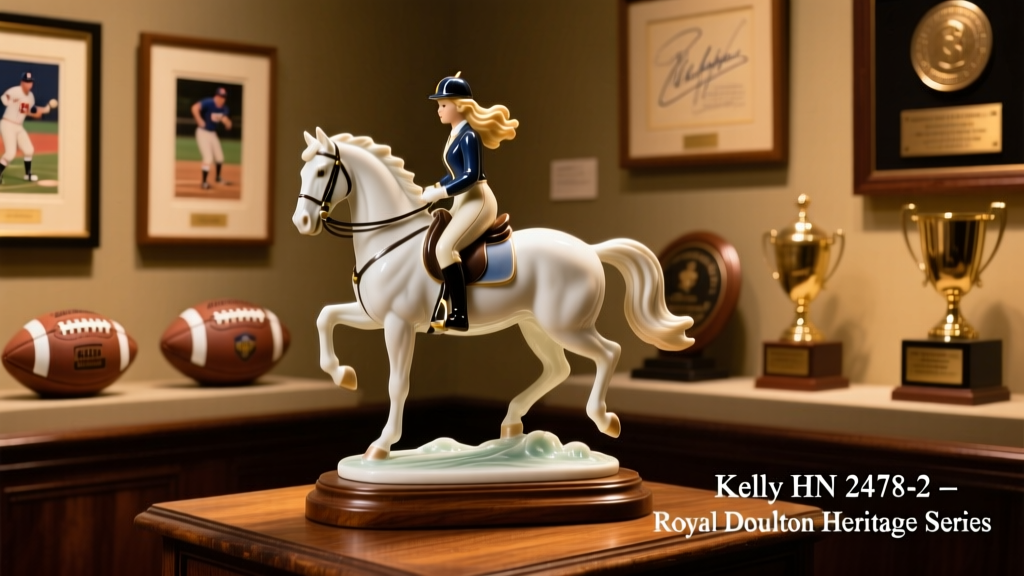
Royal Doulton Figurine Kelly HN 2478/2: Authentication, Provenance, and Collector Insights