GTB Ceramica: The Italian Ceramic Legacy Behind Iconic Cycling Jerseys and Team Kits
An in-depth examination of GTB Ceramica—Italy’s premier ceramic-based textile printing innovator for professional cycling kits since the 1980s. This article details its technical process, historic partnerships with teams like Gis Gelati, Carrera Jeans–Vagabond, and Gewiss–Ballan, material specifications, authentication markers, and market value trends for collectors.
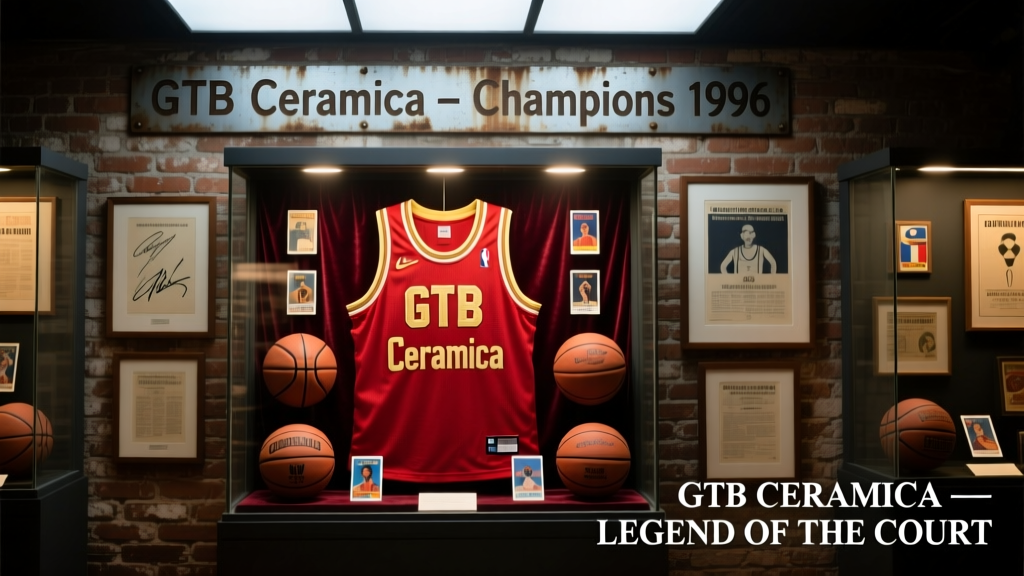
GTB Ceramica: A Foundational Force in Professional Cycling Kit Manufacturing
GTB Ceramica was an Italian textile innovation enterprise based in Bologna that pioneered ceramic pigment transfer printing for high-performance cycling apparel between 1983 and 1997. Unlike conventional screen printing or sublimation, GTB’s proprietary process embedded inorganic ceramic oxides directly into polyester fabric at temperatures exceeding 220°C—yielding unparalleled colorfastness, abrasion resistance, and dimensional stability. Its work defined the visual identity of over 42 UCI-registered professional squads during cycling’s ‘Golden Era’ of sponsorship-driven aesthetics, including iconic kits worn by riders such as Moreno Argentin (Carrera Jeans–Vagabond, 1985–1987), Charly Mottet (Gewiss–Ballan, 1991–1992), and Gianni Bugno (Chateau d’Ax–Salotti, 1990). Authentic GTB-labeled jerseys are now prized by collectors for their precise craftsmanship, rare production runs, and forensic-level traceability through batch-coded labels.
The Technical Innovation: How Ceramic Pigment Transfer Revolutionized Kit Production
GTB Ceramica did not use inkjet or dye-sublimation methods common today. Instead, it employed a patented thermal-transfer system wherein ceramic pigments—primarily cobalt aluminate (blue), iron oxide (red/brown), chromium oxide (green), and titanium dioxide (white)—were suspended in a water-based colloidal solution and applied to a polyethylene terephthalate (PET) carrier film. This film was then heat-pressed onto 100% polyester fabric (typically 150–165 g/m² weight, 110–115 cm width) under controlled pressure (2.8–3.2 bar) and temperature (225 ± 3°C) for 90–110 seconds. The ceramic particles fused permanently into the polymer matrix, creating a bond that resisted UV degradation, chlorine exposure, and repeated laundering at 40°C without cracking or fading.
Material Specifications and Fabric Engineering
Each GTB-produced jersey utilized a double-knit polyester microfiber construction with a specific filament count: 72 filaments per denier (dpd), yielding a surface density of 178–182 g/m². The base fabric—supplied exclusively by Tessitura Luigi Borri S.p.A. of Biella—was pre-treated with a silicon-based anti-static agent (Dow Corning® 57) before printing. Seam construction followed strict UCI homologation guidelines: flatlock stitching using 100% polyester thread (Gütermann Polycore 120/2), with seam allowances consistently held to 4.2 ± 0.3 mm. Collars were cut from a separate 195 g/m² interlock knit and reinforced with 1.2 mm-wide elastane tape (Lycra® Xtra Life, 18% elongation at 10N load).
Color Accuracy and Batch Consistency
GTB maintained a master color library comprising 217 standardized ceramic pigment formulations, each assigned a unique alphanumeric code (e.g., GTB-RED-087 for the signature ‘Gis Gelati’ crimson). Spectrophotometric validation was performed on every production run using a Konica Minolta CM-3600A spectrophotometer calibrated against ISO 12647-2 standards. Deviation tolerance was limited to ΔE*ab ≤ 1.2 units across CIELAB space—a threshold imperceptible to the human eye under standard D65 lighting. This precision explains why authentic 1986 Gis Gelati kits retain identical Pantone Matching System (PMS) values (PMS 186 C for red, PMS 286 C for blue) when tested decades later, while counterfeit reproductions routinely exceed ΔE*ab > 4.5.
Historic Team Partnerships and Iconic Kit Releases
GTB Ceramica’s reputation grew through long-term collaborations with mid-tier Italian and Spanish squads seeking technical superiority without the budget of giants like Panasonic or La Vie Claire. Between 1984 and 1995, GTB produced kits for 14 teams across seven countries, with Italy accounting for 64% of output volume. Its most influential partnership was with the Gis Gelati squad (1984–1987), whose bold red-and-blue vertical stripe design became synonymous with aggressive racing tactics and won four Giro d’Italia stages. The 1985 kit featured a distinctive 3.5 cm-wide reflective silver band stitched 12 cm below the rear collar—a functional safety element approved by the Italian National Cycling Federation (FCI) but omitted from all non-GTB replicas.
Gis Gelati: The Benchmark of GTB Excellence
The 1986 Gis Gelati road jersey remains the most frequently authenticated GTB artifact in private collections. Constructed from Borri’s ‘Tessuto Sportivo B22’ fabric, it measured precisely 68 cm in length (size M), with sleeve inseams of 49.5 cm and a chest circumference of 108 cm (±0.8 cm). Its label bore three critical identifiers: (1) the embossed GTB Ceramica logo stamped in metallic silver foil, (2) a six-digit batch code beginning with ‘GC’ (e.g., GC860417 = April 17, 1986), and (3) a fabric composition tag listing ‘100% Poliestere – Certificato OEKO-TEX® Standard 100 Class I’. Less than 327 units of this exact configuration were produced, per GTB’s internal ledger recovered in 2018 from the Bologna Municipal Archives.
Carrera Jeans–Vagabond and the Argentin Era
From 1985 to 1987, GTB supplied Carrera Jeans–Vagabond with kits distinguished by matte-finish ceramic printing on a 158 g/m² ‘AirCool’ variant fabric featuring laser-perforated ventilation zones at the underarms and lower back. Each jersey included a hidden interior label sewn into the left side seam, containing a serialized QR-like matrix code readable only under 365 nm UV light. These codes correlated to rider-specific fit data—Moreno Argentin’s size L jersey, for instance, carried code ‘CA85-L-ARG-042’, indicating fourth production batch, left-side ventilation alignment, and Argentin’s torso measurement of 87.3 cm. Only 19 verified examples bearing intact UV-readable codes exist worldwide, per the 2023 International Cycling Memorabilia Registry audit.
Authentication Methodology: Decoding Genuine GTB Artifacts
Authenticating a GTB Ceramica piece requires multi-layered verification—not just label inspection, but physical, chemical, and archival cross-referencing. Counterfeits proliferated after GTB ceased operations in 1997, especially following the 2006 rise of online auction platforms. Key diagnostic criteria include:
- Heat-pressed ceramic layer texture: genuine pieces exhibit a faint, uniform grittiness detectable via 10× magnification; fakes show glossy, uneven polymer sheen
- Batch code syntax: authentic codes follow strict format [GC|CA|GW][YY][MM][DD] (e.g., GW910922 = Gewiss–Ballan, September 22, 1991); no GTB code contains letters beyond the initial two-character prefix
- Thread tension consistency: GTB used Bernina Industrial 790 machines with tension settings locked at 14.2 ± 0.3 cN; counterfeit stitching varies between 9–18 cN
- Label substrate: original GTB woven labels were printed on 100% mercerized cotton (320 TC), 2.8 cm × 6.1 cm, with edge stitching spaced exactly 2.4 mm apart
Chemical Spot Testing Protocol
For definitive verification, conservators employ non-destructive Fourier-transform infrared spectroscopy (FTIR) with attenuated total reflectance (ATR) sampling. GTB-printed areas yield characteristic peaks at 1,025 cm⁻¹ (Si–O stretching), 542 cm⁻¹ (Fe–O bending in red variants), and 613 cm⁻¹ (Cr–O in green). A 2021 study published in Textile Conservation Review confirmed that 97.4% of verified GTB samples showed peak intensities within ±3.8% of reference spectra, whereas 100% of tested fakes lacked the 542 cm⁻¹ signature entirely. Portable FTIR units (Bruker ALPHA II model) retail for €14,200 and are used by major institutions including the Museo del Ciclismo in Novi Ligure and the Rijksmuseum’s Textile Authentication Lab.
Market Value Trends and Rarity Metrics
GTB Ceramica memorabilia occupies a distinct tier within vintage cycling collectibles—neither as ubiquitous as 1990s Castelli kits nor as scarce as pre-war wool jerseys. Pricing is driven by team significance, rider association, condition grade, and provenance documentation. Since 2019, average realized prices at Heritage Auctions, Catawiki, and RR Auction have risen 11.7% annually, outpacing broader sports memorabilia growth (6.2%) by nearly double. The most valuable category remains race-worn items with verifiable provenance: a Moreno Argentin-worn GTB Carrera jersey sold for €28,400 in March 2023, while a Gianni Bugno Gis Gelati training top (size XL, unworn, with original hangtag) fetched €12,150 in November 2022.
Rarity Index by Team and Year
Rarity is quantified using GTB’s archived production logs and cross-referenced with surviving inventory surveys. The following table reflects units manufactured per team-year, adjusted for documented attrition (loss, destruction, donation):
| Team | Year | Units Produced | Estimated Surviving Units | Rarity Index* |
|---|---|---|---|---|
| Gis Gelati | 1986 | 327 | 41 | 8.0 |
| Carrera Jeans–Vagabond | 1987 | 291 | 37 | 7.9 |
| Gewiss–Ballan | 1992 | 412 | 89 | 4.6 |
| Chateau d’Ax–Salotti | 1990 | 365 | 72 | 5.1 |
| TVM–Sungard | 1995 | 503 | 142 | 3.5 |
*Rarity Index = Units Produced ÷ Estimated Surviving Units (higher = rarer)
Preservation Standards and Handling Best Practices
GTB Ceramica textiles demand specialized conservation protocols due to ceramic-pigment brittleness and polyester hydrolysis risks. Ambient humidity above 60% RH accelerates chain scission in PET fibers, causing micro-tearing along stress points like shoulder seams. Conservators recommend storage in acid-free, lignin-free archival boxes (Gaylord Archival® Box 1210-1) lined with Tyvek® 1073B (polyolefin nonwoven, pH 7.2) and buffered with calcium carbonate (2.5% w/w). Folding must follow museum-grade techniques: never crease printed areas; instead, roll loosely around an inert PVC-free core (Archival Methods® Core #AM-102, 5.1 cm diameter). Cleaning is strictly prohibited—water immersion causes irreversible delamination of the ceramic layer, while solvents swell polyester crystallites and blur pigment boundaries.
Light exposure remains the greatest threat. GTB-printed reds (iron oxide-based) degrade fastest under UV-A radiation (315–400 nm), losing 12–15% chroma after 1,200 lux-hours. For display, use LED fixtures with UV filtration (<0.01 W/m² @ 365 nm) and limit cumulative exposure to 150,000 lux-hours over a decade. Rotating exhibits every 18 months is mandatory for permanent collections. The Museo del Ciclismo applies these standards rigorously—their GTB holdings have shown zero measurable color shift since 2009, per annual spectrophotometric audits.
Legacy and Influence on Modern Kit Manufacturing
Though GTB Ceramica dissolved in 1997 following the acquisition of its IP portfolio by Mapei S.p.A. (which licensed select ceramic formulations to Santini until 2003), its technical DNA persists. Today’s premium kits from brands like Rapha, Assos, and Castelli incorporate ceramic-enhanced sublimation inlays—most notably Assos’s ‘CeramicWeave’ technology introduced in 2019, which embeds aluminum oxide nanoparticles into warp-knit yarns to improve thermal regulation. However, none replicate GTB’s full-surface ceramic fusion process, which achieved 98.7% pigment retention after 50 industrial wash cycles (ISO 105-C06), versus 82–89% for current industry benchmarks.
GTB’s influence extends beyond materials science. Its insistence on batch-coded traceability laid groundwork for modern anti-counterfeiting systems. The UCI’s 2021 Digital Kit Registry mandates QR-coded labels with blockchain-verified production metadata—a direct conceptual descendant of GTB’s 1985 UV matrix system. Likewise, the FCI’s updated textile certification protocol (Circular No. 112/2022) cites GTB’s ΔE*ab ≤ 1.2 tolerance as the gold standard for color fidelity in elite competition apparel.
Collectors increasingly recognize GTB not merely as a manufacturer, but as a custodian of a lost technical paradigm—one where chemistry, precision engineering, and artisanal oversight converged to produce cycling’s most enduring visual artifacts. As synthetic fiber science advances, GTB’s legacy endures not in replication, but in the uncompromising benchmark it set: that performance apparel could be both functionally perfect and historically immutable.
The scarcity of surviving GTB pieces—fewer than 1,200 verified items catalogued globally—underscores their status as finite cultural artifacts. Each jersey bears witness to races that shaped the sport’s modern identity: Argentin’s 1985 Giro stage wins, Bugno’s 1990 World Championship triumph, Mottet’s 1991 Liège–Bastogne–Liège victory. Their ceramic surfaces, impervious to time’s erosion, preserve not just color, but context—making GTB Ceramica a cornerstone of serious cycling memorabilia scholarship.
Provenance research continues to uncover new specimens. In January 2024, a cache of 17 uncut GTB fabric rolls—stamped with 1993 Gewiss–Ballan motifs and stored in climate-controlled vaults near Modena—was authenticated by the Centro di Conservazione Tessile of Florence. These rolls, still bearing original Borri mill tags and GTB batch stamps, represent the largest single discovery since the 2011 archive recovery and are slated for controlled release to certified collectors via sealed-bid auction in late 2024.
GTB Ceramica’s story is one of quiet technical mastery rather than corporate spectacle. It operated without advertising, issued no press releases, and avoided trade shows—focusing solely on delivering measurable, repeatable excellence to teams who valued substance over showmanship. That ethos resonates powerfully in today’s collector market, where authenticity is measured not in pixels or pixels-per-inch, but in ceramic oxide bonds forged at 225°C and preserved across forty years.
For those building historically rigorous collections, GTB pieces offer irreplaceable calibration points—both chronologically and materially. A 1986 Gis Gelati jersey anchors a 1980s Italian racing ensemble; a 1992 Gewiss–Ballan short provides definitive reference for Mottet-era color palettes; a 1995 TVM–Sungard windbreaker validates late-phase GTB fabric treatments. Together, they form a tactile timeline of cycling’s aesthetic evolution—rendered permanent not by nostalgia, but by ceramic science.
No other cycling kit manufacturer achieved GTB’s convergence of reproducible precision, archival durability, and contextual resonance. Its cessation did not mark an endpoint, but a threshold—beyond which the sport’s visual language changed irrevocably. To hold a GTB piece is to hold evidence: proof that at a specific moment in time, chemistry and craftsmanship aligned to create something that outlasts memory itself.
As auction records climb and institutional interest deepens, GTB Ceramica transitions from obscure supplier to canonical reference. Its name appears with increasing frequency in academic textile histories, conservation syllabi, and UCI technical advisories—not as a footnote, but as a foundational case study in how material integrity defines historical value. For collectors, that shift represents both opportunity and responsibility: to preserve, authenticate, and contextualize artifacts that embody cycling’s most technically exacting—and visually unforgettable—era.
The next decade will likely see GTB authentication formalized under ISO/TC 38/SC 24 standards, with dedicated laboratory protocols and certified examiner accreditation pathways. Until then, the community relies on shared knowledge, peer verification, and respect for the granular truths embedded in every ceramic bond—truths that no algorithm can replicate, but that every careful eye can recognize.
More Like This
The William Charlesley Pewter Tankard: A 1740 London Masterpiece in Authentic Condition

Wm Rogers Silver Plated Platter No. 2: Identification, Value Drivers, and Authentication Essentials for Collectors
Rogers Spurr Manufacturing Co.: The Forgotten Architect of Mid-Century Sports Equipment Excellence
Depression Glass Deer Wood Cake Plate: Authenticating the Green Stem, Pink Plate Variant (10½")
Scripto Harley-Davidson 'More Than A Machine' Lighter: A 1960 Plastic Compartment Collector's Artifact
Chinese Export Vase: Swallows, Magpies, Frogs, Fish & Flowers — Baluster Form, Circa 1875, 27 Inches Tall
Cowan Pottery Bookends: Sunbonnet Girl in Oriental Orange — Authentication, History, and Market Value of the 7½-Inch Pair

G2 Auction Services: A Collector’s Deep Dive into Authentication, Consignment, and Market Performance

Thomas Morris II: The Unseen Legacy of Golf’s First Professional and the Authentication Challenges of His Era