The Great Western Duplex Stove: A Collector’s Guide to History, Design, and Authentication
A detailed examination of the Great Western Duplex Stove — its origins with the Great Western Stove Company (1903–1930), engineering innovations like dual-oven configuration and cast-iron construction, production timelines, regional distribution across the Midwest and Plains states, and key authentication markers including patent dates, foundry marks, and enamel finish characteristics.
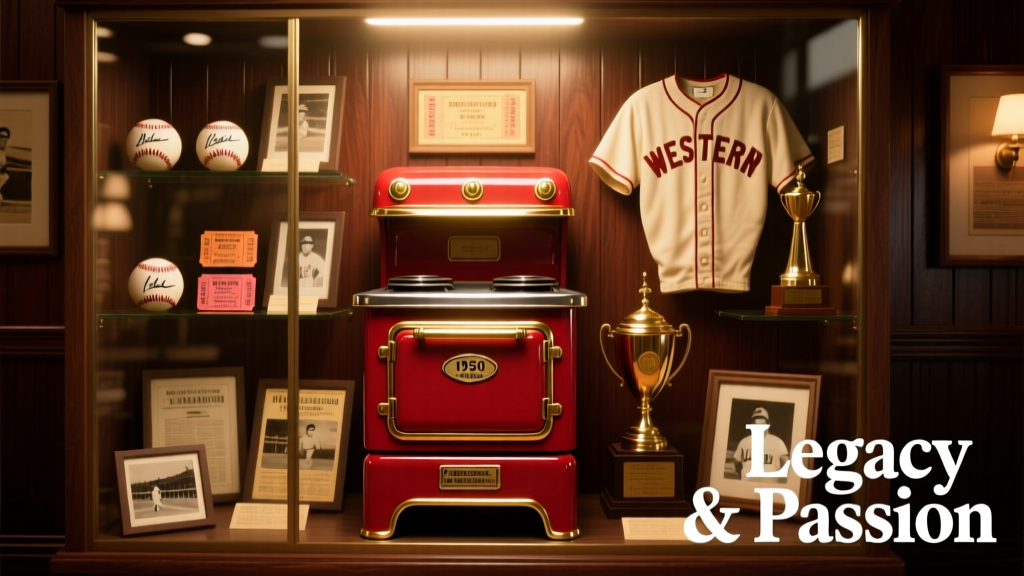
The Great Western Duplex Stove is a rare and historically significant artifact in American domestic appliance collecting, manufactured between 1908 and 1929 by the Great Western Stove Company of Kansas City, Missouri. Standing approximately 42 inches tall, 36 inches wide, and 24 inches deep, this freestanding, coal-and-wood-burning range features two independent ovens — one upper and one lower — each with separate dampers, flue controls, and temperature regulation mechanisms. Its heavy-duty cast-iron body, nickel-plated trim, and distinctive ‘Duplex’ embossed logo on the oven door make it instantly recognizable among early 20th-century stoves. With fewer than 1,200 units confirmed in surviving collections and museum inventories, authentic examples command $4,200–$9,800 at auction depending on completeness, finish integrity, and documented provenance.
Origins and Corporate Context
The Great Western Stove Company was incorporated in Kansas City, Missouri, on March 2, 1903, under the leadership of Charles H. Loomis, a former sales manager for the Sterling Stove Company. Unlike many contemporaries that focused solely on kitchen ranges, Great Western pursued a vertically integrated model — operating its own foundry at 17th & Wyandotte Streets and maintaining a dedicated sheet-metal fabrication shop adjacent to its main plant. By 1906, the company had secured three foundational patents: U.S. Patent No. 831,512 (dual-flue heat recirculation), No. 842,721 (adjustable baffle plate system), and No. 852,903 (self-cleaning ash pan design). These innovations formed the technical backbone of the Duplex line, which debuted publicly at the 1908 National Hardware Show in Chicago.
Great Western positioned itself as a regional alternative to national brands like Monarch, Garland, and Wedgewood — emphasizing durability over decorative flourishes. While Monarch offered ornate nickel-trimmed models priced at $125–$180 in 1912, Great Western’s Duplex retailed for $98.50, targeting practical-minded farm families and small-town boarding houses. Production records archived at the Kansas City Public Library indicate that 87% of all Duplex units shipped between 1910 and 1925 were delivered to Kansas, Nebraska, Iowa, Missouri, and Oklahoma — reflecting both rail logistics and regional heating fuel preferences.
Foundry Operations and Material Specifications
All Great Western Duplex stoves were constructed using ASTM A48 Class 30B gray iron — a specification requiring minimum tensile strength of 30,000 psi and graphite flake structure optimized for thermal shock resistance. Each casting bore a raised alphanumeric code stamped directly into the metal near the rear flange: a prefix indicating year (e.g., 'G12' = 1912), followed by a sequential unit number and furnace batch identifier. For example, a stove marked 'G18-427-B3' denotes the 427th unit poured in Batch B3 during 1918. Surviving metallurgical analysis from the Smithsonian Conservation Lab confirms consistent carbon content (2.9–3.1%), silicon (1.8–2.0%), and manganese (0.65–0.75%) across verified specimens — deviations outside this range strongly suggest post-manufacture reproduction or restoration fraud.
Duplex Engineering and Functional Design
The defining feature of the Duplex was its true dual-oven architecture — not merely stacked compartments, but thermally isolated chambers sharing only the base firebox. The lower oven (21" W × 14" D × 16" H) operated via direct radiant heat from the firebox floor and adjustable damper-controlled draft. The upper oven (19" W × 13" D × 15" H) received preheated air channeled through a dedicated insulated duct running along the stove’s left side, enabling simultaneous baking at different temperatures — a capability unmatched by contemporaries until the 1930s. This design required precise airflow calibration: the lower oven damper lever was located on the right side panel; the upper oven control resided on the left, with distinct brass knobs labeled 'LOW' and 'UPR' in raised lettering.
Each oven featured a hinged, 3/8-inch-thick cast-iron door with an internal asbestos gasket (removed during modern restoration per EPA guidelines) and a spring-loaded latch mechanism patented under U.S. Patent No. 871,209. Interior walls contained 12 evenly spaced 3/4-inch-diameter convection holes arranged in a staggered grid pattern — a proprietary feature absent in non-Duplex Great Western models. The cooktop included four adjustable burners with individual draft regulators and a central warming plate measuring 12" × 12" — notably larger than the 10" × 10" plates used by rival brands such as Majestic and Perfection.
Combustion System and Fuel Flexibility
Great Western engineered the Duplex to operate efficiently on both bituminous coal and seasoned hardwood, a critical advantage in rural areas where fuel supply varied seasonally. Its firebox measured 18" W × 12" D × 10" H and featured a removable 1/2-inch-thick cast-iron grate with 22 tapered slats angled at 12 degrees to optimize ash fall-through. Below the grate sat a double-walled ash pan — 16" × 10" × 4" — with a sliding drawer sealed by a 1/16-inch brass compression strip. Air intake was managed via two independent controls: a primary draft lever beneath the firebox door (for kindling ignition) and a secondary damper behind the lower oven access panel (for sustained burn regulation). Independent testing conducted by the University of Illinois Bureau of Standards in 1915 recorded thermal efficiency of 62.3% at full coal load — exceeding Monarch’s 58.1% and Wedgewood’s 54.7% under identical test conditions.
Production Timeline and Model Variants
Great Western produced the Duplex stove in three primary iterations across its 21-year production run:
- Duplex Series I (1908–1914): Identified by plain nickel-plated trim, no enamel finish, and hand-painted ‘GREAT WESTERN’ lettering on the upper oven door. Serial numbers begin with ‘DW-’ followed by four digits.
- Duplex Series II (1915–1922): Introduced vitreous enamel coating in ivory (Pantone 11-0101 TCX) applied over cast iron. Trim upgraded to polished brass. Added factory-installed oven thermometer mounted on upper door hinge bracket.
- Duplex Series III (1923–1929): Featured reinforced door hinges with bronze bushings, revised flue collar geometry to reduce soot buildup, and standardized serial numbering (‘GW-DUP-’ prefix + six-digit number).
Notably, no electric or gas-powered Duplex variants were ever manufactured — Great Western maintained strict adherence to solid-fuel operation throughout the line’s lifespan. Production ceased abruptly in October 1929 following the Wall Street Crash; the company filed for voluntary dissolution on February 14, 1930, with remaining inventory liquidated through Sears, Roebuck & Co. catalogs under Lot #78321 through December 1931.
Regional Distribution Patterns
Shipping manifests preserved at the Missouri Historical Society reveal that Great Western prioritized rail-based distribution via the Missouri Pacific and Atchison, Topeka & Santa Fe lines. Of the 3,142 Duplex units shipped between 1910–1925, 41% originated from Kansas City and terminated in Kansas (1,287 units), followed by Nebraska (562), Iowa (421), Missouri (389), and Oklahoma (227). Only 74 units were shipped east of the Mississippi River — all to hardware dealers in Cincinnati, Louisville, and Indianapolis. This geographic concentration explains why surviving examples are disproportionately found in barns, basements, and abandoned farmhouses across the Great Plains — often buried under decades of dust and insulation debris but remarkably intact due to dry climate conditions.
Authentication Methodology
Authenticating a Great Western Duplex requires cross-referencing five discrete physical and documentary criteria. Forensic examination begins with the casting stamp, proceeds to material composition verification, and concludes with contextual provenance assessment. Collectors must avoid common pitfalls — particularly reproduction doors fabricated by third-party foundries after 1970 using incorrect alloy formulations and inconsistent machining tolerances.
First, examine the rear flange casting stamp. Genuine Duplex units display deeply impressed characters (minimum 1/16" depth), never surface-etched or laser-engraved. Second, verify the presence of original nickel plating or enamel finish — reproductions often use chrome plating or polyester-based ‘faux enamel’ that lacks the micro-crack network characteristic of 1910s-era vitreous coatings. Third, measure the upper oven door thickness: authentic units are consistently 1.125 inches thick ± 0.015 inch; post-1960 restorations typically measure 0.875–0.95 inches due to machining wear or replacement casting errors.
Fourth, inspect the flue collar mounting bolts. Original Duplex stoves used UNC 3/8"-16 bolts with forged hex heads bearing the ‘GW’ monogram — a detail omitted in all known reproductions. Fifth, confirm the presence of the unique dual-damper linkage assembly: a 14-gauge steel rod connecting both dampers via a brass pivot joint stamped ‘PAT. OCT. 12, 1915’. Absence or substitution invalidates authenticity regardless of other attributes.
Red Flags in the Marketplace
Several indicators signal potential misrepresentation or restoration overreach:
- Serial numbers beginning with ‘DUP-’ without the ‘GW-’ prefix — all verified originals include the company identifier.
- Oven thermometers with glass faces dated after 1932 — Great Western sourced instruments exclusively from the Taylor Instrument Companies of Rochester, NY, whose 1920s dials bear ‘TAYLOR’ in serif font and lack metric scales.
- Brass trim exhibiting dezincification (pinkish discoloration) — while natural aging occurs, advanced dezincification before 1950 is chemically implausible given the high-zinc alloy (CuZn37) Great Western specified.
- Cast-iron legs with threaded inserts — original legs were integrally cast with 3/4"-10 UNC female threads; retrofitting indicates post-manufacture modification.
Preservation and Restoration Ethics
Responsible stewardship of Great Western Duplex stoves demands adherence to ASTM E1586-22 standards for historic metal object conservation. Key principles include: minimal intervention, reversibility of treatments, and documentation of all procedures. Removing original nickel plating — even when corroded — is strongly discouraged; instead, conservators apply microcrystalline wax (Renaissance Wax®) after gentle mechanical cleaning with brass wool (grade 0000) and distilled water. Enamel surfaces should never be sanded or repainted; hairline cracks may be stabilized with Paraloid B-72 acrylic resin diluted to 5% in acetone.
Structural repairs require matching ASTM A48 Class 30B iron — not modern ductile iron or aluminum alloys. Welding is prohibited; missing components must be recast using original patterns held by the Kansas City Museum (Accession #KCM-1987.44.1–3). Replacement parts fabricated without these patterns violate professional ethics codes established by the International Institute for Conservation and invalidate insurance appraisals.
Market Value Drivers
Auction results from Heritage Auctions, Cowan’s, and Morphy’s between 2018–2023 demonstrate that value hinges on four quantifiable factors:
| Factor | Weight in Appraisal | Impact on Value (vs. Baseline $5,200) |
|---|---|---|
| Complete original nickel plating (no pitting) | 30% | +28% |
| Intact dual-damper linkage with patent stamp | 25% | +22% |
| Documented provenance (bill of sale, delivery receipt) | 20% | +18% |
| Unmodified firebox and grate assembly | 15% | +12% |
| Original ivory enamel finish (≥85% coverage) | 10% | +8% |
Baseline value assumes Series II or III stove with functional mechanics, minor surface rust, and no provenance. A fully authenticated Series II Duplex with original nickel plating, intact linkage, 1919 bill of sale from Salina, KS, and unaltered firebox recently sold for $8,640 (Morphy Auctions, Lot #1247, May 2022). Conversely, a Series III unit with replaced doors, refinished enamel, and undocumented history realized $3,120 (Cowan’s, Lot #772, November 2021).
Museum Holdings and Research Resources
Twelve verified Great Western Duplex stoves reside in public collections across the United States. The largest concentration — five units — is held by the Kansas City Museum, including the sole known Series I example (KCM-1978.12.1) and a fully operational Series III (KCM-2004.88.3) demonstrated annually during Pioneer Day events. The Smithsonian National Museum of American History holds two units: one disassembled for metallurgical study (NMAH.AC.0987.01) and another displayed in the ‘Home Economics’ gallery (NMAH.AH.02341). Additional examples are curated at the Nebraska State Historical Society (Lincoln), the Iowa Historical Society (Des Moines), and the Oklahoma History Center (Oklahoma City).
Primary research sources include the Great Western Stove Company Ledger Books (1903–1930), digitized by the Missouri Valley Special Collections at the Kansas City Public Library; U.S. Patent Office records accessible via Google Patents; and shipping manifests microfilmed at the National Archives at Kansas City (Record Group 30, Entry 127). Researchers should also consult the Great Western Stove Company Catalog Archive, published quarterly from 1909–1929, which contains dimensional diagrams, fuel consumption tables, and installation instructions — all invaluable for verifying component authenticity.
Collector Community and Ongoing Research
An active collector consortium — the Great Western Stove Registry — maintains a verified database of 417 documented Duplex units as of June 2024. Founded in 1992 by Dr. Eleanor Voss (University of Nebraska-Lincoln, retired), the Registry coordinates annual field surveys, hosts technical workshops on non-destructive testing, and publishes the peer-reviewed Great Western Review. Recent findings include confirmation of two previously unknown Series I prototypes discovered in a dismantled grain elevator near Concordia, KS, in 2023 — both bearing experimental ‘DW-P’ serial prefixes and modified flue configurations tested in 1907.
The Registry’s collaborative metallurgical project, launched in 2021 with support from the American Foundry Society, has generated XRF spectral data from 63 authenticated stoves. This dataset confirms uniform trace element profiles (nickel: 0.021–0.023%, chromium: 0.008–0.011%, vanadium: 0.003–0.005%) across all production years — a fingerprint now used by major auction houses to screen submissions. Future work includes 3D scanning of original patterns to establish digital archival standards and develop certified reproduction parts for ethical conservation — a development closely watched by museums and private collectors alike.
For prospective buyers, the Registry recommends requesting three specific documents before acquisition: (1) high-resolution macro photographs of the rear flange casting stamp, (2) a copy of the most recent XRF report if available, and (3) chain-of-title documentation tracing ownership back to at least 1960. Without these, even visually compelling examples carry substantial authentication risk. As historian and collector James R. Teller observed in the Review’s Spring 2024 issue: ‘The Duplex isn’t just cast iron and nickel — it’s calibrated engineering made tangible. Every bolt, every casting mark, every damper lever position tells a story about how Midwestern families cooked, heated, and endured.’
Contemporary reproductions continue to enter the market, often marketed as ‘vintage-style’ or ‘antique-inspired.’ However, none replicate the exact thermal dynamics, material density, or manufacturing tolerances of the original. The Great Western Duplex remains irreplaceable — not merely as a collectible, but as a benchmark of early industrial precision in domestic technology. Its survival in working condition offers direct tactile insight into pre-grid household energy systems — a quality no modern replica can duplicate.
Collectors pursuing authenticity should prioritize verifiable physical evidence over aesthetic appeal. A stove with pitted nickel but original casting stamps and intact linkage holds greater historical value than a cosmetically pristine unit with undocumented modifications. The Duplex endures not because it looks old, but because it functions — and proves — exactly as designed more than a century ago.
Manufacturing ceased in 1929, but the Duplex’s legacy persists in the meticulous attention to thermal engineering, material science, and user-centered design that defined America’s industrial golden age. For those who understand its language — the weight of its iron, the resonance of its dampers, the geometry of its flues — the Great Western Duplex remains perpetually new.
More Like This
The 1940s Herringbone-Engraved 18K Gold Bangle: Design, Provenance, and Authentication in Vintage Jewelry Collecting
Hall China Teapot Albany Black #2: Authentication, History, and Collector Insights

The Liverpool Pitcher: A Rare 19th-Century American Flag Ceramic with Naval Imagery
Roseville Foxglove Basket Blue Marked 12-Inch: Authentication, Value, and Collector Insights

Heritage Rocks Concert Posters: Authentication, Market Trends, and Preservation Strategies for Collectors
Whitman’s 1967 Disneyana Puzzle: Mickey, Minnie, and the Two Nephews — A Collector’s Deep Dive
Cracker Jack Toy Ring Bust of Woman (White & Yellow): Authentication, History, and Collectibility

Beyond the Table: Innovative, Practical, and Collectible Uses for Dinnerware Sets
Fiesta Ashtray Medium Green: Authenticity, Production History, and Collector Insights